

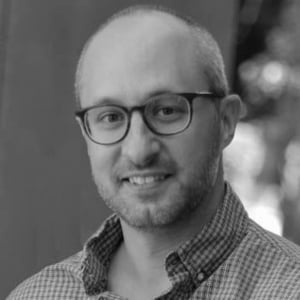
Professor of Law, Michigan State University (currently serving as FCC General Counsel)
Professor Candeub joined the MSU Law faculty in fall 2004. He is also a Fellow with MSU's Institute of Public Utilities. Prior to joining MSU, he served as an advisor at the Federal Communications Commission (FCC). From 1998 to 2000, Professor Candeub was a litigation associate for the Washington D.C. firm of Jones, Day, Reavis & Pogue and also has served as a corporate associate with Cleary, Gottlieb, Steen & Hamilton, also in Washington, D.C. Immediately following law school, he clerked for Chief Judge J. Clifford Wallace, U.S. Court of Appeals for the Ninth Circuit. While in law school, Professor Candeub was an articles editor for the University of Pennsylvania Law Review.
Professor Candeub's scholarly interests focus on the law and regulation of communications, internet, technology. His numerous law review articles and scholarly papers have placed him at the center of legal and policy controversies, and he often writes for popular outlets such as the Wall Street Journal and US News. Federal courts, including the U.S. Supreme Court, have cited and relied upon his work.
He joined the Trump administration in 2019 as Deputy Assistant Secretary of Commerce for Telecommunications and Information and assumed the role of Acting Assistant Secretary. He later joined the Department of Justice as Deputy Associate Attorney General.
Professor Candeub is a senior fellow at the D.C.-based Center of Renewing America.
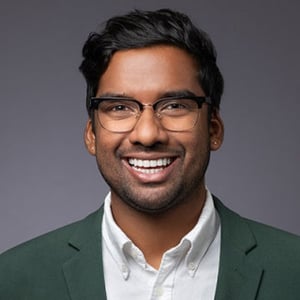
Assistant Professor of Law and, by courtesy, Computer Science, University of Nebraska College of Law; Nonresident Fellow, Stanford Law School Program in Law, Science & Technology
Professor Dickinson is an Assistant Professor of Law University of Nebraska College of Law, where he teaches Contracts, Business Torts and Unfair Competition, The Common Law, and Remedies. He is also a nonresident fellow with the Stanford Law School Program in Law, Science and Technology and holds a JD from Harvard Law School. Before teaching, Professor Dickinson practiced at Ropes & Gray LLP in Boston and at law firms in Rochester, New York, with a year in between as a law clerk for Judge Richard C. Wesley of the U.S. Court of Appeals for the Second Circuit.
Professor Dickinson's research focuses on the interaction between private law and technology. One major area of interest is how the common law responds to technological innovation and can be harnessed to complement the more particular statutory and regulatory schemes layered atop it. A second branch of his work explores how the tools of machine learning and artificial intelligence can be brought to bear on traditional legal questions. Through computational analysis of large bodies of case law his research seeks to provide a more systematic view of our legal system and doctrines and to guide legal reforms and policy decisions. His work appears in leading journals including the Boston College Law Review, the Stanford Technology Law Review, the Harvard Journal on Legislation, and the Administrative Law Review.
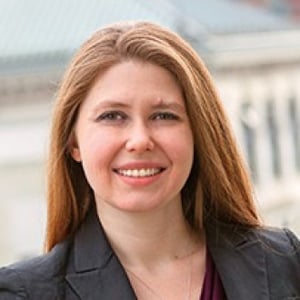
Associate Attorney - Investment Funds, Kirkland & Ellis LLP
Dhruva Krishna is an investment funds associate in the Los Angeles office of Kirkland & Ellis LLP. Dhruva's practice largely focuses on the formation, structuring, marketing, management and regulatory compliance of investment funds, including operational, legal and regulatory issues, with various sponsors ranging up to $15 billion. He also assists with related fund documentation and processes, including transfers, secondaries, co-investments and more. As an avid musician and writer, Dhruva is especially interested in the intersection of technology, regulation and innovation.
Professor of Law, Brooklyn Law School
Professor Mulligan teaches Internet law, intellectual property law, and trusts & estates. Her research addresses efforts to adapt intellectual property law for the digital age, the relationship between law and technology, and theories of constitutional interpretation. Recently, she has written about the Internet of Things, robot punishment, and early translations of the Constitution.
While at Brooklyn, Professor Mulligan researched as a visiting scholar at the Georgetown Center for the Constitution and taught as a visiting associate professor at Yale Law School. Previously, she taught at the University of Georgia and was a postdoctoral associate and lecturer in law at the Information Society Project at Yale Law School. Her scholarship has been published in a variety of journals and law reviews, including Georgia Law Review, SMU Law Review, and Constitutional Commentary.
Professor Mulligan earned her bachelor’s degree cum laude and her law degree cum laude from Harvard University, where she worked as a production and article editor for the Harvard Journal of Law & Technology. Before entering academia, she served as a law clerk for Judge Charles F. Lettow of the U.S. Court of Federal Claims.
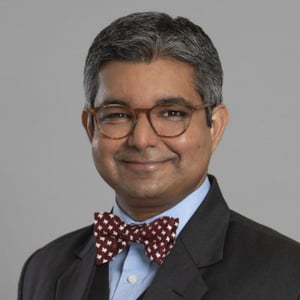
Professor of Law and Director, Intellectual Property and Information Law Program, Benjamin N. Cardozo School of Law, Yeshiva University
Saurabh Vishnubhakat is a Professor of Law and Director of the Intellectual Property and Information Law Program at Cardozo Law. He is also a Research Fellow at the Duke Law Center for Innovation Policy and a Senior Scholar at the George Mason University Center for IP and Innovation Policy. Previously, he held joint appointments as a Professor of Law and Professor of Engineering at Texas A&M University.
Professor Vishnubhakat’s expertise is in intellectual property, administrative law and federal litigation, especially from an empirical perspective. His legal writings have been cited in federal judicial opinions, agency regulations and over two dozen Supreme Court briefs. His latest work is published or forthcoming in the Indiana Law Journal, the Washington and Lee Law Review and the Iowa Law Review as well as the peer-reviewed Journal of the Copyright Society of the USA and the Journal of Economic Perspectives.
His research explores the interaction of the U.S. intellectual property system with federal courts and agencies, among other topics. With a background in the natural sciences, Professor Vishnubhakat brings a scientific mindset to legal thinking and is dedicated to teaching students how to build arguments with analytical rigor.
Prior to his appointment at Texas A&M, Professor Vishnubhakat served in the United States Patent and Trademark Office as principal legal advisor to that agency’s first two chief economists. He was also a faculty fellow at Duke Law School, where he co-taught patent law and was a postdoctoral associate at the Duke Center for Public Genomics, where he researched law and policy issues surrounding innovation in genetics and biomedicine.
Professor Vishnubhakat holds both a J.D. and LL.M. in intellectual property from the University of New Hampshire Franklin Pierce School of Law, where he was an editor of the Law Review. He also holds a B.S. in chemistry from the Georgia Institute of Technology. He is admitted to the bars of Texas, Illinois, the U.S. Court of Appeals for the Federal Circuit and the Supreme Court of the United States.

Thomas M. Siebel Senior Fellow, The Hoover Institution, Stanford University; Gary T. Schwartz Distinguished Professor of Law Emeritus, UCLA School of Law
Eugene Volokh is the Thomas M. Siebel Senior Fellow at the Hoover Institution (Stanford), as well as the Gary T. Schwartz Distinguished Professor of Law Emeritus and Distinguished Research Professor at UCLA School of Law. He recently retired from teaching at UCLA, after 30 years there, and is now focusing on research.
Volokh is the author of the textbooks The First Amendment and Related Statutes (8th ed. 2023), and Academic Legal Writing (5th ed. 2016), as well as over 100 academic law journal articles, mostly on First Amendment law. He is a member of The American Law Institute; the editor-in-chief of the Journal of Free Speech Law; and the creator and coauthor of The Volokh Conspiracy, a leading legal blog founded in 2002 (hosted at the Washington Post from 2014 to 2017 and now at Reason Magazine).
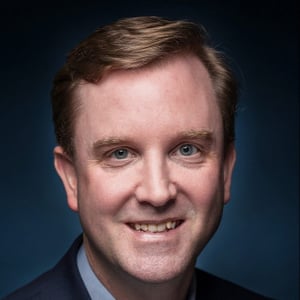
Vice President and Deputy Counsel, Wisconsin Institute for Law and Liberty
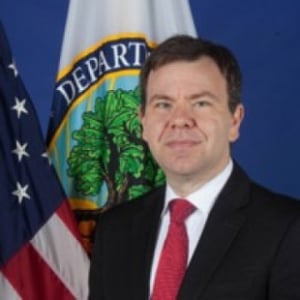
General Counsel, Mountain States Legal Foundation
William E. Trachman is General Counsel for Mountain States Legal Foundation, where he protects the rights of individuals to live freely and securely under the U.S. Constitution. Previously, he was appointed to serve in the Department of Education as Deputy Assistant Secretary in the Office for Civil Rights. Prior to his appointment, he served as General Counsel to the Douglas County School District, where he helped litigate the fight for school choice in the school district. Presently, Mr. Trachman serves as Chair of the Colorado Federalist Society and the Vice Chair of the U.S. Commission on Civil Rights’ Colorado Advisory Board. He previously taught as an Adjunct Professor at the University of Denver, Sturm College of Law. He attended U.C. Berkeley for both undergraduate and law school, and then clerked for the Honorable Harris Hartz on the 10th Circuit Court of Appeals. Mr. Trachman is licensed in Colorado, California, and Washington, D.C.
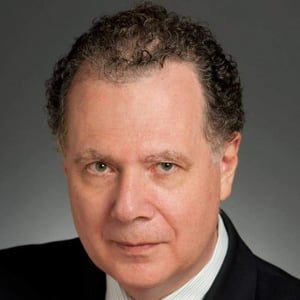
President, Macrostrategy LLC
David P. Goldman is the president of Macrostrategy LLC, a Senior Writer at Law & Liberty, and a Washington Fellow at the Claremont Institute's Center for the American Way of Life.
He writes the "Spengler" column for the Asia Times Online and the "Spengler" blog at PJ media. He is also the author of You Will Be Assimilated: China's Plan to Sino-Form the World (Bombardier Books) and How Civilizations Die (and Why Islam is Dying Too) (Regenery).
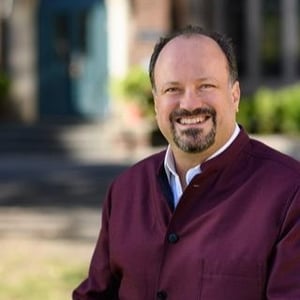
Professor of Near Eastern Studies & Director of the Institute for Transregional Study of the Contemporary Middle East, Princeton University
Prof. Bernard Haykel's research focuses on the political and social tensions that arise from questions about religious identity and authority. He obtained his doctorate in Oriental Studies with a specialization in Islam and history from the University of Oxford in 1998. His teaching and research primarily center around the intersection of intellectual, political, and social history of the Middle East, with a particular emphasis on the Arabian Peninsula. He also has a side interest in the impact of energy resources and rents on politics and society.
Prof. Haykel's work involves analyzing the reception of reformist ideas in contemporary debates among Sunnis and the Zaydi heritage among Shi`is. He is also interested in the history and politics of the countries of the Arabian Peninsula, especially Saudi Arabia. Although he focuses on the modern period, Prof. Haykel is well-versed in pre-modern Islamic literary sources and concepts and considers them crucial foundations for the study of the modern Arab and Muslim worlds.
Prof. Haykel draws inspiration from anthropology, politics, history, and philology in his work. He teaches courses on the history of the Middle East and Islamist politics at the undergraduate level. At the graduate level, he enjoys teaching courses on Arabian history and Islamism, but he is also open to accommodating the needs of NES students who want to read primary texts in areas he is less familiar with. Prof. Haykel has supervised or co-supervised nine completed Ph.D. dissertations so far.
In addition to teaching, Prof. Haykel directs the Institute for the Transregional Study of the Contemporary Middle East, North Africa, and Central Asia. In this role, he organizes lectures and conferences on topics related to the politics and culture of the contemporary Middle East.
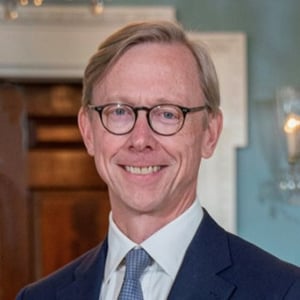
Founder, Latitude, LLC
Brian Hook is the founder of Latitude, LLC, an international strategic consulting firm based in Washington, DC.
Mr. Hook worked on the Romney campaign as senior advisor on foreign policy. He chaired the foreign policy and national security task forces of the Romney Readiness Project. From 2010-2011, he was the foreign policy director of Governor Tim Pawlenty’s presidential campaign.
Mr. Hook served in a number of positions during the Bush Administration, including Assistant Secretary of State for International Organizations; Senior Advisor to the U.S. Ambassador to the United Nations; Special Assistant to the President for Policy, Office of the Chief of Staff; and Counsel, Office of Legal Policy, at the Justice Department.
From 1999-2003, he practiced corporate law at Hogan & Hartson in Washington, D.C.
Before practicing law, he served as a policy advisor to Iowa Governor Terry Branstad and to U.S. Congressman James Leach.

Founder and Executive Director, National Security Institute; Assistant Professor of Law, Antonin Scalia Law School, George Mason University
Jamil N. Jaffer is the Founder and Executive Director of the National Security Institute at the Antonin Scalia Law School at George Mason University where he also serves as an Assistant Professor of Law, Director of the National Security Law and Policy Program, and Director of the Cyber, Intelligence, and National Security LLM Program. Jamil also teaches classes on counterterrorism, intelligence, surveillance, cybersecurity, and other national security matters, as well as a summer course held abroad with U.S. Supreme Court Justice Neil M. Gorsuch. Jamil is also affiliated with Stanford University’s Center for International Security and Cooperation and previously served as a Visiting Fellow at the Hoover Institution from 2016 to 2019.
Jamil is also a Venture Partner with Paladin Capital Group, where he assists the firm with investments across the full range of its themes and theses, including a focus on dual-use national security technologies. Jamil also serves on the board of directors of RangeForce, a cybersecurity training and readiness platform startup and Tozny, a digital identity startup, and on the advisory boards of U.S. Strategic Metals, North America’s largest primary producer of cobalt, a critical mineral used in EV batteries, aerospace, and other national security applications; and Constella Intelligence, a deep and dark web intelligence startup. Jamil also serves as an advisor to Beacon Global Strategies, a strategic advisory firm and Duco, a technology platform startup that connects corporations with geopolitical and international business experts. Jamil is also the managing director of Trigraph Caveat Capital, a private investment vehicle.
Among other things, Jamil currently serves on the Board of Directors for the Greater Washington Board of Trade, the Board of Advisors for the Global Cyber Alliance, and the Advisory Board of the Foundation for the Defense of Democracies’ Center on Cyber and Tech Innovation, the Executive Committee of the Reagan Institute Strategy Group. Jamil is also a Fellow at the Academy for Judaic, Christian, and Islamic Studies, an advisor to the Concordia Summit, and is a member of the Board of Directors for the Center for Intelligence Policy, the Board of Directors of Speech First, and the Executive Committee of the International Law and National Security Practice Group of the Federalist Society.
Immediately prior to his current positions, from 2015-2021, Jamil served as a senior business leader at IronNet Cybersecurity, helping take the company from a bootstrapped first-year technology products startup through two rounds of venture capital fundraising, growing from 40 employees to over 300, and through its listing on New York Stock Exchange. In his role as IronNet's Senior Vice President for Strategy, Partnerships & Corporate Development, Jamil worked directly for the co-CEOs of the company, Gen (ret.) Keith B. Alexander, the former Director of the National Security Agency and Founding Commander of U.S. Cyber Command, and Bill Welch, the former COO of Zscaler and Duo; in that role, Jamil led all of the company’s strategic and technology partnership efforts, including developing go-to-market and technology integration plans with some of the largest cloud platforms and cybersecurity companies in the market, evaluating potential acquisition targets, and developing overall corporate strategy and thought leadership around collective security and collaborative defense in the cyber arena.
Prior to his time at IronNet, Jamil served on the leadership team of the Senate Foreign Relations Committee as Chief Counsel and Senior Advisor under Chairman Bob Corker (R-TN), where he worked on key national security and foreign policy issues, including leading the drafting of the proposed Authorization for the Use of Military Force against ISIS in 2014 and 2015, the AUMF against Syria in 2013, and revisions to the 9/11 AUMF against al Qaeda. Jamil was also the lead architect of the Iran Nuclear Agreement Review Act and two sanctions laws against Russia for its first intervention in Ukraine.
Prior to joining SFRC, Jamil served as Senior Counsel to the House Permanent Select Committee on Intelligence under Chairman Mike Rogers (R-MI) where he led the committee’s oversight of NSA surveillance, NRO intelligence issues, and NGA analytic and collection matters, as well as intelligence community-wide counterterrorism issues. Jamil was also the lead architect of the Cyber Intelligence Sharing and Protection Act, the nation’s first cyber threat intelligence sharing legislation that was signed into law in 2015.
In the Bush Administration, Jamil served in the White House as an Associate Counsel to the President, handling Defense Department, State Department, and intelligence community matters, and serving as one of the White House Counsel’s primary representatives to the National Security Council Deputies Committee.
Prior to the White House, Jamil served on the leadership team of the Justice Department’s National Security Division as Counsel to the Assistant Attorney General for National Security, where he focused on counterterrorism and intelligence matters. At NSD, Jamil helped lead the division’s work on In re: Directives, the first ever two-party litigated matter in the FISA Court and the second case before the FISA Court of Review in its 30-year history. Jamil also led NSD’s efforts on the President’s Comprehensive National Cybersecurity Initiative (CNCI), including the drafting of NSPD-54/HSPD-23, and related classified matters, and advised the National Security Agency (NSA) and U.S. Cyber Command’s predecessor organization, the Joint Function Component Command for Network Warfare (JFCC-NW), on matters related to cyber intelligence collection and offensive cyber activities. For his work on these matters, Jamil was awarded the Assistant Attorney General’s Award for Special Initiative and was among the group of lawyers awarded the Director of National Intelligence’s 2008 Legal Award (Team of the Year – Cyber Legal).
Jamil also served in other positions in the Justice Department, including in the Office of Legal Policy, where he worked on the confirmations of Chief Justice John G. Roberts, Jr. and Justice Samuel A. Alito, Jr. to the United States Supreme Court.
Jamil also served as a lawyer in private practice at Kellogg Huber, a Washington, DC-based litigation boutique, as a policy advisor to Congressman Bob Goodlatte (R-VA), and as a staff member or senior advisor on a number of political campaigns, including two presidential campaigns and a presidential transition team. While in law school, Jamil was a member of the University of Chicago Law Review, managing editor of the Chicago Journal of International Law, and National Symposium Editor of the Harvard Journal of Law & Public Policy. Following law school, Jamil served as a law clerk to Judge Edith H. Jones of the United States Court of Appeals for the Fifth Circuit and, later in his career, as a law clerk to then-Judge Neil M. Gorsuch when he first joined the United States Court of Appeals for the Tenth Circuit as well as a law clerk to Justice Neil Gorsuch when he joined the U.S. Supreme Court.
Jamil has published multiple op-eds and academic articles on national security, foreign policy, cybersecurity, counterterrorism, encryption, and intelligence matters, and is the co-author of a book chapter with former NSA Director Gen. (Ret.) Keith B. Alexander on national security and the press in National Security, Leaks, and the Freedom of the Press: The Pentagon Papers Fifty Years On (2021) and a book chapter with former CIA Director Gen. (ret.) Mike Hayden on ISIS, al Qaeda, and other international terrorist groups in Choosing to Lead: American Foreign Policy for a Disordered World (2015). Jamil has also written book chapters on cybersecurity and surveillance, as well as op-eds and policy papers with former Attorney General Michael B. Mukasey, former National Counterterrorism Center Director Matt Olsen, and Congressman Mike Waltz (R-FL), among others.
Jamil has previously taught graduate-level courses in intelligence law and policy at George Washington University’s Elliott School of International Affairs and the National Intelligence University, served an outside advisor to the Cyberspace Solarium Commission, and has recently testified before committees of the U.S. Senate and House of Representatives on China, cybersecurity, counterterrorism, and other national security matters. Jamil has also recently appeared on a range of national television and radio outlets including CNN, Fox News, Fox Business, MSNBC, Bloomberg, PBS, Voice of America, and National Public Radio, and in various print and online publications, including the Wall Street Journal, New York Times, and the Washington Post on a range of national security matters including cybersecurity, counterterrorism, surveillance, encryption, privacy, and foreign policy issues.
Jamil holds degrees from UCLA (BA, cum laude), the University of Chicago Law School (JD, with honors), and the United States Naval War College (MA, with distinction).
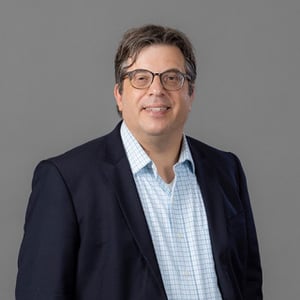
University Professor of Law and Executive Director, Liberty & Law Center, Antonin Scalia Law School, George Mason University
David Bernstein holds a University Professorship chair at the Antonin Scalia Law School, where he has been teaching since 1995. He has also been a visiting professor at the University of Michigan, Georgetown University, William & Mary, Brooklyn Law School, the University of Turin, and Hebrew University. Professor Bernstein teaches Constitutional Law, Evidence, and Products Liability.
A prolific author, Professor Bernstein often challenges the conventional wisdom with prodigious research and sharp, original analysis. He is the author of five books, and coauthor of two more. Professor Bernstein’s book Rehabilitating Lochner was praised across the political spectrum as “intellectual history in its highest form,” a “fresh perspective and a cogent analysis,” “delightful and informative,” “sharp and iconoclastic,” and “a terrific work of historical revisionism.” Columnist George Will praised Bernstein’s most recent book, Classified, The Untold Story of Racial Classification in America, as “perhaps the most consequential American book of 2022.”
Professor Bernstein has also written dozens of articles and essays published in major law reviews, including the California Law Review, Columbia Law Review, Michigan Law Review, and Yale Law Journal. An article he coauthored, Defending Daubert: It’s Time to Amend Federal Rule of Evidence 702, directly inspired a pending amendment to Rule 702.
Professor Bernstein blogs at the Instapundit.com, the Times of Israel, and the Volokh Conspiracy. He is a graduate of the Yale Law School, where he was senior editor of the Yale Law Journal and a John M. Olin Fellow in Law, Economics, and Public Policy.
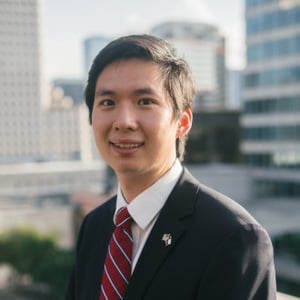
State District Judge, Austin, Texas
Cory Liu is a state district judge in Austin, Texas. He previously served as assistant general counsel to Texas Governor Greg Abbott. Mr. Liu clerked for Judge Andrew Oldham on the U.S. Court of Appeals for the Fifth Circuit and Judge Danny Boggs on the U.S. Court of Appeals for the Sixth Circuit. He was Editor-in-Chief of the Harvard Journal of Law & Public Policy and is a graduate of Harvard Law School and the University of Chicago.

Senior Fellow in Constitutional Jurisprudence, Independence Institute
Professor Robert G. Natelson is a constitutional scholar and author.
Rob’s constitutional scholarship has been cited repeatedly by justices and parties at the U.S. Supreme Court—as well as by federal appeals courts, and at least 18 state supreme courts.
Rob’s research into the Constitution’s original meaning has carried him to libraries throughout the United States and in Britain, including four months at Oxford University. His books and articles span many different parts of the Constitution, including groundbreaking studies of the Necessary and Proper Clause, the Indian Commerce Clause, federalism, Founding-Era interpretation, regulation of elections, and the amendment process of Article V. He created the first-ever online bibliography for 18th century materials used in constitutional research. He is a contributing author to the Encyclopedia of the Supreme Court of the United States (on Magna Carta). He contributed eight essays to the third edition of the Heritage Guide to the Constitution: five on the amendment procedure and one each on the Guarantee Clause, the Postal Clause, and the Recess Appointments Clause.
U.S. Supreme Court justices have relied explicitly on Rob’s research in 41 citations in 13 separate cases.
Vice President and Deputy Counsel, Wisconsin Institute for Law and Liberty
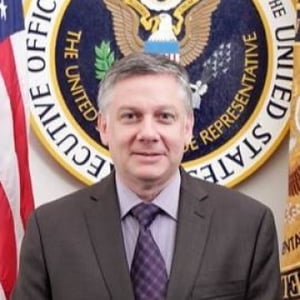
Assistant U.S. Trade Representative for Labor
Lewis Karesh was named Assistant U.S. Trade Representative for Labor Affairs in August 2005. In this capacity, he oversees trade and labor issues for USTR, including negotiation of labor provisions in multilateral, regional, and bilateral free trade agreements, monitoring and enforcement of those labor provisions, countries' adherence to worker rights provisions of U.S. trade preference programs, and development of U.S. positions on the relationship between trade and labor in international fora, including the International Labor Organization, World Trade Organization, Organization for Economic Cooperation and Development, and Asia-Pacific Economic Cooperation.
Mr. Karesh began his work on trade and labor issues in 1994 with the negotiation and implementation of the North American Agreement on Labor Cooperation (the labor supplemental agreement to the North American Free Trade Agreement). From 1996 to 2005, Mr. Karesh served in the U.S. Department of Labor’s Bureau of International Labor Affairs as Deputy Director and then Director of the office responsible for administering U.S. obligations under the North American Agreement on Labor Cooperation and the labor chapters of bilateral and regional free trade agreements. During his tenure, Mr. Karesh served as the Department’s lead representative on U.S. labor and dispute settlement negotiating teams for free trade agreements with Chile, Singapore, Australia, Central America, Morocco, and Bahrain.
From 1988 to 1996, Mr. Karesh worked as an attorney in the Department of Labor's Office of the Solicitor serving as legal counsel on a variety of domestic labor matters, including the Labor-Management Reporting and Disclosure Act and the Veterans’ Reemployment Rights Act, and international labor matters, including the North American Free Trade Agreement, the World Trade Organization, and the International Labor Organization.
Mr. Karesh holds a J.D. from the University of North Carolina and a B.S. in Industrial Engineering from North Carolina State University.
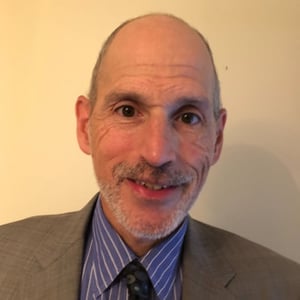
Director, Office of Trade and Labor Affairs, Bureau of International Labor Affairs, U.S. Department of Labor
Matthew Levin’s office oversees the negotiation and implementation of labor provisions in free trade agreements, participates in the administration of U.S. trade preference programs, negotiates guidelines governing lending by multilateral development banks and international financial institutions, and coordinates international technical cooperation addressing worker rights in key trading partner countries. Mr. Levin participated in the negotiation of the USMCA Labor Chapter and the Rapid Response Labor Mechanism. He has served as legal counsel to the U.S. delegation to the International Labor Organization Conference on numerous occasions and has a long history of working on labor issues all over of the world. Mr. Levin graduated from the State University of New York in Albany and Case Western Reserve University School of Law.

Stefan Marculewicz is a Shareholder in the Washington, DC office of Littler Mendelson, P.C., and focuses his legal practice on traditional labor law matters, international labor law and standards, and non-traditional worker representation.
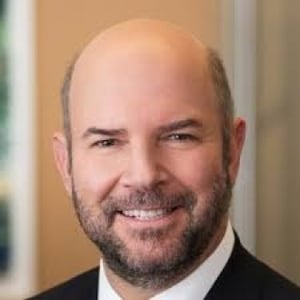
Partner, Morgan, Lewis & Bockius LLP
Philip A. Miscimarra is the former Chairman of the National Labor Relations Board (NLRB). Phil leads the firm’s NLRB special appeals practice and is co-leader of Morgan Lewis Workforce Change, which manages all employment, labor, benefits, and related issues arising from mergers, acquisitions, startups, workforce reductions, and other types of business restructuring. He represents clients on a wide range of labor and employment issues, with a focus on labor-management relations, business acquisitions and restructuring, and employment litigation. Phil is also a Senior Fellow at the University of Pennsylvania's Wharton School and the Wharton Center for Human Resources. He is admitted in Illinois only, and his practice is supervised by DC Bar members.
Phil was named Chairman of the NLRB by President Donald J. Trump on April 24, 2017, after previously serving as Acting Chairman and a Board Member. He was appointed to the NLRB by President Barack Obama on April 9, 2013, and was approved unanimously by the Senate Committee on Health, Education, Labor, and Pensions on May 22, 2013. He was confirmed by voice vote in the US Senate on July 30, 2013, and served from August 7, 2013, to December 16, 2017. Upon the completion of his term, Phil served on the NLRB longer than 26 other board members over the past 30 years.
Phil is the author or co-author of several books involving labor law issues, including The NLRB and Managerial Discretion: Subcontracting, Relocations, Closings, Sales, Layoffs, and Technological Change (2d ed. 2010) (by Miscimarra, Turner, Friedman, Callahan, Conrad, Lignowski and Scroggins); The NLRB and Secondary Boycotts (3d ed. 2002) (by Miscimarra, Berkowitz, Wiener and Ditelberg); and Government Protection of Employees Involved in Mergers and Acquisitions (1989 and 1997 supp.) (by Northrup and Miscimarra); and other publications. He has also testified on labor and employment law issues in the United States Congress.
Chambers USA named Phil one of the leading lawyers for employment law in the United States from 2004 to 2012, based on the views of clients, peers, and other industry professionals. He has been described as a "fantastic lawyer" and "prolific writer," with clients admiring his "multilayered abilities and business savvy" and his "high level of integrity."

Executive Vice President, Chief Legal Officer, Gates Corporation
Matthew R. A. Heiman joined the Company in May 2026 and has served as the Company’s Chief Legal Officer and Corporate Secretary since June 2026. As Chief Legal Officer, Mr. Heiman is responsible for all legal functions for Gates, including securities and corporate governance, M&A, litigation, commercial, regulatory, compliance, patents and trademarks, real estate, employment and labor, sustainability and environmental matters. Prior to joining Gates, Mr. Heiman held senior legal leadership roles at Waystar, where he served as Chief Legal & Administrative Officer from 2023 to 2025 and as General Counsel and Corporate Secretary from 2020 to 2023. Prior to that, he was with Johnson Controls, where he served as Vice President, Corporate Secretary, and Associate General Counsel. Mr. Heiman has been a Senior Fellow for the National Security Institute at George Mason University’s Antonin Scalia School of Law since 2018.
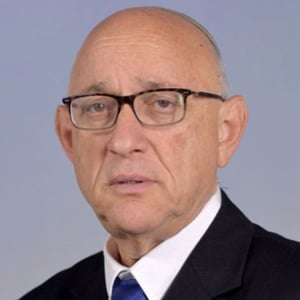
Senior Fellow, Foundation for Defense of Democracies
BG (Res.) Professor Jacob Nagel is a senior fellow at FDD and a visiting professor at the Technion Aerospace Engineering Faculty. Nagel was a career Israeli civil servant official (IDF, Defense Ministry and Prime Minister’s Office) for over 40 years.
From January 2016 to May 2017, Jacob served as the head of Israel’s National Security Council (NSC) and as Prime Minister Benjamin Netanyahu’s National Security Advisor (acting). He led the negotiations and signed the agreement for 38 billion dollar military aid to Israel from 2018 to 2027.
From May 2011 to December 2015, Jacob headed the Strategic and Defense Policy Directorate at Israel’s NSC, where he led the Israeli experts team working with the countries that negotiated the Joint Comprehensive Plan of Action (JCPOA), commonly known as the Iran nuclear deal.
From April 1996 to April 2011, Jacob held various positions at Israel’s Ministry of Defense, Directorate of Defense Research and Development, including the head of military R&D (acting), and Directorate’s Scientific Deputy, he headed the so-called “Nagel Committee,” which was responsible for Israel’s decision to develop Iron Dome as the nation’s short-range defense system.
From October 1979 to April 1996, Jacob served in several positions at the Israel Defense Forces (IDF), in the elite Israel SIGINT National Unit (known as Unit 8200).
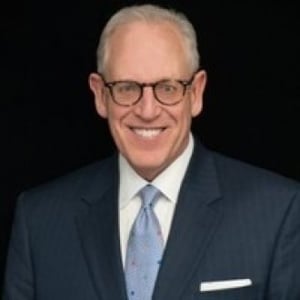
Senior Fellow, George Mason University National Security Institute
Bryan Smith is a Senior Fellow at the George Mason University National Security Institute.
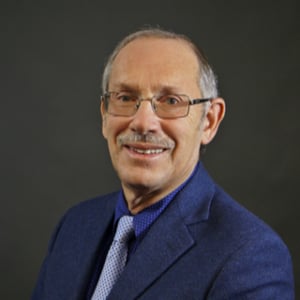
Senior Fellow, CNA
Dov Zakheim is an expert in defense strategy, programs and budgets, defense acquisition and contracting, defense-industrial collaboration, inter-agency process, Iraq, missile defense, and naval strategy, policy and organization. His research and analysis, as well as policymaking responsibilities, span the gamut of defense planning, programming and budgeting issues, wartime contracting and acquisition, and major developments in Europe, the Middle East, North Africa and East and Southeast Asia. He is also an Executive Advisor to the Chief of Naval Operations.
Previously, Zakheim was Senior Vice President of Booz Allen Hamilton, where he led the firm's support of U.S. Combatant Commanders worldwide. He also served as Under Secretary of Defense (Comptroller) and Chief Financial Officer for the Department of Defense, coordinator of DOD's civilian programs in Afghanistan, and Deputy Under Secretary of Defense for Planning and Resources in the Office of the Under Secretary of Defense (Policy). He is a member of the boards of several institutions, including the Atlantic Council, the Center for the National Interest, the Foreign Policy Research Institute and the Defense Business Board of the DOD.
Zakheim has a D.Phil. in Economics and Politics from St. Antony's College at the University of Oxford and a B.A. in Government from Columbia University. He speaks French and Hebrew.
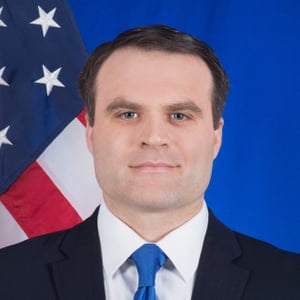
Deputy Coordinator for Countering Violent Extremism, U.S. Department of State
Christopher K. Harnisch is the Deputy Coordinator for Countering Violent Extremism. In this capacity, he is responsible for developing and implementing strategies to counter terrorist messaging and recruitment, including terrorists’ use of the Internet. He also oversees terrorist detention policy.
Prior to his appointment to the Bureau of Counterterrorism, Harnisch served as the Director for Transnational Threats and the Director for Afghanistan at the National Security Council. A Virginia native, he returned to the area following several years in Silicon Valley where he served as a Strategic Sourcing and Operations Product Development Manager at Apple. Before his time in the private sector, Harnisch worked in the public policy and defense arenas. From 2011 to 2012, he served as an Army Intelligence Officer on NATO’s counter-corruption task force in Afghanistan. Previous to that, he worked on the Critical Threats Project at the American Enterprise Institute, where he researched and wrote about al-Qa’ida’s emerging safe havens, focusing especially on those in Yemen and Somalia. He served on the staff of Vice President Dick Cheney.
Chris earned a B.A. in International Studies from Middlebury College and an MBA and M.A. in International Relations from Yale University.
He has published pieces on foreign policy in numerous publications, including The Wall Street Journal, Washington Post, and National Review Online, and he has appeared as a guest analyst on various public panels and television and radio broadcasts. Recently, he has worked on initiatives aimed at bridging the civil-military divide, including co-chairing the Veterans Summit at Yale University. He is a Term Member at the Council on Foreign Relations.
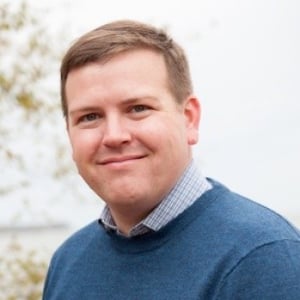
Deputy Director, Program on Extremism, George Washington University
Seamus Hughes is the Deputy Director of the Program on Extremism at George Washington University. He is an expert on terrorism, homegrown violent extremism, and countering violent extremism (CVE). Hughes has authored numerous reports for the Program including ‘ISIS in America: From Retweets to Raqqa’ and ‘The Travelers: American Jihadists in Syria and Iraq.’ He regularly provides commentary to media outlets, including the New York Times, The Washington Post, The Wall Street Journal, Los Angeles Times, The Atlantic, CNN, MSNBC, FoxNews, BBC, PBS, and CBS’ 60 Minutes. He has testified before the U.S. Congress on multiple occasions.
Hughes previously worked at the National Counterterrorism Center (NCTC), serving as a lead staffer on U.S. government efforts to implement a national CVE strategy. He regularly led engagements with Muslim American communities across the country, provided counsel to civic leaders after high-profile terror-related incidents, and met with families of individuals who joined terrorist organizations. Hughes created a groundbreaking intervention program to help steer individuals away from violence through non-law enforcement means, and worked closely with the FBI Joint Terrorism Task Force, Fusion Centers, and U.S. Attorney Offices.
Prior to NCTC, Hughes served as the Senior Counterterrorism Advisor for the U.S. Senate Homeland Security and Governmental Affairs Committee. He organized over a dozen congressional hearings on the threat of homegrown violent extremism, and led fact-finding delegations to the various European and Middle Eastern countries. He authored two reports for the Senate: “A Ticking Time Bomb: Counterterrorism Lessons from the U.S. Government’s Failure to Prevent the Fort Hood Attack” and “Zachary Chesser: A Case Study in Online Islamist Radicalization and Its Meaning for the Threat of Homegrown Terrorism.”
Hughes has authored numerous legislative bills, including sections of the 9/11 Commission Recommendations Act and the Special Agent Samuel Hicks Families of Fallen Heroes Act. He is a graduate of the University of Maryland, and a recipient of the National Security Council Outstanding Service Award and two NCTC Director’s Awards for outstanding service. He teaches classes at George Washington University and Georgetown University.
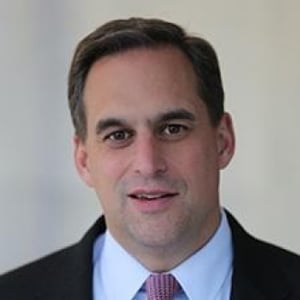
Harold Brown Chair; Director, Transnational Threats Project; and Senior Adviser, International Security Program, Center for Strategic and International Studies
Seth G. Jones holds the Harold Brown Chair, is director of the Transnational Threats Project, and is a senior adviser to the International Security Program at the Center for Strategic and International Studies (CSIS). He teaches at Johns Hopkins University’s School of Advanced International Studies (SAIS) and the Center for Homeland Defense and Security (CHDS) at the U.S. Naval Postgraduate School.
Prior to joining CSIS, Dr. Jones was the director of the International Security and Defense Policy Center at the RAND Corporation. He also served as representative for the commander, U.S. Special Operations Command, to the assistant secretary of defense for special operations. Before that, he was a plans officer and adviser to the commanding general, U.S. Special Operations Forces, in Afghanistan (Combined Forces Special Operations Component Command–Afghanistan). In 2014, Dr. Jones served on a congressionally mandated panel that reviewed the FBI’s implementation of counterterrorism recommendations contained in the 9/11 Commission Report.
Dr. Jones specializes in counterterrorism, counterinsurgency, unconventional warfare, and covert action, including a focus on al Qaeda and ISIS. He is the author of A Covert Action: Reagan, the CIA, and the Cold War Struggle in Poland (W.W. Norton, 2018), Waging Insurgent Warfare (Oxford University Press, 2016), Hunting in the Shadows: The Pursuit of al Qa'ida after 9/11 (W.W. Norton, 2012), and In the Graveyard of Empires: America’s War in Afghanistan (W.W. Norton, 2009). Dr. Jones has published articles in a range of journals, such as Foreign Affairs, Foreign Policy, and International Security, as well as newspapers and magazines like the New York Times, Washington Post, and Wall Street Journal. Dr. Jones is a graduate of Bowdoin College and received his M.A. and Ph.D. from the University of Chicago.
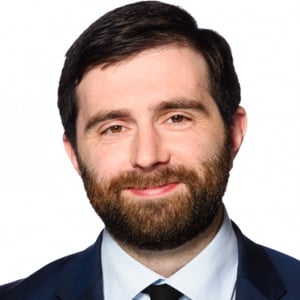
Margaret Thatcher Fellow, Margaret Thatcher Center for Freedom, The Heritage Foundation
Robin Simcox is the Margaret Thatcher Fellow at The Heritage Foundation’s Margaret Thatcher Center for Freedom, where he specializes in counter-terrorism and national security policy.
Simcox has testified before Congress on multiple occasions on issues related to ISIS, al-Qaeda and associated movements. He has also provided oral evidence to a committee of Parliament established to examine British intelligence policy.
Simcox’s commentary has been published in newspapers such as The Washington Post, The Wall Street Journal, Los Angeles Times, The (London) Telegraph, and The Guardian. It also has appeared in magazines and journals such as Foreign Affairs, Foreign Policy, The Atlantic, West Point’s CTC Sentinel, and The Weekly Standard. He regularly appears on a variety of broadcast and cable news outlets, including Fox News Channel, MSNBC, CNN, CBS, BBC, and Sky News.
Prior to arriving at Heritage in January 2016, Simcox was a research fellow at the Henry Jackson Society, a foreign policy think tank in London. While there, he authored several important works on the terrorist group al-Qaeda, including "Al-Qaeda in the United States," a 728-page monograph profiling every known court conviction in America linked to al-Qaeda.
In joining Heritage’s Thatcher Center for Freedom and assuming the fellowship that bears the name of the former British prime minister, he became part of the leading policy center in Washington dedicated to strengthening the Anglo-American “special relationship” as well as U.S. and British leadership of the broader transatlantic alliance. Established in 2005, the Thatcher Center is the only public policy center in the world dedicated to advancing the vision and ideals of Lady Thatcher, who died in 2013.
Robin received a master of science degree in U.S. foreign policy from the Institute for the Study of the Americas, University of London, and a bachelor of arts degree in international history from the University of Leeds. He studied for a year at the University of Newcastle, Australia.

Panel: Regulation of Algorithms
Adam Candeub, Gregory Dickinson, Dhruva Krishna, Christina M. Mulligan, Saurabh Vishnubhakat, Eugene Volokh
Opaque algorithms shape what news stories you see on social media, dictate how artificial intelligence...
Nuziard v. MBDA: What is the Future of Equal Protection Litigation?
Daniel Lennington, William E. Trachman
On March 5, 2024, U.S. District Court Judge Mark Pittman of the Northern District of...
Topics
Abraham Accords: Promise-Potential; Risk-Reality
The Trump Administration brokered the signing of the Abraham Accords in 2020 with the purpose...
Abraham Accords: Promise-Potential; Risk-Reality
David P. Goldman, Bernard Haykel, Brian H. Hook, Jamil N. Jaffer
As Indonesia, Somalia, Niger, and Mauritania may be next to join the Abraham Accords, what...
Talks With Authors: Classified: The Untold Story of Racial Classification in America
David Bernstein, Cory R. Liu
In his recent book, Classified: The Untold Story of Racial Classification in America, Professor...
The Original Understanding of the Indian Commerce Clause: An Update
Robert G. Natelson
The Congress shall have Power . . . To regulate Commerce with foreign Nations, and...
Litigation Update: Vitolo v. Guzman
Daniel Lennington
On May 27, 2021, the Sixth Circuit issued a decision in Vitolo v. Guzman. Over a...
The USMCA and the Rapid Response Enforcement Mechanism - Enforcing Compliance with Labor Laws through Free Trade Agreements?
Lewis Karesh, Matthew Levin, Stefan J. Marculewicz, Philip A. Miscimarra
The United States Mexico Canada Agreement (USMCA) free trade agreement went into force in July...
Iran Turns East with China Partnership: Should the West Respond?
Matthew R. A. Heiman, Jacob Nagel, Bryan Smith, Dov S. Zakheim
As the United Arab Emirates and Israel agreed to establish diplomatic ties, Iran and China’s...
ISIS Today: Prisoners, Escapees, Returnees, and Resurgent Fighters
Christopher K. Harnisch, Seamus Hughes, Seth Jones, Robin Simcox
What is the current status of ISIS worldwide? Some European countries have cancelled ISIS-travelers’ citizenship...