
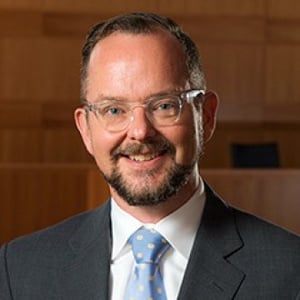
T.J. Maloney Chair in Business Law, Fordham University School of Law
Professor Griffith is an expert in corporate and financial regulatory law. He writes and speaks on corporate law, political economy, and the constitutional rights of corporations and other business associations. In addition to his academic writing, he has authored or contributed to many amicus briefs, including: Iowa v SEC, NCPPR v SEC, AFBR v SEC, and In re Tesla.

Judge, United States Court of Appeals, District of Columbia Circuit
Judge Katsas was appointed to the D.C. Circuit in December 2017. He graduated from Princeton University and Harvard Law School, where he was an executive editor on the Harvard Law Review. Between 1989 and 1992, he served as a law clerk to Judge Edward Becker on the Third Circuit, to then-Judge Clarence Thomas on the D.C. Circuit, and to Justice Thomas on the Supreme Court. Between 1992 and 2001, he was an associate and then partner in the Washington office of Jones Day, where he specialized in appellate and complex civil litigation. Between 2001 and 2009, he served in many senior positions in the Department of Justice, including as Assistant Attorney General for the Civil Division and as Acting Associate Attorney General. In 2009, he returned to Jones Day. From January to December 2017, he served as Deputy Assistant to the President and Deputy Counsel to the President.
Before joining the bench, Judge Katsas argued more than 75 appeals, including three cases in the Supreme Court, 13 cases in the D.C. Circuit, and cases in every other federal court of appeals. By appointment of the Chief Justice, he served on the Advisory Committee on Appellate Rules from 2013 to 2017. In 2016, he was elected to membership in the American Academy of Appellate Lawyers.
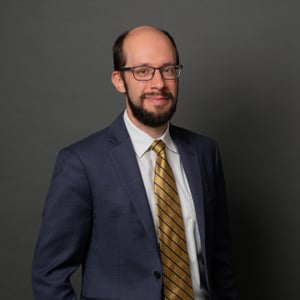
Assistant Professor of Law, Antonin Scalia Law School, George Mason University
Lael Weinberger is an assistant professor of law at George Mason University Antonin Scalia Law School. Previously, Lael clerked for Justice Neil Gorsuch on the United States Supreme Court, Judge Frank Easterbrook on the Seventh Circuit Court of Appeals, and Chief Justice Daniel Eismann on the Idaho Supreme Court. Lael also practiced law at the Washington, D.C., office of Gibson Dunn and held fellowships at Stanford and Harvard law schools. Lael earned a law degree and a Ph.D. in history, both from the University of Chicago. Lael's academic work has appeared in journals such as the University of Chicago Law Review, Notre Dame Law Review, and Constitutional Commentary, among others. He has also written widely for broader public audiences, with his writings and reviews appearing in publications including Newsweek, National Review, Claremont Review, First Things, Christianity Today, LA Review of Books, World, and the New Rambler Review.
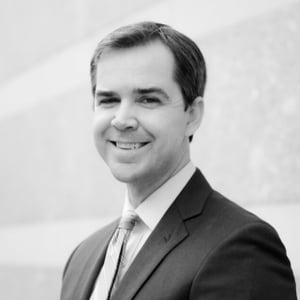
Vice President and Senior Counsel, The Becket Fund for Religious Liberty
Daniel Blomberg is vice president and senior counsel for Becket. Before joining Becket, he clerked for Chief Judge Alice M. Batchelder of the U.S. Court of Appeals for the Sixth Circuit and served as litigation counsel with the Alliance Defending Freedom. Daniel’s clients have included an international order of nuns, the world’s largest religious media organization, synagogues, members of the U.S. military, religious healthcare ministries, peaceful protestors, halfway houses, religious colleges, state legislators, homeless shelters, religious business owners, an art gallery, and churches. Daniel has represented a wide variety of faith groups, including Anglicans, Baptists, Catholics, Hindus, Hutterites, Jews, Lutherans, Mennonites, Muslims, Presbyterians, Russian Orthodox, and Sikhs. Cases on which he has served as counsel to a party include: Our Lady of Guadalupe v. Morrissey-Berru, 140 S. Ct. 2049 (2020); Roman Catholic Diocese of Brooklyn v. Cuomo, 141 S. Ct. 63 (2020); Zubik v. Burwell, 136 S. Ct. 1557 (2016); Little Sisters of the Poor v. Sebelius, 134 S. Ct. 1022 (2014); Wheaton College v. Burwell, 134 S. Ct. 2806 (2014); Fellowship of Christian Athletes v. SJUSD, 82 F.4th 664 (9th Cir. 2023) (en banc); Singh v. Berger, 56 F.4th 88 (D.C. Cir. 2022); Demkovich v. St. Andrew the Apostle Parish, 3 F.4th 968 (7th Cir. 2021) (en banc); Maxon v. Fuller Theological Seminary, 2021 WL 5882035 (9th Cir. 2021); Intervarsity Christian Fellowship/USA v. University of Iowa, 5 F.4th 855, 867 (8th Cir. 2021); Business Leaders in Christ v. University of Iowa, 991 F.3d 969 (8th Cir. 2021); Whole Woman’s Health v. Smith, 896 F.3d 362 (5th Cir. 2018); Lee v. Sixth Mount Zion Baptist Church, 903 F.3d 113 (3d Cir. 2018); Gagliardi v. TJCV, 889 F.3d 728 (11th Cir. 2018); Harvest Family Church v. FEMA, 2018 WL 386192 (5th Cir. 2018); Fratello v. Archdiocese of New York, 863 F.3d 190 (2d Cir. 2017); Eternal Word Television Network v. U.S. Dep’t of HHS, 756 F.3d 1339 (11th Cir. 2014); InterVarsity Christian Fellowship/USA v. Bd. of Governors of Wayne State Univ., 534 F. Supp. 3d 785 (E.D. Mich. 2021); and Singh v. Carter, 168 F. Supp. 3d 216 (D.D.C. 2016).
Daniel has been featured on CNN, Huffington Post Live, Fox News, EWTN Nightly News, and CBS Evening News.
He earned his J.D. from the University of South Carolina School of Law, graduating magna cum laude. While in law school, Daniel clerked for the South Carolina Attorney General’s Office, served on a South Carolina Supreme Court task force, and interned with Judge J. Michelle Childs of the Circuit Court for the Fifth Judicial Circuit as a part of the Judicial Observation and Education program. He is a Blackstone Fellow. Daniel received his undergraduate degree from Columbia International University. He and his wife have five children and too many animals.
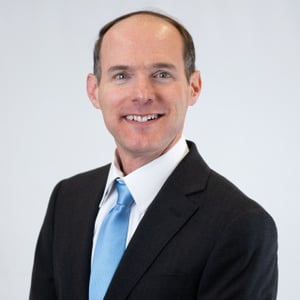
Associate Professor & Director, Constitutional Government Initiative, Wheatley Institute, Brigham Young University
James C. Phillips is the Constitutional Government Initiative Director and an associate professor at BYU’s Wheatley Institute. He is also a fellow with the UC-Berkeley School of Law’s Public Law and Policy Program and an academic affiliate with the D.C.-based law firm Schaerr|Jaffe. His scholarship has been cited by judges around the country, including at the U.S. Supreme Court, and has been covered in various media outlets, including the New York Times Magazine, USA Today, Reuters, CNN, and Fox News. He is a member of the Executive Committee of the Federalist Society's Religious Liberty Practice Group and the J. Reuben Clark Law Society Religious Liberty Committee.
Prior to joining Wheatley, Phillips was associate professor of law at Chapman University’s Fowler School of Law, where he taught Constitutional Law, Religion and the Constitution, Civil Procedure, Family Law, and Professional Responsibility and was named 1L Professor of the Year. Dr. Phillips has taught Administrative Law at BYU’s J. Reuben Clark Law School, where he also helped conceive and design the Corpus of Founding-Era American English. He was also a Non-resident Fellow with Stanford Law School’s Constitutional Law Center.
Dr. Phillips has published dozens of academic articles, primarily in law journals, but also communications, business, and history journals. His longer pieces have been published in, for example, the University of Pennsylvania Law Review, the Southern California Law Review, and the Harvard Journal of Law and Public Policy, and his shorter articles have been published in journals such as the Yale Law Journal Forum and the Duke Law Journal Online. Dr. Phillips has also written op-eds on constitutional issues for Newsweek, The Atlantic, the Los Angeles Times, the Orange County Register, Deseret News, and National Review.
Prior to his university posts, Dr. Phillips practiced law as a Constitutional Law Fellow for the Becket Fund for Religious Liberty and an associate for Kirton | McConkie. He has worked on dozens of cases at the U.S. Supreme Court, as well as cases in federal and state courts throughout the country. He is a member of the bar in Utah and D.C. He clerked for Judge Thomas B. Griffith on the U.S. Court of Appeal for the D.C. Circuit and for Justice Thomas R. Lee on the Utah Supreme Court. Dr. Phillips earned his JD, Order of the Coif, from UC-Berkeley’s School of Law, where he was a member of the California Law Review. He also has a PhD in Jurisprudence & Social Policy from UC-Berkeley, an M.A. in Mass Communication from BYU, and a B.A. in History from Arizona State University.
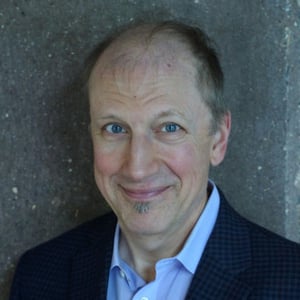
James L. Oberstar Professor of Law and Public Policy, University of St. Thomas School of Law
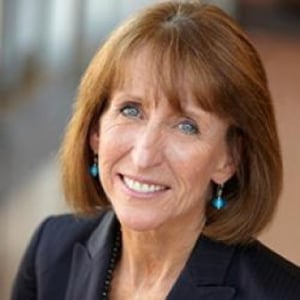
William S. Boyd Professor of Law, University of Nevada, Las Vegas, William S. Boyd School of Law
Dr. Leslie C. Griffin is the William S. Boyd Professor of Law at the University of Nevada, Las Vegas, William S. Boyd School of Law. Professor Griffin, who teaches constitutional law, is known for her interdisciplinary work in law and religion. She holds a Ph.D. in Religious Studies from Yale University and a J.D. from Stanford Law School. She is author of the Foundation Press casebook Law and Religion: Cases and Materials (5th edition, 2022) with Andrew L. Seidel. Practicing Bioethics Law (2d ed. 2021) is co-authored with Joan H. Krause, Dan K. Moore Distinguished Professor of Law at the University of North Carolina School of Law. She and University of Pennsylvania Professor Marci Hamilton published Learning Constitutional Law (Cognella Press, 2023).
She wrote the recent book chapter, Bambi Trauma—Surviving TBI Twice, in Traumatic Brain Injury—Challenges (Dr. Ioannis Mavroudis & Alin Ciobica, eds., IntechOpen, 2024), https://www.intechopen.com/online-first/1179800#. And Catholic Sexual Abuse in Louisiana is in the University of Detroit Mercy Law Review, volume 101, p. 375 (2024).
Another article is What Did Those Sixteen Justices Say?, 58 Willamette L. Rev. 163 (2022). A book chapter entitled Rewritten Opinion, Means v. United States Conference of Catholic Bishops, is in the book Feminist Judgments: Rewritten Health Law Opinions (S. Mohapatra & L. Wiley, eds., Cambridge University Press, 2022). Other recent articles include What is Ethical Discharge?, 10:3 Narrative Inquiry in Bioethics 193 (2020); What Can We Expect of Law and Religion in 2020?, 79 SMU L. Rev. F. 73 (2020); Traumatic Brain Injury: Compassionate Care, Not Clinical Nihilism, 6:2 Journal of Hospital Ethics 87 (Fall 2019) (with Carole S. Anhalt); Conquering Brain Injury, 34:5 Journal of Head Trauma Rehabilitation 366 (2019), Religious Freedom, Human Rights, and Peaceful Coexistence, 50 Loyola University Chicago Law Journal 77 (2018), Pre-or Post Mortem?, 18 Nevada Law Journal 221 (2017). Her rewritten opinion about the abortion funding case, Harris v. McRae, 448 U.S. 297 (1980), is in Feminist Judgments: Rewritten Opinions of the United States Supreme Court (L. Berger, B. Crawford & K. Stanchi, eds., Cambridge University Press, 2016).
Griffin has written numerous amicus briefs defending children's and employees' religious freedom. She blogs for Justia's Verdict column, and posts occasionally on Petrie-Flom’s health law blog.
Other writings include Marriage Rights and Religious Exemptions in the United States, Oxford Handbooks Online (2017), Beyond the Basketball Court: How Brittney Griner’s In My Skin Illustrates Title IX’s Failure to Protect LGBT Athletes at Religious Institutions, 34 Law and Inequality 489 (2016), A Word of Warning from A Woman: Arbitrary, Categorical, and Hidden Religious Exemptions Threaten LGBT Rights, 7 Ala. C.R. & C.L.L. Rev. 97 (2015), and The Catholic Bishops vs. the Contraceptive Mandate, Religions 2015, 6, 1411–1432.
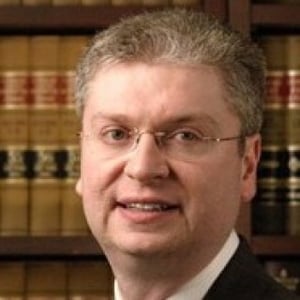
Associate Vice President & Associate Legal Director, Americans United for Separation of Church and State
Alex Luchenitser is the Associate Vice President & Associate Legal Director at Americans United for Separation of Church and State.
Alex has litigated church-state cases throughout the country for Americans United since January 2001. He has led lawsuits challenging religious proselytization of students in public schools, public funding of religious institutions, discriminatory governmental prayer practices, and government-sponsored religious displays. His successful cases include:
Alex has also authored and edited numerous friend-of-the-court briefs filed on behalf of Americans United. After the Covid-19 pandemic began, Alex led Americans United’s efforts to fight lawsuits that sought religious exemptions from public-health orders, filing fifty friend-of-the-court briefs in such cases around the country, including six in the U.S. Supreme Court.
Alex was born in Kyiv, Ukraine, in 1969 and immigrated to the United States in 1977. He received his bachelor’s degree magna cum laude in government and economics from Harvard University in 1991, and he received his Juris Doctor with distinction from Stanford Law School in 1994. After finishing law school, Alex served two one-year judicial clerkships, with Justice Warren W. Matthews Jr. of the Alaska Supreme Court and U.S. Magistrate Judge Wayne D. Brazil of the U.S. District Court for the Northern District of California. Alex then spent four years in private practice in Northern California, participating in the prosecution of class actions on behalf of investors, consumers, and trust beneficiaries.
Alex has spoken about church-state issues in many television and radio appearances and public presentations and has been quoted in numerous major newspapers. His published articles include:
Alex is an active member of the District of Columbia Bar, is an inactive member of the State Bar of California, and has been admitted to practice before the U.S. Supreme Court; the U.S. Courts of Appeals for the First, Second, Third, Fourth, Fifth, Sixth, Seventh, Eighth, Ninth, Tenth, Eleventh, Federal, and District of Columbia Circuits; and the U.S. District Courts for the District of Columbia, the Northern District of California, the District of Colorado, the Eastern District of Michigan, and the Eastern District of Wisconsin.
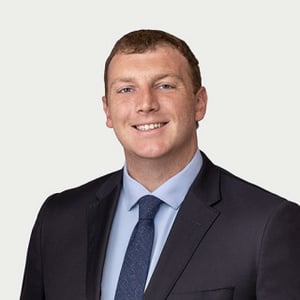
Associate Attorney, Gibson, Dunn & Crutcher LLP
Branton Nestor is an associate in the Orange County office of Gibson Dunn. He practices in the firm’s Litigation Department and is a member of the firm’s Appellate and Constitutional Law Practice Group.
Branton has represented clients in appellate, regulatory, and complex litigation matters across various industries. His experience spans a wide range of subject matters, including constitutional law and administrative law.
He clerked for Judge Diarmuid F. O’Scannlain on the U.S. Court of Appeals for the Ninth Circuit, and Judge Julius N. Richardson on the U.S. Court of Appeals for the Fourth Circuit. He graduated from Harvard Law School in 2019, and Westmont College in 2016. His scholarship has been cited at the U.S. Supreme Court.
Branton is a member of the California bar.
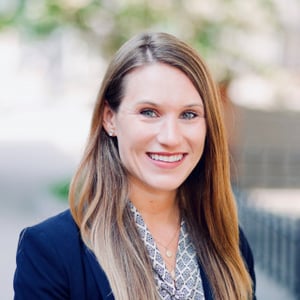
Counsel, Becket Fund for Religious Liberty
Amanda Salz is counsel at the Becket Fund for Religious Liberty, where her practice focuses on First Amendment litigation at both the trial and appellate levels. She is also a member of the Federalist Society’s Religious Liberties Executive Committee.
Before joining Becket, Amanda worked as an associate at Morgan, Lewis & Bockius LLP. As a member of the firm’s appellate group, Amanda litigated many cases involving constitutional and administrative issues. In addition to her experience in private practice, Amanda clerked for the Honorable Andrew S. Oldham of the U.S. Court of Appeals for the Fifth Circuit and the Honorable Reed C. O’Connor of the U.S. District Court for the Northern District of Texas.
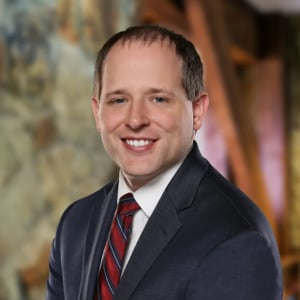
Counsel, First Liberty Institute
In February 2022, Ryan Gardner joined the First Liberty Institute as Counsel after spending over four years at large Dallas law firm handling complex commercial disputes at both before both trial and appellate courts. Before his time in private practice, Ryan worked in Washington D.C. as a law clerk to the Honorable Janice Rogers Brown of the U.S. Court of Appeals for the D.C. Circuit. Ryan graduated as Valedictorian from the Pepperdine University School of Law, where he served as the Lead Articles Editor for the Pepperdine Law Review and the President of the Pepperdine chapter of the Federalist Society. While in law school, Ryan also externed at the U.S. Court of Appeals for the Ninth Circuit for the Honorable Sandra Ikuta and worked in Pepperdine’s Ninth Circuit Clinic. Ryan received his bachelor’s degree in Criminal Justice with a minor in Psychology from Harding University, where he graduated summa cum laude. Ryan is a member of the Texas State Bar and is admitted to practice in various federal district and appellate courts.
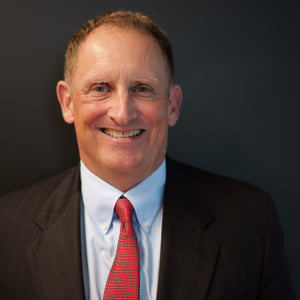
WFFC Distinguished Chair, Spring Arbor University; Counselor of the Ministry & President Emeritus, Salt & Light Global; Distinguished Professor Emeritus, Western Michigan University Cooley Law School
Following distinguished service as a federal judge and tenured university professor, William Wagner dedicated his life to full-time ministry. Now holding the rank of Distinguished Professor Emeritus, he is the Founder and President Emeritus of Salt & Light Global. He currently holds the WFFC Distinguished Chair for Faith & Freedom at Spring Arbor University.
Seasoning the public dialog with Truth, Wagner fights to protect free expression, religious conscience, and good governance under the rule of law. A frequent speaker at world conferences, his writing is published in a number of articles, books, and other publications, including an Amazon national best seller (#1in its category). As lead amicus counsel in many matters before the United States Supreme Court, he authored briefs on behalf of various organizations. He also authored written testimony, evidence, and briefs in such forums as the Swedish Supreme Court, the U.S. Congress, and the U.K. Parliament. He has further addressed many executive, legislative, parliamentary, and judicial audiences throughout the world, and presented at various diplomatic forums including the United Nations Human Rights Council in Geneva.
As a Federal Judge, Wagner adjudicated cases arising under the Constitution and laws of the United States. Prior to his appointment on the federal bench, he served as the chief American diplomat for the Department of Justice at an American Embassy in Africa. There he led a diplomatic mission charged with strengthening good governance and the rule of law.
During his career in public service, he provided international assistance to the justice sector institutions of numerous countries on five continents. Professor Wagner also served as Senior Assistant United States Attorney, litigating hundreds of federal cases and serving as chief of appellate litigation for the Office of the United States Attorney. Professor Wagner served as legal counsel in the United States Senate and as chief counsel to the Senate Judiciary Committee of the Michigan legislature. Most recently he served as Senior Advisor for Global Criminal Justice at the Department of State.
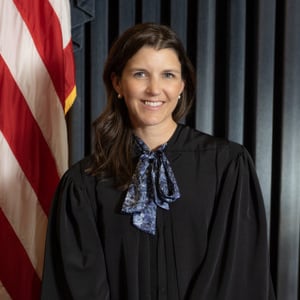
Judge, United States Court of Appeals, Sixth Circuit
The Honorable Whitney Hermandorfer is a judge on the United States Court of Appeals for the Sixth Circuit. She was nominated to the court by President Donald Trump (R) on May 12, 2025, and confirmed by the United States Senate on July 14, 2025.
Prior to her appointment, she worked in the Office of the Tennessee Attorney General as Director of the Strategic Litigation Unit. In that role, Whitney focused on leading constitutional, statutory, and administrative-law challenges to federal agency action, as well as on defending the State in complex matters at the trial and appellate level.
Whitney previously worked at Williams & Connolly LLP in Washington, DC, where she focused on appellate and administrative-law litigation. Whitney clerked for Justice Samuel Alito in the OT 2018 Supreme Court term and for Justice Amy Coney Barrett during her inaugural OT 2020 term. Prior to that, Whitney clerked for then-Judge Kavanaugh on the D.C. Circuit, and Judge Richard Leon on the U.S. District Court for D.C. Whitney is a graduate of Princeton University and George Washington University Law School.
Vice President and Senior Counsel, The Becket Fund for Religious Liberty
Lori Windham is vice president and senior counsel at Becket, where she has represented clients on cutting-edge religious freedom issues since 2005. She has represented parties before the Supreme Court, arguing Becket’s unanimous victory on behalf of foster families in Fulton v. Philadelphia, as well as working with the Becket team on its Supreme Court victories in Hosanna-Tabor, Hobby Lobby, and Little Sisters of the Poor. She won a victory for the world’s largest religious media network in EWTN v. Azar, staving off millions of dollars in government fines under unlawful the HHS mandate. She has won more than a dozen victories in federal appellate courts, including successful defense of cities and school districts sued for accommodating religion, victories for houses of worship facing discrimination in the land use process, and overturning a multimillion-dollar judgment against a major evangelical ministry. She recently won a first-in-the-nation injunction for an adoption agency threatened with shutdown for its religious beliefs.
Recognized in Washington as an expert on religious freedom issues, Lori has testified in Congressional oversight hearings before the U.S. House of Representatives Judiciary Committee and before the U.S. Commission on Civil Rights. Outside Washington, Lori is sought-after speaker on First Amendment law, including appearances at Yale Law School, Harvard Law School, Stanford Law School, Georgetown University Law Center, Central European University, and many others.
In addition to these venues, Lori also defends her clients in the media, including television appearances on CBS This Morning, Hardball, CNN Tonight, On the Record, America’s Newsroom, Opinion Journal, and many others. Her work has been covered by the New York Times, Wall Street Journal, Washington Post, and dozens of other papers. She is also a regular guest on radio, with appearances on shows ranging from Sean Hannity to NPR.
Lori has successfully represented a wide array of clients, including a Santeria priest prohibited from making animal sacrifices, synagogues prohibited from building on their own land, and religious student organizations penalized for their religious speech. One of her most challenging cases involved travel to a remote farming community to ensure that members of the local Amish community were not jailed for using their traditional building methods.
Lori is a graduate of Harvard Law School and earned her B.A. summa cum laude at Abilene Christian University. She has served on the Board of Visitors of Abilene Christian University and received the ACU Young Alumnus of the Year award for her work at Becket. She sits on the board of Dominion Christian School and the visiting committee of the Fund for American Studies’ Summer Law Fellowship.
John P. Murphy Foundation Professor of Law and Associate Dean for External Engagement, University of Notre Dame Law School
Nicole Stelle Garnett is the John P. Murphy Foundation Professor of Law at Notre Dame Law School, where she also serves as the Associate Dean for External Engagement and directs the Notre Dame Education Law Project. Her teaching and research focus on education law and policy, religious liberty, and topics related to property law (especially land use and urban development policies). In addition to dozens of articles on these subjects, she is the author of Lost Classroom, Lost Community: Catholic Schools' Importance in Urban America (University of Chicago Press, 2014) and Ordering the City: Land Use, Policing and the Restoration of Urban America (Yale University Press, 2009).
Garnett received her B.A. with distinction in Political Science from Stanford University and her J.D. from Yale Law School. After law school, she clerked for the Honorable Morris S. Arnold of the United States Court of Appeals for the Eighth Circuit and for Associate Justice Clarence Thomas of the Supreme Court of the United States. Before joining the law school faculty in 1999, she worked for two years as a staff attorney at the Institute for Justice, a non-profit public-interest law firm in Washington, D.C., where she helped to defend the constitutionality of the nation's first private-school-choice programs.
At Notre Dame, Garnett is a faculty fellow in the Institute for Educational Initiatives, Kellogg Institute for International Studies, Fitzgerald Institute for Real Estate, and deNicola Center for Ethics and Culture. She also is an elected member of the American Law Institute and a Senior Fellow at the Manhattan Institute.
Judge, United States Court of Appeals, Sixth Circuit
Raymond M. Kethledge is a Circuit Judge on the United States Court of Appeals for the Sixth Circuit, to which he was appointed on July 8, 2008. He received his BA in history from the University of Michigan in 1989, and his JD from the University of Michigan Law School in 1993. He clerked for Justice Anthony Kennedy of the United States Supreme Court and Judge Ralph B. Guy, Jr. of the United States Court of Appeals for the Sixth Circuit. He also worked in the United States Senate and later, with two partners, founded a boutique litigation firm, now known as Bush Seyferth PLLC, in Troy, Michigan. His practice there included a broad mix of trial-court, appellate, and class-action litigation.

William Rand Kenan, Jr. Distinguished Professor of Law, University of North Carolina School of Law
William (Bill) Marshall joined the Carolina Law faculty in 2001 and serves as the William R. Kenan Jr. Distinguished Professor of Law. His teaching and research interests include the first amendment, presidential power, election law, federal jurisdiction, federal judicial selection, civil procedure, and media law. Marshall is the author of numerous book chapters, articles, and essays on free speech, separation of powers, the Establishment Clause, and the Free Exercise Clause. His work has appeared in the Harvard Law Review, the Yale Law Journal, the Supreme Court Review, and the University of Chicago Law Review, among others.
Marshall received his law degree from the University of Chicago and his undergraduate degree from the University of Pennsylvania. Marshall was Deputy Counsel to the President and Deputy Assistant to the President during the Clinton Administration and also served as the Solicitor General for the State of Ohio. He has taught at the Northwestern, Boston University, Vanderbilt, Ohio State, DePaul, Case Western Reserve, William and Mary, and the University Connecticut law schools. Prior to beginning his teaching career, Marshall was a Special Assistant Attorney General for the State of Minnesota.
Partner, Clement & Murphy, PLLC
Erin Murphy is founding partner of Clement & Murphy, PLLC. She is widely recognized as one of the nation’s leading Supreme Court and appellate advocates. She has argued dozens of cases in appellate and trial courts throughout the country, including the Supreme Court and nearly all of the federal courts of appeals. Erin has long been ranked by Chambers & Partners rankings as a leading appellate practitioner, and the National Law Journal has named her one of the nation’s “Outstanding Women Lawyers.” Erin also has an active pro bono practice, through which she has successfully represented many religious organizations and adherents, criminal defendants, asylum applicants, adoptive parents, and more.
Erin is an adjunct professor at her alma mater the Georgetown University Law Center, a member and former officer of the Edward Coke Appellate Inn of Court, and a frequent speaker on topics relating to the Supreme Court and appellate advocacy. In her spare time, Erin serves on the board of directors of Street Law.
R. B. Price and Isabelle Wade & Paul C. Lyda Professor Emeritus of Law, University of Missouri School of Law
Carl H. Esbeck is R.B. Price Professor and Isabelle Wade & Paul C. Lyda Professor of Law emeritus at the University of Missouri. After attending Cornell University School of Law where he served as an editor on the Cornell Law Review, he held a judicial clerkship with the Honorable Howard C. Bratton, chief judge of the U.S. District Court in New Mexico.
Professor Esbeck publishes widely in the area of religious liberty and church-state relations. He is recognized as the progenitor of "Charitable Choice," an integral part of the 1996 Federal Welfare Reform Act, later made a part of the faith-based initiative and equal-treatment regulations under presidents George W. Bush and Barack Obama. In addition, he has taken the lead in recognizing that the modern Supreme Court has applied the Establishment Clause not as a personal right, but as a structural limit on the government's authority in disputes involving church governance. While on leave from 1999 to 2002, Professor Esbeck directed the Center for Law & Religious Freedom (CLRF) and later served as Senior Counsel to the Deputy Attorney General at the U.S. Department of Justice. While directing the CLRF, Professor Esbeck was a central part of the congressional advocacy behind the Religious Land Use and Institutionalized Persons Act of 2000 (RLUIPA). While at the Department of Justice one of his duties was to direct a task force to remove barriers to the equal-treatment of faith-based organizations applying for social service grants. He is the author of Disestablishment and Religious Dissent: Church-State Relations in the New American States, 1776 - 1833 (U. of MO Press, 2019).
Associate General Counsel, Equal Employment Opportunity Commission
Jennifer Goldstein is the Associate General Counsel at the Equal Employment Opportunity Commission where she leads the Office of General Counsel’s Appellate Litigation Division. In that role, she oversees the filing of Commission party and amicus briefs in the U.S. Courts of Appeals on a range of issues arising under the federal anti-discrimination statutes, including religious discrimination. Prior to her tenure with the EEOC, Ms. Goldstein was a law clerk to Judge Stephanie K. Seymour of the U.S. Court of Appeals for the Tenth Circuit. Ms. Goldstein is a graduate of the University of Chicago Law School.
Principal, Sharon Fast Gustafson, Attorney at Law, PLC
SHARON FAST GUSTAFSON is the immediate past General Counsel of the U.S. Equal Employment Opportunity Commission (EEOC), where she enforced Title VII of the Civil Rights Act of 1964, the Americans with Disabilities Act, and the Age Discrimination in Employment Act.
Ms. Gustafson graduated with honors from Georgetown Law Center in 1991 and has concentrated her practice in employment law. She worked for four years in the labor and employment law group at Jones, Day in Washington, D.C. Since that time, she has had a broad-based solo practice advising and representing employers and employees in handling all aspects of the employment relationship, in compliance with federal and state workplace laws, and in designing and implementing sound employment policies and practices.
Ms. Gustafson is an experienced litigator in federal and state courts; before administrative agencies, including the EEOC, state and local civil rights offices, and the Department of Labor (DOL) Wage and Hour Division; and in mediation and arbitration. She is admitted to practice in state and federal courts in Virginia, Maryland, and the District of Columbia, and in the United States Supreme Court.
Ms. Gustafson successfully litigated a pregnancy discrimination case, Young v. UPS, 575 U.S. 206 (2015), from EEOC intake to a successful outcome at the U.S. Supreme Court. In 2016, she received the Metropolitan Washington Employment Lawyers Association’s “Lawyer of the Year” award “in recognition of outstanding dedication to Civil Rights, Equality, and Justice.”
Ms. Gustafson represents both employers and employees in matters relating to employment law.

Robert E. Scott Distinguished Professor of Law Emeritus, University of Virginia School of Law; Alice McKean Young Regents Chair in Law Emeritus, University of Texas
Douglas Laycock is perhaps the nation’s leading authority on the law of religious liberty and also on the law of remedies. He has taught and written about these topics for more than four decades at the University of Chicago, the University of Texas, the University of Michigan and the University of Virginia. He retired from teaching at UVA Law School in May 2023.
Laycock has testified frequently before Congress and has argued many cases in the courts, including the U.S. Supreme Court, where he has served as lead counsel in six cases and has also filed influential amicus briefs. He is the author (co-author in the most recent edition) of the leading casebook Modern American Remedies, the award-winning monograph The Death of the Irreparable Injury Rule and many articles in leading law reviews. He co-edited a collection of essays, Same-Sex Marriage and Religious Liberty.
His many writings on religious liberty have been republished in a five-volume collection:
Laycock resigned from the council and as first vice president of the American Law Institute to become co-reporter for the Restatement (Third) of Torts: Remedies. He is a fellow of the American Academy of Arts and Sciences. He earned his B.A. from Michigan State University and his J.D. from the University of Chicago.

Church Autonomy in the Modern Era
CLE credit for this event is available at On-Demand CLE. The First Amendment’s "church autonomy" doctrine...
TikTok and the Constitution: Who Has Free Speech Rights?
Sean J. Griffith, Gregory G. Katsas, Lael Weinberger
CLE credit for this event is available at On-Demand CLE. TikTok Inc. v. Garland has reignited...
Litigation Update: Legal Developments Surrounding Tithing and Religious Donations
Daniel Blomberg, James C. Phillips
In recent years, a flurry of lawsuits has been launched nationwide against religious organizations, raising...
Topics
The Ministerial Exception’s Unrealized Promise of Early and Straightforward Resolution of Church Autonomy Matters
The ministerial exception in employment cases is a subpart of the church autonomy doctrine. The...
The Roots, Applications, and Trajectory of the Church Autonomy Doctrine
Thomas C. Berg, Leslie C. Griffin, Alex J. Luchenitser, Branton J. Nestor, Amanda Salz
The First Amendment’s Religion Clauses guarantee religious entities the freedom to make certain internal governance...
Litigation Update: Bethesda University v. Cho
Ryan Gardner, William Robert Wagner
Bethesda University, a private Christian university founded around Pentecostal theology, faced an internal leadership dispute,...
Litigation Update: Roman Catholic Diocese of Albany v. Vullo
Whitney D. Hermandorfer, Lori Windham
In 2017, New York passed a law requiring employers to cover abortions in their health...
Religious Liberty and Education: Kennedy, Carson, and Parental Rights
Nicole Stelle Garnett, Raymond Kethledge, William P. Marshall, Erin E. Murphy
This panel discussion will examine public and private education, with a focus on the relationship—and...
Suing Religious Employers: The Extent of Exemptions in Title VII
Carl H. Esbeck, Jennifer Goldstein, Sharon Fast Gustafson
Religious employers are exempt under §§ 702(a) and 703(e)(1), 42 U.S.C.2000e—1(a) and 2000e—2(e)(1), when sued...
Hosanna-Tabor v. EEOC [SCOTUSbrief]
Douglas Laycock
When an elementary school teacher named Cheryl Perich collapsed during a school field trip, a...