
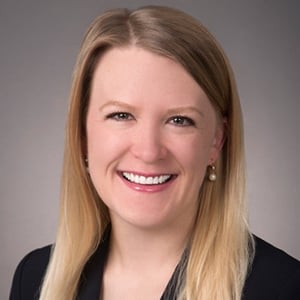
Counsel, U.S. Chamber Litigation Center
Mariel Brookins attended Wheaton College where she studied economics and theology. After graduation, she worked at PwC as a tax CPA. She attended the University of Michigan Law School. After law school, Mariel clerked for Judge Barrett on the Seventh Circuit and Judge Newsom on the Eleventh Circuit. She currently practices appellate litigation in Washington, D.C.
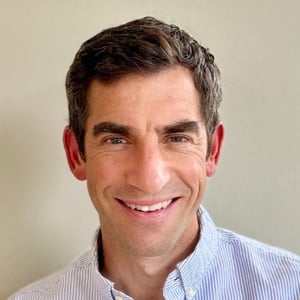
Litigation Senior Corporate Counsel, Microsoft
Benjamin Diggs is a Litigation Senior Corporate Counsel at Microsoft based in Redmond, Washington.
Previously, he was an Attorney at Hogan Lovells and also held positions at Heller Ehrman, U.S. Department of Justice, California Attorney Group, Athens College, Hellenic American Educational Foundation.
Benjamin received a Doctor of Law degree from Stanford University Law School.
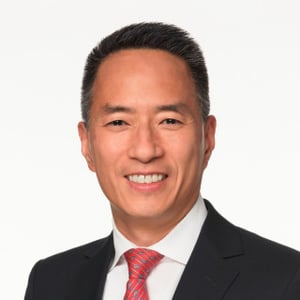
Chief Legal Officer, Cognizant
John Kim has held the title of Chief Legal Officer, Chief Administrative Officer and Corporate Secretary since February 2024. This title change was made to better reflect his responsibilities after previously serving as our Executive Vice President, General Counsel, Chief Corporate Affairs Officer and Secretary beginning March 2021. In this role, he leads Cognizant’s legal, company secretary, compliance, corporate security, regulatory, ESG, global real estate, procurement, contract lifecycle risk management and strategic negotiation functions.
John joined Cognizant in November 2019 as Senior Vice President and Deputy General Counsel, Global Commercial Contracts. Previously, he served as Global Head of Big Deals at Capgemini, U.S. Counsel for WNS Global Services and General Counsel for Travelport, a leading travel technology company, as well as a number of technology service companies.
John holds a bachelor’s degree in English literature from Columbia University. He obtained his law degree from Cornell Law School, where he was a member of the Cornell Law Review.
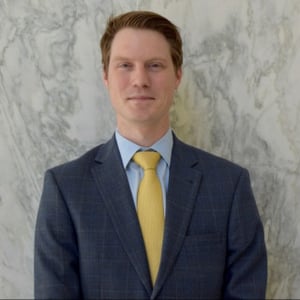
Executive Director of Policy, U.S. Chamber of Commerce Technology Engagement Center
Michael Richards is the Executive Director of Policy at the U.S. Chamber of Commerce Technology Engagement Center (C_TEC), where he leads the Chamber’s work on artificial intelligence and IT modernization. His portfolio focuses on federal and state policies related to AI, facial recognition, and emerging technologies that impact American businesses. He also manages the AI Policy Working Group, a coalition of more than 100 companies and trade associations, and played a key role in developing the Chamber’s AI policy principles.
Prior to joining the Chamber, Michael served as Deputy Chief of Staff and Legislative Director for Representatives Scott Franklin (FL-15) and Pete Olson (TX-22). In these roles, he led legislative strategy, staffed the House AI Caucus and Victims’ Rights Caucus, and handled the Communications & Technology portfolio on the House Energy and Commerce Committee.
Michael holds a Master of Public Policy from the Pepperdine School of Public Policy and a Bachelor’s degree from Texas State University.
Associate General Counsel, OpenAI
Michael Trinh is currently Associate General Counsel at OpenAI working on litigation and regulatory matters. He was formerly Head of Litigation Advance at Google where he led a team handling a broad portfolio of litigation strategy, research, amici briefs, and proactive/enforcement litigation across the company’s product areas.
In prior roles over 14 years at Google, Mike managed a group defending patent litigation worldwide, and also served as product counsel at Google X for emerging ‘moonshots’ (innovation projects primarily in developing economies). He guided experimental aviation projects as they evolved from research concept towards market introduction, handling the legal/regulatory issues arising from high altitude balloon-mounted telecommunication networks, drone delivery of burritos, kite-generated electricity, and cargo airships. Before this science fiction, he was Litigation Counsel at Google, managing a team handling a fast-growing docket of 100+ patent litigation cases in courts worldwide.
Previously, he was a technology/IP litigation associate at Orrick, Herrington and Sutcliffe in San Francisco. He also handled national security issues while representing, pro bono, Guantanamo Bay detainees challenging their indefinite incarceration without ever being charged. Mike graduated from the Georgetown University Law Center (2005) and the University of North Carolina at Chapel Hill (2002, B.S. Comp Sci). While he grew up in Raleigh, NC, he now lives in the San Francisco Bay Area with his wife and a string cheese-seeking dog (who was once featured in the Financial Times).
Senior Vice President, Strategic Initiatives & Special Counsel to the President, Alliance Defending Freedom
Ryan Bangert serves as senior vice president for strategic initiatives and special counsel to the president at Alliance Defending Freedom. He oversees ADF’s Blackstone Legal Fellowship and Research & Innovation Team. He also advises executive leadership on strategic initiatives.
Before joining ADF, Bangert served as deputy first assistant attorney general and deputy for legal counsel in the office of the Texas attorney general, and as deputy for civil litigation for Missouri Attorney General Josh Hawley. Prior to his government service, Bangert was a litigation partner at Baker Botts L.L.P., where he was a member of the firm’s commercial litigation and appellate practice sections.
Bangert has been published at First Things, Civitas Outlook, Law & Liberty, National Review, Daily Wire, The Hill, Washington Examiner, The Federalist, Fox News, and the American Reformer. He speaks nationally on constitutional, cultural, and religious liberty issues. He also serves as Visiting Faculty in Law at the University of Austin.
He earned his J.D. from Southern Methodist University, where he was a Hatton Sumners scholar and graduated first in his class. Following law school, he clerked for the Honorable Patrick E. Higginbotham on the Fifth Circuit Court of Appeals.
Head of Tech & Innovation, Centre for Policy Studies
Matthew Feeney is Head of Tech & Innovation at Centre for Policy Studies. Before joining CPS, Matthew was the director of Cato Institute’s Project on Emerging Technologies. His writing has appeared in The New York Times, The Washington Post, City A.M., and others. He received both his BA and MA in philosophy from the University of Reading.
Senior Fellow, Technology Policy, Cato Institute
Jennifer’s research focuses on the intersection of emerging technology and law with a particular interest in the interactions between technology and the administrative state. Her work covers topics including judicial deference, liability protection for Internet platforms, autonomous vehicles and other disruptive transportation technologies, the regulation of data privacy, and the benefits of technology and innovation. Her work has appeared in USA Today, the Chicago Tribune, the New York Daily News, the Sacramento Bee, the Washington Times, Real Clear Policy, and U.S. News and World Report. Jennifer has a JD from the University of Alabama School of Law and a BA in political science at Wellesley College.

Judge, United States Court of Appeals, Sixth Circuit
Amul R. Thapar serves as a judge on the United States Court of Appeals for the Sixth Circuit. His judicial career began in 2007 when President George W. Bush nominated him to serve on the Eastern District of Kentucky, making him the first South Asian Article III judge in American history. In 2017, he became President Donald J. Trump’s first appellate court nominee.
Before joining the bench, Judge Thapar served as the United States Attorney for the Eastern District of Kentucky. While United States Attorney, Judge Thapar worked on the Attorney General’s Advisory Committee (“AGAC”) and chaired the AGAC’s Controlled Substances and Asset Forfeiture subcommittee. He also served on the Terrorism and National Security subcommittee, the Violent Crime subcommittee, and the Child Exploitation working group.
Judge Thapar has worked in private practice, at Williams & Connolly in Washington, D.C., and Squire, Sanders & Dempsey in Cincinnati, Ohio. He also served as an Assistant United States Attorney in both the Southern District of Ohio and the District of Columbia.
Judge Thapar received his undergraduate degree from Boston College and his law degree from the University of California, Berkeley. After graduating, Judge Thapar worked as a law clerk to the Honorable S. Arthur Spiegel of the United States District Court for the Southern District of Ohio, and the Honorable Nathaniel R. Jones of the United States Court of Appeals for the Sixth Circuit.
Judge Thapar has also published in the Yale Law Journal, Michigan Law Review, and Catholic University Law Review. He teaches courses on originalism, the Federalists and Anti-Federalists, and legal writing at Notre Dame Law School, the University of Virginia School of Law, and Vanderbilt Law School.
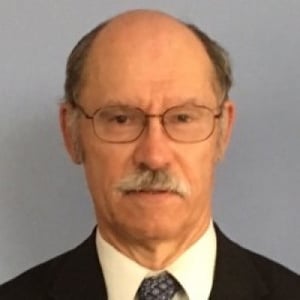
Professorial Lecturer in Law, George Washington University Law School
Theodore C. (Ted) Hirt was an attorney in the Department of Justice's Civil Division from August 1979 to March 2016. He was in its Federal Programs Branch from 1979 to 2008 (trial attorney, senior trial counsel, assistant director), and then in its Office of Immigration Litigation from 2008 to 2016 (trial attorney and senior litigation counsel). Among his responsibilities (September 2001 to March 2016) was being an advisor to the Assistant Attorneys General for the Civil Division, who serve ex officio on the Civil Rules Advisory Committee. Mr. Hirt’s areas of specialization include First Amendment issues, internet and telecommunications law, and electronic discovery. From 1976 to 1979, he was an associate at Fried, Frank, Harris, Shriver & Kampelman. From 1975 to 1976 he was an attorney in the Prehearing Division of the Michigan Court of Appeals.
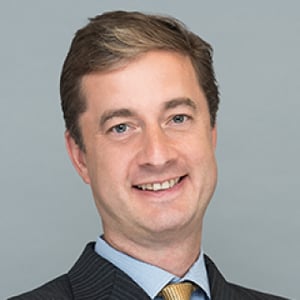
Partner, Simpson Thacher
Based in Washington, D.C. office, David Blass is a Partner in the Firm’s Investment Funds Practice. David is a leading regulatory lawyer in the funds industry and has advised on matters involving innovative registered funds products, Investment Advisers Act compliance, SEC examination and enforcement matters, and broker-dealer regulatory compliance. He is uniquely qualified to provide strategic and regulatory advice on matters involving asset management firms and broker-dealers.
David has extensive knowledge of the regulatory requirements of the asset management industry having served as General Counsel of the Investment Company Institute, the trade association for registered investment funds. He also held senior roles for over a decade at the U.S. Securities and Exchange Commission, most recently as Chief Counsel and Associate Director in the Division of Trading and Markets, where he oversaw broker-dealer regulation and large aspects of FINRA’s regulatory program. David was the Associate General Counsel for the SEC where he was responsible for Dodd-Frank Act implementation, among many other programmatic areas. He also held a senior role in the SEC’s Division of Investment Management, leading the office regulating registered investment advisers, including advisers to private funds.
Chambers Global reports that clients say he is an “excellent regulatory lawyer” who is both “very knowledgeable and easy to work with.” David was notably named “Independent Counsel of the Year” by Fund Intelligence’s Mutual Fund Industry & ETF Awards in 2021.

CEO, Institutional Limited Partners Association
As Acting CEO for the Institutional Limited Partners Association (ILPA), Jennifer Choi directs the association's engagement with external industry stakeholders to inform and enhance ILPA's education, research, membership and advocacy platforms. Ms. Choi also leads the implementation of ILPA's responses to emerging issues impacting the asset class, including efforts to establish and promote industry best practices.
Prior to joining the ILPA, Ms. Choi served as Vice President of Industry and External Affairs for the Emerging Markets Private Equity Association (EMPEA), where she led the association's member and industry engagement activities, including efforts to encourage policy frameworks that support the growth of the asset class. As EMPEA's Research Director, she built the industry's first global database of private equity activity in the emerging markets. A frequent speaker and commentator on the industry, Ms. Choi also oversaw the association's media communications and global institutional partnerships. Previously, Ms. Choi was a consultant with Boston-based Stax Inc., leading due diligence engagements and providing advisory services for the U.S. private equity and venture capital industry.
Jennifer holds a Masters in Law and Diplomacy from the Fletcher School at Tufts University and a B.A. summa cum laude in Economics and Political Science from Augustana College.

Managing Director and Associate General Counsel, Head of Asset Management Group, Securities Industry and Financial Markets Association (SIFMA)
Ms. Keljo is Managing Director, Associate General Counsel and Head of Asset Management Group for SIFMA, where she serves as counsel and staff for many of AMG’s workstreams. In particular, Ms. Keljo focuses on systemic risk & prudential regulation for asset managers, fixed income market structure, and ETF regulation. She also focuses on the U.S. impact of many European regulations, including the cross-border implications of Brexit, MiFID II, PRIIPs, and sustainable finance/ESG initiatives.
Ms. Keljo joined SIFMA AMG in October 2014 from Squire Patton Boggs, where she advised financial institutions, corporations, and asset managers on a wide range of financial services legislative and regulatory developments.
Ms. Keljo has extensive experience representing asset managers before Congress, the Commodity Futures Trading Commission (CFTC), the Securities and Exchange Commission (SEC), the U.S. Treasury Department, and other regulatory agencies that promulgate and implement financial regulation. Ms. Keljo began her career working for a major political party as a campaign manager based primarily in northwest Pennsylvania.
Ms. Keljo is a graduate of the University of Michigan Law School and Mercyhurst College.
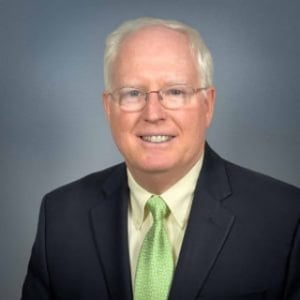
Senior Litigation Counsel, New Civil Liberties Alliance (NCLA)
Russ Ryan is a nationally recognized attorney and thought leader with particular interest in the regulatory and enforcement apparatus of the Securities and Exchange Commission (SEC) and other quasi-governmental regulators overseen by the SEC, including the Public Company Accounting Oversight Board (PCAOB), the Financial Industry Regulatory Authority (FINRA), and the various securities industry self-regulatory organizations (SROs). He has decades of experience defending private citizens and businesses caught in the crosshairs of these and other financial regulators.
Russ joined NCLA from the law firm King & Spalding, where he was a partner for 15 years. He left the firm from 2015 to 2018 to serve as Senior Vice President and Deputy Chief of Enforcement at FINRA. Earlier in his career he served for two years as law clerk to a federal judge in the Eastern District of New York and for 10 years as a staff attorney and Assistant Director in the SEC’s Division of Enforcement. He also taught for several semesters as an adjunct professor at the Antonin Scalia Law School at George Mason University.
Russ is a prolific speaker and writer on financial regulation and enforcement. He has spoken at dozens of professional conferences and published scores of commentaries and academic articles, including numerous op-eds in The Wall Street Journal, The Washington Post, Bloomberg, Law360, and elsewhere. His regular column on LinkedIn is called “On SECond Thought: Unconventional Perspectives on Securities Enforcement.”
Russ earned his undergraduate degree from Boston College and his law degree from St. John’s University School of Law, where he was an executive editor of the law review.
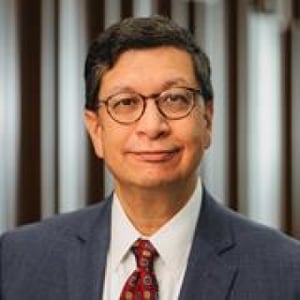
James T. Jensen Endowed Professor for Transactional Law & Director of the Program on Intellectual Property and Technology Law, University of Utah S.J. Quinney College of Law
Jorge L. Contreras is a Distinguished University Professor, the James T. Jensen Endowed Professor for Transactional Law and Director of the Program on Intellectual Property and Technology Law. He teaches and researches in the areas of intellectual property, property law, technical standardization, antitrust and science policy. In 2020 he received the University of Utah's Distinguished Research Award and is an elected member of the American Law Institute. He has testified before the U.S. Senate and House Subcommittees on Intellectual Property, and was awarded the Rossman Memorial Award by the Patent & Trademark Office Society in 2022.
Professor Contreras has written or edited fourteen books and published more than 150 scholarly articles and chapters. His book, The Genome Defense: Inside the Epic Legal Battle to Determine Who Owns Your DNA (NY: Hachette/Algonquin, 2021), has been praised by the NY Times, Wall St. Journal, Nature and numerous other outlets, and was named "Best Patent Law Book of the Year" by the international IPKat blog. His scholarly articles have appeared in leading scientific, legal and policy journals including Science, Nature, NYU Law Review, Georgetown Law Journal, Iowa Law Review and Antitrust Law Journal. He has been quoted by media outlets around the world including the New York Times, Wall Street Journal, Economist, Bloomberg, Washington Post, Korea Times and has been featured on C-SPAN, NPR, PRI and BBC shows and a range of podcasts and online news programs.
Professor Contreras currently serves Co-Chair of the Interdisciplinary Division of the ABA's Section of Science & Technology Law and a member of the Advisory Board of the American Antitrust Institute. He has previously served as Co-Chair of the National Conference of Lawyers and Scientists, a member of the National Academy of Sciences (NAS) Committee on Intellectual Property Management in Standard-Setting Processes, the National Institutes of Health (NIH) Council of Councils, the Advisory Council of NIH's National Center for the Advancement of Translational Sciences (NCATS), the National Advisory Council for Human Genome Research, and the Intellectual Property Rights Policy Committee of the American National Standards Institute (ANSI). In 2021 he served as Chair of the Art Law Section of the Association of American Law Schools (AALS) and currently serves as Chair of the AALS Remedies Section.
Professor Contreras has previously taught at American University Washington College of Law and Washington University in St. Louis. Prior to entering academia he was a partner at the international law firm Wilmer Cutler Pickering Hale and Dorr LLP, where he practiced transactional and intellectual property law in Boston, London and Washington DC. He is a cum laude graduate of Harvard Law School (JD) and Rice University (BA, BSEE) and clerked for Chief Justice Thomas R. Philips of the Texas Supreme Court.
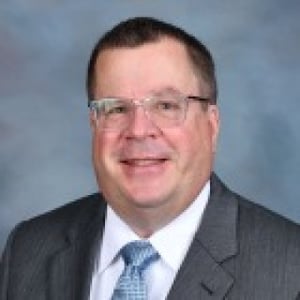
Visiting Assistant Professor of Law, University of Akron School of Law
Michael Doane joined the Akron Law faculty as a full-time visiting assistant professor of law in 2023. He had been teaching as a part-time adjunct faculty member for several years.
Doane was previously general counsel at Kent Displays, Inc., in Kent, Ohio. Prior to that, he was principal at Miles & Stockbridge P.C., in Tysons Corner, Va. Earlier, he was a partner at the Washington, D.C., law firm Adduci, Mastriani & Schaumberg LLP. He specialized in international trade and intellectual property litigation.
Doane earned a Juris Doctor from the University of Washington School of Law and a Master of Laws in International and Comparative Law from Georgetown University Law Center. He holds a Bachelor of Arts in Economics and Political Science from Kent State University and a Master of Arts in International Studies from the University of Washington.
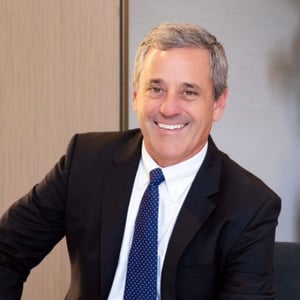
Partner, Friedland Cianfrani LLP
Mike has three decades of IP enforcement experience. He has represented clients in more than 270 intellectual property cases in state and federal courts in California and 23 other states and before the Trademark Trials and Appeals Board.
Mike’s practice includes patent, trademark, trade secret, and copyright cases. His cases have spanned a wide range of industries and technologies, including consumer products, semiconductors, tactical products, medical devices, computer software, apparel, restaurants, and financial services. He has represented brand-name companies including Oakley, Luxottica, Tesla, 5.11 Tactical, ITT, Makita, Pacific Life Insurance Company, Carl’s Jr., Microsemi, NASCAR, Daytona International Speedway, Game Show Network, Razor, Volcom, Specialized Bicycle, Mexicana Airlines, and SRS Labs, among others.
Mike was a partner at Knobbe Martens for more than two decades. At Knobbe, Mike served as co-chair of the Litigation Department. He had previously served as co-chair of the Trademark/Brand Protection group and the Consumer Products practice group.
World Trademark Review 1000 has several times named Mike a “Leading Trademark Lawyer." In the 2022 edition, WTR 1000 commended him for his “advanced state of preparedness,” and included a client remark that, “there’s nothing he hasn’t seen.”
In the 2021 edition, WTR described him as a “backbone of [his former firm's] litigation practice,” and noted his ability to litigate “cases associated with all categories of IP rights.”
In the 2020 edition, WTR described him as having been “on the cutting edge of enforcement for three decades.” In that edition, a client said he was “a sophisticated and thoughtful professional who understands how to get things done.”
In 2023, Legal 500 named Mike to its list of preeminent patent litigators. Thompson/Reuters has regularly named him a “Southern California Super Lawyer” in the category of IP litigation since 2004.
He frequently speaks on intellectual property litigation subjects, including to the AIPLA, OCBA, OCIPLA, LAIPLA, ABA, ACC, INTA, Harvard Law School Association, Harvard Business School Association, MIT Alumni Association, and the Federalist Society. Mike’s articles on IP subjects have been featured in publications including American Marketer, Luxury Roundtable, IP Watchdog, Law 360, IP 360, The Trademark Lawyer, The Los Angeles Daily Journal, The Recorder, ABA Landslide, Orange County Business Journal, Engage, and Stanford Technology Review.
Mike has taught as an adjunct professor at Whittier School of Law and served as a JAG with the California State Military Reserve. For 16 years, he served as a Reserve Deputy with the Orange County Sheriff’s Department, retiring as a Lieutenant.
Mike serves on the Harvard Law School Association’s Senior Advisory Committee, is a board member of the Federal Bar Association of Orange County, and the vice-chair of the Executive Committee of the Federalist Society's Intellectual Property Practice Group. He is a former member of Law360's Intellectual Property Editorial Board, a former member and former Secretary of the Harvard Law School Association's Executive Committee, and a former president of the Harvard Law School Association of Orange County.

Stevenson Bernard Professor, George Washington University Law School
The Honorable F. Scott Kieff is the Stevenson Bernard Professor at George Washington University Law School and a Visiting Fellow at Stanford University’s Hoover Institution.
He served as Commissioner of the U.S. International Trade Commission from 2013-2017. He also served during the Bush, Obama, and Trump Administrations in the part-time leadership of the national security defense-intelligence community.
He was previously a professor of law and medicine at Washington University in Saint Louis and a Senior Fellow at Hoover. A former law clerk to U.S. Circuit Judge Giles S. Rich, he is a graduate of Penn Law School and MIT, where he studied molecular biology and microeconomics. He was elected to the European Academy of Sciences and Arts in 2012 and the Academia Europaea in 2024.
His private sector work through Kieff Strategies LLC (www.kieffstrategies.com) provides neutral services including mediation and compliance, and expert services including crisis management, advising, and testimony.
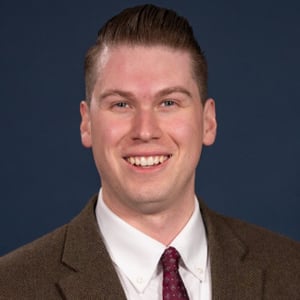
Charles Yates is an attorney in Pacific Legal Foundation’s environmental practice group, where he litigates to defend private property rights and uphold the structural protections guaranteed by the Constitution’s separation of powers.
His inspiration to focus on environmental law comes from the special case of government overreach it presents, where individual rights too often give way to collectivist notions and where misguided government policies create a cure worse than the disease. Charles has a particularly strong belief in the important role that the productive use of natural resources plays for human flourishing. To these ends, his practice at PLF focuses primarily on the Endangered Species Act, the Clean Water Act, and related regulatory issues.
Charles credits his strong belief in the principles of individual liberty and limited, constitutional government to his family. His personal philosophy developed further while studying the works of Adam Smith, John Locke, James Madison, and other classical liberals. Born and raised in Australia, Charles has always admired the U.S. Constitution as the purest and most enduring application of the ideals of individual liberty and limited government. It was these influences that impressed upon him the desire to pursue a career in public interest litigation.
After obtaining a B.A. in political science and international relations from the University of Western Australia, Charles moved to the U.S., where he earned his J.D. magna cum laude from the University of Baltimore School of Law. During law school, he served as president of his school’s chapter of The Federalist Society and was an editor of the University of Baltimore Law Review. Other highlights from his law school days include an internship at the Cato Institute and a clerkship at the Institute for Justice.
Charles lives in Sacramento with his wife Maxine. In his spare time, he enjoys reading and playing the bass guitar.

Head of U.S. Policy and Strategic Advocacy, Electric Coin Company
Paul Brigner is the Head of U.S. Policy and Strategic Advocacy at the Electric Coin Company. He has served in senior level technology policy and government relations roles for the last eighteen years with another ten years of hands-on technical experience at the beginning his career after serving in the United States Army.
He holds an MBA from the McDonough School of Business at Georgetown University and a JD from the Georgetown University Law Center. He received a Bachelors degree from Stephen F. Austin State University where he was named the Outstanding Computer Science Graduate.

General Counsel, Espresso Systems
Michael Mosier is General Counsel at Espresso Systems, which is developing configurable privacy for digital assets with decentralized private computation. He served as Acting Director, Deputy Director, and the first Digital Innovation Officer of the U.S. Treasury’s Financial Crimes Enforcement Network (FinCEN). He also was Counselor (for Cybersecurity & Emerging Technology) to the Deputy Secretary of the Treasury.
Previously, Michael was Chief Technical Counsel at Chainalysis; an Associate Director of Treasury’s Office of Foreign Assets Control; a Deputy Chief at the Department of Justice’s Money Laundering Section; and White House National Security Council Director for Transnational Organized Crime. He began his public service with the Manhattan District Attorney’s Office and has been an adjunct professor at Georgetown University Law Center.
Professor of Legal Studies and Business Ethics at the Wharton School, University of Pennsylvania
Kevin Werbach is a professor of Legal Studies and Business Ethics at the Wharton School, University of Pennsylvania, and formerly Counsel for New Technology Policy at the U.S. Federal Communications Commission, Werbach has spent the past two decades exploring major trends at the intersection of the Internet, digital media, and communications. He served on the Obama Administration's Presidential Transition Team and founded the Supernova Group, a technology consulting firm, which organized the CEO-level Supernova technology conference. He also created one of the most successful massive open online courses, with nearly half a million enrollments. He was named Wharton's first-ever Iron Prof in 2010.
Werbach has published four books, including The Blockchain and the New Architecture of Trust, For the Win: The Power of Gamification and Game Thinking in Business, Education, Government, and Social Impact, and After the Digital Tornado: Networks, Algorithms, Humanity.
Earlier in his career, he edited the influential technology newsletter Release 1.0, and helped develop the U.S. Government's Internet and e-commerce policies in the Clinton Administration

Associate Professor of Law, Antonin Scalia Law School, George Mason University
Associate Professor of Law J.W. Verret joined the Antonin Scalia Law School, George Mason University faculty in 2008. In 2013, he took leave for two years to serve as the Chief Economist and Senior Counsel for the U.S. House Committee on Financial Services. He received his JD and MA in Public Policy from Harvard Law School and the Harvard Kennedy School of Government, respectively, in 2006. While in law school, Professor Verret served an Olin Fellowship in Law and Economics at the Harvard Program on Corporate Governance under the guidance of Prof. Lucian Bebchuk.
Professor Verret then served as a law clerk for Vice-Chancellor John W. Noble of the Delaware Court of Chancery. Prior to joining the faculty at Scalia Law, Professor Verret was an associate in the SEC Enforcement Defense Practice Group at Skadden, Arps in Washington, D.C. He has written extensively on corporate law topics, including Delaware's Guidance, co-written with Chief Justice Myron T. Steele of the Delaware Supreme Court. His academic work has been featured in the Yale Journal on Regulation, The Business Lawyer, the Delaware Journal of Corporate Law, the Stanford Law Review, the University of Pennsylvania Journal of Business Law, and the Virginia Law and Business Review. Professor Verret was selected by the Northwestern Law School Searle Center on Law, Regulation, and Economic Growth for a 2009-2010 Searle-Kaufmann Research Fellowship.
Professor Verret is also a Senior Scholar at the Mercatus Center Working Group on Financial Markets, where he regularly briefs Congressional staff, members of Congress, SEC Commissioners and other financial regulatory agencies on financial regulation topics. He also directs the Corporate Federalism Initiative, where he obtains research grants for a network of students and faculty scholars who study the division between states and the federal government as sources of corporate law. Professor Verret has been invited to testify before various House and Senate Committees four times during the financial crisis of 2009 regarding all of the central provisions of the Obama Administration's 2009 financial regulatory reform proposals. For a full list of Professor Verret's C-Span appearances, including testimony before the U.S. House of Representatives and the U.S. Senate, see http://www.c-spanvideo.org/jwverret.
Professor Verret has been an invited panelist for various television appearances, including an interview on The NewsHour with Jim Lehrer. Professor Verret has been quoted in various media on financial regulation and corporate law topics, including the New York Times, CNN Money, the CNN Political Ticker, CNBC, ABC News, Investor's Business Daily, ESPN.com, The American Banker, The American Lawyer, The Huffington Post, CBS.com, and AP News. Professor Verret's op-eds have been featured in Forbes, The Chicago Tribune, The Orange County Register, and The Wall Street Journal. Professor Verret is also a regular guest contributor to three of the most noted corporate law and financial regulation law blogs: the Harvard Law School Corporate Governance and Financial Regulation Forum, Deallawyers.com, and The Conglomerate.

Commissioner, Portage County, Ohio
Kathleen Clyde is a former member of the Ohio House of Representatives, representing District 75 from 2011 to 2018. Clyde resigned from the Ohio House on December 20, 2018, to become a Portage County commissioner in Ohio.
Partner, Shumaker, Loop & Kendrick, LLP
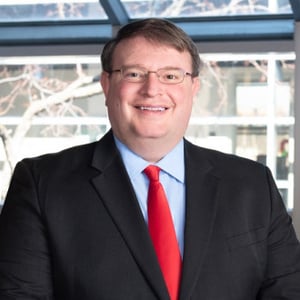
Larry builds on a wide range of experiences – including as an accomplished attorney, a former President of the Ohio Senate, and a legal academic – to help solve his clients’ most challenging legal problems. Larry focuses on complex litigation, including high-stakes appeals.
Larry is a Partner in the firm’s Litigation practice. He focuses his practice on litigation at both the trial and appellate levels and has experience in a variety of matters involving antitrust, fiduciary duties, torts, contracts, securities, and employment law. These range from standard contract disputes to constitutional challenges against federal statutes to defending against complex class actions.
In addition to his litigation practice, Larry served as a member of the Ohio Senate for nearly a decade. His colleagues unanimously elected him to serve as Senate President, the presiding officer of the 33-member chamber, from 2017-2020. During his time in the Senate, Larry successfully sponsored legislation on a wide range of topics, including education, tax law, elections administration, criminal law, and corporate law. These included a comprehensive update to Ohio’s corporate code and limited liability company law, including the sections setting out fiduciary duties for officers and shareholders. Larry also sponsored significant updates to Ohio’s Control Share Acquisition Act (which governs corporate takeovers). In 2018, he received the Ohio State Bar Association’s Lawyer-Legislator Distinguished Service Award.
Larry has also taught courses on Civil Procedure and Legislation as an adjunct law professor at Case Western Reserve University School of Law. He has published legal scholarship on a range of issues including constitutional law, education, law and economics, and securities. He has been cited in roughly 75 law journals throughout the country and by a member of the United States Supreme Court.
Larry began his legal career as a law clerk to Judge Alice M. Batchelder of the United States Court of Appeals for the Sixth Circuit. He has worked at some of the nation’s largest law firms and began his private practice by spending more than five years with Chicago-based Kirkland & Ellis LLP.
From 2018-2020, Larry was a Rodel Fellow at the Aspen Institute, a program designed to bring greater civility to public discourse. He is active in the Federalist Society and is a former board member of the Ohio Legal Assistance Foundation (now known as the Ohio Access to Justice Foundation), the statewide umbrella organization for legal aid.

Chief Judge, United States Court of Appeals, Sixth Circuit
JEFFREY S. SUTTON is the Chief Judge of the United States Court of Appeals for the Sixth Circuit. He has served as Chair of the Federal Judicial Conference Committee on Rules of Practice and Procedure, Chair of the Advisory Committee on Appellate Rules, and Chair of the Supreme Court Fellows Commission. He currently serves as Chair of the Executive Committee of the Judicial Conference of the United States. Since 1993, Chief Judge Sutton has been an adjunct professor at The Ohio State University College of Law, where he teaches seminars on State Constitutional Law, the United States Supreme Court, and Appellate Advocacy. He also teaches a class on State Constitutional Law at Harvard Law School. Among other publications, he is the author of Who Decides? States as Laboratories of Constitutional Experimentation and 51 Imperfect Solutions: States and the Making of American Constitutional Law. He is the co-author of a casebook, State Constitutional Law: The Modern Experience, as well as The Law of Judicial Precedent. He is also the co-editor of The Essential Scalia: On the Constitution, the Courts, and the Rule of Law. In 2006, Chief Judge Sutton was elected to the American Law Institute, and in 2017 he was elected to its Council.
Partner, Troutman Pepper Locke LLP
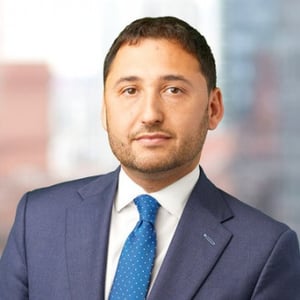
Misha leads Troutman Peppers' national appellate and Supreme Court practice. Most recently, he successfully obtained orders from the Supreme Court blocking an unconstitutional restriction on places of worship, as well as overturning a lower court order that had blocked several state election laws. He has also argued and prevailed before the Supreme Court in Gill v. Whitford, one of the most significant redistricting cases in decades, as well as Murr v. Wisconsin, a high-stakes regulatory taking case.
Before joining Troutman, Misha served as Solicitor General of the State of Wisconsin. Misha previously served as a law clerk for the Honorable Anthony M. Kennedy of the Supreme Court, Janice Rogers Brown of the D.C. Circuit, and Alex Kozinski of the 9th Circuit. He graduated from Georgetown University Law Center, where he was President of the Federalist Society Chapter.

Everyone v. AI: Navigating the New Regulatory and Legal Battleground
Mariel Brookins, Benjamin Diggs, John Kim, Michael Richards, Mike Trinh
Presented by the In-House Counsel Network and the U.S. Chamber Litigation Center CLE credit for...
Luncheon Panel: It's the End of the World as we Know it?
Ryan L. Bangert, Matthew Feeney, Jennifer Huddleston, Amul R. Thapar
Featuring: Matthew Feeney, Head of Tech & Innovation, Centre for Policy Studies Jennifer Huddleston, Senior Technology Policy...
A Short Introduction to Electronic Discovery
Ted Hirt
PowerPoint Slides This program will provide a short introduction to the world of E-Discovery,...
Understanding the Regulatory Landscape for Private Fund Advisers
David W. Blass, Jennifer Choi, Lindsey Keljo, Russ Ryan
The regulatory landscape for Private Funds has changed dramatically over the past decade, culminating in...
What is the Role of the ITC in Patent Cases?
Jorge L. Contreras, Michael Doane, Michael K. Friedland, F. Scott Kieff
The U.S. International Trade Commission (ITC), long a favored forum for patent infringement disputes, has...
Public records, Excel spreadsheets, and textualism: Kansas Supreme Court affirms the separation of powers
Charles Yates
Within the American system of government, legislative authority is the sole prerogative of the people’s...
Is the Office of Foreign Assets Control's Sanctioning of Tornado Cash a Threat to the Future of Financial Privacy?
Paul Brigner, Michael Mosier, Kevin Werbach, J.W. Verret
Tornado Cash is an open source, decentralized cryptocurrency tumbler that was introduced in 2019. The...
Topics
Make Billionaires Pay!
Thursday before last, Sen. Bernie Sanders (I-Vt.), together with Sens. Ed Markey (D-Mass.) and...
New Labor Department Rule: Taking on ESG Investment Risk to American Retirement Security
J.W. Verret
A sustained effort by activist investors to align corporate policy and investing with a progressive...
Panel 1: The Law and Policy of Redistricting Reform
Kathleen Clyde, Larry J. Obhof, Jeffrey S. Sutton, Misha Tseytlin
On April 5, 2019, the Federalist Society's Ohio lawyers chapters hosted the 2019 Ohio Chapters...