
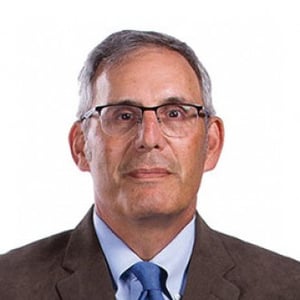
Harry Elwood Warren Scholar and Professor of Law, Boston University Law School
Jack Beermann’s scholarship focuses on two areas: civil rights litigation and administrative law. He is an authority on the circumstances under which state and local officials, and local governments, should be held liable for their constitutional violations. “What particularly fascinates me is studying the values underlying our public law system and how social movements and history have affected those values,” he says.
Professor Beermann has authored or co-authored four books on administrative law, including a widely-used casebook and the Emanuel Law Outline on the subject. He has also written extensively on the degree to which federal courts should defer to the legal determinations of federal agencies, on the problem of midnight rulemaking, in which outgoing administrations promulgate dozens of regulations at the end of their administrations and on the legal aspects of the funding crisis facing public employee pension funds in the United States.
His articles have appeared in prominent American journals such as the Stanford Law Review, UCLA Law Review, Duke Law Journal, and Boston University Law Review, and in foreign law journals including Germany’s Rechtstheorie and China’s Administrative Law Review. Recent articles include “The Public Pension Crisis” in the Washington & Lee Law Review, “Congressional Administration” in the San Diego Law Review and the “Constitutional Law of Presidential Transition” in the North Carolina Law Review. In 1998, he co-authored an article that examined civil rights violations in the popular television drama NYPD Blue and in 1993 he wrote “The Supreme Court’s Narrow View on Civil Rights” for the prestigious Supreme Court Review.
Before joining the Boston University faculty in 1984, Professor Beermann clerked for Judge Richard Cudahy of the United States Court of Appeals for the Seventh Circuit. In 2017, he was appointed as a public member of the Administrative Conference of the United States. In 2008, 2011 and 2014 he was visiting professor at Harvard Law School and in 1997, he was distinguished visiting professor at DePaul Law School. In 2004, 2005 and 2007, he taught at the Interdisciplinary Center in Herzliya, Israel, and in 2002, he taught at the China University of Political Science and Law in Beijing. He has lectured in Israel, Germany, Australia, Morocco, Portugal and Canada. At BU Law, Professor Beermann teaches administrative law, civil rights litigation, and constitutional law. In recent years, he has also taught introduction to American law (for foreign LLM students) and local government law.
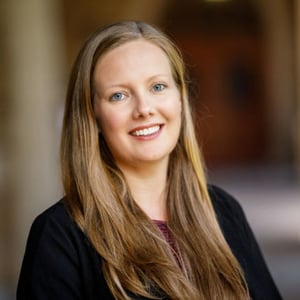
Professor of Law, University of Notre Dame Law School
Emily Bremer teaches and writes in the areas of administrative law, regulatory process, and civil procedure. Her scholarship focuses primarily on matters of procedural design, with a recent focus on the history and interpretation of the Administrative Procedure Act (APA). She is a recipient of the AALS’s award for the year’s best administrative law scholarship by a junior scholar and the AALL’s Joseph L. Andrew’s Legal Literature Award for her contribution to the Bremer-Kovacs Collection of Historical Documents Related to the APA (HeinOnline). Bremer’s articles include a defense forthcoming in the Virginia Law Review of the constitutionality of the APA’s regime for ensuring the competence and impartiality of Administrative Law Judges; a plea in the Yale Journal on Regulation for administrative law to take greater account of the on-the-ground reality of administration; twin articles uncovering the intellectual foundation and meaning of the APA’s adjudication and rulemaking provisions; and three separate studies that served as the basis of recommendations of the Administrative Conference of the United States (ACUS) on the subjects of agency declaratory orders, incorporation by reference, and statutory limitations on the jurisdiction of the Court of Federal Claims. Bremer serves as a Senior Fellow of ACUS, a co-editor of the administrative law section of Jotwell, and a regular contributor to the Yale Journal on Regulation’s Notice & Comment blog.
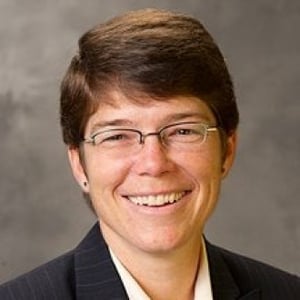
Professor of Law, Rutgers Law School
Professor Kovacs teaches Administrative Law, Natural Resources Law, Environmental Law, and Property.
Prior to joining the Rutgers faculty in 2011, she spent twelve years in the U.S. Department of Justice’s Environment and Natural Resources Division, Appellate Section. She wrote more than 100 appellate and Supreme Court briefs and argued more than sixty appeals in all thirteen of the federal circuit courts of appeals, twice en banc, and in three state supreme courts. Her cases covered a wide range of areas including environmental, administrative, and constitutional law, both civil and criminal. Among other cases, Professor Kovacs defended the Navy's use of low frequency active sonar and the display of a Latin cross in the Mojave National Preserve; she prosecuted crimes under the Bald and Golden Eagle Protection Act; she pursued a claim to compensate the Oneida Indians for the State of New York's unlawful purchase of their land in the early 19th Century; and she defended the Endangered Species Act against Fifth Amendment takings claims.
In 2016, Professor Kovacs was a political appointee serving as Senior Advisor to the Director of the Bureau of Land Management in the U.S. Department of the Interior. She also spent three years litigating primarily constitutional claims as an attorney in the Baltimore City Law Department, and she clerked for the Honorable Robert C. Murphy, former Chief Judge of the Maryland Court of Appeals. Professor Kovacs is a cum laude graduate of Yale University and the Georgetown University Law Center.
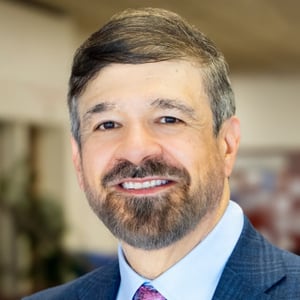
Hugh and Hazel Darling Foundation Professor of Law; Director, Center for the Study of Constitutional Originalism, University of San Diego School of Law

Professor of Law, University of Michigan Law School
Christopher J. Walker is a Professor of Law at the University of Michigan. Prior to joining Michigan law faculty in 2022, he spent a decade teaching at The Ohio State University Moritz College of Law. He previously clerked for Justice Anthony Kennedy of the U.S. Supreme Court, worked on the Civil Appellate Staff at the U.S. Department of Justice, and served on the Senate Judiciary Committee staff for the Gorsuch Supreme Court confirmation. Professor Walker’s research focuses on administrative law, regulation, and law and policy at the agency level. Outside the law school, he chaired the American Bar Association’s Section of Administrative Law and Regulatory Practice in 2020-21 and served as one of forty Public Members of the Administrative Conference of the United States from 2016-2022, and he continues to serve in both organizations in various capacities. He also works of counsel at the U.S. Chamber Litigation Center. In 2022, he received the Federalist Society’s Joseph Story Award.
Hugh and Hazel Darling Foundation Professor of Law; Director, Center for the Study of Constitutional Originalism, University of San Diego School of Law
Hugh and Hazel Darling Foundation Professor of Law; Director, Center for the Study of Constitutional Originalism, University of San Diego School of Law

George C. Dix Professor in Constitutional Law, Northwestern University Pritzker School of Law
John O. McGinnis is a graduate of Harvard College and Harvard Law School where he was an editor of the Harvard Law Review. He also has an MA degree from Balliol College, Oxford, in philosophy and theology. Professor McGinnis clerked on the U.S. Court of Appeals for the District of Columbia. From 1987 to 1991, he was deputy assistant attorney general in the Office of Legal Counsel at the Department of Justice. He is the author of Accelerating Democracy: Transforming Government Through Technology (Princeton 2013) and Originalism and the Good Constitution (Harvard 2013) (with M. Rappaport). He is a past winner of the Paul Bator award given by the Federalist Society to an outstanding academic under 40. He has been listed by the United States on the roster of panelists who may be called upon to decide World Trade Organization Disputes.
George C. Dix Professor in Constitutional Law, Northwestern University Pritzker School of Law
John O. McGinnis is a graduate of Harvard College and Harvard Law School where he was an editor of the Harvard Law Review. He also has an MA degree from Balliol College, Oxford, in philosophy and theology. Professor McGinnis clerked on the U.S. Court of Appeals for the District of Columbia. From 1987 to 1991, he was deputy assistant attorney general in the Office of Legal Counsel at the Department of Justice. He is the author of Accelerating Democracy: Transforming Government Through Technology (Princeton 2013) and Originalism and the Good Constitution (Harvard 2013) (with M. Rappaport). He is a past winner of the Paul Bator award given by the Federalist Society to an outstanding academic under 40. He has been listed by the United States on the roster of panelists who may be called upon to decide World Trade Organization Disputes.

Founding Partner, Cooper & Kirk PLLC
Charles J. Cooper is a founding member and the chairman of Cooper & Kirk, PLLC, “one of the Nation’s leading litigation boutiques” (Above The Law 2017). The National Law Journal recently wrote that Mr. Cooper’s “brilliant legal career has so far spanned five decades and thrust Cooper into the spotlight in some of the most historic moments of the country’s modern history.” He has argued nine cases before the United States Supreme Court and scores of appeals before each of the 13 federal courts of appeals and several state supreme courts. He has been lead trial counsel in numerous complex, weeks-long trials in federal courts throughout the country. Named by the National Law Journal as one of the 10 best litigators in Washington D.C., Mr. Cooper’s work has been reported in numerous press accounts, and he has been called a “powerhouse attorney” (Fortune 2015), “a hard-nosed litigator” (Washington Post 2017), and “one of the country’s most in-demand civil litigators and a Washington legal institution unto himself” (The American Spectator 2014).
After graduating from the University of Alabama School of Law in 1977, where he ranked first in his class and served as Editor-in-Chief of the Alabama Law Review, Mr. Cooper began his career as a law clerk to Judge Paul Roney on the Fifth Circuit Court of Appeals and to Justice William H. Rehnquist in 1978–79. He then practiced law in Atlanta for two years before joining the Civil Rights Division of the U.S. Department of Justice, where he served as the Deputy Assistant Attorney General in charge of, among other things, appellate matters. In 1985 President Reagan appointed him to the position of Assistant Attorney General for the Office of Legal Counsel, which is the office responsible for providing legal opinions and advice to the White House, the Attorney General, and Executive Branch departments and agencies on issues covering the full spectrum of federal constitutional, statutory, and regulatory law.
In 1988 he returned to private practice as a litigation partner in the Washington, D.C. office of McGuireWoods. From 1990 until the founding of Cooper & Kirk in 1996, he was a partner at Shaw Pittman (now Pillsbury Winthrop Shaw Pittman), where he headed the firm’s Constitutional and Government Litigation Group.
Mr. Cooper has represented a wide range of public and private clients in highly complex constitutional, civil rights, antitrust, healthcare, banking, intellectual property, elections, campaign finance, administrative, commercial, and government contract cases. He has led trial teams in cases that have won judgments and settlements valued in the billions of dollars and that have established ground-breaking constitutional precedents.
Much of Mr. Cooper’s practice has involved representing high-profile clients in nationally prominent matters, including: the State of Florida in a First Amendment suit brought by the Disney Company concerning its autonomous regulatory authority over its Disney World property; the Commonwealth of Virginia in a suit seeking to enjoin the removal of noncitizens from its voter rolls; 38 members of the Duke Lacrosse team falsely accused of rape by officials of Duke University and the City of Durham; Harper Lee in a copyright dispute with the heirs of Gregory Peck; high-ranking former government officials such as former Attorneys General John Ashcroft, Jeff Sessions, and William Barr, and Ambassador John Bolton; several Governors and United States Senators; over 100 Members of Congress; and many state, territorial, and local government bodies and officials. He has also represented and advised government officials and public figures in connection with sensitive private issues that needed to be, and were, resolved discreetly without becoming matters of public record.
In 1998 Chief Justice Rehnquist appointed Mr. Cooper to the Standing Committee on Rules of Practice and Procedure of the Judicial Conference of the United States, where he served for three terms. He also served as a Public Member, appointed by President George H.W. Bush, of the National Commission on Judicial Discipline and Removal. He is a member of numerous professional associations, including the American Law Institute (since 1993) and the American Academy of Appellate Lawyers (since 1996). He is also an active member of the Federalist Society and the Republican National Lawyers Association, which in 2010 named him Republican Lawyer of the Year and in 2016 honored him with its Edwin Meese III Award.
Mr. Cooper has published scores of articles and spoken extensively on constitutional and legal policy topics. He has appeared before congressional committees on 26 occasions, testifying as an expert on a wide variety of legal issues, including the Chevron doctrine of judicial deference to administrative agencies, the diversity of citizenship jurisdiction of federal courts, statehood bills for Puerto Rico and the District of Columbia, and the impeachment of President Clinton.
Hugh and Hazel Darling Foundation Professor of Law; Director, Center for the Study of Constitutional Originalism, University of San Diego School of Law
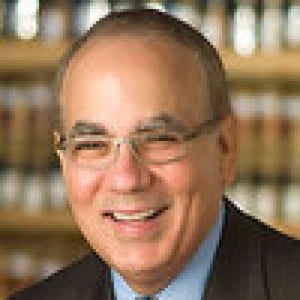
Jacob E. Davis and Jacob E. Davis II Chair in Law, Moritz Colleg, The Ohio State University
Professor Shane came to Ohio State in 2003 from Carnegie Mellon University's H. John Heinz III School of Public Policy and Management. He is an internationally recognized scholar in administrative law, with a specialty in separation of powers law, and has co-authored leading casebooks on each subject. He has served on the faculty at the University of Iowa College of Law and was dean at the University of Pittsburgh School of Law.
In addition to his outstanding law teaching and scholarship, Professor Shane has received a National Science Foundation grant for interdisciplinary study related to cyberspace and democracy. At Ohio State, he provides strong leadership in interdisciplinary scholarship and teaching.
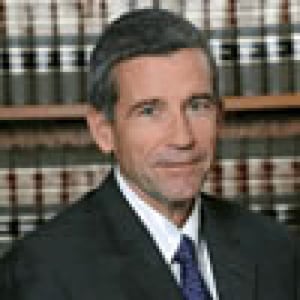
Fellow in Law and Government, American University Washington College of Law
William Yeomans joined the faculty of law of the American University Washington College of law in 2009 where he teaches courses on civil rights, legislation and the legislative process. From 2006 until 2009, he served as Sen. Edward M. Kennedy’s Chief Counsel on the Senate Judiciary Committee. Prior to that, he spent 26 years at the Department of Justice where he litigated and supervised civil rights cases in the federal courts at all levels involving voting rights, school desegregation, employment discrimination, housing discrimination, hate crimes, police misconduct, abortion clinic violence, and human trafficking. He served as Deputy Assistant Attorney General, Chief of Staff, and acting Assistant Attorney General for Civil Rights. He has also been Legal Director of the Alliance for Justice and the first Director of Programs for the American Constitution Society, where he spearheaded the launch of two publications: the Harvard Law and Policy Review and Advance.

Executive Vice President, The Federalist Society
Dean Reuter is Executive Vice President at the Federalist Society for Law and Public Policy Studies. He has served in two federal government agency Offices of the Inspector General, as Counsel to the Inspector General and Deputy Inspector General, responsible for policing the use of federal funds granted and contracted through those agencies. As such, he helped conduct and oversee criminal investigations across the country. He is the principal author of the non-fiction book, The Hidden Nazi: The Untold Story of America's Deal with the Devil, and editor of Liberty’s Nemesis: The Unchecked Expansion of the State and Confronting Terror: 9/11 and the Future of American National Security. He was appointed by the President and served as Vice-Chairman of the Board of Directors of the Corporation for National and Community Service, and recently served as an appointee on the U.S. Commission on Presidential Scholars. He is a graduate of Hood College (BA with Honors) and the University of Maryland School of Law.
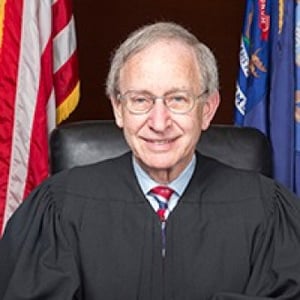
Justice, Michigan Supreme Court
Stephen Markman was appointed Justice of the Michigan Supreme Court on October 1, 1999. He served as the Chief Justice from 2017-2019. Before his appointment, he served as Judge on the Michigan Court of Appeals from 1995-1999. Prior to this, he practiced law with the firm of Miller, Canfield, Paddock & Stone in Detroit.
From 1989-1993, Justice Markman served as United States Attorney, or federal prosecutor, in Michigan, after having been nominated by President George H. W. Bush and confirmed by the United States Senate. From 1985-1989, he served as Assistant Attorney General of the United States, after having been nominated by President Ronald Reagan and confirmed by the United States Senate. In that position, he headed the Department of Justice’s Office of Legal Policy, which served as the principal policy development office within the Department, and which coordinated the federal judicial selection process. Prior to this, he served for seven years as Chief Counsel of the United States Senate Subcommittee on the Constitution, and as Deputy Chief Counsel of the United States Senate Judiciary Committee.
Justice Markman has authored articles for such publications as the University of Michigan Journal of Law Reform, the Detroit College of Law Review, the Stanford Law Review, the University of Chicago Law Review, the American Criminal Justice Law Review, the Barrister’s Law Journal, the Harvard Journal of Law & Public Policy, and the American University Law Review. He has also served as a contributing editor of National Review magazine, and has authored chapters in such books as “In the Name of Justice: The Aims of the Criminal Law,” “Still the Law of the Land,” and “Originalism: A Quarter Century of Debate.”
Justice Markman has taught constitutional law at Hillsdale College since 1993. He has served on the Board of Directors of the Western Michigan University Thomas M. Cooley Law School. He traveled to Ukraine on two occasions on behalf of the State Department, to provide assistance in the development of that nation’s post-Soviet constitution. He is a Fellow of the Michigan Bar Foundation, a Master of the Bench of the Inns of Court, and a member of the One Hundred Club. He has spoken before hundreds of youth, civic, charitable, and legal groups throughout Michigan and nationally, and has coached Little League baseball and basketball. He lives with his wife Mary Kathleen in Mason, and has two sons, James and Charles.
Justice Markman was re-elected to the Supreme Court in 2000, 2004, and 2012. His present term expires January 1, 2021.
U.S. District Court for the Eastern District of Pennsylvania
Hugh and Hazel Darling Foundation Professor of Law; Director, Center for the Study of Constitutional Originalism, University of San Diego School of Law
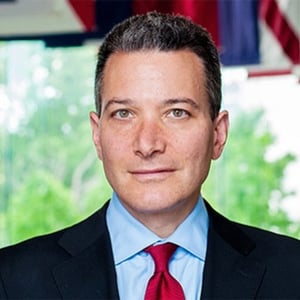
Senior Fellow, FIRE and CEO Emeritus, National Constitution Center
Jeffrey Rosen is a senior FIRE fellow as well as the host of “The Blessings of Liberty” podcast, presented by FIRE. He is also the CEO emeritus of the National Constitution Center, a professor of law at the George Washington University Law School, and a contributing editor of The Atlantic. He was previously the legal affairs editor of The New Republic and a staff writer for The New Yorker.
Rosen is the author of the New York Times bestsellers The Pursuit of Happiness and Conversations with RBG. His new book is The Pursuit of Liberty: How Hamilton vs. Jefferson Ignited the Lasting Battle Over Power in America.
Rosen is a graduate of Harvard College; Oxford University, where he was a Marshall Scholar; and Yale Law School. He is an elected member of the American Philosophical Society and the American Law Institute. In 2024, the French government recognized him as a Chevalier in the Ordre des Arts et des Lettres.
Gerald Ratner Distinguished Service Professor of Law, Faculty Director of the Jenner & Block Supreme Court and Appellate Clinic, University of Chicago Law School
David Strauss graduated from Harvard College summa cum laudein 1973. He then spent two years at Magdalen College, Oxford, on the Marshall Scholarship and received a BPhil in politics from Oxford in 1975. In 1978, he graduated magna cum laude from Harvard Law School, where he was developments editor of theLaw Review. Before joining the Law School faculty, he worked as an Attorney-Adviser in the Office of Legal Counsel of the US Department of Justice and was an Assistant to the Solicitor General of the United States.
Strauss joined the Law School faculty in 1985. He has published articles on a variety of subjects, principally in constitutional law and related areas, and recently published The Living Constitution (Oxford University Press, 2010). He is, with Geoffrey Stone and Dennis Hutchinson, editor of the Supreme Court Review. He has been a visiting professor at Harvard and Georgetown. He is a Fellow of the American Academy of Arts and Sciences.
Strauss has argued nineteen cases before the United States Supreme Court. In 1990, he served as Special Counsel to the Committee on the Judiciary of the United States Senate. He is a member of the national Board of Directors of the American Constitution Society. He has also served Chair of the Board of Trustees of the University of Chicago Laboratory Schools and as a member of the Board of Governors of the Chicago Council of Lawyers. In addition to his current teaching interests - constitutional law, federal jurisdiction, elements of the law, and administrative law - he has taught civil procedure and torts.

Topics
Sports Gambling Decision is a Major Victory for Federalism
This post has been contributed from The Volokh Conspiracy with permission by the author. Click...
Topics
A Look at Madison's Notes from the Constitutional Convention
This article was originally published in Law and Liberty. Click here to visit their website. ...
Reform Proposals for the Administrative State
20th Annual Federalist Society Faculty Conference
San Diego, CADeciding Unclear Originalist Cases: Towards Good-Faith Constitutional Construction
Interpreting a centuries-old document and applying it to factual circumstances unknown and perhaps inconceivable to...
Recess Appointments and Presidential Power
Resolved: Originalism is the Best Method for Interpreting the Constitution
Originalism and the Good Constitution
Chicago, IllinoisOriginalism and the Good Constitution
Des Moines, IowaAre the Recent Recess Appointments Constitutional?
Charles J. Cooper, Michael B. Rappaport, Peter M. Shane, William R. Yeomans, Dean Reuter
Mr. Reuter: Welcome to the Federalist Society’s practice group podcast. The following podcast, hosted by...
Panel 3 - Originalism, Precedent and Judicial Restraint
Steve J. Markman, Gene Pratter, Michael B. Rappaport, Jeffrey Rosen, David A. Strauss
We often hear much about the perils of “judicial activism” and how a judge’s proper...