

Vice President for Legal Affairs, Goldwater Institute
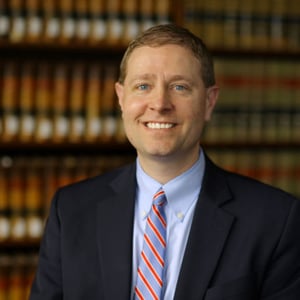
Executive Director, Salmon P. Chase Center for Civics, Culture, and Society, The Ohio State University
Professor Lee J. Strang serves as the inaugural executive director of the Salmon P. Chase Center for Civics, Culture, and Society at The Ohio State University.
Initiated in 2023 by the state of Ohio, the Chase Center will be an academic home at Ohio State for teaching, research, and programing on the foundations of the American constitutional order and its impact on society. As executive director, Professor Strang is responsible for organizing the center, overseeing the hiring and appointment of the center’s faculty, developing curriculum, and delivering student and academic programming. He also holds a faculty appointment in the Moritz College of Law at Ohio State.
Professor Strang is a nationally recognized legal scholar who has published dozens of articles in leading journals in the fields of constitutional law and interpretation, property law, and religion and the First Amendment. He co-edits the textbook Federal Constitutional Law, and his most recent book, Originalism’s Promise: A Natural Law Account of the American Constitution is the first book-length, natural law justification for originalism. He currently is writing on civic thought and leadership, and he is finalizing a book on the history of American Catholic legal education (with John M. Breen).
Before joining Ohio State, Professor Strang served as the inaugural director of the University of Toledo’s Institute of American Constitutional Thought & Leadership. He joined the Toledo College of Law faculty in 2008, was granted tenure in 2010, and was named John W. Stoepler Professor of Law & Values in 2015. The University of Toledo awarded Professor Strang its Outstanding Faculty Research and Scholarship Award in 2017. Before that, he was a visiting professor at Michigan State University College of Law. A graduate of the University of Iowa, where he was articles editor of the Iowa Law Review and Order of the Coif, Professor Strang holds an LL.M. degree from Harvard Law School.
Professor Strang has been a visiting scholar at the Georgetown Center for the Constitution and a visiting fellow at the James Madison Program at Princeton University. In 2016, he was appointed to the Ohio Advisory Committee of the U.S. Commission on Civil Rights and reappointed as chair in 2023.
Prior to teaching, Professor Strang served as a judicial clerk for Judge Alice M. Batchelder of the U.S. Court of Appeals for the Sixth Circuit. He was also an associate for Jenner & Block LLP in Chicago, where he practiced in general and appellate litigation.
Professor Strang is a frequent presenter at scholarly conferences. He is the president of the Board of Trustees of Northwest Ohio Classical Academy, Ohio’s first classical charter school. He is also a regular participant in debates at law schools across the country, a contributor to the media, and a speaker to political, civic, and religious groups.
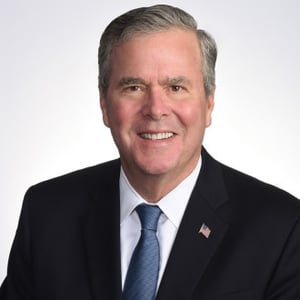
43rd Governor, State of Florida
Jeb Bush is the 43rd governor of the State of Florida, serving from 1999 through 2007. He was the third Republican elected to the state’s highest office and the first Republican in the state’s history to be reelected. He was most recently a candidate for the Republican presidential nomination in 2016.
Governor Bush remained true to his conservative principles throughout his two terms in office – cutting nearly $20 billion in taxes, vetoing more than $2.3 billion in earmarks and reducing the state government workforce by more than 13,000. His limited government approach helped unleash one of the most robust and dynamic economies in the nation, creating 1.3 million net new jobs and improving the state’s credit ratings, including achieving the first ever triple-A bond rating for Florida.
During his two terms, Governor Bush championed major reform of government, in areas ranging from health care and environmental protection to civil service and tax reform. His top priority was the overhaul of the state’s failing education system. Under Governor Bush’s leadership, Florida established a bold accountability system in public schools and created the most ambitious school choice programs in the nation. Today, Florida remains a national leader in education and is one of the only states in the nation to significantly narrow the achievement gap.
Governor Bush is also known for his leadership during two unprecedented back-to-back hurricane seasons, which brought eight hurricanes and four tropical storms to the state of Florida in less than two years. To protect the state from loss of life and damage caused by catastrophic events, such as hurricanes, Bush worked tirelessly to improve the state’s ability to respond quickly and compassionately during emergencies, while also instilling a ‘culture of preparedness’ in the state’s citizenry.
Governor Bush joined the University of Pennsylvania as a non-resident Presidential Professor of Practice for the 2018-19 academic year. He has previously served as a visiting professor and fellow at Harvard University, an executive professor at Texas A&M University, and has been awarded several honorary doctorates from collegiate institutions across the country. Governor Bush has been recognized for his contributions to public policy by national organizations including the Manhattan Institute, The Lynde and Harry Bradley Foundation and the Jack Kemp Foundation. Governor Bush earned his bachelor’s degree in Latin American Studies from the University of Texas at Austin.
Governor Bush currently serves as Chairman of Finback Investments Partners LLC and Dock Square Capital LLC, both merchant banks headquartered in Coral Gables.
Governor Bush maintains his passion for improving the quality of education for students across the country by serving as the Chairman of the Foundation for Excellence in Education, a national nonprofit education reform organization he founded to transform education in America.
He has written three books, Profiles in Character; Immigration Wars: Forging an American Solution; and Reply All: A Governor’s Story 1999-2007.
Governor Bush lives in Miami with his wife Columba. They have three children and five grandchildren.
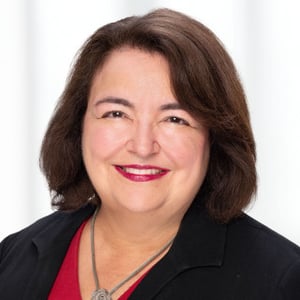
Shareholder, Buchanan Ingersoll & Rooney PC
Rocky Rodriguez helps clients resolve problems and achieve business objectives using a 360-degree perspective she has gained throughout her career in law, business and government. She serves as Chair of Buchanan's Florida offices.
Whether representing Fortune 500 or closely held companies, life science companies, nonprofit entities, high net worth individuals or entrepreneurs, Rocky dives into understanding the client’s business and goals to develop strategies to achieve those goals. She looks beyond the obvious and seeks novel approaches. In confronting regulatory issues, for example, this may mean lobbying to change the law, something she’s achieved in both the insurance and financial fields in Florida, which has permitted her clients to expand their businesses in the state and attract newcomers as well.
From 2002 to 2007, Rocky served as general counsel to former Florida Governor Jeb Bush, during which she counseled Governor Bush on more than 200 judicial appointments across all levels of the Florida judiciary. During her tenure Rocky worked on some of the most critical issues facing the state, including conceiving and co-drafting the legislation for and negotiating the then-largest economic development project in state history - a $310 million economic incentive grant to The Scripps Research Institute. Her leadership on the Scripps Florida project led her to develop expertise in the life sciences industry, an industry in which remains deeply involved, counseling some of the most prestigious research institutes and life science companies in the world.
Rocky brings over three decades of state and federal litigation experience in banking, commercial, international, real estate, constitutional, administrative and election law. She provides counseling on corporate governance and related employment matters including trade secrets, crisis and risk management, data breaches, dispute resolution and strategy, economic development and incentives, government relations, and government investigations. Her experience extends into domestic and international arbitration, and she currently serves on an arbitration panel in an investment treaty dispute at the Permanent Court of Arbitration in The Hague.
Using her background in government, Rocky has advised both domestic and international clients on issues involving Florida business, financial and healthcare regulations, the U.S. Foreign Corrupt Practices Act, the U.S.A. Patriot Act and government investigations.
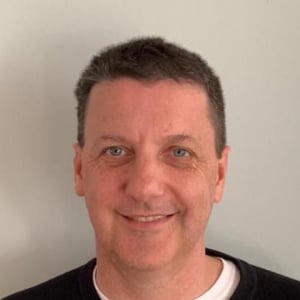
William Henry Glasson Distinguished Professor of Economics, Duke University
Peter Arcidiacono is the William Henry Glasson Professor of Economics at Duke University. He received his PhD from the University of Wisconsin-Madison in 1999 and has taught at Duke University ever since. He is a fellow of the Econometric Society, the International Association of Applied Econometricians, and a senior fellow at the Manhattan Institute. He is best known for his work in three areas: college major choice, affirmative action in higher education, and structural estimation of dynamic discrete choice models. He served as an expert witness for the plaintiffs in the Supreme Court cases SFFA v. Harvard and SFFA v. UNC, examining the role race played in the admissions process at both institutions.

University Professor of Law and Executive Director, Liberty & Law Center, Antonin Scalia Law School, George Mason University
David Bernstein holds a University Professorship chair at the Antonin Scalia Law School, where he has been teaching since 1995. He has also been a visiting professor at the University of Michigan, Georgetown University, William & Mary, Brooklyn Law School, the University of Turin, and Hebrew University. Professor Bernstein teaches Constitutional Law, Evidence, and Products Liability.
A prolific author, Professor Bernstein often challenges the conventional wisdom with prodigious research and sharp, original analysis. He is the author of five books, and coauthor of two more. Professor Bernstein’s book Rehabilitating Lochner was praised across the political spectrum as “intellectual history in its highest form,” a “fresh perspective and a cogent analysis,” “delightful and informative,” “sharp and iconoclastic,” and “a terrific work of historical revisionism.” Columnist George Will praised Bernstein’s most recent book, Classified, The Untold Story of Racial Classification in America, as “perhaps the most consequential American book of 2022.”
Professor Bernstein has also written dozens of articles and essays published in major law reviews, including the California Law Review, Columbia Law Review, Michigan Law Review, and Yale Law Journal. An article he coauthored, Defending Daubert: It’s Time to Amend Federal Rule of Evidence 702, directly inspired a pending amendment to Rule 702.
Professor Bernstein blogs at the Instapundit.com, the Times of Israel, and the Volokh Conspiracy. He is a graduate of the Yale Law School, where he was senior editor of the Yale Law Journal and a John M. Olin Fellow in Law, Economics, and Public Policy.

Judge, United States Court of Appeals, Eleventh Circuit
On March 20, 2018, Judge Elizabeth L. Branch (Lisa) was sworn in as a United States Circuit Judge for the Eleventh Circuit.
Judge Branch attended and graduated from Davidson College in North Carolina (B.A., cum laude, 1990), and Emory University School of Law (J.D., with distinction, 1994).
After graduating from law school, Judge Branch served as a federal law clerk to The Honorable J. Owen Forrester of the U.S. District Court for the Northern District of Georgia from 1994 to 1996. Following her clerkship, Judge Branch joined the litigation department of Smith, Gambrell & Russell, LLP in Atlanta as an associate and then a partner.
From 2004 to 2008, Judge Branch was a senior official in the Administration of President George W. Bush in Washington, D.C. She served first as the Associate General Counsel for Rules and Legislation at the U.S. Department of Homeland Security and then as the Counselor to the Administrator of the Office of Information and Regulatory Affairs at the U. S. Office of Management and Budget.
She returned to Smith Gambrell in 2008 as a litigation partner. Judge Branch then was appointed to the Court of Appeals of Georgia by Governor Nathan Deal, taking office on September 4, 2012, where she served until March 19, 2018.
Judge Branch is a member of the Board of Advisors of the Atlanta Lawyers Chapter for the Federalist Society for Law and Public Policy Studies.
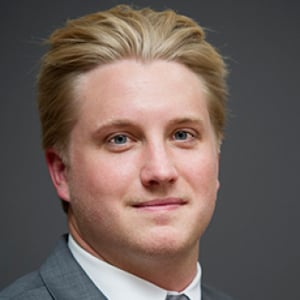
Professor of Law, Northwestern University
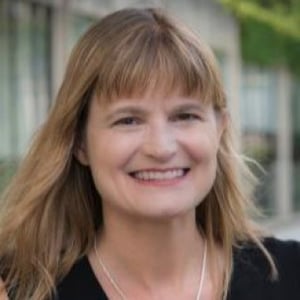
Julius Kreeger Professor of Law & Criminology, University of Chicago Law School
Sonja Starr joined the University of Chicago law faculty after eleven years teaching at the University of Michigan, where she was the Henry M. Butzel Professor of Law. She previously taught at the University of Maryland and Harvard Law School after graduating from Yale Law. She also clerked for Judges Merrick Garland of the DC Circuit and Mohamed Shahabuddeen of the International Criminal Tribunals for Rwanda and the Former Yugoslavia.
Professor Starr's research focuses on the criminal justice system and on discrimination and disparity (in the criminal process and in other contexts, including employment, education, and health care). Her research blends quantitative empirical work with more traditional legal scholarship. Topics include the use of predictive algorithms in sentencing and bail, legal and empirical analyses of statistical discrimination, racialized medical algorithms, educational diversity and race-conscious policymaking, racial and other disparities in prosecution and sentencing, policies designed to expand employment opportunities for people with criminal records, and how neighborhoods affect employment discrimination patterns. Professor Starr’s work has appeared in, for example, the Quarterly Journal of Economics, the Journal of Political Economy, the Yale Law Journal, and the Stanford and Harvard Law Reviews. She has been the Law and Economics Section Chair of the American Association of Law Schools, a past co-president of the Society for Empirical Legal Studies, and a board member of the American Law and Economics Association. She teaches Criminal Law, the Constitutional Law Workshop, Race and Criminal Justice Policy, and Collateral Consequences of Criminal Convictions.

Executive Vice President, Chief Legal Officer, Gates Corporation
Matthew R. A. Heiman joined the Company in May 2026 and has served as the Company’s Chief Legal Officer and Corporate Secretary since June 2026. As Chief Legal Officer, Mr. Heiman is responsible for all legal functions for Gates, including securities and corporate governance, M&A, litigation, commercial, regulatory, compliance, patents and trademarks, real estate, employment and labor, sustainability and environmental matters. Prior to joining Gates, Mr. Heiman held senior legal leadership roles at Waystar, where he served as Chief Legal & Administrative Officer from 2023 to 2025 and as General Counsel and Corporate Secretary from 2020 to 2023. Prior to that, he was with Johnson Controls, where he served as Vice President, Corporate Secretary, and Associate General Counsel. Mr. Heiman has been a Senior Fellow for the National Security Institute at George Mason University’s Antonin Scalia School of Law since 2018.
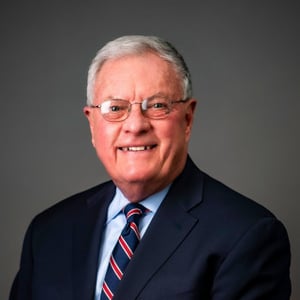
Co-Chair, Center for American Security
General Keith Kellogg was born in Dayton, Ohio, grew up in California, and 23 global and stateside military moves later, settled in Virginia, where he serves as co-Chair of the Center for American Security at AFPI. Kellogg is a highly decorated, retired three-star Army General and has extensive experience in the military and international business. Most recently, he was the National Security Advisor to former Vice President Mike Pence. He also served as the Chief of Staff and Executive Secretary of the National Security Council. Kellogg has wide-ranging experience in Europe, the Pacific, the Middle East, and Africa. He has served as an author and contributor on Fox News and CNN. Kellogg graduated from Santa Clara University with a degree in Political Science and went on to receive his master’s degree in International Studies from Kansas University. Kellogg and his wife, Paige, have three children, and love nothing more than having their four grandchildren stay with them and spoil them with anything they want. It drives their parents nuts.
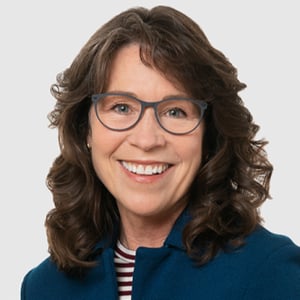
Director of Foreign and Defense Policy Studies, American Enterprise Institute
Kori Schake leads foreign and defense policy studies at the American Enterprise Institute. She is the author of Safe Passage: the Transition from British to American Hegemony, and with Jim Mattis the editor of Warriors and Citizens: American Views on Our Military. Dr. Schake has taught at Stanford, Johns Hopkins SAIS, and West Point. She has also had a distinguished career in government, working at the US State Department, the US Department of Defense, and the National Security Council.
University Professor of Law and Executive Director, Liberty & Law Center, Antonin Scalia Law School, George Mason University
David Bernstein holds a University Professorship chair at the Antonin Scalia Law School, where he has been teaching since 1995. He has also been a visiting professor at the University of Michigan, Georgetown University, William & Mary, Brooklyn Law School, the University of Turin, and Hebrew University. Professor Bernstein teaches Constitutional Law, Evidence, and Products Liability.
A prolific author, Professor Bernstein often challenges the conventional wisdom with prodigious research and sharp, original analysis. He is the author of five books, and coauthor of two more. Professor Bernstein’s book Rehabilitating Lochner was praised across the political spectrum as “intellectual history in its highest form,” a “fresh perspective and a cogent analysis,” “delightful and informative,” “sharp and iconoclastic,” and “a terrific work of historical revisionism.” Columnist George Will praised Bernstein’s most recent book, Classified, The Untold Story of Racial Classification in America, as “perhaps the most consequential American book of 2022.”
Professor Bernstein has also written dozens of articles and essays published in major law reviews, including the California Law Review, Columbia Law Review, Michigan Law Review, and Yale Law Journal. An article he coauthored, Defending Daubert: It’s Time to Amend Federal Rule of Evidence 702, directly inspired a pending amendment to Rule 702.
Professor Bernstein blogs at the Instapundit.com, the Times of Israel, and the Volokh Conspiracy. He is a graduate of the Yale Law School, where he was senior editor of the Yale Law Journal and a John M. Olin Fellow in Law, Economics, and Public Policy.
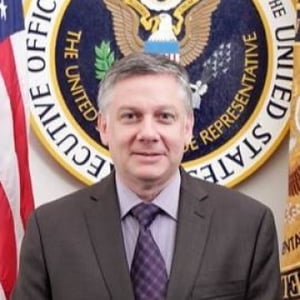
Assistant U.S. Trade Representative for Labor
Lewis Karesh was named Assistant U.S. Trade Representative for Labor Affairs in August 2005. In this capacity, he oversees trade and labor issues for USTR, including negotiation of labor provisions in multilateral, regional, and bilateral free trade agreements, monitoring and enforcement of those labor provisions, countries' adherence to worker rights provisions of U.S. trade preference programs, and development of U.S. positions on the relationship between trade and labor in international fora, including the International Labor Organization, World Trade Organization, Organization for Economic Cooperation and Development, and Asia-Pacific Economic Cooperation.
Mr. Karesh began his work on trade and labor issues in 1994 with the negotiation and implementation of the North American Agreement on Labor Cooperation (the labor supplemental agreement to the North American Free Trade Agreement). From 1996 to 2005, Mr. Karesh served in the U.S. Department of Labor’s Bureau of International Labor Affairs as Deputy Director and then Director of the office responsible for administering U.S. obligations under the North American Agreement on Labor Cooperation and the labor chapters of bilateral and regional free trade agreements. During his tenure, Mr. Karesh served as the Department’s lead representative on U.S. labor and dispute settlement negotiating teams for free trade agreements with Chile, Singapore, Australia, Central America, Morocco, and Bahrain.
From 1988 to 1996, Mr. Karesh worked as an attorney in the Department of Labor's Office of the Solicitor serving as legal counsel on a variety of domestic labor matters, including the Labor-Management Reporting and Disclosure Act and the Veterans’ Reemployment Rights Act, and international labor matters, including the North American Free Trade Agreement, the World Trade Organization, and the International Labor Organization.
Mr. Karesh holds a J.D. from the University of North Carolina and a B.S. in Industrial Engineering from North Carolina State University.
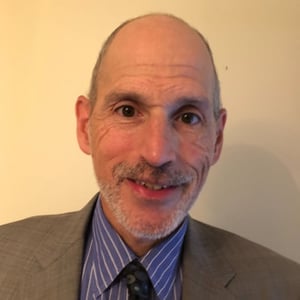
Director, Office of Trade and Labor Affairs, Bureau of International Labor Affairs, U.S. Department of Labor
Matthew Levin’s office oversees the negotiation and implementation of labor provisions in free trade agreements, participates in the administration of U.S. trade preference programs, negotiates guidelines governing lending by multilateral development banks and international financial institutions, and coordinates international technical cooperation addressing worker rights in key trading partner countries. Mr. Levin participated in the negotiation of the USMCA Labor Chapter and the Rapid Response Labor Mechanism. He has served as legal counsel to the U.S. delegation to the International Labor Organization Conference on numerous occasions and has a long history of working on labor issues all over of the world. Mr. Levin graduated from the State University of New York in Albany and Case Western Reserve University School of Law.

Stefan Marculewicz is a Shareholder in the Washington, DC office of Littler Mendelson, P.C., and focuses his legal practice on traditional labor law matters, international labor law and standards, and non-traditional worker representation.
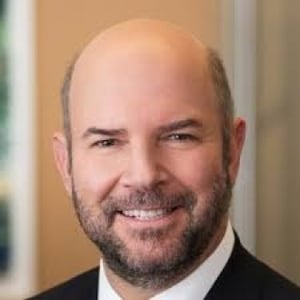
Partner, Morgan, Lewis & Bockius LLP
Philip A. Miscimarra is the former Chairman of the National Labor Relations Board (NLRB). Phil leads the firm’s NLRB special appeals practice and is co-leader of Morgan Lewis Workforce Change, which manages all employment, labor, benefits, and related issues arising from mergers, acquisitions, startups, workforce reductions, and other types of business restructuring. He represents clients on a wide range of labor and employment issues, with a focus on labor-management relations, business acquisitions and restructuring, and employment litigation. Phil is also a Senior Fellow at the University of Pennsylvania's Wharton School and the Wharton Center for Human Resources. He is admitted in Illinois only, and his practice is supervised by DC Bar members.
Phil was named Chairman of the NLRB by President Donald J. Trump on April 24, 2017, after previously serving as Acting Chairman and a Board Member. He was appointed to the NLRB by President Barack Obama on April 9, 2013, and was approved unanimously by the Senate Committee on Health, Education, Labor, and Pensions on May 22, 2013. He was confirmed by voice vote in the US Senate on July 30, 2013, and served from August 7, 2013, to December 16, 2017. Upon the completion of his term, Phil served on the NLRB longer than 26 other board members over the past 30 years.
Phil is the author or co-author of several books involving labor law issues, including The NLRB and Managerial Discretion: Subcontracting, Relocations, Closings, Sales, Layoffs, and Technological Change (2d ed. 2010) (by Miscimarra, Turner, Friedman, Callahan, Conrad, Lignowski and Scroggins); The NLRB and Secondary Boycotts (3d ed. 2002) (by Miscimarra, Berkowitz, Wiener and Ditelberg); and Government Protection of Employees Involved in Mergers and Acquisitions (1989 and 1997 supp.) (by Northrup and Miscimarra); and other publications. He has also testified on labor and employment law issues in the United States Congress.
Chambers USA named Phil one of the leading lawyers for employment law in the United States from 2004 to 2012, based on the views of clients, peers, and other industry professionals. He has been described as a "fantastic lawyer" and "prolific writer," with clients admiring his "multilayered abilities and business savvy" and his "high level of integrity."
Senior Counselor, The Cohen Group
Over the course of a 34-year career in the Foreign Service, Ambassador Jeffrey Davidow became one of America's most senior and well-respected diplomats. He has extensive experience in both Latin America and Africa, having served as US Ambassador to Mexico, Venezuela, and Zambia. He also headed the State Department's efforts in Latin America, serving as Assistant Secretary of State for Western Hemisphere Affairs. He retired in 2003 from the US State Department with the rank of Career Ambassador, the highest position in the Foreign Service which, by law, can be held by no more than five individuals at one time.
In 1993, President Clinton nominated Ambassador Davidow to be US Ambassador to Venezuela, a position he held until 1996. From 1996 to 1998, he was the State Department's chief policymaker for the Western Hemisphere, serving as Assistant Secretary of State for that region. President Clinton nominated Ambassador Davidow again in 1998, this time as US Ambassador to Mexico. Ambassador Davidow held this post from 1998 until 2002. After leaving Mexico in September 2002, he became a Visiting Fellow at the John F. Kennedy School of Government and the David Rockefeller Center for Latin American Studies.
Ambassador Davidow joined the US Foreign Service in 1969 and began his career at the American Embassy in Guatemala. He later became the head of the liaison office at the US Embassy in Zimbabwe and later returned to the US to act as the Director of the Office of Southern African Affairs in 1985. He also pursued a fellowship at Harvard University. In 1988, President Ronald Reagan nominated him to be US Ambassador to Zambia, a position he held until 1990. After his ambassadorship to Zambia, he served as Deputy Assistant Secretary of State for Africa. Ambassador Davidow spent many years involved in multiple negotiations in southern Africa - Angola, Namibia, Mozambique, Zimbabwe, and South Africa itself - that helped bring relative peace to that region.
Since leaving the Foreign Service, Ambassador Davidow has served as President of the Institute of the Americas in San Diego. Established in 1983, the Institute of the Americas is a leading institution in United States-Canada-Latin America cooperation. The Institute, best known for its energy and technology programs, brings together business and government leaders and representatives of civil society in forums designed to seek ways in which public and private entities can collaborate, clarify rules and regulations so private enterprise can flourish, promote the development of infrastructure through public-private funding, and implement effective policies for managing economic growth in Latin America.
Ambassador Davidow is also an accomplished public speaker and author. He has published articles in Foreign Policy and Foreign Affairs and authored two books, one on international negotiations and the other, The US and Mexico: The Bear and the Porcupine, a bestseller in Mexico and a prominent textbook at American universities. He speaks frequently on hemispheric policy and on Mexican developments for organizations such as the North American Forum, the Trilateral Commission, the Woodrow Wilson Center, the Pacific Council, the Chinese Academy of Social Sciences, the InterAmerican Development Bank, and many university and other groups. He also served as an adviser to President Obama for the 2009 Summit of the Americas.
A native of Massachusetts, Ambassador Davidow received a BA from the University of Massachusetts in 1965 and an MA from the University of Minnesota in 1967. He also did postgraduate work in India in 1968 on a Fulbright travel grant.
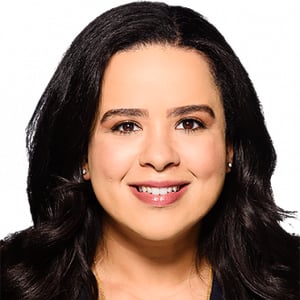
Senior Policy Analyst, Latin America and the Western Hemisphere, The Heritage Foundation
Ana Rosa Quintana leads The Heritage Foundation’s efforts on U.S. policy toward Latin America.
She has authored numerous policy studies included but not limited to Mexico, Central America, Cuba, Colombia and Venezuela. She has written articles for a wide range of outlets including The Atlantic, Real Clear World, the National Interest, The Hill, and various publications. She has presented at the State Department and other U.S. government agencies. Her work has been cited in media venues such as The Washington Post, The Wall Street Journal, Bloomberg Business, The Guardian, and she has been a commentator on media outlets like Fox News, MSNBC, and Al Jazeera. She has also testified multiple times before the U.S. Congress.
Quintana holds a Master of Arts degree in global affairs and a bachelor’s degree in political science, both from Florida International University. She also received certificates in National Security, Latin American and Caribbean studies. She was a scholar in the university’s Jack D. Gordon Institute for Public Policy and Citizenship Studies. She’s fluent in Spanish and studied in Minas Gerais, Brazil, on a scholarship sponsored by the Department of Defense.
She was formerly a National Security Fellow with the Foundation for Defense of Democracies and a former Penn Kemble Democracy Forum Fellow with the National Endowment for Democracy.
Prior to joining Heritage, she was a student trainee at the Defense Intelligence Agency. She also held internships at Virginia-based International Relief and Development, where she worked on rule of law issues in Latin America, and at the U.S. Agency for International Development, where she worked on civilian-military cooperation.
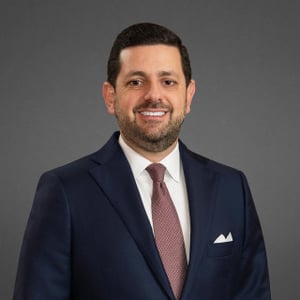
Of Counsel, DLA Piper LLP (US)
Harout J. Samra – a Board Certified Specialist in International Law – focuses his practice on international dispute resolution and arbitration matters, including international civil litigation in US courts.
Harout has represented clients from both the public and private sectors, including foreign governments, public officials and clients from a variety of industries. He has experience in international arbitrations administered under the International Chamber of Commerce (ICC), International Centre for Dispute Resolution (ICDR), United Nations Commission on International Trade Law (UNCITRAL), China International Economic and Trade Arbitration Commission (CIETAC), Bogota Chamber of Commerce, Madrid Court of Arbitration and International Centre for Settlement of Investment Disputes (ICSID) arbitration rules.
Harout currently serves as a member of the Florida Supreme Court Judicial Nominating Commission, by appointment of Governor Ron DeSantis. He previously served, by appointment of Governor Rick Scott, as a member of the Florida Third District Court of Appeal Judicial Nominating Commission, and was elected as Chair of the Commission from 2018-2019.
Partner, Stone Pigman Walther Wittmann LLC
Mr. Thomson concentrates his practice in white collar criminal defense, government investigations, and corporate compliance. He has tried over 50 criminal trials to verdict in federal and state courts, and has experience in appellate litigation. His practice also includes civil litigation and information security. Prior to joining Stone Pigman, Mr. Thomson had a 23 year career as a federal prosecutor with the U.S. Department of Justice. He served on special assignment with the National Security Agency, where he worked on matters involving information assurance and intelligence collection.
Prior to private practice, Mr. Thomson was recognized numerous times by government agencies, including a Special Commendation Award given by the U.S. Attorney General for completing the Justice Department's Leadership Excellence and Achievement Program; Special Commendation by FBI Director for outstanding performance for successful corruption prosecution after Hurricane Katrina; Special Award from the U.S. Postal Service for prosecution of corrupt employee; Special Award by New Orleans Police Department, ATF and U.S. Department of Justice for his contributions to Project Exile; and Special Awards for Outstanding Contributions to Drug Law Enforcement from the Drug Enforcement Administration.
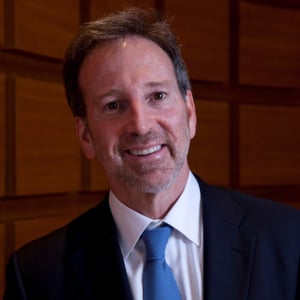
Counsel, White & Case
Antonio Garza served as the U.S. Ambassador to Mexico from 2002 through 2009 and is now Counsel to White & Case in Mexico City. Garza is currently a Director to both Kansas City Southern (NYSE:KSU), where he is member of the Executive Committee and Chairman of the company's subsidiary, Kansas City Southern de Mexico, and MoneyGram (NYSE:MGI) where he serves as Chairman of the company's Committee on Compliance and Ethics. Additionally, Garza is a Trustee at Southern Methodist University (J.D.,1983) and acts as Chairman of the university's Committee on Legal and Governmental Affairs and is a past-Chairman and President of the TexasExes, the alumni association of the University of Texas at Austin (B.B.A.,1980). Mr. Garza served as Chairman of the Texas Railroad Commission from 1998-2002, and prior to that as Texas 99th Secretary of State and Cameron County Judge , 1988-1994.
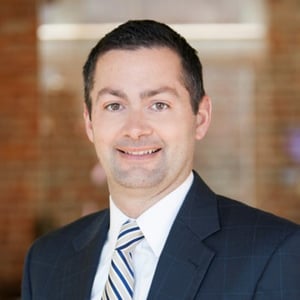
Principal, Navigators Global
Andy Keiser served 14 years on Capitol Hill for former House Intelligence Committee Chairman Mike Rogers - as Senior Advisor to the Committee, Chief of Staff, and Legislative Director handling all national security policy issues.
As Deputy National Security Senior Advisor to the pre-election phase of the Trump for America transition team, Mr. Keiser prepared and advised the transition's policy, personnel and agency action teams on all aspects of the national security portfolio. This included work in the Departments of Defense, State, Justice, Homeland Security, the Intelligence Community, and the National Security Council.
He was also the head writer for a nationally-syndicated radio program and assisted in the production of the CNN series “Declassified.”
Mr. Keiser has written extensively on intelligence, space and cyber policy, missile defense, Afghanistan, China, Iran, ISIS, North Korea, and Russia. He also helped shepherd six Intelligence Authorization Acts into law and managed Chairman Rogers’ cyber threat sharing legislation, which passed the House twice and the core of which was later signed into law by President Obama.
He has a Bachelor of Arts from Michigan State University and a Master of Arts from the United States Naval War College. He is active on various national security-focused policy projects at the Center for the Study of the Presidency and Congress, where he serves as a Senior Advisor, and at the National Security Institute at George Mason University’s Antonin Scalia Law School, where he serves as a Fellow. He also is a member of the OSS Society and serves on the Meridian International Center’s Global Leadership Council.
Mr. Keiser is currently a Principal at Navigators Global, where he focuses on cybersecurity and other national security priorities. Dubbed a “national security expert” by the Washington Post, Andy is a regular media commentator on national security issues.
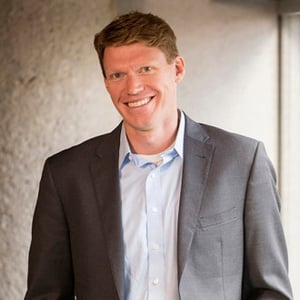
Professor of Law, Vanderbilt Law School

Professor Emeritus of Law, Antonin Scalia Law School, George Mason University
Jeremy A. Rabkin is a Professor Emeritus of Law at the Antonin Scalia Law School, George Mason University. Before joining the faculty in June 2007, he was for over two decades a professor in the Department of Government at Cornell University. Professor Rabkin serves on the board of directors of the Center for Individual Rights, a public interest law firm based in Washington, D.C. Previously he was a board member of the U.S. Institute of Peace and the board of academic advisors of the American Enterprise Institute.
Professor Rabkin’s books include Law Without Nations? (Princeton University Press, 2005). He authored “If You Need a Friend, Don’t Call a Cosmopolitan,” a chapter in Varieties of Sovereignty and Citizenship (Sigal R. Ben-Porath & Rogers M. Smith eds., University of Pennsylvania Press, 2012). His articles have appeared in major law reviews and political science journals and his journalistic contributions in a range of magazines and newspapers, including the Washington Post and the Wall Street Journal.
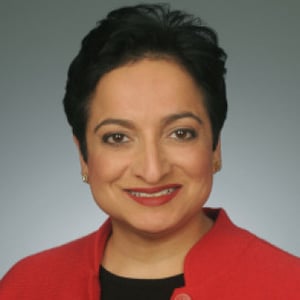
President, Mastercard Center for Inclusive Growth
Shamina Singh has spent her career building connections across the public, private and non-profit sectors to deliver strategies that contribute positively to the global economy. As president of the Mastercard Center for Inclusive Growth, she is responsible for ensuring the Center achieves its mission to advance sustainable and equitable economic growth and financial inclusion around the world. Previously, she served as the Global Director of Mastercard’s Government Services and Solutions, where she worked to digitize social subsidy programs in over 40 countries.
In 2015, Ms. Singh was appointed by President Obama to a six-year term on the board of the Corporation for National and Community Service, a federal agency responsible for engaging more than five million citizens in community service. She currently serves as Board Chair. She is also a member of the U.S. Secretary of State’s Advisory Committee on Public-Private Partnerships, a newly-formed advisory body to the U.S. Government on policies, proposals and strategies for developing public-private partnerships that promote shared value with the private sector worldwide.
Prior to joining Mastercard, Ms. Singh led Government and Public Affairs for Nike and spent five years with Citigroup’s Global Community Development Group. Over a 15-year career in the public sector, she held senior positions in the White House and the U.S. House of Representatives.
Ms. Singh is an alumna of the World Economic Forum’s Young Global Leaders program and currently serves on the Council on Economic Growth and Social Inclusion. She is on the board of Global Health Corps and the advisory boards of Data & Society and the Beeck Center for Social Impact + Innovation at Georgetown University. She is a Henry Crown Fellow with the Aspen Institute. Shamina holds an M.P.A from the Lyndon B. Johnson School of Public Affairs at the University of Texas, Austin and a B.S. from Old Dominion University.

Proclaiming Liberty with Tim Sandefur
Timothy Sandefur, Lee J. Strang
As America celebrates the 250th anniversary of the Declaration of Independence, Proclaiming Liberty by Timothy...
Opening Fireside Chat
Jeb Bush, Rocky A. Rodriguez
Featuring: Hon. Jeb Bush, Former Governor, Florida Moderator: Raquel “Rocky” Rodriguez, Shareholder, Buchanan Ingersoll &...
Showcase Panel IV: Race in the Law After SFFA
Peter Arcidiacono, David Bernstein, Lisa Branch, Kyle Rozema, Sonja B. Starr
Students for Fair Admission v. Harvard was the most important decision on affirmative action in...
Panel II: The Future of Foreign Policy: What Should be the US’s Grand Strategy Going Forward
Matthew R. A. Heiman, Lt. General Keith Kellogg, Kori Schake
With conflict rising across the globe and a presidential election this year, the United States...
Explainer 59 - Why (and How) Does OMB Classify Americans’ Race? A Brief History
David Bernstein
It may surprise some to know that the government has definitive racial classifications for Americans,...
The USMCA and the Rapid Response Enforcement Mechanism - Enforcing Compliance with Labor Laws through Free Trade Agreements?
Lewis Karesh, Matthew Levin, Stefan J. Marculewicz, Philip A. Miscimarra
The United States Mexico Canada Agreement (USMCA) free trade agreement went into force in July...
USMCA in Practice: What it Means for the Future of US-Mexico Relations
Jeffrey Davidow, Ana Rosa Quintana, Harout J. Samra
The new United States-Mexico-Canada Agreement (USMCA) entered into force in the United States on July...
Courthouse Steps Oral Argument Teleforum: Hernandez v. Mesa
Peter M. Thomson
The case of Hernandez v. Mesa arises from a 2010 confrontation on the U.S.-Mexican border in...
New NAFTA or Else ... What?
Antonio Garza, Andy Keiser, Timothy Meyer, Jeremy A. Rabkin
Last month, the Trump administration announced completion of a U.S.-Canada-Mexico-Agreement, intended to supersede the 1993...
Accelerating Financial Inclusion and Inclusive Growth - Podcast
Shamina Singh
Today, approximately two billion people lack access to financial services. Because of their exclusive reliance...