
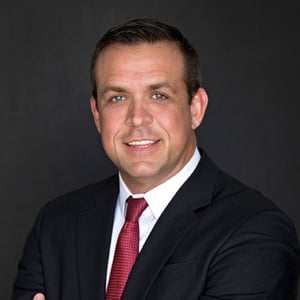
Attorney, Berkshire Law Office
As one of approximately 70 certified specialists in the State of Arizona and one of 36 Fellows in the American Academy of Matrimonial Lawyers, Keith Berkshire is well versed in all areas of family law, including high stakes litigation. In addition to his litigation practice, Keith has a significant appellate practice which includes 23 published Opinions at the Arizona Court of Appeals and the Arizona Supreme Court. Keith also successfully litigated the Howell case at the Supreme Court of the United States.
Keith routinely teaches other attorneys and judges at legal education seminars on various family law issues, including legal decision-making (custody) and appellate matters and regularly serves as an expert witness on variously family law issues.
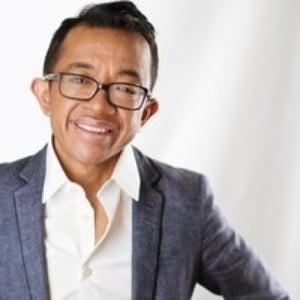
Attorney, Arizona Center for Disability Law
Sey In is a Hofstra law graduate interested in public interest law with focus in health law, public service, and immigration. He worked in litigation technology for over 10 years prior to going to law school.
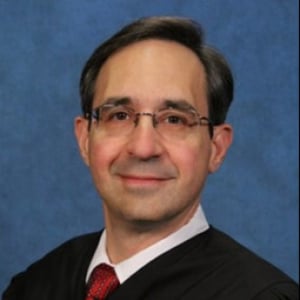
Presiding Judge of the Probate and Mental Health Department, Superior Court of Arizona for Maricopa County
Jay M. Polk is the Presiding Judge of the Probate and Mental Health Department of the Superior Court of Arizona for Maricopa County. He served as the Associate Presiding Judge of that department from April 10, 2017, through June 26, 2020. From November 21, 2011, to April 7, 2017, Judge Polk was assigned to the Family Court Department and served as the Associate Presiding Judge of Family Court Department for the Northeast Regional Court Center for approximately two of those years.
For nearly 20 years prior to his appointment to the bench, Judge Polk limited his practice of law to contested and uncontested matters relating to guardianships, conservatorships, decedents’ estates, the abuse or exploitation of vulnerable adults, and estate planning for modest estates. In addition, he served as a mediator and arbitrator, as a guardian ad litem for minor children and incapacitated adults, and as judge pro tempore. Between 1999 and 2011, Judge Polk was an Arizona Licensed Fiduciary and, as such, served as a personal representative or special administrator for several estates, as well as the special conservator for an attorney.
Judge Polk is a frequent speaker on probate and family law matters. He is an editor of the forthcoming edition of the Arizona Probate Code Practice Manual, was a co-managing editor of the 2014 edition of that publication, an associate editor of the 2000 edition of that publication, and has been a regular contributor to the Judicial College of Arizona’s Probate Benchbook. Throughout his career, Judge Polk has been involved in drafting legislation to improve Arizona’s probate laws. In addition, Judge Polk served on the Arizona Supreme Court’s Probate Rules Committee, which drafted the first set of statewide probate rules of procedure, and the Arizona Supreme Court’s Committee on Improving Judicial Oversight and Processing of Probate Court Matters, which proposed significant reforms to Arizona’s probate laws and rules. From December 2017 until December 2019, Judge Polk served on the Task Force on the Arizona Rules of Probate Procedure and chaired Workgroup 1 of that Task Force. He continues to serve on the Task Force’s Editorial Workgroup, which is updating statewide mandatory probate forms. From September 2018 until December 2019, Judge Polk was a member of the Steering Committee on Arizona Case Processing Standards and chaired the Probate Time Standards subcommittee. Between 2014 and 2015, Judge Polk assisted in creating the Superior Court of Arizona for Maricopa County’s intelligent probate forms.
Since 2011, Judge Polk has been a member of the Fiduciary Board, which regulates Arizona professional fiduciaries. He has been a member of the Executive Board of the Arizona Judges Association since June 2014, and served as Secretary from July 2016 through June 2017, Vice President from July 2017 through June 2018, and President from July 2018 to June 2019. He has been a member of the Arizona Public Safety Personnel Retirement System (“PSPRS”) Advisory Committee since November 2016. Since May 2017, Judge Polk has served as the Judicial Liaison to the Estate Planning, Probate, and Trust Law Section of the Maricopa County Bar Association, and since September 2018, he has served as the Judicial Liaison to the Elder Law, Mental Health, and Special Needs Planning Section of the State of Bar of Arizona. Since June 2019, he also has been the Judicial Liaison to the Probate and Trust Law Section of the State Bar of Arizona. In addition, Judge Polk served as President of The Council For Jews With Special Needs from 2004 to 2006 and was a member of that organization’s Board of Directors from 1998 through 2007.
A graduate of the University of Chicago (A.B. 1989, Political Science) and Arizona State University (J.D. 1992), Judge Polk has been the recipient of numerous professional awards, including the State Bar of Arizona Probate and Trust Law Section’s 2008 Eleanor ter Horst Distinguished Service Award, the Arizona Fiduciaries Association’s 2009 Leadership Award, the Arizona Chapter of the National Academy of Elder Attorneys’ 2011 Craig C. Gordon Outstanding Arizona Chapter Member Award, and the Maricopa County Bar Association Family Law Section’s 2017 Bridging the Gap Award.
Vice Chief Justice, Arizona Supreme Court
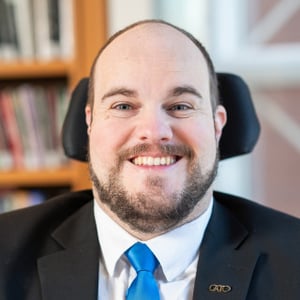
Director, Project on Criminal Justice, Cato Institute
Matthew Cavedon is the Director of the Cato Institute’s Project on Criminal Justice. He focuses on reforming plea-driven mass adjudication, ensuring police accountability, and defending constitutional criminal originalism. Cavedon’s scholarship has been published (or is forthcoming in) publications including the Arizona State Law Journal, Cato Supreme Court Review, Seattle University Law Review, and Georgetown Journal of Law and Public Policy. Formerly a Georgia public defender and fellow at the Institute for Justice, Cavedon has taught law school courses on criminal law and procedure, as well as the First Amendment. Cavedon clerked for a U.S. district court and the Supreme Court of Georgia. He came to Cato following a fellowship at the Emory University Center for the Study of Law and Religion.
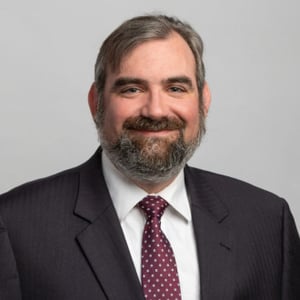
Senior Attorney, Institute for Justice
Robert Frommer serves as a senior attorney with the Institute for Justice. He joined the Institute in August 2008 and is currently litigating on behalf of SpeechNow.org, a group challenging the federal campaign finance laws regarding free speech.
Before joining IJ, Robert was an attorney with the Washington, D.C., office of Gibson, Dunn & Crutcher LLP, where he litigated both complex litigation and public-interest matters. He is a former law clerk to Judge Morris Sheppard Arnold of the U.S. Court of Appeals for the Eighth Circuit.
Robert received his law degree magna cum laude from the University of Michigan Law School in 2004, where he was elected to the Order of the Coif and served as both a book review editor for the Michigan Law Review and president of the Federalist Society student chapter. Before going to law school, Robert earned a master's degree in economics from George Mason University.

Author and FoxNews.com Contributor
John R. Lott, Jr. is an economist who has held research and/or teaching positions at the University of Chicago, Yale University, Stanford, UCLA, Wharton, and Rice and was the chief economist at the United States Sentencing Commission during 1988 and 1989. He has published over 100 articles in academic journals. He also is the author of six books including More Guns, Less Crime, Freedomnomics, The Bias Against Guns, and Are Predatory Commitments Credible? He has just released another book entitled "Debacle: Obama's war on jobs and growth and what we can do now to regain our future." Lott is a FoxNews.com contributor and a weekly columnist for them. Opinion pieces by Prof. Lott have appeared in such places as The Wall Street Journal, The New York Times, The Los Angeles Times, the New York Post, USA Today, and The Chicago Tribune. He has appeared on such television programs as the ABC and NBC National Evening News broadcasts, Fox News, "The NewsHour with Jim Lehrer," and the "Today Show." He received his Ph.D. in economics from UCLA in 1984.

Vice President, Edwin Meese III Institute for the Rule of Law, Advancing American Freedom
John G. Malcolm oversees Advancing American Freedom’s work to increase understanding of the Constitution and the rule of law as Vice President of the organization’s Edwin Meese III Institute for the Rule of Law. Malcolm brings to the challenge a wealth of legal expertise and experience in both the public and private sectors.
Prior to joining Advancing American Freedom in 2025, Malcolm was the Vice President of the Institute for Constitutional Government and the Director of the Meese Center for Legal and Judicial Studies at the Heritage Foundation. Prior to joining Heritage in 2012, Malcolm was general counsel at the U.S. Commission on International Religious Freedom, as well as a distinguished practitioner in residence at Pepperdine Law School. From 2004 to 2009, Malcolm was executive vice president and director of worldwide anti-piracy operations for the Motion Picture Association.
Malcolm served as a deputy assistant attorney general in the Department of Justice’s Criminal Division from 2001 to 2004, where he oversaw sections on computer crime and intellectual property, domestic security, child exploitation and obscenity, and special investigations. Immediately prior to that, he was a founding partner in the Atlanta law firm of Malcolm & Schroeder, LLP.
From 1990 to 1997, Malcolm was an assistant U.S. attorney in Atlanta, assigned to the fraud and public corruption section, and also an associate independent counsel, investigating fraud and abuse in the Department of Housing and Urban Development. He was honored with the Director’s Award for Superior Performance for his work in connection with the successful prosecution of Walter Leroy Moody Jr., who assassinated an 11th Circuit judge and the head of the Savannah chapter of the NAACP.
A graduate of Harvard Law School and Columbia College, Malcolm began his career as a law clerk to a federal district court judge and a federal appellate court judge, and as an associate at the Atlanta-based law firm of Sutherland, Asbill & Brennan (new Eversheds Sutherland).
Malcolm, who resides in Washington, D.C., serves on the Board of Trustees of the Washington National Opera and is a Senate-confirmed member of the Board of Directors of the Legal Services Corporation, the largest funder of civil legal aid in the United States.

Free Britney!
Do the Probate & Family Courts have too much power to control individual autonomy?
Phoenix, AZCourthouse Steps Decision Teleforum: Caniglia v. Strom
Matthew P. Cavedon, Robert Frommer
On May 17, 2021, the Supreme Court released its decision in Caniglia v. Strom, which focused...
Red Flag Laws
John Lott, John G. Malcolm
In the wake of the tragic February 2018 mass shooting at Marjory Stoneman Douglas High...