
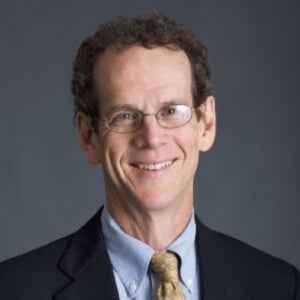
Hon. George J. Mitchell Professor in Law and Public Policy, Georgetown Law
David Cole is the Honorable George J. Mitchell Professor in Law and Public Policy and former National Legal Director of the American Civil Liberties Union (ACLU). He writes about and teaches constitutional law, freedom of speech, and constitutional criminal procedure. He is a regular contributor to The New York Review of Books and is the legal affairs correspondent for The Nation.
David has published widely in law journals and the popular press, including The Yale Law Journal, California Law Review, Stanford Law Review, The New York Times, The Washington Post, The New Yorker, The Atlantic, and The New Republic. He is the author or editor of ten books, several of which have won awards. Less Safe, Less Free: Why America Is Losing the War on Terror, published in 2007, and co-authored with Jules Lobel, won the Palmer Civil Liberties Prize for best book on national security and civil liberties. Enemy Aliens: Double Standards and Constitutional Freedoms in the War on Terrorism received the American Book Award in 2004. No Equal Justice: Race and Class in the American Criminal Justice System was named Best Non-Fiction Book of 1999 by the Boston Book Review and best book on an issue of national policy in1999 by the American Political Science Association.
David received his bachelor’s degree and law degree from Yale University. He worked as a staff attorney for the Center for Constitutional Rights from 1985 to 1990. He has continued to litigate as a professor and, from 2017 to 2024, as National Legal Director of the ACLU. He has litigated many significant constitutional cases at the Supreme Court, including Texas v. Johnson (1989), which extended First Amendment protection to flag burning; Bostock v. Clayton County (2020), which held that discrimination on the basis of sexual orientation and gender identity are prohibited forms of sex discrimination under Title VII; Mahanoy Area Sch. Dist. v. B.L. (2021), which protected student online speech from school discipline; and National Rifle Association v. Vullo (2024), which held that government officials violate the First Amendment when they use their regulatory authority to coerce private parties to blacklist a disfavored political group.
David has received two honorary degrees and numerous awards for his work, including the inaugural Norman Dorsen Presidential Prize from the ACLU for lifetime commitment to civil liberties. The late New York Times columnist Anthony Lewis called David “one of the country’s great legal voices for civil liberties today.” Nat Hentoff called him “a one-man Committee of Correspondence in the tradition of patriot Sam Adams.”

Judge, United States Court of Appeals, Third Circuit
Judge Hardiman was appointed to the United States Court of Appeals for the Third Circuit on January 9, 2007 and was confirmed by the Senate (95-0) on March 15, 2007. Prior to becoming an appellate judge, Judge Hardiman served as a trial judge on the United States District Court for the Western District of Pennsylvania as of November 1, 2003. In 2008, Chief Justice John Roberts appointed Judge Hardiman to the Information Technology Committee of the Judicial Conference of the United States. Judge Hardiman was appointed Chairman of the IT Committee in 2013 and served in that capacity until September 2021. In 2021 he was appointed by the Director of the Administrative Office of the United States Courts to serve as Chair of the Judiciary IT Security Task Force, which completed its work in fall 2023. Chief Justice Roberts appointed Judge Hardiman to the Board of the Federal Judicial Center to serve from March 2020 until March 2024. As part of his work with the Center, Judge Hardiman now serves as Editor in Chief for the Manual for Complex Civil Litigation, Fifth.
Before entering judicial service, Judge Hardiman handled a wide variety of litigation matters in state and federal trial and appellate courts as a partner at Reed Smith LLP (1999-2003), a partner at Titus & McConomy LLP (1996-1999), and as an associate with its predecessor firm, Cindrich & Titus (1992-1996). Judge Hardiman began his legal career as an associate in the Washington, D.C. office of Skadden, Arps, Slate, Meagher & Flom (1990-1992).
A 1987 honors graduate of the University of Notre Dame, Judge Hardiman received his law degree in 1990 from the Georgetown University Law Center, where he served as a Notes and Comments Editor on the Georgetown Law Journal. In 2012, Judge Hardiman was elected as a member of the American Law Institute and was elected to its Council in 2019 and its Executive Committee in 2025. Judge Hardiman regularly teaches a seminar on Advanced Constitutional Law at Duquesne University School of Law and a one-week course entitled “Constitutional Law: the First and Second Amendments” at Georgetown University Law Center.
A native of Waltham, Massachusetts, Judge Hardiman has chambers in Pittsburgh, Pennsylvania. He and his wife Lori married in 1992 and have three children.

Senior Fellow and Director of Constitutional Studies, Manhattan Institute
Ilya Shapiro is a senior fellow and director of constitutional studies at the Manhattan Institute and a contributing editor of City Journal. Previously he was executive director and senior lecturer at the Georgetown Center for the Constitution, and before that a vice president of the Cato Institute.
Shapiro is the author of Lawless: The Miseducation of America’s Elites (2025) and Supreme Disorder: Judicial Nominations and the Politics of America’s Highest Court (2020), coauthor of Religious Liberties for Corporations? (2014), and editor of 11 volumes of the Cato Supreme Court Review (2008-18). He has contributed to a variety of academic, popular, and professional publications, including the Wall Street Journal, Harvard Journal of Law & Public Policy, Washington Post, Los Angeles Times, USA Today, National Review, and Newsweek. He also regularly provides commentary for various media outlets, writes the Shapiro’s Gavel newsletter on Substack, and once appeared on the Colbert Report.
Shapiro has testified many times before Congress and state legislatures and has filed more than 500 amicus curiae “friend of the court” briefs in the Supreme Court. He lectures regularly on behalf of the Federalist Society, is a member of the board of fellows of the Jewish Policy Center, was an inaugural Washington Fellow at the National Review Institute, and has been an adjunct law professor at the George Washington University and University of Mississippi. He is also the chairman of the board of advisers of the Mississippi Justice Institute, a barrister in the Edward Coke Appellate Inn of Court, and a former member of the Virginia Advisory Committee to the U.S. Commission on Civil Rights.
Earlier in his career, Shapiro was a special assistant/adviser to the Multi-National Force in Iraq on rule-of-law issues and practiced at Patton Boggs and Cleary Gottlieb. Before entering private practice, he clerked for Judge E. Grady Jolly of the U.S. Court of Appeals for the Fifth Circuit. He holds an AB from Princeton University, an MSc from the London School of Economics, and a JD from the University of Chicago Law School.
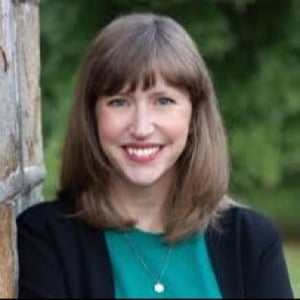
Partner, Donahue & Goldberg LLP
Megan M. Herzog is a Massachusetts-based attorney whose practice is focused on environmental, natural resources, and energy litigation and administrative advocacy. She is a member of the bar of the Commonwealth of Massachusetts, and practices in state and federal appellate courts.
Megan is a 2011 graduate of Stanford Law School, where she was Co-Editor-in-Chief of the Journal of Law, Science & Policy. She also holds an M.S. in Environment and Resources from Stanford University. Megan began her legal career with fellowships at the Environmental Law Institute in Washington, D.C. and at UCLA Law School's Emmett Institute on Climate Change and the Environment, where she advised state and local governments on climate change mitigation and adaptation policy. From 2016 to 2018, she served as staff attorney at Conservation Law Foundation's Boston office, where she worked on clean energy, ocean, and fisheries matters, including litigation in federal courts and before state public utilities commissions. Megan then spent nearly five years in the Massachusetts Office of the Attorney General, Energy and Environment Bureau, advocating before federal agencies and litigating cases concerning state and federal air, climate, energy, and natural resources laws. She led state government coalitions in several actions in the U.S. Supreme Court and the U.S. Court of Appeals for the D.C. Circuit, and before the Federal Energy Regulatory Commission.
Megan has published on a variety of environmental law topics, including climate change adaptation and federal regulation of greenhouse gas emissions. She has taught courses in environmental law, climate law, and ocean and coastal law at UCLA Law School and Tufts University. She has testified before legislative committees and given dozens of presentations on critical issues in environmental law, including for the American Law Institute, Energy Bar Association, California State Bar Association Environmental Law Section, and multiple law review symposia.
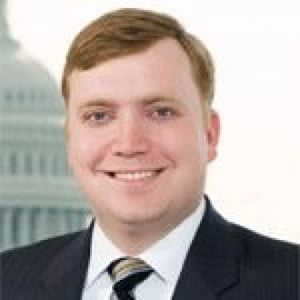
Solicitor General of Kentucky
Matt Kuhn serves as the Solicitor General of Kentucky. As Solicitor General, he oversees the office's civil and criminal appellate litigation and supervises the office's filing of amicus briefs. Since joining the Attorney General's office, he has argued in the Supreme Court of the United States, the United States Court of Appeals for the Sixth Circuit, and the Supreme Court of Kentucky. Before joining the Attorney General's office, he served as Chief Deputy General Counsel to the Governor of Kentucky. He also worked in private practice at Jones Day in Washington, D.C. and Stoll Keenon Ogden in Louisville, and served as a law clerk for Judge Raymond Gruender of the United States Court of Appeals for the Eighth Circuit. He is a graduate of Furman University and Columbia Law School.
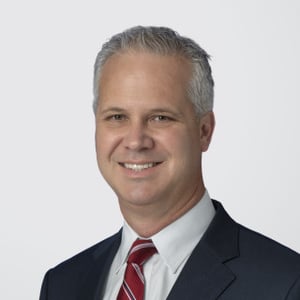
Partner, Hunton Andrews Kurth
Mr. Leopold is a Partner with the law firm of Hunton Andrews Kurth in Washington, DC. He is the former Senate-confirmed general counsel of the U.S. EPA from 2018-2020, and he previously was a litigator at the U.S. Department of Justice, Environment and Natural Resources Division form 2007-2013. As EPA General Counsel, he counseled on the development and defense of EPA’s most significant rulemakings, including the Affordable Clean Energy Rule, the Navigable Waters Protection Rule, and the Safe Affordable Fuel‐Efficient (SAFE) Vehicles Rule, as well as several pesticide actions. He was personally involved in defending EPA in litigation, including the County of Maui v. Hawaii Wildlife Fund in the U.S. Supreme Court. Mr. Leopold’s prior government service also includes working in Florida as general counsel of the Florida Department of Environmental Protection. He now represents clients in regulatory advocacy before federal agencies, litigates federal environmental actions, and defends clients with EPA enforcement issues.
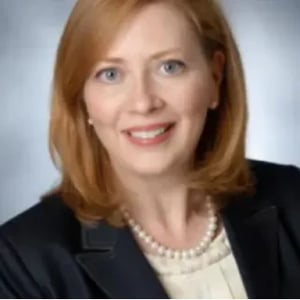
Regulatory Affairs Director, National Rural Electric Cooperative Association
Viktoria Seale is a regulatory affairs director for the National Rural Electric Cooperative Association (NRECA) which represents nearly 900 not-for-profit electric cooperatives and other rural electric utilities. She advocates before the federal government for NRECA members on environmental, permitting, and other regulatory issues.
Viktoria has extensive federal government experience and has worked on a wide range of complex legal, regulatory, legislative and policy matters. Prior to joining NRECA, she served as general counsel and chief of staff for the White House Council on Environmental Quality (CEQ) and helped lead significant initiatives including the comprehensive update and modernization of CEQ’s National Environmental Policy Act regulations in 2020. Viktoria also has worked for two chairmen of the U.S. House of Representatives Committee on Small Business. In addition, she has served as director of regional affairs and special assistant to the chief counsel for the U.S. Small Business Administration Office of Advocacy.
Viktoria received a B.A. in international studies from Rhodes College and a J.D. from Chicago-Kent College of Law, Illinois Institute of Technology. She is admitted to practice law in Texas. Viktoria resides in Alexandria, Virginia with her husband and daughter.
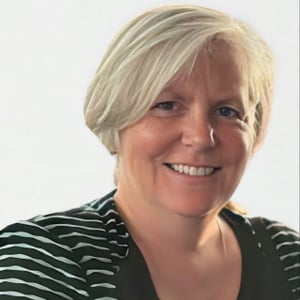
Partner, Earth & Water Law
Susan Bodine is a partner at Earth & Water Law.
Susan Bodine is a former Assistant Administrator for EPA’s Office of Enforcement and Compliance Assurance (OECA). Prior to this position, Susan served as Chief Counsel for the Senate Committee on Environment and Public Works and previously worked for the House Committee on Transportation and Infrastructure.
This is Susan’s second position at EPA, having served as Assistant Administrator for the Office of Solid Waste and Emergency Response (now the Office of Land and Emergency Management) from 2006 to 2009.
Susan has also practiced environmental law at Covington and Burling LLP and at Barnes and Thornburg LLP.
Susan is a graduate of Princeton University and the University of Pennsylvania School of Law.

Managing Partner, Boyden Gray PLLC
Michael Buschbacher is the managing partner of Boyden Gray PLLC. He represents public and private companies, trade associations, non-profits, and individuals in high-stakes litigation and administrative proceedings, with a particular focus on environmental and energy matters.
In addition to trial-level work, Mr. Buschbacher maintains an active appellate practice, both as merits counsel and as counsel for amici curiae. He has written amicus briefs quoted by the Seventh and Ninth Circuits. And his Supreme Court advocacy has been cited by The New Yorker, The New York Times, and E&E News. Mr. Buschbacher’s commentary on legal issues has been published in The Wall Street Journal, Newsweek, and The American Conservative.
Before joining the firm, Mr. Buschbacher served at the U.S. Department of Justice as counsel to the Assistant Attorney General for the Environment and Natural Resources Division. There, he advised senior Department leadership, served as the lead attorney on several lawsuits, and helped draft policy memoranda for the Department on the proper scope and procedure for environmental enforcement. Prior to serving in the government, Mr. Buschbacher was an associate in the D.C. office of Sidley Austin.
Mr. Buschbacher is a former clerk to Judge Alice M. Batchelder of the U.S. Court of Appeals for the Sixth Circuit and to Magistrate Judge Paul R. Cherry of the U.S. District Court for the Northern District of Indiana.
Mr. Buschbacher holds a B.A. in Music and Germanic Studies from Indiana University and a J.D., magna cum laude, from Notre Dame Law School.
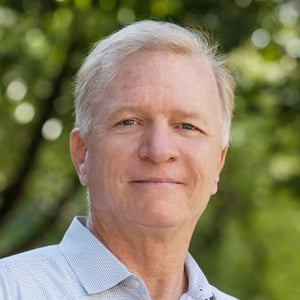
Executive Director, Environmental Integrity Project
Eric has served as Executive Director since he co-founded the organization in 2002. Previously, Eric served as director of EPA’s Office of Civil Enforcement from 1997 to 2002, where he received a Presidential Rank Award, as well as the John Marshall award from the Justice Department for his leadership in negotiating an industry-wide cleanup of petroleum refineries. Eric’s career at EPA began in 1990, and included an appointment as special assistant to the Deputy Administrator. Prior to his service at EPA, Eric worked as an environmental attorney for two and a half years at Morgan, Lewis & Bockius, and spent six years on Capitol Hill working for various members of Congress. Eric received his law degree from Georgetown University, and his B.A. from Vanderbilt University.
United States Senate, Alaska
Dan Sullivan was sworn in as Alaska’s eighth United States Senator on January 6, 2015. Sullivan serves on four Senate committees vital to Alaska: the Commerce, Science and Transportation Committee; the Armed Services Committee; the Environment and Public Works Committee; and the Veterans' Affairs Committee.
Prior to his election to the U.S. Senate, Sullivan served as Alaska’s Attorney General and Commissioner of the Alaska Department of Natural Resources. As Alaska's Attorney General, Sullivan’s number one priority was protecting Alaskans, their physical safety, financial well-being, and individual rights – particularly Alaska’s most vulnerable. During his tenure he spearheaded a comprehensive statewide strategy – the “Choose Respect” campaign – to combat Alaska’s high rates of domestic violence and sexual assault. Under Sullivan’s leadership, the Department of Law also undertook an aggressive strategy of initiating and intervening in litigation aimed at halting federal government overreach into the lives of Alaskans and their economy.
As Commissioner of the Alaska Department of Natural Resources, Sullivan managed one of the largest portfolios of oil, gas, minerals, renewable energy, timber, land, and water in the world. Working closely with Alaska’s Governor and state legislature, Sullivan developed numerous strategies that spurred responsible resource development, energy security, and a dramatic increase in good-paying jobs across a number of critical sectors in the Alaska economy. He also developed a comprehensive plan to streamline and reform the state’s regulatory and permitting system.
Sullivan is one of a select number of Alaskan attorneys who has held judicial clerkships on both the highest federal and state courts in Alaska. He served as a judicial law clerk for Judge Andrew Kleinfeld of the United States Court of Appeals for the Ninth Circuit in Fairbanks, Alaska and for Chief Justice Warren Matthews of the Alaska Supreme Court in Anchorage, Alaska. Sullivan also served as a judicial law clerk/intern for Judge James L. Buckley on the United States Court of Appeals for the District of Columbia Circuit.
Sullivan has a distinguished record of military and national security service. He is currently an infantry officer and Lieutenant Colonel in the U.S. Marine Corps Reserves. Over the past 21 years, Sullivan has served in a variety of command and staff billets on active duty and in the reserves, including: TRAP Force Commander and 81mm mortar Platoon Commander, 31st Marine Expeditionary Unit (Special Operations Capable); Weapons Company Executive Officer, Second Battalion, Fifth Marines; Commanding Officer, Delta Company, Anti-Terrorism Battalion; Executive Officer, Echo Company, Fourth Reconnaissance Battalion; and Commanding Officer, 6thAir Naval Gunfire Liaison Company (ANGLICO). In 2004, Sullivan was recalled to active duty for a year and a half to serve as a staff officer to the Commander of U.S. Central Command, General John Abizaid, spending substantial time deployed in the Middle East, the Horn of Africa, and Central Asia. In July 2013, Sullivan was recalled to active duty to serve with a Joint Task Force in Afghanistan focusing on dismantling terrorist networks and criminalizing the Taliban insurgency.
Sullivan served in the Administration of President George W. Bush as the U.S. Assistant Secretary of State for Economic, Energy, and Business under Secretary of State Condoleezza Rice. He focused on fighting terrorist financing, and implementing policies relating to international energy, economic, trade, finance, transportation, telecommunications, and Arctic issues. Sullivan also served as a Director in the International Economics Directorate of the National Security Council staff at the White House.
Sullivan earned a B.A. in Economics from Harvard University in 1987 and a joint law and Masters of Science in Foreign Service from Georgetown University in 1993. Dan and his wife Julie Fate Sullivan were married over 20 years ago in Julie’s hometown of Fairbanks, Alaska. They have three teenage daughters: Meghan, Isabella and Laurel.
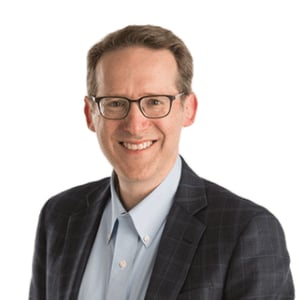
Assistant Administrator (Nominee), United States Environmental Protection Agency
Professor David M. Uhlmann has been nominated by President Biden to serve as assistant administrator for enforcement and compliance assurance at the U.S. Environmental Protection agency. If confirmed by the United States Senate, Professor Uhlmann will take a leave of absence from Michigan Law so that he can lead federal criminal, civil, and administrative enforcement of the environmental laws, including the Clean Air Act, the Clean Water Act, hazardous waste laws, the Safe Drinking Water Act, and the Toxic Substances Control Act.
Professor Uhlmann is an internationally recognized expert on environmental law, leading authority on criminal enforcement of the environmental laws in the United States, and highly-regarded advocate for environmental stewardship and corporate sustainability programs. At Michigan Law he is the Jeffrey F. Liss Professor from Practice and the director of the Environmental Law and Policy Program. Professor Uhlmann previously served for 17 years as a federal prosecutor, including seven years as chief of the Environmental Crimes Section at the U.S. Department of Justice. In that role, he led prosecution of environmental and wildlife crimes nationwide, coordinated national legislative, policy, and training initiatives regarding criminal enforcement, and chaired the Justice Department’s Environmental Crimes Policy Committee. He earned a reputation for prosecuting polluters aggressively and fairly, presided over expansion of the environmental crimes program, and strengthened relationships with the Environmental Protection Agency, the Coast Guard, and other law enforcement partners. His work as lead prosecutor in United States v. Elias is chronicled in The Cyanide Canary. He received numerous Justice Department and EPA awards for his precedent-setting prosecutions, including the first environmental justice criminal trial.
Professor Uhlmann served from 2017 to 2020 as the Counselor to the Michigan Law alumnus Larry D. Thompson, the Compliance Monitor and Independent Auditor appointed by the Justice Department and EPA in the wake of the Volkswagen diesel scandal. In addition to advising the monitor, Professor Uhlmann made numerous presentations to the Volkswagen and Audi boards regarding environmental law in the United States, corporate accountability, and promoting environmental stewardship and an ethical culture. Professor Uhlmann has testified before Congress about the use of environmental protections to address shortcomings in worker safety laws and redressing environmental harm in corporate settlements; he has lectured widely about corporate crime and the exercise of prosecutorial discretion in cases involving corporate wrongdoing. Professor Uhlmann’s views on corporate accountability for the Gulf oil spill and the VW diesel scandal, the urgency of climate disruption, and the need to promote a sustainable future for all Americans have been published in The New York Times, The Atlantic, the American Constitution Society’s Issue Briefs series, and numerous top law reviews. Professor Uhlmann leads the efforts of nearly 400 Michigan Law students participating in the Environmental Crimes Project, the first comprehensive empirical study of criminal enforcement under U.S. pollution laws. At Michigan Law, Professor Uhlmann has hosted conferences, lecture series, and pro bono projects, led campus-wide sustainability efforts, and mentored a next generation of environmental lawyers committed to public service and public interest work.
Professor Uhlmann is a fellow in the American College of Environmental Lawyers, which invited him to join their Board of Regents earlier this year. He was named a “Conservation Hero” by the Michigan League of Conservation Voters and selected by the University of Michigan to be a Distinguished Faculty Fellow in Sustainability. Uhlmann received his JD from Yale Law School and his BA in history and political science with high honors from Swarthmore College. Following law school, he clerked for U.S. District Court Judge Marvin H. Shoob in Atlanta, Georgia.
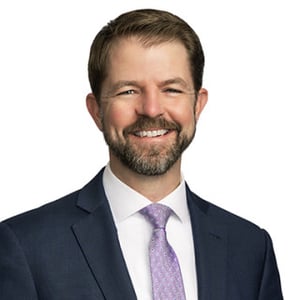
Partner, Baker Botts LLP
Drawing from two decades of experience in senior government, in-house corporate, and private law firm roles, Jeff Wood helps clients with federal enforcement, compliance, litigation, permitting, and policy challenges primarily in the energy and environmental fields.
Prior to joining Baker Botts, Mr. Wood served for almost two years as the Acting Assistant Attorney General (AAG) for the Justice Department's Environment and Natural Resources Division (ENRD). In that capacity, Mr. Wood led ENRD and its more than 600 attorneys and staff representing EPA, Departments of the Interior, Energy, and Defense, and other agencies in civil and criminal enforcement and defensive environmental, energy, and natural resources litigation.
As the top official in ENRD, Mr. Wood managed a complex organization with an annual budget exceeding $200 million and a docket of more than 6,000 cases and matters. E&E News noted that “Wood maintains a strong relationship with ENRD's career staff” (Greenwire, Oct. 31, 2018). He previously served on the staff of the United States Senate Committee on Environment and Public Works.
At the Justice Department, Mr. Wood oversaw the Division's civil and criminal enforcement programs and was responsible for developing legal strategies and approving briefs in key cases including filings before the Supreme Court and Courts of Appeals in coordination with the Office of Solicitor General. In this role, Mr. Wood held the highest level security clearance and worked closely with top leadership at DOJ, EPA, the Interior Department, USDA, the Energy Department, Transportation Department, FERC, NRC and across the Executive Branch, including the White House.
With many years of both private law firm and in-house legal experience, Mr. Wood has handled complex environmental enforcement, regulatory, policy, and litigation matters for electric utilities, energy companies, maritime companies, mining companies, real estate developers, financial institutions, industrial companies and manufacturers, business coalitions, associations, small businesses, and individual property owners. Drawing from his experiences in-house, Mr. Wood brings a common-sense, cost-effective, client-focused approach to his work every day.
With a strong national reputation, Mr. Wood is a frequent speaker on environmental law and policy matters, with recent speeches and presentations at the Environmental Law Institute, Harvard Law School, Vanderbilt Law School, American University Law School, American Bar Association Environmental Law Conferences, the Texas Environmental SuperConference, Air Force Judge Advocate General School's Advanced Environmental Law Course, Baker Institute's Center for Energy Studies (Rice University), and many other venues. He frequently appears in national news to share insights on significant environmental law and policy issues, including recent quotes in the New York Times, Washington Post, Wall Street Journal, Bloomberg, Law360, and E&E News, among others.
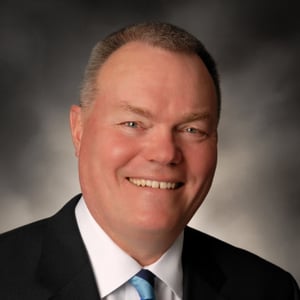
Chief Operating Officer and General Counsel, North American Meat Institute
Mark Dopp is the chief operating officer and general counsel for the North American Meat Institute (NAMI), previously serving as its senior vice president of regulatory affairs and general counsel. In his role, Dopp oversees policy development and represents industry views on significant regulatory, scientific, legislative, and communications matters. He also provides legal counsel to NAMI and oversees its administration and financial matters.
Dopp became the Meat Institute’s outside general counsel in May 1995 and in 1999 he formally joined the Institute and assumed responsibility for its legal and regulatory affairs. Before joining NAMI, Dopp worked at Hogan and Hartson (now Hogan Lovells), where he was active in areas of food and agricultural law on behalf of many clients, including domestic and foreign corporations. He joined Hogan and Hartson in 1989 as an associate and in January 1993 became a partner. Dopp began his career in USDA's Office of the General Counsel in 1984 and entered private practice in 1985.
Dopp received his Bachelor of Science-Agriculture degree in agricultural economics from the University of Wisconsin and his Master of Science from Michigan State University in 1981, also in agricultural economics. He received his law degree in 1984 from the University of Missouri.
Sean Heather is senior vice president for International Regulatory Affairs and Antitrust at the U.S. Chamber of Commerce. He leads the Chamber’s Center for Global Regulatory Cooperation (GRC), which seeks to align trade, regulatory, and competition policy in support of open and competitive markets, and oversees the organization’s antitrust policy on behalf of its members.
On the international level, Heather directs policy related to data governance, cross-border data flows, artificial intelligence, cybersecurity, and other emerging regulatory frameworks related to the digital transformation of the economy. His efforts focus on advancing sound regulatory practices as the foundation of better regulation and cooperation across jurisdictions. In addition, he is responsible for policy related to foreign direct investment and investment screening.
Heather has made significant contributions to update trade disciplines that address issues ranging from digital trade and regulatory cooperation to competition policy and state-owned enterprises.
Heather has held a variety of positions during his long career at the Chamber. He served in the Congressional and Public Affairs Division and was head of the Chamber’s regional office in Chicago.
Before joining the Chamber, Heather worked for the Illinois comptroller and with several political campaigns across the state. He holds an undergraduate degree and an M.B.A. from the University of Illinois.
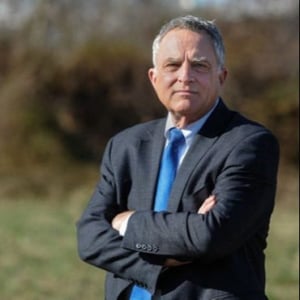
President, Board of Directors, Farm Action
Joe Maxwell is a co-founder of Farm Action. He focuses his work on a vision of an inclusive U.S. economy that works for all people, providing them an equitable opportunity to share in the prosperity they help build, rather than an economy that works for just a handful of individuals and multi-national corporations.
Joe has held key positions in both political and initiative petition campaigns. During the last election cycle, he assisted Presidential, U.S. Senate and U.S. House of Representatives candidates in developing their antitrust, agriculture, and food policy positions.
Joe holds degrees in agriculture economics and law from the University of Missouri. He served as a Missouri state legislator, as Missouri’s Lieutenant Governor, and is retired from the Army National Guard, where he served as a First Sergeant in the Field Artillery. Joe and his brother, Steve, are Missouri family farmers. Joe’s work has been profiled by The Hill, Huffington Post, Mother Jones, Politico, and The Nation. He has been cited by CNN, The New York Times, NPR, USA Today, Washington Post, and more.

Deputy Secretary of Agriculture, U.S. Department of Agriculture
Judge Stephen Alexander Vaden was appointed as the Deputy Secretary of the U.S. Department of Agriculture on July 7, 2025. Alongside Secretary Brooke L. Rollins, Deputy Secretary Vaden leads the Department’s operations and implements policies that support America’s food and farm systems. A native of Union City, Tennessee, Deputy Secretary Vaden brings expertise in agricultural policy, law, and rural development. Previously, he served as a judge on the U.S. Court of International Trade and as General Counsel of USDA. Throughout Deputy Secretary Vaden’s time as General Counsel, he led successful Supreme Court litigation, advanced regulatory reform, and supported the implementation of the 2018 Farm Bill. He is a graduate of Yale Law School and Vanderbilt University. A public servant with strong agricultural roots, Deputy Secretary Vaden is committed to revitalizing rural America and ensuring an abundant, affordable, and safe U.S. food supply.

Patrick Hotung Professor of Constitutional Law, Georgetown University Law Center; Faculty Director, Georgetown Center for the Constitution
Randy E. Barnett is the Patrick Hotung Professor of Constitutional Law at the Georgetown University Law Center and is the Faculty Director of the Georgetown Center for the Constitution. After graduating from Northwestern University and Harvard Law School, he tried many felony cases as a prosecutor in the Cook County States’ Attorney’s Office in Chicago. A recipient of a Guggenheim Fellowship in Constitutional Studies and the Bradley Prize, Professor Barnett has been a visiting professor at Penn, Northwestern and Harvard Law School.
Professor Barnett’s publications includes thirteen books, more than one hundred articles and reviews, as well as numerous op-eds. His most recent book is Felony Review: Tales of True Crime and Corruption in Chicago (2026). His other books on the Constitution include: A Life for Liberty: The Making of an American Originalist (2024); The Original Meaning of the Fourteenth Amendment: Its Letter and Spirit (2021) (with Evan Bernick); An Introduction to Constitutional Law: 100 Supreme Court Cases Everyone Should Know (2019) (with Josh Blackman); Restoring the Lost Constitution: The Presumption of Liberty (2nd ed. 2013); Our Republican Constitution: Securing the Liberty and Sovereignty of We the People (2016); and Constitutional Law: Cases in Context (5th ed. forthcoming 2027) (with Josh Blackman). His books on contracts are The Oxford Introductions to U.S. Law: Contracts (2010) and Contracts: Cases and Doctrine (7th ed. 2021) (with Nate Oman). And he is the author of The Structure of Liberty: Justice and the Rule of Law (2nd ed. 2014).
In 2004, he argued the medical marijuana case of Gonzalez v. Raich before the U.S. Supreme Court. In 2012, he was one of the lawyers representing the National Federation of Independent Business in its constitutional challenge to the Affordable Care Act in NFIB v. Sebelius. He’s appeared in numerous documentaries and portrayed a prosecutor in the 2010 science-fiction feature film, InAlienable: The Movie. On X he is @RandyEBarnett
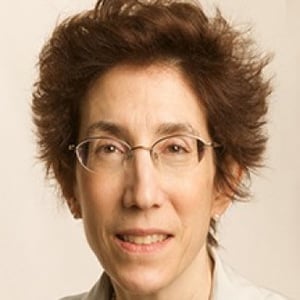
U.S. Court of Appeals, Ninth Circuit
Sandra Segal Ikuta was confirmed as a judge of the U.S. Court of Appeals for the Ninth Circuit on June 19, 2006. She filled a judgeship vacant since September 1, 2000, when Chief Judge Emeritus James R. Browning took senior status.
Before becoming a U.S. Circuit Judge, California Gov. Arnold Schwarzenegger appointed her to be deputy secretary and general counsel of the California Resources Agency in January 2004.
Prior to her political appointment, Judge Ikuta was a partner at the Los Angeles office of O'Melveny & Myers LLP. She joined the law firm in 1990 as an associate and became a partner in 1997. She specialized in environmental and natural resources law and co-chaired the firm's environmental practice group. She previously served as a law clerk for U.S. Supreme Court Justice Sandra Day O'Connor, 1989-90, and Judge Alex Kozinski of the U.S. Court of Appeals for the Ninth Circuit, 1988-89.
Prior to her legal career, Judge Ikuta took an unorthodox career path, which included serving as the first female editor-in-chief of a national martial arts magazine.
She received her J.D. from the University of California at Los Angeles School of Law and a Master of Science from Columbia University School of Journalism. She earned her undergraduate degree from the University of California at Berkeley in 1976.
In addition to her duties as an active U.S. Circuit Judge, Judge Ikuta was an appointed member of the Judicial Conference of the U.S. Advisory Committee on Bankruptcy Rules.
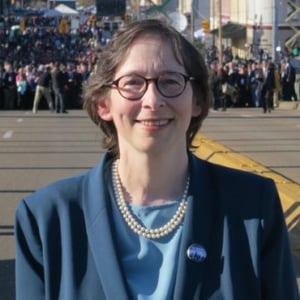
Kenneth and Harle Montgomery Professor of Public Interest Law and Co-Director, Supreme Court Litigation Clinic, Stanford Law School
A productive scholar and an award-winning teacher, Pamela S. Karlan is co-director of the school’s Supreme Court Litigation Clinic, where students litigate live cases before the Court. One of the nation’s leading experts on voting and the political process, she has served as a commissioner on the California Fair Political Practices Commission, an assistant counsel and cooperating attorney for the NAACP Legal Defense Fund, and a Deputy Assistant Attorney General in the Civil Rights Division of the U.S. Department of Justice (where she received the Attorney General’s Award for Exceptional Service – the department’s highest award for employee performance – as part of the team responsible for implementing the Supreme Court’s decision in United States v. Windsor). Professor Karlan is the co-author of leading casebooks on constitutional law, constitutional litigation, and the law of democracy, as well as numerous scholarly articles.
Before joining the Stanford Law School faculty in 1998, she was a professor of law at the University of Virginia School of Law and served as a law clerk to Justice Harry A. Blackmun of the U.S. Supreme Court and Judge Abraham D. Sofaer of the U.S. District Court for the Southern District of New York. Karlan is a member of the American Academy of Arts and Sciences, the American Academy of Appellate Lawyers, and the American Law Institute.
Senior Fellow and Director of Constitutional Studies, Manhattan Institute
Ilya Shapiro is a senior fellow and director of constitutional studies at the Manhattan Institute and a contributing editor of City Journal. Previously he was executive director and senior lecturer at the Georgetown Center for the Constitution, and before that a vice president of the Cato Institute.
Shapiro is the author of Lawless: The Miseducation of America’s Elites (2025) and Supreme Disorder: Judicial Nominations and the Politics of America’s Highest Court (2020), coauthor of Religious Liberties for Corporations? (2014), and editor of 11 volumes of the Cato Supreme Court Review (2008-18). He has contributed to a variety of academic, popular, and professional publications, including the Wall Street Journal, Harvard Journal of Law & Public Policy, Washington Post, Los Angeles Times, USA Today, National Review, and Newsweek. He also regularly provides commentary for various media outlets, writes the Shapiro’s Gavel newsletter on Substack, and once appeared on the Colbert Report.
Shapiro has testified many times before Congress and state legislatures and has filed more than 500 amicus curiae “friend of the court” briefs in the Supreme Court. He lectures regularly on behalf of the Federalist Society, is a member of the board of fellows of the Jewish Policy Center, was an inaugural Washington Fellow at the National Review Institute, and has been an adjunct law professor at the George Washington University and University of Mississippi. He is also the chairman of the board of advisers of the Mississippi Justice Institute, a barrister in the Edward Coke Appellate Inn of Court, and a former member of the Virginia Advisory Committee to the U.S. Commission on Civil Rights.
Earlier in his career, Shapiro was a special assistant/adviser to the Multi-National Force in Iraq on rule-of-law issues and practiced at Patton Boggs and Cleary Gottlieb. Before entering private practice, he clerked for Judge E. Grady Jolly of the U.S. Court of Appeals for the Fifth Circuit. He holds an AB from Princeton University, an MSc from the London School of Economics, and a JD from the University of Chicago Law School.

An Evening with Natalie Wright
Portland Lawyers Chapter
Portland, ORDaniel Webster Debate Series: Is the Trump Administration Taking the Right Approach to Civil Rights and Free Speech on Campus?
David D. Cole, Thomas M. Hardiman, Ilya Shapiro
The Federalist Society's Georgetown Law Chapter'sDaniel Webster Debate Series presents Daniel Webster Debate Series:Do...
Courthouse Steps Oral Argument: Ohio v. Environmental Protection Agency
Megan Herzog, Matthew Kuhn, Matthew Z. Leopold, Viktoria Z. Seale
On February 21, 2024, the Supreme Court will hear oral argument in Ohio v. Environmental...
Environmental Enforcement: Policies, Priorities, and the Rule of Law
Susan P. Bodine, Michael Buschbacher, Eric Schaeffer, Dan Sullivan, David Uhlmann, Jeffrey H. Wood
Registration is now closed. We will take walk-ins at the door. Online attendees: the livestream...
Where's the Beef? Inflation at the Grocery Store and Proposed Regulatory Responses
Mark Dopp, Sean Heather, Joe Maxwell, Stephen Alexander Vaden
Although inflation has broadly scattered across the economy, it is the food we buy where...
High on Federalism: Marijuana's Challenge to State-Federal Relations
Irvine, CaliforniaThe Right Way to Reform the Immigration System
Ft. Worth, TexasObamacare: Is It Unconstitutional, and How Will The Supreme Court Rule?
Tampa, FloridaObamacare – How Will The Supreme Court Rule?
Debate: The Constitutionality of the Affordable Care Act
Randy E. Barnett, Sandra Segal Ikuta, Pamela S. Karlan, Michael Reynolds
This debate will focus on the constitutionality of the Affordable Care Act. While specific attention...