

Director, Project on Criminal Justice, Cato Institute
Matthew Cavedon is the Director of the Cato Institute’s Project on Criminal Justice. He focuses on reforming plea-driven mass adjudication, ensuring police accountability, and defending constitutional criminal originalism. Cavedon’s scholarship has been published (or is forthcoming in) publications including the Arizona State Law Journal, Cato Supreme Court Review, Seattle University Law Review, and Georgetown Journal of Law and Public Policy. Formerly a Georgia public defender and fellow at the Institute for Justice, Cavedon has taught law school courses on criminal law and procedure, as well as the First Amendment. Cavedon clerked for a U.S. district court and the Supreme Court of Georgia. He came to Cato following a fellowship at the Emory University Center for the Study of Law and Religion.
Partner, Hilgers Graben PLLC
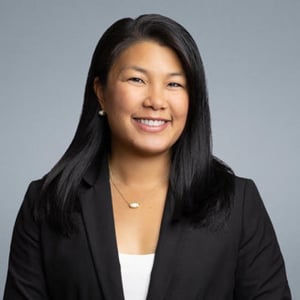
Alice LaCour is a litigation partner at Hilgers Graben PLLC and the co-host of two legal true crime podcasts: The Prosecutors Podcast and Legal Briefs, which have been downloaded over ten million times and featured on Apple Podcast's top 100 podcasts. Recently, she served as First Assistant and Criminal Chief at the U.S. Attorney's Office in the Middle District of Alabama, where she prosecuted cases spanning from guns and drugs to complex white collar crimes. Alice also served as Counselor to the Attorney General and Senior Advisor and Counselor to Assistant Attorney General of the Civil Division. During these stints at the Justice Department, Alice also served on the confirmation teams to elevate Neil Gorsuch and Brett Kavanaugh to the U.S. Supreme Court. Alice clerked for the Hon. Keith P. Ellison of the Southern District of Texas and the Hon. Jennifer Walker Elrod of the U.S. Court of Appeals for the Fifth Circuit. Alice received her J.D. from Yale Law School, and she graduated summa cum laude from Washington and Lee University with a degree in Economics and a concentration in Poverty and Human Capabilities.
Criminal Trial and Appellate Lawyer, Markus/ Moss
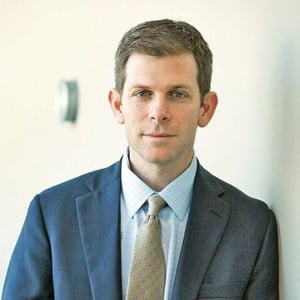
David Oscar Markus is a magna cum laude graduate of Harvard Law School. David is known for his creative and unrelenting approach to cases, which leads to wins in trials and appeals. David focuses on high-stakes criminal litigation for both white collar and traditional criminal matters.
Best Lawyers named David “Lawyer of the Year” for White Collar Criminal Law in 2020 and for General Criminal Defense in 2017. And the Dade County Bar Association awarded him the “Legal Luminary” award for criminal defense, an honor voted on by members of the legal community. In 2015, the National Law Journal selected him as one of the Trailblazers for White Collar Criminal Defense in the entire country. Back when he was 29 years old (in 2002), the National Law Journal selected him as one of the top 40 litigators in the country under 40 years old, and it has recognized one of his federal trial victories as one of the top ten defense verdicts in the country that year.
In one trial victory, David not only beat all 141 counts in federal court for a doctor, but then won attorneys’ fees and costs of over $600,000 for his client in a first-of-its-kind victory. Based on that case, he was awarded the highest honor — the Rodney Thaxton “against all odds” award — by the Florida Association of Criminal Defense Lawyers. Although the 11th Circuit reversed the fee award in a number of controversial opinions, the court referred to Markus as an “elite” and “superb” attorney. In another case, David challenged the way the federal court system in Miami selected jurors (alphabetically by last name) and won, which changed the jury selection process in the District. After obtaining a fair jury, Markus’ client was found not guilty. He never stops fighting for his clients.
Based on this type of creative and unique lawyering, in 2010, David was one of eight finalists in the country for best white-collar criminal lawyer in the country by Chambers & Partners, which quoted market sources saying that David is “the whole package,” and “a creative, courageous and tenacious courtroom advocate.” And he was named to that very prestigious short list of 8 best white-collar criminal defense lawyers again in 2011 (he was the only lawyer listed who was not from a large firm). The 2012 Chambers said this: “David Markus received strong praise from peers and clients alike, who describe him as ‘a legal genius and brilliant strategist with a great demeanor.'” A recent Chambers & Partners described David as a “wickedly smart and a terrific trial lawyer. … Clients say that he is ‘thrilling’ to watch in court and that ‘his passion appreciation and enjoyment for his work are contagious.” And in 2014, that publication identified David as “one of the best trial lawyers around: very smart, highly respected and thoroughly prepared.” In 2016, Chambers said: “David Markus is one of the most talented criminal defense lawyers in Florida. He has a wealth of litigation experience and is regularly sought after for his counsel in high-stakes tax and criminal antitrust cases. Sources also describe him as an ‘extremely creative thinker and a great oral advocate’ who gets ‘tremendous results.'” Chambers has also explained: “David Markus is amazing, not only because of the strength and genius of his arguments and motions, but also because of his brilliant and astonishing performances during the hearings. Additionally, he radiates so much confidence, and that in itself soothes the usual anguish and anxiety that you endure during these types of situations. Last but not least, he is such a great human being.” In 2020, that publication said that David “is an exceptional trial lawyer,” “an incredible oral advocate” and that “he’s pretty fearless in terms of dealing with the government.”
Since 2010, David has been listed as one of the top 100 lawyers in Miami and in all of Florida by SuperLawyers. He is one of the few criminal defense lawyers to received such an honor. He is frequently named as one of the top lawyers in the Best Lawyers in America, South Florida Legal Guide, Florida Trend Magazine, Chambers & Partners, and the South Florida Business Journal. He was one of 20 lawyers named a key partner by the South Florida Business Journal in 2011 and again in 2012. The Daily Business Review named him a finalist for Most Effective Lawyer in Criminal Justice (one of three lawyers in Miami) in 2006, 2009, 2011, 2012, and 2015. He won the award in 2018. The district judges in the Southern District of Florida presented him with the Eugene Spellman Criminal Justice Act Award in 2013.
While at Harvard, David argued in front of Supreme Court Justice Anthony Kennedy who named him best oralist. David was mentored by Alan Dershowitz while in law school. After graduating from Harvard, David served as law clerk to the Honorable Edward B. Davis, then-Chief United States District Judge, Southern District of Florida. Following his clerkship, David worked as an associate at the leading criminal defense firm in the country, Williams & Connolly in Washington, D.C., and then practiced as an Assistant Federal Public Defender in Miami.
David is a past-president of the Florida Association of Criminal Defense Lawyers – Miami Chapter and past-president of the Federal Bar Association, South Florida Chapter, 2007-08. He served for ten years as the Southern District of Florida’s national representative for the Criminal Justice Act Panel, and is the vice-chair of the National Association of Criminal Defense Lawyer’s amicus committee. David also has co-authored the Fourth Amendment Forum, published in NACDL’s The Champion. He is frequently asked to serve on committees for the Southern District of Florida.
David frequently lectures on different aspects of the criminal trial and appeal. He currently teaches a White Collar Law seminar the the University of Miami School of Law and previously taught legal writing there. David also has taught Advanced Criminal Procedure and White Collar Law at Florida International University College of Law. He often speaks to other criminal defense lawyers on ethics and zealously representing criminal defendants charged with serious crimes. His lengthy list of lectures can be found on his resume.
David is often quoted in publications around the country, including The Miami Herald, The Sun-Sentinel, The Palm Beach Post, the Daily Business Review, USA Today, The New York Times, The Wall Street Journal, The Boston Globe, Law.com, and CNN.com. He has written opinion pieces for numerous publications, and is the author of the popular Southern District of Florida blog, which has been described by the New Times as “the definitive source on South Florida’s federal court system.” He recently wrote a chapter in a book for lawyers; his chapter was titled “Battling Goliath, Trying to Win in the Court of Appeals.” David is also a frequent opinion contributor, arguing for criminal justice reform and for individual rights. He has written pieces in the Washington Post, USA Today, Miami Herald, law.com Newsmax, and others.

Co-Founder and CEO, Whole Foods Market
John Mackey, co-founder and CEO of Whole Foods Market, has built the natural and organic grocer from a single store in Austin, Texas in 1978, into a Fortune 500 company, which went public in 1992, and was purchased by Amazon in 2017. Today Whole Foods Market is a top U.S. supermarket with more than 500 stores and 95,000 Team Members across the U.S., Canada and U.K
While devoting his career to helping shoppers satisfy their lifestyle needs with quality natural and organic foods, Mackey has also focused on building a more conscious way of doing business. He was the visionary for Whole Planet Foundation to help end poverty in developing nations, the Local Producer Loan Program, which provided $25 million in low interest loans to help local food producers expand their businesses, and the Global Animal Partnership’s rating scale for humane farm animal treatment.
Mackey has been recognized as one of Fortune’s “World’s 50 Greatest Leaders,” Ernst & Young’s “Entrepreneur of the Year Overall Winner for the United States,” Institutional Investor’s “Best CEO in America,” Barron’s “World’s Best CEO,” MarketWatch’s “CEO of the Year,” Fortune’s “Businessperson of the Year,” and Esquire’s “Most Inspiring CEO.”
A strong believer in free market principles, Mackey co-founded the Conscious Capitalism Movement (http://consciouscapitalism.org/) and co-authored a New York Times and Wall Street Journal best-selling book entitled “Conscious Capitalism: Liberating the Heroic Spirit of Business” (Harvard Business Review Press 2013) to boldly defend and reimagine capitalism, and encourage a way of doing business that is grounded in ethical consciousness. Mackey cut his pay to $1 in 2006 and continues to work for Whole Foods Market out of passion to see the business realize its potential for deeper purpose, for the joy of leading a great company and to answer the call to service that he feels in his heart.
Most recently, Mackey has focused on returning to the company’s roots around healthy eating and lifestyle choices. A passionate advocate of healthy eating education, he laid the foundation for health and wellness programs for team members and customers. Mackey is co-author of The Whole Foods Diet: The Lifesaving Plan for Health and Longevity (Grand Central Life & Style 2017); and The Whole Foods Cookbook: 120 Delicious and Healthy Plant-Centered Recipes (Grand Central Life & Style 2018).
Mackey is an avid backpacker and long-distance hiker. He lives in Austin, TX with his wife Deborah.

Secretary, U.S. Department of Agriculture
Sonny Perdue came by his knowledge of agriculture the old fashioned way: he was born into a farming family in Bonaire, Georgia. From childhood, and through his life in business and elected office, Perdue has experienced the industry from every possible perspective. Uniquely qualified as a former farmer, agribusinessman, veterinarian, state legislator, and governor of Georgia, he became the 31st United States Secretary of Agriculture on April 25, 2017.
Perdue’s policies as U.S. Secretary of Agriculture will be guided by four principles which will inform his decisions. First, he will maximize the ability of the men and women of America’s agriculture and agribusiness sector to create jobs, to produce and sell the foods and fiber that feed and clothe the world, and to reap the earned reward of their labor. It should be the aim of the American government to remove every obstacle and give farmers, ranchers, and producers every opportunity to prosper. Second, he will prioritize customer service every day for American taxpayers and consumers. They will expect, and have every right to demand, that their government conduct the people’s business efficiently, effectively, and with the utmost integrity. Third, as Americans expect a safe and secure food supply, USDA will continue to serve in the critical role of ensuring the food we put on the table to feed our families meets the strict safety standards we’ve established. Food security is a key component of national security, because hunger and peace do not long coexist. And fourth, Perdue will always remember that America’s agricultural bounty comes directly from the land. And today, those land resources sustain more than 320 million Americans and countless millions more around the globe. Perdue’s father’s words still ring true: We’re all stewards of the land, owned or rented, and our responsibility is to leave it better than we found it.
Additionally, Perdue recognizes that American agriculture needs a strong advocate to promote its interests to international markets. The United States is blessed to be able to produce more than its citizens can consume, which implies that we should sell the bounty around the world. The relationship between the USDA and its trade representatives, as well as with the U.S. Trade Representative and Department of Commerce, will be vital. The work of promoting American agricultural products to other countries will begin with those relationships and will benefit us domestically, just as it will fulfill the moral imperative of helping to feed the world. Perdue has pledged to be an unapologetic advocate for American agriculture.
Under Secretary Perdue, the USDA will always be facts-based and data-driven, with a decision-making mindset that is customer-focused. He will seek solutions to problems and not lament that the agency might be faced with difficult challenges.
As a youngster growing up on a dairy and diversified row crop farm in rural Georgia, Perdue never fully realized that the blessings of purposeful, meaningful work would serve him as well as they have in life. When he was a young boy feeding the calves and plowing the fields, he was an integral part of the workforce on his father’s farm. As the son of a mother who was an English teacher for 42 years, he benefitted from her teachings as well – not just by instilling in him the beliefs he still holds dear, but also by lending him an appreciation and respect for language and proper grammar. But more than anything in his life, it was the family farm which shaped Sonny Perdue. He has lived and breathed the exhilaration of a great crop and the despair and devastation of a drought. He learned by experience what his father told him as a child, “If you take care of the land, the land will take care of you.”
The work ethic cemented in him by his farming roots has remained with Sonny Perdue throughout his life. As a younger man, he served his country in the U.S. Air Force, rising to the rank of Captain. After earning a Doctor of Veterinary Medicine from the University of Georgia, he put that training to use in private practice in North Carolina. As a member of the Georgia State Senate for eleven years, he eventually ascended to the position of President Pro Tempore as elected by his senate colleagues. As a two-term governor of Georgia, he was credited with transforming a budget deficit into a surplus, dramatically increasing the student performance in public schools, and fostering an economic environment that allowed employers to flourish and manufacturers and agricultural producers to achieve record levels of exports. He followed these accomplishments with a successful career in agribusiness, where he focused on commodities and transportation in enterprises that have spanned the southeastern United States. These experiences have proven invaluable in his current role as principal advocate for American agriculture and all that it serves.
Perdue is a strong believer in good government, in that it should operate efficiently and serve the needs of its customers: the people of the United States. As a state senator, he was recognized as a leading authority on issues including energy and utilities, agriculture, transportation, emerging technologies and economic development, and for his ability to grasp the nuances of complex problems. As governor, he reformed state budget priorities, helped Georgians create more than 200,000 new jobs, and promoted his home state around the world to attract new businesses. In 2009, the Reason Foundation’s Innovators in Action magazine recognized Perdue as a leader who “aggressively pursued new strategies to increase the effectiveness and efficiency of government and deliver better value at less cost to taxpayers.” In addition, he was named “Public Official of the Year” in October 2010 by Governing Magazine. To this day, his thoughts are never very far from the wishes of the citizens – the true owners of the government.
Perdue’s views on agriculture have always been shaped by his first-hand knowledge of all of its aspects, both as a farmer and as an agribusinessman. He appreciates the daily concerns and needs of American farmers, while also understanding the intricacies of global commodities markets. He is acknowledged as a national leader in agriculture, having served as a board member for the National Grain & Feed Association, and as President of both the Georgia Feed and Grain Association and the Southeastern Feed and Grain Association. Perdue has long-standing, close relationships with the leadership of the American Farm Bureau and has been recognized by the Georgia 4-H and FFA programs, among others, for his leadership in agriculture.
As the product of Georgia, a state where agriculture is the leading economic driver, Perdue recognizes that agriculture is an issue and industry which cuts across political party boundaries. He recognizes that the size, scope, and diversity of America’s agricultural sector requires reaching across the aisle so that partisanship doesn’t get in the way of good solutions for American farmers, ranchers, and consumers.
Perdue has been married to Mary Ruff Perdue for 45 years and has four adult children and fourteen grandchildren. He and his wife have served as foster parents for eight children awaiting adoption. Perdue remains a licensed airplane and helicopter pilot and avid outdoor sportsman.

Co-Founder & CEO, Eat JUST Inc.
Eat Just, Inc. (formerly Hampton Creek) is bringing healthier and more affordable food to everyone, everywhere. We believe that solving the problem means solving the problem for everybody—not just those who can afford it. Our technology, which is based upon understanding plants from every corner of the planet, enables consumers, food manufactures, and the largest retailers around the world, to offer better, healthier products, at a more affordable cost.
Constitutional Scholarship Director and Senior Legal Analyst, Pacific Legal Foundation
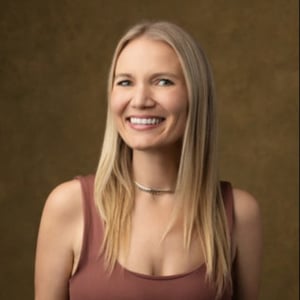
Anastasia Boden is Director of Constitutional Scholarship at Pacific Legal Foundation, where she leads the organization’s Supreme Court commentary and directs scholarly analysis in support of the firm’s litigation. She has represented entrepreneurs and small businesses nationwide in challenges to onerous licensing regimes, anti-competitive titling restrictions, Certificate of Need (“competitor’s veto”) laws, and other forms of unnecessary red tape that block economic opportunity.
Prior to this role, Anastasia developed nearly a dozen constitutional challenges to Certificate of Need laws across the country, helping spur legislative reform in Montana, Pennsylvania, and West Virginia. Her victories include a ruling invalidating Houston’s busking restrictions, multiple appellate decisions expanding access to the courts for civil rights plaintiffs, and the legislative repeal of Virginia’s happy-hour advertising ban.
Her writings on law and liberty have been featured in USA Today, The Washington Post, The Wall Street Journal, the Los Angeles Times, the Chicago Tribune, Forbes, and more, and she has appeared on Headline News, CBS News, Fox News, ReasonTV, Newsmax, and John Stossel. In 2020, she was featured on Libertarian Party presidential candidate Jo Jorgensen’s Supreme Court shortlist.
Anastasia earned her BA with dean’s honors from the University of California, Santa Barbara, and her JD from Georgetown University Law Center, where she was research assistant to Professor Randy E. Barnett—the “intellectual godfather” of the constitutional challenge to Obamacare. She is the co-creator of the podcast Dissed, about infamous Supreme Court dissents. She authors the biweekly newsletter SCOTUS Scoop and the column, “In Dissent” for SCOTUSblog.

Partner, Steptoe & Johnson LLP
Stewart Baker is a partner in the law firm of Steptoe & Johnson in Washington, D.C. From 2005 to 2009, he was the first Assistant Secretary for Policy at the Department of Homeland Security. His law practice covers cybersecurity, data protection, homeland security, and travel and foreign investment regulation; he has been awarded one patent.
Mr. Baker has been General Counsel of the National Security Agency and General Counsel of the commission that investigated WMD intelligence failures prior to the Iraq war. He is the author of Skating on Stilts, a book on terrorism, cybersecurity, and other technology issues; he also hosts the weekly Cyberlaw Podcast.
President, Committee for Justice
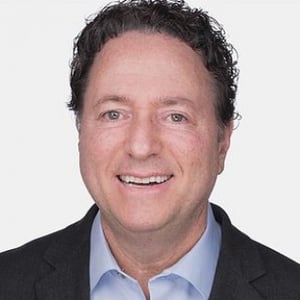
Curt Levey is President of the Committee For Justice, an organization devoted to advancing constitutionally limited government and individual liberty. He is a veteran of Supreme Court and other judicial confirmation battles and serves on the executive committee of the Federalist Society's Civil Rights Practice Group.
After graduating Harvard Law School with honors and clerking for the U.S. Court of Appeals for the Sixth Circuit, Mr. Levey served as Director of Legal & Public Affairs at the Center for Individual Rights (CIR). There he worked on landmark Supreme Court cases, including the University of Michigan affirmative action cases and the successful constitutional challenge to the Violence Against Women Act. After CIR, Mr. Levey headed the Title IX policy group at the U.S. Department of Education.
Before attending law school, Mr. Levey earned an M.S. and B.A. in computer science from Brown University and worked in the field of artificial intelligence (AI). He invented a new type of AI technology, for which he wrote a successful patent application.
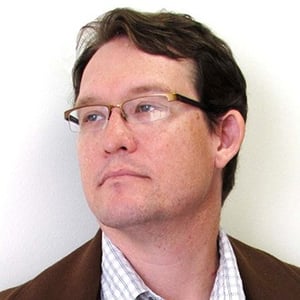
Researcher, International Computer Science Institute and Lecturer, UC Berkeley
Nicholas Weaver received a B.A. in Astrophysics and Computer Science in 1995, and a Ph.D. in Computer Science in 2003 both from the University of California at Berkeley. Although his dissertation was on novel FPGA architectures, he also was highly interested in Computer Security, including postulating the possibility of very fast computer worms in 2001.
In 2003, he joined the International Computer Science Institute, first as a postdoc and then as a staff researcher. His primary research focus is on network security, notably worms, botnets, and other internet-scale attacks, and network measurement. Other areas have included both hardware acceleration and software parallelization of network intrusion detection, defenses for DNS resolvers, and tools for detecting ISP-introduced manipulations of a user's network connection. He is also a lecturer in the Computer Science Department at UC Berkeley.
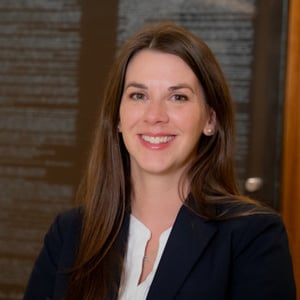
Vice President, Practice Groups, The Federalist Society

The Ethics and Impact of True Crime Podcasting
Matthew P. Cavedon, Alice Shih LaCour, David Oscar Markus
How should podcasters talk about crime in a way that informs the public while respecting...
Deep Dive Episode 140 – It Can Be Done Live: The Future of Our Food
John Mackey, Sonny Perdue, Josh Tetrick, Anastasia P. Boden
The creators of the award-winning documentary, They Say It Can’t Be Done, in partnership with...
Deep Dive Episode 114 – Is Artificial Intelligence Biased? And What Should We Do About It?
Stewart A. Baker, Curt Levey, Nicholas Weaver
Journalists and academics seem convinced that artificial intelligence is often biased against women and racial...
Fisher v. UT–Austin and the Future of Racial Preferences in College Admissions
Elizabeth Slattery
Note from the Editor: This article discusses the Supreme Court’s recent decision in Fisher v. University...