
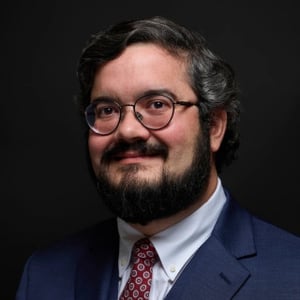
Partner, Torridon Law PLLC
Mike Fragoso is an experienced legal and policy strategist who represents clients before all three branches of the federal government. Most recently he served as chief counsel to the Senate Republican Leader, Mitch McConnell (R-KY). He has negotiated consequential legislation, managed successful congressional oversight, and prepared individuals for the most contentious Senate hearings.
As chief counsel to Leader McConnell, Mike was the Leader’s primary legal advisor and managed the “last mile” of any legislation touching on the Senate Judiciary Committee. He ran the 2024 reauthorization of FISA Section 702 and was involved at the highest levels of the appropriations and budget-reconciliation processes. Mike also repeatedly represented Leader McConnell as counsel of record at the Supreme Court. Leader McConnell said of Mike that he’s “equally at home in the high-minded philosophical discourse of the legal community and the urgent pragmatism of congressional dealmaking,” and that he “maintains a firm grasp on the realm of the possible” but “knows which screws to twist.” He observed that Mike “is so exceptionally competent that he often produces from his desk the work that would normally require, literally, teams of outside counsel.”
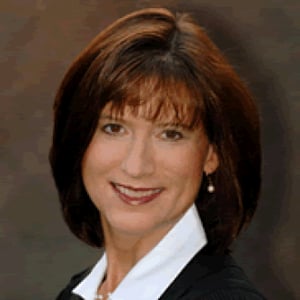
Judge, United States Court of Appeals, Seventh Circuit
Judge Sykes was nominated to the Seventh Circuit by President George W. Bush and confirmed by the Senate in 2004. Prior to her appointment to the federal bench, Judge Sykes served as a justice on the Wisconsin Supreme Court. Governor Tommy G. Thompson appointed her in September 1999 to fill a mid-term vacancy on the state supreme court, and she was elected to a full ten-year term in April 2000. From 1992-1999, Judge Sykes served on the state trial bench in Milwaukee County (elected in 1992 and re-elected in 1998). From 1985-1992, Judge Sykes practiced law with the Milwaukee firm of Whyte & Hirschboeck, S.C., and from 1984-1985, was a law clerk to Federal Judge Terence T. Evans.
Born and raised in the Milwaukee area, Judge Sykes earned a bachelor’s degree in journalism from Northwestern University in 1980 and a law degree from Marquette University Law School in 1984. Between college and law school, Judge Sykes worked as a reporter for The Milwaukee Journal.
Judge Sykes has two sons.
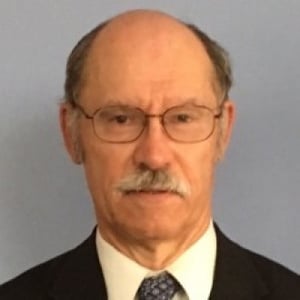
Professorial Lecturer in Law, George Washington University Law School
Theodore C. (Ted) Hirt was an attorney in the Department of Justice's Civil Division from August 1979 to March 2016. He was in its Federal Programs Branch from 1979 to 2008 (trial attorney, senior trial counsel, assistant director), and then in its Office of Immigration Litigation from 2008 to 2016 (trial attorney and senior litigation counsel). Among his responsibilities (September 2001 to March 2016) was being an advisor to the Assistant Attorneys General for the Civil Division, who serve ex officio on the Civil Rules Advisory Committee. Mr. Hirt’s areas of specialization include First Amendment issues, internet and telecommunications law, and electronic discovery. From 1976 to 1979, he was an associate at Fried, Frank, Harris, Shriver & Kampelman. From 1975 to 1976 he was an attorney in the Prehearing Division of the Michigan Court of Appeals.
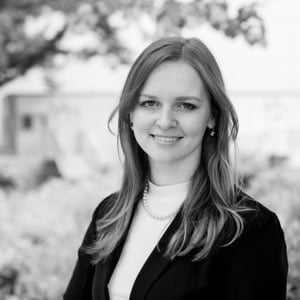
Amicus Attorney, The Foundation for Individual Rights and Expression
Abby joined FIRE after her tenure at the Becket Fund for Religious Liberty, where she litigated First Amendment student group cases from coast to coast. She also worked at a trial litigation boutique in southern California. Abby has filed briefs on the First Amendment in state and federal court at the trial and appellate court levels, including before the U.S. Supreme Court.
Abby received her B.S. in economics and her B.A. in Chinese language and literature from the University of Pittsburgh, where she graduated summa cum laude. During college, she also spent a year at Tsinghua University as a Boren Fellow. She later received her J.D. from the University of Chicago Law School, where she won the 2018 Hinton Moot Court Competition. After law school, Abby clerked for the Honorable Michael B. Brennan on the Seventh Circuit Court of Appeals in Milwaukee, Wisconsin. She is admitted to practice in New York and California, as well as several federal appellate courts and the U.S. Supreme Court.
Abby lives outside Dallas, Texas, with her husband and family. They enjoy reading together, volunteering with their local church, and continuing to fix their leaky pool.
Clerk, U.S. Court of Appeals for the Third Circuit
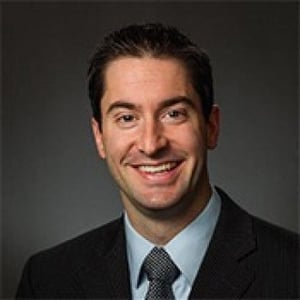
Chief Legal Counsel, Alliance Defending Freedom
Jim Campbell serves as chief legal counsel with Alliance Defending Freedom, where he leads the U.S. Legal Advocacy team. In that role, Campbell oversees all U.S. litigation teams and Allied Legal Affairs.
Prior to joining ADF in March 2023, Campbell was the solicitor general in the office of Nebraska Attorney General Douglas J. Peterson and Michael T. Hilgers. In that role, he represented the state of Nebraska in cases before state and federal courts and oversaw all civil appeals for the state. In February 2023, Campbell argued Biden v. Nebraska before the U.S. Supreme Court, a case in which Nebraska and five other states challenged the Biden administration’s attempt to forgive over $400 billion in federal student loans for over 40 million individuals.
Before joining the Nebraska attorney general’s office in January 2020, Campbell worked as senior counsel with ADF. In that role, he defended his clients’ religious freedom and freedom of speech, with a particular focus on appellate work. Campbell has also authored many articles and legal commentary pieces, including some published by USA Today and The Washington Post.
A native of northeastern Ohio, Campbell earned his Juris Doctor from the University of Akron School of Law, where he graduated summa cum laude in 2006. Following law school, he clerked for the Honorable Alice M. Batchelder of the U.S. Court of Appeals for the 6th Circuit. Campbell is admitted to the state bars of Ohio, Arizona, and Nebraska. He is also admitted to multiple federal district and appellate courts, including the U.S. Supreme Court.
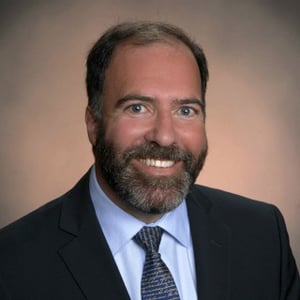
Professor of Law, Widener University Commonwealth Law School
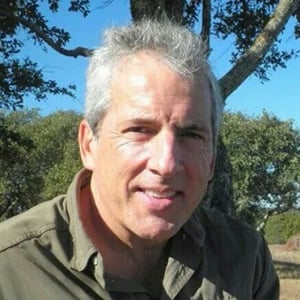
Mark Pulliam, a longtime member of the Federalist Society (and former President of the San Diego Lawyers Chapter), is a lawyer and writer in Austin, Texas. He is a contributing editor of Law and Liberty, and also writes for a variety of publications, including his blog, Misrule of Law.

Dinner & Discourse: The Role of Courts in a Shifting Legal Landscape
Phoenix Lawyers Chapter
Phoenix, AZIs Congress a Salvageable Institution?
Ted Hirt
A review of Philip A. Wallach, Why Congress (Oxford University Press 2023) Constitutional law...
Supreme Court of Texas Says Calling Abortion Murder Is Protected Speech, Not Defamation
Abigail Smith
In Lilith Fund for Reproductive Equity v. Dickson, the Supreme Court of Texas held that...
An Academic Freedom Exception to Government Control of Employee Speech
Nick Cordova
Public employee speech cases often arise as Section 1983 actions in which a public employee...
Modernizing Congress for the Present and Future
The best performing committees of the House are often those where Members’ interests fall outside...
Compelled Speech in Masterpiece Cakeshop: What the Supreme Court’s June 2018 Decisions Tell Us About the Unresolved Questions
Jim Campbell
Note from the Editor: This article discusses the unresolved compelled-speech questions in Masterpiece Cakeshop v....
Minnesota Voters Alliance v. Mansky Strikes Down a Vague Ban on Speech in Polling Places, But Future Bans May Be Upheld
Michael R. Dimino
Note from the Editor: This article discusses the Supreme Court’s opinion in Minnesota Voters Alliance...
Topics
Docket Watch: Alamo Heights Independent School District v. Clark
Texas’s employment discrimination statute (the Texas Commission on Human Rights Act, codified in the Texas...
Alamo Heights Independent School District v. Clark
Mark S. Pulliam
Texas’s employment discrimination statute (the Texas Commission on Human Rights Act, codified in the Texas...
19th Annual Faculty Conference
Faculty Division
San Francisco, CA