

Associate Dean for Academic Affairs, Austin E. Owen Research Scholar & Professor of Law, The University of Richmond School of Law
Dean Kristen Jakobsen Osenga teaches and writes in the areas of patent law, antitrust, and legislation and regulation. Some of her recent scholarship focuses on standard development organizations, patent eligible subject matter, patent licensing firms, litigation and remedies for patent infringement, and patent law reform. She has written numerous law review articles on these and other topics, as well as book chapters and op eds on various aspects of patent law. Additionally, she has spoken on these issues at many academic conferences and bar events. Dean Osenga is Chief Policy Counselor for the Inventors Defense Alliance, as well as an active member of the Federal Circuit Bar Association and the American Intellectual Property Law Association.
Dean Osenga received a B.S. degree in Biomedical Engineering from the University of Iowa, an M.S. degree in Electrical Engineering from Southern Illinois University – Carbondale, and a J.D. from the University of Illinois College of Law, where she graduated magna cum laude. After law school, she practiced at the law firm of Finnegan, Henderson, Farabow, Garrett, & Dunner LLP, (now Finnegan) where she did patent prosecution and litigation. She then clerked for the Judge Richard Linn of the U.S. Court of Appeals for the Federal Circuit. After clerking, she entered academia, teaching first at Chicago-Kent College of Law and then at the University of Richmond, where she has been since 2006. She has also been a Visiting Professor at Emory University School of Law and at William & Mary School of Law.

Professor, University of Southern California Gould School of Law
Jonathan Barnett is the Torrey H. Webb Professor of Law at the Gould School of Law, University of Southern California. He founded and currently directs the USC Media, Entertainment and Technology Law Program. Barnett specializes in intellectual property, contracts, antitrust, and corporate law. Barnett has published in the Harvard Law Review, Yale Law Journal, Journal of Legal Studies, Review of Law & Economics, Journal of Corporation Law and other scholarly journals.
He joined USC Law in fall 2006 and was a visiting professor at New York University School of Law in fall 2010. Prior to academia, Barnett practiced corporate law as a senior associate at Cleary Gottlieb Steen & Hamilton in New York, specializing in private equity and mergers and acquisitions transactions. He was also a visiting assistant professor at Fordham University School of Law in New York. A magna cum laude graduate of University of Pennsylvania, Barnett received a MPhil from Cambridge University and a JD from Yale Law School.
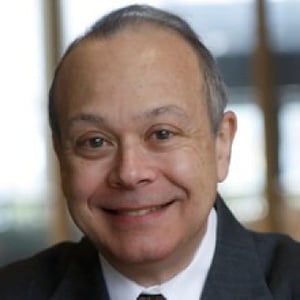
Taft, Stettinius & Hollister Professor of Law, University of Minnesota Law School
Professor Thomas F. Cotter joined the University of Minnesota Law School faculty in 2006. He received his B.S. and M.S. degrees in economics from the University of Wisconsin-Madison, and in 1987 graduated magna cum laude from the University of Wisconsin Law School, where he served as Senior Articles Editor of the Wisconsin Law Review and was elected to the Order of the Coif.
From 1987-89, Professor Cotter clerked for the Honorable Lawrence W. Pierce, United States Court of Appeals for the Second Circuit. He practiced law at Cravath, Swaine & Moore in New York City from 1988-90, and at Jenner & Block in Chicago from 1990-94. From 1994-2005, he taught at the University of Florida College of Law, where he held a University of Florida Research Foundation Professorship and directed the school’s Intellectual Property Law Program. From 2005-06, he was a Professor of Law at Washington and Lee University School of Law. In 2007, he was named to a two-year Solly Robins Distinguished Research Fellowship at the University of Minnesota Law School, and in 2008 was named to the Taft, Stettinius & Hollister Chair in Law.
Professor Cotter’s principal research and teaching interests are in the fields of domestic and international intellectual property law, antitrust, and law and economics. He is the author of six books—Patent Wars: How Patents Impact Our Daily Lives (Oxford Univ. Press, 2018); Trademarks, Unfair Competition, and Business Torts (with Barton Beebe, Mark A. Lemley, Peter S. Menell, and Robert P. Merges) (Wolters Kluwer 2d ed., 2016; 1st ed., 2011); Law and Economics: Positive, Normative, and Behavioral Perspectives (with Jeffrey L. Harrison) (3d ed., Thomson West, 2013); Comparative Patent Remedies: A Legal and Economic Analysis (Oxford University Press, 2013); and Intellectual Property: Economic and Legal Dimensions of Rights and Remedies (with Roger D. Blair) (Cambridge University Press 2005).
Altogether he has authored or coauthored over 60 other scholarly works, including articles in the California Law Review, the Georgetown Law Journal, the Iowa Law Review, the Minnesota Law Review, and the University of Illinois Law Review. He also publishes a blog, ComparativePatentRemedies.com, on the law (both foreign and domestic) and economics of patent remedies. Most recently, the Innovators Network Foundation, in partnership with ACT|The App Association, appointed Professor Cotter to a one-year Intellectual Property Fellowship.
Associate Dean for Academic Affairs, Austin E. Owen Research Scholar & Professor of Law, The University of Richmond School of Law
Dean Kristen Jakobsen Osenga teaches and writes in the areas of patent law, antitrust, and legislation and regulation. Some of her recent scholarship focuses on standard development organizations, patent eligible subject matter, patent licensing firms, litigation and remedies for patent infringement, and patent law reform. She has written numerous law review articles on these and other topics, as well as book chapters and op eds on various aspects of patent law. Additionally, she has spoken on these issues at many academic conferences and bar events. Dean Osenga is Chief Policy Counselor for the Inventors Defense Alliance, as well as an active member of the Federal Circuit Bar Association and the American Intellectual Property Law Association.
Dean Osenga received a B.S. degree in Biomedical Engineering from the University of Iowa, an M.S. degree in Electrical Engineering from Southern Illinois University – Carbondale, and a J.D. from the University of Illinois College of Law, where she graduated magna cum laude. After law school, she practiced at the law firm of Finnegan, Henderson, Farabow, Garrett, & Dunner LLP, (now Finnegan) where she did patent prosecution and litigation. She then clerked for the Judge Richard Linn of the U.S. Court of Appeals for the Federal Circuit. After clerking, she entered academia, teaching first at Chicago-Kent College of Law and then at the University of Richmond, where she has been since 2006. She has also been a Visiting Professor at Emory University School of Law and at William & Mary School of Law.
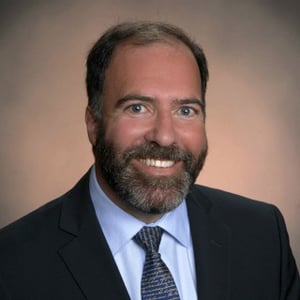
Professor of Law, Widener University Commonwealth Law School

Assistant Clinical Professor of Law & Director, Religious Freedom Clinic, Harvard Law School
Josh is the Director of Harvard Law School’s Religious Freedom Clinic, a pro bono program that gives students a hands-on, supervised experience representing a diverse group of clients in First Amendment and religious freedom cases.
Before entering clinical teaching, Josh clerked for the Honorable Cormac J. Carney of the U.S. District Court for the Central District of California and the Honorable Jay S. Bybee of the U.S. Court of Appeals for the Ninth Circuit. In addition to serving as a staff attorney in the clinic’s inaugural semester in 2020, he was previously a trial litigator at Munger, Tolles & Olson and an appellate litigator at Horvitz & Levy, where he specialized in representing individual and organizational clients in both commercial and civil rights cases, with particular expertise in First Amendment and religious freedom issues.
While in private practice, Josh received a Daily Journal 2022 California Lawyer Attorneys of the Year (CLAY) award, was twice named a “One to Watch” in appellate law by Best Lawyers, and argued in numerous appellate courts and courts of last resort, including twice before the California Supreme Court. His amicus brief for Jewish schools in a case before the U.S. Supreme Court was quoted by Justice Kavanaugh at oral argument.
Josh earned his B.A., magna cum laude, from Brigham Young University and graduated first in his class from UCLA School of Law.
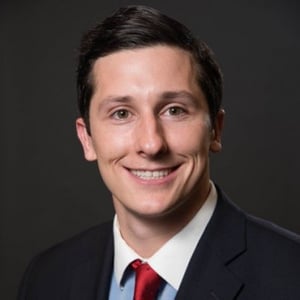
Manager of State Based Initiatives, Right on Crime
Greg Glod is the Manager of State Initiatives for Right on Crime and Senior Policy Analyst at Texas Public Policy Foundation. Based in Austin, Texas, Glod is an attorney who began his legal career as a law clerk for the Honorable Judge Laura S. Kiessling on the Circuit Court for Anne Arundel County, Maryland. He subsequently practiced at a litigation firm in Annapolis, Maryland before joining Right on Crime and the Texas Public Policy Foundation. In 2010, he graduated from The Pennsylvania State University with B.A. degrees in Crime, Law, and Justice and Political Science. In 2013, Glod received his J.D. from the University of Maryland School of Law.

Tazewell Taylor Professor of Law and William H. Cabell Research Professor, William & Mary Law School
Jonathan H. Adler joined the William & Mary law faculty as the Tazwell Taylor Professor of Law and William H. Cabell Research Professor in 2025. Prior to joining the faculty, he was the inaugural Johan Verheij Memorial Professor of Law and the founding Director of the Coleman P. Burke Center for Environmental Law at the Case Western Reserve University School of Law.
Professor Adler is the author or editor of seven books, including Climate Liberalism: Perspectives on Liberty, Property and Pollution (Palgrave, 2023), Marijuana Federalism: Uncle Sam and Mary Jane (Brookings Institution Press, 2020), Business and the Roberts Court (Oxford University Press, 2016) and Rebuilding the Ark: New Perspectives on Endangered Species Act Reform (AEI Press, 2011).
His articles have appeared in publications ranging from the Harvard Environmental Law Review and Yale Journal on Regulation to the Wall Street Journal, New York Times, and Washington Post. He has testified before Congress a dozen times, and his work has been cited in the U.S. Supreme Court. A 2024 study identified Professor Adler as the seventh most cited legal academic in administrative and environmental law from 2019 to 2023.
Professor Adler is a contributing editor to Civitas Outlook and a regular contributor to the popular legal blog, The Volokh Conspiracy. A regular commentator on constitutional and regulatory issues, he has appeared on numerous radio and television programs, ranging from the PBS Newshour and National Public Radio to the Fox News Channel and Entertainment Tonight.
Professor Adler is a senior fellow at the Property & Environment Research Center in Bozeman, Montana. In 2018, Professor Adler was elected to membership in the American Law Institute and helped co-found the organization Checks and Balances. In 2024, Professor Adler was appointed a public member of the Administrative Conference of the United States.
Professor Adler clerked for the Honorable David B. Sentelle on the U.S. Court of Appeals for the District of Columbia Circuit.

Senior Vice President and Litigation Director, Institute for Justice
Dana Berliner serves as Senior Vice President and Litigation Director at the Institute for Justice, where she has worked as a lawyer since 1994.
The focus of Dana’s litigation at IJ has been property rights. She successfully represented the Community Youth Athletic Center, a boxing gym and mentoring program for at-risk youth, which challenged the city of National City’s authorization of taking the CYAC’s property for private development; the California Court of Appeal ruled in 2013 that the authorization of eminent domain was invalid and that National City had violated California’s Public Records Act. Dana also represented the home and business owners in Norwood, Ohio, who, on July 26, 2006, secured a unanimous ruling from the Ohio Supreme Court that the city could not take their property for a privately owned shopping mall and “lifestyle center.” Along with co-counsel Scott Bullock, she represented the homeowners in Kelo v. New London, in which the U.S. Supreme Court ruled that cities could condemn property because other uses may produce an increase in tax dollars and jobs. Dana, along with many others at IJ, worked to turn the nationwide outrage caused by the decision into new state statutes, constitutions and judicial decisions that cut back on eminent domain abuse. She secured a ruling that the Village of Port Chester, N.Y., violated due process in its use of eminent domain to secure waterfront property. Since 2008, Dana has been recognized every year as a “Best Lawyer” in eminent domain and condemnation law by the publication Best Lawyers in America.
On issues of free speech and economic liberty, Dana successfully defended Carla Main and Encounter Books, who wrote and published a book about eminent domain abuse in Texas and across the country, against a defamation suit brought by a developer who stood to receive property taken by eminent domain. She secured a victory in favor of two New Orleans entrepreneurs in a federal First Amendment challenge to the city of New Orleans’ ban on sidewalk book vending. As trial counsel, Dana also secured a ruling that the Nevada Transportation Services Authority violated the rights of several would-be limousine entrepreneurs by subjecting them to an onerous and arbitrary licensing process that gave undue power to existing companies opposing competition. And she successfully represented an aspiring teacher of African hair braiding in Mississippi, as well as two of her students, challenging restrictions on learning and teaching African hair braiding in Mississippi.
In 2012, Dana became IJ’s Litigation Director. She now oversees all of IJ’s litigation, helping other attorneys craft both their major legal theories and their day-to-day litigation strategies. And she helps to set the litigation directions that IJ will take. In 2016, Dana began her role as IJ’s Senior Vice President.
Dana authored Opening the Floodgates: Eminent Domain Abuse in the Post-Kelo World, a report on the use and threatened use of eminent domain for private development in the year since the Kelo decision. Dana also authored Public Power, Private Gain: A Five-Year, State-by-State Report Examining the Abuse of Eminent Domain, the first-ever nationwide study on the abuse of eminent domain, released in 2003.
Dana has been quoted in The New York Times, USA Today, Wall Street Journal, NPR and The Washington Post as well as on various radio and television broadcasts, including 60 Minutes.
Dana received her law and undergraduate degrees from Yale University where she was a member of the Yale Law Journal and represented clients through the legal services program. After law school, she clerked for Judge Jerry Smith on the 5th U.S. Circuit Court of Appeals.
Dana Berliner is a member of the DC and Pennsylvania bars.
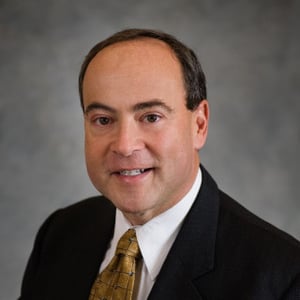
Justice, Supreme Court of Arizona
Clint Bolick was appointed by Governor Doug Ducey in January 2016 to serve on the Arizona Supreme Court and was retained by the voters in 2018 and 2024.
Prior to joining the Court, Justice Bolick litigated constitutional cases in state and federal courts from coast to coast, including the U.S. Supreme Court. Among other positions, he served as Vice President for Litigation at the Goldwater Institute and as Co-founder and Vice President for Litigation at the Institute for Justice. He has litigated in support of school choice, freedom of enterprise, private property rights, freedom of speech, and federalism, and against racial classifications and government subsidies.
Justice Bolick received his Juris Doctor degree from the University of California at Davis, where he has been recognized as a distinguished alumnus, and his Bachelor of Arts degree magna cum laude from Drew University. He serves as a research fellow with the Hoover Institution. Among other honors, he was named one of the 90 Greatest DC Lawyers in the Last 30 Years by Legal Times in 2008, received a Bradley Prize in 2006, and was recognized as one of the nation’s three lawyers of the year by American Lawyer in 2002 for his successful defense of school vouchers in Zelman v. Simmons-Harris.
Justice Bolick is a prolific author of a dozen books and hundreds of articles. Among his most recent books are Unshackled: Freeing America’s K-12 Education System: Immigration Wars: Forging an American Solution, co-authored with former Florida Governor Jeb Bush; and David’s Hammer: The Case for an Activist Judiciary. Bolick serves as an adjunct professor of constitutional law at Arizona State University’s Sandra Day O’Connor School of Law and has served as a lecturer at Harvard University’s John F. Kennedy School of Government.
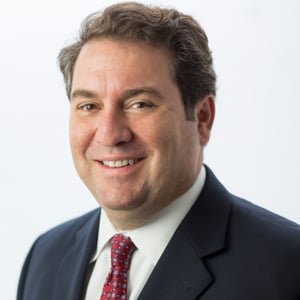
Former Attorney General, State of Arizona
Mark Brnovich served as Arizona's 26th Attorney General from 2015 to 2023. He was first inaugurated in 2015, and again in 2019 after winning re-election. Mark has spent most of his professional life serving as a prosecutor at the local, state, and federal levels. Mark met his wife Susan while they both worked as prosecutors for the Maricopa County Attorney's office. Mark worked in the Gang/Repeat Offender Unit and prosecuted many difficult and high profile cases from 1992 to 1998. He then went on to work as an Assistant Attorney General with the Arizona Attorney General's Office from 1998 to 2003, where he developed an expertise in gambling law. Brnovich later went on to serve as an Assistant United States Attorney for the District of Arizona where he prosecuted public integrity crimes, as well as crimes occurring in Indian Country.
Brnovich has also been a Judge Pro Tem of Maricopa County Superior Court, a Command Staff Judge Advocate in the U.S. Army National Guard, the Director for Constitutional Government at the Goldwater Institute, and the Director of the Arizona Department of Gaming, a law enforcement agency that investigates illegal gambling activity, as well as working with tribal regulators to ensure the integrity of tribal gaming.
Brnovich is known for restoring public confidence in the office of "Arizona's Top Cop" and for assembling some of the nation's most talented public servants for his administration. Mark argued at the United States Supreme Court in defense of the "one-person, one-vote" principle, was featured on 60 Minutes in defense of capital punishment, and has initiated national public education efforts to combat human sex trafficking.
Brnovich has been recognized by the National Federation of Independent Business as a "Champion of Small Business." and was elected by his bi-partisan colleagues to serve as the Chairman of the Conference of Western Attorneys General.
Mark's wife Susan was recently appointed by the United States Senate to serve as a U.S. District Judge for the District of Arizona. He has two teenage daughters and lives in Phoenix.

Professor of Law and Christopher N. May Chair, Loyola Law School, Los Angeles
After graduating from Loyola, Allan Ides served as a law clerk to the Honorable Clement F. Haynsworth, Jr., Chief Judge of the United States Court of Appeals for the Fourth Circuit from 1979-80 and then clerked for the Honorable Byron R. White, Associate Justice of the United States Supreme Court from 1980-81. Professor Ides joined the Loyola Law School faculty in the fall of 1982 and served as Associate Dean for Academic Affairs from 1984-87. From 1989-97, Professor Ides was a member of the law school faculty at Washington & Lee in Lexington, Virginia. He returned to Los Angeles and to Loyola in 1997. He has written extensively in the areas of Constitutional Law, Civil Procedure and Federal Jurisdiction and Practice, and is actively involved in various public service projects, ranging from civil rights litigation to the representation of individuals in deportation proceedings.

Judge, United States Court of Appeals, Sixth Circuit
Judge Readler earned his undergraduate and law degrees from the University of Michigan. After graduating, he served as a law clerk to Judge Alan Norris of the United States Court of Appeals for the Sixth Circuit. Judge Readler then began practicing law in the Columbus office of the international law firm Jones Day, eventually spending ten years as a partner in the firm’s Issues and Appeals Practice Group. While at Jones Day, Judge Readler appeared in state and federal trial and appellate courts around the country, most frequently the Supreme Court of Ohio and the Sixth Circuit. Judge Readler also successfully argued before the United States Supreme Court in McQuiggin v. Perkins on behalf of an inmate claiming actual innocence. His other pro bono representations include representing capital defendants before the Tenth Circuit and the Supreme Court of Ohio, as well as representing defendants sentenced to life in prison before the Sixth Circuit. While at Jones Day, Judge Readler traveled to Nairobi with Lawyers Without Borders to train Kenyan lawyers in prosecuting domestic violence cases, and he was also a recipient of the American Marshall Memorial Fellowship awarded by the German Marshall Fund of the United States. Following his career in private practice, Judge Readler served as Acting Assistant Attorney General for the Civil Division of the United States Department of Justice from 2017 to 2019. In that role, Judge Readler led and supervised over 1,000 lawyers in the Department’s largest litigating division, briefing and arguing several cases on behalf of the United States in federal courts across the country, including high-profile cases significant to the Administration and the Department. In March 2019, Judge Readler was confirmed to serve as a Circuit Judge on the Sixth Circuit. He resides in Columbus.
Professor, University of Southern California Gould School of Law
Jonathan Barnett is the Torrey H. Webb Professor of Law at the Gould School of Law, University of Southern California. He founded and currently directs the USC Media, Entertainment and Technology Law Program. Barnett specializes in intellectual property, contracts, antitrust, and corporate law. Barnett has published in the Harvard Law Review, Yale Law Journal, Journal of Legal Studies, Review of Law & Economics, Journal of Corporation Law and other scholarly journals.
He joined USC Law in fall 2006 and was a visiting professor at New York University School of Law in fall 2010. Prior to academia, Barnett practiced corporate law as a senior associate at Cleary Gottlieb Steen & Hamilton in New York, specializing in private equity and mergers and acquisitions transactions. He was also a visiting assistant professor at Fordham University School of Law in New York. A magna cum laude graduate of University of Pennsylvania, Barnett received a MPhil from Cambridge University and a JD from Yale Law School.
Taft, Stettinius & Hollister Professor of Law, University of Minnesota Law School
Professor Thomas F. Cotter joined the University of Minnesota Law School faculty in 2006. He received his B.S. and M.S. degrees in economics from the University of Wisconsin-Madison, and in 1987 graduated magna cum laude from the University of Wisconsin Law School, where he served as Senior Articles Editor of the Wisconsin Law Review and was elected to the Order of the Coif.
From 1987-89, Professor Cotter clerked for the Honorable Lawrence W. Pierce, United States Court of Appeals for the Second Circuit. He practiced law at Cravath, Swaine & Moore in New York City from 1988-90, and at Jenner & Block in Chicago from 1990-94. From 1994-2005, he taught at the University of Florida College of Law, where he held a University of Florida Research Foundation Professorship and directed the school’s Intellectual Property Law Program. From 2005-06, he was a Professor of Law at Washington and Lee University School of Law. In 2007, he was named to a two-year Solly Robins Distinguished Research Fellowship at the University of Minnesota Law School, and in 2008 was named to the Taft, Stettinius & Hollister Chair in Law.
Professor Cotter’s principal research and teaching interests are in the fields of domestic and international intellectual property law, antitrust, and law and economics. He is the author of six books—Patent Wars: How Patents Impact Our Daily Lives (Oxford Univ. Press, 2018); Trademarks, Unfair Competition, and Business Torts (with Barton Beebe, Mark A. Lemley, Peter S. Menell, and Robert P. Merges) (Wolters Kluwer 2d ed., 2016; 1st ed., 2011); Law and Economics: Positive, Normative, and Behavioral Perspectives (with Jeffrey L. Harrison) (3d ed., Thomson West, 2013); Comparative Patent Remedies: A Legal and Economic Analysis (Oxford University Press, 2013); and Intellectual Property: Economic and Legal Dimensions of Rights and Remedies (with Roger D. Blair) (Cambridge University Press 2005).
Altogether he has authored or coauthored over 60 other scholarly works, including articles in the California Law Review, the Georgetown Law Journal, the Iowa Law Review, the Minnesota Law Review, and the University of Illinois Law Review. He also publishes a blog, ComparativePatentRemedies.com, on the law (both foreign and domestic) and economics of patent remedies. Most recently, the Innovators Network Foundation, in partnership with ACT|The App Association, appointed Professor Cotter to a one-year Intellectual Property Fellowship.
Associate Dean for Academic Affairs, Austin E. Owen Research Scholar & Professor of Law, The University of Richmond School of Law
Dean Kristen Jakobsen Osenga teaches and writes in the areas of patent law, antitrust, and legislation and regulation. Some of her recent scholarship focuses on standard development organizations, patent eligible subject matter, patent licensing firms, litigation and remedies for patent infringement, and patent law reform. She has written numerous law review articles on these and other topics, as well as book chapters and op eds on various aspects of patent law. Additionally, she has spoken on these issues at many academic conferences and bar events. Dean Osenga is Chief Policy Counselor for the Inventors Defense Alliance, as well as an active member of the Federal Circuit Bar Association and the American Intellectual Property Law Association.
Dean Osenga received a B.S. degree in Biomedical Engineering from the University of Iowa, an M.S. degree in Electrical Engineering from Southern Illinois University – Carbondale, and a J.D. from the University of Illinois College of Law, where she graduated magna cum laude. After law school, she practiced at the law firm of Finnegan, Henderson, Farabow, Garrett, & Dunner LLP, (now Finnegan) where she did patent prosecution and litigation. She then clerked for the Judge Richard Linn of the U.S. Court of Appeals for the Federal Circuit. After clerking, she entered academia, teaching first at Chicago-Kent College of Law and then at the University of Richmond, where she has been since 2006. She has also been a Visiting Professor at Emory University School of Law and at William & Mary School of Law.

Iancu v. Brunetti [SCOTUSbrief]
Kristen Osenga
In 2011, Los Angeles streetwear brand FUCT attempted to obtain a trademark but was refused...
Roundtable: Federalism’s Contribution to Economic Liberty: Catalyzing Technological Advancement and Economic Growth
2019 National Student Symposium
Phoenix, AZDispatches from the Patent Wars: The High-Stakes Battle Between Qualcomm and Apple
Jonathan Barnett, Thomas F. Cotter, Kristen Osenga
American patent law has witnessed a number of high-profile patent wars throughout history and today...
Dispatches from the Patent Wars: The High-Stakes Battle Between Qualcomm and Apple
A Teleforum Sponsored by the Intellectual Property Practice Group
TeleforumMinnesota Voters Alliance v. Mansky Strikes Down a Vague Ban on Speech in Polling Places, But Future Bans May Be Upheld
Michael R. Dimino
Note from the Editor: This article discusses the Supreme Court’s opinion in Minnesota Voters Alliance...
California Cannabis Coalition v. City of Upland
Joshua C. McDaniel
Unlike our federal structure of government, which places the legislative power exclusively in the hands...
Topics
Docket Watch: California Cannabis Coalition v. City of Upland
Unlike our federal structure of government, which places the legislative power exclusively in the hands...
In the Matter of Property Seized from Jean Carlos Herrerra and Fernando Rodriguez
Greg Glod
On May 25, the Iowa Supreme Court issued an opinion in the case In the Matter...
Topics
Docket Watch: In the Matter of Property Seized from Jean Carlos Herrerra and Fernando Rodriguez
On May 25, the Iowa Supreme Court issued an opinion in the case In the...
Topics
The President's Power to Keep Congress at Work
Nearly a year and a half in to his first term as president, the Senate...