
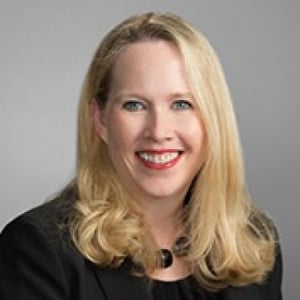
Partner and Co-Chair, Constitutional and Appellate Law Practice Group, Gibson, Dunn & Crutcher LLP
Allyson N. Ho is a partner in the Dallas office of Gibson, Dunn & Crutcher LLP and co‐chair of the Firm’s nationwide Appellate and Constitutional Law practice group.
Mrs. Ho is “undoubtedly one of the premier appellate lawyers in the United States” (Chambers). She has presented over 100 oral arguments in federal and state courts nationwide, including multiple high‐stakes cases on behalf of business before the U.S. Supreme Court.
Her most significant winning arguments include a U.S. Supreme Court reversal worth billions of dollars for unionized employers in the Sixth Circuit; a U.S. Supreme Court reversal limiting the power of federal regulators; a multi‐billion dollar environmental win in the Fifth Circuit; a multi‐billion dollar commercial victory for the founder of a technology company in the Appellate Division of the New York Supreme Court; a billion dollar environmental win in the Houston Court of Appeals; a nine‐figure commercial victory in the Corpus Christi Court of Appeals; and a nine‐figure arbitration win in the Fifth Circuit.
Among her numerous accolades, Mrs. Ho is one of only a small group of appellate lawyers nationwide, and the only one in Texas, to be nationally ranked by Chambers every year for the past ten years (2012‐21). She is also one of the few appellate lawyers nationwide to be named to the BTI Client Service All‐Stars List, an honor bestowed by the corporate counsel community for lawyers “who stand above all the others in delivering the absolute best in client service.” She is also routinely named as a leading appellate lawyer by Benchmark, The Best Lawyers in America®, The Legal 500, Texas Super Lawyers, and D Magazine.
Mrs. Ho has received the Gregory S. Coleman Outstanding Appellate Lawyer Award (Texas Bar Foundation, June 22, 2018), been named a “Distinguished Leader” (Texas Lawyer, Sep. 1, 2017) and “Appellate MVP” (Law360, Nov. 23, 2015), and been recognized on the “Appellate Hot List” (National Law Journal, Nov. 16, 2015). In addition, she has been profiled in “Texas Powerhouse” (Law360, Aug. 2, 2021), “Texas Appellate Power Couple” (Texas Lawbook, January 7, 2021), “Litigators of the Week” (The American Lawyer, May 8, 2020), “Litigation Powerhouse” (Law360, Aug. 10, 2016), “Supreme Court Insider” (National Law Journal, July 21, 2016), “Supreme Court Specialists, Mostly Male, Dominated Arguments This Term” (National Law Journal, May 11, 2016), “Attorney of the Year Finalist” (Texas Lawyer, Nov. 2, 2015), “Litigation Department of the Year” (Texas Lawyer, June 1, 2015), “Employment Group of the Year” (Law360, Jan. 13, 2015), “A Supreme Month: Lawyer Credits Preparedness in Ability to Argue Two U.S. High Court Cases in Three Weeks” (Texas Lawyer, Dec. 8, 2014), “High Court Debuts for Two Lawyers” (National Law Journal, Nov. 3, 2014), “Women in Business Awards” (Dallas Business Journal, Aug 29, 2014), “Litigation Departments of the Year” (Texas Lawyer, June 2, 2014), “Winning Women” (Texas Lawyer, Aug. 22, 2011), and “High court practitioners: increasingly diverse” (National Law Journal, June 6, 2011).
Federal and State Appellate Practice
Mrs. Ho has argued a series of high stakes, landmark cases on behalf of the business community before the U.S. Supreme Court. National Law Journal called her a “Veteran SCOTUS Advocate” in the “upper echelons of Supreme Court practice.” Law360 named her a “Supreme Court Star” and “one of the nation’s preeminent appellate lawyers.” And EmpiricalSCOTUS.com ranked her among “the most successful attorneys that currently practice before the Court.” Mrs. Ho once argued two significant business cases before the Court within the span of 21 days—including a “significant ruling for employers” that “paved a new path for companies paying millions of dollars in retiree health care benefits” (Law360), as well as a landmark administrative law dispute in which “several justices agreed with Ho’s contention that SCOTUS should revisit and overrule its own precedent” (Law360). She also prevailed against the EEOC in a case that the employment defense bar called “good news for employers across the country.” And in “the most important patent case in modern history” according to patent law experts, her argument before the Court was credited for “pick[ing] up two votes that pundits thought unreachable.”
She has appeared before every federal court of appeals in the country, including en banc arguments before the Fourth and Sixth Circuits. She has successfully represented business clients in every circuit, including the First (Pruco Life Insurance Company), Second (Swiss Federation; Rite Aid), Third (Johnson & Johnson), Fourth (Genex Services), Fifth (United Space Alliance LLC; Elliott Co.; MERSCORP; 24 Hour Fitness USA, Inc.; Stream Energy; Health Management Systems), Sixth (Deutsche Bank; American Airlines; M&G Polymers), Seventh (Expedia), Eighth (Cotter), Ninth (Boeing; JP Morgan Chase Bank), Tenth (Mitchell International), Eleventh (AstraZeneca), D.C. (FedEx), and Federal (Repros Therapeutics) Circuits.
In addition, Mrs. Ho regularly appears in state appellate courts across the country. She has argued numerous cases in the Texas Supreme Court, Texas appellate courts in Dallas, Houston, San Antonio, Corpus Christi, and Eastland, and state appellate courts in Arizona, Michigan, New York, Ohio, Oklahoma, and West Virginia, prevailing on behalf of Ford Motor Company, PepsiCo, International Paper, Tenet, GameStop, Deutsche Bank, and Unit.
Government and Public Service Experience
Mrs. Ho has a distinguished record of experience at the highest levels of the federal government. She served as Special Assistant to President George W. Bush, Counselor to Attorney General John Ashcroft, and law clerk to Justice Sandra Day O’Connor of the U.S. Supreme Court and Judge Jacques L. Wiener Jr. of the U.S. Court of Appeals for the Fifth Circuit.
Her record of public service also includes appointments to various boards and commissions. Among the most notable are her election as a member of the Administrative Conference of the United States, a trustee of the United States Supreme Court Historical Society, and a trustee of the Texas Supreme Court Historical Society. She is also vice chair of the Federal Judicial Evaluation Committee, appointed by U.S. Senators John Cornyn and Ted Cruz to evaluate potential appointments of all federal judges and U.S. Attorneys in Texas, and has previously served on the U.S. Magistrate Judge Merit Selection Panel for the Northern District of Texas.
Other Background Information
An active pro bono litigator, Mrs. Ho works most frequently with the First Liberty Institute and as amicus counsel for the State and Local Legal Center, the National Organization for Victim Assistance, and the National Crime Victim Law Institute. She is a frequent public speaker and active member of the Federalist Society, the American Law Institute, and the Washington Legal Foundation’s Legal Policy Advisory Board.
Mrs. Ho graduated from Duke University magna cum laude with a B.A. in English, Rice University with an M.A. and Ph.D. in English Literature, and the University of Chicago Law School with high honors. She was a member of the Law Review and Order of the Coif. She and her husband Jim, a federal judge, have a twin daughter and son.

Judge, United States Court of Appeals, Fifth Circuit
James C. Ho is a Circuit Judge on the U.S. Court of Appeals for the Fifth Circuit. Before taking the bench on January 4, 2018, he was a partner and co-chair of the national Appellate and Constitutional Law practice group of Gibson, Dunn & Crutcher LLP.
As an appellate litigator for over a decade, including three years as the Solicitor General of Texas, Judge Ho presented 50 oral arguments in federal and state courts nationwide. He won numerous appeals, including three merits cases at the U.S. Supreme Court. He was routinely ranked among the nation’s leading lawyers by Benchmark, Chambers, Law360, The Legal 500, and The National Law Journal, among other publications. His work has been cited favorably by courts at every level of both the federal and state judiciaries. He won a Best Brief Award from the National Association of Attorneys General for every year that he served as solicitor general, and he is the only state solicitor general in history to be invited by the U.S. Supreme Court to express the views of a state.
Judge Ho has served in all three branches of the federal government. On the Senate Judiciary Committee, he served as chief counsel of the Subcommittees on the Constitution and Immigration under Senator John Cornyn. At the Justice Department, he served as Special Assistant to the Assistant Attorney General for Civil Rights and an attorney-advisor at the Office of Legal Counsel. He clerked for Judge Jerry E. Smith of the U.S. Court of Appeals for the Fifth Circuit and Justice Clarence Thomas of the U.S. Supreme Court.
His record of public service also includes appointments as vice chair of the Federal Judicial Evaluation Committee in Texas and co-chair of the National Asian Pacific American Bar Association Judiciary Committee, and as a member of the U.S. Magistrate Judge Merit Selection Panel for the Northern District of Texas, the U.S. delegation to the United Nations Committee on the Elimination of Racial Discrimination, and the Continuity of Government Commission.
In addition, Judge Ho has served as an Adjunct Professor of Law at the University of Texas School of Law, where he taught seminars on U.S. Supreme Court Litigation and Religious Liberty. He has authored numerous articles in respected law reviews nationwide, including an annual feature on exemplary judicial writing for The Green Bag Almanac & Reader. He previously served as senior editor of The Green Bag and as co-editor of Pub. L. Misc.
Judge Ho graduated from Stanford University with honors and a B.A. in Public Policy in 1995, and the University of Chicago Law School with high honors in 1999. Before law school, he was a legislative aide to California State Senator Quentin Kopp. He and his wife Allyson live in Dallas, Texas, with their twin daughter and son.
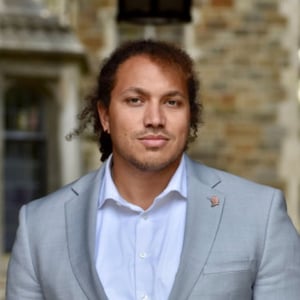
Symposium Co-Director, Michigan Student Chapter
Jeremy (‘25) is from Austin, Texas. He graduated summa cum laude from Liberty University in 2022 with a Bachelor of Science in Paralegal Studies and a minor in Biblical Theology. Prior to attending college, Jeremy helped plant three churches in the Austin area, served as a pastor and a worship leader, and taught classes on philosophy, theology, and Christian communications. He also spent 10 years as a musician. He is active in the foster care and adoptive systems, giving talks to raise awareness about the benefits of and need for foster parents. Jeremy and his wife, Ruthy, have fostered 16 children and adopted three. He served as a legal intern for the District Attorney’s Office of Travis County, TX, and returned to Austin to spend his 2L summer at O’Melveny and Myers.
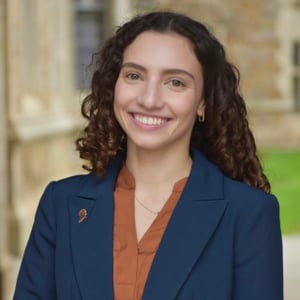
Michigan Law School Chapter, President
Katherine (’25) was born and raised in Brazil to a Greek family. She moved to the U.S. in 2015 to pursue her undergraduate education at Michigan State University (“MSU”), where she graduated Phi Beta Kappa from James Madison College. At MSU, Katherine served as Student Body President and on the executive board of the Association of Big Ten Students (a conglomerate of all Big Ten student governments). Before law school, she worked as a policy analyst at a Department of Energy nuclear physics laboratory and later in the compliance team of a Fortune 500 financial services firm. At the University of Michigan Law School, Katherine served on the executive board of the Latinx Law Student Association at Michigan Law and the Federalist Society. As a 2L, Katherine externed at the U.S. District Court for the Western District of Michigan for Chief Judge Hala Y. Jarbou. She interned at Jones Day in Chicago for her 1L summer and returned to Jones Day for her 2L summer, where she will join as an associate in 2025.
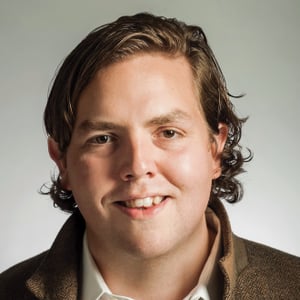
Harry Kalven, Jr. Professor of Law & Faculty Director, Constitutional Law Institute, University of Chicago Law School
William Baude is a Professor of Law and the Faculty Director of the Constitutional Law Institute at the University of Chicago Law School, where he teaches federal courts, constitutional law, and conflict of laws. His current research interests include different aspects of the Fourteenth Amendment (particularly both Section One and Section Three) and the nature of judicial discretion.
Among his other activities Baude is: the co-editor of two textbooks, The Constitution of the United States and Hart & Wechsler's Federal Courts in the Federal System; an Affiliated Scholar at the Center for the Study of Constitutional Originalism; a founding member of the Academic Freedom Alliance; a member of the American Law Institute; an occasional blogger at The Volokh Conspiracy; and a podcaster on Divided Argument. He also recently served on the Presidential Commission on the Supreme Court of the United States.
Professor Baude received his BS in Mathematics from the University of Chicago and his JD from Yale Law School. He then clerked for then-Judge Michael McConnell on the United States Court of Appeals, and Chief Justice John Roberts on the United States Supreme Court. Before joining the Chicago faculty, he was a fellow at the Stanford Constitutional Law Center, and a lawyer in Washington, DC.
Partner, Perkins Coie LLP
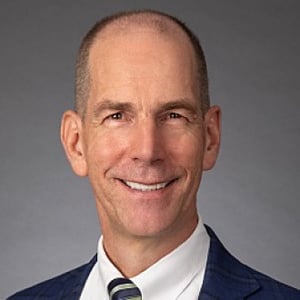
As an associate director at the President’s Council on Environmental Quality (CEQ), Edward (Ted) Boling served as the country’s top National Environmental Policy Act (NEPA) attorney. He currently advises clients on the development of renewable energy, resource development, transportation, and infrastructure, drawing on over 30 years of high-level public service.
Ted served in the U.S. Department of the Interior (DOI), CEQ, and the U.S. Department of Justice (DOJ) in both Democratic and Republican administrations. His experience includes deep involvement in federal infrastructure issues, as well as leadership of the first comprehensive revision of CEQ’s NEPA regulations in 40 years.
Ted’s work at CEQ also included the National Ocean Policy, CEQ’s climate change guidance, and the regulatory response to the Deepwater Horizon disaster. He drafted NEPA guidance on mitigation and monitoring, cumulative impacts analysis, and the development categorical exclusions from detailed NEPA documentation. Ted advised on the establishment of numerous national monuments, including the first marine national monuments in the United States and the largest marine protected areas in the world. He also assisted in briefing three U.S. Supreme Court cases.
At DOI, Ted handled matters involving energy development on the outer continental shelf, including offshore wind power development, and the fast track for solar and wind energy projects on public lands. He has provided legal and policy advice on environmental issues concerning the Federal Columbia River Power System and the California Central Valley Project.
At DOJ, in the first 10 years of his career, Ted litigated significant cases involving NEPA, endangered species, marine mammals, wetland protections, and public lands. He was involved in litigation concerning the Northwest Forest Plan, National Forest management decisions, and Federal Transit Administration decisions in New England.
Deputy General Counsel, U.S. Environmental Protection Agency
Senior Fellow for Law, Economics, and Technology, The Heritage Foundation; Professor, Florida International University
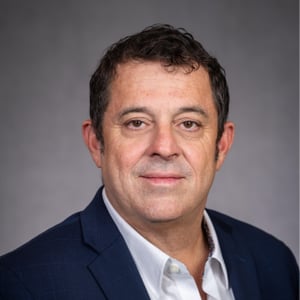
Mario Loyola is a Senior Fellow for Law, Economics, and Technology at The Heritage Foundation.
Loyola served in the Trump Administration as Associate Director for Regulatory Reform at the White House Council on Environmental Quality. In that role, he was one of the principal drafters of the One Federal Decision policy, which helped to streamline the permitting and environmental review of large infrastructure projects. While at CEQ, he was a member of the U.S. delegation to the USMCA free trade negotiations with Mexico and Canada, as well as the United Nations conference on biodiversity on the high seas. Loyola initially joined the White House in February 2017 as a Presidential Speechwriter, employing his expertise in many areas of foreign and domestic policy.
After beginning his career in M&A and corporate finance law, Loyola served in the Bush 43 Administration as a special assistant to the Undersecretary of Defense for Policy. He left that position to start writing on national defense issues in magazines such as National Review and The Weekly Standard, reporting from the front lines of the war on terrorism in Lebanon, Israel, and Iraq. He finished the Bush Administration as Foreign and Defense Counsel to the U.S. Senate Republican Policy Committee, then under the chairmanship of Senator Kay Bailey Hutchison of Texas. He subsequently moved to Texas and joined the Texas Public Policy Foundation, where he specialized in energy, environment, and federalism.
Loyola is a frequent contributor to The Wall Street Journal, National Review, and The Atlantic, among others. He teaches environmental and administrative law at Florida International University, where he is Founding Director of the Environmental Finance and Risk Management program in FIU’s prestigious Institute of Environment. He received a bachelor’s degree in European history from the University of Wisconsin–Madison and a J.D. from Washington University School of Law.
Chair, Issues & Appeals, Hunton Andrews Kurth LLP
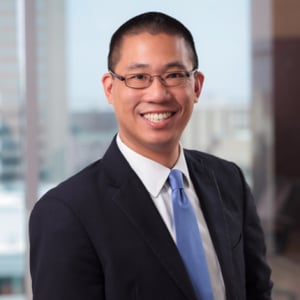
The former Solicitor General of West Virginia, Mr. Lin has been on the front lines of many precedent-setting cases in appellate courts across the country, including in a US Supreme Court victory that George Will called “the court’s most severe rebuke of a president” since the Truman administration. Having argued more than 60 appeals, he brings to clients a well-honed ability to identify the most persuasive issues for appeal and a practiced understanding of how best to frame complex legal questions in appellate courts.
With experience in the private sector and multiple branches of government, Mr. Lin’s practice has spanned a wide range of issues, including major questions of constitutional and administrative law at the federal and state levels. On behalf of more than two dozen states, he won a stay from the US Supreme Court of the EPA’s Clean Power Plan. Described by the New York Times as an “unprecedented” order, the stay was the first time the Supreme Court had ever put a regulation on hold before review by a federal appeals court. In that same case, Elbert argued before the en banc DC Circuit in an historic proceeding that one commenter quoted in E&E News compared to “the NBA All-Star Game.” At the state level, Elbert led the effort that persuaded the West Virginia Supreme Court of Appeals to overturn an injunction of the state’s right-to-work law.
In 2013, Mr. Lin was appointed the Solicitor General of West Virginia. During his four-and-a-half year tenure, he served as a member of the Attorney General’s senior management team, oversaw all civil and criminal appeals, and argued nearly two dozen cases in federal and state appellate courts. He authored more than twenty-five briefs in the US Supreme Court and more than forty-five formal Opinions of the Attorney General.
Earlier in his career, Mr. Lin served as a trial attorney in the Federal Programs Branch of the US Department of Justice’s Civil Division, where he received a Special Service Award. He has also been a law clerk at all three levels of the federal judiciary: for Justice Clarence Thomas on the US Supreme Court; for Judge William H. Pryor Jr. on the US Court of Appeals for the Eleventh Circuit; and for Senior Judge Robert E. Keeton on the US District Court for the District of Massachusetts.
Mr. Lin speaks regularly on a wide variety of topics, including constitutional law, administrative law, environmental law, state and federal relations, the US Supreme Court, and appellate practice. He has testified before Congress, and has spoken at the national conventions of the American Bar Association, the Association of Corporate Counsel, the National Asian Pacific American Bar Association, the Federalist Society, Americans for Prosperity, and the American Legislative Exchange Council. He is an elected member of the American Law Institute, a public member of the Administrative Conference of the United States, and a fellow of the American Academy of Appellate Lawyers.
Mr. Lin is admitted to practice in the following federal courts: the Supreme Court of the United States; the First, Second, Third, Fourth, Fifth, Sixth, Seventh, Eighth, Ninth, Eleventh, D.C., and Federal Circuits; the District of Massachusetts; the Northern and Southern Districts of West Virginia; and the Eastern and Western Districts of Virginia.
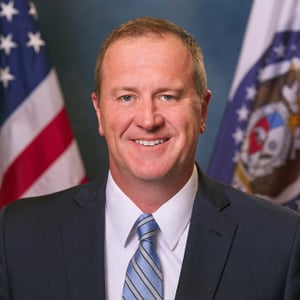
United States Senator, Missouri
Senator Eric Schmitt represents Missouri in the United States Senate, where he serves as the Chairman of the Senate Judiciary Committee's Subcommittee on the Constitution. He also serves on the Senate Armed Services and Commerce Committees and is the Vice-Chair of the Joint Economic Committee.
Prior to his election to the Senate in 2022, he served as Missouri’s Attorney General, where he was a tireless advocate for the First Amendment and our Separation of Powers and against the Biden Administration's overreach and COVID craziness.
He details those accounts in his New York Times Bestselling book:The Last Line of Defense: How to Beat the Left in Court.
He is a graduate of Truman State University and Saint Louis University School of Law.

Levin, Mabie & Levin Professor of Law, University of Florida Levin College of Law
Professor Gary Lawson joined the University of Florida Levin College of Law faculty on July 1, 2024, after twenty-four years at Boston University School of Law and eleven years at Northwestern University School of Law. While at Boston University, he was named a William Fairfield Warren Distinguished Professor in 2022 – the highest faculty honor within the university. He has authored or co-authored nine editions of a textbook on administrative law, a textbook on constitutional law, five university press books, one popular press book, and more than one hundred scholarly articles on topics ranging from aspects of constitutional theory and history to the proof of legal propositions. His works have been cited in more than twenty opinions of United States Supreme Court justices. He is a founding member, and serves on the Board of Directors, of the Federalist Society for Law and Public Policy Studies and is on the Editorial Advisory Board of the Heritage Guide to the Constitution.
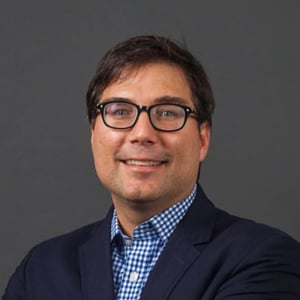
Associate Professor of Law and Director, Program on Economics & Privacy, Antonin Scalia Law School, George Mason University
Associate Professor of Law James C. Cooper brings over a decade of public and private sector experience to his research and teaching. He served as Deputy and Acting Director of the Federal Trade Commission’s Office of Policy Planning, Advisor to Federal Trade Commissioner William Kovacic, and an associate in the antitrust group of Crowell and Moring, LLP. His research on vertical restraints, price discrimination, behavioral economics and antitrust, and privacy policy have appeared in top journals and are widely cited.
Professor Cooper has a BA from the University of South Carolina, received his PhD in economics from Emory University, and his law degree (magna cum laude) from Antonin Scalia Law School, George Mason University, where he was a Levy Fellow and a member of the George Mason Law Review.
He teaches Economics for Lawyers, Advanced Seminar on Law & Economics, and Digital Information Policy Seminar.
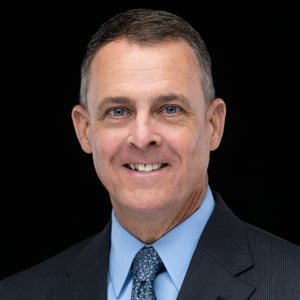
Nonresident Senior Fellow, Sowcroft Center for Strategy and Security
Michael served over 37 years in the U.S. Marine Corps, culminating his career as the Director of the Joint Artificial Intelligence Center, and the senior executive for AI in the Department of Defense. He previously served at the National Security Agency, overseeing global network operations and as the Director of Intelligence for the Chairman and the Joint Staff. In that position he worked closely with the Chairman of the Joint Chiefs, Secretary of Defense and Senior Leaders across the Department. Groen is an experienced Marine commander and multi-tour combat veteran. He was the Intelligence Officer for the 1st Marine Division in Operation Iraqi Freedom for both OIF I and II. He is the author of With the First Marine Division in Iraq, No Greater Friend, No Worse Enemy. His awards include the Defense Distinguished Service Award, the Legion of Merit, the Bronze Star and the Combat Action Ribbon.
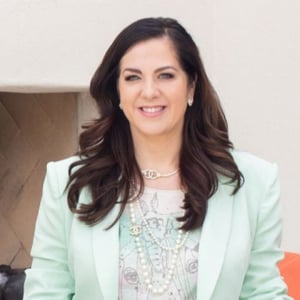
President, Rainey Center
Sarah E. Hunt is a globally focused leader in climate advocacy, technology, and democracy. Her expertise is regularly sought by national publications such as The Wall Street Journal and The New York Times. As President of the Joseph Rainey Center for Public Policy, a think tank and leadership community in Washington D.C., Ms. Hunt leads her team to generate new solutions to some of our nation’s most critical challenges and then cultivates a new generation of leaders to actually implement them.
Prior to founding the Rainey Center, much of Hunt’s background centered in the areas of climate change and election law. She launched a clean energy program at the American Legislative Exchange Council and a climate change program at the Niskanen Center. Before that, she managed state issues and ethics for a political consulting firm and practiced political law at a boutique law firm in the Pacific Northwest.
She currently also serves as Director, Policy & Strategy at the Rob and Melani Walton Sustainability Solutions Service at Arizona State University.
Ms. Hunt holds a BA in political science from the University of New Mexico, a JD from Willamette University College of Law, an LLM in international environmental law from Georgetown University Law Center, and an MPS in global advocacy from the George Washington University Graduate School of Political Management. She is admitted to the bar in Washington, DC, Oregon, and the 9th Circuit.
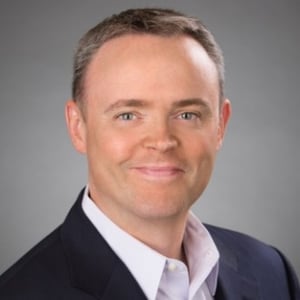
Senior Fellow, R Street Institute
Prior to R Street, Adam spent 12 years as a senior fellow at the Mercatus Center at George Mason University. Before the Mercatus Center, he served as the president of the Progress and Freedom Foundation. Adam has also worked for the Adam Smith Institute, the Heritage Foundation and the Cato Institute.
Adam has published 10 books on a wide range of topics, including online child safety, internet governance, intellectual property, telecommunications policy, media regulation and federalism.
In 2008, Adam received the Family Online Safety Institute’s “Award for Outstanding Achievement.”
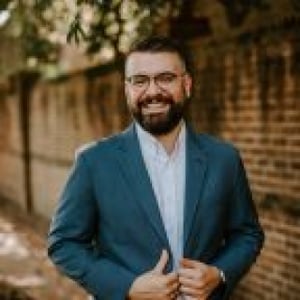
Senior Manager of Public Policy, Workday
Evangelos Razis is Senior Manager of Public Policy at Workday, where he leads U.S. artificial intelligence and data privacy policy. Since joining the company, Evangelos has grown Workday’s engagement on emerging AI laws and frameworks at the federal and state level, helping it become a leading proponent for workable safeguards on high-risk AI.
He regularly advises Workday’s responsible AI, privacy, and product legal teams on emerging legal and policy developments.
Before joining Workday, Evangelos led digital trade and global data policy at the U.S. Chamber of Commerce, the world’s largest business association. While at the Chamber, Evangelos spearheaded the U.S. business community’s engagement on the U.S.-EU Privacy Shield and advocated for open data governance frameworks in key U.S. export markets on six continents. He co-authored the Chamber’s AI policy principles, released in 2019. Previously, Evangelos worked as a trade and technology policy analyst at Fujitsu and as a fellow at the Information Technology Industry Council.
Evangelos holds a B.A. in Political Science from Fordham University, a M.S. in Foreign Service from Georgetown University, and is a Certified Information Privacy Professional (CIPP/E). He is pursuing a J.D. at George Mason University’s Scalia Law School.
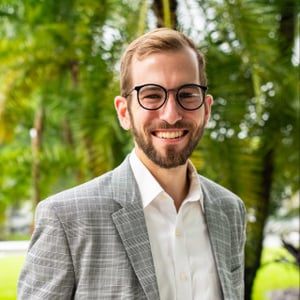
AI Innovation and Law Fellow, University of Texas School of Law
Kevin Frazier is an AI Innovation and Law Fellow with University of Texas School of Law.
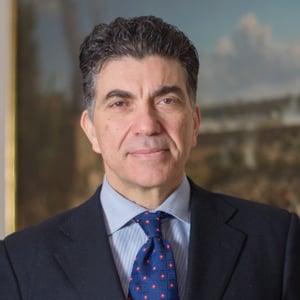
University of Florence, Professor of Constitutional Law
Distinguished Research Affiliate Andrea Simoncini is a professor of constitutional law at the University of Florence. As a constitutional scholar whose work is internationally well known, Simoncini focuses his research on Italian and European constitutional law, developmental dynamics of the sources of law, social rights, and the study of the interrelations between natural law and positive legal systems. He also studies the nexus of environmental politics with constitutional law and human rights.
Simoncini spent fall semester 2013 at the Kellogg Institute as a visiting fellow working on a joint project with Mauro Magatti: Europe: An Institution without a Society? His Kellogg collaboration with Magatti examined the changes over time in the meaning of civil society in Europe, looking particularly on how it evolved from a communally oriented to a more individualistic concept. Using a multidisciplinary approach, the pair study the relationship between the multiple civil societies of Europe and the future of the EU's institutional framework.
Twice a visiting professor at Notre Dame Law School, Simoncini was also the University's 2009 Fulbright Italian Scholar, serving as research fellow at the Nanovic Institute for European Studies.

Legal Fellow, Center for Constitutional Studies, Cato Institute
Brent Skorup is a legal fellow in the Cato Institute’s Robert A. Levy Center for Constitutional Studies.
Before joining Cato, he was a senior research fellow at the Mercatus Center at the George Mason University. His research areas include free speech, technology law, Fourth Amendment protections, regulation, and property law. Skorup has published pieces in economics and law journals and in popular media, including The Wall Street Journal, The New York Times, Bloomberg Law, Reuters, and Wired. He’s appeared as a TV and radio interview guest for news outlets like C‑SPAN, NPR, CBS News, ABC News, and CNBC Asia.
The Pennsylvania Supreme Court, a dissenting opinion at the Illinois Supreme Court, and the ALI's Restatement of the Law of Property have cited his legal research and he has testified as a technology and legal expert in legislative hearings in several states. Skorup has been appointed to several federal and state advisory bodies and he is currently a member of the Texas Advanced Air Mobility Advisory Committee.
Skorup has a BA in economics from Wheaton College and a law degree from the George Mason University School of Law, where he was articles editor for the Civil Rights Law Journal. He was a legal clerk at the FCC’s wireless bureau and Office of General Counsel and at the Energy and Commerce Committee in the U.S. House of Representatives.

Laurence H. Silberman Chair in Constitutional Governance, American Enterprise Institute; Executive Director, Antonin Scalia Law School’s C. Boyden Gray Center for the Study of the Administrative State
Adam J. White is the Laurence H. Silberman Chair in Constitutional Governance and senior fellow at the American Enterprise Institute, where he focuses on the Supreme Court and the administrative state. He also directs the Antonin Scalia Law School’s C. Boyden Gray Center for the Study of the Administrative State.
He writes on regulation and constitutional government for a variety of publications. He practiced law in Washington, D.C., after clerking for the D.C. Circuit's Judge David Sentelle. He also has been chairman of the ABA's Administrative Law Section.
In 2021, he served on the Presidential Commission on the Supreme Court of the United States, where he criticized “Court packing” and other efforts to restructure the Supreme Court.
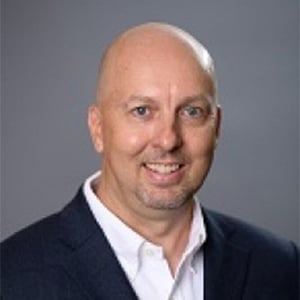
Associate Professor of Political Science, Public Policy and Public Administration, and International Affairs, George Washington University
Steven Balla is Associate Professor of Political Science, Public Policy and Public Administration, and International Affairs, and a Senior Scholar at the George Washington Regulatory Studies Center. He researches government consultation and public participation in policymaking in the United States and China. He has on two occasions served as a consultant to the Administrative Conference of the United States, drawing on his research on public commenting in the U.S. rulemaking process to make recommendations for how to improve regulatory policymaking. He has twice served as a Fulbright Scholar in China, at Peking University in Beijing and Nankai University in Tianjin. He is currently working on projects on congressional oversight of regulatory policymaking, polarization in public commenting on proposed rules, and the responsiveness of Chinese government officials to public feedback on draft laws and regulations.

Director, GW Regulatory Studies Center & Distinguished Professor of Practice, Trachtenberg School of Public Policy & Public Administration, The George Washington University
Susan Dudley is the Founder and Director of the George Washington University Regulatory Studies Center, established in 2009 to raise awareness of regulations’ effects and improve regulatory policy through research, education, and outreach. She is also a distinguished professor of practice in the Trachtenberg School of Public Policy and Public Administration. She is past-president of the Society for Benefit Cost Analysis, a senior fellow of the Administrative Conference of the United States, and on the Regulatory Transparency Project Regulatory Practice Working Group. Her book, Regulation: A Primer, with Jerry Brito, is available on Amazon.com.
From April 2007 through January 2009, Professor Dudley served as the Presidentially-appointed Administrator of the Office of Information and Regulatory Affairs in the U.S. Office of Management and Budget and was responsible for the review of draft executive branch regulations under Executive Order 12866, the collection of federal-government-wide information under the Paperwork Reduction Act, the development and implementation of government-wide policies in the areas of information policy, privacy, and statistical policy, and international regulatory cooperation efforts.
Prior to OIRA, she directed the Regulatory Studies Program at the Mercatus Center at George Mason University, and taught courses on regulation at the George Mason University School of Law. Earlier in her career, Professor Dudley served as an economist at OIRA, as well as the Environmental Protection Agency and the Commodity Futures Trading Commission. She was also a consultant to government and private clients at Economists Incorporated. She holds a Master of Science degree from the Sloan School of Management at MIT and a Bachelor of Science degree (summa cum laude) in Resource Economics from the University of Massachusetts, Amherst.
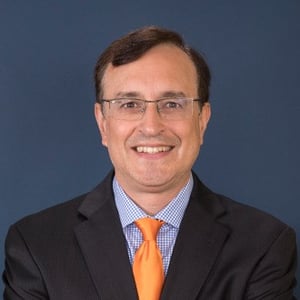
President, Center for Individual Rights
Todd Gaziano is the President of the Center for Individual Rights. Mr. Gaziano received his J.D. in 1988 from the University of Chicago Law School, where he was a John M. Olin Fellow in Law and Economics. He received his B.A. from West Virginia University, summa cum laude in 1985. He was selected as a Truman Scholar from West Virginia while an undergraduate.
Mr. Gaziano’s previous legal work includes service as a law clerk for U.S. Court of Appeals for the Fifth Circuit Judge Edith Jones, as an attorney in the U.S. Department of Justice Office of Legal Counsel, as a chief subcommittee counsel in the U.S. House of Representatives, as a Houston trial attorney, and as a chief corporate legal officer. He also served a six-year term as commissioner on the U.S. Commission on Civil Rights (2008-2013), where he helped conduct oversight and investigations of civil rights agencies.
For most of the last 25 years, Mr. Gaziano was a legal scholar and public interest law leader, promoting individual liberty in the Supreme Court and Congress. From 1997 to 2013, he was the founding director of the Edwin Meese Center for Legal and Judicial Studies at The Heritage Foundation. From 2014 until he joined CIR, he was the Chief of Legal Policy and Strategic Research, and Director of the Center for the Separation of Powers, at Pacific Legal Foundation.
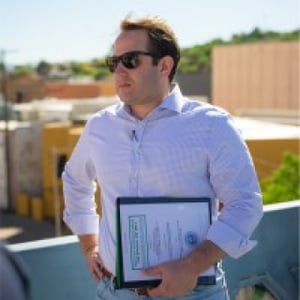
Staff Director, US Senate
Staff Director at United States Senate, Subcommittee on Government Operations and Border Management.
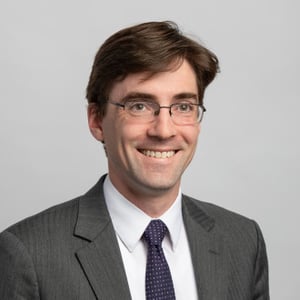
Deputy Litigation Director, Institute for Justice
Robert McNamara serves as Deputy Litigation Director with the Institute for Justice. He joined the Institute in August 2006 and litigates cutting-edge constitutional cases protecting free speech, property rights, economic liberty and other individual liberties in both federal and state courts.
Robert’s work has resulted in court victories for property owners fighting eminent domain abuse, tour guides fighting unconstitutional restrictions on their speech, taxi drivers seeking the right to own their own business, and many others. Robert also litigates in defense of innovation and entrepreneurship in medical care and was co-counsel in Flynn v. Holder, IJ’s landmark challenge to the federal prohibition on compensating bone marrow donors.
Robert’s writing has been published by outlets including The New York Times, The Wall Street Journal, The Washington Post and dozens more nationwide. His opinions and views on legal issues have been featured in radio and television programs ranging from National Public Radio’s All Things Considered to Fox News Channel’s Hannity & Colmes.
Robert is a graduate of Boston University and the New York University School of Law, where he was a founding member and eventual editor-in-chief of the NYU Journal of Law & Liberty. He currently lives in Virginia with his wife and children.
Robert McNamara is a member of the Virginia bar.
Michael primarily litigates cases related to police misconduct and racial discrimination. He graduated Harvard Law School, cum laude, and Brandeis University, summa cum laude. Previously, Michael clerked for the Hon. John R. Fisher on the District of Columbia Court of Appeals and interned with the Special Litigation Section of DOJ’s Civil Rights Division. He has also represented tenants facing eviction and prisoners in disciplinary hearings. In addition to his legal experience, Michael has worked on a political campaign and served as a fellow at an organization that helps people on public assistance find employment.
Michael enjoys running and, one day, hopes to learn how to dance.

Professor of Law, University of Michigan Law School
Christopher J. Walker is a Professor of Law at the University of Michigan. Prior to joining Michigan law faculty in 2022, he spent a decade teaching at The Ohio State University Moritz College of Law. He previously clerked for Justice Anthony Kennedy of the U.S. Supreme Court, worked on the Civil Appellate Staff at the U.S. Department of Justice, and served on the Senate Judiciary Committee staff for the Gorsuch Supreme Court confirmation. Professor Walker’s research focuses on administrative law, regulation, and law and policy at the agency level. Outside the law school, he chaired the American Bar Association’s Section of Administrative Law and Regulatory Practice in 2020-21 and served as one of forty Public Members of the Administrative Conference of the United States from 2016-2022, and he continues to serve in both organizations in various capacities. He also works of counsel at the U.S. Chamber Litigation Center. In 2022, he received the Federalist Society’s Joseph Story Award.

Closing Banquet and Fireside Chat with Hon. James C. Ho and Allyson Newton Ho, and Presentation of the Annual Joseph Story Award and Feddie Awards
Allyson Newton Ho, James C. Ho, JJ Marshall, Katherine R. Slivensky
Overflow: Hutchins Hall Michigan Law School We are pleased to announce that the Honorable James...
Introduction: Originalism and the General Law
William Baude
Does constitutional interpretation require more than just text? What happens when the text runs out?...
Unleashing American Energy at CEQ
Edward Boling, Garrett Kral, Mario Loyola
On his first day back in office, President Trump issued Executive Order 14154 (Unleashing American...
Fireside Chat with Senator Eric Schmitt
Elbert Lin, Eric Schmitt
Featuring: Hon. Eric Schmitt, United States Senator, Missouri Moderator: Mr. Elbert Lin, Former Solicitor General,...
Ghosts of Chevron [The FedSoc Films Podcast]
Gary Lawson
In this episode of the FedSoc Films Podcast, Professor Gary Lawson of the University of...
Panel IV: Is the Hour Getting Late? Will Federalism Guide AI and Meet the Demands of Global Opportunities and Threats?
James C. Cooper, Michael Groen, Sarah E. Hunt, Adam Thierer, Evangelos Razis
This panel will discuss James Cooper and Evangelos Razis’s piece, “The Federalist’s Dilemma: State AI Regulation...
Panel III: Let Slip the AI Overlords? Justice and Federal Regulators
Kevin Frazier, Andrea Simoncini, Brent Skorup, Adam White
Panel 3 will tackle Anastasia Boden and Brent Skorup’s paper, “Welcoming Our AI Overlords and...
Daniel Webster Debate Series: Should the Court Restore Chevron?
The Federalist Society's Georgetown Law Chapter'sDaniel Webster Debate Series presents Daniel Webster Debate Series:Should the...
Will the Congressional Review Act Be Revived in 2025?
Steven Balla, Susan E. Dudley, Todd F. Gaziano, Anthony Papian
Federal regulators were busy in April 2024, with agencies publishing a record-breaking 66 significant new...
Do We Need Qualified Immunity?
Robert J. McNamara, Michael Perloff, Christopher J. Walker
Qualified immunity is perhaps the nation’s most controversial legal doctrine. Proponents say qualified immunity is necessary to give government officials—especially...