
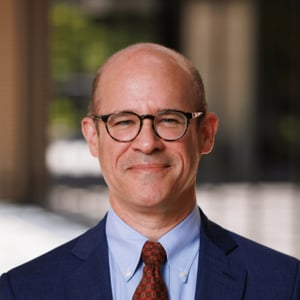
Professor of Law, Stanford Law School
Orin S. Kerr is a Professor of Law at Stanford Law School, where he teaches and writes in the areas of criminal procedure and computer crime law. Kerr earned mechanical engineering degrees from Princeton University and Stanford University before graduating with a J.D. from Harvard Law School. He is a former law clerk to Justice Anthony M. Kennedy at the United States Supreme Court and Judge Leonard I. Garth of the U.S. Court of Appeals for the Third Circuit.

President and Executive Director, Electronic Privacy Information Center
Marc Rotenberg is President and Executive Director of the Electronic Privacy Information Center (EPIC) in Washington, DC. He teaches information privacy law at Georgetown University Law Center and frequently testifies before Congress on emerging privacy and civil liberties issues. He testified before the 9-11 Commission on "Security and Liberty: Protecting Privacy, Preventing Terrorism." He has served on several national and international advisory panels, including the expert panels on Cryptography Policy and Computer Security for the OECD, the Legal Experts on Cyberspace Law for UNESCO, and the Countering Spam program of the ITU. He chairs the ABA Committee on Privacy and Information Protection. He is a founding board member and former Chair of the Public Interest Registry, which manages the .ORG domain. He is editor of "The Privacy Law Sourcebook," and co-editor of "Information Privacy Law" (Aspen Publishing 2006) and "Litigation Under the Federal Open Government Laws" (EPIC 2010). He is a graduate of Harvard College and Stanford Law School. He served as Counsel to Senator Patrick J. Leahy on the Senate Judiciary Committee after graduation from law school. He is the recipient of several awards, including the World Technology Award in Law, the American Lawyer Award for Top Lawyers Under 45, the Norbert Weiner Award for Social and Professional Responsibility, and the Vicennial medal from Georgetown University.
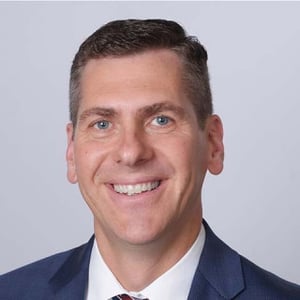
Senior Vice President, Chief Legal Officer and General Counsel, Ryan LLC
John Smith is the Senior Vice President, Chief Legal Officer and General Counsel at Ryan, LLC. Based at Ryan’s global headquarters in Dallas, Texas, John Smith brings more than 20 years of experience as a proven leader in the legal, business, and national security communities, including all three branches of the United States Government.
Prior to joining Ryan, Mr. Smith spent 12 years in Texas and Virginia at Raytheon Technologies, an American multinational aerospace and defense corporation. He pioneered roles as the company’s first cybersecurity lawyer and first privacy lawyer. During the last seven years, as a divisional Vice President and General Counsel, Mr. Smith led the legal departments of the two Raytheon divisions focused primarily on services.
Before Raytheon, Mr. Smith served as Associate Counsel to U.S. President George W. Bush. He was the lead lawyer for the White House Homeland Security Council staff. He began his legal career by clerking for Judge Samuel Alito, a few years before Alito’s elevation to the U.S. Supreme Court, and then by practicing at the international law firm of Covington & Burling.
Mr. Smith served a decade as a U.S. Army reservist and two years as a missionary in Ukraine and Russia, a few years after the collapse of the Soviet Union. He graduated with high honors from both Princeton University and Brigham Young University Law School.

Partner, Steptoe & Johnson LLP
Michael A. Vatis is a partner in the New York office of Steptoe & Johnson LLP. His practice focuses on Internet, e-commerce, and technology matters, providing legal advice and strategic counsel on matters involving privacy, security, encryption, intelligence, law enforcement, Internet gambling, and international regulation of Internet content. He also is an experienced appellate litigator, representing clients before the US Supreme Court and federal courts of appeals.
Mr. Vatis has spent most of his career addressing cutting edge issues at the intersection of law, policy, and technology. He was the founding director of the National Infrastructure Protection Center at the FBI, the first government organization responsible for detecting, warning of, and responding to cyber attacks, including computer crimes, cyber terrorism, cyber espionage, and information warfare. Before that, Mr. Vatis served as Associate Deputy Attorney General and Deputy Director of the Executive Office for National Security in the Department of Justice, where he advised the Attorney General and Deputy Attorney General and coordinated the Department’s activities involving counterterrorism, intelligence, encryption, and cyber crime. In that capacity, he also helped lead the development of the nation’s first policies regarding critical infrastructure protection. Mr. Vatis served as Special Counsel at the Department of Defense, where he handled sensitive legal and policy issues for the Secretary and Deputy Secretary of Defense and the General Counsel, receiving the Secretary of Defense Award for Excellence.
After leaving the government in 2001, Mr. Vatis served as the first Director of the Institute for Security Technology Studies at Dartmouth, a federally funded counterterrorism and cyber security research institute. He was simultaneously the founding Chairman of the Institute for Information Infrastructure Protection (I3P). I3P, a consortium of leading cyber security research organizations, worked with industry, government, and academia to develop a comprehensive research and development agenda to improve the security of the nation’s computer and communications networks. Mr. Vatis also served as the Executive Director of the Markle Task Force on National Security in the Information Age, a highly influential group of technology company executives, former government officials, and civil libertarians that recommended ways the government could more effectively use information and technology to combat terrorism while preserving civil liberties. Mr. Vatis was the principal author of the group’s second report, whose recommendations were adopted by the 9/11 Commission and included in the 2004 Intelligence Reform Act.
Mr. Vatis has been a Senior Fellow at New York University Law School’s Center on Law and Security and a member of numerous expert working groups on counterterrorism, intelligence, and technology issues. He is currently a member of the National Academy of Science/National Research Council Committee on the Policy Consequences and Legal/Ethical Implications of Offensive Information Warfare and served on the Commission on Cyber Security for the 44th Presidency, an independent group of cyber security experts who examined existing and potential cyber security threats and developed recommendations for the US government and private businesses. Mr. Vatis has also regularly testified before congressional committees on counterterrorism, intelligence, and cyber security issues. He is also interviewed frequently on television, radio, and in print media, and has been a guest lecturer at many prestigious law schools and universities and a speaker at industry conferences worldwide.
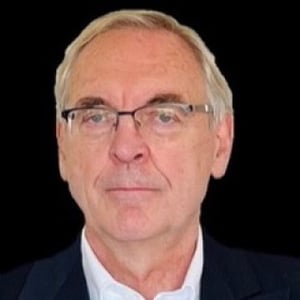
Fellow, National Security Institute, Antonin Scalia Law School, George Mason University
Vince Vitkowsky chaired the Executive Committee of the Federalist Society’s International and National Security Law and Policy Practice Group for over a decade. He is also a Fellow at the National Security Institute of George Mason University Law School. Vince spent 45 years in private practice, primarily in AmLaw 100/200 firms and their spin-offs. His practice included domestic and international commercial arbitration and litigation, as well as cyber risks and liabilities. Vince's current focus is on national security policy, artificial intelligence, cybersecurity, and counterterrorism. He has often written and spoken on national security and other public policy issues. Among other affiliations, Vince has been an Adjunct Fellow at the Center for Law and Counterterrorism of the Foundation for the Defense of Democracies, a member of the Executive Committee of the American Branch of the International Law Association, and Co-Chair of the Committee on Interventions and Trial Observations of the International Bar Association’s Human Rights Institute. He received his B.A. from Northwestern University and his J.D. from Cornell Law School.
Former Solicitor General of Texas
Gregory Scott Coleman was an American lawyer and the first Solicitor General of Texas, serving in that capacity from 1999 to 2001.
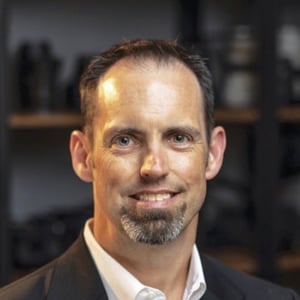
President and Senior Counsel, Casey Law Office, P.C.
Stephen Casey is President and Senior Counsel at Casey Law Office, P.C. After high school, Stephen entered the United States Navy, and while there supervised operation of nuclear reactors in the United States Navy for eight years, holding several leadership and supervisory positions in what is regularly acknowledged as one of the most academically rigorous program in the United States military. In 1999, Stephen finished his naval service and attended LeTourneau University in Longview, Texas, where he double-majored in Biblical Studies and History-Political Science, graduating with a 4.0 GPA. He continued his education at Regent University School of Divinity, earning a pre-doctoral Master of Arts in Biblical Interpretation. Subsequently, Stephen attended Regent University School of Law, where he was selected based on his writing skills to serve as an editor for Regent's Law Review. Stephen also was active with the Federalist Society, and participated in moot courts.
Both during and after law school Stephen clerked with several firms and was selected in 2008 to clerk with the Texas Supreme Court in the chambers of former Justice Scott Brister. Following his time on the Court, Stephen decided to open his own law practice so he could tailor cases to client's individual needs. Stephen is also an Allied Attorney with the Alliance Defending Freedom, a Blackstone Fellow, and serves as Co-Founder and Chief Counsel for the Texas Center for Defense of Life. Stephen also continues to serve in the Federalist Society.
Stephen lives in Round Rock with his wife and five children, where they are active in the community. He and his family attend Austin Vineyard Church, and he remains activing in local, state, and national political issues.

Senior Fellow and Director of Constitutional Studies, Manhattan Institute
Ilya Shapiro is a senior fellow and director of constitutional studies at the Manhattan Institute and a contributing editor of City Journal. Previously he was executive director and senior lecturer at the Georgetown Center for the Constitution, and before that a vice president of the Cato Institute.
Shapiro is the author of Lawless: The Miseducation of America’s Elites (2025) and Supreme Disorder: Judicial Nominations and the Politics of America’s Highest Court (2020), coauthor of Religious Liberties for Corporations? (2014), and editor of 11 volumes of the Cato Supreme Court Review (2008-18). He has contributed to a variety of academic, popular, and professional publications, including the Wall Street Journal, Harvard Journal of Law & Public Policy, Washington Post, Los Angeles Times, USA Today, National Review, and Newsweek. He also regularly provides commentary for various media outlets, writes the Shapiro’s Gavel newsletter on Substack, and once appeared on the Colbert Report.
Shapiro has testified many times before Congress and state legislatures and has filed more than 500 amicus curiae “friend of the court” briefs in the Supreme Court. He lectures regularly on behalf of the Federalist Society, is a member of the board of fellows of the Jewish Policy Center, was an inaugural Washington Fellow at the National Review Institute, and has been an adjunct law professor at the George Washington University and University of Mississippi. He is also the chairman of the board of advisers of the Mississippi Justice Institute, a barrister in the Edward Coke Appellate Inn of Court, and a former member of the Virginia Advisory Committee to the U.S. Commission on Civil Rights.
Earlier in his career, Shapiro was a special assistant/adviser to the Multi-National Force in Iraq on rule-of-law issues and practiced at Patton Boggs and Cleary Gottlieb. Before entering private practice, he clerked for Judge E. Grady Jolly of the U.S. Court of Appeals for the Fifth Circuit. He holds an AB from Princeton University, an MSc from the London School of Economics, and a JD from the University of Chicago Law School.
Executive Vice President and Chief Legal Officer, HII
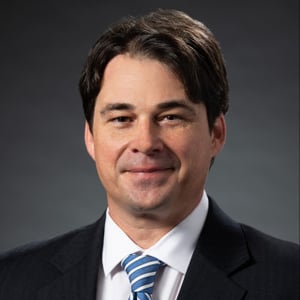
Chad Boudreaux is executive vice president and chief legal officer for HII, America’s largest military shipbuilding company and a provider of professional services to partners in government and industry.
Serving in this role since 2020, he has overall leadership responsibility for HII’s Law Department and outside counsel, which provide a broad range of legal advice and support for the company’s business activities, including corporate governance matters, compliance, litigation management, and mergers and acquisitions.
Previous to this appointment, Boudreaux managed HII’s litigation docket and oversaw HII’s nationally recognized compliance program as the company’s first chief compliance officer. He joined HII in 2011 as corporate vice president for litigation, investigations and compliance. In 2014, he led the Law Department team that won the coveted ACC Value Challenge Award for HII’s compliance program, a program that has since been heralded as “a roadmap for other companies.”
Before joining HII, he practiced law at Baker Botts LLP, where he established the law firm’s Global Security and Corporate Risk Counseling practice group. He has also previously held various high-ranking positions in the U.S. government to include serving as the deputy chief of staff of the U.S. Department of Homeland Security and multiple leadership positions at the U.S. Department of Justice.
Boudreaux earned a Bachelor of Arts degree from Baylor University and a Juris Doctor degree from the University of Memphis School of Law. He is a recipient of the U.S. Justice Department’s Special Commendation for Outstanding Service for his work on high-stakes litigation for the United States.
Fellow, National Security Institute, Antonin Scalia Law School, George Mason University
Vince Vitkowsky chaired the Executive Committee of the Federalist Society’s International and National Security Law and Policy Practice Group for over a decade. He is also a Fellow at the National Security Institute of George Mason University Law School. Vince spent 45 years in private practice, primarily in AmLaw 100/200 firms and their spin-offs. His practice included domestic and international commercial arbitration and litigation, as well as cyber risks and liabilities. Vince's current focus is on national security policy, artificial intelligence, cybersecurity, and counterterrorism. He has often written and spoken on national security and other public policy issues. Among other affiliations, Vince has been an Adjunct Fellow at the Center for Law and Counterterrorism of the Foundation for the Defense of Democracies, a member of the Executive Committee of the American Branch of the International Law Association, and Co-Chair of the Committee on Interventions and Trial Observations of the International Bar Association’s Human Rights Institute. He received his B.A. from Northwestern University and his J.D. from Cornell Law School.
Director, Vanderbilt Health Policy Center, Vanderbilt University Law School
President, Center for Individual Rights
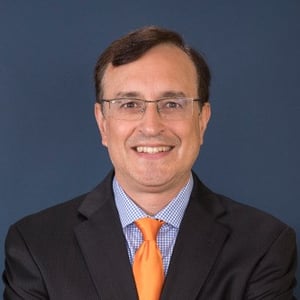
Todd Gaziano is the President of the Center for Individual Rights. Mr. Gaziano received his J.D. in 1988 from the University of Chicago Law School, where he was a John M. Olin Fellow in Law and Economics. He received his B.A. from West Virginia University, summa cum laude in 1985. He was selected as a Truman Scholar from West Virginia while an undergraduate.
Mr. Gaziano’s previous legal work includes service as a law clerk for U.S. Court of Appeals for the Fifth Circuit Judge Edith Jones, as an attorney in the U.S. Department of Justice Office of Legal Counsel, as a chief subcommittee counsel in the U.S. House of Representatives, as a Houston trial attorney, and as a chief corporate legal officer. He also served a six-year term as commissioner on the U.S. Commission on Civil Rights (2008-2013), where he helped conduct oversight and investigations of civil rights agencies.
For most of the last 25 years, Mr. Gaziano was a legal scholar and public interest law leader, promoting individual liberty in the Supreme Court and Congress. From 1997 to 2013, he was the founding director of the Edwin Meese Center for Legal and Judicial Studies at The Heritage Foundation. From 2014 until he joined CIR, he was the Chief of Legal Policy and Strategic Research, and Director of the Center for the Separation of Powers, at Pacific Legal Foundation.
Regional Deputy General Counsel, North America and Lead Counsel, Treasury, Willis Towers Watson
Partner, Waller Lansden Dortch & Davis LLP
Paul Summers is a partner with Waller Lansden and practices in the area of trial and appellate litigation; regulatory matters; and government affairs. Prior to joining the firm, he served as Attorney General of the State of Tennessee. As Attorney General, he led a staff of 340, including 170 attorneys, in all civil litigation and criminal appellate litigation before state and federal courts. Major accomplishments during his term included the conclusion of a 36-year-old higher education desegregation lawsuit, Geier v. Sundquist. General Summers also successfully argued the death penalty case of Rahman v. Bell (2002) before the United States Supreme Court. While serving as the state's chief legal officer, General Summers was twice named to Business Tennessee's Power 100 list of Tennessee's most powerful people. He is recognized in The Best Lawyers in America (Woodward White, Inc.) for his work in commercial litigation and is listed in the 2009-2010 Edition of Who's Who in American Law.
Before he was appointed Attorney General in 1999 by the Tennessee Supreme Court, General Summers served as Judge of the Tennessee Court of Criminal Appeals. He was appointed to the bench by Governor Ned McWherter in 1990 and elected in statewide retention elections in 1992 and 1998. Prior to this service, General Summers was elected District Attorney General for the multi-county 25th judicial district in West Tennessee. During his nearly nine-year tenure as a DA, General Summers also served as President of the Tennessee District Attorneys General Conference. Prior to state service, he was in private practice in his hometown of Somerville, Tenn.
General Summers served as a JAG officer for more than three decades in both active and reserve duty with the Air Force, Army and National Guard. His last duty assignment was Command Staff Judge Advocate, Tennessee Army National Guard. He retired with the rank of colonel in the U.S. Army. Upon his retirement after 33 years of commissioned military service, Tennessee Governor Phil Bredesen awarded General Summers the National Guard Distinguished Service Medal. General Summers was awarded the Legion of Merit by President George W. Bush.
General Summers is a Fellow of the Tennessee Bar Foundation and the Nashville Bar Foundation. He is the past Chair of the Jason Foundation, Inc., a national nonprofit foundation dedicated to the education and prevention of teenage suicide. He performs regular volunteer work for the Jason Foundation.
General Counsel, BlueCross BlueShield of Tennessee
Director, Vanderbilt Health Policy Center, Vanderbilt University Law School
President, Center for Individual Rights
Todd Gaziano is the President of the Center for Individual Rights. Mr. Gaziano received his J.D. in 1988 from the University of Chicago Law School, where he was a John M. Olin Fellow in Law and Economics. He received his B.A. from West Virginia University, summa cum laude in 1985. He was selected as a Truman Scholar from West Virginia while an undergraduate.
Mr. Gaziano’s previous legal work includes service as a law clerk for U.S. Court of Appeals for the Fifth Circuit Judge Edith Jones, as an attorney in the U.S. Department of Justice Office of Legal Counsel, as a chief subcommittee counsel in the U.S. House of Representatives, as a Houston trial attorney, and as a chief corporate legal officer. He also served a six-year term as commissioner on the U.S. Commission on Civil Rights (2008-2013), where he helped conduct oversight and investigations of civil rights agencies.
For most of the last 25 years, Mr. Gaziano was a legal scholar and public interest law leader, promoting individual liberty in the Supreme Court and Congress. From 1997 to 2013, he was the founding director of the Edwin Meese Center for Legal and Judicial Studies at The Heritage Foundation. From 2014 until he joined CIR, he was the Chief of Legal Policy and Strategic Research, and Director of the Center for the Separation of Powers, at Pacific Legal Foundation.
Regional Deputy General Counsel, North America and Lead Counsel, Treasury, Willis Towers Watson
Partner, Waller Lansden Dortch & Davis LLP
Paul Summers is a partner with Waller Lansden and practices in the area of trial and appellate litigation; regulatory matters; and government affairs. Prior to joining the firm, he served as Attorney General of the State of Tennessee. As Attorney General, he led a staff of 340, including 170 attorneys, in all civil litigation and criminal appellate litigation before state and federal courts. Major accomplishments during his term included the conclusion of a 36-year-old higher education desegregation lawsuit, Geier v. Sundquist. General Summers also successfully argued the death penalty case of Rahman v. Bell (2002) before the United States Supreme Court. While serving as the state's chief legal officer, General Summers was twice named to Business Tennessee's Power 100 list of Tennessee's most powerful people. He is recognized in The Best Lawyers in America (Woodward White, Inc.) for his work in commercial litigation and is listed in the 2009-2010 Edition of Who's Who in American Law.
Before he was appointed Attorney General in 1999 by the Tennessee Supreme Court, General Summers served as Judge of the Tennessee Court of Criminal Appeals. He was appointed to the bench by Governor Ned McWherter in 1990 and elected in statewide retention elections in 1992 and 1998. Prior to this service, General Summers was elected District Attorney General for the multi-county 25th judicial district in West Tennessee. During his nearly nine-year tenure as a DA, General Summers also served as President of the Tennessee District Attorneys General Conference. Prior to state service, he was in private practice in his hometown of Somerville, Tenn.
General Summers served as a JAG officer for more than three decades in both active and reserve duty with the Air Force, Army and National Guard. His last duty assignment was Command Staff Judge Advocate, Tennessee Army National Guard. He retired with the rank of colonel in the U.S. Army. Upon his retirement after 33 years of commissioned military service, Tennessee Governor Phil Bredesen awarded General Summers the National Guard Distinguished Service Medal. General Summers was awarded the Legion of Merit by President George W. Bush.
General Summers is a Fellow of the Tennessee Bar Foundation and the Nashville Bar Foundation. He is the past Chair of the Jason Foundation, Inc., a national nonprofit foundation dedicated to the education and prevention of teenage suicide. He performs regular volunteer work for the Jason Foundation.
General Counsel, BlueCross BlueShield of Tennessee
General Counsel, Hyperloop One
Marvin Ammori is the General Counsel of Hyperloop One.
He is widely regarded as one of the top lawyers and political strategists in the US, and is best known for leading the most important, successful, and unlikely political victories determining the Internet’s future, including the net neutrality campaigns. Time Magazine calls him “a prominent First Amendment lawyer and Internet policy expert,” the San Jose Mercury News calls him “a well-known advocate for Internet freedom,” while Fast Company calls him Silicon Valley’s “go-to First Amendment guy.” In private practice, he has represented Apple, Google, Dropbox, eBay, Automattic, Tumblr, Twitter, the National Association of Realtors, and others. He helped them stop “inevitable” legislation and to overcome widely believed “impossible” odds on issues of international significance, even when few in DC saw a path to victory.
For his pioneering work advancing Internet freedom, Ammori has been named to POLITICO 50’s “list of thinkers, doers, and dreamers” “transforming politics,” Washingtonian Magazine’s “Tech Titans,” Fast Company Magazine’s “100 Most Creative People in Business,” one of the top five tech lawyers by the World Technology Network, and is a recipient of the Nyan Cat Medal of Internet Awesomeness. His work has been profiled on the front pages of the Philadelphia Inquirer, the Wall Street Journal, and the Washington Post.
Ammori helped lead the online movement that killed the proposed SOPA bill in 2012 as well as the movements defending network neutrality. He was a key organizational and intellectual force behind the FCC’s Comcast/BitTorrent decision in 2008 (he authored the complaint) and the key advocate behind the White House and FCC’s decision to back strong “Title II” rules in 2015. Etsy CEO Chad Dickerson has called him the “net neutrality whisperer”; Tim Wu wrote that Ammori “deserves enormous credit for leading the march to Title II”; and Kickstarter’s communications head declared that, “No one deserves more credit for the Net neutrality victory than” Ammori. Reviewing the decade-long fight for net neutrality, Salon’s Matt Stoller wrote, “if there’s one person who really operated with superb strategic insight and tenacity this whole time, it would be superlawyer Marvin Ammori.”
Ammori has published articles in the New York Times, USA Today, the Atlantic, Wired, Slate, Forbes, and the Harvard Law Review, and authored a book On Internet Freedom. He has appeared as an expert on CNN, MSNBC, ABC, NPR, and other TV and radio outlets. Ammori has also keynoted conferences in Germany, Portugal, Brussels, Taiwan, has spoken at TEDx U-Michigan,three Federalist Society National Lawyer Conventions, and has testified before several government bodies.
Ammori has also served as a Senior Fellow to the Democracy Fund, as well as a Future Tense and Schwartz Fellow at New America, one of the nation’s most prominent think tanks. He serves on the boards of the nonprofit advocacy groups Fight for the Future, Demand Progress, and Engine Advocacy. He also serves as an Affiliate Scholar of the Stanford Law School Center for Internet & Society. Ammori was a Term Member of the Council on Foreign Relations and a Fellow of the Americas Business Council Foundation. In 2008, he served as an advisor to the Obama campaign and the transition team.
Chief Judge, United States Court of Appeals, Fifth Circuit
Jennifer Walker Elrod is the Chief Judge of the United States Court of Appeals for the Fifth Circuit. She was nominated to the Fifth Circuit in 2007, and she served as a Circuit Judge on the court until assuming the role of Chief Judge in October 2024. Prior to serving as a Circuit Judge, Chief Judge Elrod was appointed and then twice elected Judge of the 190th District Court of Harris County, Texas, where she spent over five years presiding over more than 200 jury and non-jury trials.
Chief Judge Elrod graduated cum laude from Harvard Law School, where she was an active member of the Harvard Federalist Society, an Ames Moot Court finalist, and a Senior Editor of the Harvard Journal of Law & Public Policy. She clerked for the Honorable Sim Lake in the Southern District of Texas. Before serving as a judge, Chief Judge Elrod worked in private practice, focusing on civil litigation, antitrust, and employment matters.
She has been repeatedly recognized for her work as a jurist, as well as for her pro bono work and contributions to the community. She has been named the 2022 Texas Review of Law & Politics’ Jurist of the Year, the 2018 Harvard Federalist Society’s Alumni of the Year, the 2016–17 Texas Association of Civil Trial and Appellate Specialists’ Appellate Judge of the Year, and the 2008 Mexican-American Bar Association of Texas’s Judge of the Year.
Chief Judge Elrod is actively engaged in the academic and legal communities. Chief Judge Elrod currently serves on the Board of Directors and as the Jurist-in-Residence at the South Texas College of Law, where she teaches civil procedure and First Amendment law. She is also a member of the American Law Institute and of the Board of Advisors for the Harvard Journal of Law & Public Policy, and she is a former member of the Board of Regents of her alma mater, Baylor University, and the Board of Visitors at Brigham Young University Law School. She previously served as the Chair of the Codes of Conduct Committee for the Judicial Conference of the United States. She has also served as the M.D. Anderson Visiting Public Service Professor at the Texas Tech University School of Law and as Jurist-in-Residence at Brigham Young University Law School, and she has taught legal writing at the University of Houston Law Center. She presented the Lewis F. Powell, Jr. Distinguished Lecture at the Washington and Lee University School of Law and is a frequent speaker on the topics of trial and appellate procedure, ethics, employment law, and constitutional law. Chief Judge Elrod also serves on the board of the Garland R. Walker Inn of Court, and co-produces an annual musical CLE, for which her pupilage group has won multiple national awards.
Chief Judge Elrod’s publications include: Trial by Siri: AI Comes to the Courtroom; Don’t Mess with Texas Judges: In Praise of the State Judiciary; For Good: Enriching Your Practice and Your Life Through Pro Bono and Community Service; Is the Jury Still Out?: A Case for the Continued Viability of the American Jury; and W(h)ither the Jury? The Diminishing Role of the Jury Trial in our Legal System.
Partner, Cooley
Rob McDowell advises telecommunications, media and technology clients on their most significant regulatory, legal and business matters. As a former commissioner of the Federal Communications Commission (FCC) and a highly regarded industry leader, Rob has been at the forefront of the most complex and groundbreaking issues facing telecommunications.
Mr. McDowell was first appointed to the FCC by President George W. Bush in 2006 and again by President Obama in 2009. He was unanimously confirmed both times by the US Senate. During his tenure, Mr. McDowell led efforts to expand consumer access to spectrum through his work on the two largest wireless auctions in US history at the time, played a key role in the 2009 digital television transition and led efforts to establish the first federal civil rights rule in a generation by creating a ban on racially discriminatory practices in broadcast advertising. He also worked extensively on several large and complex mergers, including Sirius/XM and Comcast/NBC-Universal.
He is an advocate for internet freedom, serving on the US delegation to the 2012 World Conference on International Telecommunications and exposing an international bid to regulate vital aspects of the Internet through multilateral treaty-based organizations. Mr. McDowell authored an op-ed in the Wall Street Journal opposing multilateral internet regulation that led to a resolution passed unanimously in the House and Senate, as well as the ultimate defeat of the international bid at a treaty negation in Dubai later that year.
Prior to the FCC, Mr. McDowell was senior vice president for CompTel, the Competitive Telecommunications Association, where he led advocacy efforts before several government agencies, the White House and Congress.
Mr. McDowell is often called upon for speaking engagements and frequently appears on TV and radio. He has written opinion pieces for many high-profile publications, including the Wall Street Journal and Washington Post.
David McIntosh is a leader for the principles of limited constitutional government and individual freedom. He is president of the Club for Growth, the leading advocate for economic liberty.
Former Congressman David McIntosh represented Indiana's 2nd Congressional District in the United States Congress from 1995-2001. As a Freshman, David chaired the Subcommittee on Regulatory Relief. He passed the Congressional Review Act and held extensive oversight and field hearings to build a record of public support for regulatory relief initiatives in energy, biotechnology, pharmaceutical, healthcare, transportation and technology sectors. Another issue that he championed was the elimination of the marriage penalty in the Federal Tax Code.
David served during the Reagan administration as special assistant to Attorney General Edwin Meese III, and as special assistant to President Reagan for Domestic Affairs. During the first Bush administration, he served as executive director of the President's Council on Competitiveness and assistant to the Vice President. The Competitiveness Council coordinated the cost/benefit review of major regulations and promoted legal reform measures.
David is a co-founder of the Federalist Society for Law and Public Policy and serves on the Board of Directors. He remains active with several free market and conservative think tanks and grassroots organizations. David has also had stints at the Hudson Institute and as a Professor of Economics at Ball State School of Business.
Prior to the Club for Growth, David was a partner at Mayer Brown, LLP in Washington, DC.
David graduated from the University of Chicago Law School in 1983, and Yale University, BA, cum laude, in 1980. He and his wife, Ruthie, are the proud parents of Ellie age 17 and Davey age 13.
President & CEO, National Cable & Telecommunications Association
President and Co-Founder, Public Knowledge
Gigi Sohn is an internationally known communications attorney. In September 2001, she founded Public Knowledge with Laurie Racine (then President of the Center for the Public Domain) and activist/author David Bollier.
Gigi serves as PK's chief strategist, fundraiser and public face. She is frequently quoted in the New York Times, Washington Post and Wall Street Journal, as well as in trade and local press. Gigi has been published in the Washington Post, Variety, CNET and Legal Times. In addition, she has appeared on numerous television and radio programs, including the Today Show, The McNeil-Lehrer Report, C-SPAN's Washington Journal and National Public Radio's All Things Considered and Morning Edition.
Gigi is a Senior Adjunct Fellow at the Silicon Flatirons Center for Law, Technology and Entrepreneurship at the University of Colorado and a Senior Fellow at the University of Melbourne Faculty of Law, Graduate Studies Program in Australia. She has been a Non-Resident Fellow at the University of Southern California Annenberg Center, and an Adjunct Professor at Georgetown University and at the Benjamin N. Cardozo School of Law, Yeshiva University.
Gigi served as a Project Specialist in the Ford Foundation's Media, Arts and Culture unit and as Executive Director of the Media Access Project, a public interest law firm that represents citizens' rights before the FCC and the courts. In 1997, President Clinton appointed Gigi to serve as a member of his Advisory Committee on the Public Interest Obligations of Digital Television Broadcasters. In May 2006, the Electronic Frontier Foundation gave Gigi its Internet "Pioneer" Award.
Gigi currently serves on the board of the Telecommunications Policy Research Conference (TPRC) and Broadcasters' Child Development Center (BCDC). She is a member of the advisory board of the Future of Music Coalition and the Center for Public Integrity's "Well Connected" Telecommunications Project. Gigi served on the District of Columbia Bar Board of Governors from 1997-2000.
Gigi holds a B.S. in Broadcasting and Film, Summa Cum Laude, from the Boston University College of Communication and a J.D. from the University of Pennsylvania Law School.
General Counsel, Hyperloop One
Marvin Ammori is the General Counsel of Hyperloop One.
He is widely regarded as one of the top lawyers and political strategists in the US, and is best known for leading the most important, successful, and unlikely political victories determining the Internet’s future, including the net neutrality campaigns. Time Magazine calls him “a prominent First Amendment lawyer and Internet policy expert,” the San Jose Mercury News calls him “a well-known advocate for Internet freedom,” while Fast Company calls him Silicon Valley’s “go-to First Amendment guy.” In private practice, he has represented Apple, Google, Dropbox, eBay, Automattic, Tumblr, Twitter, the National Association of Realtors, and others. He helped them stop “inevitable” legislation and to overcome widely believed “impossible” odds on issues of international significance, even when few in DC saw a path to victory.
For his pioneering work advancing Internet freedom, Ammori has been named to POLITICO 50’s “list of thinkers, doers, and dreamers” “transforming politics,” Washingtonian Magazine’s “Tech Titans,” Fast Company Magazine’s “100 Most Creative People in Business,” one of the top five tech lawyers by the World Technology Network, and is a recipient of the Nyan Cat Medal of Internet Awesomeness. His work has been profiled on the front pages of the Philadelphia Inquirer, the Wall Street Journal, and the Washington Post.
Ammori helped lead the online movement that killed the proposed SOPA bill in 2012 as well as the movements defending network neutrality. He was a key organizational and intellectual force behind the FCC’s Comcast/BitTorrent decision in 2008 (he authored the complaint) and the key advocate behind the White House and FCC’s decision to back strong “Title II” rules in 2015. Etsy CEO Chad Dickerson has called him the “net neutrality whisperer”; Tim Wu wrote that Ammori “deserves enormous credit for leading the march to Title II”; and Kickstarter’s communications head declared that, “No one deserves more credit for the Net neutrality victory than” Ammori. Reviewing the decade-long fight for net neutrality, Salon’s Matt Stoller wrote, “if there’s one person who really operated with superb strategic insight and tenacity this whole time, it would be superlawyer Marvin Ammori.”
Ammori has published articles in the New York Times, USA Today, the Atlantic, Wired, Slate, Forbes, and the Harvard Law Review, and authored a book On Internet Freedom. He has appeared as an expert on CNN, MSNBC, ABC, NPR, and other TV and radio outlets. Ammori has also keynoted conferences in Germany, Portugal, Brussels, Taiwan, has spoken at TEDx U-Michigan,three Federalist Society National Lawyer Conventions, and has testified before several government bodies.
Ammori has also served as a Senior Fellow to the Democracy Fund, as well as a Future Tense and Schwartz Fellow at New America, one of the nation’s most prominent think tanks. He serves on the boards of the nonprofit advocacy groups Fight for the Future, Demand Progress, and Engine Advocacy. He also serves as an Affiliate Scholar of the Stanford Law School Center for Internet & Society. Ammori was a Term Member of the Council on Foreign Relations and a Fellow of the Americas Business Council Foundation. In 2008, he served as an advisor to the Obama campaign and the transition team.
Chief Judge, United States Court of Appeals, Fifth Circuit
Jennifer Walker Elrod is the Chief Judge of the United States Court of Appeals for the Fifth Circuit. She was nominated to the Fifth Circuit in 2007, and she served as a Circuit Judge on the court until assuming the role of Chief Judge in October 2024. Prior to serving as a Circuit Judge, Chief Judge Elrod was appointed and then twice elected Judge of the 190th District Court of Harris County, Texas, where she spent over five years presiding over more than 200 jury and non-jury trials.
Chief Judge Elrod graduated cum laude from Harvard Law School, where she was an active member of the Harvard Federalist Society, an Ames Moot Court finalist, and a Senior Editor of the Harvard Journal of Law & Public Policy. She clerked for the Honorable Sim Lake in the Southern District of Texas. Before serving as a judge, Chief Judge Elrod worked in private practice, focusing on civil litigation, antitrust, and employment matters.
She has been repeatedly recognized for her work as a jurist, as well as for her pro bono work and contributions to the community. She has been named the 2022 Texas Review of Law & Politics’ Jurist of the Year, the 2018 Harvard Federalist Society’s Alumni of the Year, the 2016–17 Texas Association of Civil Trial and Appellate Specialists’ Appellate Judge of the Year, and the 2008 Mexican-American Bar Association of Texas’s Judge of the Year.
Chief Judge Elrod is actively engaged in the academic and legal communities. Chief Judge Elrod currently serves on the Board of Directors and as the Jurist-in-Residence at the South Texas College of Law, where she teaches civil procedure and First Amendment law. She is also a member of the American Law Institute and of the Board of Advisors for the Harvard Journal of Law & Public Policy, and she is a former member of the Board of Regents of her alma mater, Baylor University, and the Board of Visitors at Brigham Young University Law School. She previously served as the Chair of the Codes of Conduct Committee for the Judicial Conference of the United States. She has also served as the M.D. Anderson Visiting Public Service Professor at the Texas Tech University School of Law and as Jurist-in-Residence at Brigham Young University Law School, and she has taught legal writing at the University of Houston Law Center. She presented the Lewis F. Powell, Jr. Distinguished Lecture at the Washington and Lee University School of Law and is a frequent speaker on the topics of trial and appellate procedure, ethics, employment law, and constitutional law. Chief Judge Elrod also serves on the board of the Garland R. Walker Inn of Court, and co-produces an annual musical CLE, for which her pupilage group has won multiple national awards.
Chief Judge Elrod’s publications include: Trial by Siri: AI Comes to the Courtroom; Don’t Mess with Texas Judges: In Praise of the State Judiciary; For Good: Enriching Your Practice and Your Life Through Pro Bono and Community Service; Is the Jury Still Out?: A Case for the Continued Viability of the American Jury; and W(h)ither the Jury? The Diminishing Role of the Jury Trial in our Legal System.
Partner, Cooley
Rob McDowell advises telecommunications, media and technology clients on their most significant regulatory, legal and business matters. As a former commissioner of the Federal Communications Commission (FCC) and a highly regarded industry leader, Rob has been at the forefront of the most complex and groundbreaking issues facing telecommunications.
Mr. McDowell was first appointed to the FCC by President George W. Bush in 2006 and again by President Obama in 2009. He was unanimously confirmed both times by the US Senate. During his tenure, Mr. McDowell led efforts to expand consumer access to spectrum through his work on the two largest wireless auctions in US history at the time, played a key role in the 2009 digital television transition and led efforts to establish the first federal civil rights rule in a generation by creating a ban on racially discriminatory practices in broadcast advertising. He also worked extensively on several large and complex mergers, including Sirius/XM and Comcast/NBC-Universal.
He is an advocate for internet freedom, serving on the US delegation to the 2012 World Conference on International Telecommunications and exposing an international bid to regulate vital aspects of the Internet through multilateral treaty-based organizations. Mr. McDowell authored an op-ed in the Wall Street Journal opposing multilateral internet regulation that led to a resolution passed unanimously in the House and Senate, as well as the ultimate defeat of the international bid at a treaty negation in Dubai later that year.
Prior to the FCC, Mr. McDowell was senior vice president for CompTel, the Competitive Telecommunications Association, where he led advocacy efforts before several government agencies, the White House and Congress.
Mr. McDowell is often called upon for speaking engagements and frequently appears on TV and radio. He has written opinion pieces for many high-profile publications, including the Wall Street Journal and Washington Post.
David McIntosh is a leader for the principles of limited constitutional government and individual freedom. He is president of the Club for Growth, the leading advocate for economic liberty.
Former Congressman David McIntosh represented Indiana's 2nd Congressional District in the United States Congress from 1995-2001. As a Freshman, David chaired the Subcommittee on Regulatory Relief. He passed the Congressional Review Act and held extensive oversight and field hearings to build a record of public support for regulatory relief initiatives in energy, biotechnology, pharmaceutical, healthcare, transportation and technology sectors. Another issue that he championed was the elimination of the marriage penalty in the Federal Tax Code.
David served during the Reagan administration as special assistant to Attorney General Edwin Meese III, and as special assistant to President Reagan for Domestic Affairs. During the first Bush administration, he served as executive director of the President's Council on Competitiveness and assistant to the Vice President. The Competitiveness Council coordinated the cost/benefit review of major regulations and promoted legal reform measures.
David is a co-founder of the Federalist Society for Law and Public Policy and serves on the Board of Directors. He remains active with several free market and conservative think tanks and grassroots organizations. David has also had stints at the Hudson Institute and as a Professor of Economics at Ball State School of Business.
Prior to the Club for Growth, David was a partner at Mayer Brown, LLP in Washington, DC.
David graduated from the University of Chicago Law School in 1983, and Yale University, BA, cum laude, in 1980. He and his wife, Ruthie, are the proud parents of Ellie age 17 and Davey age 13.
President & CEO, National Cable & Telecommunications Association
President and Co-Founder, Public Knowledge
Gigi Sohn is an internationally known communications attorney. In September 2001, she founded Public Knowledge with Laurie Racine (then President of the Center for the Public Domain) and activist/author David Bollier.
Gigi serves as PK's chief strategist, fundraiser and public face. She is frequently quoted in the New York Times, Washington Post and Wall Street Journal, as well as in trade and local press. Gigi has been published in the Washington Post, Variety, CNET and Legal Times. In addition, she has appeared on numerous television and radio programs, including the Today Show, The McNeil-Lehrer Report, C-SPAN's Washington Journal and National Public Radio's All Things Considered and Morning Edition.
Gigi is a Senior Adjunct Fellow at the Silicon Flatirons Center for Law, Technology and Entrepreneurship at the University of Colorado and a Senior Fellow at the University of Melbourne Faculty of Law, Graduate Studies Program in Australia. She has been a Non-Resident Fellow at the University of Southern California Annenberg Center, and an Adjunct Professor at Georgetown University and at the Benjamin N. Cardozo School of Law, Yeshiva University.
Gigi served as a Project Specialist in the Ford Foundation's Media, Arts and Culture unit and as Executive Director of the Media Access Project, a public interest law firm that represents citizens' rights before the FCC and the courts. In 1997, President Clinton appointed Gigi to serve as a member of his Advisory Committee on the Public Interest Obligations of Digital Television Broadcasters. In May 2006, the Electronic Frontier Foundation gave Gigi its Internet "Pioneer" Award.
Gigi currently serves on the board of the Telecommunications Policy Research Conference (TPRC) and Broadcasters' Child Development Center (BCDC). She is a member of the advisory board of the Future of Music Coalition and the Center for Public Integrity's "Well Connected" Telecommunications Project. Gigi served on the District of Columbia Bar Board of Governors from 1997-2000.
Gigi holds a B.S. in Broadcasting and Film, Summa Cum Laude, from the Boston University College of Communication and a J.D. from the University of Pennsylvania Law School.

Panel Two: Economic Security
Cyber Security, National Security and Economic Security
Washington, DCThe Soul of Private Practice
U.S. Supreme Court Round-Up: A Review of the 2009-10 Term
Austin Lawyers Chapter
AustinA Jurisprudence of Platonic Guardians Thwarted by the People: Proposition 8's Trump of the California Supreme Court’s Decision in In Re Marriage Cases
Austin, TexasThe GM Bankruptcy
Should Suspected Terrorists Be Tried in Military or Civilian Courts?
Rochester, New York2010 Health Care Reform Legislation
James Blumstein, Todd F. Gaziano, J. Ammon Smartt, Paul Summers, Bill Young
The Nashville Lawyers Chapter hosted this panel discussion on "2010 Health Care Reform Legislation" at...
2010 Health Care Reform Legislation
James Blumstein, Todd F. Gaziano, J. Ammon Smartt, Paul Summers, Bill Young
The Nashville Lawyers Chapter hosted this panel discussion on "2010 Health Care Reform Legislation" at...
Telecommunications: Broadband Policy -- One Year In
Marvin Ammori, Jennifer Walker Elrod, Robert M. McDowell, David M. McIntosh, Kyle E. McSlarrow, Gigi B. Sohn
President Obama was elected after running a very technology-savvy campaign and now promises to continue...
Telecommunications: Broadband Policy -- One Year In
Marvin Ammori, Jennifer Walker Elrod, Robert M. McDowell, David M. McIntosh, Kyle E. McSlarrow, Gigi B. Sohn
President Obama was elected after running a very technology-savvy campaign and now promises to continue...