

Partner, King & Spalding LLP
A partner in the FDA and Life Sciences practice at King & Spalding LLP, Marisa Maleck focuses on litigation, regulatory matters and public policy, with a focus on consumer products. As a former senior counsel at a bio-tech company and in private practice, Marisa has substantial experience with and is skilled in providing creative solutions in the face of uncertainty.
Marisa represents clients in a variety of matters with a focus on FDA-regulated products like food, beverages, pharmaceuticals, medical devices, wellness products, cosmetics, tobacco and cannabis. As a former senior counsel at an FDA-regulated biotech company and as a former partner in King & Spalding’s Litigation and Global Disputes practice group, she handled hundreds of suits in a multi-district litigation, multiple agency inquiries, an FTC lawsuit and 10+ state Attorney Generals actions. With a special focus on consumer fraud, social-media marketing and personal injury/wrongful death lawsuits, Marisa has successfully drafted and/or argued appellate briefs and critical motions in numerous cases—including class actions and complex litigation—before the U.S. Supreme Court, federal and state courts of appeals, and federal and state trial courts. She has also advocated tirelessly for her clients through engagement with agencies and policy-makers. She also advises her clients about legal risk (and how to avoid it) in investigations, enforcement actions, private litigation and private-equity investments.
Marisa also advocates for her clients’ interests in the court of public opinion. She is often solicited for her balanced legal analysis by members of the media. Marisa has appeared on (tv/radio) MSNBC, MSN, CNBC and NPR, and in (print) Newsweek, the National Law Journal, The Wall Street Journal, The Washington Post and Politico.
In addition, Marisa has an active pro-bono practice representing indigent defendants through federal appellate appointments as part of the Criminal Justice Act program and as a screener for the Mid-Atlantic Innocence Project.

Judge, United States Court of Appeals, Sixth Circuit
Judge Readler earned his undergraduate and law degrees from the University of Michigan. After graduating, he served as a law clerk to Judge Alan Norris of the United States Court of Appeals for the Sixth Circuit. Judge Readler then began practicing law in the Columbus office of the international law firm Jones Day, eventually spending ten years as a partner in the firm’s Issues and Appeals Practice Group. While at Jones Day, Judge Readler appeared in state and federal trial and appellate courts around the country, most frequently the Supreme Court of Ohio and the Sixth Circuit. Judge Readler also successfully argued before the United States Supreme Court in McQuiggin v. Perkins on behalf of an inmate claiming actual innocence. His other pro bono representations include representing capital defendants before the Tenth Circuit and the Supreme Court of Ohio, as well as representing defendants sentenced to life in prison before the Sixth Circuit. While at Jones Day, Judge Readler traveled to Nairobi with Lawyers Without Borders to train Kenyan lawyers in prosecuting domestic violence cases, and he was also a recipient of the American Marshall Memorial Fellowship awarded by the German Marshall Fund of the United States. Following his career in private practice, Judge Readler served as Acting Assistant Attorney General for the Civil Division of the United States Department of Justice from 2017 to 2019. In that role, Judge Readler led and supervised over 1,000 lawyers in the Department’s largest litigating division, briefing and arguing several cases on behalf of the United States in federal courts across the country, including high-profile cases significant to the Administration and the Department. In March 2019, Judge Readler was confirmed to serve as a Circuit Judge on the Sixth Circuit. He resides in Columbus.
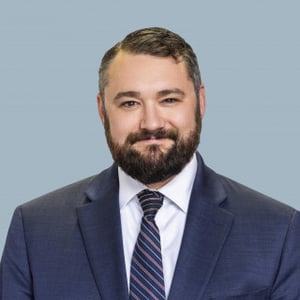
Partner, Ashbrook Byrne Kresge Flowers LLC
Ben Flowers, a partner at Ashbrook Byrne Kresge Flowers LLC, is an accomplished litigator with experience briefing, arguing, and winning high-stakes cases in courts throughout the country.
Before joining the law firm, Ben served as Ohio's 10th Solicitor General. In that role he regularly represented the State of Ohio before the Supreme Court of the United States, the United States Court of Appeals for the Sixth Circuit, and the Supreme Court of Ohio. Most prominently, in National Federation of Independent Business v. Department of Labor, Ben led a multi-state challenge to OSHA's vaccine mandate, ultimately prevailing before the Supreme Court.
Ben is a graduate of The Ohio State University and the University of Chicago Law School. Following law school, Ben clerked for Judge Sandra Ikuta of the U.S. Court of Appeals for the Ninth Circuit and for Justice Antonin Scalia of the Supreme Court of this United States. Ben lives in Upper Arlington, Ohio with his wife Denise and their three very active children.
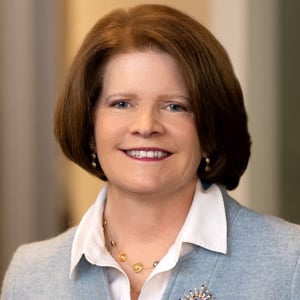
Partner, Antitrust and Competition, Wilson Sonsini Goodrich & Rosati
Maureen Ohlhausen is a partner in the Washington, D.C., office of Wilson Sonsini Goodrich & Rosati, where she advises industry-leading clients on complex antitrust and litigation matters, with a focus on high-profile cases. Sought after for her depth of experience on antitrust and Federal Trade Commission (FTC)-related issues, Maureen is known for her relationships with officials in the U.S. and abroad.
After finishing law school and clerking at the U.S. Court of Appeals for the D.C. Circuit, Maureen joined the FTC in 1997. She held a series of roles at the agency over the next 12 years, rising to the position of Director of the FTC Office of Policy Planning, where she led the agency’s work on e-commerce and headed the FTC’s Internet Access Task Force, which produced an influential report analyzing competition and consumer protection legal issues in the broadband and internet sectors. She then went into private practice at a leading telecommunications law firm, where she headed the FTC practice group.
In 2012, Maureen was confirmed by the Senate as a Commissioner of the FTC and was appointed Acting Chairman in January 2017, a role she held until May 2018. As Acting Chairman, Maureen directed all aspects of the agency’s antitrust work, including merger review, conduct enforcement, and all consumer protection enforcement, with an emphasis on privacy and technology issues. Under her leadership, the FTC won several influential merger challenges in court and reached a number of key digital privacy settlements.
To date, Maureen is the only FTC Commissioner to have received the Robert Pitofsky Lifetime Achievement Award in recognition of her contributions to the FTC.
Following the end of her term at the FTC, and immediately prior to joining Wilson Sonsini, Maureen was chair of the global antitrust and competition practice at Baker Botts, based in that firm’s Washington, D.C., office.
A recognized thought leader, Maureen is a frequent author and speaker, and is often quoted by leading print and broadcast media on antitrust, FTC, and privacy and data security matters. She has published dozens of articles on antitrust, privacy, intellectual property, regulation, FTC litigation, telecommunications, and international law issues in prestigious publications. During her tenure at the FTC and in private practice, she testified more than two dozen times before Congress, including before the Senate Commerce Committee and the House Energy and Commerce Antitrust Sub-Committee. She also testified before the Antitrust Modernization Commission.

Partner, Marzulla Law
Roger J. Marzulla is one of the nation’s leading environmental, water, and property lawyers. As Assistant Attorney General in charge of the U.S. Justice Department’s Environment and Natural Resources Division, Roger learned first hand the operations and litigation styles of his client agencies: EPA, Interior Department, Bureau of Reclamation, Fish and Wildlife Service, National Marine Fisheries Service, Department of Transportation, Department of Commerce. In 1997, he co-founded Marzulla Law, where he brings to bear more than 35 years of expertise representing companies and individuals in industries as diverse as land and project development, aerospace, chemicals, oil and gas, mining, timber, manufacturing, computers, agriculture and water service.
Roger began his legal career as a trial lawyer in San Jose, California, after graduating magna cum laude from the University of Santa Clara School of Law. As a partner in Matthews & Marzulla he represented developers, title and construction companies, shopping centers, apartment owners and lenders in litigation throughout California. In 1981 he moved to Denver to become President of Mountain States Legal Foundation, litigating environmental and natural resource cases across the West.
In 1983 Roger joined the Justice Department as Special Litigation Counsel. He was subsequently promoted to Deputy Assistant Attorney General and, in 1987, was confirmed by the Senate as Assistant Attorney General in charge of the Environment and Natural Resources Division. At the Justice Department, Roger helped create litigation strategies for government programs as diverse as Superfund, the Clean Air Act, off-shore oil leasing, environmental crimes, federal facility clean-up, wetlands, endangered species and hazardous waste enforcement, as well as Presidential Order EO 12,630 (Government Interference with Private Property Rights).
In 1989 Roger returned to private law practice, successively heading the environmental law practices of the Powell, Goldstein and Akin, Gump law firms.
Since 1997, as a partner in Marzulla Law, Roger has continued to represent corporate and business clients in a wide array of environmental and property issues in courts across the country, frequently in litigation against the United States. He also assists clients in attaining compliance with environmental, health and safety regulation, and in avoiding risks in transactions.
Laura Carlisle is an associate in the New Orleans office of Baker Donelson, and a member of the Advocacy Department. She assists in a wide variety of business litigation matters for clients.
Jennifer McNamara, of counsel in the New Orleans office of Baker Donelson, has litigated in state and federal courts for fifteen years and concentrates her practice in the areas of commercial litigation, employment, and intellectual property. Her commercial litigation experience includes representing corporate and individual clients in a variety of business disputes, including class actions, contract disputes, defamation claims, franchise disputes, and unfair trade practices. Ms. McNamara has also represented national insurance companies in class actions and the defense of first-party claims.
Ms. McNamara's employment law experience includes defending employers against claims brought under state discrimination statutes, the Family Medical Leave Act, Title VII, and the Age Discrimination in Employment Act before the EEOC, in mediation, and in state and federal courts. She also counsels employers regarding personnel policies and covenants not to compete.
With respect to her intellectual property practice, Ms. McNamara counsels clients on copyright, trademark, and defamation issues arising from Internet publications and Web sites. She is experienced in handling trademark litigation, including litigation arising from the transfer and use of domain names. Ms. McNamara has also counseled and represented media clients in areas such as access to public records and protection of the reporter's privilege in civil and criminal court.
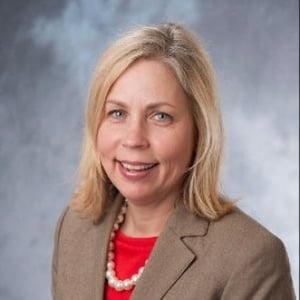
Senior Executive Counsel, NFIB Small Business Legal Center
Elizabeth Milito serves as Senior Executive Counsel with the National Federation of Independent Business, a position she has held since March 2004. Ms. Milito came to NFIB from the U.S. Department of Veteran's Affairs where she defended the agency in employment and labor lawsuits and was responsible for training and counseling managers on fair employment and HR practices. She has an extensive background in tort, medical malpractice and employment law.
Prior to serving as an attorney at the Department of Veteran's Affairs, Ms. Milito worked as a trial attorney at Nationwide Insurance Company. At Nationwide, she completed over 100 trials to verdict. Ms. Milito was the editor of notes and comments for the Maryland Law Review at the University of Maryland School of Law where she earned her Juris Doctor degree in May of 1996. Following her education, she served as a clerk to the Honorable Alan M. Wilner on the Maryland Court of Appeals, the state's highest court.
Ms. Milito is responsible for managing litigation and amicus work for NFIB. She has testified before Congress, federal agencies, and state legislatures on the small business impact of labor and employment issues. She also comments and writes regularly on small business cases before federal and state courts. Ms. Milito frequently counsels businesses facing employment discrimination charges, wage and hour claims, wrongful termination lawsuits, and in most other areas of human resources law. She also provides and develops on-line and on-site training on a variety of employment law matters and is a frequent media spokesperson on employment and labor matters.
Partner, Stroock & Stroock & Lavan LLP

Founder, President, and General Counsel, Wisconsin Institute for Law & Liberty
Rick Esenberg is the founder and current President and General Counsel of the Wisconsin Institute for Law & Liberty, a rapidly expanding law and policy organization headquartered in Milwaukee. Under Rick’s leadership, WILL has grown into one of the more active state-based think tanks and litigation centers in the country. Rick is a frequent litigator in state and federal courts and nationally recognized scholar and commentator on constitutional law, particularly the First Amendment’s guarantees of freedom of speech and religion. He is one of the leading experts on the Wisconsin Constitution and a frequent advocate before the Wisconsin Supreme Court. Rick’s work seeks to advance the rule of law and individual liberty, formed by a robust civil society that forms individual and community character, preserving the wisdom of the past and an openness to the future.
Rick’s commentary has been featured in such outlets as the Wall Street Journal, National Review, Weekly Standard, Real Clear Politics, Milwaukee Journal Sentinel and Washington Examiner. Formerly on the faculty of Marquette University Law School, his scholarship has appeared in such publications as the Harvard Law Review, Harvard Journal of Law & Public Policy, Wake Forest Law Review and William & Mary Bill of Rights Journal. Back when they were a thing, he operated a blog called Shark and Shepherd where he tried to suggest something about the duality of man – “the Jungian thing.”
Rick holds a J.D., magna cum laude, from Harvard Law School, where he was an editor of the Harvard Law Review, and a B.A., summa cum laude, in political science from the University of Wisconsin-Milwaukee. In addition to service on the Marquette Faculty, he was formerly a litigation partner at Foley & Lardner and General Counsel of an international manufacturing firm headquartered in Wisconsin. He lives in Mequon Wisconsin with his wife Karen, golden retrievers Cooper and Riley and more books than he can find places for.

Topics
Further Reflections on the Oil States Case after Oral Argument Before the Supreme Court
On November 27, 2017, the United States Supreme Court heard oral argument in Oil States...
The Misapplication of eBay v. MercExchange, LLC
Marisa Maleck
Note from the Editor: This article discusses the Supreme Court’s decision in eBay Inc. v....
Felix v. Ganley Chevrolet, Inc.
Chad A. Readler, Benjamin M. Flowers
When the Ohio Supreme Court interprets state class-action law, it often relies on decisions from...
Net Neutrality vs. Net Reality: Why an Evidence-Based Approach to Enforcement, And Not More Regulation, Could Protect Innovation on the Web
Maureen K. Ohlhausen
Related Links: Senate Committee on Commerce, Science, and Transportation, Hearing on “Network Neutrality” (testimony of...
Obama Administration Policy on Offshore Oil and Gas Production: Consensus or Contempt?
Roger J. Marzulla
In March 2010, President Obama announced his support for expanded oil and gas production in...
Del Monte and El Paso: Going to Revlon-Land With a Conflicted Financial Advisor
Note from the Editor: This article examines two recent cases in the Delaware Court of...
Individualizing the FLSA: Collective Action Waivers and the Split in the Federal Courts
Laura Carlisle, Amelia W. Koch, Jennifer McNamara
Introduction The ability of employees to proceed collectively under the Fair Labor Standards Act (FLSA)...
United States v. Home Concrete & Supply, LLC and Its Implications for Administrative Law
Elizabeth Milito
I. Introduction On April 25, 2012, the United States Supreme Court decided United States v....
Use of Expert Testimony at the Class Certification Stage After Wal-Mart v. Dukes
Stephen J. Newman
The United States Supreme Court’s decision in Wal-Mart Stores, Inc. v. Dukes1 sent a strong...
A Modest Proposal for Human Limitations on Cyberdiscovery
Rick M. Esenberg
Note from the Editor: In December 2010, the Federalist Society heard from a number of...