
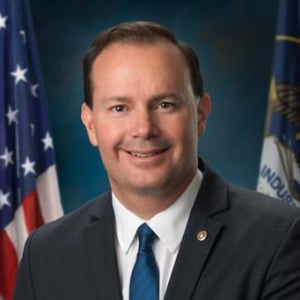
United States Senator, Utah
Elected in 2010 as Utah's 16th Senator, Mike Lee has spent his career defending the basic liberties of Americans and Utahns as a tireless advocate for our founding constitutional principles.
Senator Lee acquired a deep respect for the Constitution early on. His father, Rex Lee, who served as the Solicitor General under President Ronald Reagan, would often discuss varied aspects of judicial and constitutional doctrine around the kitchen table, from Due Process to the uses of Executive Plenary Power. He attended most of his father's arguments before the U.S. Supreme Court, giving him a unique, hands-on experience and understanding of government up close.
Lee graduated from Brigham Young University with a Bachelor of Science in Political Science, and served as BYU's Student Body President in his senior year. He graduated from BYU's Law School in 1997 and went on to serve as law clerk to Judge Dee Benson of the U.S. District Court for the District of Utah, and then with future Supreme Court Justice Judge Samuel A. Alito, Jr. on the U.S. Court of Appeals for the Third Circuit.
Lee spent several years as an attorney with the law firm Sidley & Austin specializing in appellate and Supreme Court litigation, and then served as an Assistant U.S. Attorney in Salt Lake City arguing cases before the U.S. Court of Appeals for the Tenth Circuit.
Lee served the state of Utah as Governor Jon Huntsman's General Counsel and was later honored to reunite with Justice Alito, now on the Supreme Court, for a one-year clerkship. He returned to private practice in 2007.
Throughout his career, Lee earned a reputation as an outstanding practitioner of the law based on his sound judgment, abilities in the courtroom, and thorough understanding of the Constitution.
Today, Lee fights to preserve America's proud founding document in the United States Senate. He advocates efforts to support constitutionally limited government, fiscal responsibility, individual liberty, and economic prosperity.
Lee is a member of the Judiciary Committee, and serves as Chairman of the Antitrust, Competition Policy and Consumer Rights Subcommittee protecting business competition and personal freedom.
He also oversees issues critical to Utah as the Chairman of the Water and Power Subcommittee of the Energy and Natural Resources Committee. He serves on the Commerce Committee and the Joint Economic Committee, as well.
In the 114th Congress, Lee also began his tenure as Chairman of the Senate Steering Committee, where he works with his Republican colleagues in the Senate to introduce bold and innovative solutions to issues facing the American people.
Lee and his wife Sharon live in Alpine, Utah, with their three children. He is a member of The Church of Jesus Christ of Latter-day Saints and served a two-year mission for the Church in the Texas Rio Grande Valley.

Former President & CEO, The Federalist Society for Law and Public Policy Studies
Eugene B. Meyer, former President and CEO of the Federalist Society, has served as Executive Director, CEO, and/or President of the organization for more than 40 years. He is responsible for shepherding the organization from a small group of law students to a community of 90,000 lawyers, law students, academics, judges, and others interested in the rule of law. The Society now includes a Student Chapter at nearly every ABA-accredited law school in the country and Lawyers Chapters in 220 major cities across the nation. Gene earned his B.A. in history at Yale in 1975 and his M.A. in political science from the London School of Economics in 1976. Gene currently serves on the boards of the U.S. Chess Center, the Holman Foundation, the Sarah Scaife Foundation, and the advisory board of the Adam Smith Society. He holds the title of International Chess Master.
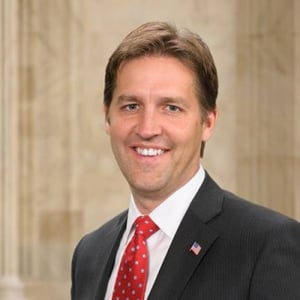
United States Senator, Nebraska
Ben Sasse is a United States Senator, representing the great state of Nebraska.
He was elected in a 2014 landslide, winning each of Nebraska's 93 counties, and securing the second-largest margin for a new senator in the history of the state. Living off of a rickety old campaign bus, he and his family campaigned tirelessly on a common-sense platform of restoring the Constitution to its rightful place and encouraging a more constructive politics where every public official works to make the American Dream achievable for every family. He believes in term limits and a humbler Washington, where the federal government does fewer things, but the more important things, more urgently, more transparently, and with less partisan screaming. Healthy lives are lived primarily in the private sector, and the vast majority of good policy is created at the state and local level -- and Washington should get better at talking honestly about these essential American realities.
A fifth-generation Nebraskan, Ben grew up walking beans and detasseling corn, experiences that taught him the value of hard work. A graduate of Fremont High School, he was recruited to wrestle at Harvard and then earned a PhD in American history at Yale. Ben comes to the Senate having spent the last five years as a college president. When he was recruited to take over the failing Midland University, Ben was just 37 years old, making him one of the youngest college presidents in the nation. The 130-year-old Lutheran college was on the verge of bankruptcy when he arrived, but became one of the fastest-growing higher education institutions in the country by the time of his departure.
Most of his career has been spent guiding companies and institutions through times of crisis with straight talk about the core issues. He has worked with the Boston Consulting Group and McKinsey and Company, as well as private equity firms and not-for-profit organizations, to tackle failing strategies across a broad array of sectors and nations.
Ben believes that we have a moral obligation to pass along a country as great and free and opportunity-filled to the next generation as we were blessed to inherit from our grandparents. This will require a more serious Congress, committed to reforming entitlements, telling the truth about fake federal budgets, modernizing national security for the age of global terror networks, and helping the next generation recover a sense of optimism about the American Dream for everyone of every race in every neighborhood.
Former President & CEO, The Federalist Society for Law and Public Policy Studies
Eugene B. Meyer, former President and CEO of the Federalist Society, has served as Executive Director, CEO, and/or President of the organization for more than 40 years. He is responsible for shepherding the organization from a small group of law students to a community of 90,000 lawyers, law students, academics, judges, and others interested in the rule of law. The Society now includes a Student Chapter at nearly every ABA-accredited law school in the country and Lawyers Chapters in 220 major cities across the nation. Gene earned his B.A. in history at Yale in 1975 and his M.A. in political science from the London School of Economics in 1976. Gene currently serves on the boards of the U.S. Chess Center, the Holman Foundation, the Sarah Scaife Foundation, and the advisory board of the Adam Smith Society. He holds the title of International Chess Master.
United States Senator, Nebraska
Ben Sasse is a United States Senator, representing the great state of Nebraska.
He was elected in a 2014 landslide, winning each of Nebraska's 93 counties, and securing the second-largest margin for a new senator in the history of the state. Living off of a rickety old campaign bus, he and his family campaigned tirelessly on a common-sense platform of restoring the Constitution to its rightful place and encouraging a more constructive politics where every public official works to make the American Dream achievable for every family. He believes in term limits and a humbler Washington, where the federal government does fewer things, but the more important things, more urgently, more transparently, and with less partisan screaming. Healthy lives are lived primarily in the private sector, and the vast majority of good policy is created at the state and local level -- and Washington should get better at talking honestly about these essential American realities.
A fifth-generation Nebraskan, Ben grew up walking beans and detasseling corn, experiences that taught him the value of hard work. A graduate of Fremont High School, he was recruited to wrestle at Harvard and then earned a PhD in American history at Yale. Ben comes to the Senate having spent the last five years as a college president. When he was recruited to take over the failing Midland University, Ben was just 37 years old, making him one of the youngest college presidents in the nation. The 130-year-old Lutheran college was on the verge of bankruptcy when he arrived, but became one of the fastest-growing higher education institutions in the country by the time of his departure.
Most of his career has been spent guiding companies and institutions through times of crisis with straight talk about the core issues. He has worked with the Boston Consulting Group and McKinsey and Company, as well as private equity firms and not-for-profit organizations, to tackle failing strategies across a broad array of sectors and nations.
Ben believes that we have a moral obligation to pass along a country as great and free and opportunity-filled to the next generation as we were blessed to inherit from our grandparents. This will require a more serious Congress, committed to reforming entitlements, telling the truth about fake federal budgets, modernizing national security for the age of global terror networks, and helping the next generation recover a sense of optimism about the American Dream for everyone of every race in every neighborhood.
W. H. Brady Scholar, American Enterprise Institute
Charles Murray is a political scientist, author, and libertarian. He first came to national attention in 1984 with the publication of Losing Ground, which has been credited as the intellectual foundation for the Welfare Reform Act of 1996. His 1994 New York Times bestseller, The Bell Curve (Free Press, 1994), coauthored with the late Richard J. Herrnstein, sparked heated controversy for its analysis of the role of IQ in shaping America’s class structure. Murray's other books include What It Means to Be a Libertarian (1997), Human Accomplishment (2003), In Our Hands (2006), and Real Education (2008). His most recent book, Coming Apart (Crown Forum, 2012), describes an unprecedented divergence in American classes over the last half century.

Laurence H. Silberman Chair in Constitutional Governance, American Enterprise Institute; Executive Director, Antonin Scalia Law School’s C. Boyden Gray Center for the Study of the Administrative State
Adam J. White is the Laurence H. Silberman Chair in Constitutional Governance and senior fellow at the American Enterprise Institute, where he focuses on the Supreme Court and the administrative state. He also directs the Antonin Scalia Law School’s C. Boyden Gray Center for the Study of the Administrative State.
He writes on regulation and constitutional government for a variety of publications. He practiced law in Washington, D.C., after clerking for the D.C. Circuit's Judge David Sentelle. He also has been chairman of the ABA's Administrative Law Section.
In 2021, he served on the Presidential Commission on the Supreme Court of the United States, where he criticized “Court packing” and other efforts to restructure the Supreme Court.
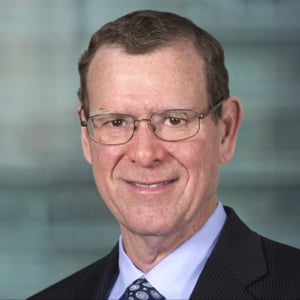
Executive in Residence, Wake Forest University School of Business
John Allison is an Executive in Residence at the Wake Forest School of Business. He is a member of the Cato Institute’s Board of Directors and Chairman of the Executive Advisory Council of the Cato Institute’s Center for Monetary and Financial Alternatives. Allison was president and CEO of the Cato Institute from October 2012 to April 2015. Prior to joining Cato, Allison was chairman and CEO of BB&T Corporation, the 10th-largest financial services holding company headquartered in the United States. During his tenure as CEO from 1989 to 2008, BB&T grew from $4.5 billion to $152 billion in assets. He was recognized by theHarvard Business Reviewas one of the top 100 most successful CEOs in the world over the last decade.
Allison has received the Corning Award for Distinguished Leadership, been inducted into the North Carolina Business Hall of Fame, and received the Lifetime Achievement Award from theAmerican Banker. He is the author of The Financial Crisis and the Free Market Cure: Why Pure Capitalism Is the World Economy’s Only Hope and The Leadership Crisis and the Free Market Cure: Why the Future of Business Depends on the Return to Life, Liberty, and the Pursuit of Happiness. In addition, he is a former Distinguished Professor of Practice at Wake Forest University School of Business, and serves on the Board of Visitors at the business schools at Wake Forest, Duke, and the University of North Carolina–Chapel Hill.
Allison is a Phi Beta Kappa graduate of the University of North Carolina–Chapel Hill. He received his master’s degree in management from Duke University and is also a graduate of the Stonier Graduate School of Banking. Allison is the recipient of six honorary doctorate degrees.
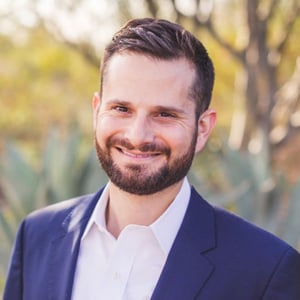
Osborn Maledon
Andrew G. Pappas is an Assistant Solicitor General in the Office of the Attorney General of Arizona. Mr. Pappas is a member of the California Bar, and is admitted to practice before the U.S. Court of Appeals for the Ninth Circuit and the U.S. District Courts for the Central District of California, Southern District of California, and Northern District of Illinois. Before joining the Attorney General's Office, Mr. Pappas was an associate attorney at Gibson, Dunn & Crutcher LLP in Los Angeles. He graduated from Occidental College in 2004, and from the University of Arizona James E. Rogers College of Law in 2009.

Founder, Law Office of Eileen J. O'Connor PLLC
After nearly 30 years as a national tax specialist with the IRS and major accounting firms, Eileen J. O’Connor, now an attorney in private practice, was Assistant Attorney General for the Justice Department’s Tax Division for six years during the administration of President George W. Bush and a member of then-President-elect Trump’s Treasury Department Transition Team. She focuses on federal administrative and tax law.

Senior Vice President for Legal Studies, Cato Institute
Clark Neily is senior vice president for legal studies at the Cato Institute. His areas of interest include constitutional law, overcriminalization, civil forfeiture, police accountability, and gun rights. Neily is the author of Terms of Engagement: How Our Courts Should Enforce the Constitution’s Promise of Limited Government. His writing has appeared in the Wall Street Journal, Forbes, and National Review Online, as well as various law reviews, including the Harvard Journal of Law and Public Policy, George Mason Law Review, Georgetown Journal of Law and Public Policy, NYU Journal of Law and Liberty, and Texas Review of Law and Politics. Neily is a frequent guest speaker and lecturer for the Federalist Society, Institute for Humane Studies, and American Constitution Society.
Before joining Cato in 2017, Neily was a senior attorney and constitutional litigator at the Institute for Justice and director of the Institute’s Center for Judicial Engagement. He is also an adjunct professor at the University of Texas School of Law, where he teaches constitutional litigation and public-interest law.
Neily served as co-counsel in District of Columbia v. Heller, the historic case in which the Supreme Court held for the first time that the Second Amendment protects an individual right to own a gun for self-defense.
Neily began his legal career as a law clerk to Judge Royce Lamberth on the U.S. District Court for the District of Columbia. After that he spent four years in the trial department of the Dallas-based firm Thompson & Knight. Neily received his undergraduate and law degrees from the University of Texas, where he was Chief Articles Editor of the Texas Law Review.
Professor, The University of South Dakota School of Law
Patrick Garry is a professor of law at The University of South Dakota and the Director of the Hagemann Center for Legal & Public Policy Research.
Professor Garry has published more than forty scholarly articles and authored ten books, many of which have been the subject of numerous conferences and symposia. Professor Garry has been invited on several occasions to testify before Congress on legal and constitutional matters, and he is a frequent speaker at Federalist Society sponsored events. Aside from his public speaking appearances, Professor Garry often writes for popular audience websites, magazines, and newspapers, including the Chicago Tribune and Washington Times. These writings offer commentary and analysis of current political and legal issues.
Professor Garry received his Ph.D. and J.D. from the University of Minnesota. And he has been invited to teach as a visiting professor at the George Washington University Law School, the University of Utah School of Law, the University of Missouri School of Law, and the University of St. Thomas School of Law.
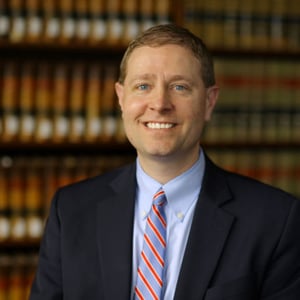
Executive Director, Salmon P. Chase Center for Civics, Culture, and Society, The Ohio State University
Professor Lee J. Strang serves as the inaugural executive director of the Salmon P. Chase Center for Civics, Culture, and Society at The Ohio State University.
Initiated in 2023 by the state of Ohio, the Chase Center will be an academic home at Ohio State for teaching, research, and programing on the foundations of the American constitutional order and its impact on society. As executive director, Professor Strang is responsible for organizing the center, overseeing the hiring and appointment of the center’s faculty, developing curriculum, and delivering student and academic programming. He also holds a faculty appointment in the Moritz College of Law at Ohio State.
Professor Strang is a nationally recognized legal scholar who has published dozens of articles in leading journals in the fields of constitutional law and interpretation, property law, and religion and the First Amendment. He co-edits the textbook Federal Constitutional Law, and his most recent book, Originalism’s Promise: A Natural Law Account of the American Constitution is the first book-length, natural law justification for originalism. He currently is writing on civic thought and leadership, and he is finalizing a book on the history of American Catholic legal education (with John M. Breen).
Before joining Ohio State, Professor Strang served as the inaugural director of the University of Toledo’s Institute of American Constitutional Thought & Leadership. He joined the Toledo College of Law faculty in 2008, was granted tenure in 2010, and was named John W. Stoepler Professor of Law & Values in 2015. The University of Toledo awarded Professor Strang its Outstanding Faculty Research and Scholarship Award in 2017. Before that, he was a visiting professor at Michigan State University College of Law. A graduate of the University of Iowa, where he was articles editor of the Iowa Law Review and Order of the Coif, Professor Strang holds an LL.M. degree from Harvard Law School.
Professor Strang has been a visiting scholar at the Georgetown Center for the Constitution and a visiting fellow at the James Madison Program at Princeton University. In 2016, he was appointed to the Ohio Advisory Committee of the U.S. Commission on Civil Rights and reappointed as chair in 2023.
Prior to teaching, Professor Strang served as a judicial clerk for Judge Alice M. Batchelder of the U.S. Court of Appeals for the Sixth Circuit. He was also an associate for Jenner & Block LLP in Chicago, where he practiced in general and appellate litigation.
Professor Strang is a frequent presenter at scholarly conferences. He is the president of the Board of Trustees of Northwest Ohio Classical Academy, Ohio’s first classical charter school. He is also a regular participant in debates at law schools across the country, a contributor to the media, and a speaker to political, civic, and religious groups.
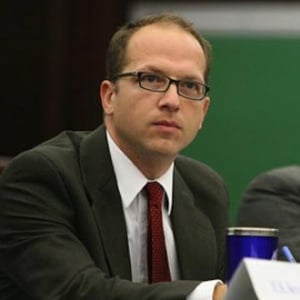
Roger Williams University School of Law
While serving as an associate at Shearman & Sterling in Washington, D.C., Professor Goldstein became one of the first civilian lawyers allowed into the Guantanamo Bay prison, in conjunction with his representation of several families of Kuwaiti detainees.
After resistance from the U.S. Government, the Supreme Court agreed to hear the case Rasul v. Bush. Professor Goldstein’s involvement with the Guantanamo cases included drafting district, appellate and Supreme Court briefs on behalf of the detainees. He continues his work with the detainees through his scholarship at RWU, and is a national expert on the applicability of habeas corpus to the Guantanamo Bay detainees. He has published numerous articles on the topic and penned an Op-ed reprinted in newspapers around the country.
Additionally, Professor Goldstein was a Bristow Fellow in the Office of the United States Solicitor General and served as an attorney for the Department of Justice, working in the appellate section of the Environment and Natural Resources division, where he drafted briefs on behalf of the United States in several Supreme Court cases. He received numerous awards while working at the Department of Justice including the Special Commendation for Outstanding Service and the National Oceanic and Atmospheric Administration General Counsel’s award.
Professor Goldstein teaches Constitutional Law and an array of Environmental Law courses. He regularly publishes in top law journals and because of his nationally recognized expertise, he has authored numerous briefs in the Supreme Court of the United States. Professor Goldstein is a graduate of Vassar and Michigan (J.D., magna cum laude).

Written Out of History: The Forgotten Founders Who Fought Big Government
Mike S. Lee
In the earliest days of our nation, a handful of unsung heroes—including women, slaves, and...
16th Annual Barbara K. Olson Memorial Lecture
Eugene B. Meyer, Ben Sasse
On September 11, 2001, at the age of 45 and at the height of her...
16th Annual Barbara K. Olson Memorial Lecture
Eugene B. Meyer, Ben Sasse
On September 11, 2001, at the age of 45 and at the height of her...
The U.S. Constitution: A cause for celebration - and concern
This past Friday was Constitution Day, designated by Congress for the observance of the anniversary...
Happy Constitution Day!
On September 17th, 1787, the delegates to the Constitutional Convention signed the Constitution of the...
The Balance of Power: The People v. The State - Podcast
Charles Murray, Adam White
In his new book, By the People: Rebuilding Liberty Without Permission, acclaimed social scientist and...
Luncheon Address by John Allison
John A. Allison, Andrew G. Pappas
John Allison, President and CEO of the Cato Institute, delivered the Keynote Address at the...
Terms of Engagement - Podcast
Eileen J. O'Connor, Clark Neily
In his new book, Terms of Engagement: How Our Courts Should Enforce the Constitution's Promise of...
Limited Government and the Bill of Rights - Faculty Book Podcast
Patrick Garry, Lee J. Strang
Limited Government and the Bill of Rights takes a novel approach to the constitutional connection between...
The Tea Party: Three Principles - Faculty Book Podcast
Elizabeth Price Foley, Jared Goldstein
This Federalist Society Faculty Book Podcast features Professor Elizabeth Price Foley’s new book, The Tea Party:...