
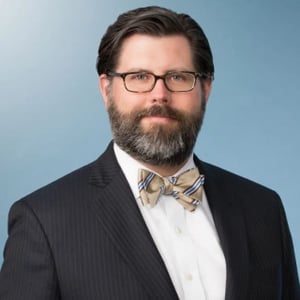
Partner, Faegre Drinker Biddle & Reath LLP
Brian J. Paul is an appellate lawyer and leads law teams in high-stakes commercial litigation. He has briefed and argued everything from weighty abstract constitutional issues to dollars-and-cents business issues and everything in-between, both on appeal and in trial courts around the country. A member of the American Law Institute, recent past-president of the Seventh Circuit Bar Association and top-tier ranked Chambers appellate lawyer, Brian had one client say about him: “Brian is one of the most respected and skilled appellate lawyers, not only in Indianapolis but across the country. He is trusted to deliver timely guidance on complex issues.” Another said: “He is excellent. I enjoyed working with him. He is able to put things into layman’s terms and explains things really well. His written and oral advocacy are short, crisp and to the point.”
Clients hire Brian to digest the complex, and make the complex simple and compelling for busy, generalist judges. In his writing, he strives to cut through jargon and legalese, and distill things down to what’s important. In his oral advocacy, by intense preparation, he strives to be the advocate whom judges trust for the right answers. In the dozens of cases he has argued, Brian has helped clients win on both sides of the “v.” His recent representations include:
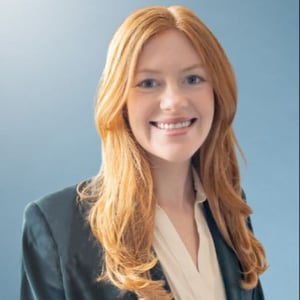
Associate, Faegre Drinker
Melinda Hudson represents clients in a broad range of litigation, dispute resolution and regulatory matters. For state and federal trial and appellate courts, she has drafted motions and briefs on threshold issues of justiciability, the merits of federal and state constitutional and statutory claims, and other legal issues. Melinda’s experience also includes taking depositions of plaintiffs and other witnesses, working with expert witnesses, and presenting oral argument to state and federal courts of appeals.
Before joining Faegre Drinker, Melinda served as a deputy attorney general in the Solicitor General Division in the Office of the Indiana Attorney General. She represented the State of Indiana and its officers and agencies in courts including the Indiana Supreme Court, U.S. Court of Appeals for the Seventh Circuit and the Supreme Court of the United States. She drafted critical motions, appellate briefs, and amici curiae briefs led by Indiana and joined by dozens of other states. Melinda also argued as lead counsel in appellate cases before the Seventh Circuit and Indiana Court of Appeals, and prepared the solicitor general of Indiana for oral arguments in state and federal courts, including the U.S. Supreme Court.
Associate Professor of Government, Van Andel Graduate School of Government, Hillsdale College in Washington, DC
Bradley C.S. Watson is Associate Professor of Government at the Van Andel Graduate School of Government of Hillsdale College in Washington, DC. Professor Watson’s books include Progressivism: The Strange History of a Radical Idea (Notre Dame, 2022/2020), Progressive Challenges to the American Constitution: A New Republic (Cambridge, 2020/2017), and Living Constitution, Dying Faith: Progressivism and the New Science of Jurisprudence (ISI, 2020/2009).
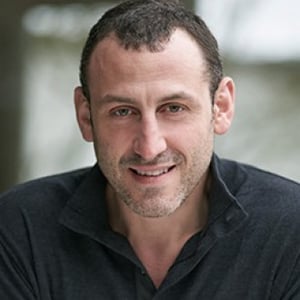
Professor of Law, Northwestern University Pritzker School of Law
Joshua Kleinfeld teaches and writes about political, legal, and moral philosophy, criminal law, and criminal procedure. He also practices law in Northwestern's Juvenile Criminal Defense Clinic. He is a full professor with tenure at the Northwestern Pritzker School of the Law and (by courtesy) in Northwestern’s philosophy department. In 2017-18, he was a visiting professor at Harvard and Stanford Law Schools. He is the recipient of the Bator Award, given annually to one American law professor under the age of 40 who has demonstrated "excellence in legal scholarship, a commitment to teaching, a concern for students, and who has made a significant public impact."
In philosophy, Kleinfeld's research focuses on the idea of "embodied ethical life," as developed in the socio-theoretic tradition of Hegel, Weber, and Durkheim. This tradition aims to understand and critique social life by bringing to light the normative ideas implicit in social practices and institutions. In law, this means that the most interesting philosophical concepts are often those reflected or actualized in legal practice – in the law as judges and lawyers think of it and wield it.
In criminal law and procedure, Kleinfeld has developed a theory known as "reconstructivism," which holds that the chief office of criminal law is not to dole out retributive justice, nor to optimize crime and cost control, but to reconstruct a violated normative order in the wake of a crime. This work, which draws on the thought of Hegel, Durkheim, Jean Hampton, and Antony Duff, develops an alternative to retributive and utilitarian theories of criminal law by focusing on the distinctive social function and sense of justice at work in the criminal system.
Kleinfeld is also involved in practical criminal justice reform. In this vein, he defends children accused of homicide in the Northwestern Juvenile Criminal Defense clinic and assists in litigation efforts meant to reform American criminal law through the courts. He has also developed a view of criminal justice reform known as "democratization," which holds that the root of the American criminal justice crisis is a set of bureaucratic attitudes, structures, and incentives divorced from the American public’s concerns and sense of justice, and that the primary solution is to make criminal justice more community-focused and responsive to lay influences. Working with others, he has developed a number of policy proposals meant to reform American criminal justice in a democratic direction.
Kleinfeld holds a JD from Yale Law School, a PhD in philosophy from the Goethe University of Frankfurt (supervised by Axel Honneth, Klaus Günther, and Rainer Forst), and a BA in philosophy from Yale College. He clerked for Judge J. Harvie Wilkinson on the United States Court of Appeals for the Fourth Circuit; Judge Janice Rogers Brown on the United States Court of Appeals for the D.C. Circuit; and President (chief justice) Aharon Barak of the Supreme Court of Israel. He worked as an Associate at Debevoise & Plimpton LLP in Frankfurt, Germany, in the area of corporate criminal law. Before law school, he worked as a Senior Research Analyst at the White House’s Council on Bioethics.

Patrick Hotung Professor of Constitutional Law, Georgetown University Law Center
Randy Barnett is the Patrick Hotung Professor of Constitutional Law at Georgetown University Law Center. He has argued before the United States Supreme Court, tried murder cases to juries as a prosecutor in Chicago, and appeared as a prosecutor in the feature film Inalienable. He is the author of numerous books, including Restoring the Lost Constitution, The Structure of Liberty, Our Republican Constitution, and The Original Meaning of the Fourteenth Amendment. He has published two memoirs, A Life for Liberty: The Making of an American Originalist, and Felony Review: Tales of True Crime and Corruption in Chicago. He is currently working on a new book, Freedom and Flourishing: Libertarianism for the Real World.
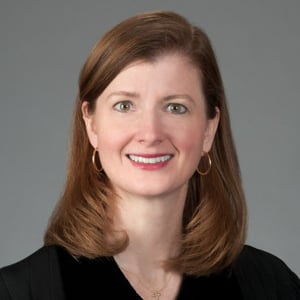
Judge, United States Court of Appeals, Eleventh Circuit
On March 20, 2018, Judge Elizabeth L. Branch (Lisa) was sworn in as a United States Circuit Judge for the Eleventh Circuit.
Judge Branch attended and graduated from Davidson College in North Carolina (B.A., cum laude, 1990), and Emory University School of Law (J.D., with distinction, 1994).
After graduating from law school, Judge Branch served as a federal law clerk to The Honorable J. Owen Forrester of the U.S. District Court for the Northern District of Georgia from 1994 to 1996. Following her clerkship, Judge Branch joined the litigation department of Smith, Gambrell & Russell, LLP in Atlanta as an associate and then a partner.
From 2004 to 2008, Judge Branch was a senior official in the Administration of President George W. Bush in Washington, D.C. She served first as the Associate General Counsel for Rules and Legislation at the U.S. Department of Homeland Security and then as the Counselor to the Administrator of the Office of Information and Regulatory Affairs at the U. S. Office of Management and Budget.
She returned to Smith Gambrell in 2008 as a litigation partner. Judge Branch then was appointed to the Court of Appeals of Georgia by Governor Nathan Deal, taking office on September 4, 2012, where she served until March 19, 2018.
Judge Branch is a member of the Board of Advisors of the Atlanta Lawyers Chapter for the Federalist Society for Law and Public Policy Studies.
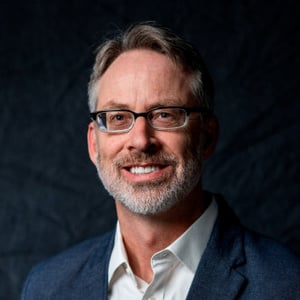
Professor of Philosophy and Religion, Hillsdale College
Nathan Schlueter is Professor of Philosophy and Religion at Hillsdale College. He has a B.A. in History from Miami University of Ohio (1993) and an M.A. and Ph.D. in Politics from the University of Dallas (1999). His articles have appeared in First Things, Touchstone, Logos, Communio, Public Discourse and Perspectives in Political Science. He has been a fellow of the National Endowment for the Humanities (2005) and the James Madison Program in American Ideals and Institutes at Princeton University (2011). He and his wife Elizabeth, who is a homemaker and homeschooler, have eight children.
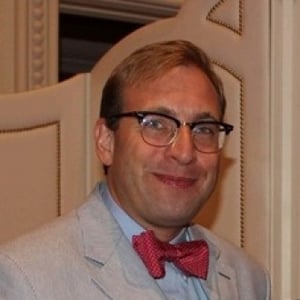
L.V. Hackley Chair for the Study of Capitalism and Free Enterprise, and Distinguished Professor of Economics, Fayetteville State University
Nikolai G. Wenzel is the L.V. Hackley Chair for the Study of Capitalism and Free Enterprise, and Distinguished Professor of Economics at Fayetteville State University (Fayetteville, NC). He is a Research Fellow of the Institut Economique Molinari (Paris France); from 2008 to 2019, he was a Research Fellow at the University of Paris Law School (Center for Law & Economics). Dr. Wenzel has held appointments as Associate Professor at Flagler College, Visiting Assistant Professor at Florida Gulf Coast University, and Wallace and Marion Reemelin Chair in Free-Market Economics (Assistant Professor) at Hillsdale College.
Dr. Wenzel has a Ph.D. in economics from George Mason University (where he was an H.B. Earhart fellow) and a BSFS cum laude in international affairs from the School of Foreign Service at Georgetown University.
Dr. Wenzel is a former Foreign Service Officer with the US State Department; for two years, he worked at the US Embassy in Mexico City, where he was vice consul and special assistant to the US ambassador. He subsequently worked for various free-market think tanks while completing his doctoral coursework.
Dr. Wenzel is a member of the Mont Pelerin Society, the Society for the Development of Austrian Economics, and the Association of Private Enterprise Education. He sat for four years on the Executive Committee of the Association of Private Enterprise Education and is currently on the Board of Scholars of the Foundation for Economic Education. From 2014 to 2019, he taught political economy for the Asia Institute of Political Economy, co-sponsored by George Mason University and the Fund for American Studies at Hong Kong University.
Dr. Wenzel has published more than fifty scholarly articles and book chapters, and is the co-author of a book on the libertarian-conservative debate (Stanford University Press, 2016). He is on the editorial board of Cosmos and Taxis and the Journal des Libertés. Since January 2020, he has been the editor of the Journal of Entrepreneurship and Public Policy.
When not writing on political economy, Dr. Wenzel dabbles in wine economics. He is a member of the Georgetown Chimes, Georgetown University's male a cappella singing group, and a novice bluegrass guitar picker and singer. He has traveled to 61 countries in the Americas, Asia and Europe, and to 49 US states. He is fluent in English, French, and Spanish, with conversational German and Italian.
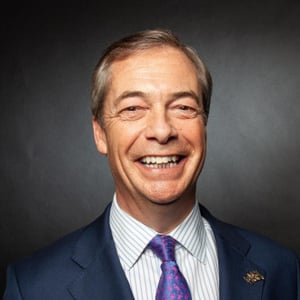
Former Member of the European Parliament, South East England Constituency
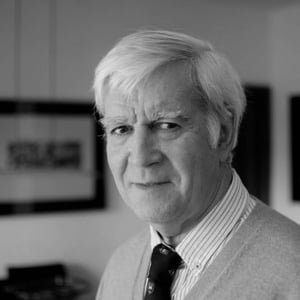
President, Congress of Catalan Culture Foundation
Michael Strubell was born in 1949 in Oxford (UK). His father was English and his mother was and still is Catalan. They met during her family´s exile in England following the Spanish Civil War.
He has a degree in Psychology and Physiology (PPP) from Oxford University, an M.Sc. in Psychology of Education from the Institute of Education, London University, and a degree in Psychology from the Universitat Autònoma de Barcelona, where he also received a Diploma in Advanced Studies.
His main fields of research have been language policy and planning and related topics, especially in the field of European minority languages.
He taught at international schools for eight years, before moving to Barcelona to work for the restored Catalan government (1980 to 1999), where he held several posts in the language planning agency, devoted to the promotion and recovery of Catalan. He is a member (and former secretary) of the Consell Social de la Llengua Catalana.
From 1999 to his retirement in 2014 he lectured at the UOC (Universitat Oberta de Catalunya) in Barcelona in language planning and sociolinguistics. He was deputy director of the Estudis d'Humanitats i Filologia, and from 2001 to 2004 he was the director of the Humanities degree programme. He was a co-author of the White Paper on the Humanities degree (2005) written for ANECA, Spain’s Universities quality agency. He was executive Secretary and later Director of the Linguamón-UOC Chair in Multilingualism (2009-2014).
He is author (or co-author) of dozens of academic papers, and of eight books, as well as several Reports for European institutions. He has sat on the editorial boards of four academic journals in the fields of language policy and sociolinguistics.
He has been a consultant for the Council of Europe and the Organisation for Security and Cooperation in Europe, for language-policy-related missions to Kazakhstan, Estonia, Latvia, Croatia, the Russian Federation and other countries. He helped draft several sets of “Recommendations” on the rights of National Minorities, for the OSCE, and coordinated half a dozen European research projects.
Outside the academic world he is a board member of several private foundations in the fields of language, culture and the handicapped.
Without ever being a member of a political party, he has been actively involved in the Catalan independence movement. He chaired Catalunya 2003, a political association calling for greater self-government (2002 - 2005). Since 2007 he has been a member of anotherplatform, Sobirania i Progrés, promoting the democratic path towards the freedom of the Catalan people. He was one of the founders, in 2009, of the Assemblea Nacional Catalana, a grassroots organisation working for Catalonia's independence. It grew rapidly to over 30,000 members and, since 2012, has organised historic rallies and marches, particularly on Catalonia’s National Day (September 11) each year.
He is married, has two sons and a daughter, and his main hobbies are mushroom hunting, listening to classical music and hill-walking. He lives with his wife between Barcelona and Palamós (on the Costa Brava).
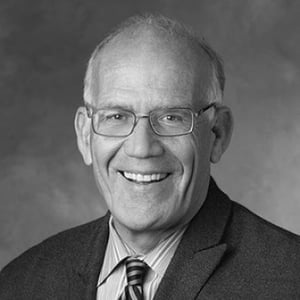
Martin and Illie Anderson Senior Fellow, Hoover Institution
Victor Davis Hanson is the Martin and Illie Anderson Senior Fellow at the Hoover Institution; his focus is classics and military history.
Hanson was a National Endowment for the Humanities fellow at the Center for Advanced Studies in the Behavioral Sciences, Stanford, California (1992–93), a visiting professor of classics at Stanford University (1991–92), the annual Wayne and Marcia Buske Distinguished Visiting Fellow in History at Hillsdale College (2004–), the Visiting Shifron Professor of Military History at the US Naval Academy (2002–3),and the William Simon Visiting Professor of Public Policy at Pepperdine University (2010).
In 1991 he was awarded an American Philological Association Excellence in Teaching Award. He received the Eric Breindel Award for Excellence in Opinion Journalism (2002), presented the Manhattan's Institute's Wriston Lecture (2004), and was awarded the National Humanities Medal (2007) and the Bradley Prize (2008).
Hanson is the author of hundreds of articles, book reviews, and newspaper editorials on Greek, agrarian, and military history and essays on contemporary culture. He has written or edited twenty-four books, the latest of which is The Case for Trump (Basic Books, 2019). His other books include The Second World Wars (Basic Books, 2017); The Savior Generals: How Five Great Commanders Saved Wars That Were Lost - from Ancient Greece to Iraq (Bloomsbury 2013); The End of Sparta (Bloomsbury, 2011); The Father of Us All: War and History, Ancient and Modern (Bloomsbury, 2010); Makers of Ancient Strategy: From the Persian Wars to the Fall of Rome (ed.) (Princeton, 2010); The Other Greeks (California, 1998); The Soul of Battle (Free Press, 1999); Carnage and Culture (Doubleday, 2001); Ripples of Battle (Doubleday, 2003); A War Like No Other (Random House, 2005); The Western Way of War (Alfred Knopf, 1989; 2nd paperback ed., University of California Press, 2000); The Wars of the Ancient Greeks (Cassell, 1999; paperback ed., 2001); and Mexifornia: A State of Becoming (Encounter, 2003), as well as two books on family farming, Fields without Dreams (Free Press, 1995) and The Land Was Everything (Free Press, 1998). Currently, he is a syndicated columnist for Tribune Media Services and a weekly columnist for the National Review Online.
Hanson received a BA in classics at the University of California, Santa Cruz (1975), was a fellow at the American School of Classical Studies, Athens (1977–78), and received his PhD in classics from Stanford University (1980).
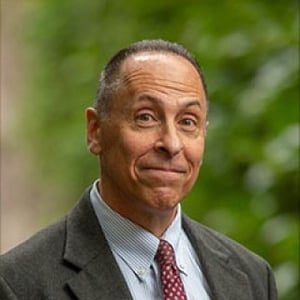
John Paul Stevens Professor of Law, Northwestern University School of Law
Andrew Koppelman is John Paul Stevens Professor of Law, Professor (by courtesy) of Political Science, and Philosophy Department Affiliated Faculty at Northwestern University. He received the Walder Award for Research Excellence from Northwestern, the Hart-Dworkin award in legal philosophy from the Association of American Law Schools, and the Edward S. Corwin Prize from the American Political Science Association. His scholarship focuses on issues at the intersection of law and political philosophy. He has written more than 100 scholarly articles and eight books, most recently Burning Down the House: How Libertarian Philosophy Was Corrupted by Delusion and Greed, (St. Martin’s Press). His column appears regularly at The Hill. You can find his recent work at andrewkoppelman.com.

Professor of Law, Antonin Scalia Law School, George Mason University
ILYA SOMIN is Professor of Law at George Mason University and the B. Kenneth Simon Chair in Constitutional Studies at the Cato Institute. His research focuses on constitutional law, property law, democratic theory, federalism, and migration rights. He is the author of Free to Move: Foot Voting, Migration, and Political Freedom (Oxford University Press, revised and expanded edition, 2022), Democracy and Political Ignorance: Why Smaller Government is Smarter (Stanford University Press, revised and expanded second edition, 2016), and The Grasping Hand: Kelo v. City of New London and the Limits of Eminent Domain (University of Chicago Press, 2015, rev. paperback ed., 2016), coauthor of A Conspiracy Against Obamacare: The Volokh Conspiracy and the Health Care Case (Palgrave Macmillan, 2013), and co-editor of Eminent Domain: A Comparative Perspective (Cambridge University Press, 2017). Democracy and Political Ignorance has been translated into Italian and Japanese.
Somin’s work has appeared in numerous scholarly journals, including the Yale Law Journal, Stanford Law Review, Northwestern University Law Review, Georgetown Law Journal, Critical Review, and others. Somin has also published articles in a variety of popular press outlets, including the New York Times, Washington Post, Wall Street Journal, Los Angeles Times, CNN, NBC, The Atlantic, USA Today, Boston Globe, US News and World Report, South China Morning Post, National Law Journal and Reason. He has been quoted or interviewed by the New York Times, Washington Post, Wall Street Journal, Time, Newsweek, The Economist, the Christian Science Monitor, the Financial Times, The Guardian, the Associated Press, CBS, MSNBC, NPR, BBC, Reuters, the Canadian Broadcasting Corporation, the Australian Broadcasting Corporation, Radio Free Europe/Radio Liberty, Al Jazeera, and the Voice of America, among other media.
Somin’s writings have been cited in decisions by the United States Supreme Court, multiple state supreme courts and lower federal courts, and the Supreme Court of Israel. He is co-counsel for the plaintiffs in VOS Selections, Inc. v. Trump, a case challenging the constitutionality of President Trump’s “Liberation Day” tariffs. Somin has testified on the use of drones for targeted killing in the War on Terror before the US Senate Judiciary Subcommittee on the Constitution, Civil Rights, and Human Rights. In 2009, he testified on property rights issues at the United States Senate Judiciary Committee confirmation hearings for Supreme Court Justice Sonia Sotomayor. Somin writes regularly for the popular Volokh Conspiracy law and politics blog, now affiliated with Reason magazine (previously affiliated with the Washington Post from 2014 to 2017). From 2006 to 2013, he served as Co-Editor of the Supreme Court Economic Review, one of the country’s top-rated law and economics journals.
Somin has served as a visiting professor at the University of Pennsylvania Law School. He has also been a visiting professor or scholar at the Georgetown University Law Center, the University of Hamburg, Germany, the University of Torcuato Di Tella in Buenos Aires, Argentina, Uriel Reichman University in Israel, and Zhengzhou University in China. He is a University Affiliate of the Schar School of Policy and Government at George Mason University, and an affiliated faculty member of the George Mason University Institute for Immigration Research. Before joining the faculty at George Mason, Somin was the John M. Olin Fellow in Law at Northwestern University Law School in 2002-2003. In 2001-2002, he clerked for the Hon. Judge Jerry E. Smith of the U.S. Court of Appeals for the Fifth Circuit. Professor Somin earned his B.A., Summa Cum Laude, at Amherst College, M.A. in Political Science from Harvard University, and J.D. from Yale Law School.
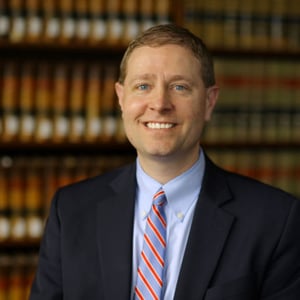
Executive Director, Salmon P. Chase Center for Civics, Culture, and Society, The Ohio State University
Professor Lee J. Strang serves as the inaugural executive director of the Salmon P. Chase Center for Civics, Culture, and Society at The Ohio State University.
Initiated in 2023 by the state of Ohio, the Chase Center will be an academic home at Ohio State for teaching, research, and programing on the foundations of the American constitutional order and its impact on society. As executive director, Professor Strang is responsible for organizing the center, overseeing the hiring and appointment of the center’s faculty, developing curriculum, and delivering student and academic programming. He also holds a faculty appointment in the Moritz College of Law at Ohio State.
Professor Strang is a nationally recognized legal scholar who has published dozens of articles in leading journals in the fields of constitutional law and interpretation, property law, and religion and the First Amendment. He co-edits the textbook Federal Constitutional Law, and his most recent book, Originalism’s Promise: A Natural Law Account of the American Constitution is the first book-length, natural law justification for originalism. He currently is writing on civic thought and leadership, and he is finalizing a book on the history of American Catholic legal education (with John M. Breen).
Before joining Ohio State, Professor Strang served as the inaugural director of the University of Toledo’s Institute of American Constitutional Thought & Leadership. He joined the Toledo College of Law faculty in 2008, was granted tenure in 2010, and was named John W. Stoepler Professor of Law & Values in 2015. The University of Toledo awarded Professor Strang its Outstanding Faculty Research and Scholarship Award in 2017. Before that, he was a visiting professor at Michigan State University College of Law. A graduate of the University of Iowa, where he was articles editor of the Iowa Law Review and Order of the Coif, Professor Strang holds an LL.M. degree from Harvard Law School.
Professor Strang has been a visiting scholar at the Georgetown Center for the Constitution and a visiting fellow at the James Madison Program at Princeton University. In 2016, he was appointed to the Ohio Advisory Committee of the U.S. Commission on Civil Rights and reappointed as chair in 2023.
Prior to teaching, Professor Strang served as a judicial clerk for Judge Alice M. Batchelder of the U.S. Court of Appeals for the Sixth Circuit. He was also an associate for Jenner & Block LLP in Chicago, where he practiced in general and appellate litigation.
Professor Strang is a frequent presenter at scholarly conferences. He is the president of the Board of Trustees of Northwest Ohio Classical Academy, Ohio’s first classical charter school. He is also a regular participant in debates at law schools across the country, a contributor to the media, and a speaker to political, civic, and religious groups.
Judge, United States Court of Appeals, Eleventh Circuit
On March 20, 2018, Judge Elizabeth L. Branch (Lisa) was sworn in as a United States Circuit Judge for the Eleventh Circuit.
Judge Branch attended and graduated from Davidson College in North Carolina (B.A., cum laude, 1990), and Emory University School of Law (J.D., with distinction, 1994).
After graduating from law school, Judge Branch served as a federal law clerk to The Honorable J. Owen Forrester of the U.S. District Court for the Northern District of Georgia from 1994 to 1996. Following her clerkship, Judge Branch joined the litigation department of Smith, Gambrell & Russell, LLP in Atlanta as an associate and then a partner.
From 2004 to 2008, Judge Branch was a senior official in the Administration of President George W. Bush in Washington, D.C. She served first as the Associate General Counsel for Rules and Legislation at the U.S. Department of Homeland Security and then as the Counselor to the Administrator of the Office of Information and Regulatory Affairs at the U. S. Office of Management and Budget.
She returned to Smith Gambrell in 2008 as a litigation partner. Judge Branch then was appointed to the Court of Appeals of Georgia by Governor Nathan Deal, taking office on September 4, 2012, where she served until March 19, 2018.
Judge Branch is a member of the Board of Advisors of the Atlanta Lawyers Chapter for the Federalist Society for Law and Public Policy Studies.
Professor of Philosophy and Religion, Hillsdale College
Nathan Schlueter is Professor of Philosophy and Religion at Hillsdale College. He has a B.A. in History from Miami University of Ohio (1993) and an M.A. and Ph.D. in Politics from the University of Dallas (1999). His articles have appeared in First Things, Touchstone, Logos, Communio, Public Discourse and Perspectives in Political Science. He has been a fellow of the National Endowment for the Humanities (2005) and the James Madison Program in American Ideals and Institutes at Princeton University (2011). He and his wife Elizabeth, who is a homemaker and homeschooler, have eight children.
L.V. Hackley Chair for the Study of Capitalism and Free Enterprise, and Distinguished Professor of Economics, Fayetteville State University
Nikolai G. Wenzel is the L.V. Hackley Chair for the Study of Capitalism and Free Enterprise, and Distinguished Professor of Economics at Fayetteville State University (Fayetteville, NC). He is a Research Fellow of the Institut Economique Molinari (Paris France); from 2008 to 2019, he was a Research Fellow at the University of Paris Law School (Center for Law & Economics). Dr. Wenzel has held appointments as Associate Professor at Flagler College, Visiting Assistant Professor at Florida Gulf Coast University, and Wallace and Marion Reemelin Chair in Free-Market Economics (Assistant Professor) at Hillsdale College.
Dr. Wenzel has a Ph.D. in economics from George Mason University (where he was an H.B. Earhart fellow) and a BSFS cum laude in international affairs from the School of Foreign Service at Georgetown University.
Dr. Wenzel is a former Foreign Service Officer with the US State Department; for two years, he worked at the US Embassy in Mexico City, where he was vice consul and special assistant to the US ambassador. He subsequently worked for various free-market think tanks while completing his doctoral coursework.
Dr. Wenzel is a member of the Mont Pelerin Society, the Society for the Development of Austrian Economics, and the Association of Private Enterprise Education. He sat for four years on the Executive Committee of the Association of Private Enterprise Education and is currently on the Board of Scholars of the Foundation for Economic Education. From 2014 to 2019, he taught political economy for the Asia Institute of Political Economy, co-sponsored by George Mason University and the Fund for American Studies at Hong Kong University.
Dr. Wenzel has published more than fifty scholarly articles and book chapters, and is the co-author of a book on the libertarian-conservative debate (Stanford University Press, 2016). He is on the editorial board of Cosmos and Taxis and the Journal des Libertés. Since January 2020, he has been the editor of the Journal of Entrepreneurship and Public Policy.
When not writing on political economy, Dr. Wenzel dabbles in wine economics. He is a member of the Georgetown Chimes, Georgetown University's male a cappella singing group, and a novice bluegrass guitar picker and singer. He has traveled to 61 countries in the Americas, Asia and Europe, and to 49 US states. He is fluent in English, French, and Spanish, with conversational German and Italian.

Indiana Supreme Court Upholds Law Restricting Which Candidates Can Appear on Primary Ballots
Brian J. Paul, Melinda Hudson
Indiana requires candidates on a primary election ballot to demonstrate party affiliation by either (1)...
What Is Conservative Constitutionalism? A Fractured History Reveals an Uncertain Path Forward
Bradley C. S. Watson
A review of Johnathan O’Neill, Conservative Thought and American Constitutionalism Since the New Deal (Johns Hopkins...
Open Minds: Applying Libertarian Convictions in The Real World
Joshua Kleinfeld, Randy E. Barnett
Prof. Randy Barnett joins Prof. Joshua Kleinfeld to discuss how his life experiences have informed his libertarian...
Burning Down the House? Debating Libertarian Thought
Northwestern Student Chapter
Chicago , ILWhy Libertarian Originalism Gets it 70% Right and Conservative Originalism Gets it 100% Right
Long Island Lawyers Chapter
Mineola, NYWhy Libertarian Originalism Gets it 70% Right and Conservative Originalism Gets it 100% Right
Long Island Lawyers Chapter
Mineola, NYFeddie Night Fusionism: I Love You, You're Perfect, Now Change!
Pepperdine Student Chapter
Feddie Night Fusionism: I Love You, You're Perfect, Now Change!
Pepperdine Student Chapter
Feddie Night Fusionism: I Love You, You're Perfect, Now Change!
Lisa Branch, Nathan W. Schlueter, Nikolai G. Wenzel
The Federalist Society's Student Division &Pepperdine Student Chapter Present Feddie Night Fusionism:I Love You, You're Perfect,...
Secession: Sovereignty & Nationalism [POLICYbrief]
Nigel Farage, Michael Strubell, Victor Davis Hanson
With over two dozen active separatist movements in Europe alone, the concepts of sovereignty and...