
Publius comes from the pen name Alexander Hamilton, James Madison, and John Jay used when they wrote 85 publicly printed letters now known as the Federalist Papers. Hamilton chose “Publius” as a name that would represent friends of the newly proposed American republic - Publius Valeria Publicola was a Roman general who helped to found the Roman Republic. The Federalist Society continues the tradition of publishing things under the name Publius in celebration of our constitutional roots and recognition that author credit is not always necessary.
Publius comes from the pen name Alexander Hamilton, James Madison, and John Jay used when they wrote 85 publicly printed letters now known as the Federalist Papers. Hamilton chose “Publius” as a name that would represent friends of the newly proposed American republic - Publius Valeria Publicola was a Roman general who helped to found the Roman Republic. The Federalist Society continues the tradition of publishing things under the name Publius in celebration of our constitutional roots and recognition that author credit is not always necessary.
Partner, Proskauer Rose LLP
Steven Krane joined Proskauer upon his graduation from New York University School of Law in 1981, taking a year off in 1984-85 to serve as law clerk to Judge Judith S. Kaye of the New York Court of Appeals. He became a partner in the Litigation and Dispute Resolution Department in 1989, and is the chair of the firm’s Law Firm Advisory Practice Group, concentrating in the field of legal ethics and professional responsibility, while continuing to represent commercial clients in a broad range of civil litigation matters.
Steven represents law firms and individual lawyers in a variety of professional matters, including rendering opinions and counseling them on a daily basis on a broad range of professional matters including conflicts of interest, client confidentiality, cross-border legal practice issues, partnership disputes, and internal investigations. In addition, he defends law firms in litigated proceedings involving legal malpractice and other civil claims; represents individual lawyers before grievance and disciplinary committees; and assists lawyers in disputes concerning admission to the Bar. He has served as a litigation consultant and expert witness testifying on a variety of issues such as conflicts of interest, litigation conduct, legal malpractice, billing disputes, and solicitation of clients by lawyers leaving a law firm.
Steven is among the nation’s leaders in developing and interpreting the rules governing the professional conduct of lawyers. He is chair of the American Bar Association’s Standing Committee on Ethics and Professional Responsibility, and has served on that committee since 2004. He has led the New York State Bar Association's Committee on Standards of Attorney Conduct, and its predecessor, since 1995. That committee is responsible for formulating the ethical rules governing New York lawyers. He served as a member of the NYSBA Committee on Professional Ethics for four years (1990-94), and spent nine of the 11 years from 1985 to 1996 associated in various capacities with the Committee on Professional and Judicial Ethics of the New York City Bar, including three years as the chair (1993-96). He was recently appointed by Chief Judge Kaye as co-chair of the New York Judicial Institute on Professionalism in the Law. He served as vice-chair of the NYSBA Special Committee on the Law Governing Firm Structure and peration (the “MacCrate Committee”), and chaired the successor to that committee, the Special Committee on Multidisciplinary Practice.
Steven has had a distinguished career as a bar leader outside of the field of legal ethics as well, most notably serving as President of the NYSBA in 2001-02; the youngest person to hold that post. He coordinated the efforts of the organized bar in responding to the terrorist attacks of September 11, 2001; initiated the NYSBA’s successful lawsuit against the Federal Trade Commission challenging the application of the Gramm-Leach-Bliley Act’s privacy provisions to the legal profession (serving as counsel to the NYSBA in the District of Columbia Circuit and as a member of the ABA’s Gramm-Leach-Bliley Task Force); and created and now chairs the Student Loan Assistance for the Public Interest program, which provides grants to lawyers in public interest jobs to help them defray their educational debts. Active in the community, he is a member of the Board of Directors of the Friends of the John Jay Homestead (Katonah, NY) and a Trustee of the New York Bar Foundation.
Steven is active in the development of law and policy relating to cross-border legal practice, and serves as one of the principal negotiators for the ABA and NYSBA in their efforts to achieve agreements with foreign governments to liberalize restrictions on lawyers engaged in international practice. In that regard, he chairs the NYSBA Special Committee on Crossborder Legal Practice; is a vice-chair of the NYSBA Section on International Law and Practice; and Liaison to International Bar Associations; and is an Advisor to the ABA Task Force on International Trade in Legal Services.
Steven served as a Hearing Panel Chair for both the Departmental Disciplinary Committee for the First Judicial Department (1996-99) and the Committee on Grievances of the United States District Court for the Southern District of New York (1995-2000). He currently serves as a Special Referee for the Grievance Committee for the Ninth Judicial District (Second Department) in New York.
For several years, Steven taught legal ethics at Columbia University School of Law as a member of its adjunct faculty. He continues to be a frequent lecturer on ethics, and has written extensively on issues of professional responsibility.
Robert S. Stevens Professor of Law, Emeritus, Cornell Law School
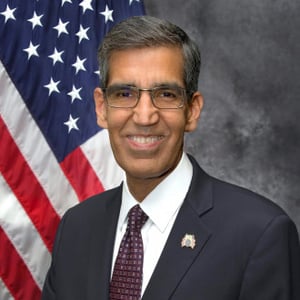
Acting Administrator, Drug Enforcement Administration (DEA)
Uttam Dhillon was appointed Acting Administrator of the Drug Enforcement Administration (DEA) on July 2, 2018. As Acting Administrator, Mr. Dhillon leads a workforce of over 15,000 and oversees a budget of $3.2 billion. He is responsible for DEA’s enforcement, intelligence, administrative, and regulatory activities worldwide. He currently serves on the Board of Directors for the International Association of Chiefs of Police (IACP), and is co-chair of the IACP Narcotics and Dangerous Drugs Committee.
Before joining DEA, Mr. Dhillon served as Deputy Counsel and Deputy Assistant to the President of the United States.
In 2006, Mr. Dhillon was confirmed by the United States Senate as the first Director of the Office of Counternarcotics Enforcement at the Department of Homeland Security (DHS). In that role, he worked closely with other federal agencies to coordinate the federal government’s anti-drug efforts. Prior to DHS, Mr. Dhillon served as an Associate Deputy Attorney General in the United States Department of Justice.
Earlier in his career, Mr. Dhillon served as an Assistant United States Attorney in the Central District of California. In that role, he successfully prosecuted complex investigations involving drug trafficking, money laundering, alien smuggling, and gun possession. He also argued multiple appeals before the Ninth Circuit Court of Appeals.
Mr. Dhillon also has significant experience in the Legislative Branch, holding several senior roles, including Chief Oversight Counsel for the House Financial Services Committee, Chief Counsel and Deputy Staff Director for the House Select Committee on Homeland Security, and Senior Investigative Counsel for the House Committee on Oversight and Government Reform.
Mr. Dhillon graduated from Boalt Hall School of Law at the University of California, Berkeley. He earned a Master of Arts degree in psychology from the University of California, San Diego and a Bachelor of Arts degree in psychology from California State University, Sacramento. He is a member of the District of Columbia Bar.
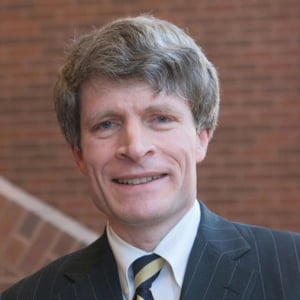
S. Walter Richey Professor of Corporate Law, University of Minnesota Law School
Professor Richard W. Painter received his B.A., summa cum laude, in history from Harvard University and his J.D. from Yale University, where he was an editor of the Yale Journal on Regulation. Following law school, he clerked for Judge John T. Noonan Jr., of the United States Court of Appeals for the Ninth Circuit and later practiced at Sullivan & Cromwell in New York City and Finn Dixon & Herling in Stamford, Connecticut.
He has served as a tenured member of the law faculty at the University of Oregon School of Law and the University of Illinois College of Law, where he was the Guy Raymond and Mildred Van Voorhis Jones Professor of Law from 2002 to 2005.
From February 2005 to July 2007, he was Associate Counsel to the President in the White House Counsel's office, serving as the chief ethics lawyer for the President, White House employees and senior nominees to Senate-confirmed positions in the Executive Branch. He is a member of the American Law Institute and is an advisor for the new ALI Principles of Government Ethics. He has also been active in the Professional Responsibility Section of the American Bar Association.
Professor Painter has also been active in law reform efforts aimed at deterring securities fraud and improving ethics of corporate managers and lawyers. A key provision of the Sarbanes-Oxley Act of 2002 requiring the SEC to issue rules of professional responsibility for securities lawyers was based on earlier proposals Professor Painter made in law review articles and to the ABA and the SEC. He has given dozens of lectures on the Sarbanes-Oxley Act to law schools, bar associations, and learned societies, such as the American Academy of Arts and Sciences. Professor Painter has on four separate occasions provided invited testimony before committees of the U.S. House of Representatives or the U.S. Senate on securities litigation and/or the role of attorneys in corporate governance.
His book, Getting the Government America Deserves: How Ethics Reform Can Make a Difference, was published by Oxford University Press in January 2009. He has written op-eds on government ethics for various publications including the New York Times, the Washington Post and the Los Angeles Times, and he has been interviewed several times on government ethics and corporate ethics by national news organizations, including appearances on Lawrence O'Donnell (MSNBC), Anderson Cooper 360 (CNN), CNN News, Fox News, National Public Radio All Things Considered, and Minnesota Public Radio News. In 2011, he testified before the U.S. House Government Oversight Committee on partisan political activity by government officials and reform of the Hatch Act. Professor Painter has also given expert testimony in cases involving securities transactions and the professional responsibility of lawyers. He testified as a defense witness in SEC. v. The Reserve Money Market Fund (SDNY, November 2012), a jury trial of an SEC enforcement action against the founders of the world's oldest money market fund that ended with a defense verdict on all of the fraud counts.
Professor Painter is the author of two casebooks: Securities Litigation and Enforcement (with Margaret Sachs and Donna Nagy; West 2003; Second Edition, 2007; Third Edition 2011) and Professional and Personal Responsibilities of the Lawyer (with Judge John T. Noonan Jr.; Foundation 1997; Second Edition, 2001; Third Edition 2011). He has written dozens of articles, book reviews, and essays, including a series of papers and a forthcoming book with Minnesota colleague Claire Hill on the personal responsibility of investment bankers.
Senior Counsel, Linklaters LLP, New York
EXPERIENCE
United States law and practise governing securities, futures and derivatives transactions; New York corporate and contract law

Professor Emeritus of Law, Antonin Scalia Law School, George Mason University
Jeremy A. Rabkin is a Professor Emeritus of Law at the Antonin Scalia Law School, George Mason University. Before joining the faculty in June 2007, he was for over two decades a professor in the Department of Government at Cornell University. Professor Rabkin serves on the board of directors of the Center for Individual Rights, a public interest law firm based in Washington, D.C. Previously he was a board member of the U.S. Institute of Peace and the board of academic advisors of the American Enterprise Institute.
Professor Rabkin’s books include Law Without Nations? (Princeton University Press, 2005). He authored “If You Need a Friend, Don’t Call a Cosmopolitan,” a chapter in Varieties of Sovereignty and Citizenship (Sigal R. Ben-Porath & Rogers M. Smith eds., University of Pennsylvania Press, 2012). His articles have appeared in major law reviews and political science journals and his journalistic contributions in a range of magazines and newspapers, including the Washington Post and the Wall Street Journal.
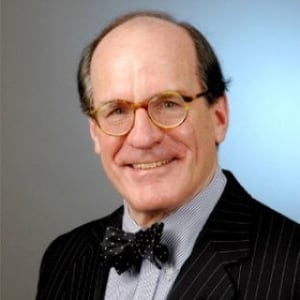
Retired Partner, Sullivan & Cromwell LLP
Upon his resignation as the Legal Adviser of the U.S. Department of State in January 1993, Mr. Williamson rejoined Sullivan & Cromwell's Washington, D.C. office. He originally joined the Firm in 1964 after graduating from New York University School of Law, where he was an editor of the Law Review. He became a partner of the Firm in 1971, moved to its London office in 1976, returned to its New York office in 1979, moved to its Washington, D.C. office in 1988 and became Of Counsel in 2007. In 2018, he retired from the firm.
At Sullivan & Cromwell, Mr. Williamson engaged in a broad and wide-ranging domestic and international financing and transactions practice, as well as advice with respect to corporate governance issues, the United States’ economic sanctions laws, the ethics rules applicable to government officials and the immunities of foreign sovereigns and international organizations.
Mr. Williamson has been an active participant on panels and other forums involving public international law and national security issues, such as the domestic and international bases for the use of force, the role of the United States with respect to the International Criminal Court, the law of the sea and the application of international legal principles in the war against terrorism.
Mr. Williamson is a member of the Council on Foreign Relations and a former member of the Executive Council of the American Society of International Law, the Executive Committees of the Business and Advisory Committee (BIAC) to the OECD and the U.S. Council for International Business, the United States Advisory Board of NTT DoCoMo, Inc. and the Board of Directors of Triton Oil & Gas Limited.
Mr. Williamson has served on the Boards of Regents and Trustees of the University of the South and as chair of the Board of Regents. He is currently a member of the Board of Directors of the American Council of Trustees and Alumni, a higher education watchdog.

Partner, Steptoe & Johnson LLP
Stewart Baker is a partner in the law firm of Steptoe & Johnson in Washington, D.C. From 2005 to 2009, he was the first Assistant Secretary for Policy at the Department of Homeland Security. His law practice covers cybersecurity, data protection, homeland security, and travel and foreign investment regulation; he has been awarded one patent.
Mr. Baker has been General Counsel of the National Security Agency and General Counsel of the commission that investigated WMD intelligence failures prior to the Iraq war. He is the author of Skating on Stilts, a book on terrorism, cybersecurity, and other technology issues; he also hosts the weekly Cyberlaw Podcast.

Florida Supreme Court Allows Assignment of Legal Malpractice Claim to Third Party Plaintiff
Publius
In Cowan Liebowitz & Latman, P.C., v. Kaplan,1 the Florida Supreme Court decided whether a...
Engage Volume 6, Issue 1, May 2005
ADMINISTRATIVE LAW & REGULATION Supreme Court Decision: Regulatory Takings by Louis K. Fisher & Esther...
Eminent Domain in Minnesota
Tonetta Dove
The Minnesota Court of Appeals has affirmed a landowner’s constitutional right to judicial review of...
Extraterritorial Application of State Antitrust Law (Texas)
Publius
In a recent opinion affirming a jury verdict against The Coca-Cola Company and several Coca-Cola...
After the 1999 Code Amendments: The Future of Ethics
Steven C. Krane
On July 14, 1999, the presiding Justices of the Appellate Division of the New York...
Why Central Bank Should be Overruled
Roger C. Cramton
The lawyer’s primary function is to counsel and assist clients in conduct that is “within...
6th Annual Corporate Governance Conference: Securities Markets After Global Crossing and Enron
Uttam Dhillon, Edward Labaton, Richard W. Painter, Edward H. Fleischman
PROFESSOR PAINTER: Good morning. I’m Richard Painter, Professor of Securities Regulation and Lawyers’ Ethics at...
Can the ICC Be Effective on the World Stage?
Tom Malinowski, Jeremy A. Rabkin, Edwin D. Williamson, Stewart A. Baker, Elisa Massimino
MR. BAKER: We’re going to do this almost entirely out of questions, as opposed to...
Recent Developments
Engle Court Paves Way for Record Punitive Award A Florida trial court has paved the...
The Future of Small Banks in our Financial System
R Gilbert
Until recently I thought the consensus view on the future of the banking industry included...