

James Monroe Distinguished Professor of Law and Albert Clark Tate, Jr., Professor of Law, University of Virginia School of Law
Professor Saikrishna Prakash’s scholarship focuses on separation of powers, particularly executive powers. He teaches Constitutional Law, Foreign Relations Law and Presidential Powers at the Law School.
Prakash’s most recent book, “The Living Presidency: An Originalist Argument Against Its Ever-Expanding Powers,” was published by Harvard Belknap Press in 2020. He also authored “Imperial from the Beginning: The Constitution of the Original Executive” (Yale University Press, 2015). The former book focuses on the modern presidency while the latter considers the presidency of the Founders.
Prakash has authored over 75 law review articles. Among them are “Of Synchronicity and Supreme Law” in the Harvard Law Review, “The Indefensible Duty to Defend” in the Columbia Law Review, and “50 States, 50 Attorneys General and 50 Approaches to the Duty to Defend” and “The Executive Power Over Foreign Affairs” in the Yale Law Journal.
Prakash has published op-eds in The New York Times, The Wall Street Journal and the Los Angeles Times. At the request of Democrats and Republicans, he has testified before Congress on matters of presidential removal, the Mueller Report and how Congress might better check the presidency. He is currently a Miller Center Senior Fellow. In 2015, he received the Roger Traynor award for faculty scholarship. In the same year, he received an honorable mention from the American Society of Legal Writers for his book “Imperial from the Beginning.” He has given named lectures at William & Mary Law School, Princeton University and Toledo Law School, and keynote addresses at several conferences.
Prakash majored in economics and political science at Stanford University. At Yale Law School, he served as senior editor of the Yale Law Journal and received the John M. Olin Fellowship in Law, Economics and Public Policy. He subsequently clerked for Judge Laurence H. Silberman of the U.S. Court of Appeals for the District of Columbia Circuit and for Justice Clarence Thomas of the U.S. Supreme Court. After practicing in New York for two years, he served as a visiting professor at the University of Illinois College of Law and as an associate professor at Boston University School of Law. He then spent several years at the University of San Diego School of Law as the Herzog Research Professor of Law. Prakash has been a visiting professor at Northwestern University and the University of Chicago. He also has served as a James Madison Fellow at Princeton University and Visiting Research Fellow at the Hoover Institution of War & Peace at Stanford University.
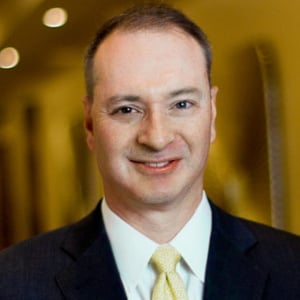
Managing Shareholder, Saltzman Mugan Dushoff, PLLC
Over the course of his twenty-plus years as an attorney in Las Vegas, Mr. Saltzman has developed a corporate law practice focused on financial institution and liquor law. He assists businesses in their formation, licensing and governance matters; he also counsels businesses on corporate mergers and acquisition matters. He assists highly regulated financial institutions and captive insurance companies in corporate and regulatory compliance matters and he has testified before the Nevada legislature as an expert on trust company legislation and drafted portions of Nevada law relating to the chartering and operation of Nevada trust companies. He has counseled trust companies and financial service firms on Blockchain and cryptocurrency related legal compliance matters.
Mr. Saltzman has developed and managed the firm’s liquor law practice into Nevada’s largest alcohol beverage specialty law practice group. He and his team of attorneys and paralegals assist a wide range of liquor retailers, wholesalers and suppliers in licensing and compliance matters in all Nevada jurisdictions. More information on Mr. Saltzman’s liquor law practice can be found at his blog: www.nvliquorlaw.com
Matthew Saltzman received a Bachelor of Arts degree in Economics and Philosophy from University of Wisconsin, Madison in 1987. In 1993, he received his Juris Doctor from University of Pittsburgh School of Law, where he was also Executive Editor of the University of Pittsburgh Law Review and served as teaching assistant for the Legal Research and Writing course.
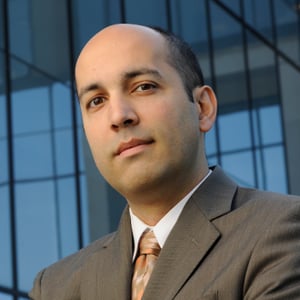
Professor of Law, Villanova University Charles Widger School of Law
Tuan Samahon teaches and writes in the areas of federal courts and constitutional law. His articles have been published in the Stanford Law Review, Ohio State Law Journal, Hastings Law Journal, William & Mary Bill of Rights Journal, University of Chicago Legal Forum, Denver Law Review, and Villanova Law Review, among others.
Beyond his scholarship, Tuan is engaged in interpreting and fashioning federal constitutional law. He has testified before the U.S. Senate Judiciary Committee, Subcommittee on the Constitution, and has served as counsel in separation-of-powers and Freedom of Information Act litigation in federal trial and appellate courts. Recently, Tuan prevailed against the CIA in a civil action for the release of the draft fifth volume of its secret history of the 1961 Bay of Pigs operation. In addition to representing others, for a book he is researching, Tuan successfully sued the FBI for the release of agency records detailing high-ranking executive and judicial officers' abuses of power.
Tuan received his B.A. from Brigham Young University and his J.D. from Georgetown University Law Center, where he was an Olin Law and Economics Research Fellow and was co-awarded the Olin Prize in Law and Economics. Prior to entering teaching, he clerked for U.S. District Judge Raymond A. Jackson on the Eastern District of Virginia and for U.S. Circuit Judge Jay S. Bybee on the Ninth Circuit. He also practiced in the Washington, D.C. office of Covington & Burling. Professor Samahon was named "Professor of the Year" by his students at the University of Nevada, Las Vegas. He teaches civil procedure, federal courts, and constitutional law subjects.
During spring 2017, Tuan served as a Fulbright scholar with the law faculty at the University of Zagreb, Croatia.
Samuel Candler Dobbs Professor of Economics Emeritus, Emory University
Paul H. Rubin is the Samuel Candler Dobbs Professor of Economics Emeritus in the Economics Department of Emory University and a former Professor of Law and Economics at the School of Law. He served as editor-in-chief of Managerial and Decision Economics. In addition, he is associated with the Mont Peleron Society, the Independent Institute, and the American Enterprise Institute, and a Fellow of the Public Choice Society and former President of the Southern Economics Association. Professor Rubin was Senior Economist at the Council of Economic Advisers under President Reagan, Chief Economist at the U.S. Consumer Product Safety Commission, Director of Advertising Economics at the Federal Trade Commission, and Vice-President of Glassman-Oliver Economic Consultants, Inc., a litigation consulting firm in Washington. He has taught economics at the University of Georgia, City University of New York, VPI, and law and economics at George Washington University Law School. Professor Rubin has written or edited several books, and has published over one hundred articles and chapters on economics, law, and regulation.
Much of Professor Rubin's writing is in law and economics, with a focus on tort, crime and contract issues. His areas of research interest include law and economics, industrial organization, transaction cost economics, government and business, public choice, regulation and price theory, and evolution and economics. His work has been cited in the professional literature over 11,100 times. He has consulted widely on litigation related matters, and has addressed numerous business, professional, policy and academic audiences. He has testified three times before Congress, and has served as an advisor on tort issues to the Congressional Budget Office.
Professor Rubin is the author of the well known paper "Why Is the Common Law efficient?" Journal of Legal Studies, 1977, which has been reprinted eight times, in English, Spanish and French.

Laurence A. Tisch Professor of Law and Director, Classical Liberal Institute, New York University School of Law; Senior Fellow, The Civitas Institute, University of Texas at Austin
Richard A. Epstein is the inaugural Laurence A. Tisch Professor of Law at NYU School of Law. Prior to his joining the faculty, he was a visiting law professor at NYU from 2007 through 2009. He served as the Peter and Kirstin Bedford Senior Fellow at the Hoover Institution from 2000 to 2024. Since 2024 to the present he is a senior lecturer at the Civitas Institute at the University of Texas—Austin. Epstein is also the James Parker Hall Distinguished Service Professor of Law Emeritus and a senior lecturer at the University of Chicago. His initial law school appointment was at the University of Southern California from 1968 to 1972. Epstein received an LL.D., h.c. from the University of Ghent, 2003. He has been a member of the American Academy of Arts and Sciences since 1985 and was a Senior Fellow of the Center for Clinical Medical Ethics at the University of Chicago Division of Biological Sciences, also from 1983. to 2022 He served as editor of the Journal of Legal Studies from 1981 to 1991, and of the Journal of Law and Economics from 1991-2001. From 2001 to 2010 he was a director of the John M. Olin Program in Law and Economics at the University of Chicago.
His newest book, The Myth of Birthright Citizenship: What the Fourteenth Amendment Really Says was published in 2026 (Encounter Books). Prior to that he has published many books including, The Dubious Morality of the Modern Administrative State (Roman & Littlefield 2020).Earlier he published th Classical Liberal Constitution: The Uncertain Quest for Limited Government (Harvard 2014) iHis previous books include Design for Liberty: Private Property, Public Administration and the Rule of Law (Harvard 2011); The Case Against the Employee Free Choice Act (Hoover 2009); Supreme Neglect: How to Revive the Constitutional Protection of Property Rights (Oxford 2008); Antitrust Decrees in Theory and Practice: Why Less is More (AEI 2007); Overdose: How Excessive Government Regulation Stifles Pharmaceutical Innovation (Yale University Press. 2006); How Progressives Rewrote the Constitution (Cato 2006); Cases and Materials on Torts (Aspen Law & Business; 8th ed. 2004); Skepticism and Freedom: A Modern Case for Classical Liberalism (University of Chicago, 2003); Torts (Aspen Law & Business 1999); Principles for a Free Society: Reconciling Individual Liberty with the Common Good (Perseus Books, 1998): Mortal Peril: Our Inalienable Rights to Health Care (Addison-Wesley, 1997); Simple Rules for a Complex World (Harvard, 1995); Bargaining With the State (Princeton, 1993); Forbidden Grounds: The Case Against Employment Discrimination Laws (Harvard , 1992); Takings: Private Property and the Power of Eminent Domain (Harvard, 1985); and Modern Products Liability Law (Greenwood Press, 1980). He has also edited(with Catherine M. Sharkey) Cases and Materials on the Law of Torts (10th edition 2012).
Professor Epstein has written numerous articles on a wide range of legal and interdisciplinary subjects. He has taught courses in administrative law, antitrust law, civil procedure, communications, constitutional law, contracts, corporations, criminal law, employment discrimination law, environmental law, food and drug law health law and policy, legal history, labor law, property, real estate development and finance, jurisprudence, labor law; land use planning, patents, individual, estate and corporate taxation, Roman Law; torts, and workers' compensation.
Professor Epstein also writes a regular column for Civitas Institute, which also sponsors his podcast, The Libertarian with Charles C.W. Cooke, and Law Talk, with Cooke and John Yoo. He also does a podcast with John Batchelor. And appears regularly on the Freedom File with Judge Andrew Napolitano.

Responses to Judicial Corruption: The Press, Prosecution, Professional Responsibility, Political Controls
Saikrishna Prakash, William C. Rempel, Matthew Saltzman, Tuan Samahon, Jeff Stempel
Almost a year ago, the Los Angeles Times ran a series of articles entitled "Juice...
State Consumer Protection Statutes: A Boon or Bane for Consumers? - Event Audio
Dwight Golann, Paul H. Rubin, Deirdre Cummings, Brian G. Leary, John Roddy
Enacted as a state counterpart to the Federal Trade Commission Act, 15 U.S.C. §45, the...
Transaction Costs and Property Rights: Or Do Good Fences Make Good Neighbors
Richard A. Epstein
The selection of the title for my Coase lecture was in part an act of...