

General Counsel, United States Senator Jim Banks
Elle Bernstein serves as General Counsel to United States Senator Jim Banks (R-IN). In her capacity as General Counsel, Elle handles immigration policy, pro-life issues, and judicial nominations. Elle has served as counsel for amicus briefs on abortion and the Constitution, Title IX, and religious liberty. Her article, “Beyond Barbara: Towards A Jurisprudence of Nationhood,” is forthcoming in the Notre Dame Journal of Law, Ethics, and Public Policy.
Elle co-founded the Pro-Life Lawyers Caucus and is an executive committee member of the Federalist Society’s Immigration Practice Group. She has also held fellowships with the Claremont Institute, the James Wilson Institute, and Alliance Defending Freedom.
Previously, Elle was an Associate in the Washington, D.C. office of Gibson, Dunn & Crutcher LLP and clerked for the Honorable James C. Ho of the United States Court of Appeals for the Fifth Circuit.
Elle holds a B.A. in Philosophy from the King’s College and a J.D. from the University of Chicago Law School.
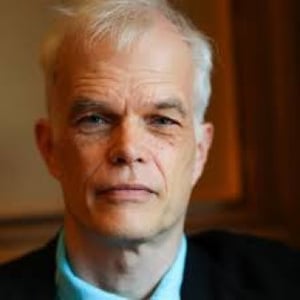
Senior Editor, National Review
Historian Richard Brookhiser is a senior editor of National Review, a senior fellow at the National Review Institute, and the author of several books, including Founders’ Son, Right Time, Right Place, George Washington on Leadership, What Would the Founders Do?, Gentleman Revolutionary, Rules of Civility, America’s First Dynasty, Alexander Hamilton, American, Founding Father: Rediscovering George Washington, Way of the WASP, and The Outside Story.
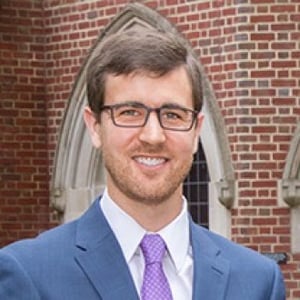
Professor of Law & Helen L. Crocker Faculty Scholar, Stanford Law School
Jud Campbell joined the faculty of Stanford Law School in 2023. He previously served as a professor of law at the University of Richmond School of Law and as a visiting professor of law at the University of Chicago Law School and at Harvard Law School. His academic focus is constitutional history and First Amendment law. His publications include articles in the Stanford Law Review, Yale Law Journal, Harvard Law Review, Texas Law Review, Constitutional Commentary, and Law and History Review. After completing his J.D. at Stanford Law School, he clerked for Judge Diane S. Sykes on the U.S. Court of Appeals for the Seventh Circuit, and for Judge José A. Cabranes on the U.S. Court of Appeals for the Second Circuit. He then served as the Executive Director of the Stanford Constitutional Law Center. He holds a bachelor’s degree from the University of North Carolina at Chapel Hill and two master’s degrees from the London School of Economics, where he studied as a Marshall Scholar.

Leitner Family Professor of International Law and Co-Founder & Co-Director of the Center on Asian Americans & the Law, Fordham University School of Law
Thomas H. Lee is the Leitner Family Professor of International Law at Fordham, where he teaches civil procedure, constitutional law, federal courts, international law, and the U.S. law of civil-military relations. His meticulously researched and historically-grounded scholarship has argued that the Eleventh Amendment reflected the classical international law principle that only a sovereign state—not its citizens or subjects— has rights against other sovereign states; that the Alien Tort Statute was a national-security peacekeeping statute, not an international human-rights statute, enacted in 1789 when the United States was a militarily weak state; and that the Natural Born Citizen Clause regarding presidential eligibility reflected natural-law principles of membership by descent as well as domestic birthplace. His current research examines the nature of Article III judicial power and the role of the federal courts in American society.
He is Co-Director of the Center on Asian Americans and the Law, Special Counsel at Hughes Hubbard & Reed, and a Member of the American Law Institute. He was Special Counsel to the General Counsel of the U.S. Department of Defense, a Member of the ICSID Panel of Conciliators, Adviser to the Constitutional Court of Korea, and Visiting Professor at Columbia, Harvard, and the University of Virginia law schools, as well as Faculty Director of International and Graduate Studies at Fordham from 2006 to 2019. Before his academic career, Lee clerked for Judge Michael Boudin of the First Circuit and Justice David Souter of the Supreme Court and served as an active-duty U.S. naval cryptology officer, afloat on submarines and surface combatants and ashore in Korea, Japan, and with the National Security Agency. He holds A.B. (summa cum laude), A.M. (Regional Studies—East Asia), and J.D. degrees from Harvard, where he was Articles Chair of the Harvard Law Review and a Ph.D. candidate (ABD) in Government.
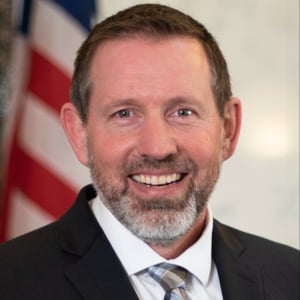
Judge, United States Court of Appeals, Ninth Circuit
Lawrence VanDyke serves as a circuit judge on the U.S. Court of Appeals for the Ninth Circuit. Prior to that appointment in January 2020, he served as a Deputy Assistant Attorney General in the Environment and Natural Resources Division of the United States Department of Justice. Before that, he served consecutively as the Solicitor General of two western states – Nevada and Montana. At the beginning of his legal career, he worked as an attorney in the Appellate and Constitutional Issues practice group at Gibson Dunn & Crutcher, LLP.
Judge VanDyke received his law degree magna cum laude from Harvard Law School, where he was an editor on the Harvard Law Review. He has engineering and theology undergraduate degrees and a masters degree in engineering management. He served as a law clerk to the Honorable Janice Rogers Brown of the United States Court of Appeals for the District of Columbia Circuit. Judge VanDyke and his wife Cheryl live in Reno, Nevada, and they have three children.

Clinical Professor of Law, University of Arizona, James E. Rogers College of Law
Tessa L. Dysart is the Assistant Director of Legal Writing and Associate Clinical Professor of Law at the University of Arizona, James E. Rogers College of Law. With the Hon. Leslie H. Southwick of the United States Court of Appeals for the Fifth Circuit, she co-authored the third edition of Winning on Appeal: Better Briefs and Oral Arguments. She manages the Appellate Advocacy Blog, writes on human trafficking and constitutional law, and lectures nationally on developing effective state anti-trafficking laws.
Professor Dysart is a graduate of Willamette University and Harvard Law School. She clerked for the Hon. Dennis W. Shedd of the United States Court of Appeals for the Fourth Circuit. Her practice experience includes working for the United States Department of Justice Office of Legal Policy and the Senate Judiciary Committee. Prior to joining the College of Law faculty she taught appellate advocacy and constitutional law courses at Regent University School of Law, where she coached award-winning moot court teams and advised the program to a national ranking.
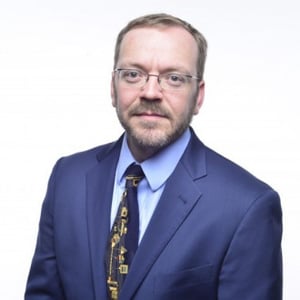
Vice President for Legal Affairs, Goldwater Institute

Tazewell Taylor Professor of Law and William H. Cabell Research Professor, William & Mary Law School
Jonathan H. Adler joined the William & Mary law faculty as the Tazwell Taylor Professor of Law and William H. Cabell Research Professor in 2025. Prior to joining the faculty, he was the inaugural Johan Verheij Memorial Professor of Law and the founding Director of the Coleman P. Burke Center for Environmental Law at the Case Western Reserve University School of Law.
Professor Adler is the author or editor of seven books, including Climate Liberalism: Perspectives on Liberty, Property and Pollution (Palgrave, 2023), Marijuana Federalism: Uncle Sam and Mary Jane (Brookings Institution Press, 2020), Business and the Roberts Court (Oxford University Press, 2016) and Rebuilding the Ark: New Perspectives on Endangered Species Act Reform (AEI Press, 2011).
His articles have appeared in publications ranging from the Harvard Environmental Law Review and Yale Journal on Regulation to the Wall Street Journal, New York Times, and Washington Post. He has testified before Congress a dozen times, and his work has been cited in the U.S. Supreme Court. A 2024 study identified Professor Adler as the seventh most cited legal academic in administrative and environmental law from 2019 to 2023.
Professor Adler is a contributing editor to Civitas Outlook and a regular contributor to the popular legal blog, The Volokh Conspiracy. A regular commentator on constitutional and regulatory issues, he has appeared on numerous radio and television programs, ranging from the PBS Newshour and National Public Radio to the Fox News Channel and Entertainment Tonight.
Professor Adler is a senior fellow at the Property & Environment Research Center in Bozeman, Montana. In 2018, Professor Adler was elected to membership in the American Law Institute and helped co-found the organization Checks and Balances. In 2024, Professor Adler was appointed a public member of the Administrative Conference of the United States.
Professor Adler clerked for the Honorable David B. Sentelle on the U.S. Court of Appeals for the District of Columbia Circuit.

Laurence H. Silberman Chair in Constitutional Governance, American Enterprise Institute; Executive Director, Antonin Scalia Law School’s C. Boyden Gray Center for the Study of the Administrative State
Adam J. White is the Laurence H. Silberman Chair in Constitutional Governance and senior fellow at the American Enterprise Institute, where he focuses on the Supreme Court and the administrative state. He also directs the Antonin Scalia Law School’s C. Boyden Gray Center for the Study of the Administrative State.
He writes on regulation and constitutional government for a variety of publications. He practiced law in Washington, D.C., after clerking for the D.C. Circuit's Judge David Sentelle. He also has been chairman of the ABA's Administrative Law Section.
In 2021, he served on the Presidential Commission on the Supreme Court of the United States, where he criticized “Court packing” and other efforts to restructure the Supreme Court.

Professor, University of Minnesota Law School
Ilan Wurman is the Julius E. Davis Professor of Law at the University of Minnesota, where he teaches administrative law and constitutional law. He previously taught at Arizona State University. He writes primarily on the Fourteenth Amendment, administrative law, separation of powers, and constitutionalism. His academic writing has appeared in the Yale Law Journal, the Stanford Law Review, the University of Chicago Law Review, the University of Pennsylvania Law Review, the Virginia Law Review, the Duke Law Journal, the Minnesota Law Review, the Notre Dame Law Review, and the Texas Law Review among other journals.
Professor Wurman is the author of the new book The Constitution of 1789: A New Introduction (Cambridge 2026). His previous books include A Debt Against the Living: An Introduction to Originalism (Cambridge 2017), and The Second Founding: An Introduction to the Fourteenth Amendment (Cambridge 2020). He is also the author of the casebook, Administrative Law Theory and Fundamentals: An Integrated Approach (Foundation Press 3d ed. 2025).
Professor Wurman practices law with the firm Tully Bailey. He has litigated a variety of administrative law and constitutional law cases, including cases involving COVID-19 restrictions, transmission lines, and Appointments Clause challenges. He also devised winning public nuisance theories to force city governments to address the increasingly challenging public camping crises throughout the country.
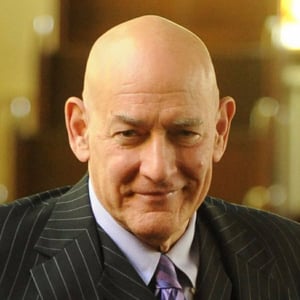
Raoul Berger Professor of Legal History at Northwestern University School of Law
Stephen Presser is a leading American legal historian and expert on shareholder liability for corporate debts. He is frequently an invited witness before committees of the U.S. Senate and House of Representatives on issues of constitutional law. He holds a joint appointment with the J. L. Kellogg Graduate School of Management and also teaches in Northwestern's history department.
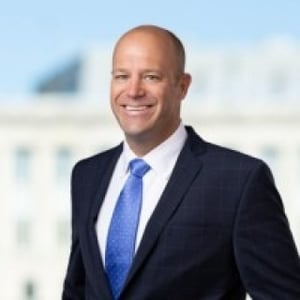
Partner, Givens Pursley LLP
Jeff Beelaert is a partner at Givens Pursley LLP in Boise, Idaho, with a distinguished background of public service and extensive experience with trial and appellate litigation. As lead counsel, Jeff has achieved success for clients in high-stakes, complex cases at every level of state and federal courts, including the United States Supreme Court.
Before joining Givens Pursley, Jeff previously held several posts at the United States Department of Justice.
Jeff previously worked as an associate at Sidley Austin in DC, where he drafted Supreme Court briefs and handled white collar matters and investigations.
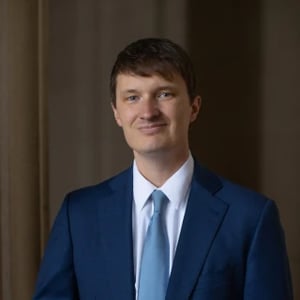
Partner, Boyden Gray PLLC
Trent McCotter is a partner with Boyden Gray PLLC. He previously served as Deputy Associate Attorney General of the United States and as an Assistant U.S. Attorney.
Mr. McCotter maintains an extensive appellate practice. He has considerable experience identifying and briefing cases that draw the Supreme Court’s attention, having persuaded the Court to grant certiorari in numerous cases raising issues of sovereignty, constitutional rights, due process, and criminal law. He has authored and submitted over 60 briefs at the Court.
He has also personally argued more than fifteen federal appeals across the Second, Fourth, Fifth, Sixth, Ninth, Eleventh, Federal, and D.C. Circuits—including once arguing three separate appeals in just four days. He has also twice argued before the 17-judge en banc Fifth Circuit. He has been counsel in over 50 other appeals raising matters from FOIA and the APA to constitutional rights and statutory construction.
As Deputy Associate Attorney General, Mr. McCotter oversaw DOJ’s Civil Appellate and Federal Programs branches, which are responsible for defending nearly all major litigation against the federal government. During his three years as a federal trial attorney in the Eastern District of Virginia’s “Rocket Docket,” Mr. McCotter won the Attorney General’s Award for Distinguished Service.
During his DOJ tenures, Mr. McCotter also assisted with the confirmations of two Supreme Court justices and over a dozen lower-court judges.
Mr. McCotter served as an inaugural clerk to the Hon. Steven J. Menashi on the U.S. Court of Appeals for the Second Circuit and also clerked for the Hon. R. Lanier Anderson III on the U.S. Court of Appeals for the Eleventh Circuit.
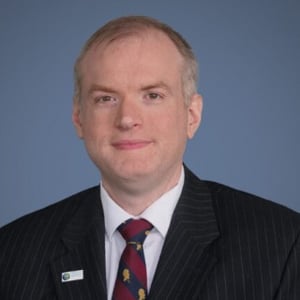
Attorney, Competitive Enterprise Institute
Devin Watkins is an attorney at the Competitive Enterprise Institute. Devin Watkins previously worked at the Cato Institute as a legal associate and interned at the Institute for Justice. At the Cato Institute, Watkins worked on a variety of Supreme Court cases, and one of the briefs he worked on was cited by the Court. His op-eds have appeared in National Review Online, The Hill, Time, and The Federalist among others.
Watkins holds a Juris Doctor cum laude from George Mason University's Antonin Scalia Law School, where he was the development editor on the Mason Law Review. Prior to his legal career Watkins was a senior software developer at Intel and WebMD. He graduated with a Bachelor of Science in Computer Science from Stevens Institute of Technology in Hoboken, New Jersey.
Watkins is a member of the Virginia State Bar, the District of Columbia Bar, the U.S. District Court for the District of Columbia Bar, and the U.S. Court of Appeals for the District of Columbia Circuit Bar.
Partner, Givens Pursley LLP
Jeff Beelaert is a partner at Givens Pursley LLP in Boise, Idaho, with a distinguished background of public service and extensive experience with trial and appellate litigation. As lead counsel, Jeff has achieved success for clients in high-stakes, complex cases at every level of state and federal courts, including the United States Supreme Court.
Before joining Givens Pursley, Jeff previously held several posts at the United States Department of Justice.
Jeff previously worked as an associate at Sidley Austin in DC, where he drafted Supreme Court briefs and handled white collar matters and investigations.
Partner, Boyden Gray PLLC
Trent McCotter is a partner with Boyden Gray PLLC. He previously served as Deputy Associate Attorney General of the United States and as an Assistant U.S. Attorney.
Mr. McCotter maintains an extensive appellate practice. He has considerable experience identifying and briefing cases that draw the Supreme Court’s attention, having persuaded the Court to grant certiorari in numerous cases raising issues of sovereignty, constitutional rights, due process, and criminal law. He has authored and submitted over 60 briefs at the Court.
He has also personally argued more than fifteen federal appeals across the Second, Fourth, Fifth, Sixth, Ninth, Eleventh, Federal, and D.C. Circuits—including once arguing three separate appeals in just four days. He has also twice argued before the 17-judge en banc Fifth Circuit. He has been counsel in over 50 other appeals raising matters from FOIA and the APA to constitutional rights and statutory construction.
As Deputy Associate Attorney General, Mr. McCotter oversaw DOJ’s Civil Appellate and Federal Programs branches, which are responsible for defending nearly all major litigation against the federal government. During his three years as a federal trial attorney in the Eastern District of Virginia’s “Rocket Docket,” Mr. McCotter won the Attorney General’s Award for Distinguished Service.
During his DOJ tenures, Mr. McCotter also assisted with the confirmations of two Supreme Court justices and over a dozen lower-court judges.
Mr. McCotter served as an inaugural clerk to the Hon. Steven J. Menashi on the U.S. Court of Appeals for the Second Circuit and also clerked for the Hon. R. Lanier Anderson III on the U.S. Court of Appeals for the Eleventh Circuit.
Attorney, Competitive Enterprise Institute
Devin Watkins is an attorney at the Competitive Enterprise Institute. Devin Watkins previously worked at the Cato Institute as a legal associate and interned at the Institute for Justice. At the Cato Institute, Watkins worked on a variety of Supreme Court cases, and one of the briefs he worked on was cited by the Court. His op-eds have appeared in National Review Online, The Hill, Time, and The Federalist among others.
Watkins holds a Juris Doctor cum laude from George Mason University's Antonin Scalia Law School, where he was the development editor on the Mason Law Review. Prior to his legal career Watkins was a senior software developer at Intel and WebMD. He graduated with a Bachelor of Science in Computer Science from Stevens Institute of Technology in Hoboken, New Jersey.
Watkins is a member of the Virginia State Bar, the District of Columbia Bar, the U.S. District Court for the District of Columbia Bar, and the U.S. Court of Appeals for the District of Columbia Circuit Bar.

Associate, Gibson, Dunn & Crutcher LLP
Stephen Hammer is a litigation associate in the Dallas office of Gibson, Dunn & Crutcher.
Before joining the firm, Mr. Hammer served as a law clerk to Chief Justice John G. Roberts, Jr. of the Supreme Court of the United States, Judge Gregory G. Katsas of the United States Court of Appeals for the District of Columbia Circuit, and Judge Jeffrey S. Sutton of the United States Court of Appeals for the Sixth Circuit.
Mr. Hammer graduated magna cum laude from Harvard Law School, where he served as managing editor of the Harvard Journal of Law and Public Policy. Before law school, Mr. Hammer served as an infantry officer in the 82nd Airborne Division of the United States Army. His military decorations include the Bronze Star. Mr. Hammer received an M.Phil. in theology from the University of Oxford, where he studied on a Rhodes scholarship. He received an A.B. summa cum laude in classics from Princeton University and graduated as Latin salutatorian.
Mr. Hammer is a member of the Texas and District of Columbia bars.

Plenary Session 1: Congressional Primacy at the Founding and Today
Featuring: Dr. Nicholas P. Cole, Senior Research Fellow, University of Oxford Mr. Yuval Levin, Senior Fellow, American Enterprise Institute...
What Were the Founders' Views of Citizenship?
Elle Rogers Bernstein, Richard Brookhiser, Jud Campbell, Thomas Lee
In this Federalist Society America250 series, experts analyze modern legal and policy debates through the...
Closing Banquet: Keynote Address and Presentation of the Annual Joseph Story Award and Feddie Awards*
Lawrence VanDyke
Keynote Address: The Proper Judicial Role, 250 Years Later Hon. Lawrence VanDyke, Judge, United States Court...
The Federalist’s Quill: A Mighty Tool—But Only If You Know How to Use It! A Mini-Session on Legal Writing
Tessa Dysart, Timothy Sandefur
Featuring: Prof. Tessa L. Dysart, Assistant Director of Legal Writing and Clinical Professor of Law, James...
Nondelegation and the Limits of Agency Authority after Consumers' Research and Loper Bright
Jonathan H. Adler, Adam White, Ilan Wurman
The panel will discuss the questions left open—or raised—by the Supreme Court’s decisions in FCC...
Supreme Court Roundup (OT2024)
Dallas Lawyers Chapter
Dallas, TXThe Past Is Not a Foreign Country: How a Historical Critique of Originalism Misses That the Past Is Prologue
Stephen B. Presser
A review of Jonathan Gienapp, Against Constitutional Originalism: A Historical Critique (2024) This review is...
Topics
The Police Power, Good Governing, and Big Tech: How a Power to Protect Became a Power to Punish
What is the “police power”? Most often, the term is used as a synonym for...
Nondelegation Doctrine Adds Another Good Year?
Jeff Beelaert, Trent McCotter, Devin Watkins
For many years, legal scholars have declared that the nondelegation doctrine is dead. Professor Cass...
Nondelegation Doctrine Adds Another Good Year?
Jeff Beelaert, Trent McCotter, Devin Watkins
For many years, legal scholars have declared that the nondelegation doctrine is dead. Professor Cass...