

Executive Director, Committee for Justice
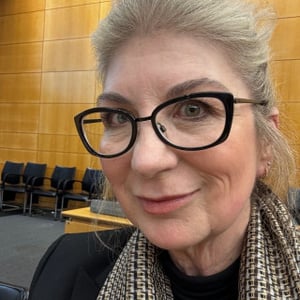
Ashley Baker serves as Executive Director at the Committee for Justice. Her focus areas include the Supreme Court, regulatory policy, antitrust, and judicial nominations. Her writing has appeared in Fox News, USA Today, The Boston Globe, The Hill, RealClearPolitics, The American Spectator, and elsewhere. Ashley is also the founder of the recently-formed Alliance on Antitrust coalition. She has testified before the United States Senate on the topic of antitrust law.
Ashley is an active member of the Federalist Society, where she serves as a member of the Regulatory Transparency Project's Antitrust & Consumer Protection and Cyber & Privacy working groups. As a member of the Republican National Lawyers Association, she has served as a speaker on the Supreme Court and the federal judiciary.
As an expert on the judicial nominations process, Ashley worked closely on the efforts to confirm Justices Neil Gorsuch and Brett Kavanaugh.
Much of Ashley’s work is at the intersection of the courts, regulation, and technology. Ashley also engages in policy analysis and outreach on legislation and regulations related to these issues by writing op-eds, letters to Congress for committee hearings, and regulatory comments.
Founder & Executive Director, World Privacy Forum
Pam Dixon is the founder and executive director of the World Privacy Forum, a respected public interest research group. An author and researcher, she has written influential studies in the area of identity, AI, health, and complex data ecosystems and their governance for more than 20 years. Dixon has worked extensively on privacy and governance across multiple jurisdictions, including the US, India, Africa, Asia, the EU, and additional jurisdictions. Dixon currently serves as the co-chair of the UN Statistics Data Governance and Legal Frameworks working group, and is an advisor to WHO’s Health Data Collaborative. At OECD, Dixon chairs the formal civil society multistakeholder work in OECD’s Artificial Intelligence Working Party. Dixon has presented her work on complex data ecosystems governance to the National Academies of Science, the Mongolian National Academies of Science, and to the Royal Academies of Science.
AI Innovation and Law Fellow, University of Texas School of Law
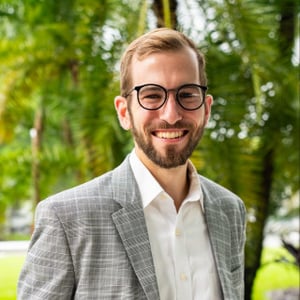
Kevin Frazier is an AI Innovation and Law Fellow with University of Texas School of Law.

Senior Fellow, Technology Policy, Cato Institute
Jennifer’s research focuses on the intersection of emerging technology and law with a particular interest in the interactions between technology and the administrative state. Her work covers topics including judicial deference, liability protection for Internet platforms, autonomous vehicles and other disruptive transportation technologies, the regulation of data privacy, and the benefits of technology and innovation. Her work has appeared in USA Today, the Chicago Tribune, the New York Daily News, the Sacramento Bee, the Washington Times, Real Clear Policy, and U.S. News and World Report. Jennifer has a JD from the University of Alabama School of Law and a BA in political science at Wellesley College.
AI Innovation and Law Fellow, University of Texas School of Law
Kevin Frazier is an AI Innovation and Law Fellow with University of Texas School of Law.
Head of AI Policy, Abundance Institute
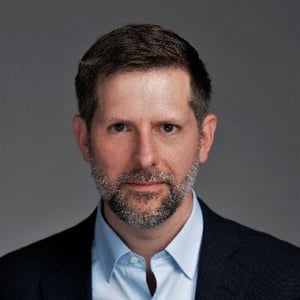
Neil Chilson is the Head of AI Policy at the Abundance Institute. Prior to this position, he served as a Senior Research Fellow at the Center for Growth and Opportunity. Chilson is a lawyer, computer scientist, and author of the book “Getting Out of Control: Emergent Leadership in a Complex World.”
Chilson was previously the senior research fellow for Technology and Innovation at Stand Together, where he guided efforts to understand and promote the legal and cultural paradigms that best enable people to discover, innovate, and improve all our lives.
Before Stand Together, Chilson was the Chief Technologist at the Federal Trade Commission, where he focused on the economics of privacy and blockchain-related issues. Previously, he was an attorney advisor to Acting FTC Chairman Maureen K. Ohlhausen. In both roles he advised Chairman Ohlhausen and worked with staff on nearly every major technology-related case, report, workshop, or other FTC proceeding since January 2014. Neil joined the FTC from telecom firm Wilkinson Barker Knauer. Neil is frequently quoted by the press and his work has appeared in numerous news outlets, including The Wall Street Journal, The Washington Post, USAToday, and Newsweek. Neil has a J.D. from The George Washington Law School, a M.S. in computer science from University of Illinois, Urbana-Champaign, and a B.S. in computer science from Harding University.
AI Innovation and Law Fellow, University of Texas School of Law
Kevin Frazier is an AI Innovation and Law Fellow with University of Texas School of Law.
Senior Vice President, Americans for Responsible Innovation
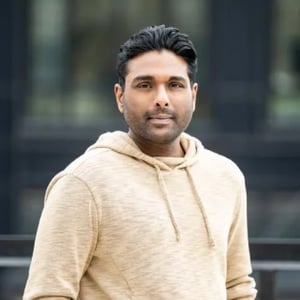
Satya Thallam is Senior Vice President for Government of Government Affairs at Americans for Responsible Innovation, focused on AI policy issues. He is also Non-Resident Senior Fellow at the Foundation for American Innovation. He is a policy expert and advisor, having served in senior roles in the congressional and executive branches and as an executive at a biotechnology startup, and is frequently invited to testify before Congress and appear in media.
Previously, he was a senior policy official at the White House Office of Management and Budget (OMB), with direct oversight, review, and negotiation of all federal regulatory policymaking across over a dozen cabinet agencies. In this role, he advised the Director of OMB and fellow senior White House colleagues on regulatory policies and process. His time in government began in the U.S. Senate, at the Committee on Homeland Security and Governmental Affairs, where for nearly five years he was the Senate’s point person on regulatory reform, as well as the committee’s expert on areas running the breadth of the committee’s jurisdiction.
Satya has also spent many years in the think tank sector, leading programs primarily related to financial services policy, at both university-based and independent organizations. In this capacity, he authored policy reports, congressional testimonies, op-eds, and presentations, and built new research programs. Satya’s policy career began at the Goldwater Institute, the premier state policy-focused think tank, beginning as an intern and rising to a director-level role leading the organization’s fiscal policy program.

Senior Fellow, R Street Institute
Prior to R Street, Adam spent 12 years as a senior fellow at the Mercatus Center at George Mason University. Before the Mercatus Center, he served as the president of the Progress and Freedom Foundation. Adam has also worked for the Adam Smith Institute, the Heritage Foundation and the Cato Institute.
Adam has published 10 books on a wide range of topics, including online child safety, internet governance, intellectual property, telecommunications policy, media regulation and federalism.
In 2008, Adam received the Family Online Safety Institute’s “Award for Outstanding Achievement.”
AI Innovation and Law Fellow, University of Texas School of Law
Kevin Frazier is an AI Innovation and Law Fellow with University of Texas School of Law.
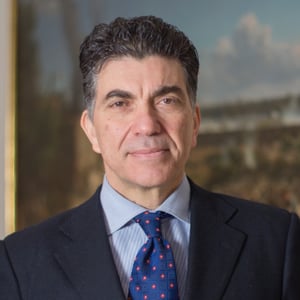
University of Florence, Professor of Constitutional Law
Distinguished Research Affiliate Andrea Simoncini is a professor of constitutional law at the University of Florence. As a constitutional scholar whose work is internationally well known, Simoncini focuses his research on Italian and European constitutional law, developmental dynamics of the sources of law, social rights, and the study of the interrelations between natural law and positive legal systems. He also studies the nexus of environmental politics with constitutional law and human rights.
Simoncini spent fall semester 2013 at the Kellogg Institute as a visiting fellow working on a joint project with Mauro Magatti: Europe: An Institution without a Society? His Kellogg collaboration with Magatti examined the changes over time in the meaning of civil society in Europe, looking particularly on how it evolved from a communally oriented to a more individualistic concept. Using a multidisciplinary approach, the pair study the relationship between the multiple civil societies of Europe and the future of the EU's institutional framework.
Twice a visiting professor at Notre Dame Law School, Simoncini was also the University's 2009 Fulbright Italian Scholar, serving as research fellow at the Nanovic Institute for European Studies.
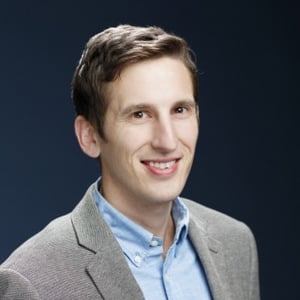
Legal Fellow, Center for Constitutional Studies, Cato Institute
Brent Skorup is a legal fellow in the Cato Institute’s Robert A. Levy Center for Constitutional Studies.
Before joining Cato, he was a senior research fellow at the Mercatus Center at the George Mason University. His research areas include free speech, technology law, Fourth Amendment protections, regulation, and property law. Skorup has published pieces in economics and law journals and in popular media, including The Wall Street Journal, The New York Times, Bloomberg Law, Reuters, and Wired. He’s appeared as a TV and radio interview guest for news outlets like C‑SPAN, NPR, CBS News, ABC News, and CNBC Asia.
The Pennsylvania Supreme Court, a dissenting opinion at the Illinois Supreme Court, and the ALI's Restatement of the Law of Property have cited his legal research and he has testified as a technology and legal expert in legislative hearings in several states. Skorup has been appointed to several federal and state advisory bodies and he is currently a member of the Texas Advanced Air Mobility Advisory Committee.
Skorup has a BA in economics from Wheaton College and a law degree from the George Mason University School of Law, where he was articles editor for the Civil Rights Law Journal. He was a legal clerk at the FCC’s wireless bureau and Office of General Counsel and at the Energy and Commerce Committee in the U.S. House of Representatives.
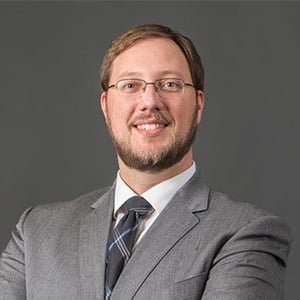
Laurence H. Silberman Chair in Constitutional Governance and Senior Fellow, American Enterprise Institute; Co-Director, Antonin Scalia Law School’s C. Boyden Gray Center for the Study of the Administrative State
Adam J. White is the Laurence H. Silberman Chair in Constitutional Governance and senior fellow at the American Enterprise Institute, where he focuses on the Supreme Court and the administrative state. Concurrently, he codirects the Antonin Scalia Law School’s C. Boyden Gray Center for the Study of the Administrative State.
Mr. White practiced constitutional and administrative law, particularly in the regulation of energy and financial markets. He started his legal career as a law clerk for Judge David B. Sentelle at the US Court of Appeals for the DC Circuit.
Mr. White has written for the Wall Street Journal, the New York Times, the Washington Post, National Affairs, Commentary, Harvard Journal of Law & Public Policy, and Notre Dame Law Review, among other publications. He is a regular contributor to the Yale Journal on Regulation’s Notice and Comment blog, and for many years, he was one of the Weekly Standard’s lead writers on constitutional law and the Supreme Court.
Mr. White has testified often before Congress, including before the Senate’s Committees on the Judiciary; Commerce, Science, and Transportation; and Homeland Security and Governmental Affairs and before the House’s Judiciary and Financial Services Committees. In 2018, the Senate Committee on the Judiciary called him to testify in Brett Kavanaugh’s Supreme Court confirmation hearings to advise senators on Kavanaugh’s approach to administrative law.
In 2021, he served on the Presidential Commission on the Supreme Court of the United States, where he criticized “Court packing” and other efforts to restructure the Supreme Court. In 2017, he was appointed to serve on the Administrative Conference of the United States. He also serves on the leadership council for the American Bar Association’s Administrative Law and Regulatory Practice Section, which he will chair in 2023–24. Before joining AEI, he was a research fellow at Stanford University’s Hoover Institution and an adjunct fellow at the Manhattan Institute.
Mr. White has a JD from Harvard Law School and a bachelor of business administration from the College of Business at the University of Iowa.
AI Innovation and Law Fellow, University of Texas School of Law
Kevin Frazier is an AI Innovation and Law Fellow with University of Texas School of Law.
Senior Fellow, R Street Institute
Prior to R Street, Adam spent 12 years as a senior fellow at the Mercatus Center at George Mason University. Before the Mercatus Center, he served as the president of the Progress and Freedom Foundation. Adam has also worked for the Adam Smith Institute, the Heritage Foundation and the Cato Institute.
Adam has published 10 books on a wide range of topics, including online child safety, internet governance, intellectual property, telecommunications policy, media regulation and federalism.
In 2008, Adam received the Family Online Safety Institute’s “Award for Outstanding Achievement.”

Director, Center on Technology Policy, New York University
He was previously the head of online expression policy at UNC’s Center on Technology policy, and was a senior policy associate at the Center on Science & Technology Policy at Duke University. Prior to Duke, Scott was a research fellow at the University of Oxford, where he led research for the Oxford Martin Programme on Misinformation, Science, and Media, which examined the interplay between media change and misinformation about science, technology, and health.
AI Innovation and Law Fellow, University of Texas School of Law
Kevin Frazier is an AI Innovation and Law Fellow with University of Texas School of Law.
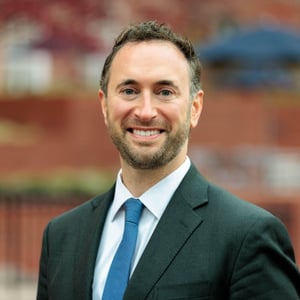
Associate Dean for Academic Affairs, The George Washington University Law School
Aram A. Gavoor is the Associate Dean for Academic Affairs and an internationally recognized scholar in American administrative law, national security, and federal courts. His co-authored work was cited by the U.S. Supreme Court in Department of Commerce v. New York (2019). His scholarship has earned placement in the Florida Law Review, Indiana Law Journal, Ohio State Law Journal, and other law journals. He has briefed and argued over a dozen high-profile public law cases before a majority of the U.S. Courts of Appeals and numerous cases before almost a third of the 94 U.S. District Courts. Associate Dean Gavoor frequently shares his national security, artificial intelligence policy, and federal courts expertise with international news media, including CNN, BBC World News, Wall Street Journal, NBC News, and ABC (Australia) World News. In 2021, the National Law Journal named Associate Dean Gavoor a Rising Star (top 40 under 40) honoree.
Earlier in his career, Associate Dean Gavoor served as Senior Counsel for National Security in the Civil Division of the U.S. Department of Justice, as third-in-rank Counselor to the Administrator of the Office of Information and Regulatory Affairs in the White House Office of Management and Budget, and in private practice. He received the Attorney General's Award for Distinguished Service in 2019, the Civil Division Special Commendation Award in 2020, 2019, and 2018, and a Commendation from the Human Rights and Special Prosecutions Section of the Criminal Division in 2018.
Associate Dean Gavoor previously served on the law school’s part-time faculty from 2008-2017 before accepting a term-limited position as Visiting Associate Professor from 2017-2019. He received GW Law’s Distinguished Adjunct Faculty Teaching Award from the 2020 and 2017 graduating classes. He currently teaches Constitutional Law II, Administrative Law, National Security Law, and Federal Courts.
AI Innovation and Law Fellow, University of Texas School of Law
Kevin Frazier is an AI Innovation and Law Fellow with University of Texas School of Law.
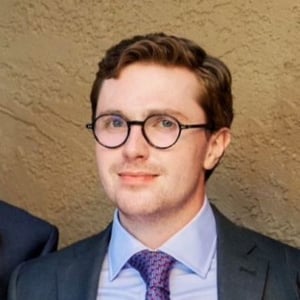
Senior Fellow, Foundation for American Innovation
Dean Woodley Ball is a senior fellow at FAI. He most recently served as Senior Policy Advisor for Artificial Intelligence and Emerging Technology at the White House Office of Science and Technology Policy and Strategic Advisor for AI at the National Science Foundation. Previously he was a Research Fellow in the Artificial Intelligence & Progress Project at George Mason University's Mercatus Center and a Policy Fellow at Fathom.
Dean is author of Hyperdimensional. His work focuses on emerging technologies and the future of governance, spanning artificial intelligence, manufacturing innovation, neural technology, bioengineering, technology policy, political theory, public finance, urban infrastructure, and criminal justice reform. Outside of FAI, his scholarship has been published by the Mercatus Center, the Hoover Institution, the Carnegie Endowment for International Peace, the Federation of American Scientists, the Manhattan Institute, and American Compass.
His writing has appeared in National Affairs, The New Atlantis, Pirate Wires, Lawfare, The Dispatch, The Hill, Tech Policy Press, the Washington Post, the Orange County Register, the Coolidge Quarterly, and National Review. His academic work includes "Neither Harbour nor Floor: Contemplating the Singularity with Michael Oakeshott" in the forthcoming Liberalism Revisited (Palgrave) and "Ideas of Another Order: Michael Oakeshott and Confucius in Conversation" in Collingwood and British Idealism Studies.
Prior to his government service, Dean held senior positions at Stanford's Hoover Institution, the Calvin Coolidge Presidential Foundation, and the Manhattan Institute, where he oversaw the Hayek Book Prize. He also consults on passion projects, including on-the-ground policing reform in Argentina and Chile and the restoration of the Florentine guild system for sacred liturgical art.
Dean serves on the Board of Directors of the Alexander Hamilton Institute and was selected as an Aspen Ideas Fellow. He graduated magna cum laude from Hamilton College with a B.A. in History and lives in Washington, D.C. with his wife, Abigail, and their two cats, Io and Ganymede.

Vice President of Political Affairs, Encode
As Vice President of Political Affairs, Sunny led Encode’s co-sponsorship of California’s SB 1047, a landmark AI safety bill that would have required testing of advanced AI systems and created whistleblower protections. The bill passed both chambers of the state legislature with strong bipartisan margins, drawing support from an unlikely coalition including Nobel Laurate Geoffrey Hinton, Elon Musk, and Mark Ruffalo.
He also spearheaded efforts leading to the first U.S. law establishing guardrails for AI use in nuclear weapons systems, ensuring human control while enabling security benefits. At Encode, he has coordinated campaigns to authorize and fund a U.S. AI Safety Institute and advance legislation targeting AI-generated exploitation.
His technical work includes pioneering a benchmark for testing AI legal reasoning capabilities (presented at NeurIPS) and developing systems for rapid cloud deployment of AI services. He has also published research on cross-platform information analysis at AAAI. Before Encode, he served in technical roles at NASA, Deloitte, and a nuclear energy company.
Head of AI Policy, Abundance Institute
Neil Chilson is the Head of AI Policy at the Abundance Institute. Prior to this position, he served as a Senior Research Fellow at the Center for Growth and Opportunity. Chilson is a lawyer, computer scientist, and author of the book “Getting Out of Control: Emergent Leadership in a Complex World.”
Chilson was previously the senior research fellow for Technology and Innovation at Stand Together, where he guided efforts to understand and promote the legal and cultural paradigms that best enable people to discover, innovate, and improve all our lives.
Before Stand Together, Chilson was the Chief Technologist at the Federal Trade Commission, where he focused on the economics of privacy and blockchain-related issues. Previously, he was an attorney advisor to Acting FTC Chairman Maureen K. Ohlhausen. In both roles he advised Chairman Ohlhausen and worked with staff on nearly every major technology-related case, report, workshop, or other FTC proceeding since January 2014. Neil joined the FTC from telecom firm Wilkinson Barker Knauer. Neil is frequently quoted by the press and his work has appeared in numerous news outlets, including The Wall Street Journal, The Washington Post, USAToday, and Newsweek. Neil has a J.D. from The George Washington Law School, a M.S. in computer science from University of Illinois, Urbana-Champaign, and a B.S. in computer science from Harding University.
AI Innovation and Law Fellow, University of Texas School of Law
Kevin Frazier is an AI Innovation and Law Fellow with University of Texas School of Law.
Senior Vice President, Americans for Responsible Innovation
Satya Thallam is Senior Vice President for Government of Government Affairs at Americans for Responsible Innovation, focused on AI policy issues. He is also Non-Resident Senior Fellow at the Foundation for American Innovation. He is a policy expert and advisor, having served in senior roles in the congressional and executive branches and as an executive at a biotechnology startup, and is frequently invited to testify before Congress and appear in media.
Previously, he was a senior policy official at the White House Office of Management and Budget (OMB), with direct oversight, review, and negotiation of all federal regulatory policymaking across over a dozen cabinet agencies. In this role, he advised the Director of OMB and fellow senior White House colleagues on regulatory policies and process. His time in government began in the U.S. Senate, at the Committee on Homeland Security and Governmental Affairs, where for nearly five years he was the Senate’s point person on regulatory reform, as well as the committee’s expert on areas running the breadth of the committee’s jurisdiction.
Satya has also spent many years in the think tank sector, leading programs primarily related to financial services policy, at both university-based and independent organizations. In this capacity, he authored policy reports, congressional testimonies, op-eds, and presentations, and built new research programs. Satya’s policy career began at the Goldwater Institute, the premier state policy-focused think tank, beginning as an intern and rising to a director-level role leading the organization’s fiscal policy program.
Senior Fellow, R Street Institute
Prior to R Street, Adam spent 12 years as a senior fellow at the Mercatus Center at George Mason University. Before the Mercatus Center, he served as the president of the Progress and Freedom Foundation. Adam has also worked for the Adam Smith Institute, the Heritage Foundation and the Cato Institute.
Adam has published 10 books on a wide range of topics, including online child safety, internet governance, intellectual property, telecommunications policy, media regulation and federalism.
In 2008, Adam received the Family Online Safety Institute’s “Award for Outstanding Achievement.”
Head of AI Policy, Abundance Institute
Neil Chilson is the Head of AI Policy at the Abundance Institute. Prior to this position, he served as a Senior Research Fellow at the Center for Growth and Opportunity. Chilson is a lawyer, computer scientist, and author of the book “Getting Out of Control: Emergent Leadership in a Complex World.”
Chilson was previously the senior research fellow for Technology and Innovation at Stand Together, where he guided efforts to understand and promote the legal and cultural paradigms that best enable people to discover, innovate, and improve all our lives.
Before Stand Together, Chilson was the Chief Technologist at the Federal Trade Commission, where he focused on the economics of privacy and blockchain-related issues. Previously, he was an attorney advisor to Acting FTC Chairman Maureen K. Ohlhausen. In both roles he advised Chairman Ohlhausen and worked with staff on nearly every major technology-related case, report, workshop, or other FTC proceeding since January 2014. Neil joined the FTC from telecom firm Wilkinson Barker Knauer. Neil is frequently quoted by the press and his work has appeared in numerous news outlets, including The Wall Street Journal, The Washington Post, USAToday, and Newsweek. Neil has a J.D. from The George Washington Law School, a M.S. in computer science from University of Illinois, Urbana-Champaign, and a B.S. in computer science from Harding University.
AI Innovation and Law Fellow, University of Texas School of Law
Kevin Frazier is an AI Innovation and Law Fellow with University of Texas School of Law.
Senior Vice President, Americans for Responsible Innovation
Satya Thallam is Senior Vice President for Government of Government Affairs at Americans for Responsible Innovation, focused on AI policy issues. He is also Non-Resident Senior Fellow at the Foundation for American Innovation. He is a policy expert and advisor, having served in senior roles in the congressional and executive branches and as an executive at a biotechnology startup, and is frequently invited to testify before Congress and appear in media.
Previously, he was a senior policy official at the White House Office of Management and Budget (OMB), with direct oversight, review, and negotiation of all federal regulatory policymaking across over a dozen cabinet agencies. In this role, he advised the Director of OMB and fellow senior White House colleagues on regulatory policies and process. His time in government began in the U.S. Senate, at the Committee on Homeland Security and Governmental Affairs, where for nearly five years he was the Senate’s point person on regulatory reform, as well as the committee’s expert on areas running the breadth of the committee’s jurisdiction.
Satya has also spent many years in the think tank sector, leading programs primarily related to financial services policy, at both university-based and independent organizations. In this capacity, he authored policy reports, congressional testimonies, op-eds, and presentations, and built new research programs. Satya’s policy career began at the Goldwater Institute, the premier state policy-focused think tank, beginning as an intern and rising to a director-level role leading the organization’s fiscal policy program.
Senior Fellow, R Street Institute
Prior to R Street, Adam spent 12 years as a senior fellow at the Mercatus Center at George Mason University. Before the Mercatus Center, he served as the president of the Progress and Freedom Foundation. Adam has also worked for the Adam Smith Institute, the Heritage Foundation and the Cato Institute.
Adam has published 10 books on a wide range of topics, including online child safety, internet governance, intellectual property, telecommunications policy, media regulation and federalism.
In 2008, Adam received the Family Online Safety Institute’s “Award for Outstanding Achievement.”
AI Innovation and Law Fellow, University of Texas School of Law
Kevin Frazier is an AI Innovation and Law Fellow with University of Texas School of Law.
University of Florence, Professor of Constitutional Law
Distinguished Research Affiliate Andrea Simoncini is a professor of constitutional law at the University of Florence. As a constitutional scholar whose work is internationally well known, Simoncini focuses his research on Italian and European constitutional law, developmental dynamics of the sources of law, social rights, and the study of the interrelations between natural law and positive legal systems. He also studies the nexus of environmental politics with constitutional law and human rights.
Simoncini spent fall semester 2013 at the Kellogg Institute as a visiting fellow working on a joint project with Mauro Magatti: Europe: An Institution without a Society? His Kellogg collaboration with Magatti examined the changes over time in the meaning of civil society in Europe, looking particularly on how it evolved from a communally oriented to a more individualistic concept. Using a multidisciplinary approach, the pair study the relationship between the multiple civil societies of Europe and the future of the EU's institutional framework.
Twice a visiting professor at Notre Dame Law School, Simoncini was also the University's 2009 Fulbright Italian Scholar, serving as research fellow at the Nanovic Institute for European Studies.
Legal Fellow, Center for Constitutional Studies, Cato Institute
Brent Skorup is a legal fellow in the Cato Institute’s Robert A. Levy Center for Constitutional Studies.
Before joining Cato, he was a senior research fellow at the Mercatus Center at the George Mason University. His research areas include free speech, technology law, Fourth Amendment protections, regulation, and property law. Skorup has published pieces in economics and law journals and in popular media, including The Wall Street Journal, The New York Times, Bloomberg Law, Reuters, and Wired. He’s appeared as a TV and radio interview guest for news outlets like C‑SPAN, NPR, CBS News, ABC News, and CNBC Asia.
The Pennsylvania Supreme Court, a dissenting opinion at the Illinois Supreme Court, and the ALI's Restatement of the Law of Property have cited his legal research and he has testified as a technology and legal expert in legislative hearings in several states. Skorup has been appointed to several federal and state advisory bodies and he is currently a member of the Texas Advanced Air Mobility Advisory Committee.
Skorup has a BA in economics from Wheaton College and a law degree from the George Mason University School of Law, where he was articles editor for the Civil Rights Law Journal. He was a legal clerk at the FCC’s wireless bureau and Office of General Counsel and at the Energy and Commerce Committee in the U.S. House of Representatives.
Laurence H. Silberman Chair in Constitutional Governance and Senior Fellow, American Enterprise Institute; Co-Director, Antonin Scalia Law School’s C. Boyden Gray Center for the Study of the Administrative State
Adam J. White is the Laurence H. Silberman Chair in Constitutional Governance and senior fellow at the American Enterprise Institute, where he focuses on the Supreme Court and the administrative state. Concurrently, he codirects the Antonin Scalia Law School’s C. Boyden Gray Center for the Study of the Administrative State.
Mr. White practiced constitutional and administrative law, particularly in the regulation of energy and financial markets. He started his legal career as a law clerk for Judge David B. Sentelle at the US Court of Appeals for the DC Circuit.
Mr. White has written for the Wall Street Journal, the New York Times, the Washington Post, National Affairs, Commentary, Harvard Journal of Law & Public Policy, and Notre Dame Law Review, among other publications. He is a regular contributor to the Yale Journal on Regulation’s Notice and Comment blog, and for many years, he was one of the Weekly Standard’s lead writers on constitutional law and the Supreme Court.
Mr. White has testified often before Congress, including before the Senate’s Committees on the Judiciary; Commerce, Science, and Transportation; and Homeland Security and Governmental Affairs and before the House’s Judiciary and Financial Services Committees. In 2018, the Senate Committee on the Judiciary called him to testify in Brett Kavanaugh’s Supreme Court confirmation hearings to advise senators on Kavanaugh’s approach to administrative law.
In 2021, he served on the Presidential Commission on the Supreme Court of the United States, where he criticized “Court packing” and other efforts to restructure the Supreme Court. In 2017, he was appointed to serve on the Administrative Conference of the United States. He also serves on the leadership council for the American Bar Association’s Administrative Law and Regulatory Practice Section, which he will chair in 2023–24. Before joining AEI, he was a research fellow at Stanford University’s Hoover Institution and an adjunct fellow at the Manhattan Institute.
Mr. White has a JD from Harvard Law School and a bachelor of business administration from the College of Business at the University of Iowa.

Does Privacy Exist in an AI World? (Part I: Rethinking Data Protection)
Tech Roundup Episode 27 - AI on the Senate Floor: Is it Time for a Moratorium?
Kevin Frazier, Adam Thierer, Scott Babwah Brennen
President Trump's budget bill, having recently passed the House of Representatives, is headed for the...
The AI Imperative: How to Prepare Your Firm Today for Tomorrow's AI
Columbus Lawyers Chapter
Columbus, OHTech Roundup Episode 26 - Making Sense of Recent White House AI Policy
Kevin Frazier, Aram A. Gavoor
In this Tech Roundup Episode of RTP's Fourth Branch podcast, Kevin Frazier and Aram Gavoor...
Tech Roundup Episode 25 - How are the States Approaching AI?
Kevin Frazier, Dean W. Ball, Sunny Gandhi
As the second Trump administration kicks off an ambitious AI agenda, individual states have been...
AI Policy In President Trump's Second Term
Neil Chilson, Kevin Frazier, Satya Thallam, Adam Thierer
There have been significant changes in federal AI policy over the course of the first...
AI Policy In President Trump's Second Term
Neil Chilson, Kevin Frazier, Satya Thallam, Adam Thierer
There have been significant changes in federal AI policy over the course of the first...
AI Policy In President Trump's Second Term
Panel III: Let Slip the AI Overlords? Justice and Federal Regulators
Kevin Frazier, Andrea Simoncini, Brent Skorup, Adam White
Panel 3 will tackle Anastasia Boden and Brent Skorup’s paper, “Welcoming Our AI Overlords and...
Panel III: Let Slip the AI Overlords? Justice and Federal Regulators
The Future of Law in an AI World
Washington, DC