
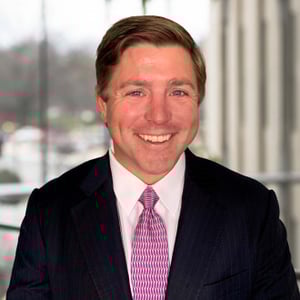
General Counsel, xAI and X
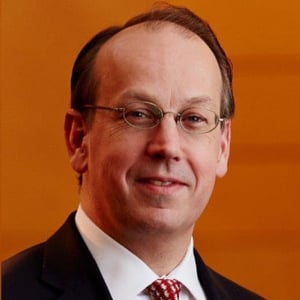
Partner, Clement & Murphy, PLLC
Paul served as the 43rd Solicitor General of the United States from June 2005 until June 2008. Before his confirmation as Solicitor General, he served as Acting Solicitor General for nearly a year and as Principal Deputy Solicitor General for over three years.
Paul has argued over 100 cases before the United States Supreme Court, including McConnell v. FEC, Tennessee v. Lane, United States v. Booker, MGM v. Grokster, Hobby Lobby v. Burwell, Epic Systems Corp. v. Lewis, Rucho v. Common Cause, Facebook v. Duguid, and TransUnion v. Ramirez. Paul has argued more Supreme Court cases since 2000 than any lawyer in or out of government. He has also argued many important cases in the lower courts, including Walker v. Cheney, United States v. Moussaoui and NFL v. Brady.
Paul’s practice focuses on appellate matters, constitutional litigation and strategic counseling. He represents a broad array of clients in the Supreme Court and in federal and state appellate courts. Last year, for example, he successfully argued Supreme Court cases involving significant issues of energy regulation, statutory interpretation, state sovereign immunity and Article III standing, and successfully argued a trademark appeal in the Fourth Circuit, and a constitutional appeal before the en banc Eleventh Circuit.
Paul focuses on high-stakes appeals. In recent years, he successfully defended a $1.2 billion jury verdict for clients in a Tenth Circuit case, while securing the reversal of an over $2 billion jury verdict for another client in the Seventh Circuit and the approval of a nearly $1 billion dollar class action settlement in the Third Circuit. He has initiated major administrative law challenges and constitutional litigation against the federal government, such as the successful challenge to the HHS drug-pricing rule and threatened challenges that led to the withdrawal of the Treasury Department’s proposed cryptocurrency regulations. He also counsels clients on a variety of strategic legal questions, whether arising from pending legislation, government inquiries or ongoing litigation.
Paul has undertaken substantial pro bono engagements in the Supreme Court, such as twice successfully representing the defendant in Bond v. United States and successfully representing the Omaha Tribe in Nebraska v. Parker, the guardian ad litem in Adoptive Couple v. Baby Girl, the defendant in Sekhar v. United States, a high school football coach in Kennedy v. Bremerton, and the Little Sisters of the Poor. Paul’s pro bono representation also precipitated the federal government’s confession of error in United States v. Rojas.
Following law school, Paul clerked for Judge Laurence H. Silberman of the U.S. Court of Appeals for the D.C. Circuit and for Associate Justice Antonin Scalia of the U.S. Supreme Court. After his clerkships, he went on to serve as Chief Counsel of the U.S. Senate Subcommittee on the Constitution, Federalism and Property Rights.
Paul is a Distinguished Lecturer in Law at the Georgetown University Law Center, where he has taught in various capacities since 1998. He also serves as a Senior Fellow of the Law Center’s Supreme Court Institute. He is the Justice Joseph Story Distinguished Practitioner in Residence at the Gray Center at Scalia Law School.
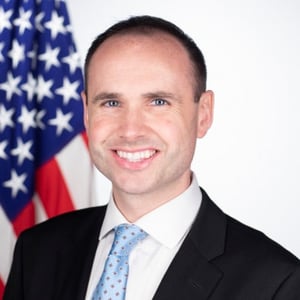
Partner, Jones Day
David Morrell is aPartner at Jones Day. Previously, David oversaw the U.S. Department of Justice's (DOJ) Consumer Protection Branch, which enforces the Food, Drug, and Cosmetic Act (FDCA), the FTC Act, and other laws relating to consumer and health care fraud. David later ran DOJ's Federal Programs Branch, which defends against regulatory challenges to significant government policies and programs in federal district court.
Before DOJ, David served at the White House, where he advised senior Administration officials on a wide range of international trade issues, including the new United States-Mexico-Canada Agreement (USMCA) and tariff actions under Section 301 of the Trade Act of 1974 and other trade remedy laws. In this role, David worked closely with the United States Trade Representative (USTR) and other senior U.S. trade officials.
David's practice builds on his previous tenure at the Firm, during which he represented clients in complex trial and appellate litigation matters. David has argued numerous cases in federal courts across the country, including in the U.S. Court of International Trade. graduated from Yale Law School and Hillsdale College, summa cum laude.
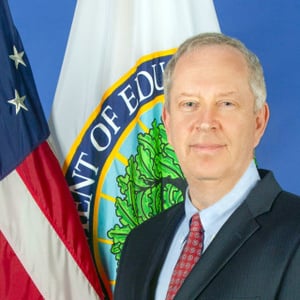
Senior Counselor and Director of Oversight and Investigations, America First Legal Foundation, Cause of Action
Reed D. Rubinstein is Senior Counselor and Director of Oversight and Investigations for the America First Legal Foundation. He has extensive constitutional, administrative, and complex commercial trial and appellate experience, including Executive Branch and Congressional oversight, investigations, and enforcement.
Reed joined the Trump Campaign legal team in February 2016, supported Treasury, DHS, and DOD operations during the Presidential Transition, and entered Federal service in January 2017. As Deputy Associate Attorney General, U.S. Department of Education General Counsel (acting and delegated), and Senior Advisor to the Secretary of the Treasury, Reed fought to protect free speech, religious liberty, and civil rights; combat anti-Semitism; expose Obama/Biden support for the Iranian regime; and defend the Trump Administration against Congressional overreach and leftist lawfare. He played a material role in many Trump Administration actions and Executive Orders and between June 2019 and January 2021, initiated and led twenty-seven civil investigations of U.S. universities for colluding with the Chinese Communist Party, violating foreign money disclosure laws, misrepresenting free speech policies, failing to provide balance in Middle Eastern studies, making false non-discrimination assurances (the Princeton investigation), and consumer fraud.
Reed is a graduate of the University of Michigan Law School and has practiced law since 1985. A former AmLaw 10 shareholder, he spent thirty years in the private practice of law representing manufacturing and retail corporations, financial institutions, trade associations, and individuals in a wide range of matters. Notably, he represented the victims of the Fort Hood terrorist attack, overcoming the Obama Administration, the Pentagon, and House Speaker John Boehner to win them Purple Hearts and medical benefits.
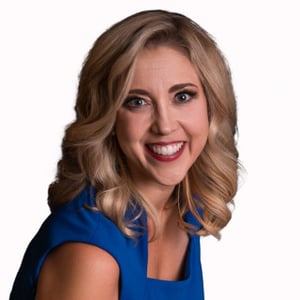
Founder, BrighterSideHR, LLC
Stephanie Holmes is an experienced labor and employment lawyer. She started her legal career at a large, international law firm where she represented employers in a wide variety of labor and employment matters, ranging from single plaintiff to complex class action cases. She then worked as an in-house counsel for a Fortune 500 company for almost a decade. As in-house counsel, Stephanie handled all labor and employment matters in both union and non-union environments. She worked closely with HR, business leaders, and executives on a myriad of employment issues, including policy development and implementation, workplace investigations, hiring processes, reorganizations, training, and questions around the ADA, FMLA, Title VII, FLSA, ADEA, and other federal and state laws.
Stephanie received her B.A. in Political Science and American Studies from Illinois Wesleyan University and her J.D. from The Catholic University of America Columbus School of Law. She is also a trained mediator through the Northwestern University School of Professional Studies and has years of experience helping resolve workplace conflict. Coming from a family of small business owners, Stephanie decided to start her own company and transitioned to consulting.
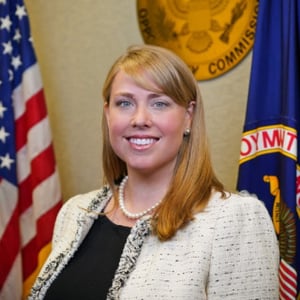
Chair, United States Equal Employment Opportunity Commission
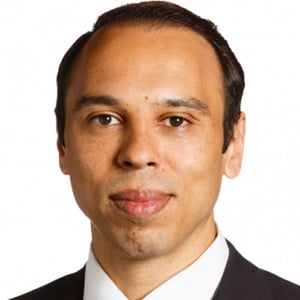
Vice President of Domestic and Economic Policy, The Heritage Foundation
Roger Severino is Vice President of Economic and Domestic Policy, and the Joseph C. and Elizabeth A. Anderlik Fellow at The Heritage Foundation.
Severino is a national authority on civil rights, conscience and religious freedom, the administrative state, and information privacy, particularly as applied to health care law and policy. Find his tweets at @RogerSeverino_.
Severino spearheaded the HHS Accountability Project while a Senior Fellow at EPPC from 2021 to 2023. Previously, Severino was Director of HHS’ Office for Civil Rights, where he led a team of over 250 staff enforcing our nation’s civil rights, conscience and religious freedom, and health information privacy laws. He served from 2017 to 2021 and was the longest-serving OCR director of the past three decades.
Prior to joining HHS, Severino served for two years as Director of the DeVos Center for Religion and Civil Society at Heritage, advocating for life, family, and religious-freedom policies. Before that, he was a trial attorney for seven years at the U.S. Department of Justice’s Civil Rights Division where he enforced the Fair Housing Act and the Civil Rights Act of 1964. Severino started his legal career at the Becket Fund for Religious Liberty, where he was Legal Counsel and Chief Operations Officer and defended the rights of people of all faiths under federal and international law.
Severino has been profiled in The New York Times, The Atlantic, The Wall Street Journal, and The Hill and has appeared on Fox News, CNN, MSNBC, NPR, and PBS, among others. In 2020, The New York Times dubbed him and his wife Carrie, “a conservative power couple” to be reckoned with.
Severino holds a JD from Harvard Law School, a master’s degree in public policy, with highest distinction, from Carnegie Mellon University, and a bachelor’s degree in business from the University of Southern California. He was appointed by President Trump to the Administrative Conference of the United States and is a member of the District of Columbia and the Commonwealth of Virginia bars.
As OCR director, Severino founded the federal government’s first division dedicated exclusively to conscience and religious freedom compliance and enforcement. He enforced the Weldon Amendment for the first time against a state (California) after it coerced families and religious organizations into paying for abortion insurance coverage, leading to a $200 million federal funding disallowance. He also enforced laws protecting pro-life pregnancy resource centers from discrimination by states hostile to their message and enforced laws prohibiting forced participation in abortions by medical professionals.
With respect to civil rights, Severino protected older persons and people with disabilities from being denied life-saving care due to discriminatory “quality of life” judgments, especially during the COVID-19 pandemic. He also achieved a landmark sexual harassment resolution with Michigan State University in the wake of the Larry Nassar sexual assault scandal and protected the rights of non-English speakers to have equal access to health and human services.
In the area of health privacy, he secured the largest HIPAA monetary settlement in history and achieved the largest number of enforcement resolutions both in a single year and across four years. He also facilitated the transformational use of Skype, Zoom, and Facetime for delivery of telehealth during the COVID-19 pandemic and beyond.
His regulatory reform activities resulted in a comprehensive conscience protection regulation and proposed a life-affirming disability rights regulation. He achieved regulatory savings of $3.6 billion in health care industry costs over five years and identified and proposed an additional $3.2 billion in cost savings from the repeal of ineffective and unnecessary regulatory burdens.
Severino is a Spanish speaker who teaches salsa and west coast swing in his spare time.
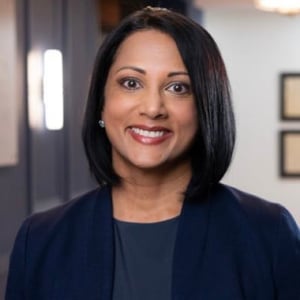
Vice President of Legal Professional Affairs, Blackstone Legal Fellowship
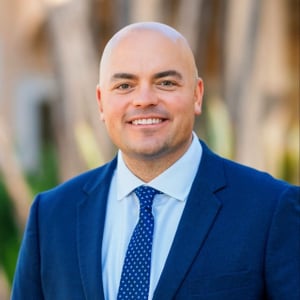
Solicitor General, State of Florida
Previously, David served as Senior Advisor to Florida Governor Ron DeSantis, Chief Deputy Attorney General of Idaho, and Solicitor General of Montana.
As an appointee of President Donald J. Trump, David served as the Principal Deputy General Counsel at the U.S. Department of Commerce, where he advised the Secretary on legal and policy matters implicating every corner of Commerce’s broad mandate. In this role, David worked closely with the White House to advance the President's agenda, and managed the Department’s expansive litigation portfolio. He also defended Department officials in Congressional investigations, and served as Commerce’s Regulatory Reform Officer and Chief Environmental Review Permitting Officer.
David clerked for Judge Lawrence VanDyke on the U.S. Court of Appeals for the Ninth Circuit, and helped create and lead the public interest litigation group at the Freedom Foundation, where he litigated constitutional, labor, and campaign finance cases before federal and state courts and administrative agencies.
David received his B.A. from Western Kentucky University. After a year teaching overseas, David earned his J.D. from The George Washington University Law School, where he served as symposium editor for the Harvard Journal of Law & Public Policy and President of the Federalist Society.
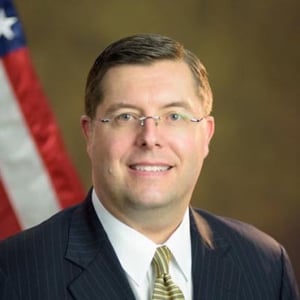
Chief Deputy Attorney General
Ryan Newman is currently Chief Deputy Attorney General for Florida Office of the Attorney General.
During the first Trump Administration, he served as Counselor to the United States Attorney General for national security and international affairs, Deputy General Counsel (Legal Counsel) for the Department of Defense, and Acting Assistant Attorney General for the Office of Legal Policy at the Department of Justice. Prior to serving in the Executive Branch, Ryan was Chief Counsel to United States Senator Ted Cruz during the 114th Congress.
Ryan served as a law clerk to the Honorable Samuel A. Alito, Jr. on the United States Supreme Court, the Honorable Richard J. Leon on the United States District Court for the District of Columbia, and the Honorable J.L. Edmondson on the United States Court of Appeals for the Eleventh Circuit.
Prior to law school, Ryan was an armor officer in the United States Army assigned to the 1st Squadron, 10th U.S. Cavalry Regiment (Buffalo Soldiers). He deployed to Iraq in 2003 for Operation Iraqi Freedom.
Ryan graduated from the United States Military Academy at West Point in 1998. He earned his law degree with high honors from The University of Texas School of Law in 2007.
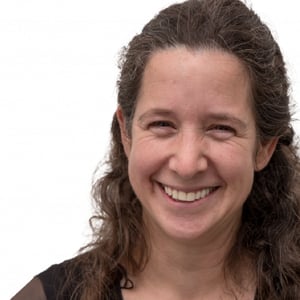
Professor of Law and the James Edgar Hervey '50 Chair of Litigation, UC Hastings Law
Professor Dorit Rubinstein Reiss’ received her undergraduate degree in Law and Political Science from the Faculty of Law in the Hebrew University of Jerusalem and her Ph.D. from the Jurisprudence and Social Policy program in UC Berkeley, writing her dissertation on accountability in the liberalized telecommunications and electricity sectors in England, France and Sweden.
Professor Reiss’ initial research examined accountability of administrative agencies at the state, national and international level, using as case studies the California Public Utility Commission (CPUC), the FAA, and other agencies in the United States and Europe.
Her current research and activities focus on legal and policy issues related to vaccines. She writes about vaccines mandates, policy responses to non-vaccinating, tort issues and administrative issues related to vaccines, and the anti-vaccine movement.
Professor Reiss teaches torts, administrative law, public health law, and several seminars, and appreciates the opportunity to work with UC Hastings’ talented, hardworking body of students.

Professor of Law, Antonin Scalia Law School, George Mason University
ILYA SOMIN is Professor of Law at George Mason University and the B. Kenneth Simon Chair in Constitutional Studies at the Cato Institute. His research focuses on constitutional law, property law, democratic theory, federalism, and migration rights. He is the author of Free to Move: Foot Voting, Migration, and Political Freedom (Oxford University Press, revised and expanded edition, 2022), Democracy and Political Ignorance: Why Smaller Government is Smarter (Stanford University Press, revised and expanded second edition, 2016), and The Grasping Hand: Kelo v. City of New London and the Limits of Eminent Domain (University of Chicago Press, 2015, rev. paperback ed., 2016), coauthor of A Conspiracy Against Obamacare: The Volokh Conspiracy and the Health Care Case (Palgrave Macmillan, 2013), and co-editor of Eminent Domain: A Comparative Perspective (Cambridge University Press, 2017). Democracy and Political Ignorance has been translated into Italian and Japanese.
Somin’s work has appeared in numerous scholarly journals, including the Yale Law Journal, Stanford Law Review, Northwestern University Law Review, Georgetown Law Journal, Critical Review, and others. Somin has also published articles in a variety of popular press outlets, including the New York Times, Washington Post, Wall Street Journal, Los Angeles Times, CNN, NBC, The Atlantic, USA Today, Boston Globe, US News and World Report, South China Morning Post, National Law Journal and Reason. He has been quoted or interviewed by the New York Times, Washington Post, Wall Street Journal, Time, Newsweek, The Economist, the Christian Science Monitor, the Financial Times, The Guardian, the Associated Press, CBS, MSNBC, NPR, BBC, Reuters, the Canadian Broadcasting Corporation, the Australian Broadcasting Corporation, Radio Free Europe/Radio Liberty, Al Jazeera, and the Voice of America, among other media.
Somin’s writings have been cited in decisions by the United States Supreme Court, multiple state supreme courts and lower federal courts, and the Supreme Court of Israel. He is co-counsel for the plaintiffs in VOS Selections, Inc. v. Trump, a case challenging the constitutionality of President Trump’s “Liberation Day” tariffs. Somin has testified on the use of drones for targeted killing in the War on Terror before the US Senate Judiciary Subcommittee on the Constitution, Civil Rights, and Human Rights. In 2009, he testified on property rights issues at the United States Senate Judiciary Committee confirmation hearings for Supreme Court Justice Sonia Sotomayor. Somin writes regularly for the popular Volokh Conspiracy law and politics blog, now affiliated with Reason magazine (previously affiliated with the Washington Post from 2014 to 2017). From 2006 to 2013, he served as Co-Editor of the Supreme Court Economic Review, one of the country’s top-rated law and economics journals.
Somin has served as a visiting professor at the University of Pennsylvania Law School. He has also been a visiting professor or scholar at the Georgetown University Law Center, the University of Hamburg, Germany, the University of Torcuato Di Tella in Buenos Aires, Argentina, Uriel Reichman University in Israel, and Zhengzhou University in China. He is a University Affiliate of the Schar School of Policy and Government at George Mason University, and an affiliated faculty member of the George Mason University Institute for Immigration Research. Before joining the faculty at George Mason, Somin was the John M. Olin Fellow in Law at Northwestern University Law School in 2002-2003. In 2001-2002, he clerked for the Hon. Judge Jerry E. Smith of the U.S. Court of Appeals for the Fifth Circuit. Professor Somin earned his B.A., Summa Cum Laude, at Amherst College, M.A. in Political Science from Harvard University, and J.D. from Yale Law School.
Solicitor General, State of Florida
Previously, David served as Senior Advisor to Florida Governor Ron DeSantis, Chief Deputy Attorney General of Idaho, and Solicitor General of Montana.
As an appointee of President Donald J. Trump, David served as the Principal Deputy General Counsel at the U.S. Department of Commerce, where he advised the Secretary on legal and policy matters implicating every corner of Commerce’s broad mandate. In this role, David worked closely with the White House to advance the President's agenda, and managed the Department’s expansive litigation portfolio. He also defended Department officials in Congressional investigations, and served as Commerce’s Regulatory Reform Officer and Chief Environmental Review Permitting Officer.
David clerked for Judge Lawrence VanDyke on the U.S. Court of Appeals for the Ninth Circuit, and helped create and lead the public interest litigation group at the Freedom Foundation, where he litigated constitutional, labor, and campaign finance cases before federal and state courts and administrative agencies.
David received his B.A. from Western Kentucky University. After a year teaching overseas, David earned his J.D. from The George Washington University Law School, where he served as symposium editor for the Harvard Journal of Law & Public Policy and President of the Federalist Society.
Chief Deputy Attorney General
Ryan Newman is currently Chief Deputy Attorney General for Florida Office of the Attorney General.
During the first Trump Administration, he served as Counselor to the United States Attorney General for national security and international affairs, Deputy General Counsel (Legal Counsel) for the Department of Defense, and Acting Assistant Attorney General for the Office of Legal Policy at the Department of Justice. Prior to serving in the Executive Branch, Ryan was Chief Counsel to United States Senator Ted Cruz during the 114th Congress.
Ryan served as a law clerk to the Honorable Samuel A. Alito, Jr. on the United States Supreme Court, the Honorable Richard J. Leon on the United States District Court for the District of Columbia, and the Honorable J.L. Edmondson on the United States Court of Appeals for the Eleventh Circuit.
Prior to law school, Ryan was an armor officer in the United States Army assigned to the 1st Squadron, 10th U.S. Cavalry Regiment (Buffalo Soldiers). He deployed to Iraq in 2003 for Operation Iraqi Freedom.
Ryan graduated from the United States Military Academy at West Point in 1998. He earned his law degree with high honors from The University of Texas School of Law in 2007.
Professor of Law and the James Edgar Hervey '50 Chair of Litigation, UC Hastings Law
Professor Dorit Rubinstein Reiss’ received her undergraduate degree in Law and Political Science from the Faculty of Law in the Hebrew University of Jerusalem and her Ph.D. from the Jurisprudence and Social Policy program in UC Berkeley, writing her dissertation on accountability in the liberalized telecommunications and electricity sectors in England, France and Sweden.
Professor Reiss’ initial research examined accountability of administrative agencies at the state, national and international level, using as case studies the California Public Utility Commission (CPUC), the FAA, and other agencies in the United States and Europe.
Her current research and activities focus on legal and policy issues related to vaccines. She writes about vaccines mandates, policy responses to non-vaccinating, tort issues and administrative issues related to vaccines, and the anti-vaccine movement.
Professor Reiss teaches torts, administrative law, public health law, and several seminars, and appreciates the opportunity to work with UC Hastings’ talented, hardworking body of students.
Professor of Law, Antonin Scalia Law School, George Mason University
ILYA SOMIN is Professor of Law at George Mason University and the B. Kenneth Simon Chair in Constitutional Studies at the Cato Institute. His research focuses on constitutional law, property law, democratic theory, federalism, and migration rights. He is the author of Free to Move: Foot Voting, Migration, and Political Freedom (Oxford University Press, revised and expanded edition, 2022), Democracy and Political Ignorance: Why Smaller Government is Smarter (Stanford University Press, revised and expanded second edition, 2016), and The Grasping Hand: Kelo v. City of New London and the Limits of Eminent Domain (University of Chicago Press, 2015, rev. paperback ed., 2016), coauthor of A Conspiracy Against Obamacare: The Volokh Conspiracy and the Health Care Case (Palgrave Macmillan, 2013), and co-editor of Eminent Domain: A Comparative Perspective (Cambridge University Press, 2017). Democracy and Political Ignorance has been translated into Italian and Japanese.
Somin’s work has appeared in numerous scholarly journals, including the Yale Law Journal, Stanford Law Review, Northwestern University Law Review, Georgetown Law Journal, Critical Review, and others. Somin has also published articles in a variety of popular press outlets, including the New York Times, Washington Post, Wall Street Journal, Los Angeles Times, CNN, NBC, The Atlantic, USA Today, Boston Globe, US News and World Report, South China Morning Post, National Law Journal and Reason. He has been quoted or interviewed by the New York Times, Washington Post, Wall Street Journal, Time, Newsweek, The Economist, the Christian Science Monitor, the Financial Times, The Guardian, the Associated Press, CBS, MSNBC, NPR, BBC, Reuters, the Canadian Broadcasting Corporation, the Australian Broadcasting Corporation, Radio Free Europe/Radio Liberty, Al Jazeera, and the Voice of America, among other media.
Somin’s writings have been cited in decisions by the United States Supreme Court, multiple state supreme courts and lower federal courts, and the Supreme Court of Israel. He is co-counsel for the plaintiffs in VOS Selections, Inc. v. Trump, a case challenging the constitutionality of President Trump’s “Liberation Day” tariffs. Somin has testified on the use of drones for targeted killing in the War on Terror before the US Senate Judiciary Subcommittee on the Constitution, Civil Rights, and Human Rights. In 2009, he testified on property rights issues at the United States Senate Judiciary Committee confirmation hearings for Supreme Court Justice Sonia Sotomayor. Somin writes regularly for the popular Volokh Conspiracy law and politics blog, now affiliated with Reason magazine (previously affiliated with the Washington Post from 2014 to 2017). From 2006 to 2013, he served as Co-Editor of the Supreme Court Economic Review, one of the country’s top-rated law and economics journals.
Somin has served as a visiting professor at the University of Pennsylvania Law School. He has also been a visiting professor or scholar at the Georgetown University Law Center, the University of Hamburg, Germany, the University of Torcuato Di Tella in Buenos Aires, Argentina, Uriel Reichman University in Israel, and Zhengzhou University in China. He is a University Affiliate of the Schar School of Policy and Government at George Mason University, and an affiliated faculty member of the George Mason University Institute for Immigration Research. Before joining the faculty at George Mason, Somin was the John M. Olin Fellow in Law at Northwestern University Law School in 2002-2003. In 2001-2002, he clerked for the Hon. Judge Jerry E. Smith of the U.S. Court of Appeals for the Fifth Circuit. Professor Somin earned his B.A., Summa Cum Laude, at Amherst College, M.A. in Political Science from Harvard University, and J.D. from Yale Law School.
Solicitor General, State of Florida
Previously, David served as Senior Advisor to Florida Governor Ron DeSantis, Chief Deputy Attorney General of Idaho, and Solicitor General of Montana.
As an appointee of President Donald J. Trump, David served as the Principal Deputy General Counsel at the U.S. Department of Commerce, where he advised the Secretary on legal and policy matters implicating every corner of Commerce’s broad mandate. In this role, David worked closely with the White House to advance the President's agenda, and managed the Department’s expansive litigation portfolio. He also defended Department officials in Congressional investigations, and served as Commerce’s Regulatory Reform Officer and Chief Environmental Review Permitting Officer.
David clerked for Judge Lawrence VanDyke on the U.S. Court of Appeals for the Ninth Circuit, and helped create and lead the public interest litigation group at the Freedom Foundation, where he litigated constitutional, labor, and campaign finance cases before federal and state courts and administrative agencies.
David received his B.A. from Western Kentucky University. After a year teaching overseas, David earned his J.D. from The George Washington University Law School, where he served as symposium editor for the Harvard Journal of Law & Public Policy and President of the Federalist Society.
Chief Deputy Attorney General
Ryan Newman is currently Chief Deputy Attorney General for Florida Office of the Attorney General.
During the first Trump Administration, he served as Counselor to the United States Attorney General for national security and international affairs, Deputy General Counsel (Legal Counsel) for the Department of Defense, and Acting Assistant Attorney General for the Office of Legal Policy at the Department of Justice. Prior to serving in the Executive Branch, Ryan was Chief Counsel to United States Senator Ted Cruz during the 114th Congress.
Ryan served as a law clerk to the Honorable Samuel A. Alito, Jr. on the United States Supreme Court, the Honorable Richard J. Leon on the United States District Court for the District of Columbia, and the Honorable J.L. Edmondson on the United States Court of Appeals for the Eleventh Circuit.
Prior to law school, Ryan was an armor officer in the United States Army assigned to the 1st Squadron, 10th U.S. Cavalry Regiment (Buffalo Soldiers). He deployed to Iraq in 2003 for Operation Iraqi Freedom.
Ryan graduated from the United States Military Academy at West Point in 1998. He earned his law degree with high honors from The University of Texas School of Law in 2007.
Professor of Law and the James Edgar Hervey '50 Chair of Litigation, UC Hastings Law
Professor Dorit Rubinstein Reiss’ received her undergraduate degree in Law and Political Science from the Faculty of Law in the Hebrew University of Jerusalem and her Ph.D. from the Jurisprudence and Social Policy program in UC Berkeley, writing her dissertation on accountability in the liberalized telecommunications and electricity sectors in England, France and Sweden.
Professor Reiss’ initial research examined accountability of administrative agencies at the state, national and international level, using as case studies the California Public Utility Commission (CPUC), the FAA, and other agencies in the United States and Europe.
Her current research and activities focus on legal and policy issues related to vaccines. She writes about vaccines mandates, policy responses to non-vaccinating, tort issues and administrative issues related to vaccines, and the anti-vaccine movement.
Professor Reiss teaches torts, administrative law, public health law, and several seminars, and appreciates the opportunity to work with UC Hastings’ talented, hardworking body of students.
Professor of Law, Antonin Scalia Law School, George Mason University
ILYA SOMIN is Professor of Law at George Mason University and the B. Kenneth Simon Chair in Constitutional Studies at the Cato Institute. His research focuses on constitutional law, property law, democratic theory, federalism, and migration rights. He is the author of Free to Move: Foot Voting, Migration, and Political Freedom (Oxford University Press, revised and expanded edition, 2022), Democracy and Political Ignorance: Why Smaller Government is Smarter (Stanford University Press, revised and expanded second edition, 2016), and The Grasping Hand: Kelo v. City of New London and the Limits of Eminent Domain (University of Chicago Press, 2015, rev. paperback ed., 2016), coauthor of A Conspiracy Against Obamacare: The Volokh Conspiracy and the Health Care Case (Palgrave Macmillan, 2013), and co-editor of Eminent Domain: A Comparative Perspective (Cambridge University Press, 2017). Democracy and Political Ignorance has been translated into Italian and Japanese.
Somin’s work has appeared in numerous scholarly journals, including the Yale Law Journal, Stanford Law Review, Northwestern University Law Review, Georgetown Law Journal, Critical Review, and others. Somin has also published articles in a variety of popular press outlets, including the New York Times, Washington Post, Wall Street Journal, Los Angeles Times, CNN, NBC, The Atlantic, USA Today, Boston Globe, US News and World Report, South China Morning Post, National Law Journal and Reason. He has been quoted or interviewed by the New York Times, Washington Post, Wall Street Journal, Time, Newsweek, The Economist, the Christian Science Monitor, the Financial Times, The Guardian, the Associated Press, CBS, MSNBC, NPR, BBC, Reuters, the Canadian Broadcasting Corporation, the Australian Broadcasting Corporation, Radio Free Europe/Radio Liberty, Al Jazeera, and the Voice of America, among other media.
Somin’s writings have been cited in decisions by the United States Supreme Court, multiple state supreme courts and lower federal courts, and the Supreme Court of Israel. He is co-counsel for the plaintiffs in VOS Selections, Inc. v. Trump, a case challenging the constitutionality of President Trump’s “Liberation Day” tariffs. Somin has testified on the use of drones for targeted killing in the War on Terror before the US Senate Judiciary Subcommittee on the Constitution, Civil Rights, and Human Rights. In 2009, he testified on property rights issues at the United States Senate Judiciary Committee confirmation hearings for Supreme Court Justice Sonia Sotomayor. Somin writes regularly for the popular Volokh Conspiracy law and politics blog, now affiliated with Reason magazine (previously affiliated with the Washington Post from 2014 to 2017). From 2006 to 2013, he served as Co-Editor of the Supreme Court Economic Review, one of the country’s top-rated law and economics journals.
Somin has served as a visiting professor at the University of Pennsylvania Law School. He has also been a visiting professor or scholar at the Georgetown University Law Center, the University of Hamburg, Germany, the University of Torcuato Di Tella in Buenos Aires, Argentina, Uriel Reichman University in Israel, and Zhengzhou University in China. He is a University Affiliate of the Schar School of Policy and Government at George Mason University, and an affiliated faculty member of the George Mason University Institute for Immigration Research. Before joining the faculty at George Mason, Somin was the John M. Olin Fellow in Law at Northwestern University Law School in 2002-2003. In 2001-2002, he clerked for the Hon. Judge Jerry E. Smith of the U.S. Court of Appeals for the Fifth Circuit. Professor Somin earned his B.A., Summa Cum Laude, at Amherst College, M.A. in Political Science from Harvard University, and J.D. from Yale Law School.

Panel 2: Navigating Investigations and Rulemakings
Chicago, ILSecond Annual In-House Counsel Network Conference
Chicago, ILWork Different: Finding the opportunities that match your priorities
2022 National Lawyers Convention
Washington, DCVaccine Policy: Who Decides?
David Dewhirst, Ryan Dean Newman, Dorit Reiss, Ilya Somin, Kate Comerford Todd
The Supreme Court recently issued its decisions in two federal vaccine mandate cases. Several states...
Vaccine Policy: Who Decides?
David Dewhirst, Ryan Dean Newman, Dorit Reiss, Ilya Somin, Kate Comerford Todd
The Supreme Court recently issued its decisions in two federal vaccine mandate cases. Several states...
Vaccine Policy: Who Decides?
Teleforum