

McCormick Professor of Jurisprudence; Director, James Madison Program, Princeton University
Robert P. George is McCormick Professor of Jurisprudence and Director of the James Madison Program in American Ideals and Institutions at Princeton University. He has several times been a Visiting Professor at Harvard Law School. He has served as Chairman of the U.S. Commission on International Religious Freedom and on the U.S. Commission on Civil Rights and the President’s Council on Bioethics. He has also served as the U.S. member of UNESCO’s World Commission on the Ethics of Scientific Knowledge and Technology. He was a Judicial Fellow at the Supreme Court of the United States, where he received the Justice Tom C. Clark Award. A Phi Beta Kappa graduate of Swarthmore, he holds the degrees of J.D. and M.T.S. from Harvard University and the degrees of D.Phil., B.C.L., D.C.L., and D.Litt. from Oxford University, in addition to twenty-one honorary doctorates. He is a recipient of the U.S. Presidential Citizens Medal, the Honorific Medal for the Defense of Human Rights of the Republic of Poland, the Canterbury Medal of the Becket Fund for Religious Liberty, the Bradley Prize, the Irving Kristol Award of the American Enterprise Institute, and Princeton University’s President’s Award for Distinguished Teaching. His books include Making Men Moral: Civil Liberties and Public Morality and In Defense of Natural Law (both published by Oxford University Press), as well as The Clash of Orthodoxies and Conscience and Its Enemies (both published by ISI Books).

Former President & CEO, The Federalist Society for Law and Public Policy Studies
Eugene B. Meyer, former President and CEO of the Federalist Society, has served as Executive Director, CEO, and/or President of the organization for more than 40 years. He is responsible for shepherding the organization from a small group of law students to a community of 90,000 lawyers, law students, academics, judges, and others interested in the rule of law. The Society now includes a Student Chapter at nearly every ABA-accredited law school in the country and Lawyers Chapters in 220 major cities across the nation. Gene earned his B.A. in history at Yale in 1975 and his M.A. in political science from the London School of Economics in 1976. Gene currently serves on the boards of the U.S. Chess Center, the Holman Foundation, the Sarah Scaife Foundation, and the advisory board of the Adam Smith Society. He holds the title of International Chess Master.
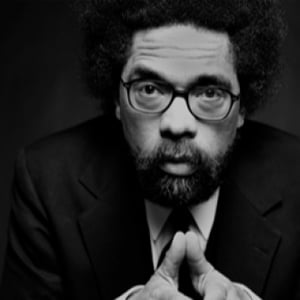
Professor of the Practice of Public Philosophy, Harvard University
Cornel West is a prominent and provocative democratic intellectual. He is Professor of the Practice of Public Philosophy at Harvard University and holds the title of Professor Emeritus at Princeton University. He has also taught at Union Theological Seminary, Yale, Harvard, Dartmouth College, and the University of Paris. Cornel West graduated Magna Cum Laude from Harvard in three years and obtained his M.A. and Ph.D. in Philosophy at Princeton. He has written 20 books and has edited 13. He is best known for his classics -- Democracy Matters and Race Matters -- which recently celebrated the 25th Anniversary of its debut with a new edition. His memoir Brother West: Living and Loving Out Loud, and Black Prophetic Fire have also received much critical acclaim. Dr. West is a frequent guest on the Bill Maher Show, Colbert Report, CNN, C-Span and Democracy Now.
He made his film debut in the Matrix – and was the commentator (with Ken Wilbur) on the official trilogy released in 2004. He also has appeared in over 25 documentaries and films including Examined Life, Call & Response, Sidewalk and Stand.
Last, he has made three spoken word albums including Never Forget, collaborating with Prince, Jill Scott, Andre 3000, Talib Kweli, KRS-One and the late Gerald Levert. His spoken word interludes were featured on Terence Blanchard’s Choices (which won the Grand Prix in France for the best Jazz Album of the year of 2009), The Cornel West Theory’s Second Rome, Raheem DeVaughn’s Grammy-nominated Love & War: Masterpeace, and most recently on Bootsy Collins’ The Funk Capital of the World. In short, Cornel West has a passion to communicate to a vast variety of publics in order to keep alive the legacy of Martin Luther King, Jr. – a legacy of telling the truth and bearing witness to love and justice.
He currently co-hosts a podcast – “The Tight Rope” with Professor Tricia Rose.
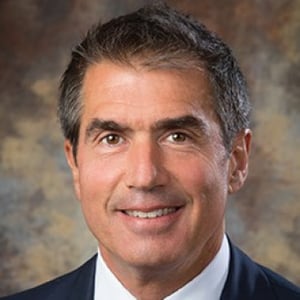
Vice Chairman, Caris Life Sciences
Brian J. Brille joined Caris Life Sciences in January of 2018 as Vice Chairman of the Company. Mr. Brille currently provides executive leadership for strategic, corporate and business development activities. He is also a member of the Board of Directors.
Prior to joining Caris Life Sciences, Mr. Brille worked in various capacities for Bank of America Merrill Lynch since 2009. Most recently, Mr. Brille was based in Hong Kong and served as Chairman/President Asia Pacific for Bank of America Merrill Lynch, with responsibility for the combined Asia Pacific platform across 12 countries and 4 business lines. Prior to this, he served as Global Head of Corporate & Investment Banking at Bank of America. He was also responsible for building and leading Bank of America’s Healthcare Corporate & Investment Banking business, as well as previously establishing and leading Morgan Stanley’s Healthcare Services Group. In 2003, he was named Investment Dealer’s Digest Banker of the Year.
Mr. Brille holds a JD from Stanford Law School, a Masters of Public Policy from Harvard’s Kennedy School of Government, and a BS in Accounting from the University of Illinois. Mr. Brille currently serves on the Asia Pacific Council of The Nature Conservancy, and is a member of the Board of Overseers of the Museum of Fine Arts in Boston.
Former Dean, Stanford Law School
John Hart Ely was one of the most important constitutional scholars of his generation. He was born in 1938 and died in 2003. As a summer associate following his second year at YLS, Ely assisted Abe Fortas in litigating Gideon v. Wainwright, the landmark Supreme Court decision that established a criminal defendant's right to counsel. After graduating from Yale, Ely served as a staff attorney on the Warren Commission, and then clerked for Chief Justice Earl Warren before going on to serve as a public defender in San Diego. Later in his career, he served as General Counsel of the Department of Transportation during the Ford Administration.
Ely taught at Yale Law School, Harvard Law School, Stanford Law School, and the University of Miami School of Law and served as dean at Stanford. In 1980, Ely published the highly influential Democracy and Distrust, which developed a theory of judicial review that emphasized the role of the courts in safeguarding the democratic process. In 1993, Ely published War and Responsibility, a comprehensive constitutional analysis of war powers. His last book, On Constitutional Ground, was published in 1996 and covers a variety of constitutional law issues, including federalism and criminal procedure.
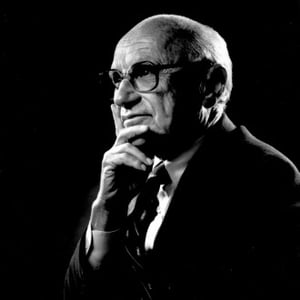
Nobel Laureate
Milton Friedman, recipient of the 1976 Nobel Prize for Economic Science, was a Senior Research Fellow at the Hoover Institution, Stanford University, from 1977 to 2006. He was also Paul Snowden Russell Distinguished Service Professor Emeritus of Economics at the University of Chicago, where he taught from 1946 to 1976, and was a member of the research staff of the National Bureau of Economic Research from 1937 to 1981.
Professor Friedman was awarded the Presidential Medal of Freedom in 1988 and received the National Medal of Science the same year. He is widely regarded as the leader of the Chicago School of monetary economics, which stresses the importance of the quantity of money as an instrument of government policy and as a determinant of business cycles and inflation.
In addition to his scientific work, Professor Friedman had also written extensively on public policy, always with primary emphasis on the preservation and extension of individual freedom. His most important books in this field are (with Rose D. Friedman) Capitalism and Freedom (University of Chicago Press, 1962); Bright Promises, Dismal Performance (Thomas Horton and Daughters, 1983), which consists mostly of reprints of tri-weekly columns that he wrote for Newsweek from 1966 to 1983; and (with Rose Friedman) Free to Choose (Harcourt Brace Jovanovich, 1980), which complements a ten-part TV series of the same name, shown over PBS in early 1980, and (with Rose D. Friedman) Tyranny of the Status Quo (Harcourt Brace Jovanovich, 1984), which complements a three-part TV series of the same name, shown over PBS in early 1984.
He was a member of the President’s Commission on an All-Volunteer Armed Force (1969-70) and of the President’s Commission on White House Fellows (1971-73). He was a member of President Reagan’s Economic Policy Advisory Board, a group of experts outside the government, named in early 1981 by President Reagan.
He had also been active in public affairs, serving as an informal economic adviser to Senator Goldwater in his unsuccessful campaign for the presidency in 1964, to Richard Nixon in his successful campaign in 1968, to President Nixon subsequently, and to Ronald Reagan in his 1980 campaign.
He had published many books and articles, most notably A Theory of the Consumption Function (University of Chicago Press, 1957), The Optimum Quantity of Money and Other Essays (Aldine, 1969), and (with A. J. Schwartz) A Monetary History of the United States (Princeton University Press, 1963), Monetary Statistics of the United States (Columbia University Press, 1970), and Monetary Trends in the United States and the United Kingdom (University of Chicago Press, 1982).
Professor Friedman was a past president of the American Economic Association, the Western Economic Association, and the Mont Pelerin Society, and is a member of the American Philosophical Society and of the National Academy of Sciences.
He also had been awarded honorary degrees by universities in the United States, Japan, Israel, and Guatemala, as well as the Grand Cordon of the First Class Order of the Sacred Treasure by the Japanese government in 1986.
Friedman received a B.A. in 1932 from Rutgers University, an M.A. in 1933 from the University of Chicago, and a Ph.D. in 1946 from Columbia University.
He and his wife established the Milton and Rose D. Friedman Foundation, for the purpose of promoting parental choice of the schools their children attend. The Foundation is based in Indianapolis and its president and chief executive officer is Robert C. Enlow.
He and his wife published their memoirs: Milton and Rose D. Friedman, Two Lucky People: Memoirs (University of Chicago Press, 1998).
On November 16, 2006, Dr. Friedman passed away at the age of 94 in San Francisco.
President, Oklahoma City University
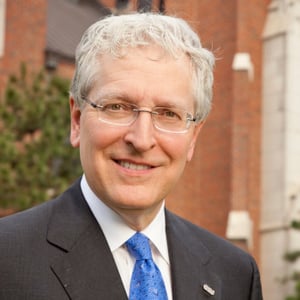
Robert Henry is the 17th president of Oklahoma City University. He is a member of the Council on Foreign Relations, a member of the American Bar Association, serving as Chair of the Middle East and North Africa Council, board member of the Rule of Law Initiative, and was a board member of the Committee for the Africa Law Initiative Council. He is a member of the Judicial Advisory Board of the American Society of International Law. Henry is also a member of the American Law Institute, the Oklahoma Bar Association, the National Conference of Commissioners on Uniform State Law and the William J. Holloway Jr. American Inn of the Court, Master of the Court. He has served on the Civil Justice Reform Act Advisory Group, the Oklahoma Constitutional Revision Committee and the National Association of Attorneys General (Committees on Agricultural Law, Civil Rights, and Supreme Court Advocacy).
He returns to OCU after having served as Chief Judge of the United States Court of Appeals for the Tenth Circuit. Henry has a long-standing relationship with OCU, serving as Dean of the OCU School of Law and tenured Professor of Law from 1991-1994. He taught graduate and undergraduate courses at OCU and has been a frequent guest lecturer.
Henry has been a lifelong advocate for common and higher education. He co-authored the legislation that established the Oklahoma School of Science and Mathematics (OSSM), established the Sen. Penny Williams Lecture in Arts and Sciences at OSSM, and established the Henry Family Lecture Series at the University of Oklahoma College of Law and was the co-founder of the Oklahoma Symposium.
Henry has served on the Court of Appeals for 16 years. Prior to his appointment to the Court by President William J. Clinton, Henry served as Attorney General of the State of Oklahoma. He served ten years as a state representative in the Oklahoma House of Representatives, where he was Chair of the Majority Caucus, and Chair of the Committees on the Judiciary, Common Education and Appropriations and Budget Committee - General Government and Judiciary.
In addition to teaching at OCU, Henry also taught at the University of Oklahoma Honors College, Oxford Program; University of Oklahoma College of Law, served as Distinguished Judge in Residence, University of Tulsa College of Law and taught Business Law at Oklahoma Baptist University. He was a former chairman of the Board of Trustees of St. Gregory's College. He practiced law in Shawnee, Oklahoma for ten years.
Henry serves on the Committee on International Judicial Relations of the Judicial Conference of the United States, which he chaired from July 2005 – May 2008. He has also served on the Committee on Codes of Conduct of the Judicial Conference of the United States. He is also a Director and Honorary Lifetime Member of the Tenth Judicial Circuit's Historical Society Committee, and a member of the Tenth Judicial Circuit Court of Appeals Lawyer's Advisory Committee. He serves on the Board of Directors of the VERA Institute of Justice in New York; the Foundation for the Future, based in Amman, Jordan; and the Oklahoma Medical Research Foundation; on the Board of Visitors of the University of Oklahoma International Programs Center and Honors College; and on the Board of Advisors of the Jasmine Moran Foundation Children's Museum and the Columbia University National State Attorneys General Program.
The recipient of many honors and awards, Henry was inducted into the 2008 Oklahoma Hall of Fame. He was named "The Honored One," Oklahoma Sovereignty Symposium, Supreme Court of Oklahoma, 2008; received Certificate of Appreciation, US Department of State, 2008 and the Certificate of Gratitude, Council of Judges of the Russian Federation and Justice for substantial contribution to the development of relations between American and Russian Judges. Henry received the Distinguished Alumni award, University of Oklahoma Arts & Sciences, 2004; the E.T. Dunlap Award for Public Service, Southeastern Oklahoma University, 1998; Humanitarian of the Year Award, National Conference of Community and Justice, 1996. In 1993, Henry received the Myrtle Wreath Award for Humanitarianism, Oklahoma City Chapter of Hadassah; Conservationist of the Year, Oklahoma Wildlife Federation, 1989; Oklahoma Human Rights Award, Oklahoma Human Rights Commission, 1988; and Outstanding Young Oklahoman, Oklahoma Jaycees, 1988; the A. C. Hamlin Award, National Black Caucus of State Legislatures, 1984.
Henry has authored numerous chapters in a variety of volumes including: "Civil Rights Movement" in The Encyclopedia of Oklahoma History and Culture; "The Rehnquist Court: A Schwartzian Critique," in The Rehnquist Court: Farewell to the Old Order?; and "The Play and The Players," in The Burger Court: Counter-Revolution or Confirmation?. He was the principal author and narrator for the Oklahoma Educational Television Authority's series on arts and culture, "The People's Art," which received "Best of the Best" (program production) and also named 2008's finest news and information program for 2008 by the National Educational Telecommunications Association (NETA). In addition, Henry has authored scores of law review articles, scholarly journal articles and other published works. Henry serves as outside evaluator, reader, and columnist for World Literature Today Magazine, University of Oklahoma Press, Oklahoma Today, and Oklahoma Gazette.
Henry is married to Dr. Jan Ralls Henry, an Oklahoma City dentist, who will serve as first lady of Oklahoma City University. President and Dr. Henry reside in Wilson House on the OCU campus.
He has two children and four stepchildren: Rachel Henry, a recent graduate of the Tisch School of the Arts at New York University; Joshua Henry, a junior at OCU; Amie Bostian, a speech therapist in Edmond; Scott Ralls, a graphic designer in Seattle; Greg Ralls, an airline pilot in Edmond; and Daniel Ralls, an architect in Seattle.
Partner, Spencer Fane LLP
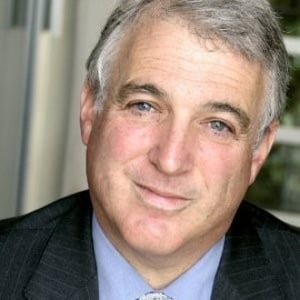
Andy Lester has a civil litigation and appellate practice in both state and federal court. His fields of emphasis include complex business, civil rights, commercial, constitutional, and state and local government law. He has faced off against the White House over the use of Executive Privilege, has appeared as counsel before committees of the United States Senate and the United States House of Representatives, and has been a featured guest on television shows such as Hardball with Chris Matthews and The Situation Room with Wolf Blitzer. He has also served as Acting General Counsel for the Oklahoma House of Representatives, and has twice served as Chief Counsel to Special House Committees investigating public corruption.
While in law school, Lester served on President Ronald Reagan’s Transition Team for the Equal Employment Opportunity Commission. In 2002, he chaired Governor Brad Henry’s Law Enforcement/Corrections Transition Team and, as a member of the Budget/Finance Transition Team, helped write Governor Henry’s first State budget.
He is a former United States Magistrate Judge for the Western District of Oklahoma, and has served as Adjunct Professor at Oklahoma City University School of Law, having taught State & Local Government, Employment Law, Criminal Law, and International Law. Lester has written over 100 articles and papers on professional and public policy issues, and has published one book, Constitutional Law and Democracy, a collection of speeches he gave in 1993 in the former Soviet Union.
Lester is a former member of the Oklahoma State Regents for Higher Education, and in 2019 was named a State Regent Emeritus. He served on the board of Eureka College (President Reagan’s alma mater), is a former chairman of the Oklahoma Advisory Committee for the United States Commission on Civil Rights, and is a past president, past board chairman, and current board member of the Tenth Circuit Historical Society. He co-chaired the bipartisan Oklahoma Death Penalty Review Commission, which conducted the first-ever independent, objective, and thorough review of the state’s entire capital punishment system.
In 2012, Lester was named Citizen of the Year of Edmond, Oklahoma. He is a past president of the Rotary Club of Edmond, and in 2011 was named Rotarian of the Year.
Of Counsel, Crowe & Dunlevy
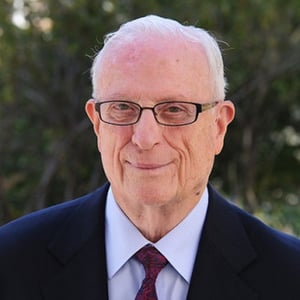
Highly distinguished and respected, William G. Paul serves as an of counsel attorney in the Firm’s Oklahoma City office. His areas of practice encompass alternative dispute resolution, commercial transactions, corporate governance, and trusts and estates law.
William’s prestige and respect are evidenced by his leadership in various professional organizations. He has served as president of both the Oklahoma and American Bar Associations, the American Bar Endowment, the Oklahoma County Bar Association, and the National Conference of Bar Presidents to name a few.
Judge, United States Court of Appeals, District of Columbia Circuit
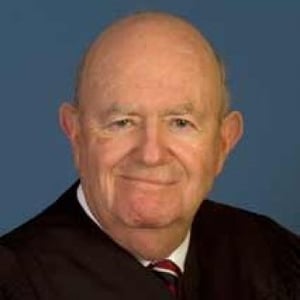
LAURENCE HIRSCH SILBERMAN, senior circuit judge; recipient of the Presidential Medal of Freedom, June 19, 2008; born in York, PA, October 12, 1935; son of William Silberman and Anna (Hirsch); married to Rosalie G. Gaull on April 28, 1957 (deceased), married Patricia Winn on January 5, 2008; children: Robert Steven Silberman, Katherine DeBoer Fischer, and Anne Gaull Otis; B.A., Dartmouth College, 1957; LL.B., Harvard Law School, 1961; admitted to Hawaii Bar, 1962; District of Columbia Bar, 1973; associate, Moore, Torkildson and Rice, 1961–64; partner (Moore, Silberman and Schulze), Honolulu, 1964–67; attorney, National Labor Relations Board, Office of General Counsel, Appellate Division, 1967–69; Solicitor, Department of Labor, 1969–70; Under Secretary of Labor, 1970–73; partner, Steptoe and Johnson, 1973–74; Deputy Attorney General of the United States, 1974–75; Ambassador to Yugoslavia, 1975–77; President’s Special Envoy on ILO Affairs, 1976; senior fellow, American Enterprise Institute, 1977–78; visiting fellow, 1978–85; managing partner, Morrison and Foerster, 1978–79 and 1983–85; executive vice president, Crocker National Bank, 1979–83; lecturer, University of Hawaii, 1962–63; board of directors, Commission on Present Danger, 1978–85, Institute for Educational Affairs, New York, NY, 1981–85, member: General Advisory Committee on Arms Control and Disarmament, 1981–85; Defense Policy Board, 1981–85; vice chairman, State Department’s Commission on Security and Economic Assistance, 1983–84; American Bar Association (Labor Law Committee, 1965–72, Corporations and Banking Committee, 1973, Law and National Security Advisory Committee, 1981–85); Hawaii Bar Association Ethics Committee, 1965–67; Council on Foreign Relations, 1977–present; Judicial Conference Committee on Court Administration and Case Management, 1994; member, U.S. Foreign Intelligence Surveillance Act Court of Review, 1996–2003; Adjunct Professor of Law (Administrative Law and Labor Law) Georgetown Law Center, 1987–94; 1997; Adjunct Professor of Law, Harvard Law School, 1994-95, Adjunct Professor of Law, New York University Law School, 1995–96; Distinguished Visitor from the Judiciary, Georgetown Law Center, 2003–2019; co-chairman of the President’s Commission on The Intelligence Capabilities of the United States Regarding Weapons of Mass Destruction, 2004–05; appointed to the U.S. Court of Appeals for the District of Columbia Circuit by President Reagan on October 28, 1985.
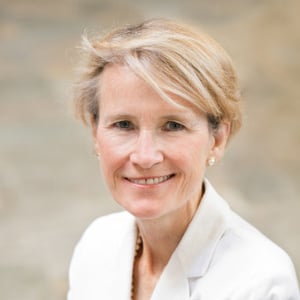
Professor, The University of Texas at Austin
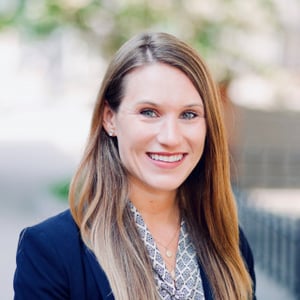
Counsel, Becket Fund for Religious Liberty
Amanda Salz is counsel at the Becket Fund for Religious Liberty, where her practice focuses on First Amendment litigation at both the trial and appellate levels. She is also a member of the Federalist Society’s Religious Liberties Executive Committee.
Before joining Becket, Amanda worked as an associate at Morgan, Lewis & Bockius LLP. As a member of the firm’s appellate group, Amanda litigated many cases involving constitutional and administrative issues. In addition to her experience in private practice, Amanda clerked for the Honorable Andrew S. Oldham of the U.S. Court of Appeals for the Fifth Circuit and the Honorable Reed C. O’Connor of the U.S. District Court for the Northern District of Texas.
Vice President of Speakers, Texas Student Chapter
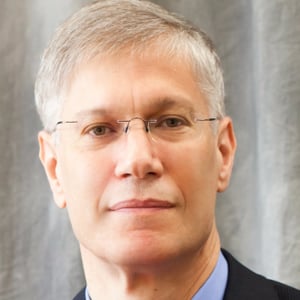
Chairman of the Board, The Ayn Rand Institute
Yaron Brook is chairman of the board of the Ayn Rand Institute. He wears many hats at the institute and travels extensively as ARI’s spokesman.
Brook can be heard weekly on The Yaron Brook Show, which airs live on the BlogTalkRadio podcast. He is also a frequent guest on national radio and television programs.
An internationally sought-after speaker and debater, Brook also pens works that make one think. As coauthor, with Don Watkins, of the national best-seller Free Market Revolution: How Ayn Rand's Ideas Can End Big Government, Brook and Watkins argue that the answer to our current economic woes lies not in "trickle-down government" but in Rand's inspiring philosophy of capitalism and self-interest. Last year, Brook and Watkins released a new book, Equal Is Unfair: America's Misguided Fight Against Income Inequality, a book that shows the real key to making America a freer, fairer, more prosperous nation is to protect and celebrate the pursuit of success―not pull down the high fliers in the name of equality. Brook is also contributing author to Neoconservatism: An Obituary for an Idea, Winning the Unwinnable War: America’s Self-Crippled Response to Islamic Totalitarianism and Big Tent: The Story of the Conservative Revolution — As Told by the Thinkers and Doers Who Made It Happen. He was a columnist at Forbes.com, and his articles have been featured in the Wall Street Journal, USA Today, Investor’s Business Daily and many other publications.
Brook was born and raised in Israel. He served as a first sergeant in Israeli military intelligence and earned a BSc in civil engineering from Technion-Israel Institute of Technology in Haifa, Israel. In 1987 he moved to the United States where he received his MBA and PhD in finance from the University of Texas at Austin; he became an American citizen in 2003. For seven years he was an award-winning finance professor at Santa Clara University, and in 1998 he cofounded BH Equity Research, a private equity and hedge fund manager, of which he is managing founder and director.
Brook serves on the boards of the Ayn Rand Institute, the Clemson Institute for the Study of Capitalism and CEHE (Center for Excellence in Higher Education), and he is a member of the Association of Private Enterprise Education and the Mont Pelerin Society.
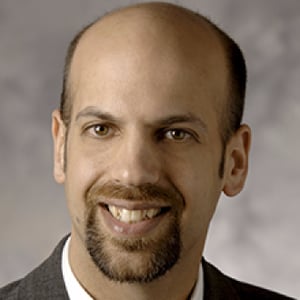
Guido Calabresi Professor of Law, Yale Law School
Daniel Markovits is Guido Calabresi Professor of Law at Yale Law School. He works in the philosophical foundations of private law, moral and political philosophy, and behavioral economics. He has written articles on contract, legal ethics, distributive justice, democratic theory, and other-regarding preferences. Professor Markovits concentrates, in each area, on the ways in which legal orderings engage the human instinct in favor of sociality to sustain cooperation even among persons who pursue conflicting interests and endorse competing moral ideals. He finds respectful relations in surprising places, for example in contracts between self-interested buyers and sellers, litigation between adversary disputants, and political competition between partisan parties. In each case, Markovits argues, seemingly competitive interactions contain, in their immanent logic, forms of reciprocal recognition and respect. After earning a B.A. in Mathematics, summa cum laude from Yale University, Markovits received a British Marshall Scholarship to study in England, where he was awarded an M.Sc. in Econometrics and Mathematical Economics from the L.S.E. and a B.Phil. and D.Phil. in Philosophy from the University of Oxford. Markovits then returned to Yale to study law and, after clerking for the Honorable Guido Calabresi, joined the faculty at Yale.
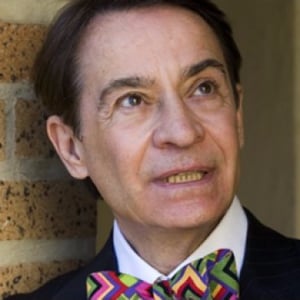
Doy & Dee Henley Chair and Distinguished Professor of Jurisprude, Chapman University Dale E. Fowler School of Law
Ronald D. Rotunda was the Doy & Dee Henley Chair and Distinguished Professor of Jurisprudence, at Chapman University, the Dale E. Fowler School of Law. He joined the faculty in 2008. Before that, he was University Professor and Professor of Law at George Mason University School of Law. From 2002 to 2006, he was the George Mason University Foundation Professor of Law. Before that, he was the Albert E. Jenner, Jr. Professor of Law, at the University of Illinois. He was a magna cum laude graduate of both Harvard College and Harvard Law School, where he was a member of Harvard Law Review. He joined the University of Illinois faculty in 1974 after clerking for Judge Walter R. Mansfield of the United States Court of Appeals for the Second Circuit, practicing law in Washington, D.C., and serving as assistant majority counsel for the Senate Watergate Committee. He has co-authored the most widely used course book on legal ethics, Problems and Materials on Professional Responsibility(Foundation Press, 12th ed. 2014) and was the author of a leading course book on constitutional law, Modern Constitutional Law (West Academic Co., 11th ed. 2015)(Abridged & Unabridged editions). He was the coauthor of, Legal Ethics: The Lawyer's Deskbook on Professional Responsibility (ABA- West/Thompson Reuters Publishing, St. Paul, Minnesota, 2016-2017 ed.) (Jointly published by the ABA and West/Thompson Reuters Publishing) (with John Dzienkowski). Rotunda also co-authored (with John Nowak) the six-volume Treatise on Constitutional Law (West/Thompson Reuters Publishing, 5th ed. 2012)(with annual updates), and a one volume Treatise on Constitutional Law (West Academic, 8th ed. 2010). He was also the author of several other books and more than 500 articles in various law reviews, journals, newspapers, and books in this country and abroad. His works have been translated into French, Portuguese German, Romanian, Czech, Russian, Japanese, and Korean. These books and articles have been cited more than 2000 times by law reviews, by state and federal courts at every level, from trial courts to the U.S. Supreme Court, and by foreign courts in Europe, Africa, Asia, and South America. He has been interviewed on radio and television on legal issues, both in this country and abroad. In 1993 he was the Constitutional Law Adviser to the Supreme National Council of Cambodia and assisted that country in writing its first democratic constitution. He has consulted with various new democracies in Eastern Europe and the former Soviet Union, including Moldova, Romania, and Ukraine, on their proposed constitutions and judicial codes. He chaired the subcommittee that drafted the American Bar Association's Model Rules for Lawyer Disciplinary Enforcement; was a member of the Publications Board of the A.B.A. Center for Professional Responsibility from 1994 to 2016; was a member of the A.B.A. Standing Committee on Professional Discipline (1991-1997); and was Liaison to the A.B.A. Standing Committee on Ethics and Professional Responsibility (1994-1997). He was a Fulbright Professor in Venezuela in 1986 and a Fulbright Research Scholar in Italy in 1981. In 1996 he assisted the Czech Republic in drafting the first Rules of Ethics for lawyers in that country. During the Spring, 1999 semester, he was Visiting Professor at the University of Alabama School of Law, holding the John S. Stone Endowed Chair of Law. During the summer and fall of 2000, he was the Visiting Senior Fellow in Constitutional Studies at the Cato Institute, in Washington, DC. In the fall of 2001, he was visiting professor at George Mason University School of Law. During November-December, 2002, he was Visiting Scholar, Katholieke Universiteit Leuven, Faculty of Law, Leuven, Belgium. In May, 2004, and December, 2005, he was visiting lecturer at the Institute of Law and Economics, Institut für Recht und Ökonomik, at the University of Hamburg. From early June 2004 to May 2005, he was the Special Counsel to the Department of Defense. He was on the Panel of Contributing Editors that produced, Black's Law Dictionary (West/Thompson Reuters Publishing, 8th ed. 2004; Thomson-Reuters, 10th ed. 2014). From 2005-2006, he was a member of the Task Force on Judicial Functions of the Commission on Virginia Courts in the 21st Century: To Benefit All, to Exclude None.
In May, 2000, American Law Media, publisher of The American Lawyer, the National Law Journal, and the Legal Times picked Professor Rotunda as one of the ten most influential Illinois Lawyers. Also in 2000, a lengthy study that the University of Chicago Press published, which sought to determine the influence, productivity, and reputations of law professors over the last several decades, listed Professor Rotunda as the 17th highest in the nation. The 2002-2003 New Educational Quality Ranking of U.S. Law Schools (EQR) [the last year for which such records are available] ranks Professor Rotunda as the eleventh most cited of all law faculty in the United States. Seehttp://www.leiterrankings.com/faculty/2002faculty_impact_cites.shtml.
In July, 2007, he was one of the main speakers at the International Judicial Conference hosted by the United States Embassy, the Supreme Court of Latvia, and the Latvian Ministry of Justice. The other main speakers were Justice Samuel Alito, the President of Latvia, the Prime Minister of Latvia, the Chief Justice of Latvia, and the Minister of Justice of Latvia. On February 27, 2008, President George W. Bush nominated Ronald D. Rotunda to become a member of the Privacy and Civil Liberties Oversight Board (PCLOB) for an initial four-year term and sent his nomination to the Senate Committee on Homeland Security and Governmental Affairs for confirmation hearings on the nominees. He was selected the Best Lawyer in Washington, DC, in 2009 in Ethics and Professional Responsibility Law, as published in November 2008 in the Washington Post in association with the Legal Times. When he moved to California, he was also selected as one of the Best Lawyers in Southern California, in 2009, 2010, 2011, 2012, 2013, 2014, 2015, 2016, 2017, also in Ethics and Professional Responsibility Law as published in the Los Angeles Times, U.S. News, and American Law Media. On June 17, 2009, he became a Commissioner of the Fair Political Practices Commission, a state regulatory agency (analogous to the Federal Election Commission) that is California's independent political watchdog. He served until January 31, 2013, when his term expired. In 2012, he became a Distinguished International Research Fellow at the World Engagement Institute, a non-profit, multidisciplinary and academically-based non-governmental organization with the mission to facilitate professional global engagement for international development and poverty reduction http://www.weinstitute.org/fellows.html. In 2012, Chapman University honored him with The Chapman University Excellence In Scholarly/Creative Work Award, 2011-2012. Since 2014, he has been a member of the Editorial Board of, The International Journal of Sustainable Human Security (IJSHS), a peer-reviewed publication of the World Engagement Institute (WEI). Rotunda was a Member of the Editorial Board of ABA's Journal of Legal Education (2014 to 2016).
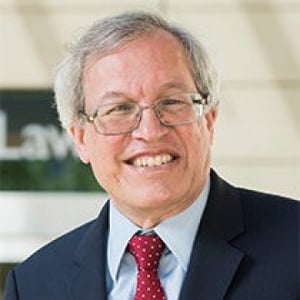
Dean and Jesse H. Choper Distinguished Professor of Law, UC Berkeley School of Law
Erwin Chemerinsky became the 13th Dean of Berkeley Law on July 1, 2017, when he joined the faculty as the Jesse H. Choper Distinguished Professor of Law.
Prior to assuming this position, from 2008-2017, he was the founding Dean and Distinguished Professor of Law, and Raymond Pryke Professor of First Amendment Law, at University of California, Irvine School of Law, with a joint appointment in Political Science. Before that he was the Alston and Bird Professor of Law and Political Science at Duke University from 2004-2008, and from 1983-2004 was a professor at the University of Southern California Law School, including as the Sydney M. Irmas Professor of Public Interest Law, Legal Ethics, and Political Science. He also has taught at DePaul College of Law and UCLA Law School.
He is the author of eleven books, including leading casebooks and treatises about constitutional law, criminal procedure, and federal jurisdiction. His most recent books are, We the People: A Progressive Reading of the Constitution for the Twenty-First Century (Picador Macmillan) published in November 2018, and two books published by Yale University Press in 2017, Closing the Courthouse Doors: How Your Constitutional Rights Became Unenforceable and Free Speech on Campus (with Howard Gillman).
He also is the author of more than 200 law review articles. He writes a regular column for the Sacramento Bee, monthly columns for the ABA Journal and the Daily Journal, and frequent op-eds in newspapers across the country. He frequently argues appellate cases, including in the United States Supreme Court.
In 2016, he was named a fellow of the American Academy of Arts and Sciences. In 2017, National Jurist magazine again named Dean Chemerinsky as the most influential person in legal education in the United States.
Chairman of the Board, The Ayn Rand Institute
Yaron Brook is chairman of the board of the Ayn Rand Institute. He wears many hats at the institute and travels extensively as ARI’s spokesman.
Brook can be heard weekly on The Yaron Brook Show, which airs live on the BlogTalkRadio podcast. He is also a frequent guest on national radio and television programs.
An internationally sought-after speaker and debater, Brook also pens works that make one think. As coauthor, with Don Watkins, of the national best-seller Free Market Revolution: How Ayn Rand's Ideas Can End Big Government, Brook and Watkins argue that the answer to our current economic woes lies not in "trickle-down government" but in Rand's inspiring philosophy of capitalism and self-interest. Last year, Brook and Watkins released a new book, Equal Is Unfair: America's Misguided Fight Against Income Inequality, a book that shows the real key to making America a freer, fairer, more prosperous nation is to protect and celebrate the pursuit of success―not pull down the high fliers in the name of equality. Brook is also contributing author to Neoconservatism: An Obituary for an Idea, Winning the Unwinnable War: America’s Self-Crippled Response to Islamic Totalitarianism and Big Tent: The Story of the Conservative Revolution — As Told by the Thinkers and Doers Who Made It Happen. He was a columnist at Forbes.com, and his articles have been featured in the Wall Street Journal, USA Today, Investor’s Business Daily and many other publications.
Brook was born and raised in Israel. He served as a first sergeant in Israeli military intelligence and earned a BSc in civil engineering from Technion-Israel Institute of Technology in Haifa, Israel. In 1987 he moved to the United States where he received his MBA and PhD in finance from the University of Texas at Austin; he became an American citizen in 2003. For seven years he was an award-winning finance professor at Santa Clara University, and in 1998 he cofounded BH Equity Research, a private equity and hedge fund manager, of which he is managing founder and director.
Brook serves on the boards of the Ayn Rand Institute, the Clemson Institute for the Study of Capitalism and CEHE (Center for Excellence in Higher Education), and he is a member of the Association of Private Enterprise Education and the Mont Pelerin Society.
Adjunct Professor of Journalism, Columbia Graduate School of Journalism
Tom Edsall joined the full-time faculty here after a twenty-five year career at The Washington Post. During that time, he covered all aspects of national politics, including presidential elections, the House and Senate, lobbying, tax policy, demographic trends, social welfare, the politics of race and ethnicity, and organized labor. He is currently writing an online opinion column for The New York Times. Edsall is also a correspondent for The New Republic and has reported on politics for The Baltimore Sun and The Providence Journal. He has frequently contributed TV and radio commentary to CNN, CSPAN, MSNBC, PBS, FOX, and NPR.
Edsall is the author of five books: "The Age of Austerity" (2012); "Building Red America" (2006); "Chain Reaction: The Impact of Race, Rights, and Taxes on American Politics" (1992, a Pulitzer finalist in General Non-Fiction); "Power and Money: Writing About Politics" (1988); and "The New Politics of Inequality" (1984). He has written extensively for magazines, with articles appearing in American Prospect, The Atlantic Monthly, Civilization, Dissent, Harper's, The Nation, The New Republic, The New York Review of Books, and the Washington Monthly. Awards include the Carey McWilliams Award of the American Political Science Association, the Bill Pryor Award of the Newspaper Guild, a yearlong fellowship at the Woodrow Wilson International Center for Scholars, and five Media Fellowships at the Hoover Institution at Stanford University. Edsall attended Brown University and received a B.A. from Boston University.
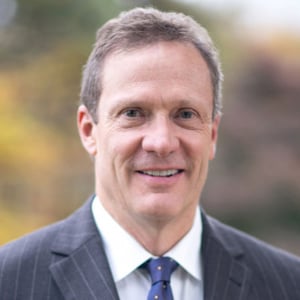
Blaine T. Phillips Distinguished Professor in Environmental Law, University of Virginia School of Law
Law and economics expert Jason Scott Johnston joined the Virginia Law faculty in 2010 and is the Blaine T. Phillips Distinguished Professor in Environmental Law. He formerly served as the the Nicholas E. Chimicles Research Professor in Business Law and Regulation at Virginia Law, and the Robert G. Fuller, Jr. Professor of Law and director of the Program on Law, Environment and Economy at the University of Pennsylvania Law School.
Johnston’s scholarship has examined subjects ranging from natural resources law to torts and contracts. He has published dozens of articles in law journals, such as the Yale Law Journal, and in peer-reviewed economics journals, such as the Journal of Law, Economics and Organization. He is currently working on a book that critically analyzes the foundations of global warming law and policy, a series of articles on the economics of regulatory science and another series of articles on various aspects of the law and economics of consumer protection. He has served on the Board of Directors of the American Law and Economics Association, on the National Science Foundation’s Law and Social Science grant review panel, and on the Board of the Searle Civil Justice Institute. He won Penn Law’s Robert A. Gorman Award for Teaching Excellence in 2003.
After earning his A.B. from Dartmouth College and both his J.D. and Ph.D. (economics) from the University of Michigan, Johnston clerked for Judge Gilbert S. Merritt on the U.S. Court of Appeals for the Sixth Circuit. He then taught at Vermont Law School and Vanderbilt Law School before joining Penn’s faculty. He has been a visiting professor or held fellowship appointments at Yale Law School, the University of Southern California Gould School of Law, the American Academy in Berlin and the Property and Environment Research Center.

David and Mary Harrison Distinguished Professor of Law, University of Virginia School of Law
Paul G. Mahoney is a David and Mary Harrison Distinguished Professor and served as dean of the Law School from 2008-16. Mahoney's teaching and research areas are securities regulation, law and economic development, corporate finance, financial derivatives and contracts. He has published widely in law reviews and peer-reviewed finance and law and economics journals. His book, “Wasting a Crisis: Why Securities Regulation Fails,” was published by the University of Chicago Press in 2015.
Mahoney joined the Law School faculty in 1990 after practicing law with the New York firm of Sullivan & Cromwell and clerking for Judge Ralph K. Winter, Jr. of the U.S. Court of Appeals for the Second Circuit and Justice Thurgood Marshall of the U.S. Supreme Court. He served as academic associate dean at the Law School from 1999 to 2004 and has held the Albert C. BeVier Research Chair and the Brokaw Chair in Corporate Law. He has been a visiting professor at the University of Chicago Law School, the University of Southern California Law School and the University of Toronto Faculty of Law. He has also worked on legal reform projects in Kazakhstan, Kyrgyzstan, Mongolia and Nepal.
Mahoney is a member of the Council on Foreign Relations and a fellow of the American Academy of Arts and Sciences. In 2018 he joined Securities and Exchange Commission’s Investor Advisory Committee. He served as an associate editor of the Journal of Economic Perspectives from 2004 to 2007 and as a director of the American Law and Economics Association from 2002 to 2004. He is a past recipient of the All-University Outstanding Teacher Award and the Law School's Traynor Award for excellence in faculty scholarship.
President, University of Virginia School of Law Student Chapter
Dan graduated summa cum laude from the University of Ottawa in 2013 with a Specialization in Economics and Minor in History. At UVA, he is a Hardy Cross Dillard Scholar and serves on the Editorial Board of the Journal of Law and Politics. Dan spent his 2L summer at Abrams & Bayliss LLP, a litigation boutique in Wilmington, Delaware.

Judge, United States Court of Appeals, Fifth Circuit
Judge Smith was appointed U.S. Circuit Judge for the Fifth Circuit by President Reagan and entered on duty in January 1988. He attended public schools in Lubbock, Texas, and graduated from Yale University, receiving a B.A. in 1969 and a J.D. in 1972.
Judge Smith was a Law Clerk to U.S. District Judge Halbert Woodward, Northern District of Texas, 1972-1973; with the Houston law firm of Fulbright & Jaworski as an Associate, 1973-1981, and as Partner, 1981-1984; and as City Attorney, City of Houston, 1984-1988. He was Chairman, Civil Service Commission, City of Houston, 1982-1984; and a Director, Harris County Housing Authority, 1978-1980.
Judge Smith lives in Houston and is married to Mary Jane Smith and has four children: Ruth Ann, Clark, J.J., and Brandon. He formerly was Chair of the Advisory Committee on Federal Rules of Evidence of the Judicial Conference of the United States. He assists LexisNexis/Matthew Bender & Co. in periodic revisions of several chapters of Moore’s Federal Practice.
Associate Professor of Political Science, Johns Hopkins University
Steven Teles is associate professor of political science at Johns Hopkins University and fellow at the New America Foundation.
He is the author, most recently, of the Rise of the Conservative Legal Movement: The Battle for Control of the Law (Princeton University Press, 2008), and before that Whose Welfare: AFDC and Elite Politics (University Press of Kansas, 1996). He is the co-editor of two books: Conservatism and American Political Development (Oxford University Press, 2009, with Brian Glenn) and Ethnicity, Social Mobility and Public Policy: Comparing the US and UK (Cambridge University Press, 2005, with Glenn Loury and Tariq Modood). Professor Teles is also the editor of Oxford University Press' book series on Contemporary American Political Development. He is currently working on two co-authored books. The first, with Mark Kleiman of UCLA, tentatively calledThe Statesman's Discipline: The Art of Asking the Right Questions. His second project, with Peter Frumkin, is a developmental study of foundations over the past half-century.
Professor Teles has also published articles in the New Statesman, American Prospect, Public Interest, National Affairs, The American Interest, Prospect (UK) and Boston Reviews, appeared on bloggingheads.tv and blogs occasionally at samefacts.com.
He received his PhD in government and foreign affairs from the University of Virginia in 1995, and his BA in political science from George Washington University in 1989.

Tazewell Taylor Professor of Law and William H. Cabell Research Professor, William & Mary Law School
Jonathan H. Adler joined the William & Mary law faculty as the Tazwell Taylor Professor of Law and William H. Cabell Research Professor in 2025. Prior to joining the faculty, he was the inaugural Johan Verheij Memorial Professor of Law and the founding Director of the Coleman P. Burke Center for Environmental Law at the Case Western Reserve University School of Law.
Professor Adler is the author or editor of seven books, including Climate Liberalism: Perspectives on Liberty, Property and Pollution (Palgrave, 2023), Marijuana Federalism: Uncle Sam and Mary Jane (Brookings Institution Press, 2020), Business and the Roberts Court (Oxford University Press, 2016) and Rebuilding the Ark: New Perspectives on Endangered Species Act Reform (AEI Press, 2011).
His articles have appeared in publications ranging from the Harvard Environmental Law Review and Yale Journal on Regulation to the Wall Street Journal, New York Times, and Washington Post. He has testified before Congress a dozen times, and his work has been cited in the U.S. Supreme Court. A 2024 study identified Professor Adler as the seventh most cited legal academic in administrative and environmental law from 2019 to 2023.
Professor Adler is a contributing editor to Civitas Outlook and a regular contributor to the popular legal blog, The Volokh Conspiracy. A regular commentator on constitutional and regulatory issues, he has appeared on numerous radio and television programs, ranging from the PBS Newshour and National Public Radio to the Fox News Channel and Entertainment Tonight.
Professor Adler is a senior fellow at the Property & Environment Research Center in Bozeman, Montana. In 2018, Professor Adler was elected to membership in the American Law Institute and helped co-found the organization Checks and Balances. In 2024, Professor Adler was appointed a public member of the Administrative Conference of the United States.
Professor Adler clerked for the Honorable David B. Sentelle on the U.S. Court of Appeals for the District of Columbia Circuit.

Professor of Law, Antonin Scalia Law School, George Mason University
ILYA SOMIN is Professor of Law at George Mason University and the B. Kenneth Simon Chair in Constitutional Studies at the Cato Institute. His research focuses on constitutional law, property law, democratic theory, federalism, and migration rights. He is the author of Free to Move: Foot Voting, Migration, and Political Freedom (Oxford University Press, revised and expanded edition, 2022), Democracy and Political Ignorance: Why Smaller Government is Smarter (Stanford University Press, revised and expanded second edition, 2016), and The Grasping Hand: Kelo v. City of New London and the Limits of Eminent Domain (University of Chicago Press, 2015, rev. paperback ed., 2016), coauthor of A Conspiracy Against Obamacare: The Volokh Conspiracy and the Health Care Case (Palgrave Macmillan, 2013), and co-editor of Eminent Domain: A Comparative Perspective (Cambridge University Press, 2017). Democracy and Political Ignorance has been translated into Italian and Japanese.
Somin’s work has appeared in numerous scholarly journals, including the Yale Law Journal, Stanford Law Review, Northwestern University Law Review, Georgetown Law Journal, Critical Review, and others. Somin has also published articles in a variety of popular press outlets, including the New York Times, Washington Post, Wall Street Journal, Los Angeles Times, CNN, NBC, The Atlantic, USA Today, Boston Globe, US News and World Report, South China Morning Post, National Law Journal and Reason. He has been quoted or interviewed by the New York Times, Washington Post, Wall Street Journal, Time, Newsweek, The Economist, the Christian Science Monitor, the Financial Times, The Guardian, the Associated Press, CBS, MSNBC, NPR, BBC, Reuters, the Canadian Broadcasting Corporation, the Australian Broadcasting Corporation, Radio Free Europe/Radio Liberty, Al Jazeera, and the Voice of America, among other media.
Somin’s writings have been cited in decisions by the United States Supreme Court, multiple state supreme courts and lower federal courts, and the Supreme Court of Israel. He is co-counsel for the plaintiffs in VOS Selections, Inc. v. Trump, a case challenging the constitutionality of President Trump’s “Liberation Day” tariffs. Somin has testified on the use of drones for targeted killing in the War on Terror before the US Senate Judiciary Subcommittee on the Constitution, Civil Rights, and Human Rights. In 2009, he testified on property rights issues at the United States Senate Judiciary Committee confirmation hearings for Supreme Court Justice Sonia Sotomayor. Somin writes regularly for the popular Volokh Conspiracy law and politics blog, now affiliated with Reason magazine (previously affiliated with the Washington Post from 2014 to 2017). From 2006 to 2013, he served as Co-Editor of the Supreme Court Economic Review, one of the country’s top-rated law and economics journals.
Somin has served as a visiting professor at the University of Pennsylvania Law School. He has also been a visiting professor or scholar at the Georgetown University Law Center, the University of Hamburg, Germany, the University of Torcuato Di Tella in Buenos Aires, Argentina, Uriel Reichman University in Israel, and Zhengzhou University in China. He is a University Affiliate of the Schar School of Policy and Government at George Mason University, and an affiliated faculty member of the George Mason University Institute for Immigration Research. Before joining the faculty at George Mason, Somin was the John M. Olin Fellow in Law at Northwestern University Law School in 2002-2003. In 2001-2002, he clerked for the Hon. Judge Jerry E. Smith of the U.S. Court of Appeals for the Fifth Circuit. Professor Somin earned his B.A., Summa Cum Laude, at Amherst College, M.A. in Political Science from Harvard University, and J.D. from Yale Law School.
Associate Professor of Law, William & Mary Law School
James Y. Stern joined the William & Mary faculty in 2013. His scholarship centers on property and private law theory, intellectual property, and conflict of laws. His articles have been selected for publication in the California Law Review, the Harvard Law Review, and the Virginia Law Review. He currently teaches Torts, the Intellectual Property Survey Course, and an advanced property seminar. He was awarded the Temple Bar Scholarship by the American Inns of Court Foundation in 2011 and is an honorary member of the Commercial Bar Association for England and Wales.
Professor Stern clerked for Justice Anthony Kennedy on the U.S. Supreme Court and for Judge J. Harvie Wilkinson on the U.S. Court of Appeals for the Fourth Circuit. He received his J.D. from the University of Virginia, where he was awarded the Traynor Prize for the best paper by a graduating student and named a John M. Olin Law and Economics Fellow. He was inducted into the Order of the Coif and the Raven Society, the university’s principal academic honor association.
Professor Stern received his undergraduate degree from Harvard, where he studied American history and literature and wrote his honors thesis on the influence of Friedrich Nietzsche on H.L. Mencken. He was awarded the John Harvard Scholarship and was selected to serve as the Harvard-Shrewsbury Fellow upon graduation.
Before coming to William & Mary, Professor Stern was Research Assistant Professor at University of Virginia Law School.
Professor of Law; Director, Business Law Program, American University Washington College of Law
David V. Snyder is professor of law at the American University Washington College of Law and is the director of the Business Law Program. He was also a visiting professor of law at the University of Michigan from January to May 2024. He has been a regular visiting professor at the law school of the University of Paris II (Panthéon-Assas) since 2012, and during 2021-2022, he held a Fernand Braudel Senior Fellowship at the European University Institute (Florence). In 2014, he was awarded a McCormick Fellowship, during which he delivered the Wilson Memorial Lecture (University of Edinburgh).
Professor Snyder’s research and teaching interests are primarily in contracts and commercial law, including their U.S., international, and comparative aspects. He is known for his work on international commercial transactions and is the author (with Martin Davies) of International Transactions in Goods: Global Sales in Comparative Context (Oxford University Press 2014). More particularly, he has devoted considerable effort to using contracts to protect the environment and the human rights of workers in international supply chains, and his book (with Susan A. Maslow) Contracts for Responsible and Sustainable Supply Chains (American Bar Association 2023) includes the Model Contract Clauses produced by a working group and task force that he chairs for the ABA Business Law Section. He is also co-chair of a similar working group in Europe. He has published numerous journal articles and book chapters on these and other topics
A Louisiana native, Professor Snyder graduated summa cum laude from Tulane Law School after earning his undergraduate degree cum laude from Yale. He clerked for the Honorable John M. Duhé Jr. of the United States Court of Appeals for the Fifth Circuit and subsequently joined the D.C. firm of Hogan & Hartson (now Hogan Lovells). He began his academic career at Cleveland-Marshall College at Law Cleveland State University and then moved to Indiana University (Bloomington) before joining the faculty at Tulane Law School. He returned to Washington to accept his current appointment in 2006. In addition, Professor Snyder has served as a visiting professor at the University of Paris 10 (Nanterre La Défense), Boston University, and the College of William and Mary, and he has taught summer courses at the University of Mainz (Germany).
Professor Snyder was chair of the Section on Contracts of the Association of American Law Schools (2005-2006) and chaired the Washington steering committee for the XVIIIth International Congress of Comparative Law (2010). He is an elected member of the American Law Institute, a titular member of the International Academy of Comparative Law, and has served on the board of directors of the Washington Foreign Law Society, the board of editors of the American Journal of Comparative Law, and the scientific council of the French Journal of Legal Policy

Laurence A. Tisch Professor of Law and Director, Classical Liberal Institute, New York University School of Law; Senior Fellow, The Civitas Institute, University of Texas at Austin
Richard A. Epstein is the inaugural Laurence A. Tisch Professor of Law at NYU School of Law. Prior to his joining the faculty, he was a visiting law professor at NYU from 2007 through 2009. He served as the Peter and Kirstin Bedford Senior Fellow at the Hoover Institution from 2000 to 2024. Since 2024 to the present he is a senior lecturer at the Civitas Institute at the University of Texas—Austin. Epstein is also the James Parker Hall Distinguished Service Professor of Law Emeritus and a senior lecturer at the University of Chicago. His initial law school appointment was at the University of Southern California from 1968 to 1972. Epstein received an LL.D., h.c. from the University of Ghent, 2003. He has been a member of the American Academy of Arts and Sciences since 1985 and was a Senior Fellow of the Center for Clinical Medical Ethics at the University of Chicago Division of Biological Sciences, also from 1983. to 2022 He served as editor of the Journal of Legal Studies from 1981 to 1991, and of the Journal of Law and Economics from 1991-2001. From 2001 to 2010 he was a director of the John M. Olin Program in Law and Economics at the University of Chicago.
His newest book, The Myth of Birthright Citizenship: What the Fourteenth Amendment Really Says was published in 2026 (Encounter Books). Prior to that he has published many books including, The Dubious Morality of the Modern Administrative State (Roman & Littlefield 2020).Earlier he published th Classical Liberal Constitution: The Uncertain Quest for Limited Government (Harvard 2014) iHis previous books include Design for Liberty: Private Property, Public Administration and the Rule of Law (Harvard 2011); The Case Against the Employee Free Choice Act (Hoover 2009); Supreme Neglect: How to Revive the Constitutional Protection of Property Rights (Oxford 2008); Antitrust Decrees in Theory and Practice: Why Less is More (AEI 2007); Overdose: How Excessive Government Regulation Stifles Pharmaceutical Innovation (Yale University Press. 2006); How Progressives Rewrote the Constitution (Cato 2006); Cases and Materials on Torts (Aspen Law & Business; 8th ed. 2004); Skepticism and Freedom: A Modern Case for Classical Liberalism (University of Chicago, 2003); Torts (Aspen Law & Business 1999); Principles for a Free Society: Reconciling Individual Liberty with the Common Good (Perseus Books, 1998): Mortal Peril: Our Inalienable Rights to Health Care (Addison-Wesley, 1997); Simple Rules for a Complex World (Harvard, 1995); Bargaining With the State (Princeton, 1993); Forbidden Grounds: The Case Against Employment Discrimination Laws (Harvard , 1992); Takings: Private Property and the Power of Eminent Domain (Harvard, 1985); and Modern Products Liability Law (Greenwood Press, 1980). He has also edited(with Catherine M. Sharkey) Cases and Materials on the Law of Torts (10th edition 2012).
Professor Epstein has written numerous articles on a wide range of legal and interdisciplinary subjects. He has taught courses in administrative law, antitrust law, civil procedure, communications, constitutional law, contracts, corporations, criminal law, employment discrimination law, environmental law, food and drug law health law and policy, legal history, labor law, property, real estate development and finance, jurisprudence, labor law; land use planning, patents, individual, estate and corporate taxation, Roman Law; torts, and workers' compensation.
Professor Epstein also writes a regular column for Civitas Institute, which also sponsors his podcast, The Libertarian with Charles C.W. Cooke, and Law Talk, with Cooke and John Yoo. He also does a podcast with John Batchelor. And appears regularly on the Freedom File with Judge Andrew Napolitano.

Executive Vice President, The Federalist Society
Dean Reuter is Executive Vice President at the Federalist Society for Law and Public Policy Studies. He has served in two federal government agency Offices of the Inspector General, as Counsel to the Inspector General and Deputy Inspector General, responsible for policing the use of federal funds granted and contracted through those agencies. As such, he helped conduct and oversee criminal investigations across the country. He is the principal author of the non-fiction book, The Hidden Nazi: The Untold Story of America's Deal with the Devil, and editor of Liberty’s Nemesis: The Unchecked Expansion of the State and Confronting Terror: 9/11 and the Future of American National Security. He was appointed by the President and served as Vice-Chairman of the Board of Directors of the Corporation for National and Community Service, and recently served as an appointee on the U.S. Commission on Presidential Scholars. He is a graduate of Hood College (BA with Honors) and the University of Maryland School of Law.

Patrick Hotung Professor of Constitutional Law, Georgetown University Law Center; Faculty Director, Georgetown Center for the Constitution
Randy E. Barnett is the Patrick Hotung Professor of Constitutional Law at the Georgetown University Law Center and is the Faculty Director of the Georgetown Center for the Constitution. After graduating from Northwestern University and Harvard Law School, he tried many felony cases as a prosecutor in the Cook County States’ Attorney’s Office in Chicago. A recipient of a Guggenheim Fellowship in Constitutional Studies and the Bradley Prize, Professor Barnett has been a visiting professor at Penn, Northwestern and Harvard Law School.
Professor Barnett’s publications includes thirteen books, more than one hundred articles and reviews, as well as numerous op-eds. His most recent book is Felony Review: Tales of True Crime and Corruption in Chicago (2026). His other books on the Constitution include: A Life for Liberty: The Making of an American Originalist (2024); The Original Meaning of the Fourteenth Amendment: Its Letter and Spirit (2021) (with Evan Bernick); An Introduction to Constitutional Law: 100 Supreme Court Cases Everyone Should Know (2019) (with Josh Blackman); Restoring the Lost Constitution: The Presumption of Liberty (2nd ed. 2013); Our Republican Constitution: Securing the Liberty and Sovereignty of We the People (2016); and Constitutional Law: Cases in Context (5th ed. forthcoming 2027) (with Josh Blackman). His books on contracts are The Oxford Introductions to U.S. Law: Contracts (2010) and Contracts: Cases and Doctrine (7th ed. 2021) (with Nate Oman). And he is the author of The Structure of Liberty: Justice and the Rule of Law (2nd ed. 2014).
In 2004, he argued the medical marijuana case of Gonzalez v. Raich before the U.S. Supreme Court. In 2012, he was one of the lawyers representing the National Federation of Independent Business in its constitutional challenge to the Affordable Care Act in NFIB v. Sebelius. He’s appeared in numerous documentaries and portrayed a prosecutor in the 2010 science-fiction feature film, InAlienable: The Movie. On X he is @RandyEBarnett

Professor of Law, University of Baltimore School of Law (on leave); Senior Counsel, U.S. Department of Justice
Professor Dolin’s scholarship centers on patent law with a specific focus on how the patent regime affects innovation, especially in bio-pharmaceutical areas. His work in these areas includes a number of scholarly articles, presentations, amicus briefs, and congressional testimony.
Dr. Dolin is currently on leave from his academic duties while he serves as Senior Counsel in the Civil Rights Division of the United States Department of Justice.
From January 2020 to January 2022, Professor Dolin served as a resident Associate Justice of the Supreme Court of the Republic of Palau. In this role, he (together with other members of the Court) heard appeals in civil, criminal, administrative, and constitutional law matters.
Prior to joining the University of Baltimore School of Law, Professor Dolin held visiting appointments in other law schools. He also served as a law clerk to the Hon. Pauline Newman, of the U.S. Court of Appeals for the Federal Circuit and the late Hon. H. Emory Widener Jr., of the U.S. Court of Appeals for the Fourth Circuit.
Rumors that he has a real Russian bear in his office are entirely true.
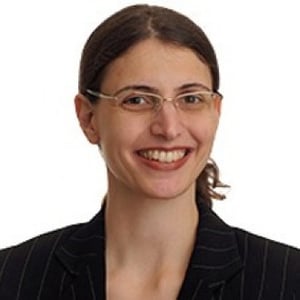
Professor of Law and Director of the Center for Intellectual Property Law, Maurice A. Deane School of Law at Hofstra University
Professor Manta teaches intellectual property law subjects. Her research examines the intersection between intellectual property law and social science, with a focus on psychology. She has most recently written about the hedonic value of trademarks and its legal implications, the problem of cognitive bias in copyright infringement litigation, price discrimination through software licensing in the age of the Internet of Things, and the role of criminal sanctions in intellectual property. Professor Manta has published or has forthcoming work in the Emory Law Journal, William & Mary Law Review, Iowa Law Review, Alabama Law Review, Boston College Law Review, Ohio State Law Journal, Washington and Lee Law Review, Harvard Journal of Law & Technology, Stanford Technology Law Review, Florida Law Review, Arizona Law Review, and Cornell Law Review Online, among others. She is also a co-author for a forthcoming textbook on criminal law issues in intellectual property. Professor Manta has further been a guest blogger for PrawfsBlawg and for Concurring Opinions. In 2014, she received the Lawrence A. Stessin Prize for Outstanding Scholarly Publications, which is awarded to two junior faculty members across all disciplines at Hofstra University.
Before joining the law school faculty in 2012, Professor Manta was an Assistant Professor of Law at the Case Western Reserve University School of Law. She was a Bigelow Teaching Fellow and Lecturer in Law at the University of Chicago Law School from 2007 to 2009. Professor Manta has also served on the faculties of Brooklyn Law School, The George Washington University School of Law, and the University of Arkansas at Little Rock William H. Bowen School of Law. She clerked for Judge Morris S. Arnold on the U.S. Court of Appeals for the Eighth Circuit for the 2006-2007 term.
While earning her J.D. at Yale Law School, Professor Manta was the grand prize winner of the Foley & Lardner LLP Intellectual Property Writing Competition. She also served as tributes editor of the Yale Law Journal, articles editor of the Yale Law & Policy Review, and editor of the Yale Journal on Regulation. She graduated magna cum laude from Yale University with a B.A. in psychology.

Professor of Law, Antonin Scalia Law School, George Mason University
Adam Mossoff is Professor of Law at Antonin Scalia Law School, George Mason University. He has published extensively on why patents, copyrights, and other intellectual property rights have been—and should be—legally secured to innovators and creators as property rights. His scholarship has been relied on by the United States Supreme Court, by lower federal courts, and by U.S. federal agencies. He has been invited to testify numerous times before the U.S. Senate and the House of Representatives on intellectual property legislation. His writings on intellectual property policy have also appeared in the Wall Street Journal, New York Times, Forbes, Investors Business Daily, and in other media outlets. His journal articles can be downloaded here.
Professor Mossoff is a longstanding member of the Executive Committee of the Intellectual Property Practice Group of the Federalist Society, on which he served as Chairperson from 2016-2018, and he is Chair of the Intellectual Property Working Group of the Regulatory Transparency Project of the Federalist Society. He is a Senior Fellow and Chair of the Forum for Intellectual Property at the Hudson Institute, a Visiting Intellectual Property Fellow at the Heritage Foundation, and a member of the Board of Directors of the Center for Intellectual Property Understanding. He is a member of the Intellectual Property Rights Policy Committee of ANSI and he has served as Chair and Vice-Chair of the Intellectual Property Committee of the IEEE-USA, on which he remains a member in good standing.
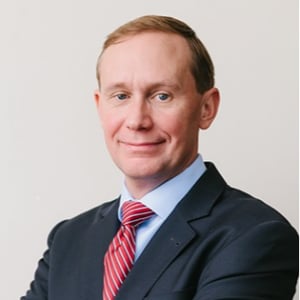
Associate Professor, Boston College Law School
David Olson is an associate professor and the Faculty Director of the Program on Innovation and Entrepreneurship. He teaches patent law, intellectual property law, antitrust law, and various seminars. His research and writing primarily focus on patents, copyrights, antitrust, and incentives for innovation and competition. Since joining BC Law in 2007, he has been recognized for his teaching excellence and contributions. In 2011, he received the Business & Law Society Faculty Award for Achievement in Business & Law. In 2012, he received the Professor Emil Slizewski Award for Faculty Excellence. For one semester in 2015, Olson served as a visiting professor at Pontifical Catholic University, Rio de Janeiro, Brazil, where he conducted research and taught a course on intellectual property.
Olson has published scholarly articles on patent law, copyright law, antitrust, music licensing, and first amendment copyright issues. His writing has been cited in Supreme Court and other legal opinions. He has testified before the U.S. Congress on matters of drug patents, FDA regulation, and antitrust.
The media frequently seeks Olson’s insights and opinions. He has been quoted in the Wall Street Journal, Associated Press, and Reuters, among others. He has appeared as a guest panelist on WBUR’s Radio Boston, WAMU's Kojo Namdi Show, and Public Radio Canada. His op-eds have appeared in the Chicago Tribune, Washington Times, and The Hill.
Olson came to Boston College from Stanford Law School's Center for Internet and Society, where he conducted research on patent law and litigated copyright fair use impact cases. Before entering academia, Olson practiced law as a patent litigator. He clerked for Judge Jerry Smith of the U.S. Court of Appeals for the Fifth Circuit.

A Discussion with Professors Robert George and Cornel West
Robert P. George, Eugene B. Meyer, Cornel West
A discussion about freedom of speech, freedom of thought, the Black Lives Matter movement, and...
Keynote Address by Milton Friedman [Archive Collection]
Brian J. Brille, John Hart Ely, Milton Friedman
On March 7, 1986, The Federalist Society hosted its annual National Student Symposium at Stanford...
Lawyers & the U.S. Justice System [Archive Collection]
Robert H. Henry, Andy Lester, William G. Paul, Laurence H. Silberman
On June 22, 1999, the Oklahoma City Federalist Society Chapter hosted a panel discussion on...
The Free Speech Vernacular
Tara A. Smith, Amanda Salz, Ashley H. Terrazas
Is there something wrong with the way we speak about speech? Tara Smith, Professor of...
Income Inequality: Is It Fair or Unfair?
Yaron Brook, Daniel Markovits
The Yale Federalist Society presents a conversation and Q&A on income inequality. Is it fair...
The Least Dangerous Branch? Reflections on Bickel’s Classic - Podcast
Ronald D. Rotunda, Erwin Chemerinsky, James A. Haynes
The Federalist Society's Teleforum series, Legal Classics Revisited, will consider Professor Alexander Bickel's 1962 book,...
Panel I: Capitalism and Inequality
Yaron Brook, Thomas B. Edsall, Jason Johnston, Paul G. Mahoney, Dan McBride, Jerry E. Smith, Steven Teles
Free markets have exponentially improved the well-being of humanity and lifted more people out of...
Panel: Upward Redistribution, Government Policy, and Rent Seeking
Jonathan H. Adler, Ilya Somin, James Y. Stern, David V. Snyder
This panel will consider to what extent the disproportionate increase in income among the very...
Luncheon and Keynote Address by Richard Epstein
Richard A. Epstein, Dean Reuter
Prof. Richard Epstein delivered the Keynote Address during a conference titled "Patents and Innovation: Addressing Current...
Panel I: Is IP Property or Government-Conferred Monopoly?
Randy E. Barnett, Gregory Dolin, Irina D. Manta, Adam Mossoff, David S. Olson
The Federalist Society's Faculty Division hosted a panel discussion that asked "Is IP Property or...