

Professor of Law, Widener University Commonwealth Law School
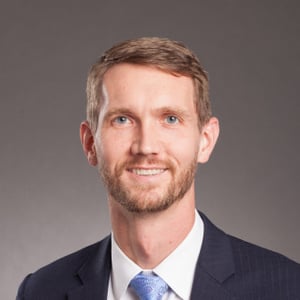
Senior Counsel for Environmental and Regulatory Affairs, Boeing
Adam Gustafson is a Senior Counsel for Environmental and Regulatory Affairs at Boeing.
Prior to joining Boeing, he served as Deputy General Counsel at the Environmental Protection Agency. Prior to that, he was a partner at Boyden Gray & Associates, where he represented States, federal judges, environmental groups, biofuel producers, agricultural interests, and public policy organizations, on such issues as the constitutional separation of powers, the First Amendment, automotive regulations, environmental computer models, healthcare regulation, and judicial deference to federal agencies.
Mr. Gustafson received his J.D. in 2009 from Yale Law School, where he was an editor of the Yale Law Journal, a managing editor of the Yale Journal of Law & the Humanities, and an executive editor of the symposium issue of the Harvard Journal of Law & Public Policy.
Mr. Gustafson served as a Vice President of the Yale Law School Federalist Society. He was a Coker Fellow, and his legal writing won the Joseph A. Chubb Competition Prize and the Edward D. Robbins Memorial Prize.
Mr. Gustafson graduated with high distinction in 2005 from the University of Virginia, where he was an Echols Scholar, a member of the Raven Society, a member of the rowing team, and a Lawn resident.
Before joining Boyden Gray & Associates, Mr. Gustafson was an associate at Cooper & Kirk, where he specialized in appellate litigation. Mr. Gustafson served as a law clerk to Judge Richard R. Clifton of the U.S. Court of Appeals for the Ninth Circuit, and to Judge Janice Rogers Brown of the U.S. Court of Appeals for the D.C. Circuit.

Professor of Law and Executive Director, Law and Economics Center, Antonin Scalia Law School, George Mason University
Donald Kochan is Professor of Law and Executive Director of the Law & Economics Center (LEC). Professor Kochan is an elected member of the American Law Institute (ALI) and serves as an Adviser to ALI's Restatement of the Law Fourth, Property project. Professor Kochan is a Nonresident Scholar at the Center for the Constitution at Georgetown University Law Center, where he was a Visiting Scholar in residence during Fall 2018. Before joining the Antonin Scalia Law School faculty, he was the Parker S. Kennedy Professor in Law at Chapman University’s Dale E. Fowler School of Law from 2004 to 2020. From 2003 to 2004, Professor Kochan was an Olin Fellow at the University of Virginia School of Law. During 2002-2003, he was a Visiting Assistant Professor of Law at George Mason’s Scalia Law School.
Professor Kochan’s scholarship focuses on areas of property law, constitutional law, administrative law, local government law, natural resources and environmental law, and law & economics. He has published several books and more than 50 scholarly articles and essays in well-regarded law journals. His work has been cited in more than a dozen state and federal court opinions, in more than 75 briefs filed in state and federal courts including more than 25 filed in the U.S. Supreme Court, in dozens of books and treatises, and in more than 800 scholarly articles.
Professor Kochan received his JD from Cornell Law School, where he was a John M. Olin Scholar in Law and Economics and managing editor of the Cornell International Law Journal. During law school, he also served as editor and executive editor of the Harvard Journal of Law & Public Policy symposium issues in 1997 and 1998. He received his BA from Western Michigan University, magna cum laude, with majors in both political science and philosophy, where he studied as the John W. Gill Medallion Scholar and was honored as the Presidential Scholar (awarded to the top graduate in the political science department).
After graduating from law school, Professor Kochan was a law clerk to The Honorable Richard F. Suhrheinrich of the United States Court of Appeals for the Sixth Circuit. Following his clerkship, Professor Kochan was an associate with the firm of Crowell & Moring LLP in Washington, D.C., where he specialized in natural resources & environmental law as well as tort, products, and consumer civil litigation & legislative affairs.
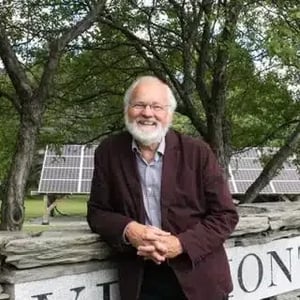
Professor of Law Emeritus; Senior Fellow for Climate Policy, Environmental Law Center, Vermont Law School
Patrick A. Parenteau is Emeritus Professor of Law and Senior Fellow for Climate Policy in the Environmental Law Center at Vermont Law School. He previously served as Director of the Environmental Law Center and was the founding director of the EAC (formerly the Environmental and Natural Resources Law Clinic) in 2004.
Professor Parenteau has an extensive background in environmental and natural resources law. His previous positions include Vice President for Conservation with the National Wildlife Federation in Washington, DC (1976-1984); Regional Counsel to the New England Regional Office of the EPA in Boston (1984-1987); Commissioner of the Vermont Department of Environmental Conservation (1987-1989); and Senior Counsel with the Perkins Coie law firm in Portland, Oregon (1989-1993).
Professor Parenteau has been involved in drafting, litigating, implementing, teaching, and writing about environmental law and policy for over three decades. His current focus is on confronting the profound challenges of climate change through his teaching, publishing, public speaking and litigation.
Professor Parenteau is a Fulbright US Scholar and a Fellow in the American College of Environmental Lawyers. In 2005 he received the National Wildlife Federation’s Conservation Achievement Award in recognition of his contributions to wildlife conservation and environmental education. In 2016 he received the Kerry Rydberg Award for excellence in public interest environmental law.
Professor Parenteau holds a B.S. from Regis University, a J.D. from Creighton University, and an LLM in Environmental Law from the George Washington U.
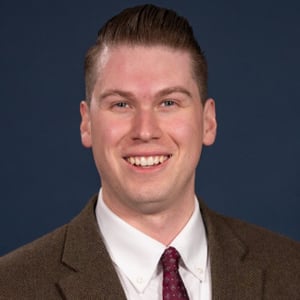
Charles Yates is an attorney in Pacific Legal Foundation’s environmental practice group, where he litigates to defend private property rights and uphold the structural protections guaranteed by the Constitution’s separation of powers.
His inspiration to focus on environmental law comes from the special case of government overreach it presents, where individual rights too often give way to collectivist notions and where misguided government policies create a cure worse than the disease. Charles has a particularly strong belief in the important role that the productive use of natural resources plays for human flourishing. To these ends, his practice at PLF focuses primarily on the Endangered Species Act, the Clean Water Act, and related regulatory issues.
Charles credits his strong belief in the principles of individual liberty and limited, constitutional government to his family. His personal philosophy developed further while studying the works of Adam Smith, John Locke, James Madison, and other classical liberals. Born and raised in Australia, Charles has always admired the U.S. Constitution as the purest and most enduring application of the ideals of individual liberty and limited government. It was these influences that impressed upon him the desire to pursue a career in public interest litigation.
After obtaining a B.A. in political science and international relations from the University of Western Australia, Charles moved to the U.S., where he earned his J.D. magna cum laude from the University of Baltimore School of Law. During law school, he served as president of his school’s chapter of The Federalist Society and was an editor of the University of Baltimore Law Review. Other highlights from his law school days include an internship at the Cato Institute and a clerkship at the Institute for Justice.
Charles lives in Sacramento with his wife Maxine. In his spare time, he enjoys reading and playing the bass guitar.
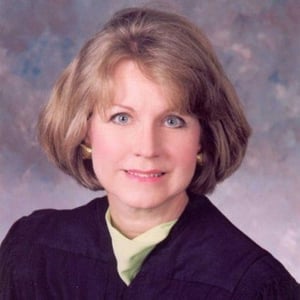
Judge, United States Court of Appeals, Fifth Circuit
Judge Edith Clement sits on the United States Court of Appeals for the Fifth Circuit. Judge Clement worked in a private practice as a maritime attorney in New Orleans, Louisiana, before being appointed in 1991 to the United States District Court for the Eastern District of Louisiana by President George H. W. Bush. In 2001, she was appointed by President George W. Bush to the United States Court of Appeals for the Fifth Circuit. Judge Clement is a member of the Maritime Law Association of the United States, the Federal Bar Association, the American Law Institute, the Federalist Society, the Tulane Law Schools Inn of Court, and the Committee on the Administrative Office of the Judicial Conference of the United States. She is a graduate of the University of Alabama and received her JD from Tulane Law School.
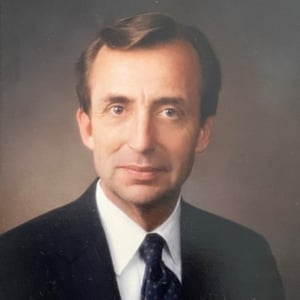
Partner, Montgomery Barnett
Harvey Charles Koch, Jr, a native of Hammond La. and a resident of New Orleans for 80 years, was born on August 15, 1934, and died peacefully on July 13, 2020, from cancer at age 85.
Mr. Koch's practice included complex commercial litigation, litigation management, insurance coverage and extra-contractual defense litigation, the construction process, construction litigation and arbitration, contract interpretation, sports and entertainment law, fidelity, surety and financial institution bonds, lawyer's malpractice, errors and omissions, life and long term care and fine arts coverages.
Mr. Koch participated in negotiations in Egypt after the Yom Kippur War leading to removal of ships sunk in the Suez Canal; represented a consortium of companies involved in reconstructing Kuwait and its oil fields after Operation Desert Storm; represented a major international insurance company in developing indemnity agreements, construction bonds, and guarantees for use with contractors in twelve foreign countries; represented the lead insurer in the adjustment of the business interruption claims of the Titan IV rockets manufacturer when the solid rocket fuel manufacturing plant supplying that missile program was destroyed in an explosion. And Mr. Koch has defended parties in complex litigation involving nuclear power and fossil fuel plants; the shipping industry; the former Louisiana Sunday Closing laws; and the resurfacing of both runways of the New Orleans International Airport (MSY) in the 1980's. Mr. Koch currently represents the international construction management firm managing all construction at the New Orleans Louis Armstrong International Airport (MSY).
As an appellate practitioner, Mr. Koch briefed the United States Supreme Court on the Insurance Industry's position on coverage issues regarding the Security Dealer's Blanket Bond, and the New Zealand Supreme Court on the interpretation by United States Courts on coverage issues related to the Financial Institution Bond.
Mr. Koch was listed in Best Lawyers in America (Construction), was a Fellow of the American College of Construction Lawyers (Founder and Former Chair of its Insurance Industry Committee and a former member of its Board of Governors), and was a consultative member of the American Law Institute. Mr. Koch chaired the American Bar Association's Fidelity and Surety Law Committee, Co-Chaired the ABA's first three National Institutes of the Forum on the Construction Industry, chaired six ABA National Law Institutes, founded and served as first Chair of the Louisiana Bar Association's Section on Construction, Fidelity and Surety Law, served as a Vice Chair of the Fidelity and Surety Law Committee of the International Association of Defense Counsel, served on both the Surety Claims Institute Board of Governors and the Advisory Council of the Chief Judge of the Court of Federal Claims in Washington, D.C., was a Trustee of the Federalist Society, was a member of the National Bond Claims Association, was one of the four Advisors Emeritus of the Fidelity Law Association and was a Life Fellow of both the American and Louisiana Bar Foundations.
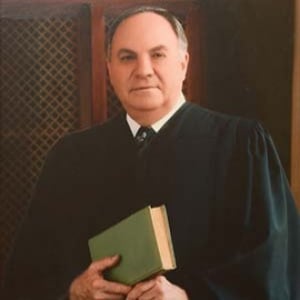
Justice, Louisiana Supreme Court
Harry Thomas Lemmon was a Justice of the Louisiana Supreme Court from May 16, 1980 to May 16, 2001. Born in Morgan City, Louisiana, Lemmon graduated from Morgan City High School in 1948, and from the University of Southwestern Louisiana in 1952. After briefly working as a chemist for American Oil Company, he served in the United States Army Chemical Corps in the Korean War. He graduated from Loyola University New Orleans College of Law in 1963, and was in private practice from then until 1970.

Ronald Reagan Distinguished Fellow Emeritus, The Heritage Foundation
Edwin Meese III, the prominent conservative leader, thinker and elder statesman, continues a quarter-century formal association with The Heritage Foundation as the leading think tank’s Ronald Reagan Distinguished Fellow Emeritus.
In that capacity, Meese oversees special projects and acts as an ambassador for Heritage within the conservative movement.
Meese was chairman of Heritage’s Center for Legal and Judicial Studies from its founding in 2001 until what he calls his “semi-retirement” on Feb. 1, 2013.
He joined Heritage in 1988 as the think tank's first Ronald Reagan Distinguished Fellow -- the only policy chair in the country to be officially named for the 40th president. His work focused on keeping President Reagan’s legacy of conservative principles alive in public debate and discourse.
The legal center now bears his name, in recognition of Meese’s contributions to the rule of law and the nation’s understanding of constitutional law. Its mission is to educate government officials, the media and the public about the Constitution and legal principles -- and how they affect public policy.
Perhaps best known as U.S. attorney general during Reagan’s second term, Meese’s service to the conservative icon stretched from the California governor’s mansion in 1966 to the White House in 1981 before he went to the Department of Justice four years later.
His Heritage “hats” kept Meese among the major conservative voices in national policy debates at an age when most men and women enjoyed quiet retirements.
In 2006, for example, Meese was named to the Iraq Study Group, a special presidential commission dedicated to examining the best resolutions for America's involvement in Iraq. In the past few years he wrote and spoke about constitutional topics ranging from religious liberty to the responsibility of Supreme Court justices.
Immediately after Reagan's death in 2004, and in the years since, Meese often agreed to major media appearances to discuss the lasting impact of his old friend, mentor and boss. He has summarized the Reagan legacy in three accomplishments: Reagan cut taxes and kept them low. He worked to defeat and end the Soviet Union and its worldwide push for communism. And he restored America's faith in itself after years of failure and "malaise."
"I admired him as a leader and cherish his friendship," Meese wrote in a 2004 essay for Heritage members and supporters. "Ronald Reagan had strong convictions. He was committed to the principles that had led to the founding of our nation. And he had the courage to follow his convictions against all odds." <[>Edwin Meese III was born Dec. 2, 1931, to Edwin Jr. and Leone Meese in Oakland, Calif. He graduated from Yale University in 1953 and holds a law degree from the University of California-Berkeley.
Meese spent much of his adult life working for Reagan, first after the former actor, sports announcer and athlete was elected as California’s governor in 1966 and then when he sought and won the presidency in 1980.
Reagan never forgot Meese's loyalty and hard work. During a press conference at which reporters questioned Meese's actions at the Justice Department, Reagan replied: "If Ed Meese is not a good man, there are no good men."
During the Reagan governorship, Meese served as executive assistant and chief of staff from 1969 through 1974 and as legal affairs secretary from 1967 through 1968. He previously was deputy district attorney in Alameda County, Calif.
From January 1981 to February 1985, Meese held the position of counsellor to the president -- the senior job on the White House staff -- and functioned as Reagan's chief policy adviser. In 1985, he received Government Executive magazine's annual award for excellence in management.
Meese served as the 75th attorney general of the United States from February 1985 to August 1988. As the nation's chief law enforcement officer, he directed the Justice Department and led international efforts to combat terrorism, drug trafficking and organized crime.
Meese’s relationship with Heritage began when he met with senior management to discuss the think tank's landmark policy guide, Mandate for Leadership, prepared for the incoming administration. Meese later recalled that Reagan personally handed out copies of the 1,093-page book to members of his Cabinet and asked them to read it. Nearly two-thirds of Mandate's 2,000 recommendations would be adopted or attempted by the Reagan administration.
More than a decade after joining Heritage, Meese assumed the chairmanship of its Center for Legal and Judicial Studies. Under his guidance, the center counseled White House staffers, Justice Department officials and Senate Judiciary Committee members on the importance of filling judicial vacancies with qualified men and women who are committed to interpreting the Constitution according to the founding document's original meaning.
The center became known for hosting "moot court" practice sessions to sharpen the arguments of attorneys slated to bring important cases before the Supreme Court. Those cases addressed constitutional issues ranging from property rights to racial preferences in primary and secondary schools to restrictions on free speech in campaign finance law.
Meese headed the legal center's Advisory Board for the writing and editing of the best-selling book, The Heritage Guide to the Constitution (Regnery, 2005). In it, 109 experts walked readers through a clause-by-clause analysis of the Constitution. Sen. Tom Coburn (R-Okla.) was among those keeping the reference work handy during Judiciary Committee hearings on Supreme Court nominees.
Meese's other books include “Leadership, Ethics and Policing” (Prentice Hall, 2004); “Making America Safer” (Heritage, 1997); and “With Reagan: The Inside Story” (Regnery Gateway, 1992).He wrote the Introduction to a well-received 2010 book on the “overcriminalization” trend, “One Nation Under Arrest,” by Heritage veterans Paul Rosenzweig and Brian W. Walsh.
He also is a distinguished visiting fellow at the Hoover Institution at Stanford University in California and lectures, writes and consults throughout the United States on a variety of subjects.
As both attorney general and counsellor to Reagan, Meese was a member of the Cabinet and the National Security Council. He served as chairman of the Domestic Policy Council and the National Drug Policy Board. After Reagan won the White House in the 1980 election, Meese headed the transition team. During the campaign, he was the Reagan-Bush Committee's senior official.
Meese had a career outside government and politics. From 1977 to 1981, he was a law professor at the University of San Diego, where he also directed the Center for Criminal Justice Policy and Management.
He was an executive in the aerospace and transportation industry as vice president for administration of Rohr Industries Inc. in Chula Vista, Calif. He left Rohr to return to the practice of law, doing corporate and general work in San Diego County.
A retired colonel in the Army Reserve, Meese remains active in numerous civic and educational organizations.
He and his wife, Ursula, have two grown children and reside in McLean, Va.
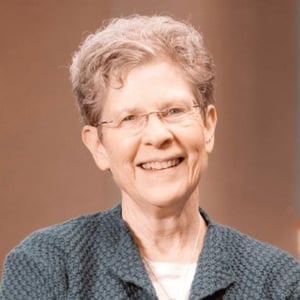
Senior Judge, U.S. Court of Appeals, Sixth Circuit
Alice M. Batchelder obtained her first judicial post as a judge on the U.S. Bankruptcy Court for the Northern District of Ohio in 1983. After two years, she was appointed by President Ronald Reagan to the U.S. District Court for the Northern District of Ohio. In 1991 President George H.W. Bush appointed her to her position on the U.S. Court of Appeals for the Sixth Circuit. From August 2009 to August 2014, Judge Batchelder served as Chief Judge of the Sixth Circuit. In March 2019, she took Senior Status and continues to work nearly full time.
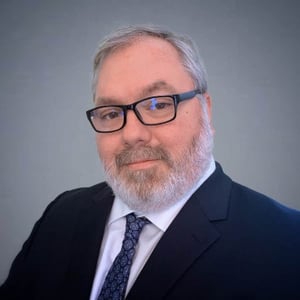
Director of Engagement, New Civil Liberties Alliance
NCLA’s Director of Engagement, Clegg Ivey, began his career as a software developer when he sold his first piece of code at the age of 15. Later, as a tech attorney, he represented clients like Google, Apple, Netscape, and Sun. Clegg then became a Silicon Valley tech entrepreneur, raising millions in venture capital for a series of startups he co-founded that were eventually acquired by firms like Cisco, Actel, and others. Most recently, he spent years building a local retail empire in Savannah that the COVID lockdown forced him to close.
Clegg has been fighting against the encroachment of the administrative state for three decades. As a tech lawyer in the ‘90s, he worked to keep the fledgling Internet free of government regulation. In the ‘00s he defended his own startups – against the FDA when it came after his energy drink company and against the FTC when it threatened his telephony and computer monitoring startups. During the ‘10s Clegg fought the good fight against countless state and local bureaucrats and regulatory agencies that made life difficult for his retail businesses.
Clegg is a graduate of Tulane University and the University of Chicago Law School. He also clerked for the Hon. Alice M. Batchelder on the U.S. Court of Appeals for the Sixth Circuit. He taught classes on technology and public policy as an adjunct at Tulane University and classes on entrepreneurship as a visiting professor at Zhejiang University.
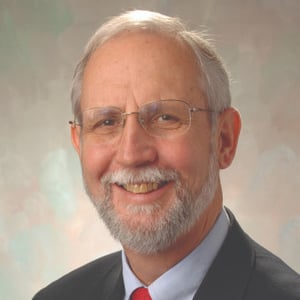
C. Blake McDowell, Jr. Professor of Law, University of Akron
William S. Jordan, III is Emeritus Professor of Law, retired from The University of Akron School of Law, where he taught Administrative Law. He also taught Property, Environmental Law, and Evidence. He received his B.A. from Stanford University and his J.D., cum laude, from the University of Michigan. He served as an attorney-advisor at the U.S. Department of Housing and Urban Development, then with the Washington, D.C., firm of Sheldon, Harmon, Roisman & Weiss, which became Harmon, Weiss, and Jordan, where he engaged primarily in environmental and administrative litigation. Dean Jordan is an active member and Fellow of the Section of Administrative Law and Regulatory Practice of the ABA. He has served on the Council of the Section, as Chair of the Judicial Review Committee, the Membership Committee, and the Publications Committee. He served for eighteen years as a contributing editor to the Administrative and Regulatory Law News.
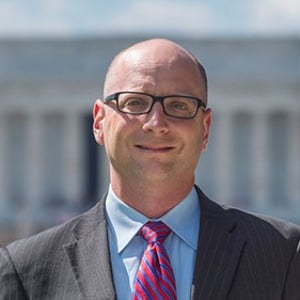
Partner, Consovoy McCarthy Park PLLC
Mr. Strawbridge provides clients with advice and representation at the pre-litigation, trial, and appellate stages. He has represented a broad range of individual and institutional clients on matters of constitutional law, financial and securities regulation, environmental laws, complex commercial disputes, and consumer protection statutes. His experience includes arbitrations, trial and appellate litigation, and administrative and regulatory proceedings.
Mr. Strawbridge served as a law clerk to Supreme Court Justice Clarence Thomas, Judge Morris Sheppard Arnold of the United States Court of Appeals for the Eighth Circuit, and Justice Howard Dana of the Supreme Judicial Court of Maine. Previously, Mr. Strawbridge was a partner at two large international law firms. He worked as a newspaper reporter for four years before attending law school. Mr. Strawbridge is an adjunct professor for the Supreme Court Clinic at the Antonin Scalia Law School at George Mason University.
Mr. Strawbridge earned a Bachelor of Journalism from the University of Missouri, and his J.D. summa cum laude from Creighton University School of Law. Mr. Strawbridge is a member of the Maine and Massachusetts bars.

Richard and Frances Mallery Professor of Law and Faculty Director, Constitutional Law Center, Stanford Law School
Michael W. McConnell is the Richard and Frances Mallery Professor and Faculty Director of the Constitutional Law Center at Stanford Law School, and a Senior Fellow at the Hoover Institution. From 2002 to 2009, he served as a Circuit Judge on the United States Court of Appeals for the Tenth Circuit. He was nominated by President George W. Bush, a Republican, and confirmed by a Democratic Senate by unanimous consent. McConnell has previously held chaired professorships at the University of Chicago and the University of Utah, and visiting professorships at Harvard and NYU. He teaches courses on constitutional law, constitutional history, First Amendment, and interpretive theory. He has published widely in the fields of constitutional law and theory, especially church and state, equal protection, and separation of powers. His book, “The President Who Would Not Be King: Executive Power Under the Constitution,” was published by Princeton University Press in 2020, based on the Tanner Lectures in Human Values, which he delivered at Princeton in 2019. His latest book, co-authored with Nathan Chapman, “Agreeing to Disagree: How the Establishment Clause Protects Religious Diversity and Freedom of Conscience,” was published by Oxford University Press in mid-2023. McConnell has argued sixteen cases in the United States Supreme Court, most recently Carney v. Adams (2020). defending a provision of the Delaware Constitution requiring political balance on that state’s courts. More recently, he was co-counsel in Gonzalez v. Google. He earned his B.A. from Michigan State University and his J.D. from the University of Chicago, and has received honorary degrees from Notre Dame University and Michigan State. He served as law clerk to Supreme Court Justice William J. Brennan, Jr. and D.C. Circuit Chief Judge J. Skelly Wright. He has been Assistant General Counsel of the Office of Management & Budget, Assistant to the Solicitor General of the Department of Justice, and a member of the President’s Intelligence Oversight Board. He is Senior of Counsel to the law firm Wilson, Sonsini, Goodrich & Rosati, and is co-chair of Meta’s Oversight Review Board.
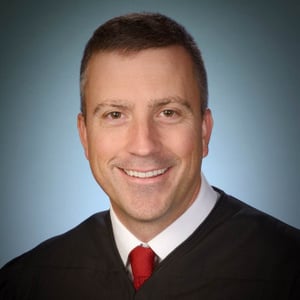
Judge, United States District Court, District of Columbia
Judge Trevor N. McFadden was appointed to the United States District Court for the District of Columbia in 2017. He received his B.A. in 2001 from Wheaton College, IL, magna cum laude. In 2006, he received his J.D. from the University of Virginia School of Law, where he graduated Order of the Coif and was an editor for the Virginia Law Review.
Following graduation from law school, Judge McFadden clerked for Judge Steven Colloton, U.S. Court of Appeals for the Eighth Circuit. He then joined the U.S. Department of Justice, where he served as Counsel to the Deputy Attorney General and as Assistant U.S. Attorney in the District of Columbia. Judge McFadden subsequently became a partner at Baker & McKenzie LLP in Washington, DC, where he focused on white collar investigations. He is also co-author of a treatise, Corporate Settlement Tools: DPAs, NPAs, and Cooperation Agreements.
After four years in private practice, Judge McFadden returned to the U.S. Department of Justice, where he was Deputy Assistant Attorney General and acted as the second-in-command of the Department's Criminal Division. As Deputy Assistant Attorney General, he managed the Division's Fraud and Appellate Sections.
Judge McFadden also has extensive experience in law enforcement. He served as an officer with the Fairfax County, VA, Police Department and as a deputy sheriff in Madison County, VA.
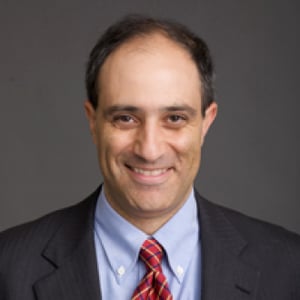
Carroll Professor of Jurisprudence, Georgetown Law
John Mikhail is the Carroll Professor of Jurisprudence at Georgetown University Law Center, where he has taught since 2004. He teaches and writes on a variety of topics, including constitutional law, moral psychology, moral and legal theory, and legal history. His recent scholarship has focused mainly on American constitutional history, including the original understanding of the Preamble, Tenth Amendment, and Emoluments, Ex Post Facto, and Necessary and Proper Clauses. Professor Mikhail received his B.A. from Amherst College, a Ph.D. in Philosophy from Cornell University, and his J.D. from Stanford Law School, where he was Senior Article Editor of the Stanford Law Review and Senior Submissions Editor of the Stanford Journal of International Law. Before coming to Georgetown, he was a Lecturer and Research Affiliate at MIT, an associate at Simpson, Thacher & Bartlett, and a judicial clerk to Judge Rosemary Barkett on the U.S. Court of Appeals for the Eleventh Circuit. Professor Mikhail served as the Law Center's Associate Dean for Research and Academic Programs from 2017 to 2020 and its Associate Dean for International and Transnational Programs from 2011 to 2013.
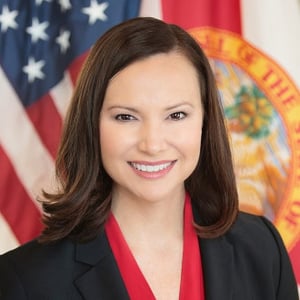
Attorney General, Florida
Attorney General Ashley Moody, a fifth generation Floridian, was born and raised in Plant City, Florida. She attended the University of Florida where she earned her bachelors and masters degrees in accounting and juris doctorate. She later attended Stetson University College of Law earning a masters of law in international law. In 2018, she was elected the 38th Attorney General of Florida.
General Moody joined the United States Attorney’s Office prosecuting drug, firearm, and fraud offenses. While a federal prosecutor, Ashley was commended by the DEA for prosecutorial excellence and outstanding initiative in drug law enforcement. She was also recognized by the Florida Department of Law Enforcement for her lead of “Operation Round-Up,” a targeted prosecution of violent and repeat offenders.
In 2006, at the age of 31, General Moody became the youngest judge in Florida when she was elected Circuit Court Judge of the 13th Judicial Circuit in Hillsborough County. As a judge, she founded the Attorney Ad Litem program recruiting volunteer attorneys to stand in the place of parents who did not appear in court with their children. She also developed a mentoring program for at-risk children within the juvenile delinquency system.
Ashley is married to Justin, a federal law enforcement agent. They have two sons, Connor and Brandon. Their eldest son Brandon is serving in the United States Army.
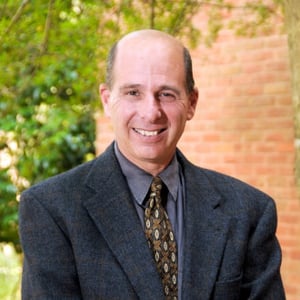
Sandra Day O'Connor Professor of Law & Professor of Government, William & Mary Law School
Neal Devins is the Sandra Day O’Connor Professor of Law and Professor of Government at the College of William and Mary. He is the author of several books and more than 100 articles and book chapters on courts, constitutional law, and law & politics. His books include The Company They Keep (Oxford 2019) (with Larry Baum), The Democratic Constitution (Oxford 2d ed. 2015) (with Louis Fisher), Political Dynamics of Constitutional Law (West 6th ed. 2019) (with Louis Fisher), and Shaping Constitutional Values: The Supreme Court, Elected Government, and the Abortion Dispute (Johns Hopkins University Press 1996). His articles have appeared in The Yale Law Journal, The Stanford Law Review, The Columbia Law Review, The Michigan Law Review, The California Law Review, The Virginia Law Review, The University of Pennsylvania Law Review, The University of Chicago Law Review, The New York University Law Review, and several other journals and magazines. Professor Devins is also the author of op-eds appearing in The Wall Street Journal, The New York Times, The Washington Post, The Los Angeles Times, Slate, and several other newspapers. He has testified before House and Senate committees on budget reform and the separation of powers. Professor Devins is a graduate of Georgetown University (A.B. 1978) and Vanderbilt Law School (J.D. 1982).
Ralph V. Whitworth Professor in Law, Georgetown University Law Center
Professor Nourse is one of the nation’s leading scholars of Congress, the separation of powers, and statutory interpretation. In addition to her scholarship, she has practiced as an attorney in the White House, the Department of Justice, the Senate, and in private practice. The story of her pioneering work on gender equality is told in Equal: Women Reshape American Law.
Her most recent book is “The Impeachments of Donald Trump: An Introduction to Constitutional Argument” (West 2021). In 2016, Harvard Press published her Misreading Law, Misreading Democracy, on the limits of textualism. She is one of the most-cited scholars on interpretation in the country and has recently co-authored Yale’s revised leading casebook, Statutes, Regulation & Interpretation (West 2024).
Professor Nourse has published widely on the power of the President and the separation of powers, Reclaiming the Constitutional Text from Originalism: The Case of Executive Power, 106 Calif. L. Rev. 1 (2018), and constitutional rights, In Reckless Hands (Norton 2008), the story of Skinner v. Oklahoma and American eugenics.
President Biden appointed Professor Nourse to serve as Vice-Chair of the United States Commission on Civil Rights in 2023, with her term expiring in 2029.
Professor Nourse previously served as Chief Counsel to then Vice President Biden under the Obama Administration. Prior to that role, she practiced as an appellate litigator in the Department of Justice and as Special Counsel to the Senate Judiciary Committee.
Professor Nourse has held chairs at Emory University and the University of Wisconsin. She has been a visiting professor at Yale, NYU, University of Maryland, and Northwestern.
She began her legal career in New York, clerking for legendary trial judge of the Southern District of New York, Edward Weinfeld, and practicing at Paul, Weiss, Rifkind Wharton & Garrison. She left private practice to serve as junior counsel to the Senate-Iran Contra Committee. After serving on the appellate staff of the Civil Division, she was hired as a legal expert for then Senator Joseph Biden.
Professor Nourse is the co-Founder of the Supreme Court Interpretation Lab, which uses big data to analyze trends in Supreme Court analyses. She formerly served as Executive Director of the Georgetown Law Center on Congressional Studies.
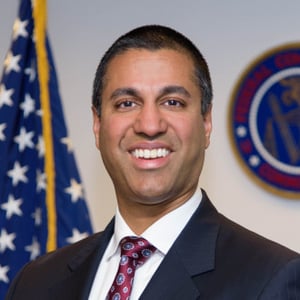
Nonresident Fellow, American Enterprise Institute
Ajit Pai, a former chairman of the Federal Communications Commission (FCC), is a nonresident fellow at the American Enterprise Institute, where he focuses on issues pertaining to technology and innovation, telecommunications regulatory policy, and market-based incentives for investment in broadband deployment. Concurrently, he is a partner at Searchlight Capital Partners, a global investment firm.
Mr. Pai’s distinguished career at the FCC includes two leadership roles following presidential appointments. He was appointed commissioner by President Barack Obama in 2012, designated chairman by President Donald Trump in 2017, and twice confirmed by the US Senate. While at the helm of the FCC, Mr. Pai had a transformative impact on the future of US technology and communications policy, implementing major initiatives to help close the digital divide; advance US leadership in 5G and other wireless technologies; promote innovation; protect consumers, public safety, and national security; and make the agency itself more open, transparent, and data-driven.
Earlier in his career, Mr. Pai served in various public-sector positions in the FCC’s Office of General Counsel, the US Department of Justice, the US Senate Judiciary Committee, and the US District Court for the Eastern District of Louisiana. He also worked as a partner at Jenner & Block and associate general counsel at Verizon Communications.
Mr. Pai graduated with honors from Harvard University, where he received a bachelor’s degree, and from the University of Chicago Law School, where he received a law degree and was an editor on the University of Chicago Law Review.

Chief Judge, United States Court of Appeals, Eleventh Circuit
William H. Pryor Jr. serves as Chief Circuit Judge on the United States Court of Appeals for the Eleventh Circuit.
In 2013–18, he served on the United States Sentencing Commission and, in 2017–18, served as Acting Chair.
He has taught as a visiting professor at the University of Alabama School of Law and previously taught as an adjunct professor at the Cumberland School of Law of Samford University.
He served as the 45th Attorney General of Alabama from 1997 to 2004. When he took office, he was the youngest attorney general in the nation. In his reelection, he received the highest percentage of votes of any statewide candidate.
He graduated magna cum laude from Tulane Law School where he finished first in the common-law curriculum and was editor in chief of the Tulane Law Review. He then served as a law clerk for Judge John Minor Wisdom of the U.S. Court of Appeals for the Fifth Circuit.
He is a member of The American Law Institute and an Adviser for the RESTATEMENT OF THE LAW THIRD, CONFLICT OF LAWS. He is a coauthor with Bryan Garner, Justices Gorsuch and Kavanaugh, and several other judges of a treatise, THE LAW OF JUDICIAL PRECEDENT. He has published in the Yale Law Journal, Columbia Law Review, Virginia Law Review, Notre Dame Law Review, Harvard Journal of Law & Public Policy, Yale Law & Policy Review, George Mason Law Review, Florida Law Review, Alabama Law Review, Case Western Reserve Law Review, and Tulane Law Review. He has published op-eds in The Wall Street Journal, The New York Times, National Review, and USA Today. He has debated at National Lawyers’ Conventions of the Federalist Society (including on National Public Radio) and at the Oxford Union in the United Kingdom. And he is listed among several “widely admired judicial writers” in Bryan Garner’s The Redbook: A Manual on Legal Style.
He is a member of the Tulane Law School Hall of Fame and has received the Defender of the Constitution Award from the Heritage Foundation, the Jurist of the Year Award from the Texas Review of Law & Politics, and the St. Thomas More Award from the St. Thomas More Society of Atlanta. Judge Pryor is also a proud member of the National Society of the Sons of the American Revolution.
Hugh and Hazel Darling Foundation Professor of Law; Director, Center for the Study of Constitutional Originalism, University of San Diego School of Law
Professor Emeritus, Wake Forest University School of Law
Michael Kent Curtis is one of the foremost constitutional historians in the United States. His book "Free Speech: The People's Darling Privilege: Struggles for Freedom of Expression in American History" won the Playboy Foundation Heffner First Amendment Award for the best book of its year on the subject of the 1st Amendment. The North Carolina Literary and Historical Society also chose the book as the best non-fiction book of the year by a North Carolina author. Professor Akhil Amar of Yale Law School described Michael Curtis's book "No State Shall Abridge: The Fourteenth Amendment and the Bill of Rights" as "one of the most important and most impressive works of constitutional scholarship of the late twentieth century." Professor Curtis has also received the Frank Porter Graham Award from the North Carolina Civil Liberties Union for achievement in defending and advancing civil liberties in North Carolina. He lives in Greensboro, North Carolina with his wife Deborah Maury, who is also an attorney. Deborah Maury retired from law practice after a serious horse accident which left her with incomplete quadriplegia. He has one son, Matthew Fontaine Curtis-Maury.
A. W. Walker Centennial Chair in Law, University of Texas at Austin School of Law
Professor Graglia has written widely in constitutional law--especially on judicial review, constitutional interpretation, race discrimination, and affirmative action--and also teaches and writes in the area of antitrust. He is the author of Disaster by Decree: The Supreme Court Decisions on Race and the Schools (Cornell, 1976) and many articles, including recently "Church of the Lukumi Babalu Aye: Of Animal Sacrifice and Religious Persecution" (Georgetown Law Journal, 1996). He has been a Visiting Professor at the University of Virginia School of Law.
W. St. John Garwood and W. St. John Garwood, Jr. Centennial Chair and Professor of Government, University of Texas at Austin School of Law
Sanford Levinson, who holds the W. St. John Garwood and W. St. John Garwood, Jr. Centennial Chair in Law, joined the University of Texas Law School in 1980. Previously a member of the Department of Politics at Princeton University, he is also a Professor in the Department of Government at the University of Texas. Levinson is the author of approximately 400 articles, book reviews, or commentaries in professional and popular journals--and a regular contributor to the popular blog Balkinization. He has also written six books: Constitutional Faith (1988, winner of the Scribes Award, 2d edition 2011); Written in Stone: Public Monuments in Changing Societies (1998); Wrestling With Diversity (2003); Our Undemocratic Constitution: Where the Constitution Goes Wrong (and How We the People Can Correct It)(2006); Framed: America's 51 Constitutions and the Crisis of Governance (2012); An Argument Open to All: Reading the Federalist in the 21st Century (2015); and, with Cynthia Levinson, Fault Lines in the Constitution: The Framers, Their Fights, and teh Flaws that Affect Us Today (forthcoming, September 2017). Edited or co-edited books include a leading constitutional law casebook, Processes of Constitutional Decisionmaking (6th ed. 2015, with Paul Brest, Jack Balkin, Akhil Amar, and Reva Siegel); Nullification and Secession in Modern Constitutional Thought (2016); Reading Law and Literature: A Hermeneutic Reader (1988, with Steven Mallioux); Responding to Imperfection: The Theory and Practice of Constitutional Amendment (1995); Constitutional Stupidities, Constitutional Tragedies (1998, with William Eskridge); Legal Canons (2000, with Jack Balkin); The Louisiana Purchase and American Expansion (2005, with Batholomew Sparrow); Torture: A Collection (2004, revised paperback edition, 2006); and The Oxford Handbook on the United States Constitution (with Mark Tushnet and Mark Graber, 2015). He received the Lifetime Achievement Award from the Law and Courts Section of the American Political Science Association in 2010.
He has been a visiting faculty member of the Boston University, Georgetown, Harvard, New York University, and Yale law schools in the United States and has taught abroad in programs of law in London; Paris; Jerusalem; Auckland, New Zealand; and Melbourne, Australia. He was a Fellow at the Institute for Advanced Study in Princeton in 1985-86 and a Member of the Ethics in the Professions Program at Harvard in 1991-92. He is also affiliated with the Shalom Hartman Institute of Jewish Philosophy in Jerusalem. A member of the American Law Institute, Levinson was elected to the American Academy of Arts and Sciences in 2001. He is married to Cynthia Y. Levinson, a writer of children's literature, and has two daughters and four grandchildren.
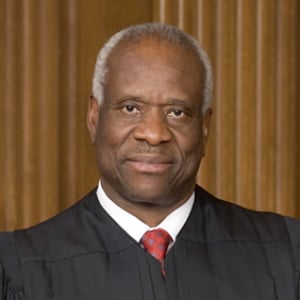
Associate Justice, Supreme Court of the United States
Clarence Thomas, Associate Justice, was born in the Pinpoint community near Savannah, Georgia on June 23, 1948. He attended Conception Seminary from 1967-1968 and received an A.B., cum laude, from Holy Cross College in 1971 and a J.D. from Yale Law School in 1974. He was admitted to law practice in Missouri in 1974, and served as an Assistant Attorney General of Missouri, 1974-1977; an attorney with the Monsanto Company, 1977-1979; and Legislative Assistant to Senator John Danforth, 1979-1981. From 1981–1982 he served as Assistant Secretary for Civil Rights, U.S. Department of Education, and as Chairman of the U.S. Equal Employment Opportunity Commission, 1982-1990. From 1990–1991, he served as a Judge on the United States Court of Appeals for the District of Columbia Circuit. President Bush nominated him as an Associate Justice of the Supreme Court and he took his seat October 23, 1991. He married Virginia Lamp on May 30, 1987 and has one child, Jamal Adeen by a previous marriage.

United States Court of Appeals, Fourth Circuit
James Harvie Wilkinson III is an Article III federal judge on the United States Court of Appeals for the Fourth Circuit. He joined the Court in 1984 after being nominated by President Ronald Reagan.
Born in New York City, New York, Wilkinson graduated from Yale University with his Bachelor's degree in 1967. Wilkinson served in the United States Army from 1968 to 1969 and received his Juris Doctor degree from the University of Virginia School of Law in 1972.
On the recommendation of Virginia U.S. Senator John Warner, Wilkinson was nominated to the United States Court of Appeals for the Fourth Circuit by President Ronald Reagan on January 30, 1984 to a seat vacated by John Butzner, Jr.,. Wilkinson was confirmed by the Senate on August 9, 1984 on a Senate vote and received commission on August 13, 1984. Wilkinson served as the Chief Judge of the Court from 1996 to 2003.
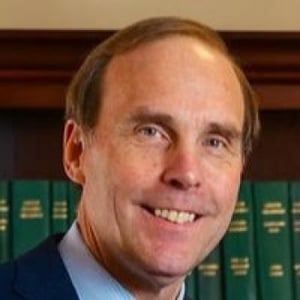
Distinguished Research Professor, Center for Citizenship and Constitutional Government, University of Notre Dame
Donald L. Drakeman is Distinguished Research Professor in the Center for Citizenship and Constitutional Government at the University of Notre Dame, and a Fellow of the Centre for Health Leadership and Enterprise at the University of Cambridge. His writings have been cited by the Supreme Courts of the United States and the Philippines. He has published seven books, including The Hollow Core of Constitutional Theory (Cambridge University Press, 2021), Why We Need the Humanities (Palgrave, 2016), and Church, State, and Original Intent (Cambridge University Press, 2010). He received an A.B. magna cum laude from Dartmouth College; a J.D. from Columbia Law School, where he was a Harlan Fiske Stone Scholar; and a Ph.D. from Princeton University. He is a Fellow of the Royal Historical Society, and he was the founding chair of the Advisory Council for the James Madison Program on American Ideals and Institutions at Princeton University.
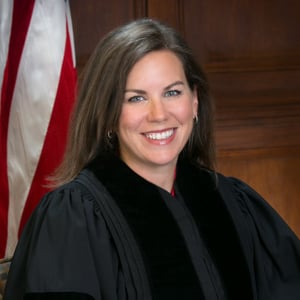
Judge, United States Court of Appeals, Eleventh Circuit
Britt C. Grant is a judge on the U.S. Court of Appeals for the Eleventh Circuit. Judge Grant was appointed to the federal bench in August 2018 after serving as a Justice on the Supreme Court of Georgia. Prior to her judicial appointment, she served as the Solicitor General of Georgia and practiced in the Washington, D.C. office of Kirkland & Ellis. Upon graduation from law school, Judge Grant served as a law clerk to then-Judge Brett M. Kavanaugh of the U.S. Court of Appeals for the District of Columbia Circuit. She earned her J.D., with distinction, from Stanford Law School, where she was the Co-Founder of the Stanford National Security and the Law Society, and the President of the Stanford Law chapter of the Federalist Society. Before enrolling in law school, Judge Grant served in The White House in a variety of domestic policy roles as well as on the staff of Congressman Nathan Deal. Judge Grant earned her B.A., summa cum laude, from Wake Forest University, where she was inducted into Phi Beta Kappa. She now lives in Atlanta, Georgia with her husband and three children.
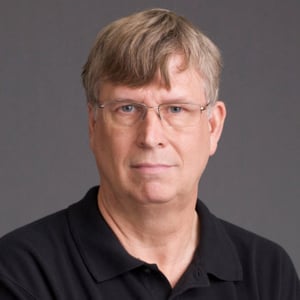
William L. Matheson and Robert M. Morgenthau Distinguished Professor of Law and Douglas D. Drysdale Research Professor of Law, University of Virginia School of Law
Lawrence B. Solum is an internationally recognized legal theorist who works in constitutional theory, procedure and the philosophy of law. Solum contributes to debates in constitutional theory and normative legal theory. He is especially interested in the intersection of law with the philosophy of language and with moral and political philosophy. His series of articles on constitutional originalism have shaped contemporary thinking about the great debate between originalism and constitutional theory. Solum’s original theory of the fundamental nature and purpose of law, “Virtue Jurisprudence,” has been debated and discussed in Asia, Europe and North America. He also works on problems of law and technology, including Internet governance, copyright policy and patent law. His pathbreaking article, “Legal Personhood for Artificial Intelligences,” published in the early 1990s, is widely acknowledged as far ahead of its time.
Solum received his J.D. magna cum laude from Harvard Law School and received his B.A. with highest departmental honors in philosophy from the University of California at Los Angeles. While at Harvard, he served as an editor of the Harvard Law Review. After graduation, he worked for the law firm of Cravath, Swaine, and Moore in New York, and then clerked for Judge William A. Norris of the U.S. Court of Appeals for the Ninth Circuit.
Prior to joining the UVA Law faculty in 2020, he was a member of the faculty at Georgetown University Law Center, the University of Illinois, the University of San Diego and Loyola Marymount University, and visited at Boston University and the University of Southern California. He regularly teaches Civil Procedure and Constitutional Law. His other teaching includes seminars in constitutional theory and the philosophy of law as well as courses in conflict of laws, federal courts, intellectual property and internet law and governance.

David Boies Professor of Law, Yale Law School
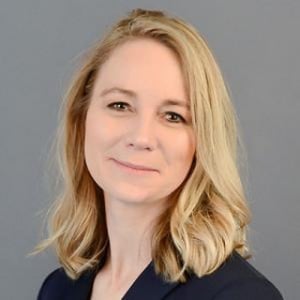
Supreme Court & Appellate Litigation Chair, Lex Politica; Of Counsel, Alliance Defending Freedom
Erin Morrow Hawley serves as Chair of Lex Politica's Supreme Court and Appellate Practice overseeing the firm’s strategic appellate litigation and critical motions practice in the trial courts. Erin is an experienced litigator who represents clients in constitutional, regulatory, and appellate matters in federal and state courts throughout the country.
Erin has represented dozens of clients before the Supreme Court of the United States, served as lead counsel in high-profile cases raising novel constitutional and statutory issues, and authored numerous successful petitions for certiorari and briefs in opposition. She has argued in state and federal appellate and trial courts throughout the country, including the Supreme Court of the United States. Erin represents diverse clients in high-stakes litigation from state governments to faith-based nonprofits to Fortune 100 companies. She possesses expertise on a wide range of subject matters including administrative law, the First Amendment, religious liberty, federal jurisdiction, federal preemption, equitable jurisdiction, tax law, the Affordable Care Act, and Title IX.
Erin represents clients in cases where public communications strategy is paramount. She is a sought-after speaker and writer, has testified multiple times before Congress, and is a frequent presenter on constitutional and administrative law issues, including at the Oxford Union, the National Federalist Society Convention, and university campuses across the country. She is a frequent commentator to media outlets, including Fox News, MSNBC, the Wall Street Journal, WORLD, USA Today, the Federalist, and the Hill.
Erin previously oversaw Alliance Defending Freedom’s--where she still serves as Of Counsel--litigation strategies to empower women and protect the dignity of life, defend pregnancy centers’ First Amendment rights from government overreach, and safeguard Americans’ freedoms from the ever-encroaching administrative state.
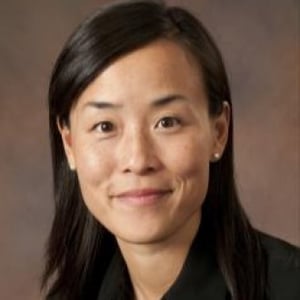
Professor of Law, University of Chicago Law School
Jennifer Nou is Professor of Law at the University of Chicago Law School. Nou’s main research interests are in administrative law, executive branch dynamics, regulatory policy, and constitutional separation-of-powers. Prior to joining the faculty, she was a Public Law Fellow at the Law School and also worked as a policy analyst and special assistant at the Office of Information and Regulatory Affairs. Nou is a graduate of Yale College and Yale Law School, and received an MPhil in Politics from Oxford University as a Marshall Scholar. After law school, she was a law clerk to Judge Richard Posner of the US Court of Appeals for the Seventh Circuit and then to Justice Stephen Breyer of the US Supreme Court. She is currently a public member of the Administrative Conference of the United States.

A Seat at the Sitting - October 2022
Michael R. Dimino, Adam Gustafson, Donald J. Kochan, Patrick A. Parenteau, Charles Yates
Each month, a panel of constitutional experts convenes to discuss the Court’s upcoming docket sitting...
1996 James Madison Lecture [Archive Collection]
Edith Brown Clement, Martin Feldman, Harvey C. Koch, Harry T. Lemmon, Edwin Meese
On October 9, 1996, the Federalist Society's student chapter at Loyola University School of Law...
Panel Two: Is the Administrative State a Threat to Individual Liberty?
Alice Batchelder, Clegg Ivey, William S. Jordan, Patrick Strawbridge
Law in the form of regulation is increasingly made, enforced, and adjudicated by administrative agencies,...
IV: Resolved: The Federalists Designed a Constitution of Plenary Federal Power (Debate)
Michael W. McConnell, Trevor N. McFadden, John Mikhail
One of the principal disagreements between the Federalists and Anti-Federalists surrounded the role of the...
Remarks from Attorney General Ashley Moody [Florida Chapters Conference]
Ashley Moody
Florida Attorney General Ashley Moodey delievered the opening remarks at the Federalist Society's Eighth Annual...
The Separation of Powers and Political Polarization
Neal E. Devins, Victoria Nourse, Ajit V. Pai, William H. Pryor, Michael B. Rappaport
The 2021 National Lawyers Convention took place November 11-13, 2021 at the Mayflower Hotel in...
Panel III: The Modern Role of the Privileges or Immunities Clause [Archive Collection]
Michael Kent Curtis, Lino A. Graglia, Sanford V. Levinson, Clarence Thomas, J. Harvie Wilkinson
On March 4-5, 1988, The Federalist Society's University of Virginia student chapter hosted the National...
Original Meaning or Framers' Intent? A New Book and an Age-Old Debate
Donald L. Drakeman, Britt C. Grant, Lawrence Solum, Keith E. Whittington
In his new book, The Hollow Core of Constitutional Theory: Why We Need the Framers, historian Donald...
Topics
The 2021 Joseph Story Award
The Federalist Society is delighted to announce that the winner of the 2021 Joseph Story...
Kisor and Gundy: The Future of Administrative Law?
Erin M. Hawley, Jennifer Nou, Hallie Saunders
On February 15, 2021, Erin M. Hawley and Jennifer Nou joined the Federalist Society’s Chicago...