
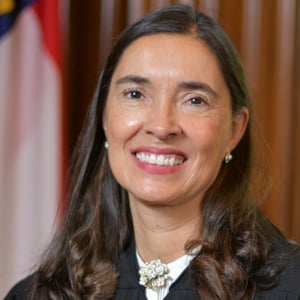
Senior Associate Justice, Supreme Court of North Carolina
Justice Anita Earls currently serves as the Senior Associate Justice on the North Carolina
Supreme Court. Her professional background combines over thirty years of high-stakes civil
rights litigation with more than seven years of direct judicial experience. She has participated in
hundreds of cases on the bench and has authored numerous major constitutional opinions
across civil, criminal, and regulatory matters.
Before serving on the Court, Earls spent three decades trying civil and criminal cases in state
and federal courts. She began her career as an associate and then partner at the Ferguson
Stein law firm in Charlotte, practicing civil rights, criminal defense, and employment law
alongside legends Julius Chambers and James Ferguson. She later served as Deputy Assistant
Attorney General in the Civil Rights Division of the U.S. Department of Justice under President
Clinton, where she oversaw the Voting, Coordination and Review, Educational Opportunities,
and Disability Rights sections. Following her federal service, Earls directed the Voting Rights
Project for the Lawyers' Committee for Civil Rights Under Law, served as Director of Advocacy at the UNC Center for Civil Rights, and in 2007 founded and directed the Southern Coalition for Social Justice.
Her extensive litigation experience includes over thirty federal cases at the trial level, trials
before Superior Court juries on serious felony charges, appellate arguments in state courts and
in the First, Fourth, and Eleventh Circuits. She also served as a member of the North Carolina
State Board of Elections and as Secretary of the North Carolina Equal Access to Justice
Commission. She has taught as an adjunct professor at Duke University and currently teaches
as an adjunct at the UNC School of Law. She lives in Durham with her husband and has two
children and three grandchildren.
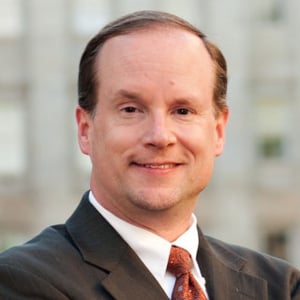
President, John William Pope Foundation
John Hood is president of the John William Pope Foundation. Hood also serves on the board of the John Locke Foundation, the state policy think tank he helped found in 1989 and led as its president for more than two decades.
Since 1986, Hood has written a syndicated column on politics and public policy for North Carolina newspapers. It appears regularly in more than 50 papers across the state. A frequent radio and television commentator, Hood is the author of seven nonfiction books on such subjects as business, advertising, public policy, and political history. His latest three books — Mountain Folk, Forest Folk, and Water Folk — are historical-fantasy novels set in early America.
A former Bradley Fellow at the Heritage Foundation, Hood teaches at Duke University’s Sanford School of Public Policy. His articles have appeared in magazines such as Readers’ Digest, The New Republic, National Review, Military History, and Reason as well as newspapers such as The Wall Street Journal and USA Today. His broadcast appearances include CNN, NBC News, National Public Radio, and Fox News.
At Locke, Hood created the E.A. Morris Fellowship for Emerging Leaders, which prepares young North Carolinians for leadership roles in the public and private sectors. He also serves on the faculty and as board chair of the NC Institute of Public Leadership; as co-chair of the North Carolina Leadership Forum, based at Duke University; as vice-chair of the James G. Martin Center for Academic Renewal, State Policy Network, and the Carolina Liberty Foundation; and on the board the Student Free Press Association.
Hood received his BA in journalism from the University of North Carolina at Chapel Hill, where he serves as vice chair of North Carolina Public Radio-WUNC and on the foundation board of the Hussman School of Journalism and Media. He earned a MA in liberal studies and a graduate certificate in nonprofit management from UNC-Greensboro.
A native of Mecklenburg County, Hood now resides in Wake County with his wife, two sons, and a stepdaughter.
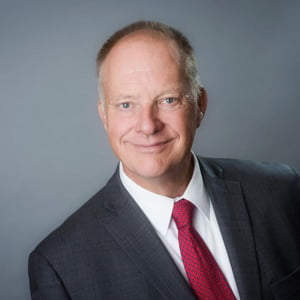
Associate Justice, Minnesota Supreme Court (ret.)
Former Minnesota Supreme Court Justice Barry Anderson is a 1976 graduate of Gustavus Adolphus College in St. Peter, Minnesota and a 1979 graduate of the University of Minnesota Law School. He was a member of the Minnesota Court of Appeals from August 1998 until his appointment to the Supreme Court. He was sworn in and joined the court on October 13, 2004, and served through to his retirement on May 10, 2024.
He previously was a partner in the Minneapolis and Hutchinson law firm of Arnold, Anderson & Dove, PLLP, and also served the City of Hutchinson as City Attorney from 1987 to 1998. He is certified by the Minnesota State Bar Association as a civil trial specialist.
Justice Anderson’s background includes substantial public service including as a board member and chair of variety of community organizations including service clubs, task forces and a local public access channel as well as a wide variety of other community activities.
Justice Anderson also served on the Minnesota Judicial Council, the managing body for the Minnesota Judicial Branch. He is also a frequent contributor to continuing legal education efforts on both appellate advocacy issues as well as general trial practice.

Justice, Supreme Court of Arizona
Clint Bolick was appointed by Governor Doug Ducey in January 2016 to serve on the Arizona Supreme Court and was retained by the voters in 2018 and 2024.
Prior to joining the Court, Justice Bolick litigated constitutional cases in state and federal courts from coast to coast, including the U.S. Supreme Court. Among other positions, he served as Vice President for Litigation at the Goldwater Institute and as Co-founder and Vice President for Litigation at the Institute for Justice. He has litigated in support of school choice, freedom of enterprise, private property rights, freedom of speech, and federalism, and against racial classifications and government subsidies.
Justice Bolick received his Juris Doctor degree from the University of California at Davis, where he has been recognized as a distinguished alumnus, and his Bachelor of Arts degree magna cum laude from Drew University. He serves as a research fellow with the Hoover Institution. Among other honors, he was named one of the 90 Greatest DC Lawyers in the Last 30 Years by Legal Times in 2008, received a Bradley Prize in 2006, and was recognized as one of the nation’s three lawyers of the year by American Lawyer in 2002 for his successful defense of school vouchers in Zelman v. Simmons-Harris.
Justice Bolick is a prolific author of a dozen books and hundreds of articles. Among his most recent books are Unshackled: Freeing America’s K-12 Education System: Immigration Wars: Forging an American Solution, co-authored with former Florida Governor Jeb Bush; and David’s Hammer: The Case for an Activist Judiciary. Bolick serves as an adjunct professor of constitutional law at Arizona State University’s Sandra Day O’Connor School of Law and has served as a lecturer at Harvard University’s John F. Kennedy School of Government.
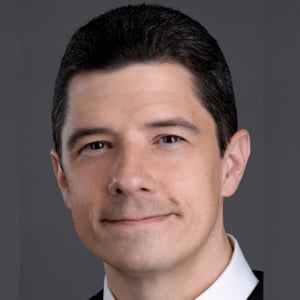
Justice, Texas Supreme Court
Brett Busby was appointed to the Supreme Court of Texas in 2019, confirmed unanimously by the Texas Senate, and elected to a full term in 2020. He previously practiced as an appellate litigator in Houston, served on the Fourteenth Court of Appeals and the Texas Multi-District Litigation Panel, and taught at U.T. Law School as an adjunct professor.
Brett is a seventh-generation Texan, third-generation Eagle Scout, and life-long violinist who grew up in Amarillo and Austin. After graduating with high honors from Duke University and Columbia Law School, he served as a law clerk to Justices Byron R. White (Ret.) and John Paul Stevens, U.S. Supreme Court, and to Judge Gerald Bard Tjoflat, U.S. Court of Appeals, Eleventh Circuit.
In private practice, Brett presented oral argument in the U.S. Supreme Court and handled dozens of appeals in that Court, the Supreme Court of Texas, and federal and state appellate courts. He is board-certified in civil appellate law, and his fellow Texas appellate lawyers elected him as Chair of the State Bar of Texas Appellate Section in 2018. He has also served as Chair of the Texas Bar Committee on Pattern Jury Charges (Business, Consumer, Insurance, and Employment) and as a Director of the Texas Young Lawyers Association.
Brett serves as the Court’s liaison to the Texas Access to Justice Commission and Foundation, which help assure that Texans with limited means have access to basic civil legal services. He received the 2022 Judicial Civic Education Award from the American Lawyers Alliance for his work on the Teach Texas judicial civics program, a partnership with the Houston Bar Association and the Texas Supreme Court Historical Society that sends lawyers and judges to teach seventh graders about our court system and Texas legal history. The Texas Association of Civil Trial and Appellate Specialists named him Appellate Judge of the Year in 2018.
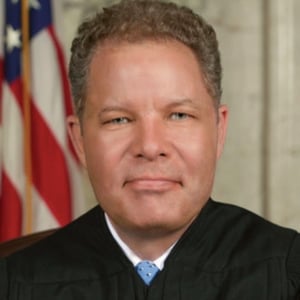
Former Justice, Wisconsin Supreme Court
Justice Daniel Kelly was appointed to the Supreme Court by Gov. Scott Walker in 2016 to fill the vacancy created by the retirement of Justice David T. Prosser, Jr.
A native of Santa Barbara, California, Kelly grew up in Arvada, Colorado. He came to Waukesha, Wisconsin to study at Carroll College (now Carroll University), where he earned a bachelor's degree in Political Science and Spanish in 1986. He earned his law degree from Regent University School of Law in Virginia Beach, Virginia in 1991.
Before joining the Court, Kelly had 19 years' experience as a private practice attorney in Wisconsin and represented clients in cases before the Wisconsin Supreme Court and the U.S. Supreme Court. Kelly spent most of his private practice career at one of the largest and oldest law firms in Wisconsin. Subsequently, he served as vice president and general counsel for a philanthropic foundation, and then practiced law at a firm he owned and founded in Waukesha.
Early in his legal career, Kelly was a law clerk and then staff attorney for the Office of Special Masters of the U.S. Court of Federal Claims, from 1992 to 1996. He worked as a law clerk for the late Wisconsin Court of Appeals Judge Ralph Adam Fine from 1991 to 1992.
Kelly is a member of the board of advisors and past president of the Milwaukee Lawyer's Chapter of the Federalist Society. He serves on the Carroll University President's Advisory Council and is a former member of the Wisconsin Advisory Committee of the U.S. Commission on Civil Rights.
Kelly is married and has five children. He lives in North Prairie, Wisconsin.
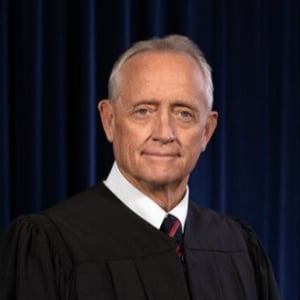
Justice, Supreme Court of Ohio
Justice Joseph T. Deters is the 163rd justice of the Supreme Court of Ohio. He took office in January 2023, following appointment by Governor Mike DeWine.
Prior to joining the Court, Justice Deters served as the longest-tenured prosecutor in Hamilton County. He held the position twice from 1992-1999 and 2005-2023.
During his time as prosecutor, Justice Deters established the first drug court in Ohio, in partnership with Hamilton County Common Pleas Court. The Hamilton County Drug Treatment and Recovery Court handles more cases than any other specialized docket in the state.
Justice Deters established the county’s first victim/witness advocate program and helped develop several diversion programs for first time non-violent offenders. He started a sex offender unit within the prosecutor’s office to monitor offender registration and compliance. He formed a unit focused on violent crimes against women and children.
Justice Deters was elected statewide as Ohio Treasurer for two terms, in 1998 and 2002. As treasurer, he was responsible for collecting, managing, and investing more than $11 billion in assets for the state.
He served as Hamilton County Clerk of Courts from 1988-1992. The justice spent the first six years of his legal career as an assistant Hamilton County prosecutor.
Justice Deters received his undergraduate and law degrees from the University of Cincinnati, where he was recognized as a distinguished alumnus. He is a member of the Cincinnati Bar Association and various civic organizations. He previously served on the University of Cincinnati Board of Trustees, Ohio Organized Crime Commission, and the Southern Ohio Leukemia Foundation.
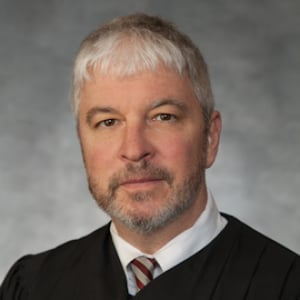
Cuyahoga County Common Pleas Court
Michael P. Donnelly is a judge on the Cuyahoga County Court of Common Pleas General Division in Cleveland, Ohio. He first joined the court on January 3, 2005. Donnelly won re-election to a third consecutive term in the general election on November 8, 2016. His current term expires January 2, 2023.
Donnelly received his undergraduate degree from John Carroll University and his J.D. from the Cleveland-Marshall College of Law. He was admitted to the Ohio Bar in 1992 and began working as an assistant prosecutor for Cuyahoga County. In 1997, he left that role to become an attorney at the firm of Davis & Young, where he worked until 1999. He then joined the firm of Climaco, Lefkowitz, Peca, Wilcox & Garofoli, working as a private practice attorney until his election to the common pleas bench in 2004.
In 2011, Donnelly participated in a program with the National Judicial College called "Innovative Leadership/Management Skills for Future Court Leaders". In 2012, Donnelly served as the Chair of Commission on Professionalism.
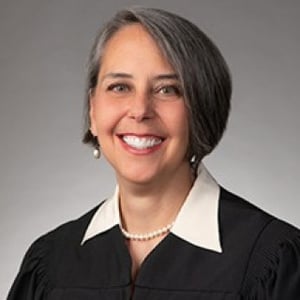
Judge, 8th District Court of Appeals, State of Ohio
Judge Lisa Forbes was elected to the Eighth District Court of Appeals on November 3, 2020. Prior to joining the bench, Judge Forbes was a partner in the Cleveland office of the law firm Vorys, Sater, Seymour and Pease LLP where she practiced in the area of complex litigation. As a litigator, Judge Forbes represented clients in state and federal trial and appellate courts throughout Ohio for 27 years.
Throughout her career, Judge Forbes has been an active and engaged member of the Northeast Ohio community including serving on the boards of the Centers for Families and Children and Circle Health for over a decade. She is currently the chair of both boards. In addition, while practicing, she regularly wrote and presented on developments in and application of the law.
Judge Forbes graduated summa cum laude from Case Western Reserve University School of Law in 1992. She served first as an associate editor on the law review and then as Executive Notes Editor. Judge Forbes majored in public policy at Cornell University, graduating in 1985 with a Bachelor of Science degree.
Judge Forbes is excited to bring her passion for and love of the law to the Eighth District Court of Appeals.
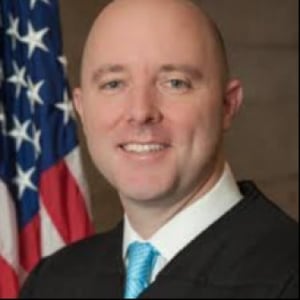
Judge, Franklin County Court
Hon. Daniel R. Hawkins is a judge for the Franklin County Court of Common Pleas (General Division) in Ohio. He was elected to the seat on November 6, 2018.
Prior to his election, Hawkins presided as a judge in the Environmental Division of the Franklin County Municipal Court, a position he had held since 2013.
He received a B.S. in criminal justice from Bowling Green State University in 1998. Hawkins went on to complete a J.D. at Ohio State University, Michael E. Moritz College of Law in 2001.
After graduating from law school, he began his legal career as an assistant prosecuting attorney with the Franklin County Prosecutor’s Office. During his tenure there, Hawkins was promoted to director of the Special Victims Unit in 2003. In that role, he prosecuted violent crimes involving women and children as victims, including homicides, sexual assaults, child abuse, human trafficking, and internet child exploitation. In addition, Hawkins was tasked with managing fellow prosecutors in the SVU and was credited with conducting several jury trials including six death penalty cases. He remained in that capacity until joining the Municipal Court bench in 2013.
His memberships have included the American Judges Association, the Ohio Judicial Conference, the Association of Municipal County Judges of Ohio, the Ohio State Bar Association, and the Columbus Bar Association.
Hawkins is a married father of three.
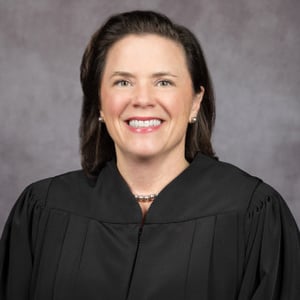
Judge, Hamilton County Courts
Hon. Megan E. Shanahan is a judge for the Hamilton County Court of Common Pleas (General Division) in Ohio. She was appointed to the bench by former Governor John Kasich on March 6, 2015 to fill the vacancy created by the Hon. Ralph E. Winkler after his election to the Hamilton County Court of Common Pleas Probate Division.
Prior to her appointment, Shanahan had presided as a judge for the Hamilton County Municipal Court, a position to which she was elected in 2011.
She received a B.A. in political science from Kent State University in 1995. SHanahan went on to complete a J.D. at the University of Cincinnati College of Law in 2000.
After graduating from law school, she began her legal career as an assistant prosecutor with the Butler county Prosecutor’s Office, where she served in the appellate, municipal, and trial divisions and prosecuted cases involving the violation of the obscenity law as well as child pornography cases. In 2005, Shanahan moved to the Hamilton County Prosecutor’s Office. During her tenure in that position, she prosecuted child predators and served in the Felony Trial Division.
Her legal career also included acting as a prosecutor for the Mt. Healthy Mayor’s Court.
Shanahan received the Peggy Caldwell Award ini 20009.
From a civic standpoint, she has been a supporter of the Cincinnati Living Hope organization which provides transitional housing or homeless women and children.
She was born and raised in western Pennsylvania, the youngest of eight children. At the time of her appointment, Shanahan and her family resided in Cincinnati.
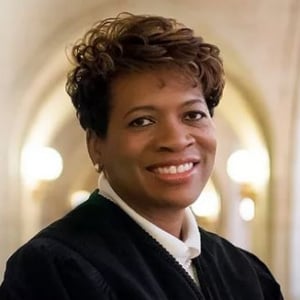
Ohio Eighth District Court of Appeals
Elected to the Ohio Court of Appeals – Eighth Appellate District in 2006 and twice reelected, Judge Melody Stewart has over 30 years of combined administrative, legal, and academic experience in a number of private and public settings. She has been an administrator for a healthcare management company, a music teacher, a civil defense litigator, and a law school administrator and professor. She served as the Administrative Judge for the Court of Appeals in 2013.
Judge Stewart earned a Bachelor of Music degree from the College-Conservatory of Music at the University of Cincinnati; her law degree as a Patricia Roberts Harris Fellow from the Cleveland-Marshall College of Law, Cleveland State University; and her Ph.D. as a Mandel Leadership Fellow at Case Western Reserve University’s Mandel School of Applied Social Sciences.
After practicing law as an assistant law director for the cities of Cleveland and East Cleveland, Judge Stewart worked as a lecturer, an adjunct instructor, and an assistant dean at Cleveland-Marshall College of Law before joining the faculty. Her primary teaching areas were ethics and professional responsibility, criminal law, criminal procedure, and legal research, writing, and advocacy. Additionally, she taught at the University of Toledo College of Law, at Ursuline College, and was Director of Student Services at Case Western Reserve University’s School of Law.
Judge Stewart has served on many boards of trustees and been a member of various professional, educational, civic, and community organizations. She also served as a commissioner and chair of the Board of Planning and Zoning for the city of Euclid. Recently Judge Stewart served as a member of the Ohio Criminal Justice Recodification Committee. She is currently a member of the board of the Ohio Supreme Court’s Judicial College and is chair of the Ohio Capital Case Attorney Fee Council. Judge Stewart is admitted to practice in the state and federal courts in Ohio, the District of Columbia, and the United States Supreme Court.

Professor of Law, University of Michigan Law School
Christopher J. Walker is a Professor of Law at the University of Michigan. Prior to joining Michigan law faculty in 2022, he spent a decade teaching at The Ohio State University Moritz College of Law. He previously clerked for Justice Anthony Kennedy of the U.S. Supreme Court, worked on the Civil Appellate Staff at the U.S. Department of Justice, and served on the Senate Judiciary Committee staff for the Gorsuch Supreme Court confirmation. Professor Walker’s research focuses on administrative law, regulation, and law and policy at the agency level. Outside the law school, he chaired the American Bar Association’s Section of Administrative Law and Regulatory Practice in 2020-21 and served as one of forty Public Members of the Administrative Conference of the United States from 2016-2022, and he continues to serve in both organizations in various capacities. He also works of counsel at the U.S. Chamber Litigation Center. In 2022, he received the Federalist Society’s Joseph Story Award.
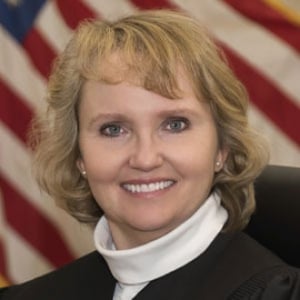
Judge, District II, Wisconsin Court of Appeals
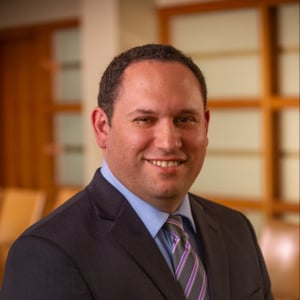
Partner, Stafford Rosenbaum, LLP
Jeff Mandell is a partner at Stafford Rosenbaum LLP, where he maintains a broad practice with specialties in election and political law, complex litigation and appeals, and issues related to the Wisconsin Fair Dealership Law. Jeff is also the co-founder and board president of Law Forward, a nonprofit, nonpartisan organization focused on defending and advancing democracy in Wisconsin. Jeff is a graduate of the University of Chicago Law School and, before entering practice, served as a judicial clerk for the Honorable A. Raymond Randolph of the U.S. Court of Appeals for the D.C. Circuit.
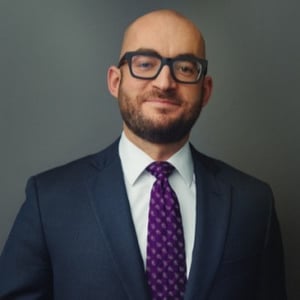
Partner, Eimer Stahl LLP
Ryan is a partner at Eimer Stahl LLP and is based in the firm’s Madison office. He focuses his practice on appellate and complex litigation in a wide variety of areas, including antitrust, constitutional law, corporate law, environmental, ERISA, products liability, and white collar. As part of his practice, Ryan devotes significant time to matters of legal strategy and the art of written and oral advocacy.
Ryan previously served as Chief Deputy Solicitor General of Wisconsin, securing numerous wins in the Supreme Court of the United States, in three federal courts of appeal, and in the state supreme court. Ryan built national, bipartisan coalitions of attorneys general and agencies in support of several lawsuits and briefing efforts, including a Wisconsin-led, 12-state coalition whose suit against the Federal Communications Commission prompted that agency to reverse a major new rule. When he left government, Ryan had a perfect win record in all of his cases to have reached final judgment.
Earlier in his career, Ryan worked in Washington D.C. as an associate in the appellate group of one of the world’s largest law firms.
Ryan also served as a law clerk on the U.S. Supreme Court for the Honorable Antonin Scalia and on the U.S. Court of Appeals for the Ninth Circuit for the Honorable Diarmuid F. O’Scannlain.
Ryan was named to Forbes’ “30 Under 30: Law and Policy” list in 2017. His briefing has won awards from the National Association of Attorneys General and the International Municipal Lawyers Association. He has also won a “best brief” accolade from the State Bar of Wisconsin in the civil category for his written work defending Wisconsin’s right-to-work law.
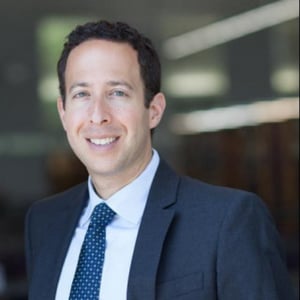
Associate Professor of Law, University of Wisconsin-Madison
Robert Yablon is an Associate Professor of Law and Faculty Co-Director of the State Democracy Research Initiative. His research interests include political and election law, constitutional law, federal and state courts, and statutory interpretation. He teaches Civil Procedure, Federal Jurisdiction, and the Law of Democracy.
Professor Yablon's recent publications have appeared in the NYU Law Review, Northwestern University Law Review, Minnesota Law Review, and Iowa Law Review. In 2018, UW Law students honored Professor Yablon with the Classroom Teacher of the Year Award, and in 2019 he received a University Distinguished Teaching Award.
Professor Yablon received his bachelor's degree in economics and political science from the University of Wisconsin-Madison and his master's degree in social policy from the University of Oxford, where he was a Rhodes Scholar. He then earned his J.D. at Yale Law School, where he was an Articles Editor of the Yale Law Journal.
Following law school, Professor Yablon served as a law clerk for Judge William Fletcher of the U.S. Court of Appeals for the Ninth Circuit and for U.S. Supreme Court Justices Ruth Bader Ginsburg and Sonia Sotomayor. He also worked in private practice at Orrick, Herrington & Sutcliffe LLP in San Francisco and Washington, D.C. He has been the principal author of dozens of appellate and trial-level briefs, and has argued in a number of state and federal courts, including the U.S. Supreme Court.
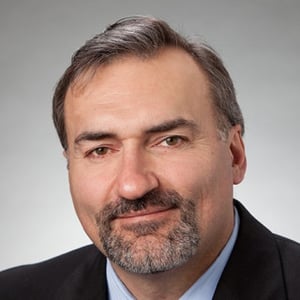
Judge, Waukesha County Circuit Court
Judge Michael J. Aprahamian serves as a judge on the Waukesha County Circuit Court. Prior to taking the bench in 2014, Judge Aprahamian was a partner at Foley & Lardner LLP, where he was a civil trial lawyer and the firm's partner in charge of ethics training. Prior to joining Foley, he clerked for the Honorable Richard D. Cudahy on the United States Court of Appeals for the Seventh Circuit. He received his J.D. from Yale Law School in 1992 and a B.S. from the University of Wisconsin in 1989.
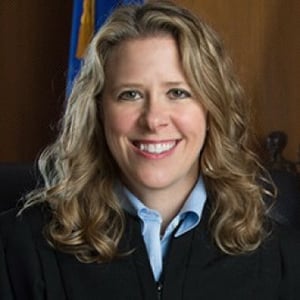
Justice, Wisconsin Supreme Court
Justice Rebecca Grassl Bradley, a Milwaukee native, was elected to the Supreme Court in 2016 after being appointed by Gov. Scott Walker in 2015. She is the first Wisconsin Supreme Court Justice to have served as an intermediate appellate court judge as well as a circuit court judge. Before joining the Supreme Court, Justice Bradley served as a District I Court of Appeals judge (appointed 2015), a Milwaukee County Circuit Court Judge (appointed 2012, elected 2013) and worked as an attorney in private practice (1996-2012), including serving as vice president of legal operations for a global software company.
Justice Bradley graduated from Marquette University in 1993 with an honors B.S. in Business Administration and Business Economics and received her juris doctor from the University of Wisconsin Law School in 1996.
Justice Bradley is a member of the Supreme Court Finance Committee and chairs the Supreme Court Legislative Committee as the Chief Justice's designee. She is a member of the Board of Advisors and past president of the Milwaukee Lawyers Chapter of the Federalist Society; serves on the Wisconsin State Advisory Committee of the U.S. Commission on Civil Rights; and is a member of the Bench and Bar Committee of the Wisconsin State Bar. She previously served on the Board of Governors of the St. Thomas More Lawyers Society; the Wisconsin Juvenile Jury Instructions Committee; the Wisconsin Juvenile Benchbook Committee; and as a member of the Milwaukee Trial Judges Association and the Wisconsin Trial Judges Association. While in private practice, Justice Bradley served as an American Arbitration Association Arbitrator and Chairman of the State Bar Business Law Section.
Justice Bradley's current term expires July 31, 2026.
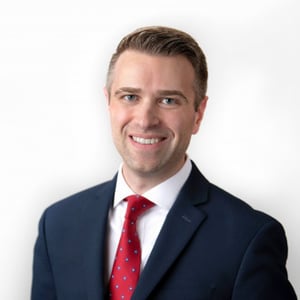
Managing Partner, Cramer Multhauf LLP
Attorney Matthew Fernholz focuses his practice on commercial litigation, trust and fiduciary disputes, business torts, trade secrets, non-compete agreements, defamation, and appellate work. In addition, he has developed one of the preeminent political and election law practices in the State of Wisconsin, and has handled several high-profile matters, from representing candidates for statewide office, successfully challenging the Governor’s emergency powers, arguing before the Wisconsin Elections Commission, and representing the Speaker of the Assembly.
Matthew frequently and successfully tries cases to verdict, and believes a lawyer unwilling to try a case should not take on a client in a litigation matter. In addition to this trial work, he has handled dozens of appeals, and countless dispositive motions.
His work has also been published in law review journals and newspapers alike.
Senior District Judge, United States District Court, Eastern District of Wisconsin
Judge William C. Griesbach is Senior District Judge of the United States District Court for the Eastern District of Wisconsin. Born in Milwaukee, Judge Griesbach received his B.A. from Marquette University and his J.D. from Marquette University Law School. Before joining the bench Judge Griesbach worked as a law clerk for Justice Bruce Beilfuss of the Supreme Court of Wisconsin, a staff attorney for the U.S. Court of Appeals for the Seventh Circuit, in private practice, and as an assistant district attorney for Brown County. In 1995, Judge Griesbach was elected to the Brown County Circuit Court, where he served until he was nominated by President George W. Bush to the Eastern District, and confirmed by the Senate, in 2002. He served as Chief Judge of that court from 2012 to 2019, assuming senior status in 2019.
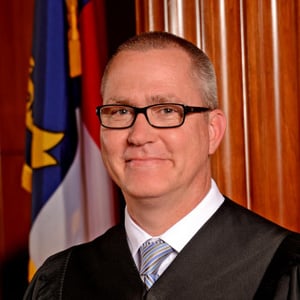
Curtis "Trey" Allen was born in Robeson County to Curtis and Elaine Allen. He obtained a bachelor's degree from UNC Pembroke and a law degree from UNC Chapel Hill.
Trey began his legal career as a judge advocate in the United States Marine Corps. He spent most of his time in the USMC overseas, and his military service included a deployment to Iraq during Operation Iraqi Freedom. As a judge advocate, Trey advised commanding generals and subordinate commanders on military justice and operational law matters, prosecuted violations of the Uniform Code of Military Justice, and helped fellow Marines resolve personal legal issues.
After being honorably discharged, Trey completed a clerkship with Justice (now Chief Justice) Paul Newby of the NC Supreme Court. He then practiced education law and became a partner at Tharrington Smith LLP in Raleigh. While in private practice, Trey successfully litigated cases involving constitutional and other claims before administrative agencies, federal and state trial courts, and appellate courts, including the NC Supreme Court. In 2013 he joined the faculty at UNC Chapel Hill, where his research, writing, and teaching focused on local government law. Trey was named Coates Distinguished Term Associate Professor of Public Law and Government for 2020-2022.
Following Paul Newby's installation as Chief Justice in January 2021, Trey was appointed General Counsel for the NC Administrative Office of the Courts. In that capacity, he provides legal guidance on a broad range of subjects to court officials across the state.
Trey is married to Teryn Melissa Smith Allen, another Robeson County native. Together they have five (awesome) children, all of whom they homeschool. Church activities, sports, and Scouting take up much of the family's free time.
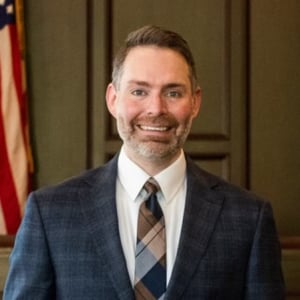
Judge, North Carolina Court of Appeals
Richard Dietz has served as a judge on the North Carolina Court of Appeals for eight years.
Judge Dietz comes from a mountain family of railroad and telephone workers. From an early age, his parents encouraged him to study hard and to get an education. He succeeded, becoming the first in his family to attend college. He went on to graduate first in his class from Wake Forest University School of Law and later earned a master’s degree from Duke University School of Law.
As a lawyer, Judge Dietz became one of the most accomplished appellate advocates in North Carolina. He has personally argued in the U.S. Supreme Court—something only a handful of lawyers in the State have ever done—and is a board-certified specialist in appellate practice. He handled cases in a wide range of constitutional areas including gun rights, religious liberty, and the free speech rights of students.
Before joining the Court of Appeals, Judge Dietz was a partner at Kilpatrick Townsend & Stockton LLP, a 650-lawyer international law firm with its roots in North Carolina. He also served as a law clerk for two highly regarded federal judges—Judge Emory Widener on the U.S. Court of Appeals for the Fourth Circuit and Judge Samuel Wilson on the U.S. District Court in Virginia—and served as a research fellow in international law at Kyushu University in Japan.
Judge Dietz joined the Court of Appeals in 2014 and is now the third-most senior judge on the 15-member court. He has distinguished himself on the Court by writing thoughtful opinions that are concise and easy for the public to read and understand.
Judge Dietz is happily married to Kelley Dietz, who is both the love of his life and his most trusted advisor. Kelley is a former Capitol Hill staffer and political appointee of President George W. Bush who now works in higher education.
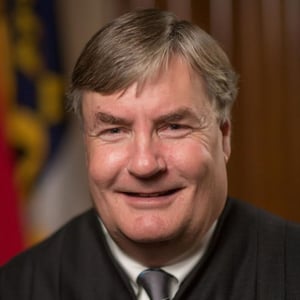
North Carolina Court of Appeals
Sam J. Ervin, IV, was born in Morganton, North Carolina, on November 18, 1955. He attended the public schools in Burke County, North Carolina, graduating from Freedom High School in 1974. In 1978, Judge Ervin was awarded an A.B., magna cum laude, from Davidson College. After graduating from Davidson, he attended Harvard Law School, from which he received a J.D., cum laude, in 1981.
From 1981 until 1999, Judge Ervin practiced law with the Morganton, North Carolina firm of Byrd, Byrd, Ervin, Whisnant, McMahon, P.A., and its predecessors. While in private practice, Judge Ervin handled a wide variety of civil, criminal, and administrative matters, including many appeals to the North Carolina Court of Appeals and the Supreme Court of North Carolina.
In 1999, Judge Ervin was nominated for a seat on the North Carolina Utilities Commission by Governor James B. Hunt, Jr. He was nominated for a second term on the Utilities Commission by Governor Michael F. Easley in 2007. Both appointments were confirmed by the General Assembly. The Utilities Commission is a quasi-judicial body that is responsible for regulating electric, natural gas, telecommunications, water and sewer, and certain types of transportation service provided to retail customers in North Carolina by privately-owned entities. During his service as a member of the Utilities Commission, Judge Ervin was involved in deciding many important regulatory matters, including, but not limited to, electric and natural gas rate proceedings, electric and natural gas business combination proceedings, proceedings involving applications by electric utilities for authority to construct new generation and transmission facilities, proceedings involving the approval of telecommunications price regulation plans, proceedings arbitrating or otherwise examining the terms and conditions under which competitive telecommunications providers were allowed to interconnect with incumbents, and proceedings addressing issues relating to the adequacy of water and sewer service in certain specific locations.
In addition, Judge Ervin was extensively involved in the activities of the National Association of Regulatory Utility Commissioners (NARUC), having served as Chairman of that organization's Subcommittee on Nuclear Issues and Waste Disposal from 2002 until 2005; as Chairman of that organization's Committee on Electricity from 2004 until 2007; and as a member of its Task Force on Climate Policy from 2007 through 2008. As part of his involvement in NARUC, Judge Ervin supervised its participation in the process that led to the implementation of the Energy Policy Act of 2005. While a member of the Utilities Commission, Judge Ervin testified on two different occasions before the Subcommittee on Energy and Air Quality of the Committee on Commerce of the United States House of Representatives. Judge Ervin was a regular speaker at energy-related conferences and seminars during his service as a Utilities Commissioner.
Judge Ervin has also been, at various times, involved in a wide variety of church-related, bar-related, and charitable activities. He is married to Mary Temple Ervin and has two children and two step-children.
Judge Ervin was elected to the North Carolina Court of Appeals at the November 4, 2008, general election. His term as a member of the Court of Appeals commenced on January 1, 2009, and extends until December 31, 2017.
President, John William Pope Foundation
John Hood is president of the John William Pope Foundation. Hood also serves on the board of the John Locke Foundation, the state policy think tank he helped found in 1989 and led as its president for more than two decades.
Since 1986, Hood has written a syndicated column on politics and public policy for North Carolina newspapers. It appears regularly in more than 50 papers across the state. A frequent radio and television commentator, Hood is the author of seven nonfiction books on such subjects as business, advertising, public policy, and political history. His latest three books — Mountain Folk, Forest Folk, and Water Folk — are historical-fantasy novels set in early America.
A former Bradley Fellow at the Heritage Foundation, Hood teaches at Duke University’s Sanford School of Public Policy. His articles have appeared in magazines such as Readers’ Digest, The New Republic, National Review, Military History, and Reason as well as newspapers such as The Wall Street Journal and USA Today. His broadcast appearances include CNN, NBC News, National Public Radio, and Fox News.
At Locke, Hood created the E.A. Morris Fellowship for Emerging Leaders, which prepares young North Carolinians for leadership roles in the public and private sectors. He also serves on the faculty and as board chair of the NC Institute of Public Leadership; as co-chair of the North Carolina Leadership Forum, based at Duke University; as vice-chair of the James G. Martin Center for Academic Renewal, State Policy Network, and the Carolina Liberty Foundation; and on the board the Student Free Press Association.
Hood received his BA in journalism from the University of North Carolina at Chapel Hill, where he serves as vice chair of North Carolina Public Radio-WUNC and on the foundation board of the Hussman School of Journalism and Media. He earned a MA in liberal studies and a graduate certificate in nonprofit management from UNC-Greensboro.
A native of Mecklenburg County, Hood now resides in Wake County with his wife, two sons, and a stepdaughter.
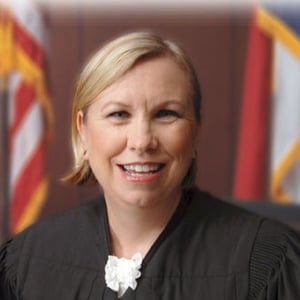
Judge, North Carolina Court of Appeals
Lucy Inman, a judge on the North Carolina Court of Appeals, is a candidate for the North Carolina Supreme Court in 2020. Judge Inman was elected statewide to the Court of Appeals in 2014.
Judge Inman was raised in Raleigh by parents who taught her the value of hard work and respect for people of all races, faiths, and walks of life. She graduated from Sanderson High School and earned a degree in English from N.C. State University.
Judge Inman’s first career was as a newspaper reporter. While covering court proceedings, she was inspired to participate in the justice system. She then moved to Chapel Hill and earned her law degree from UNC School of Law in 1990. Her first job after law school was working as a law clerk for North Carolina Supreme Court Chief Justice Jim Exum.
Judge Inman went on to practice civil litigation for 18 years, first in Los Angeles and then back home in Raleigh. Her clients included small business owners, large corporations, famous individuals, and lesser known -- but no less important -- survivors of negligence, fraud, and sexual abuse.
In 2010, Judge Inman was appointed by Governor Beverly Perdue to serve as a special superior court judge. She served in that role for four years, presiding in hearings and jury trials across North Carolina. Since her election to the Court of Appeals, Judge Inman has authored over 400 appellate decisions in a wide variety of cases, including criminal, civil, and constitutional disputes. She has presided in thousands of other cases.
Judge Inman brings hard work and respect for all others to her personal and professional life every day. She hopes to bring these values, and equal justice for all, to the North Carolina Supreme Court.
Judge Inman and her husband Billy Warden live in Raleigh. They have two college-age children and a black lab rescue who keeps their nest from ever being empty.
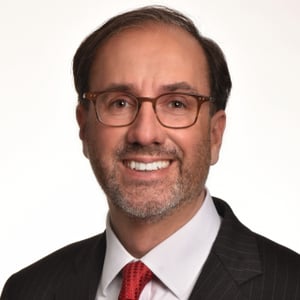
President and CEO, The Buckeye Institute
Robert Alt is the President and Chief Executive Officer of The Buckeye Institute where he has catalyzed exponential growth since he took the organization’s helm in 2012. He has since founded Buckeye’s renowned Economic Research Center and established its impactful Legal Center.
Alt is a distinguished scholar and attorney with particular expertise in legal policy, criminal justice, national security, and constitutional law. He previously worked for former U.S. Attorney General Edwin Meese III, regularly provides commentary on television and radio programs, and his writings have appeared in countless outlets.
In 2004, Alt spent five months in Iraq as an embedded war correspondent.
Alt has testified before Congress multiple times—including at the confirmation hearings for U.S. Supreme Court Justice Elena Kagan—the Federal Election Commission regarding matters of constitutional and administrative law, and numerous state legislatures.
Alt serves as an officer on the boards of The Philadelphia Society and the Federalist Society’s Columbus Lawyers Chapter. He taught national security law, criminal law, and legislation at Case Western Reserve University School of Law, as well as constitutional law and political parties and interest groups at Ashland University.
Alt earned his Doctor of Law degree from The University of Chicago Law School, where he was Symposium Editor and the winner of the Mulroy Prize for Excellence in Appellate Advocacy as well as research assistant to Professor Richard Epstein. Following law school, he clerked for Judge Alice Batchelder on the U.S. Court of Appeals for the Sixth Circuit. Alt graduated with his Bachelor of Arts in philosophy and political science magna cum laude from Azusa Pacific University where he also won the Outstanding Senior Award in Political Science.
Alt is an accomplished high-altitude alpinist and endurance athlete who has successfully climbed 6.75 of the famed Seven Summits of the World including Mount Everest. He is the creator of PROFOUND CLIMBING™ and a frequent speaker across the country and around the world on legal and public policy topics as well as effective leadership, management, decision-making, and teamwork in contexts ranging from extraordinary life/death situations to ordinary professional/business settings.
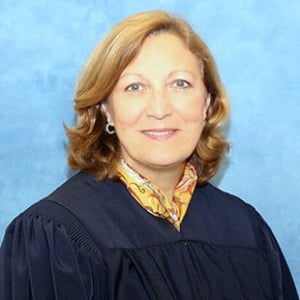
Justice, Ohio Supreme Court
On November 3, 2020 Judge Jennifer Brunner was elected Justice of the Ohio Supreme Court. Previously she served as a judge of the Tenth District Court of Appeals for 6 years and the Franklin County Common Pleas Court for nearly 5 years. As a trial court judge Brunner founded the county’s adult felony drug court, known as the TIES (Treatment is Essential to Success) Program, now in its seventeenth year of operation. She was elected Ohio’s first woman Secretary of State on November 7, 2006 and held the office for four years. While in that office, she became the first Ohioan to receive the John F. Kennedy Profile in Courage Award from the bipartisan board of the JFK Library and Museum in Boston. Justice Brunner has 17 years of private law practice experience and has provided rule of law technical expertise to the government of the Republic of Serbia, election observation in the Arab Republic of Egypt, and rule of law instruction at the bar association of Sri Lanka through the U.S. state department (USAID), as well as provided remote rule of law and civic participation training through the American Bar Association to the Republic of Kazakhstan. She has gained a deep understanding of the importance of a strong and well-functioning judiciary to preserving peace and growing democracy through the rule of law. A native of Springfield, Ohio, Justice Brunner has been married to Rick Brunner since 1978. They have 3 adult children and 6 grandchildren, 2 dogs and 2 cats and spend time at their home in Columbus and at their farm in Columbiana County in Northeast Ohio.
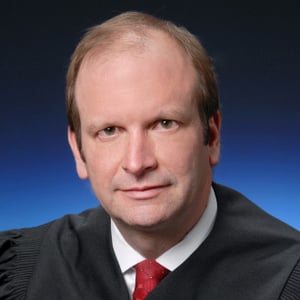
Associate Justice, Supreme Court of Ohio
Justice Pat DeWine began his six-year term on the Supreme Court of Ohio on Jan. 2, 2017, following his statewide election in November 2016. An excellent writer, Justice DeWine is known for the quality and thoroughness of his legal opinions. His opinions reflect his strong belief in judicial restraint and his respect for the constitutional roles of the other coequal branches of government.
Justice DeWine has served at all levels of the Ohio judiciary. Prior to his election to the Supreme Court, Justice DeWine served for four years on the First District Court of Appeals, and prior to that, for four years on the Hamilton County Common Pleas Court.
Justice DeWine has a strong commitment to furthering the rule of law through education. He is an adjunct professorat the University of Cincinnati College of Law where he teaches Appellate Practice and Procedure. In addition, he has taught undergraduate courses at the University of Cincinnati in Ohio Government & Politics and American Courts.
Justice DeWine has strong academic credentials. He graduated from the University of Michigan Law School in the top ten percent of his class with Order of the Coif honors. As an undergraduate student at Miami University, he maintained a perfect 4.0 grade point average and received summa cum laude honors. He was also a member of the Varsity Track and Cross Country teams.
After law school, he was selected for a clerkship on United States Court of Appeals for the Sixth Circuit. He served under the Honorable David A. Nelson, who had been appointed to the Sixth Circuit by President Ronald Reagan.
Justice DeWine understands the litigant’s perspective, having practiced law for 13 years with one of Cincinnati’s top law firms, Keating, Muething & Klekamp. He represented clients in appellate matters in Ohio and in federal courts across the country. He handled a diverse range of litigation matters, including mass tort bankruptcies, securities fraud litigation, and constitutional issues.
Other Public Service
Justice DeWine brings a unique perspective to the bench because of his public service as a County Commissioner and a member of Cincinnati City Council.
As a member of the Hamilton County Board of Commissioners, he focused on reforming County government, lowering the tax burden, eliminating unnecessary bureaucracy and promoting public safety. He led the citizens referendum that ultimately repealed the nearly $1 billion sales tax increase that was enacted by his colleagues on the Commission. The Reason Foundation named him an “Innovator in Action,” along with such leaders as Rudy Giuliani and Jeb Bush, for his efforts to reform County government.
On Cincinnati City Council, he was known as a taxpayer watchdog, successfully rooting out wasteful spending and abuse in city government. He helped eliminate unnecessary regulations, led the effort to crack down on quality of life issues affecting city neighborhoods and created a development fund that leveraged private capital to spur new housing development downtown and across city neighborhoods. He also led the Issue Four charter change that created a more accountable city government by allowing the city to hire the most qualified individuals for key positions in city government.
He was a founder of the Build Cincinnati reform group that successfully passed a charter amendment to allow Cincinnati voters to directly elect the Mayor.athon.
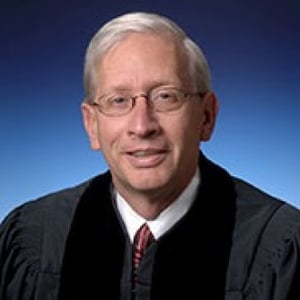
Justice, Ohio Supreme Court
Justice Patrick F. Fischer began his six-year term on the Supreme Court of Ohio on Jan. 1, 2017, following his election in November 2016. Previously, he was elected to serve as a judge on the Ohio First District Court of Appeals in 2010, and was re-elected in 2012.
Justice Fischer has dedicated himself to the practice of law for more than 30 years. An honors graduate of Harvard Law School and Harvard College, as a practicing lawyer he tried cases throughout the country, and was named to Best Lawyers in America, one of the Top 50 Lawyers in Cincinnati, and one of the Top 100 Lawyers in Ohio. He was routinely named to Ohio Super Lawyers.
A respected member of the legal community, from 2012 to 2013 then-Judge Fischer served as president of the Ohio State Bar Association. He previously had served on the Ohio State Bar Association’s Board of Governors, chaired its budget and headquarters committee, and served on numerous other Ohio State Bar Association committees and task forces, and in its House of Delegates. Justice Fischer recently completed his second tenure on the board of the Ohio Lawyers Assistance Program. He also was elected by his peers to serve as president of the Cincinnati Bar Association for 2006 through 2007.
Justice Fischer has an abiding interest in ethics and professionalism. As an attorney he served two terms on the Ohio Supreme Court's Commission on Professionalism, including serving as vice chair. He also chaired the Cincinnati Bar Association's ethics and professional responsibility, as well as its professionalism, committees.
Having represented plaintiffs and defendants while an attorney, Justice Fischer knows the importance of being able to see and listen to both sides of an issue. Knowing and understanding the law as he does, Justice Fischer is keenly aware of how important it is that the law be applied properly to the facts in each case. The late chief justice of the Supreme Court of Ohio, Thomas J. Moyer, named him to co-chair a task force to make the Ohio judicial system more efficient and just. Justice Fischer served on the Ohio Constitutional Modernization Commission, and was vice chair of its committee on the judicial branch.
Justice Fischer began his legal career with a clerkship for U.S. District Court Judge William Bertelsman, and in 1987, he began working for the law firm of Keating Muething & Klekamp. Just four years later, he became a partner in the trial department. Although on inactive status, he also is a licensed attorney in Texas.
In his free time, Justice Fischer is a dedicated public servant. He served on numerous local boards such as the Hamilton County Mental Health & Recovery Services Board, Visions Community Services Board, St. Ursula Villa, and the Pleasant Ridge Community Council. He was a founding member of the Cincinnati Children’s Museum and served on its board.
Justice Fischer, his wife Jane, and their dog live in Cincinnati. He has one married daughter who is a practicing attorney in Ohio, and two grandsons. A graduate of St. Xavier High School, Justice Fischer also is an active, long-time member of St. Xavier Catholic Church in downtown Cincinnati, serving as both a lector and Eucharistic minister.
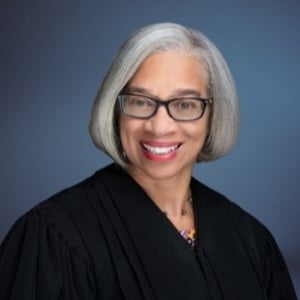
Judge, Ohio 10th District Court of Appeals
Judge Terri Jamison’s journey from the coal fields of West Virginia to the highest reaches of the legal profession is a testament to her strength, intelligence, perseverance, and persistence. Her life story is truly a personification of the American Dream.
Judge Jamison was born and raised in Welch, WV where she attended Welch Dunbar and Welch Elementary School before graduating from Welch High School. While in high school she was active in sports, including baseball and track, was a cheerleader for the Welch Maroon Waves and worked after school at J. C. Penney’s.
Immediately after graduation she was employed by the Department of Welfare as a Daycare Provider Coordinator, Eligibility Specialist and Fraud Investigator but soon left the Department, joined the United Mine Workers, District 17, Union Local 7635 and became one of the few women who worked as an underground coal miner. After being laid off due to the declining economy in her hometown, Terri moved to Columbus, Ohio.
She enrolled in the CETA program and obtained the training she needed to enter the workforce. She was employed by Xerox Corporation, OCLC, Nationwide Insurance and was an office manager for Howard Tyler's State Farm Insurance Agency. At Mr. Tyler’s urging she opened her own Allstate Insurance Agency which she owned and operated for more than 16 years.
Terri decided to return to college to complete her bachelor’s degree while continuing to run the agency on a full-time basis. She initially enrolled in Columbus State Community College then transferred to Franklin University where she graduated cum laude with a Bachelor of Science in Business Administration and a minor in Human Resources Management.
When Allstate made changes to its contracts with agents that made the insurance business less lucrative, Terri sold her agency and enrolled in the Capital University School of Law and obtained her Juris Doctorate in 2004.
After being admitted to the Bar, Attorney Jamison worked in the Franklin County Public Defender’s Office as an assistant public defender representing indigent clients in the Franklin County Municipal Court System and served as a Hearing Office for the Ohio Unemployment Compensation Review Commission.
On February 1, 2005, she was admitted to the United States District Court, Southern District of Ohio. In May of 2005, she was once again bitten by the entrepreneurial bug and opened the Jamison Law Offices Co. L.P.A. where she practiced Criminal, Juvenile, Domestic Relations and Probate law at the trial and appellate level. On October 29, 2007, she was admitted to practice in the Supreme Court of the United States of America.
In 2012, she made her first foray into the political world, earning 55.08% of the vote, and was elected judge of the Franklin County Court of Common Pleas, Division of Domestic Relations and Juvenile Branch. In 2018, she was overwhelmingly reelected to the Common Pleas bench. In 2020, she was then elected to the Ohio Court of Appeals, Tenth District. During her time on the bench Judge Jamison has used her experience, perspective, talent, and knowledge to develop new strategies to empower families, including the Compass Program, a collaboration with the Franklin County Child Support Enforcement Agency that provided child support obligors with the training and support needed to become employed. Compass received an award from the National Association of Counties in 2017 as part of CSEA's Procedural Justice Informed Alternatives to Contempt, or P-JAC.
She has also devoted considerable time, energy, and attention to issues related to equal access to justice, diversity, inclusion, and the need to develop alternatives to detention for juveniles. Her work has been featured in two documentaries, "The Walking Logo" and "PUSHOUT: The Criminalization of Black Girls in School" which shined a spotlight on troubling disparities in school discipline that impact Black girls.
Judge Jamison is a member of numerous committees, boards, and associations including:
● National Council of Juvenile and Family Court Judges
● American Judges Association
● Ohio Black Judges Association Executive Board
● Ohio State Bar Association
● Columbus Bar Association
● Franklin County Women Lawyers
● National Council of Negro Women
● NAACP
● Ohio Women in Government
● COLERA
● National Bar Association
● Ohio Supreme Court Advisory Committee for Court Security
● Ohio Supreme Court Sentencing Commission
● Board of Counselors at Capital University Law School
● Advisory Board, the Franklin University Global Center for Healthcare Education
She is also an adjunct faculty member at Capital University Law School, volunteers as an American Red Cross Blood Ambassador, YWCA and performs community service through the National Council of Negro Women, Women2Women, and the Divine Kingdom Builders Church.
Judge Jamison has gained a national reputation as a prolific and energetic speaker. She has delivered commencement addresses at high schools and colleges, presented at national conferences, and participated in panels on the need for equal access to justice, greater diversity and inclusion in the judicial system, and alternatives to detention for juveniles.
Along with her many other accomplishments, Judge Jamison is most proud of being a spouse to Ricardo “Ty” Gary, a retired Franklin County Deputy Sheriff who has started a new career as a realtor with E-Merge Realty. Their blended family includes three sons, Tremayne, Demetrius, and Sean, eight grandchildren, and one great-granddaughter.
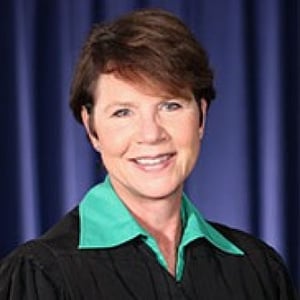
Justice, Ohio Supreme Court
On November 4, 2014, Justice Sharon L. Kennedy was re-elected to a full term on the Supreme Court of Ohio in a decisive victory winning all 88 counties and garnering 73 percent of the vote. Justice Kennedy first joined the court in 2012, having been elected to fill an unexpired term.
Prior to her term on the Ohio Supreme Court, Justice Kennedy served at the Butler County Court of Common Pleas, Domestic Relations Division beginning in 1999. From 2005 until December of 2012, Justice Kennedy served as the administrative judge of that division. During her time as administrative judge, she improved the case management system to ensure the timely resolution of cases for families and children. Working with state legislators she championed a "common sense" family law initiative to reduce multiple-forum litigation for Butler County families.
When Butler County faced tough economic times, Justice Kennedy organized concerned elected officials in a county-wide Budget Work Group. Seeing the need to bring private sector financial know-how to the government, she worked to create the Advisory Committee to the Budget Work Group. Justice Kennedy served as the facilitator and led discussions between county officials and private sector leaders to analyze county finances, study and implement cost saving measures, and present business driven fiscal policy to the county commissioners.
In 1991, after obtaining her law degree from the University of Cincinnati College of Law, Justice Kennedy ran a small business of her own as a solo practitioner. While in private practice she served the legal needs of families, juveniles, and the less fortunate. As special counsel for Attorney General Betty D. Montgomery, Justice Kennedy fought on behalf of Ohio’s taxpayers to collect monies due the State of Ohio. As a part-time magistrate in the Butler County Area Courts, Justice Kennedy presided over a wide array of civil litigation and assisted law enforcement officers and private citizens seeking the issuance of criminal warrants for arrest.
Justice Kennedy began her career in the justice system as a police officer at the Hamilton Police Department. She was assigned to a rotating shift, single-officer road patrol unit working to protect and serve the citizens of the City of Hamilton. From the routine, to the heart-pounding, to the heart-breaking, she has seen it all. During her time as an officer, Justice Kennedy also worked undercover operations, implemented crime prevention programs, and later, as a civil assistant, assisted in drafting police policy and procedure for the Accreditation Program.
Throughout her career Justice Kennedy has served on numerous boards, developed and facilitated programs to address the needs of young people, and worked with judges across the state. As a dedicated jurist she has received multiple awards of recognition including: Leadership Ohio Community Leadership Award, 2016; The University of Cincinnati College of Law Nicholas Longworth, III Alumni Achievement Award, May 17, 2014; Northwest High School Distinguished Alumnus Award, April 25, 2014; named one of 13 professional women to watch by The Cincinnati Enquirer, March 17, 2013; Excellence in Public Service, June 2009; Judge of the Year, 2006; Above the Fold Award, 2002; and the Furtherance of Justice Award, 2001. Justice Kennedy was also featured in Trends in the Judiciary: Interviews with Judges Across the Globe, Volume II, published by CRC Press in February 2015.
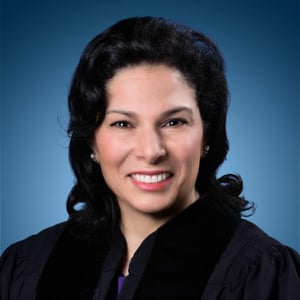
Judge, Ohio 1st District Court of Appeals
In 2018, Judge Marilyn Zayas was re-elected to the First District Court of Appeals. She first joined the Court in 2016 after her election to fill an unexpired term. Since joining the Court, Judge Zayas has sat by appointment of Ohio’s Chief Justice on the Ohio Supreme Court and on the Second, Sixth, Eight, and Tenth District Courts of Appeals.
After her election, Judge Zayas created the “Educating Tomorrow’s Leaders” program, an educational program for high school, undergraduate and law school students. The program invites students to the Court of Appeals to interact with judges and attorneys, learn about the law, and inspire them to dream big and to never give up. Judge Zayas is committed to promoting accessibility and accountability through student outreach and community forums.
She currently serves on the Ohio Supreme Court’s Board of Character and Fitness, the Ohio Supreme Court’s Ethics, Professionalism, and Diversity Committee, the board of the Immigrant and Refugee Law Center, and the board of Beech Acres Parenting Center.
Prior to joining the First District Court of Appeals, Judge Zayas served the community as an attorney for nearly 20 years after obtaining her law degree. In 2001, she founded a private practice and built a strong reputation by successfully handling complex cases. She has an extensive legal background including investor, business, and family immigration law, intellectual property law, labor and employment law, criminal defense, and juvenile law. She has also served as an adjunct professor at her alma mater, the University Of Cincinnati College of Law and provided legal training to judges, magistrates, attorneys, and the Cincinnati FBI.
Judge Marilyn Zayas was celebrated for her community contributions by Good Morning America as a GMA 2021 Inspiration List: Who’s Making Hispanic Latinx History Right Now. She was one of the 2021 City of Cincinnati City Council Women’s History Month honorees and a 2019 YWCA Career Women of Achievement award recipient. In 2017, she received the prestigious University of Cincinnati College of Law Nicholas Longworth, III Alumni Achievement Award. She was also awarded the LULAC Women’s National Convention Service and Commitment Award in 2014, and the Ohio Commission of Hispanic and Latino Affairs, Distinguished Hispanic Ohioan Award in 2013.
Judge Zayas was born in New York City and grew up in a tough neighborhood. Her dad worked in a printing shop and her mom worked as a seamstress in a garment factory. Judge Zayas overcame numerous obstacles to earn a college degree in computer science. In 1988, Judge Zayas moved to Cincinnati to begin her career as an Information Technology Manager at Procter and Gamble. In 1994, she left P & G to pursue her dream to become a lawyer. Her family includes her three adult children and two adopted rescue dogs, Thor and Sparkle Lou.
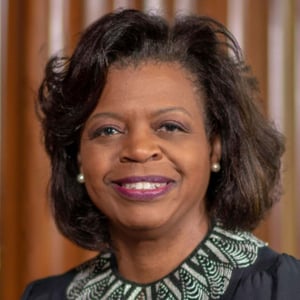
Fmr. Chief Justice, North Carolina Supreme Court
Chief Justice Cheri Beasley has spent more than 20 years dedicated to the rule of law. She began her judicial career as a district court judge in Cumberland County, where she served for a decade before being elected to the North Carolina Court of Appeals in 2008. She served as an associate justice on the Supreme Court of North Carolina for seven years before being appointed by Governor Roy Cooper to lead the Supreme Court and North Carolina's third branch of government, the Judicial Branch. She is the first African-American woman in the Supreme Court’s 200-year history to serve as Chief Justice.
Chief Justice Beasley has spent her entire career advocating for courts that are independent, fair, and accessible, and that serve every person with dignity and respect. As Chief Justice, she is advocating for a court system that not only solves legal disputes, but also helps people better their lives. By engaging local judges, educators and law enforcement, she is helping to reform discipline in our schools and keeping kids out of our courtrooms. She is committed to expanding specialized treatment courts that better serve the needs of North Carolina’s children and families. She is also working to leverage the power of technology to make sure our courts are efficient and accessible.
She has lectured extensively to promote the administration of justice, the importance of an independent judiciary, and fair judicial selection. She is active in her community through leadership in her church, First Baptist of Raleigh, her support of hunger relief efforts, and her mentoring of students from elementary school to law school. She is a graduate of Douglass College of Rutgers University, the University of Tennessee College of Law, and Duke University School of Law where she obtained her LL.M. She and her husband, Curtis Owens, are the proud parents of twin sons, Thomas and Matthew.
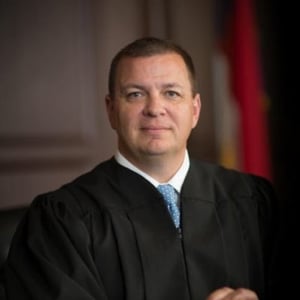
Associate Justice, Supreme Court of North Carolina
Phil was born in Danville, Virginia on March 26, 1972, to Philip and Pat Berger. Phil is a 1990 graduate of Morehead High School in Eden, North Carolina. He graduated from UNC-Wilmington in 1994 with a B.A. in History, and earned his law degree from Wake Forest University School of Law in 1999.
Phil began his legal career in private practice in 1999. From 2001 through 2006, he joined his father and brother, Kevin, forming The Berger Law Firm. In 2006, Phil was elected District Attorney in the 17A Prosecutorial District and was re-elected in 2010.
While serving as District Attorney, Phil was the chair of Project SAFE Rockingham County. A collaboration with the US Attorney's Office and local law enforcement, Project SAFE implemented the “focused-deterrence” model for reducing violent crime among recidivists and gang members. In 2013-14, he served as President of the North Carolina Conference of District Attorneys. Phil represented the National District Attorneys Association in Guantanamo Bay, Cuba, as a Non-Governmental Observer to the United States v. Khalid Sheikh Mohammad, et al hearings.
From 2015-2016, Phil served as an Administrative Law Judge with the North Carolina Office of Administrative Hearings. He was elected to the North Carolina Court of Appeals in 2016. In 2020, Phil was elected to the Supreme Court of North Carolina.
Phil has a passion for helping young people. He serves as a volunteer assistant coach with the baseball team at Cedar Ridge High School. Phil previously coached football at the high school level, and he has also coached youth football with the Durham Firebirds and Greensboro Eagles. Phil was the founder and chair of Eden Youth Football, and he served as a board member and basketball coach with Bethany Community Middle School.
Phil is married to Jodie Church, a public school teacher. They have two children, Philip III and Will.
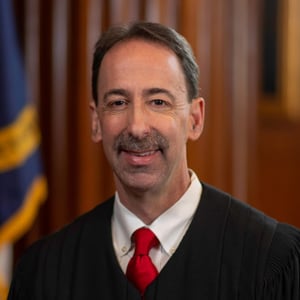
Associate Justice, North Carolina Supreme Court
Judge, North Carolina Court of Appeals
Lucy Inman, a judge on the North Carolina Court of Appeals, is a candidate for the North Carolina Supreme Court in 2020. Judge Inman was elected statewide to the Court of Appeals in 2014.
Judge Inman was raised in Raleigh by parents who taught her the value of hard work and respect for people of all races, faiths, and walks of life. She graduated from Sanderson High School and earned a degree in English from N.C. State University.
Judge Inman’s first career was as a newspaper reporter. While covering court proceedings, she was inspired to participate in the justice system. She then moved to Chapel Hill and earned her law degree from UNC School of Law in 1990. Her first job after law school was working as a law clerk for North Carolina Supreme Court Chief Justice Jim Exum.
Judge Inman went on to practice civil litigation for 18 years, first in Los Angeles and then back home in Raleigh. Her clients included small business owners, large corporations, famous individuals, and lesser known -- but no less important -- survivors of negligence, fraud, and sexual abuse.
In 2010, Judge Inman was appointed by Governor Beverly Perdue to serve as a special superior court judge. She served in that role for four years, presiding in hearings and jury trials across North Carolina. Since her election to the Court of Appeals, Judge Inman has authored over 400 appellate decisions in a wide variety of cases, including criminal, civil, and constitutional disputes. She has presided in thousands of other cases.
Judge Inman brings hard work and respect for all others to her personal and professional life every day. She hopes to bring these values, and equal justice for all, to the North Carolina Supreme Court.
Judge Inman and her husband Billy Warden live in Raleigh. They have two college-age children and a black lab rescue who keeps their nest from ever being empty.
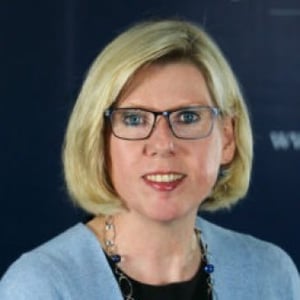
Vice President of Marketing and Communications, John Locke Foundation
As Vice President of Marketing and Communications, Donna shares the foundation’s message of freedom, free markets, and limited government across media platforms. She co-hosts Carolina Journal Radio, a weekly syndicated radio show produced by JLF and heard on more than a dozen stations across North Carolina. Donna came to JLF in 2003 after freelance writing for Carolina Journal and contributing to projects for the North Carolina Education Alliance. Her career has been spent in marketing, public relations, and broadcasting, and includes time at UNC-TV and The Arizona Republic, the daily newspaper serving metropolitan Phoenix. Donna is a graduate of Arizona State University and is married to Rick Martinez. She and Rick co-host “You Don’t Say,” a daily radio talk show heard on NewsRadio 680 WPTF in the Triangle.
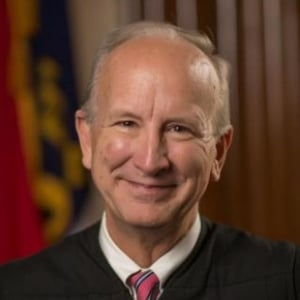
Chief Justice, North Carolina Supreme Court
Chief Justice Paul Newby was born in Asheboro and grew up in Jamestown, N.C. He received his B.A. degree in Public Policy Studies from Duke University and law degree from UNC-Chapel Hill School of Law.
Chief Justice Newby was first elected to the Supreme Court as an Associate Justice in 2004. He was elevated to the highest judicial office in North Carolina in the 2020 election. As Chief Justice, he is head of the Judicial Branch, a co-equal branch of state government with the Legislative and Executive branches. He is entrusted with leading the Judicial Branch and its 7,600 elected officials and employees.
He is a former adjunct professor of law at Campbell University and has published a book on the North Carolina Constitution.
Chief Justice Newby’s legal experience includes private practice and corporate inhouse legal counsel. He also served almost 20 years as an Assistant United States Attorney, during which he played an integral role in conducting the undercover sting operation that recovered North Carolina’s original copy of the Bill of Rights, stolen in the aftermath of the Civil War.
Chief Justice Newby is an Eagle Scout and is the recipient of the Heroism Award (for rescuing nine people from a riptide), the God and Service Award, the Silver Beaver Award, and the Scouter of the Year Award. In 2012, he was designated a Distinguished Eagle Scout, a national honor that recognizes both his service to the Boy Scouts and his dedication to public service.
Chief Justice Newby has been married to Macon Tucker Newby since 1983, and they have four children. He is active in his local church, where he serves as a teacher and mentor to young professionals.
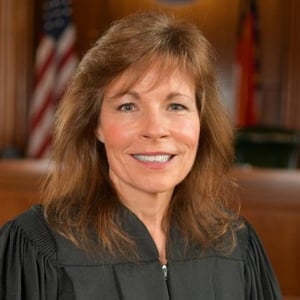
Associate Justice, Supreme Court of North Carolina
Tamara Patterson Barringer is the 101st Associate Justice of the Supreme Court of North Carolina.
Justice Barringer teaches Law and Ethics to Master of Accounting and Undergraduate Business students at the Kenan-Flagler Business School at the University of North Carolina-Chapel Hill, where she has served on the faculty for 15 years. Tamara also serves as the Director and Lead Faculty for the Master of Accounting Mentorship Program, a diversity, equity, and inclusion program, which she founded over a decade ago to introduce careers in accounting and business to first generation and under-represented minority undergraduate students.
Justice Barringer has also taught as an Adjunct Professor of Business Law at North Carolina State University and later designed and taught the first business law paralegal program curriculum at Meredith College.
Justice Barringer began her legal career in private practice in 1985 with Poyner and Spruill, being mentored closely by attorneys Nat Townsend, Curtis Twiddy, and Maria Lynch. She then founded the Barringer Sasser, LLP law firm in Cary in 1988 with her husband, Brent. As Managing Partner, she gained over 20 years’ experience representing entrepreneurs and small business clients in business and tax law, estate planning, and estate administration matters.
Justice Barringer served as a North Carolina Senator, representing District 17 in Southern Wake County from 2012 to 2018. She served as Chair of the Senate Judiciary Committee and Chair of the Joint Legislative Committee for General Government and Information Technology Appropriations.
Justice Barringer’s lifelong mission for healthy children and families in North Carolina began when she and her husband, Brent, served as therapeutic foster parents for the Methodist Home for Children for over 10 years. Through her work in the General Assembly as Chair of the Permanency Innovation Initiative, partnering with the Dave Thomas Foundation and Wendy’s Wonderful Kids Program, 300 older North Carolina children, who had very little chance of being adopted, now have permanent, loving, and stable homes.
Justice Barringer’s life journey began on her family’s farm in Patterson Springs, Cleveland County, North Carolina, growing up with three younger sisters outside Shelby. After graduating from Crest High School in 1977, she became the first member of her family to ever graduate from college when she earned her Bachelor of Science in Business Administration with Highest Honors in 1981 from the Kenan-Flagler Business School at the University of North Carolina at Chapel Hill. She earned her Juris Doctor with Honors from the UNC School of Law in 1985, after serving on the North Carolina Law Review and being inducted into the Order of the Coif.
Justice Barringer is married to her college sweetheart, Brent, and have three adopted children, Jessica, John Charles, and Emily, and two rescue dogs, Lilah and Baloo.
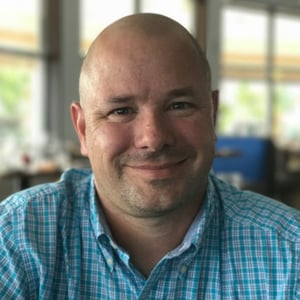
Professor of Political Science, University of Pittsburgh
Chris W. Bonneau is Professor of Political Science at the University of Pittsburgh, where he has been since 2002. His research is primarily in the areas of judicial selection (specifically, judicial elections) and judicial decisionmaking. Professor Bonneau’s work has been supported by the National Science Foundation and he has published numerous articles, including in the American Journal of Political Science and Journal of Politics. He is also the coauthor of three books: Strategic Behavior and Policy Choice on the U.S. Supreme Court (2005), In Defense of Judicial Elections (2009), and the award-winning Voters’ Verdicts: Citizens, Campaigns, and Institutions in State Supreme Court Elections (2015).
Professor Bonneau teaches undergraduate classes in constitutional law, judicial politics, and research methods, as well as graduate classes in judicial politics and research design.
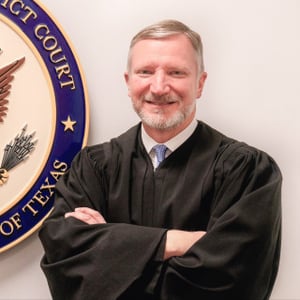
United States District Court, Southern District of Texas
Prior to joining TXSE, Jeff served as acting general counsel of Charles Schwab and led its Office of Legislative and Regulatory Affairs in Washington, D.C. for the past two decades, managing the company's response to public policy initiatives and advocating for policies that aid individual investors. He has over four decades of securities markets experience, starting his career as an options trader at the Philadelphia Stock Exchange, then founding his own trading firm, and later serving on the exchange's Board of Governors. He also served as senior counsel in the Division of Market Regulation at the U.S. Securities and Exchange Commission. Jeff's additional experience in the securities industry includes serving as vice president for regulation and general counsel at the Cincinnati Stock Exchange and as chairman of the Operating Committee of the National Market System Plan governing Nasdaq securities. Jeff holds degrees from the Wharton School of the University of Pennsylvania and Ohio Northern School of Law.

Milton R. Underwood Chair in Free Enterprise, Vanderbilt University Law School
Brian Fitzpatrick is the Milton R. Underwood Chair in Free Enterprise and Professor of Law at Vanderbilt Law School, where his research focuses on class action litigation, federal courts, judicial selection, and constitutional law. He is best known for his empirical studies of class action settlements as well as his book The Conservative Case for Class Actions (University of Chicago Press, 2019). Professor Fitzpatrick joined Vanderbilt's law faculty in 2007 after serving as the John M. Olin Fellow at New York University School of Law. He graduated first in his class from Harvard Law School and went on to clerk for Judge Diarmuid O'Scannlain on the U.S. Court of Appeals for the Ninth Circuit and Justice Antonin Scalia on the U.S. Supreme Court. After his clerkships, Professor Fitzpatrick practiced commercial and appellate litigation for several years at Sidley Austin in Washington, D.C., and served as Special Counsel for Supreme Court Nominations to U.S. Senator John Cornyn. Before earning his law degree, Fitzpatrick graduated summa cum laude with a bachelor's of science in chemical engineering from the University of Notre Dame. He has received the Hall-Hartman Outstanding Professor Award, which recognizes excellence in classroom teaching, for his Civil Procedure and Federal Courts courses.

Partner, Jackson Walker
Arthur offers clients a winning combination of trial and appellate experience gained as a federal prosecutor and more than 20 years of experience in handling patent, copyright, trademark, and trade secrets litigation.
While his practice concentrates on intellectual property litigation, Arthur also has significant experience in internal investigations, False Claims Act suits, partnership and breach of fiduciary duty, breach of contract, and employment litigation. Arthur also has represented clients testifying before Congressional committees.
Arthur writes and speaks frequently on topics ranging from the case against Boston bomber Dzhokhar Tsarnaev to patent litigation reform.
Prior to joining Michael Best, Arthur served as an Assistant United States Attorney in the Southern District of New York, where he was the lead prosecutor in criminal trials, including federal intellectual property crimes. He also argued numerous appeals.
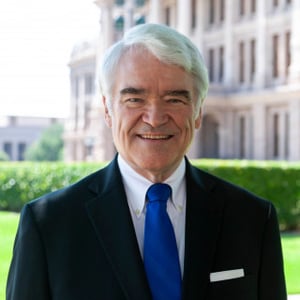
Chief Justice, Texas Supreme Court
Nathan L. Hecht is the 27th Chief Justice of the Supreme Court of Texas. He has been elected to the Court six times, first in 1988 as a Justice, and most recently in 2014 as Chief Justice. He is the longest-serving Member of the Court in Texas history and the senior Texas appellate judge in active service. Throughout his service on the Court, Chief Justice Hecht has overseen revisions to the rules of administration, practice, and procedure in Texas courts, and was appointed by the Chief Justice of the United States to the federal Advisory Committee on Civil Rules. Chief Justice Hecht is also active in the Court's efforts to assure that Texans living below the poverty level, as well as others with limited means, have access to basic civil legal services.
Chief Justice Hecht was appointed to the district court in 1981 and was elected to the court of appeals in 1986. Before taking the bench, he was a partner in the Locke firm in Dallas. Chief Justice Hecht holds a B.A. degree with honors in philosophy from Yale University, and a J.D. degree cum laude from the SMU School of Law, where he was a Hatton W. Sumners Scholar. He clerked for Judge Roger Robb on the U.S. Court of Appeals for the District of Columbia Circuit and was a Lieutenant in the U.S. Navy Reserve Judge Advocate General Corps.
Chief Justice Hecht is First Vice President of the national Conference of Chief Justices. He is a Life Member of the American Law Institute and a member of Council. He is also a member of the Texas Philosophical Society.
His current term ends December 31, 2020.
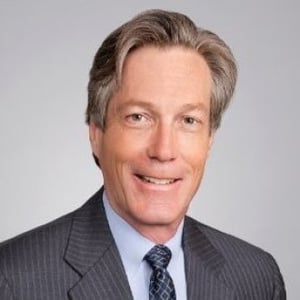
General Counsel, Texans for Lawsuit Reform
Lee Parsley has worked with TLR since 2002, and now serves as its general counsel. Lee leads a team of attorneys who help identify and research solutions to the challenges facing Texas’ legal system. Lee’s background in civil and appellate law has given him firsthand experience in navigating Texas’ courts. His experience in the legislative process helps TLR engage with lawmakers and stakeholders to ensure Texas is passing principled laws for a fair and efficient legal system.
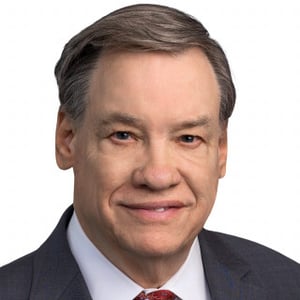
Partner, Baker Botts L.L.P.
Thomas R. Phillips is a partner in the Austin office of Baker Botts L.L.P.,
concentrating in general litigation, including appellate, trial strategy, and alternate
dispute resolution. He was appointed and then elected Chief Justice of the Supreme
Court of Texas in 1988, being one of the first four Republicans (along with Kent Hance,
Eugene Cook, and Bathan Hecht) to win a down-ballot statewide race since
Reconstruction. He was re-elected in 1990, 1996, and 2002 before leaving the Court in
2004.
While in office, Phillips served as president of the Conference of Chief Justices in
1997-98 and as a member of the Federal-State Relations Committee of the
Administrative Conference of the United States and the Institutions of Democracy
Judicial Branch Commission of the Annenberg Public Policy Center. After returning to
private life, he served on the Carter-Baker Commission on Federal Election Reform, the
Texas Historical Commission, the Texas State Historical Society, and the Judicial
Districts Board.
A native of Dallas, Phillips earned a B.A. from Baylor University in 1971 and a
J.D. from Harvard Law School in 1974. He has been awarded honorary doctoral
degrees from St. Edward’s University and Texas Tech University. Prior to becoming
Chief Justice, he practiced law in Houston and served as judge of the 280th District
Court in Harris County. Texas.
He resides with his wife, Dr. Lyn B. Phillips, in a historic home in Bastrop.
Professor of Political Science, University of Pittsburgh
Chris W. Bonneau is Professor of Political Science at the University of Pittsburgh, where he has been since 2002. His research is primarily in the areas of judicial selection (specifically, judicial elections) and judicial decisionmaking. Professor Bonneau’s work has been supported by the National Science Foundation and he has published numerous articles, including in the American Journal of Political Science and Journal of Politics. He is also the coauthor of three books: Strategic Behavior and Policy Choice on the U.S. Supreme Court (2005), In Defense of Judicial Elections (2009), and the award-winning Voters’ Verdicts: Citizens, Campaigns, and Institutions in State Supreme Court Elections (2015).
Professor Bonneau teaches undergraduate classes in constitutional law, judicial politics, and research methods, as well as graduate classes in judicial politics and research design.
Milton R. Underwood Chair in Free Enterprise, Vanderbilt University Law School
Brian Fitzpatrick is the Milton R. Underwood Chair in Free Enterprise and Professor of Law at Vanderbilt Law School, where his research focuses on class action litigation, federal courts, judicial selection, and constitutional law. He is best known for his empirical studies of class action settlements as well as his book The Conservative Case for Class Actions (University of Chicago Press, 2019). Professor Fitzpatrick joined Vanderbilt's law faculty in 2007 after serving as the John M. Olin Fellow at New York University School of Law. He graduated first in his class from Harvard Law School and went on to clerk for Judge Diarmuid O'Scannlain on the U.S. Court of Appeals for the Ninth Circuit and Justice Antonin Scalia on the U.S. Supreme Court. After his clerkships, Professor Fitzpatrick practiced commercial and appellate litigation for several years at Sidley Austin in Washington, D.C., and served as Special Counsel for Supreme Court Nominations to U.S. Senator John Cornyn. Before earning his law degree, Fitzpatrick graduated summa cum laude with a bachelor's of science in chemical engineering from the University of Notre Dame. He has received the Hall-Hartman Outstanding Professor Award, which recognizes excellence in classroom teaching, for his Civil Procedure and Federal Courts courses.

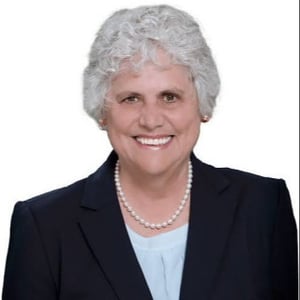
Panel I: Supreme Court Candidate Forum
2026 North Carolina Conference
Raleigh, NCJudicial Elections and Free Speech
Barry Anderson, Clint Bolick, Brett Busby, Daniel Kelly
Judicial selection in the states is not uniform, but most states have some form of...
Panel 1: State Supreme Court Candidate Forum
Joseph T. Deters, Michael P. Donnelly, Lisa Forbes, Hon. Daniel R. Hawkins, Megan E. Shanahan, Melody Stewart, Christopher J. Walker
Featuring: Hon. Joseph Deters, Justice, Supreme Court of Ohio Hon. Michael Donnelly, Justice, Supreme Court of...
Panel II: The Future of the Wisconsin Supreme Court
Shelley A. Grogan, Jeffrey A. Mandell, Ryan J. Walsh, Robert Yablon
Panelists will offer their diverse perspectives on the current state of the Wisconsin Supreme Court...
Panel I: Path to the Judiciary in Wisconsin
Michael J. Aprahamian, Rebecca Bradley, Matthew M. Fernholz, William C. Griesbach
Although many lawyers spend their careers in front of judges, the process by which a...
Supreme Court Candidate Forum
Trey Allen, Richard Dietz, Samuel J. Ervin, John Hood, Lucy Inman
Featuring: Trey Allen, General Counsel, Administrative Office of the Courts Hon. Richard Dietz, Judge, North Carolina...
Panel One: The Role of a Justice in the Ohio Supreme Court System
Robert Alt, Jennifer Brunner, Pat DeWine, Pat Fischer, Terri Jamison, Sharon L. Kennedy, Marilyn Zayas
10:10 - 10:20 Remarks from Chief Justice Candidate Brunner 10:20 - 10:30 Remarks from Chief Justice Candidate...
North Carolina Supreme Court Candidate Forum
Cheri Beasley, Phil Berger, Mark Davis, Lucy Inman, Donna Martinez, Paul Newby, Tamara Patterson Barringer
On September 10, 2020, The Federalist Society's Triangle and Cape Fear Lawyers Chapters hosted a...
Panel One: Proposed Reforms to Texas Judicial Selection
Chris W. Bonneau, Jeffrey Vincent Brown, Brian T. Fitzpatrick, Arthur Gollwitzer, Nathan L. Hecht, E. Lee Parsley, Thomas R. Phillips
On September 14, 2019, The Federalist Society held a panel on Proposed Reforms to Texas...
How Are State Supreme Court Justices Selected? [POLICYbrief]
Chris W. Bonneau, Brian T. Fitzpatrick
State supreme court justices play a considerable role in interpreting state laws and making common...