

Executive Director, Justice and Society Program, The Aspen Institute
Meryl Justin Chertoff is Executive Director of The Aspen Institute’s Justice and Society Program. She directs its summer seminar in Aspen, its speaker series in New York, Washington and Aspen, and the Inclusive America Project, on religious pluralism in America. She is also an adjunct professor of law at Georgetown Law, where she teaches about state government. She is an opinion contributor for The Hill, and also writes for the Huffington Post and the Aspen Idea.
From 2006-2009, Ms. Chertoff was Director of the Sandra Day O’Connor Project on the State of the Judiciary at Georgetown Law, studying and educating the public about federal and state courts. At Georgetown Law, she developed educational programs for visiting judges and other government officials from overseas.
She served in the Office of Legislative Affairs at the Federal Emergency Management Agency (FEMA), participating in the agency’s transition into the Department of Homeland Security in 2003. Ms. Chertoff has been a legislative relations professional, Director of New Jersey’s Washington, D.C. Office under two governors, and legislative counsel to the Chair of the New Jersey State Assembly Appropriations Committee.
Her undergraduate and law degrees are from Harvard. She and her husband have two adult children.

Milton R. Underwood Chair in Free Enterprise, Vanderbilt University Law School
Brian Fitzpatrick is the Milton R. Underwood Chair in Free Enterprise and Professor of Law at Vanderbilt Law School, where his research focuses on class action litigation, federal courts, judicial selection, and constitutional law. He is best known for his empirical studies of class action settlements as well as his book The Conservative Case for Class Actions (University of Chicago Press, 2019). Professor Fitzpatrick joined Vanderbilt's law faculty in 2007 after serving as the John M. Olin Fellow at New York University School of Law. He graduated first in his class from Harvard Law School and went on to clerk for Judge Diarmuid O'Scannlain on the U.S. Court of Appeals for the Ninth Circuit and Justice Antonin Scalia on the U.S. Supreme Court. After his clerkships, Professor Fitzpatrick practiced commercial and appellate litigation for several years at Sidley Austin in Washington, D.C., and served as Special Counsel for Supreme Court Nominations to U.S. Senator John Cornyn. Before earning his law degree, Fitzpatrick graduated summa cum laude with a bachelor's of science in chemical engineering from the University of Notre Dame. He has received the Hall-Hartman Outstanding Professor Award, which recognizes excellence in classroom teaching, for his Civil Procedure and Federal Courts courses.
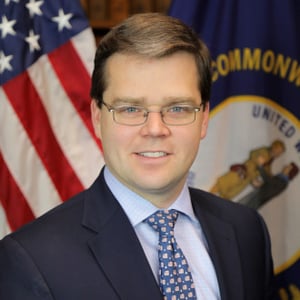
United States District Judge, Eastern District of Kentucky
Chad served as solicitor general from 2019 to 2021, overseeing all civil and criminal appellate litigation involving the commonwealth, and leading a team of nearly 30 appellate lawyers.
Chad has also served as the chief deputy general counsel (2015-2019) to the governor of Kentucky. In that role, he represented the governor in litigation and advised the governor and other executive branch officials on a wide variety of legal and policy issues.
After graduating law school, he clerked for Judge John M. Rogers on the US Court of Appeals for the Sixth Circuit, and also for Judge Amul R. Thapar on the US District Court for the Eastern District of Kentucky.
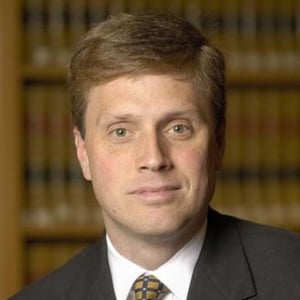
Partner, Ransdell Roach & Royse PLLC
John Roach is a former Kentucky Supreme Court Justice who also served as General Counsel to Governor Ernie Fletcher. Recently, John served as General Counsel in the Transition of Governor Matt Bevin. In addition to a vigorous trial practice, John has successfully argued cases before the Kentucky Court of Appeals, Kentucky Supreme Court and U.S. Court of Appeals for the Sixth Circuit. Since returning to private practice, John has represented a diverse group of individuals and businesses including Toyota Motor Manufacturing Kentucky, Harrison Memorial Hospital, Bayer Properties (developers of The Summit at Fritz Farm), Dominion Enterprises, and Greer Companies (major franchisee of Cheddar’s Casual Café). John is an avid horseracing fan with a genuine passion for the sport and the Commonwealth’s role as the epicenter of the thoroughbred world. He has represented a number of domestic and foreign clients in all aspects of thoroughbred breeding and racing. John is currently the Vice Chairman of the Kentucky Horse Racing Commission. Among the many equine transactions and litigation matters in which Mr. Roach has participated, he is proud to have served as lead counsel in the stallion syndication of PIONEEROF THE NILE, sire of Triple Crown Winner and Breeders’ Cup Champion AMERICAN PHAROAH. He has been included in The Best Lawyers in America® for numerous years and is AV Preeminent® Peer Review Rated by Martindale-Hubbell®. His practice primarily focuses on commercial litigation, appellate advocacy, labor and employment law and litigation, equine law, and corporate transactions for businesses and entrepreneurs.
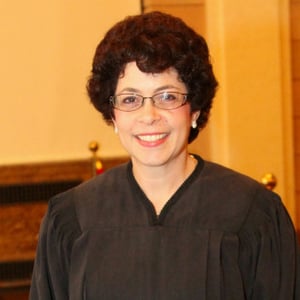
Eighth Judicial District Court, Clark County, Nevada
Judge Elissa Cadish graduated magna cum laude from the University of Pennsylvania in 1986, receiving her Bachelor of Arts degree with honors in Political Science. She received her law degree from the University of Virginia School of Law in 1989. After graduation, she moved to Las Vegas and clerked for two years for Honorable Philip M. Pro in the United States District Court for the District of Nevada.
Judge Cadish then entered private practice where she focused on commercial litigation and employment law. She practiced most recently at Hale Lane Peek Dennison and Howard, where she worked from 1995 until August of 2007, becoming a shareholder at Hale Lane in 2000. In July of 2007, she was appointed to fill the District Judge vacancy in Department 6 where she presently serves.
Judge Cadish was President of the Southern Nevada Association of Women Attorneys from 2004 to 2006, and remains an active member in that organization. She is also a Master in the Howard D. McKibben Inn of Court. She was Chair of the Court’s Civil Bench Bar Committee from 2008 until 2011, President of the Howard D. McKibben Chapter of the American Inn of Court from 2010 to 2012, Judicial Representative on the Clark County Bar Association’s Executive Board from January 2010 to December 2011, and is currently Chair of the State Bar’s Law Related Education Committee. She was honored as the Clark County Bar Association’s Ambassador of the Year for 2010, the Trial by Peers Judge of the Year for 2009, and a recipient of the Clark County Law Foundation’s Liberty Bell Award in 2016. She was recently elected to membership in the American Law Institute. Judge Cadish hears civil and criminal cases in District Court.
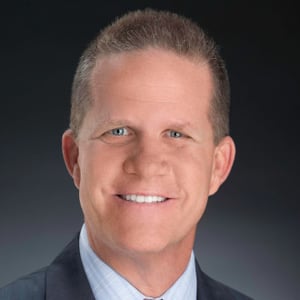
Lieutenant Governor, State of Nevada
A third generation Nevadan, born and raised in Las Vegas, Lieutenant Governor Mark Hutchison is a husband, father and grandfather, constitutional lawyer, and business owner. He has a strong sense of commitment and dedication to Nevada and is deeply honored to represent the Silver State.
Mark was raised in a modest blue-collar family and is the product of Nevada’s public education system. After he graduated from Bonanza High School Mark earned his business administration degree, Phi Kappa Phi, from the University of Nevada, Las Vegas and received his law degree, magna cum laude, from Brigham Young University. Following law school Mark clerked for a judge on the U.S. Seventh Circuit Court of Appeals in Indiana. Mark then worked for a national law firm until returning to Nevada and founding his own law firm in 1996 with his good friend, John Steffen. Today, Mark is the senior partner at Hutchison & Steffen, one of the largest law firms in the state, employing nearly one hundred Nevadans. Mark has been widely recognized by his peers and clients as a skilled an effective lawyer. As a result, Mark has been a key figure in some of Nevada’s most significant governmental disputes at the intersection of law and politics.
On November 4, 2014, Mark Hutchison was elected to serve as Nevada’s 34th Lieutenant Governor. Prior to running for lieutenant governor, Mark had a long history of public service. Mark served on the Nevada Commission on Ethics for six years, two of which he chaired the commission. Mark also had the pleasure of serving in the Nevada State Senate (Senate District 6) to which he was elected in 2012. In addition to his service in the public sector Mark served as a member of numerous non-profit and community organizations, some of which he is still active in today.
Mark was sworn in to office on January 5, 2015. As Lieutenant Governor, Mark is a member of Governor Brian Sandoval’s cabinet and serves as President of the State Senate. Mark is the Chairman of the Commission on Tourism, Vice-Chairman of the State Board of Transportation, a member of the Board of the Governor’s Office of Economic Development, and a member of the Executive Budget Audit Committee. On November 17, 2015 Mark was appointed to the Governor’s Commission on Homeland Security and was later appointed to the Commission’s subcommittee on Cyber Security where he serves as Chairman. On February 9, 2017, Mark was appointed as Chairman of the Governor's Committee on Energy Choice. Mark also serves as a member of the Board of Directors for the Public Education Foundation and as Co-Chair of What’s Next Nevada?
When not focused on his duties as Lieutenant Governor or at his law firm, Mark is focused on his family. Mark and his wife Cary have been married for thirty years and together they have six children and six grandchildren. Mark enjoys doing just about anything with his family and has spent many enjoyable years coaching the athletic teams of his children and their friends. When he can, Mark continues to help the football team at Palo Verde High School where his youngest son still plays. Mark and his family are also active in their church. During his limited free time, Mark enjoys running, collecting leatherback books, and writing.
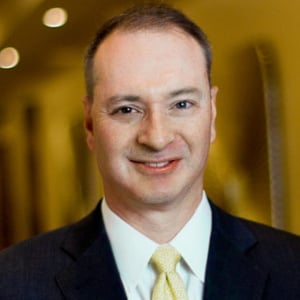
Managing Shareholder, Saltzman Mugan Dushoff, PLLC
Over the course of his twenty-plus years as an attorney in Las Vegas, Mr. Saltzman has developed a corporate law practice focused on financial institution and liquor law. He assists businesses in their formation, licensing and governance matters; he also counsels businesses on corporate mergers and acquisition matters. He assists highly regulated financial institutions and captive insurance companies in corporate and regulatory compliance matters and he has testified before the Nevada legislature as an expert on trust company legislation and drafted portions of Nevada law relating to the chartering and operation of Nevada trust companies. He has counseled trust companies and financial service firms on Blockchain and cryptocurrency related legal compliance matters.
Mr. Saltzman has developed and managed the firm’s liquor law practice into Nevada’s largest alcohol beverage specialty law practice group. He and his team of attorneys and paralegals assist a wide range of liquor retailers, wholesalers and suppliers in licensing and compliance matters in all Nevada jurisdictions. More information on Mr. Saltzman’s liquor law practice can be found at his blog: www.nvliquorlaw.com
Matthew Saltzman received a Bachelor of Arts degree in Economics and Philosophy from University of Wisconsin, Madison in 1987. In 1993, he received his Juris Doctor from University of Pittsburgh School of Law, where he was also Executive Editor of the University of Pittsburgh Law Review and served as teaching assistant for the Legal Research and Writing course.
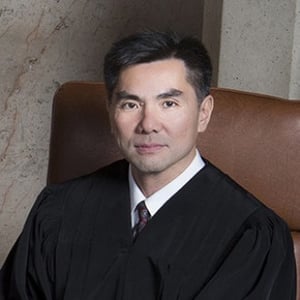
Nevada Court of Appeals, Department 1
Judge Jerome T. Tao was appointed to the Court of Appeals, Department 1, by Governor Brian Sandoval in December 2014.
Judge Tao was appointed by Governor Sandoval in January 2011 to the Eighth Judicial District Court. As a District Court Judge, he earned a retention rating of 86 percent in the December 2013 Las Vegas Review-Journal “Judging the Judges” survey, which was the fourth-highest score among the 32 judges in the civil-criminal division of the Eighth Judicial District Court. In 2014, Judge Tao was re-elected to the District Court in a landslide, winning more than 67% of the vote, and following his appointment to the Court of Appeals was re-elected in 2016 with 70% of the vote.
Previously he served at various times as a Clark County Deputy District Attorney, Chief Deputy Public Defender, and as a civil attorney in private practice. He has been active in a variety of community organizations including Leadership Las Vegas, Focus Las Vegas, the UNLV Vice-President’s Commission on Diversity, and serves on the adjunct faculty of the UNLV Boyd Law School, teaching classes in trial advocacy.
In 2017, Judge Tao was elected to The American Law Institute, the leading independent organization in the United States producing scholarly work to clarify, modernize, and improve the law. By participating in the Institute’s work, Judge Tao influences the development of the law in both existing and emerging areas.
Judge Tao is a graduate of Cornell University (B.S. 1989) and the George Washington University (J.D. 1992, with honors), where he served on the Law Review and the Moot Court Board.
Milton R. Underwood Chair in Free Enterprise, Vanderbilt University Law School
Brian Fitzpatrick is the Milton R. Underwood Chair in Free Enterprise and Professor of Law at Vanderbilt Law School, where his research focuses on class action litigation, federal courts, judicial selection, and constitutional law. He is best known for his empirical studies of class action settlements as well as his book The Conservative Case for Class Actions (University of Chicago Press, 2019). Professor Fitzpatrick joined Vanderbilt's law faculty in 2007 after serving as the John M. Olin Fellow at New York University School of Law. He graduated first in his class from Harvard Law School and went on to clerk for Judge Diarmuid O'Scannlain on the U.S. Court of Appeals for the Ninth Circuit and Justice Antonin Scalia on the U.S. Supreme Court. After his clerkships, Professor Fitzpatrick practiced commercial and appellate litigation for several years at Sidley Austin in Washington, D.C., and served as Special Counsel for Supreme Court Nominations to U.S. Senator John Cornyn. Before earning his law degree, Fitzpatrick graduated summa cum laude with a bachelor's of science in chemical engineering from the University of Notre Dame. He has received the Hall-Hartman Outstanding Professor Award, which recognizes excellence in classroom teaching, for his Civil Procedure and Federal Courts courses.
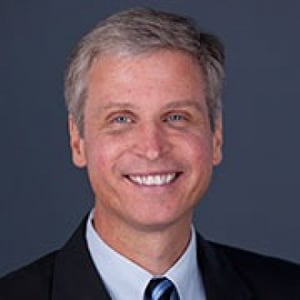
Frank Edwards Tyler Distinguished Professor of Law, University of Kansas School of Law
Stephen Ware is the author of five books, over 60 law review articles and many other publications. His writings have been cited by the Supreme Court of the United States and in at least 37 other cases. Ware teaches and writes on:
each with an international or comparative dimension. An experienced teacher of lawyering skills exercises in which student groups negotiate, mediate, and draft legal documents, Professor Ware takes this approach in his Transnational Dispute Resolution course, which he has customized for universities from Beijing to Istanbul to Kansas.
Ware has testified before both houses of the U.S. Congress, several state legislatures and, as an expert witness, in court. He is a frequent guest lecturer and speaker at academic and professional conferences—having given such presentations throughout the U.S. and in several other countries. He has appeared on numerous television and radio stations and been quoted in The New York Times, Wall Street Journal, USA Today, Financial Times, National Law Journal and many other news outlets. He is an elected member of the American Law Institute (ALI) and has served, at various times in his career, on the editorial board of the Journal of Legal Education and as an arbitrator for the American Arbitration Association.
Ware was named as the Frank Edwards Tyler Distinguished Professor of Law in 2019.
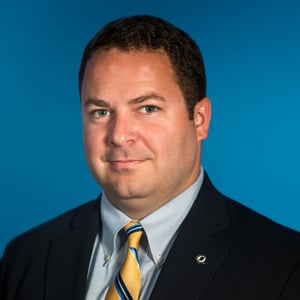
Former Director, State Courts, The Federalist Society for Law and Public Policy Studies
Peter Bisbee served as Director of State Courts for the Federalist Society. In this capacity, he lead a comprehensive effort to promote the discussion on the role of courts in states across the country. Peter also executed the Society’s government and coalition outreach efforts at the national level as Deputy Director of External Relations, working as a liaison to Congress and other public policy organizations. He previously served as Director of Membership at the Society, where he managed relations with the Society’s network of over 70,000 individuals, created outreach campaigns to increase engagement, and developed the organization's recordkeeping and communication systems. Peter holds a B.A. from the University of Michigan in History and lives in Virginia with his wife and daughter.
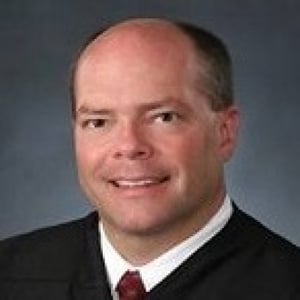
Ohio Fifth District Court of Appeals
Judge Craig Baldwin was appointed to the Fifth District Court of Appeals in 2013. He was elected to the position in 2014 and again in 2016. Prior to his time on the appellate court, Judge Baldwin served eight years as a judge in the Licking County Court of Common Pleas, Domestic Relations Division. An attorney since 1992, Judge Baldwin was a partner with the law firm of Jones, Norpell, List, Miller and Howarth. In 2001 he was appointed by the Licking County Commissioners as director of the Licking County Child Support Enforcement Agency until his election as judge in 2004. He was re-elected as judge in 2010.
Judge Baldwin obtained his Juris Doctor from Capital University, Bachelor of Arts degree from Ohio University and pursued graduate degree work in public administration at Ohio University.
Judge Baldwin has served by assignment on the Ohio Supreme Court. Judge Baldwin is a former chair of the Ohio Supreme Court’s Commission on the Rules of Superintendence, a member of the Licking County Bar, Stark County Bar and Ohio State Bar Associations. In 2012 he was appointed to the Ohio Supreme Court’s Task Force on the Funding of Ohio Courts. Judge Baldwin is also a frequent instructor at the Ohio Judicial College.
Judge Baldwin is a member of the Newark-Heath Rotary and a board member of the Licking Memorial Hospital. He is married and has two children.
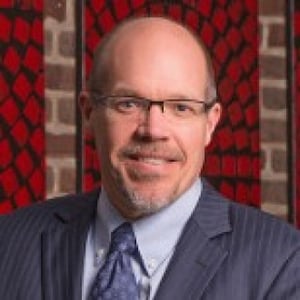
United States District Judge, Southern District of Ohio
Douglas R. Cole was nominated for the position in May 2019 by President Donald J. Trump and confirmed by the Senate in December 2019. Immediately before joining the bench, Judge Cole was a founding partner at Organ Cole, a litigation boutique in Columbus, Ohio.
Judge Cole received his J.D. from the University of Chicago Law School, where he graduated with High Honors and Order of the Coif, was an Olin Fellow in Law & Economics, and was a member of the editorial board of the University of Chicago Law Review. He clerked for Judge Frank H. Easterbrook on the United States Court of Appeals for the Seventh Circuit before joining Kirkland & Ellis in its Chicago office. He has served as a professor at the University of Oklahoma College of Law and at the Michael E. Moritz College of Law at The Ohio State University, where he taught in the fields of business law, law & economics, and intellectual property. From 2003-2006, he was the State Solicitor for the State of Ohio. In that capacity, he argued five cases at the United States Supreme Court, and multiple cases in the United States Court of Appeals for the Sixth Circuit and the Ohio Supreme Court. Before joining Organ Cole, Judge Cole was a litigation partner at the Columbus office of Jones Day, where he practiced in the Issues & Appeals group and the Intellectual Property group.
Judge Cole has undergraduate degrees in electrical engineering, mathematics, and physics, and worked as an electrical engineer before attending law school.
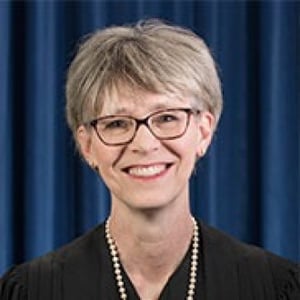
Associate Justice, Ohio Supreme Court
Mary DeGenaro became the 159th justice of the Ohio Supreme Court by gubernatorial appointment, effective Jan. 28, 2018.
Justice DeGenaro served nearly 17 years as a judge on the Seventh District Court of Appeals in Youngstown prior to her Supreme Court appointment. The appointed term ends Jan. 1, 2019 for a seat up for election in November 2018.
During her tenure on the Seventh District Court of Appeals, which began Feb. 9, 2001, she sat by assignment with the Ohio Supreme Court and other appellate districts.
Justice DeGenaro has served in many roles outside the courtroom. She was an adjunct faculty member for the political science department at Youngstown State University, where she earned her Bachelor of Arts degree. She received her law degree from the Cleveland-Marshall College of Law, where she interned with U.S. District Judge George White.
She also was vice president of the Ohio Women’s Bar Association at the time of her Supreme Court appointment.
Admitted to the Ohio bar in 1986, she also was admitted to practice in the federal courts, including the U.S. Supreme Court and the Sixth Circuit, U.S. Court of Appeals.
Prior to her judgeship, she served on the Poland Village Council.
Justice DeGenaro was appointed by the late Chief Justice Thomas J. Moyer to serve during 2002 and 2003 as a member of the Voter Education & Public Funding Working Group to further Judicial Impartiality: The Next Step Forum. This court-policy initiative addressed issues involving judicial races and preserving the integrity of Ohio’s judiciary.
In 2005, she began serving as a founding member of the Ohio State Bar Association’s Appellate Practice Specialty Certification Board, which administers the specialty bar examination and certification.
Involved in a variety of community organizations, Justice DeGenaro's service includes the board of trustees of the Public Library of Youngstown and Mahoning County and the Mahoning Valley Historical Society. Past service includes the external advisory committees for the Ohio Center for the Advancement of Women in Public Service at Cleveland State University, and Youngstown State University’s College of Liberal Arts and Social Sciences.
Outside of her judicial duties, Justice DeGenaro enjoys reading and beekeeping. She and her husband, Steve, reside in Poland, Ohio. They have two adult sons.
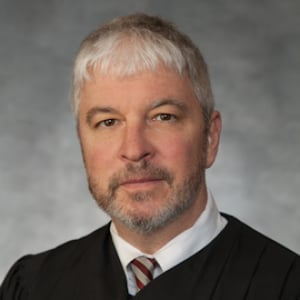
Cuyahoga County Common Pleas Court
Michael P. Donnelly is a judge on the Cuyahoga County Court of Common Pleas General Division in Cleveland, Ohio. He first joined the court on January 3, 2005. Donnelly won re-election to a third consecutive term in the general election on November 8, 2016. His current term expires January 2, 2023.
Donnelly received his undergraduate degree from John Carroll University and his J.D. from the Cleveland-Marshall College of Law. He was admitted to the Ohio Bar in 1992 and began working as an assistant prosecutor for Cuyahoga County. In 1997, he left that role to become an attorney at the firm of Davis & Young, where he worked until 1999. He then joined the firm of Climaco, Lefkowitz, Peca, Wilcox & Garofoli, working as a private practice attorney until his election to the common pleas bench in 2004.
In 2011, Donnelly participated in a program with the National Judicial College called "Innovative Leadership/Management Skills for Future Court Leaders". In 2012, Donnelly served as the Chair of Commission on Professionalism.
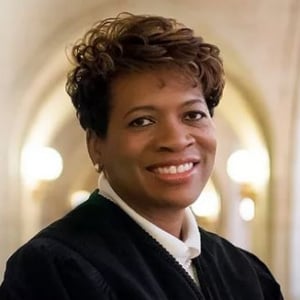
Ohio Eighth District Court of Appeals
Elected to the Ohio Court of Appeals – Eighth Appellate District in 2006 and twice reelected, Judge Melody Stewart has over 30 years of combined administrative, legal, and academic experience in a number of private and public settings. She has been an administrator for a healthcare management company, a music teacher, a civil defense litigator, and a law school administrator and professor. She served as the Administrative Judge for the Court of Appeals in 2013.
Judge Stewart earned a Bachelor of Music degree from the College-Conservatory of Music at the University of Cincinnati; her law degree as a Patricia Roberts Harris Fellow from the Cleveland-Marshall College of Law, Cleveland State University; and her Ph.D. as a Mandel Leadership Fellow at Case Western Reserve University’s Mandel School of Applied Social Sciences.
After practicing law as an assistant law director for the cities of Cleveland and East Cleveland, Judge Stewart worked as a lecturer, an adjunct instructor, and an assistant dean at Cleveland-Marshall College of Law before joining the faculty. Her primary teaching areas were ethics and professional responsibility, criminal law, criminal procedure, and legal research, writing, and advocacy. Additionally, she taught at the University of Toledo College of Law, at Ursuline College, and was Director of Student Services at Case Western Reserve University’s School of Law.
Judge Stewart has served on many boards of trustees and been a member of various professional, educational, civic, and community organizations. She also served as a commissioner and chair of the Board of Planning and Zoning for the city of Euclid. Recently Judge Stewart served as a member of the Ohio Criminal Justice Recodification Committee. She is currently a member of the board of the Ohio Supreme Court’s Judicial College and is chair of the Ohio Capital Case Attorney Fee Council. Judge Stewart is admitted to practice in the state and federal courts in Ohio, the District of Columbia, and the United States Supreme Court.
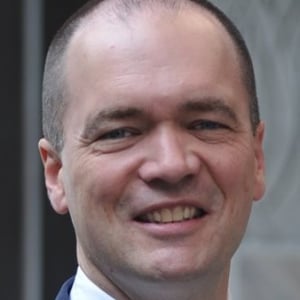
Professor of Law, High Point School of Law
Scott Gaylord directs High Point Law’s Appellate Litigation Clinic and serves as a Professor of Law, teaching Constitutional Law and related upper-level elective courses. The Appellate Clinic works with students to write and file briefs in significant court cases, including appeals before the United States Supreme Court.
Professor Gaylord is a prominent Constitutional Law scholar with an impressive background in both academia and legal practice. He has authored or co-authored 18 substantial law review articles, co-authored a Constitutional Law casebook, and has written more than 35 amicus briefs to the U.S. Supreme Court and federal circuit courts on prominent national cases involving religious liberty and free speech. He is a frequent speaker on constitutional law and First Amendment topics at law schools across the country and has regularly provided commentary on ongoing constitutional issues to national media outlets, including th eNew York Times, USA Today, the Diane Rehm Show, NPR, The National Constitution Center, and Bloomberg Law.
Professor Gaylord also started an appellate advocacy clinic at his former law school and currently serves on the North Carolina Chief Justice’s Commission on Professionalism, along with holding many other service and leadership roles. Prior to joining the academy in 2007, he practiced complex civil and commercial litigation with the Charlotte firm of Robinson Bradshaw & Hinson, and he clerked for Judge Edith H. Jones on the United States Court of Appeals for the Fifth Circuit.
Professor Gaylord earned his B.A. in philosophy and English, summa cum laude, from Colgate University, his Ph.D. in philosophy from the University of North Carolina at Chapel Hill, and his J.D. from Notre Dame Law School, where he also graduated summa cum laude.
Former Director, State Courts, The Federalist Society for Law and Public Policy Studies
Peter Bisbee served as Director of State Courts for the Federalist Society. In this capacity, he lead a comprehensive effort to promote the discussion on the role of courts in states across the country. Peter also executed the Society’s government and coalition outreach efforts at the national level as Deputy Director of External Relations, working as a liaison to Congress and other public policy organizations. He previously served as Director of Membership at the Society, where he managed relations with the Society’s network of over 70,000 individuals, created outreach campaigns to increase engagement, and developed the organization's recordkeeping and communication systems. Peter holds a B.A. from the University of Michigan in History and lives in Virginia with his wife and daughter.
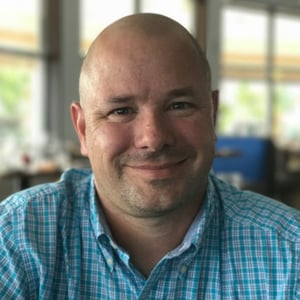
Professor of Political Science, University of Pittsburgh
Chris W. Bonneau is Professor of Political Science at the University of Pittsburgh, where he has been since 2002. His research is primarily in the areas of judicial selection (specifically, judicial elections) and judicial decisionmaking. Professor Bonneau’s work has been supported by the National Science Foundation and he has published numerous articles, including in the American Journal of Political Science and Journal of Politics. He is also the coauthor of three books: Strategic Behavior and Policy Choice on the U.S. Supreme Court (2005), In Defense of Judicial Elections (2009), and the award-winning Voters’ Verdicts: Citizens, Campaigns, and Institutions in State Supreme Court Elections (2015).
Professor Bonneau teaches undergraduate classes in constitutional law, judicial politics, and research methods, as well as graduate classes in judicial politics and research design.

Partner, Schaerr | Jaffe LLP
Erik Jaffe has been involved in appeals on a broad range of legal issues, including First Amendment challenges to campaign finance reform, Commerce Clause challenges to Health Care Reform and other federal legislation, Equal Protection Clause challenges to affirmative action in education, First Amendment challenges to school vouchers, Fifth Amendment challenges to takings of property, Second Amendment challenges to restrictions on gun ownership, and a wide variety of cases involving patents, copyrights, ERISA, securities fraud, federal preemption, environmental regulation, and other state and federal constitutional and statutory matters. He has represented businesses and non-profit groups, Judges, Senators, former government officials, Nobel Prize winners, and a broad cross-section of private individuals. Mr. Jaffe has been involved in over 120 Supreme Court matters, including filing over 30 cert. petitions, representing half-a-dozen parties on the merits, and filing over 70 amicus briefs at both the cert. and merits stages.
A 1990 graduate of the Columbia University School of Law, Mr. Jaffe was a law clerk to Judge Douglas H. Ginsburg of the United States Court of Appeals for the District of Columbia Circuit from 1990 to 1991. Following that clerkship he spent five years in litigation practice with the Washington, D.C. law firm of Williams & Connolly. In the summer of 1996 he left Williams & Connolly to clerk for Supreme Court Justice Clarence Thomas. At the end of that clerkship he started his own practice, and he was a sole practitioner from 1997 to 2018. He joined the firm of Schaerr | Jaffe LLP in 2018.
Milton R. Underwood Chair in Free Enterprise, Vanderbilt University Law School
Brian Fitzpatrick is the Milton R. Underwood Chair in Free Enterprise and Professor of Law at Vanderbilt Law School, where his research focuses on class action litigation, federal courts, judicial selection, and constitutional law. He is best known for his empirical studies of class action settlements as well as his book The Conservative Case for Class Actions (University of Chicago Press, 2019). Professor Fitzpatrick joined Vanderbilt's law faculty in 2007 after serving as the John M. Olin Fellow at New York University School of Law. He graduated first in his class from Harvard Law School and went on to clerk for Judge Diarmuid O'Scannlain on the U.S. Court of Appeals for the Ninth Circuit and Justice Antonin Scalia on the U.S. Supreme Court. After his clerkships, Professor Fitzpatrick practiced commercial and appellate litigation for several years at Sidley Austin in Washington, D.C., and served as Special Counsel for Supreme Court Nominations to U.S. Senator John Cornyn. Before earning his law degree, Fitzpatrick graduated summa cum laude with a bachelor's of science in chemical engineering from the University of Notre Dame. He has received the Hall-Hartman Outstanding Professor Award, which recognizes excellence in classroom teaching, for his Civil Procedure and Federal Courts courses.
Partner, Schaerr | Jaffe LLP
Erik Jaffe has been involved in appeals on a broad range of legal issues, including First Amendment challenges to campaign finance reform, Commerce Clause challenges to Health Care Reform and other federal legislation, Equal Protection Clause challenges to affirmative action in education, First Amendment challenges to school vouchers, Fifth Amendment challenges to takings of property, Second Amendment challenges to restrictions on gun ownership, and a wide variety of cases involving patents, copyrights, ERISA, securities fraud, federal preemption, environmental regulation, and other state and federal constitutional and statutory matters. He has represented businesses and non-profit groups, Judges, Senators, former government officials, Nobel Prize winners, and a broad cross-section of private individuals. Mr. Jaffe has been involved in over 120 Supreme Court matters, including filing over 30 cert. petitions, representing half-a-dozen parties on the merits, and filing over 70 amicus briefs at both the cert. and merits stages.
A 1990 graduate of the Columbia University School of Law, Mr. Jaffe was a law clerk to Judge Douglas H. Ginsburg of the United States Court of Appeals for the District of Columbia Circuit from 1990 to 1991. Following that clerkship he spent five years in litigation practice with the Washington, D.C. law firm of Williams & Connolly. In the summer of 1996 he left Williams & Connolly to clerk for Supreme Court Justice Clarence Thomas. At the end of that clerkship he started his own practice, and he was a sole practitioner from 1997 to 2018. He joined the firm of Schaerr | Jaffe LLP in 2018.

Distinguished Senior Fellow and Antonin Scalia Chair in Constitutional Studies, Ethics and Public Policy Center
Edward Whelan is a Distinguished Senior Fellow of the Ethics and Public Policy Center and holds EPPC’s Antonin Scalia Chair in Constitutional Studies. He is the longest-serving President in EPPC’s history, having held that position from March 2004 through January 2021.
Mr. Whelan directs EPPC’s program on The Constitution, the Courts, and the Culture. His areas of expertise include constitutional law and the judicial confirmation process. As a contributor to National Review Online’s Bench Memos blog, he has been a leading commentator on nominations to the Supreme Court and the lower courts and on issues of constitutional law. He has written essays and op-eds for leading newspapers—including the Wall Street Journal, the New York Times, and the Washington Post—opinion journals, and academic symposia and law reviews. The National Law Journal has named Mr. Whelan among its “Champions and Visionaries” in the practice of law in D.C.
Mr. Whelan is co-editor of three volumes of Supreme Court Justice Antonin Scalia’s work: Scalia Speaks: Reflections on Law, Faith, and Life Well Lived (Crown Forum, 2017), a New York Times bestselling collection of speeches by Justice Scalia; On Faith: Lessons from an American Believer (Crown Forum, 2019), a collection of Justice Scalia’s writings on faith and religion; and The Essential Scalia: On the Constitution, the Courts, and the Rule of Law (Crown Forum, 2020), a collection of Justice Scalia’s views on legal issues.
Mr. Whelan, a lawyer and a former law clerk to Justice Scalia, has served in positions of responsibility in all three branches of the federal government. From just before the terrorist attacks of September 11, 2001, until joining EPPC in 2004, Mr. Whelan was the Principal Deputy Assistant Attorney General for the Office of Legal Counsel in the U.S. Department of Justice. In that capacity, he advised the White House Counsel’s Office, the Attorney General and other senior DOJ officials, and departments and agencies throughout the executive branch on difficult and sensitive legal questions. Mr. Whelan previously served on Capitol Hill as General Counsel to the U.S. Senate Committee on the Judiciary. In addition to clerking for Justice Scalia, he was a law clerk to Judge J. Clifford Wallace of the U.S. Court of Appeals for the Ninth Circuit.
In 1981 Mr. Whelan graduated with honors from Harvard College and was inducted into Phi Beta Kappa. He received his J.D. magna cum laude in 1985 from Harvard Law School, where he was a member of the Board of Editors of the Harvard Law Review.
For more on Mr. Whelan’s background, see this interview.
Milton R. Underwood Chair in Free Enterprise, Vanderbilt University Law School
Brian Fitzpatrick is the Milton R. Underwood Chair in Free Enterprise and Professor of Law at Vanderbilt Law School, where his research focuses on class action litigation, federal courts, judicial selection, and constitutional law. He is best known for his empirical studies of class action settlements as well as his book The Conservative Case for Class Actions (University of Chicago Press, 2019). Professor Fitzpatrick joined Vanderbilt's law faculty in 2007 after serving as the John M. Olin Fellow at New York University School of Law. He graduated first in his class from Harvard Law School and went on to clerk for Judge Diarmuid O'Scannlain on the U.S. Court of Appeals for the Ninth Circuit and Justice Antonin Scalia on the U.S. Supreme Court. After his clerkships, Professor Fitzpatrick practiced commercial and appellate litigation for several years at Sidley Austin in Washington, D.C., and served as Special Counsel for Supreme Court Nominations to U.S. Senator John Cornyn. Before earning his law degree, Fitzpatrick graduated summa cum laude with a bachelor's of science in chemical engineering from the University of Notre Dame. He has received the Hall-Hartman Outstanding Professor Award, which recognizes excellence in classroom teaching, for his Civil Procedure and Federal Courts courses.
Professor of Law, High Point School of Law
Scott Gaylord directs High Point Law’s Appellate Litigation Clinic and serves as a Professor of Law, teaching Constitutional Law and related upper-level elective courses. The Appellate Clinic works with students to write and file briefs in significant court cases, including appeals before the United States Supreme Court.
Professor Gaylord is a prominent Constitutional Law scholar with an impressive background in both academia and legal practice. He has authored or co-authored 18 substantial law review articles, co-authored a Constitutional Law casebook, and has written more than 35 amicus briefs to the U.S. Supreme Court and federal circuit courts on prominent national cases involving religious liberty and free speech. He is a frequent speaker on constitutional law and First Amendment topics at law schools across the country and has regularly provided commentary on ongoing constitutional issues to national media outlets, including th eNew York Times, USA Today, the Diane Rehm Show, NPR, The National Constitution Center, and Bloomberg Law.
Professor Gaylord also started an appellate advocacy clinic at his former law school and currently serves on the North Carolina Chief Justice’s Commission on Professionalism, along with holding many other service and leadership roles. Prior to joining the academy in 2007, he practiced complex civil and commercial litigation with the Charlotte firm of Robinson Bradshaw & Hinson, and he clerked for Judge Edith H. Jones on the United States Court of Appeals for the Fifth Circuit.
Professor Gaylord earned his B.A. in philosophy and English, summa cum laude, from Colgate University, his Ph.D. in philosophy from the University of North Carolina at Chapel Hill, and his J.D. from Notre Dame Law School, where he also graduated summa cum laude.
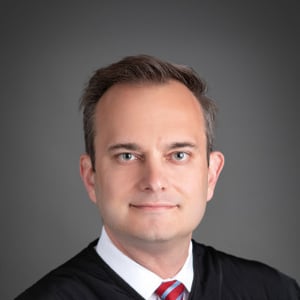
United States Magistrate Judge, Eastern District of North Carolina
Robert T. Numbers, II serves as a United States Magistrate Judge in the United States District Court for the Eastern District of North Carolina.
Judge Numbers received degrees in Political Science and Economics, with honors, from Wake Forest University. After completing his undergraduate work, Judge Numbers obtained his law degree from the University of Notre Dame where he served on the Notre Dame Law Review.
Upon his graduation from law school, Judge Numbers joined the Winston-Salem office of a large, regional law firm. From 2005 until 2010, Judge Numbers’ practice focused on civil rights claims against local municipalities and government contractors. In 2010, Judge Numbers joined the firm’s Raleigh office and concentrated his practice on complex business litigation in state and federal courts.

President, JCN
Carrie Campbell Severino is the president of the JCN, and co-author with Mollie Hemingway of the bestselling book Justice on Trial: The Kavanaugh Confirmation and the Future of the Court. As a go-to expert on the confirmation process, Mrs. Severino has been extensively quoted in the media. She regularly appears on television, including FOX, CNN, MSNBC, C-SPAN, and ABC’s This Week.
Severino writes and speaks on a wide range of judicial issues, including the constitutional limits on government, the federal nomination process, and state judicial selection. She has testified before Congress on constitutional questions and briefed Senators on judicial nominations, and regularly files briefs in high-profile Supreme Court cases. She was a law clerk to Supreme Court Justice Clarence Thomas and to Judge David B. Sentelle of the U.S. Court of Appeals for the D.C. Circuit, and is a graduate of Harvard Law School (J.D.), Duke University (B.A., Biology), and Michigan State University (M.A., Linguistics).

Judicial Selection in Kentucky
Meryl J. Chertoff, Brian T. Fitzpatrick, S. Chad Meredith, John C. Roach
On October 29, 2018, the Federalist Society's Kentucky lawyers chapters hosted the second annual Kentucky...
Nevada Supreme Court Candidate Forum
Elissa Cadish, Mark Hutchison, Matthew Saltzman, Jerry Tao
On September 28, 2018, the Las Vegas Lawyers Chapter hosted a luncheon forum featuring two...
The Case for Political Appointment of Judges
Brian T. Fitzpatrick, Stephen J. Ware, Peter Bisbee
Join us in a discussion with our experts, Professor Brian Fitzpatrick and Professor Stephen Ware,...
Analyzing Ohio's Judicial System and the Ohio Supreme Court
Craig R. Baldwin, Douglas R. Cole, Mary DeGenaro, Michael P. Donnelly, Melody Stewart
What methods of interpretation should Ohio courts use in constitutional matters and in cases involving...
Wisconsin Supreme Court Candidate Forum
With Justice Michael Gableman not seeking a second term on the Wisconsin Supreme Court a...
The Case for Partisan Judicial Elections
Scott W. Gaylord, Peter Bisbee, Chris W. Bonneau
Join us in a discussion with our experts, Professor Chris Bonneau and Professor Scott Gaylord,...
Williams-Yulee v. The Florida Bar - Post-Decision SCOTUScast
Erik S. Jaffe, Brian T. Fitzpatrick
On January 20, 2015, the Supreme Court heard oral argument in Williams-Yulee v. The Florida...
Supreme Court Upholds Ban on Judicial Election Fundraising - Podcast
Brian T. Fitzpatrick, Erik S. Jaffe
On April 29, the United States Supreme Court issued a 5-4 opinion in Williams-Yulee v....
Judicial Campaign Fundraising and the Supreme Court: Williams-Yulee v. The Florida Bar - Podcast
Erik S. Jaffe, Edward Whelan
On Tuesday, January 20, the Supreme Court heard argument in Williams-Yulee v. The Florida Bar,...
Panel Discussion on Judicial Selection in North Carolina
Brian T. Fitzpatrick, Scott W. Gaylord, Robert T. Numbers, Carrie Campbell Severino
Although North Carolina currently elects its judicial officials, various groups are pushing to eliminate judicial...