
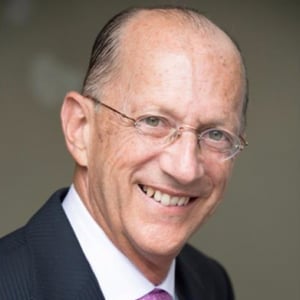
President, Cass & Associates, PC
Ronald A. Cass is Dean Emeritus of Boston University School of Law (where he was Dean from 1990-2004), President of Cass & Associates, PC, former Vice-Chairman and Commissioner of the U.S. International Trade Commission, former faculty member at Boston University School of Law and the University of Virginia Law School, and Distinguished Senior Fellow at the C. Boyden Gray Center for the Study of the Administrative State. Dean Cass also sits as an arbitrator for commercial, international, and intellectual property rights disputes, and is a former United States member of the Panel of Conciliators of the International Centre for Settlement of Investment Disputes. He is a member of the Council of the Administrative Conference of the United States and has received seven presidential appointments, spanning Presidents Ronald Reagan to Donald J. Trump.
As a law professor, lecturer, and scholar, Dean Cass has been teaching and writing about a wide array of legal issues on topics such as administrative law and regulation, antitrust, constitutional law, communications, intellectual property, international trade, separation of powers, and legal process. He has published more than 160 scholarly books, chapters, articles, and papers, including a leading casebook on administrative law. Dean Cass has taught judges as well as students in schools of law, economics, business, and public policy and has held academic appointments in the United States, Europe, and Latin America.
In addition to his academic work, Dean Cass has participated in numerous important legal cases as an amicus, consultant, or expert, and has advised businesses, law firms, investment funds, and government agencies on a range of trade, antitrust, intellectual property, and regulatory issues. He has a broad range of affiliations with professional groups, and has received numerous honors, fellowships and awards.
Dean Cass is a graduate of the University of Virginia and the University of Chicago Law School.
Visiting Scholar, Center for Citizenship & Constitutional Government, University of Notre Dame

Executive Director, Ohio Dental Association
David J. Owsiany is the executive director of the Ohio Dental Association and a past president of the Columbus Lawyers Chapter of the Federalist Society.
He has served as CEO of a statewide health care association, president of the Buckeye Institute, chief of policy for the Ohio Department of Insurance, judicial law clerk for the Illinois Appellate Court, and staffer on the United State Senate Judiciary Committee.
Mr. Owsiany has written dozens of articles on legal and public policy issues for various publications, including the University of Toledo Law Review, the Federalist Society's State Court Docket Watch, Columbus Dispatch, Cincinnati Enquirer, Crain’s Cleveland Business, and Akron Beacon Journal.
Owsiany received his J.D. from Washington University School of Law in St. Louis and B.A. from the University of Michigan in Ann Arbor.
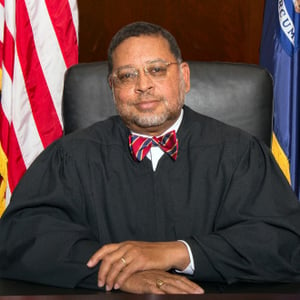
Former Michigan Supreme Court Justice
Robert P. Young, Jr., retired justice of the Michigan Supreme Court, promoted initiatives to measure judicial performance, track public satisfaction, adopt best practices, streamline court processes, and implement technologies that expand public access, increase efficiency, and boost productivity of trial courts. From 2018 to 2019 he served as vice president and general counsel at Michigan State University. Mr. Young previously served 18 years as a member of the Michigan Supreme Court, including as chief justice from 2011 to January 2017. Before that, he was a judge of the Michigan Court of Appeals. Mr. Young has served on the boards of many charitable groups, including the Detroit Urban League, United Community Services of Metropolitan Detroit, and Vista Maria, a resource center for abused and neglected young women and girls. A former commissioner of the Michigan Civil Service Commission, he was a trustee of Central Michigan University, University Liggett School, and the Grosse Pointe Academy. Mr. Young is a former chair of the Greater Detroit Chamber of Commerce Leadership Detroit. He had been an adjunct professor at Wayne State University Law School for more than 20 years and more recently taught at Michigan State University Law School.
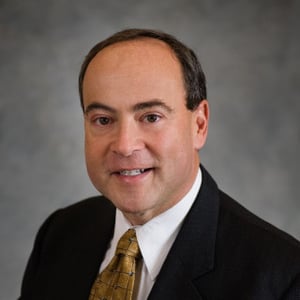
Justice, Supreme Court of Arizona
Clint Bolick was appointed by Governor Doug Ducey in January 2016 to serve on the Arizona Supreme Court and was retained by the voters in 2018 and 2024.
Prior to joining the Court, Justice Bolick litigated constitutional cases in state and federal courts from coast to coast, including the U.S. Supreme Court. Among other positions, he served as Vice President for Litigation at the Goldwater Institute and as Co-founder and Vice President for Litigation at the Institute for Justice. He has litigated in support of school choice, freedom of enterprise, private property rights, freedom of speech, and federalism, and against racial classifications and government subsidies.
Justice Bolick received his Juris Doctor degree from the University of California at Davis, where he has been recognized as a distinguished alumnus, and his Bachelor of Arts degree magna cum laude from Drew University. He serves as a research fellow with the Hoover Institution. Among other honors, he was named one of the 90 Greatest DC Lawyers in the Last 30 Years by Legal Times in 2008, received a Bradley Prize in 2006, and was recognized as one of the nation’s three lawyers of the year by American Lawyer in 2002 for his successful defense of school vouchers in Zelman v. Simmons-Harris.
Justice Bolick is a prolific author of a dozen books and hundreds of articles. Among his most recent books are Unshackled: Freeing America’s K-12 Education System: Immigration Wars: Forging an American Solution, co-authored with former Florida Governor Jeb Bush; and David’s Hammer: The Case for an Activist Judiciary. Bolick serves as an adjunct professor of constitutional law at Arizona State University’s Sandra Day O’Connor School of Law and has served as a lecturer at Harvard University’s John F. Kennedy School of Government.
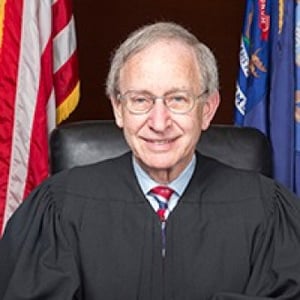
Justice, Michigan Supreme Court
Stephen Markman was appointed Justice of the Michigan Supreme Court on October 1, 1999. He served as the Chief Justice from 2017-2019. Before his appointment, he served as Judge on the Michigan Court of Appeals from 1995-1999. Prior to this, he practiced law with the firm of Miller, Canfield, Paddock & Stone in Detroit.
From 1989-1993, Justice Markman served as United States Attorney, or federal prosecutor, in Michigan, after having been nominated by President George H. W. Bush and confirmed by the United States Senate. From 1985-1989, he served as Assistant Attorney General of the United States, after having been nominated by President Ronald Reagan and confirmed by the United States Senate. In that position, he headed the Department of Justice’s Office of Legal Policy, which served as the principal policy development office within the Department, and which coordinated the federal judicial selection process. Prior to this, he served for seven years as Chief Counsel of the United States Senate Subcommittee on the Constitution, and as Deputy Chief Counsel of the United States Senate Judiciary Committee.
Justice Markman has authored articles for such publications as the University of Michigan Journal of Law Reform, the Detroit College of Law Review, the Stanford Law Review, the University of Chicago Law Review, the American Criminal Justice Law Review, the Barrister’s Law Journal, the Harvard Journal of Law & Public Policy, and the American University Law Review. He has also served as a contributing editor of National Review magazine, and has authored chapters in such books as “In the Name of Justice: The Aims of the Criminal Law,” “Still the Law of the Land,” and “Originalism: A Quarter Century of Debate.”
Justice Markman has taught constitutional law at Hillsdale College since 1993. He has served on the Board of Directors of the Western Michigan University Thomas M. Cooley Law School. He traveled to Ukraine on two occasions on behalf of the State Department, to provide assistance in the development of that nation’s post-Soviet constitution. He is a Fellow of the Michigan Bar Foundation, a Master of the Bench of the Inns of Court, and a member of the One Hundred Club. He has spoken before hundreds of youth, civic, charitable, and legal groups throughout Michigan and nationally, and has coached Little League baseball and basketball. He lives with his wife Mary Kathleen in Mason, and has two sons, James and Charles.
Justice Markman was re-elected to the Supreme Court in 2000, 2004, and 2012. His present term expires January 1, 2021.
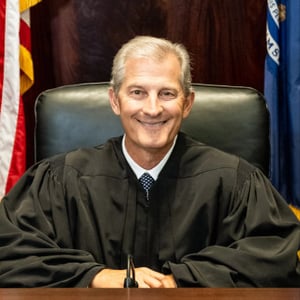
Justice of the Supreme Court, Michigan Supreme Court
Justice Brian K. Zahra was appointed by Governor Rick Snyder to the Michigan Supreme Court on January 14, 2011. The people of Michigan subsequently elected him in November 2012 to a partial term and then re-elected him in November 2014 to a full term.
Justice Zahra received his undergraduate degree in 1984 from Wayne State University. To finance his education, he opened and operated a small health and personal care retail store in downtown Detroit. Justice Zahra later opened a grocery outlet, also in Detroit, with two partners. In 1987, he graduated with honors from the University Of Detroit School Of Law, where he served as a member of the Law Review and as Articles Editor of the State Bar of Michigan’s Corporation and Finance Business Law Journal. Upon graduation he served as law clerk to Judge Lawrence P. Zatkoff of the U.S. District Court for the Eastern District of Michigan before joining and eventually becoming a partner in the law firm of Dickinson, Wright, Moon, Van Dusen & Freeman. In 1994, Governor John Engler appointed him to the Wayne County Circuit Court where in 1996 he was elected to a six-year term. In December of 1998, he was appointed to the Michigan Court of Appeals by Governor Engler. He was elected to six-year terms in 2000 and 2006. From December 2005 to January 2007, he served as the Court of Appeals’ Chief Judge Pro Tem.
Justice Zahra has been active in many civic and charitable organizations, including Boys and Girls Clubs of Southeastern Michigan, Kiwanis Club International, Leadership Detroit, the Knights of Columbus, the Maltese American Community Club, and the Maltese American Benevolent Society, of which he is a past officer. He is a former board member and officer of the Catholic Lawyers Society, and past officer of the Federalist Society, where he currently serves as a member of the Advisory Board to the Michigan chapter. He also serves as the judicial advisor to the Hillsdale College Federalist Society Chapter.

Topics
SCOTUS Preview: Brackeen v. Haaland (Part I)
The Supreme Court will hear arguments next month about the constitutionality of the Indian Child...
Topics
Reflections on Sackett v. EPA II Oral Argument
On October 3rd, my colleague Damien Schiff argued Sackett v. EPA II, a critically important...
Chevron—Complicated, Start to Finish
Ronald A. Cass
A Review of Thomas W. Merrill, The Chevron Doctrine: Its Rise and Fall, and the...
Topics
Cert Petition Challenges Title VII Religious Accommodation “Undue Hardship” Standard
Last month, a Petition for Writ of Certiorari in the case of Groff v. DeJoy...
Topics
New Cert Petition Questions Judicial Deference to the Military
A recent petition for writ of certiorari at the United States Supreme Court is attracting...
Rights Talk in a Post-Liberal Age: Mary Ann Glendon's Enduring Insight Into the American Rights Tradition
Gabrielle M. Girgis
Gross human rights violations occur every day, often invisibly to most of us. Media coverage...
DuBose v. McGuffey
David J. Owsiany
In recent years, a debate has emerged related to the appropriate role of bail in...
Topics
Ramirez v. Collier: Religious Liberty on Death Row
The Supreme Court’s decision last month in Ramirez v. Collier was noteworthy for several reasons:...
Feddie Fight Night Watch Party and Justice After Discussion
Hillsdale Student Chapter
Hillsdale , MIOverturning Poletown: County of Wayne v. Hathcock | Taking Poletown [The FedSoc Films Podcast]
Robert P. Young
For over 20 years, the Michigan Supreme Court ruling in Poletown Neighborhood Council v. Detroit,...