
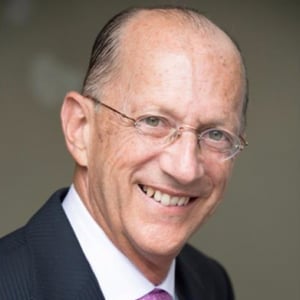
President, Cass & Associates, PC
Ronald A. Cass is Dean Emeritus of Boston University School of Law (where he was Dean from 1990-2004), President of Cass & Associates, PC, former Vice-Chairman and Commissioner of the U.S. International Trade Commission, former faculty member at Boston University School of Law and the University of Virginia Law School, and Distinguished Senior Fellow at the C. Boyden Gray Center for the Study of the Administrative State. Dean Cass also sits as an arbitrator for commercial, international, and intellectual property rights disputes, and is a former United States member of the Panel of Conciliators of the International Centre for Settlement of Investment Disputes. He is a member of the Council of the Administrative Conference of the United States and has received seven presidential appointments, spanning Presidents Ronald Reagan to Donald J. Trump.
As a law professor, lecturer, and scholar, Dean Cass has been teaching and writing about a wide array of legal issues on topics such as administrative law and regulation, antitrust, constitutional law, communications, intellectual property, international trade, separation of powers, and legal process. He has published more than 160 scholarly books, chapters, articles, and papers, including a leading casebook on administrative law. Dean Cass has taught judges as well as students in schools of law, economics, business, and public policy and has held academic appointments in the United States, Europe, and Latin America.
In addition to his academic work, Dean Cass has participated in numerous important legal cases as an amicus, consultant, or expert, and has advised businesses, law firms, investment funds, and government agencies on a range of trade, antitrust, intellectual property, and regulatory issues. He has a broad range of affiliations with professional groups, and has received numerous honors, fellowships and awards.
Dean Cass is a graduate of the University of Virginia and the University of Chicago Law School.

Alice McKean Young Regents Chair in Law, The University of Texas School of Law at Austin
Susan Riva Klein, the Alice McKean Young Regents Chair in Law at the University of Texas, is a nationally prominent scholar in the fields of criminal procedure, federal criminal law, and prosecutorial ethics. Her many articles have appeared in the University of Pennsylvania Law Review, the Michigan Law Review, the California Law Review, the Supreme Court Review, the Stanford Law Review, and many other top ten journals, and have been cited recently by the United States Supreme Court. She is active in educating state and federal judges, Chief Reporter for committee to redraft the "Fifth Circuit Pattern Jury Instruction, Criminal" (West 2001, and West 2013), and currently serves on the State Bar of Texas standing committee on Pattern Jury Charges - Criminal. The first four volumes of Texas Criminal Pattern Jury Charges, "Intoxication and Controlled Substances," “Crimes Committed Against Persons”, “Property Offenses” and “Property Defenses”were published by the State Bar of Texas in 2009 through 2013. She is currently co-author of Abrams, Beale, and Klein, "Federal Criminal Law and Its Enforcement" (West 2009). She serves on the members consultative group of the American Law Institute's Model Penal Code, Sentencing. Upon graduation from Boalt Hall School of Law, she clerked for Judge Cynthia H. Hall on the Ninth Circuit Court of Appeals and spent four years as a federal criminal prosecutor with the United States Department of Justice through the Attorney General's Honor Program.

Vice President, Edwin Meese III Institute for the Rule of Law, Advancing American Freedom
John G. Malcolm oversees Advancing American Freedom’s work to increase understanding of the Constitution and the rule of law as Vice President of the organization’s Edwin Meese III Institute for the Rule of Law. Malcolm brings to the challenge a wealth of legal expertise and experience in both the public and private sectors.
Prior to joining Advancing American Freedom in 2025, Malcolm was the Vice President of the Institute for Constitutional Government and the Director of the Meese Center for Legal and Judicial Studies at the Heritage Foundation. Prior to joining Heritage in 2012, Malcolm was general counsel at the U.S. Commission on International Religious Freedom, as well as a distinguished practitioner in residence at Pepperdine Law School. From 2004 to 2009, Malcolm was executive vice president and director of worldwide anti-piracy operations for the Motion Picture Association.
Malcolm served as a deputy assistant attorney general in the Department of Justice’s Criminal Division from 2001 to 2004, where he oversaw sections on computer crime and intellectual property, domestic security, child exploitation and obscenity, and special investigations. Immediately prior to that, he was a founding partner in the Atlanta law firm of Malcolm & Schroeder, LLP.
From 1990 to 1997, Malcolm was an assistant U.S. attorney in Atlanta, assigned to the fraud and public corruption section, and also an associate independent counsel, investigating fraud and abuse in the Department of Housing and Urban Development. He was honored with the Director’s Award for Superior Performance for his work in connection with the successful prosecution of Walter Leroy Moody Jr., who assassinated an 11th Circuit judge and the head of the Savannah chapter of the NAACP.
A graduate of Harvard Law School and Columbia College, Malcolm began his career as a law clerk to a federal district court judge and a federal appellate court judge, and as an associate at the Atlanta-based law firm of Sutherland, Asbill & Brennan (new Eversheds Sutherland).
Malcolm, who resides in Washington, D.C., serves on the Board of Trustees of the Washington National Opera and is a Senate-confirmed member of the Board of Directors of the Legal Services Corporation, the largest funder of civil legal aid in the United States.

Executive Vice President and Senior Counselor to the President, The Federalist Society for Law and Public Policy Studies
B.A., Yale; J.D., University of Chicago. Lee Liberman Otis is the Executive Vice President and Senior Counselor to the President at the Federalist Society. She also serves as a member of the American Law Institute (ALI), a senior fellow of the Administrative Conference (ACUS), and as the co-chair of the National Constitution Center's Coalition of Freedom Advisory Board. She previously was a special assistant and an Associate Deputy Attorney General at the U.S. Department of Justice, General Counsel of the Department of Energy, an associate in the appellate section of Jones, Day, Reavis & Pogue, an associate counsel to President George H.W. Bush, and a law clerk to Associate Justice Antonin Scalia. She also served as an assistant professor of law at George Mason, where she taught legislation, federal jurisdiction, constitutional law, civil procedure, and appellate advocacy. Ms. Otis has been an important member of the Federalist Society team since the organization’s beginnings. Together with David McIntosh, she led the effort to start what became the Chicago chapter of the Society. She also helped organize the Society’s first conference at Yale, its second conference at Chicago, and its first Lawyers Division chapter in Washington DC, as well as the effort to incorporate the Society, recruit its permanent staff, and obtain its early funding. She was a Founding Director of the Federalist Society.
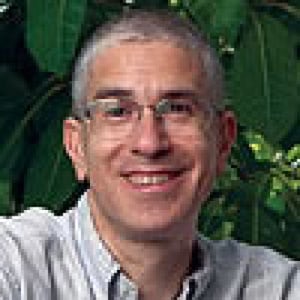
Paul J. Kellner Professor of Law, Columbia Law School
Law Clerk, Chief Judge Wilfred Feinberg, Second Circuit Court of Appeals, 1984-1985; Law Clerk, Justice Thurgood Marshall, Supreme Court of the United States, 1985-1986; Associate, Patterson, Belknap, Webb & Tyler, 1986-1987; Chief Appellate Attorney and Assistant United States Attorney, Southern District of New York, 1987-1992.
Joined Fordham University School of Law in 1992, tenured in 1998, promoted to full professor in 2000 and named the Brendan Moore Professor in Advocacy in 2006; Visiting Associate Professor of Law, University of Virginia, 1996-1997; and Visiting Professor, Columbia University School of Law, 2002. Joined Columbia Law faculty July 1, 2007.
Other professional activities include Consultant, Department of Justice, Office of the Inspector General, 1997-2000; Independent Expert under the National Basketball Association/ National Basketball Players Association Anti-Drug Program, 2000-present; Peer Reviewer, National Institute of Justice, U.S. Department of Justice, 2000-present; Chairman, Local Conditional Release Commission for the City of New York, 10/2004- 9/2005 (appointed by Mayor Michael Bloomberg); and Member, Homeland Security Policy Advisory Committee, Governor-Elect Eliot Spitzer, 2006.
Richman's scholarly writings include more than 30 law review articles.
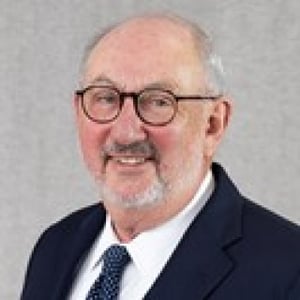
Partner, McGuireWoods LLP
George Terwilliger is co-head of the firm's white collar practice and leads the firm's Strategic Response and Crisis Management practice group. Following his fifteen years of public service in the US Department of Justice, where he began as a law clerk and concluded as Acting Attorney General, George has provided counsel in government and internal investigations, agency enforcement proceedings and in civil and criminal litigation. He has represented many of the nation's and the world's largest corporations, including major financial institutions, energy companies, public institutions as well as leading business and government officials, including members of the US Senate and House as well as cabinet officials. He has also represented lawyers and corporate legal departments in investigations. As a result of both his private sector work and government positions, George is called upon to provide counsel as well as commentary to government officials, Congress and private organizations on national security, homeland defense, terrorism, and other public policy and legal issues. George's work regularly involves providing counsel in the executive suites and boardrooms of major corporations.
In private practice for international law firms, George has represented national and international financial, energy, telecommunications, industrial and healthcare companies. He is a recognized expert in leading credible corporate internal investigations and his experience designing and executing both targeted and global legal compliance reviews has involved work in more than 60 countries around the globe. George is an expert on the Foreign Corrupt Practices Act and regularly provides counsel to companies addressing FCPA issues. No stranger to high stakes litigation and crisis events, George helped lead the Bush-Cheney legal team in the 2000 Florida vote recount, served as special outside counsel to a Senate committee investigating vote fraud allegations, served as counsel to an executive commission on gambling, and has represented many clients in politically charged election law and similar cases. He has guided corporations and individual through high stakes matters of intense public interest. He represented an incumbent president in First Amendment litigation concerning the right to have an inaugural prayer said in a public ceremony.
At the Department of Justice, George served for 10 years as a frontline federal prosecutor, handling hundreds of investigations, trials and appeals, including in white collar and national security cases. President Ronald Reagan appointed him as a U.S. attorney, and he next served as the deputy attorney general and as acting attorney general during the George H.W. Bush administration. As Deputy Attorney General, George ran the Justice Department's operations, overseeing all the nation's federal prosecutors, as well as the FBI and other law enforcement agencies. He also had leadership responsibility in several national and international crises, including a hostage-taking in a federal prison and the federal law enforcement response to domestic unrest in Los Angeles. In several instances, he personally handled negotiations of high-profile criminal and civil matters in the United States and abroad.
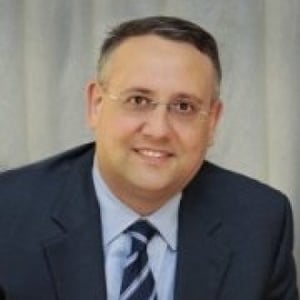
Lecturer in Law, University of Pennsylvania Carey Law School
Matthew Lee Wiener served until recently as the twice-presidentially appointed Acting Chair and Vice Chair of the Administrative Conference of the United States (ACUS), as well as a member of its Council and its Executive Director. (In 2016, President Obama nominated him to be ACUS’s Chairman.)
He is now a special counsel to ACUS, co-chair of its Council on Federal Administrative Adjudication, and a lecturer at the University of Pennsylvania Carey Law School, where he teaches Administrative Law.
Before affiliating with ACUS, Mr. Wiener was general counsel to U.S. Senator Arlen Specter (Senate Committee on the Judiciary), counsel to the U.S. House of Representatives Committee on the Judiciary, a partner at Dechert LLP, and special counsel to Cuneo Gilbert & LaDuca.
He has taught courses on administrative law, administrative practice, regulation remedies, statutory interpretation, and separation of powers at the law schools of the University of Pennsylvania, Rutgers University, and George Mason University.
Mr. Wiener is an elected member of the American Law Institute, a fellow of the American Bar Foundation, and co-chair of the Adjudication Committee of the American Bar Association’s Section of Administrative Law and Regulatory Practice.
Mr. Wiener holds a J.D. from Stanford Law School, where he was Articles Editor of the Stanford Law Review, and an A.B. from William and Mary.
Vice President, Edwin Meese III Institute for the Rule of Law, Advancing American Freedom
John G. Malcolm oversees Advancing American Freedom’s work to increase understanding of the Constitution and the rule of law as Vice President of the organization’s Edwin Meese III Institute for the Rule of Law. Malcolm brings to the challenge a wealth of legal expertise and experience in both the public and private sectors.
Prior to joining Advancing American Freedom in 2025, Malcolm was the Vice President of the Institute for Constitutional Government and the Director of the Meese Center for Legal and Judicial Studies at the Heritage Foundation. Prior to joining Heritage in 2012, Malcolm was general counsel at the U.S. Commission on International Religious Freedom, as well as a distinguished practitioner in residence at Pepperdine Law School. From 2004 to 2009, Malcolm was executive vice president and director of worldwide anti-piracy operations for the Motion Picture Association.
Malcolm served as a deputy assistant attorney general in the Department of Justice’s Criminal Division from 2001 to 2004, where he oversaw sections on computer crime and intellectual property, domestic security, child exploitation and obscenity, and special investigations. Immediately prior to that, he was a founding partner in the Atlanta law firm of Malcolm & Schroeder, LLP.
From 1990 to 1997, Malcolm was an assistant U.S. attorney in Atlanta, assigned to the fraud and public corruption section, and also an associate independent counsel, investigating fraud and abuse in the Department of Housing and Urban Development. He was honored with the Director’s Award for Superior Performance for his work in connection with the successful prosecution of Walter Leroy Moody Jr., who assassinated an 11th Circuit judge and the head of the Savannah chapter of the NAACP.
A graduate of Harvard Law School and Columbia College, Malcolm began his career as a law clerk to a federal district court judge and a federal appellate court judge, and as an associate at the Atlanta-based law firm of Sutherland, Asbill & Brennan (new Eversheds Sutherland).
Malcolm, who resides in Washington, D.C., serves on the Board of Trustees of the Washington National Opera and is a Senate-confirmed member of the Board of Directors of the Legal Services Corporation, the largest funder of civil legal aid in the United States.
Vice President, Edwin Meese III Institute for the Rule of Law, Advancing American Freedom
John G. Malcolm oversees Advancing American Freedom’s work to increase understanding of the Constitution and the rule of law as Vice President of the organization’s Edwin Meese III Institute for the Rule of Law. Malcolm brings to the challenge a wealth of legal expertise and experience in both the public and private sectors.
Prior to joining Advancing American Freedom in 2025, Malcolm was the Vice President of the Institute for Constitutional Government and the Director of the Meese Center for Legal and Judicial Studies at the Heritage Foundation. Prior to joining Heritage in 2012, Malcolm was general counsel at the U.S. Commission on International Religious Freedom, as well as a distinguished practitioner in residence at Pepperdine Law School. From 2004 to 2009, Malcolm was executive vice president and director of worldwide anti-piracy operations for the Motion Picture Association.
Malcolm served as a deputy assistant attorney general in the Department of Justice’s Criminal Division from 2001 to 2004, where he oversaw sections on computer crime and intellectual property, domestic security, child exploitation and obscenity, and special investigations. Immediately prior to that, he was a founding partner in the Atlanta law firm of Malcolm & Schroeder, LLP.
From 1990 to 1997, Malcolm was an assistant U.S. attorney in Atlanta, assigned to the fraud and public corruption section, and also an associate independent counsel, investigating fraud and abuse in the Department of Housing and Urban Development. He was honored with the Director’s Award for Superior Performance for his work in connection with the successful prosecution of Walter Leroy Moody Jr., who assassinated an 11th Circuit judge and the head of the Savannah chapter of the NAACP.
A graduate of Harvard Law School and Columbia College, Malcolm began his career as a law clerk to a federal district court judge and a federal appellate court judge, and as an associate at the Atlanta-based law firm of Sutherland, Asbill & Brennan (new Eversheds Sutherland).
Malcolm, who resides in Washington, D.C., serves on the Board of Trustees of the Washington National Opera and is a Senate-confirmed member of the Board of Directors of the Legal Services Corporation, the largest funder of civil legal aid in the United States.
Vice President, Edwin Meese III Institute for the Rule of Law, Advancing American Freedom
John G. Malcolm oversees Advancing American Freedom’s work to increase understanding of the Constitution and the rule of law as Vice President of the organization’s Edwin Meese III Institute for the Rule of Law. Malcolm brings to the challenge a wealth of legal expertise and experience in both the public and private sectors.
Prior to joining Advancing American Freedom in 2025, Malcolm was the Vice President of the Institute for Constitutional Government and the Director of the Meese Center for Legal and Judicial Studies at the Heritage Foundation. Prior to joining Heritage in 2012, Malcolm was general counsel at the U.S. Commission on International Religious Freedom, as well as a distinguished practitioner in residence at Pepperdine Law School. From 2004 to 2009, Malcolm was executive vice president and director of worldwide anti-piracy operations for the Motion Picture Association.
Malcolm served as a deputy assistant attorney general in the Department of Justice’s Criminal Division from 2001 to 2004, where he oversaw sections on computer crime and intellectual property, domestic security, child exploitation and obscenity, and special investigations. Immediately prior to that, he was a founding partner in the Atlanta law firm of Malcolm & Schroeder, LLP.
From 1990 to 1997, Malcolm was an assistant U.S. attorney in Atlanta, assigned to the fraud and public corruption section, and also an associate independent counsel, investigating fraud and abuse in the Department of Housing and Urban Development. He was honored with the Director’s Award for Superior Performance for his work in connection with the successful prosecution of Walter Leroy Moody Jr., who assassinated an 11th Circuit judge and the head of the Savannah chapter of the NAACP.
A graduate of Harvard Law School and Columbia College, Malcolm began his career as a law clerk to a federal district court judge and a federal appellate court judge, and as an associate at the Atlanta-based law firm of Sutherland, Asbill & Brennan (new Eversheds Sutherland).
Malcolm, who resides in Washington, D.C., serves on the Board of Trustees of the Washington National Opera and is a Senate-confirmed member of the Board of Directors of the Legal Services Corporation, the largest funder of civil legal aid in the United States.
Vice President, Edwin Meese III Institute for the Rule of Law, Advancing American Freedom
John G. Malcolm oversees Advancing American Freedom’s work to increase understanding of the Constitution and the rule of law as Vice President of the organization’s Edwin Meese III Institute for the Rule of Law. Malcolm brings to the challenge a wealth of legal expertise and experience in both the public and private sectors.
Prior to joining Advancing American Freedom in 2025, Malcolm was the Vice President of the Institute for Constitutional Government and the Director of the Meese Center for Legal and Judicial Studies at the Heritage Foundation. Prior to joining Heritage in 2012, Malcolm was general counsel at the U.S. Commission on International Religious Freedom, as well as a distinguished practitioner in residence at Pepperdine Law School. From 2004 to 2009, Malcolm was executive vice president and director of worldwide anti-piracy operations for the Motion Picture Association.
Malcolm served as a deputy assistant attorney general in the Department of Justice’s Criminal Division from 2001 to 2004, where he oversaw sections on computer crime and intellectual property, domestic security, child exploitation and obscenity, and special investigations. Immediately prior to that, he was a founding partner in the Atlanta law firm of Malcolm & Schroeder, LLP.
From 1990 to 1997, Malcolm was an assistant U.S. attorney in Atlanta, assigned to the fraud and public corruption section, and also an associate independent counsel, investigating fraud and abuse in the Department of Housing and Urban Development. He was honored with the Director’s Award for Superior Performance for his work in connection with the successful prosecution of Walter Leroy Moody Jr., who assassinated an 11th Circuit judge and the head of the Savannah chapter of the NAACP.
A graduate of Harvard Law School and Columbia College, Malcolm began his career as a law clerk to a federal district court judge and a federal appellate court judge, and as an associate at the Atlanta-based law firm of Sutherland, Asbill & Brennan (new Eversheds Sutherland).
Malcolm, who resides in Washington, D.C., serves on the Board of Trustees of the Washington National Opera and is a Senate-confirmed member of the Board of Directors of the Legal Services Corporation, the largest funder of civil legal aid in the United States.
Vice President, Edwin Meese III Institute for the Rule of Law, Advancing American Freedom
John G. Malcolm oversees Advancing American Freedom’s work to increase understanding of the Constitution and the rule of law as Vice President of the organization’s Edwin Meese III Institute for the Rule of Law. Malcolm brings to the challenge a wealth of legal expertise and experience in both the public and private sectors.
Prior to joining Advancing American Freedom in 2025, Malcolm was the Vice President of the Institute for Constitutional Government and the Director of the Meese Center for Legal and Judicial Studies at the Heritage Foundation. Prior to joining Heritage in 2012, Malcolm was general counsel at the U.S. Commission on International Religious Freedom, as well as a distinguished practitioner in residence at Pepperdine Law School. From 2004 to 2009, Malcolm was executive vice president and director of worldwide anti-piracy operations for the Motion Picture Association.
Malcolm served as a deputy assistant attorney general in the Department of Justice’s Criminal Division from 2001 to 2004, where he oversaw sections on computer crime and intellectual property, domestic security, child exploitation and obscenity, and special investigations. Immediately prior to that, he was a founding partner in the Atlanta law firm of Malcolm & Schroeder, LLP.
From 1990 to 1997, Malcolm was an assistant U.S. attorney in Atlanta, assigned to the fraud and public corruption section, and also an associate independent counsel, investigating fraud and abuse in the Department of Housing and Urban Development. He was honored with the Director’s Award for Superior Performance for his work in connection with the successful prosecution of Walter Leroy Moody Jr., who assassinated an 11th Circuit judge and the head of the Savannah chapter of the NAACP.
A graduate of Harvard Law School and Columbia College, Malcolm began his career as a law clerk to a federal district court judge and a federal appellate court judge, and as an associate at the Atlanta-based law firm of Sutherland, Asbill & Brennan (new Eversheds Sutherland).
Malcolm, who resides in Washington, D.C., serves on the Board of Trustees of the Washington National Opera and is a Senate-confirmed member of the Board of Directors of the Legal Services Corporation, the largest funder of civil legal aid in the United States.

Associate General Counsel, Indiana University
Beth Cate is Associate General Counsel for Indiana University, and practices in a variety of areas, with emphases on intellectual property law and the law and ethics concerning research and the use of information technologies. Beth is also an adjunct member of the faculty in the University's School for Public and Environmental Affairs. Before joining the University in 1998, Beth served as in-house counsel for Eli Lilly and Company, practicing in a variety of areas; clerked for the Hon. S. Jay Plager of the United States Court of Appeals for the Federal Circuit; and practiced with the law firm of McKenna & Cuneo (now McKenna Long & Aldridge) in Washington D.C., focusing on civil litigation and international trade. Beth holds a B.A. in Economics from The George Washington University and a J.D. from Harvard Law School, both with honors. She is a member of both EDUCAUSE and the National Association of College and University Attorneys (NACUA) and a frequent speaker for these and other organizations.
Distinguished Scholar in Intellectual Property Law, Indiana University Maurer School of Law
Professor Leaffer, formerly the Anderson-Fornoff Professor of Law and Values at the University of Toledo College of Law, is an internationally known intellectual property law scholar. He received his JD at the University of Texas and his LLM in Trade Regulation at New York University Law School.
At Indiana since 1997, Leaffer teaches Copyright Law, Trademark Law, Intellectual Property Survey, and International Intellectual Property. He is the author of three books and numerous articles, including the best-selling treatise, Understanding Copyright Law, now in its fourth edition. Leaffer is also the author of Copyright Law: Cases and Materials, 7th edition and International Treaties on Intellectual Property, 2d edition. His current research focuses on the interplay of intellectual property law in a global marketplace.
Before becoming a full-time teacher, he practiced trademark law with American Home Products Corp. and the firm of Haseltine Lake & Waters in New York. He also has served as attorney-advisor to the U.S. Patent and Trademark Office and the U.S. Copyright Office.
Leaffer is a popular speaker in both the United States and Europe on all areas of intellectual property law, and has been honored as both a scholar and lecturer. He currently serves on the international executive committee of the Association Littéraire et Artistique Internationale, a non-governmental institution based in Paris, that promotes the rights of authors worldwide.
Vice President, Edwin Meese III Institute for the Rule of Law, Advancing American Freedom
John G. Malcolm oversees Advancing American Freedom’s work to increase understanding of the Constitution and the rule of law as Vice President of the organization’s Edwin Meese III Institute for the Rule of Law. Malcolm brings to the challenge a wealth of legal expertise and experience in both the public and private sectors.
Prior to joining Advancing American Freedom in 2025, Malcolm was the Vice President of the Institute for Constitutional Government and the Director of the Meese Center for Legal and Judicial Studies at the Heritage Foundation. Prior to joining Heritage in 2012, Malcolm was general counsel at the U.S. Commission on International Religious Freedom, as well as a distinguished practitioner in residence at Pepperdine Law School. From 2004 to 2009, Malcolm was executive vice president and director of worldwide anti-piracy operations for the Motion Picture Association.
Malcolm served as a deputy assistant attorney general in the Department of Justice’s Criminal Division from 2001 to 2004, where he oversaw sections on computer crime and intellectual property, domestic security, child exploitation and obscenity, and special investigations. Immediately prior to that, he was a founding partner in the Atlanta law firm of Malcolm & Schroeder, LLP.
From 1990 to 1997, Malcolm was an assistant U.S. attorney in Atlanta, assigned to the fraud and public corruption section, and also an associate independent counsel, investigating fraud and abuse in the Department of Housing and Urban Development. He was honored with the Director’s Award for Superior Performance for his work in connection with the successful prosecution of Walter Leroy Moody Jr., who assassinated an 11th Circuit judge and the head of the Savannah chapter of the NAACP.
A graduate of Harvard Law School and Columbia College, Malcolm began his career as a law clerk to a federal district court judge and a federal appellate court judge, and as an associate at the Atlanta-based law firm of Sutherland, Asbill & Brennan (new Eversheds Sutherland).
Malcolm, who resides in Washington, D.C., serves on the Board of Trustees of the Washington National Opera and is a Senate-confirmed member of the Board of Directors of the Legal Services Corporation, the largest funder of civil legal aid in the United States.
David and Mary Harrison Distinguished Professor of Law Emeritus, University of Virginia School of Law
Lillian BeVier taught constitutional law (with special emphasis on First Amendment issues), intellectual property (trademark, copyright), real property and torts from 1973-2010 at the Law School, and now teaches a January Term course on judicial philosophy.
At Stanford Law School, BeVier was revising editor for the Stanford Law Review and a member of the Order of the Coif. Before coming to Virginia, she was associate professor of law at the University of Santa Clara Law School; practiced law with Spaeth Blase Valentine & Klein in Palo Alto, Calif.; served as research associate to Professor William F. Baxter at Stanford University Law School, working on the FAA-ABA study of the legal aspects of airport noise and the sonic boom; and was assistant to the general secretary and assistant staff legal counsel for Stanford University.
BeVier received the University of Virginia Alumni Association Distinguished Professor Award in 2006. The Raven Society elected her to membership in 1993 and honored her with the faculty award in 2010. She delivered the Henry Miller Memorial Lecture at Georgia State Law School in 2005, the Coen Memorial Lecture at the University of Colorado Law School in 2000, and the David C. Baum Lecture on Civil Rights and Civil Liberties at the University of Illinois Law School in 1996. In 1999, at the invitation of the Supreme Court Historical Society, she spoke to the Society on Free Expression in the Warren and Burger Courts. Suffolk University awarded her an honorary S.J.D. degree in 1998. In the fall of 2003, she was a visiting scholar at the National Constitution Center in Philadelphia.
Having been nominated by President Bush and confirmed by the Senate in 2003, she served as vice-chair of the Board of Directors of the Legal Services Corporation until 2009. She serves on the national Board of Visitors of the Federalist Society. Within the Charlottesville community, BeVier has served as chair of the Board of Trustees of St. Anne’s-Belfield School and of the Martha Jefferson Hospital. She is currently chair of the board of the Martha Jefferson Health Services Corporation and of Piedmont CASA (Court-Appointed Special Advocates).
Co-Founder, Trustee, and Legal Advisor, Reason Foundation and Ge, Individual Rights Foundation
Manuel "Manny" Klausner was one of the founding partners in Reason Enterprises, which began publishing Reason magazine in 1971, three years after the publication's creation. He became editor in the summer of 1972 and a senior editor in June 1978. In 1978 he co-founded the Reason Foundation with Tibor Machan and Bob Poole. He remains on the board of the Reason Foundation today, is a stalwart supporter of the Federalist Society, and a libertarian lawyer extraordinaire.
Vice President, Edwin Meese III Institute for the Rule of Law, Advancing American Freedom
John G. Malcolm oversees Advancing American Freedom’s work to increase understanding of the Constitution and the rule of law as Vice President of the organization’s Edwin Meese III Institute for the Rule of Law. Malcolm brings to the challenge a wealth of legal expertise and experience in both the public and private sectors.
Prior to joining Advancing American Freedom in 2025, Malcolm was the Vice President of the Institute for Constitutional Government and the Director of the Meese Center for Legal and Judicial Studies at the Heritage Foundation. Prior to joining Heritage in 2012, Malcolm was general counsel at the U.S. Commission on International Religious Freedom, as well as a distinguished practitioner in residence at Pepperdine Law School. From 2004 to 2009, Malcolm was executive vice president and director of worldwide anti-piracy operations for the Motion Picture Association.
Malcolm served as a deputy assistant attorney general in the Department of Justice’s Criminal Division from 2001 to 2004, where he oversaw sections on computer crime and intellectual property, domestic security, child exploitation and obscenity, and special investigations. Immediately prior to that, he was a founding partner in the Atlanta law firm of Malcolm & Schroeder, LLP.
From 1990 to 1997, Malcolm was an assistant U.S. attorney in Atlanta, assigned to the fraud and public corruption section, and also an associate independent counsel, investigating fraud and abuse in the Department of Housing and Urban Development. He was honored with the Director’s Award for Superior Performance for his work in connection with the successful prosecution of Walter Leroy Moody Jr., who assassinated an 11th Circuit judge and the head of the Savannah chapter of the NAACP.
A graduate of Harvard Law School and Columbia College, Malcolm began his career as a law clerk to a federal district court judge and a federal appellate court judge, and as an associate at the Atlanta-based law firm of Sutherland, Asbill & Brennan (new Eversheds Sutherland).
Malcolm, who resides in Washington, D.C., serves on the Board of Trustees of the Washington National Opera and is a Senate-confirmed member of the Board of Directors of the Legal Services Corporation, the largest funder of civil legal aid in the United States.

President and Executive Director, Electronic Privacy Information Center
Marc Rotenberg is President and Executive Director of the Electronic Privacy Information Center (EPIC) in Washington, DC. He teaches information privacy law at Georgetown University Law Center and frequently testifies before Congress on emerging privacy and civil liberties issues. He testified before the 9-11 Commission on "Security and Liberty: Protecting Privacy, Preventing Terrorism." He has served on several national and international advisory panels, including the expert panels on Cryptography Policy and Computer Security for the OECD, the Legal Experts on Cyberspace Law for UNESCO, and the Countering Spam program of the ITU. He chairs the ABA Committee on Privacy and Information Protection. He is a founding board member and former Chair of the Public Interest Registry, which manages the .ORG domain. He is editor of "The Privacy Law Sourcebook," and co-editor of "Information Privacy Law" (Aspen Publishing 2006) and "Litigation Under the Federal Open Government Laws" (EPIC 2010). He is a graduate of Harvard College and Stanford Law School. He served as Counsel to Senator Patrick J. Leahy on the Senate Judiciary Committee after graduation from law school. He is the recipient of several awards, including the World Technology Award in Law, the American Lawyer Award for Top Lawyers Under 45, the Norbert Weiner Award for Social and Professional Responsibility, and the Vicennial medal from Georgetown University.
Freelance Journalist and Author
Stuart Taylor, Jr. is a Washington writer focusing on legal and policy issues and a National Journal contributing editor. He occasionally practices law.
Taylor has coauthored three books. All have been acclaimed by commentators across the ideological spectrum. In January 2017, KC Johnson and Taylor authored The Campus Rape Frenzy: The Attack on Due Process at America's Universities. In 2012, Richard Sander and Taylor authored Mismatch: How Affirmative Action Hurts Students It's Intended to Help, and Why Universities Won't Admit It. In 2007, Taylor and Johnson authored Until Proven Innocent: Political Correctness and the Shameful Injustices of the Duke Lacrosse Rape Fraud. Sander and Taylor have also filed amicus briefs in Supreme Court cases involving admissions preferences.
Since 1980, Taylor has done reporting and commentary about issues ranging from the biggest Supreme Court cases to race, voting rights, mindlessly excessive criminal penalties, guilt-presuming campus rape processes, journalistic bias, the death penalty, war powers, gerrymandering, guns, polarization, civil liberties, national security, torture, campaign finance, education, impeachment, and other issues. He has often been called one of the nation's best legal journalists and is known for challenging both liberal and conservative conventional wisdom.
Taylor was a reporter for The New York Times from 1980-1988, covering legal affairs and then the Supreme Court. He wrote commentaries and long features for The American Lawyer, Legal Times and their affiliates from 1989-1997, and for National Journal and Newsweek from 1998 through 2010. He has written (less often) on a freelance basis for numerous publications since 2010. He has written op-eds for The Washington Post, The New York Times, The Wall Street Journal, The Los Angeles Times, USA Today, and The New York Daily News and longer commentaries for RealClearPolitics, The Atlantic, The New Republic, the (late) Weekly Standard, National Review, Slate, The Daily Beast, Harper’s, Reader’s Digest, Time and other magazines. He has been interviewed on all major television and radio networks. He taught “Law and the News Media” at Stanford Law School in 2011 and 2012 and practices law on occasion.
Taylor graduated from Princeton University in 1970 with an A.B. in History. After working as a reporter for the Baltimore Evening Sun and Sun from 1971-1974, he moved to Harvard Law School, was a Harvard Law Review note editor, and graduated in 1977 at the top of his class, with high honors. He also won a Frederick Sheldon Traveling Fellowship and traveled around the world in 1977-1978 while studying freedom of the press in the United Kingdom and Kenya.
Taylor practiced law with Wilmer, Cutler & Pickering, in Washington, D.C., from 1977-1980 before returning to journalism in 1980 by joining the Washington Bureau of The New York Times.
Taylor's journalism honors include the 2009 Northern California Innocence Project Media Award for his work on the Duke lacrosse rape fraud; a 2002 National Headliner Award for best special magazine column on one subject; and a share of The American Lawyer’s National Magazine Award for a March 1990 special issue on the drug war. He was a National Magazine Award finalist in 1993 and 1997 and was nominated by The New York Times for a Pulitzer Prize in 1988.

Thomas M. Siebel Senior Fellow, The Hoover Institution, Stanford University; Gary T. Schwartz Distinguished Professor of Law Emeritus, UCLA School of Law
Eugene Volokh is the Thomas M. Siebel Senior Fellow at the Hoover Institution (Stanford), as well as the Gary T. Schwartz Distinguished Professor of Law Emeritus and Distinguished Research Professor at UCLA School of Law. He recently retired from teaching at UCLA, after 30 years there, and is now focusing on research.
Volokh is the author of the textbooks The First Amendment and Related Statutes (8th ed. 2023), and Academic Legal Writing (5th ed. 2016), as well as over 100 academic law journal articles, mostly on First Amendment law. He is a member of The American Law Institute; the editor-in-chief of the Journal of Free Speech Law; and the creator and coauthor of The Volokh Conspiracy, a leading legal blog founded in 2002 (hosted at the Washington Post from 2014 to 2017 and now at Reason Magazine).

Introduction & Panel I: Defining Regulatory Crimes
Criminal Law and the Administrative State
Washington, DCThe Criminalization of Almost Everything: Why Both Liberals & Conservatives Should Be Alarmed
Maryland v. King
Overcriminalization
Operation Fast & Furious
Intellectual Property
The Scurvy of Hollywood: International Film Piracy and the Pirate Bay Cases
Indiana - Bloomington Student Chapter
Bloomington, INFree Speech & Election Law: The Bartnicki Case and Privacy
2001 National Lawyers Convention
Washington, DC