
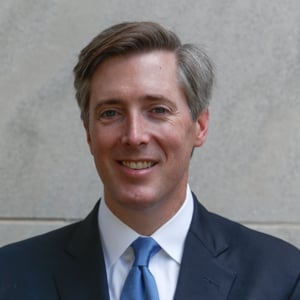
Former Criminal Court Judge & Senior Counsel to DOJ
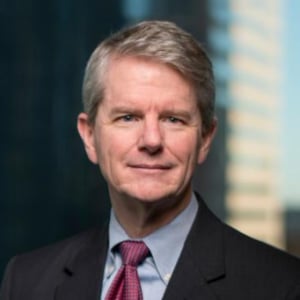
Former Trial Lawyer, Bradley Arant Boult Cummings LLP
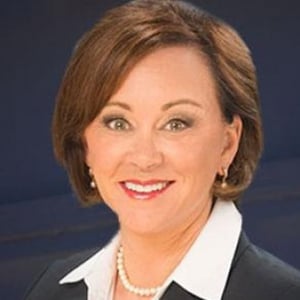
Former Alabama Chief Deputy & Deputy Attorney General
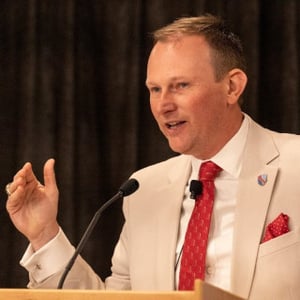
Senior Advisor and Research Fellow, The Heritage Foundation
Allen Mendenhall is a Senior Advisor for the Capital Markets Initiative and Research Fellow in the Thomas A. Roe Institute for Economic Policy Studies at the Heritage Foundation in Washington, D.C. Previously, he served as Associate Dean and Grady Rosier Professor in the Sorrell College of Business at Troy University, where he also directed the Manuel H. Johnson Center for Political Economy. He is also a Visiting Fellow at the Madden Center for Value Creation at Florida Atlantic University.
His books include Literature and Liberty: Essays in Libertarian Literary Criticism (2014), Oliver Wendell Holmes Jr., Pragmatism, and the Jurisprudence of Agon: Aesthetic Dissent and the Common Law (2017), Of Bees and Boys: Lines from a Southern Lawyer (2017), The Southern Philosopher: Collected Essays of John William Corrington (2017), Writers on Writing: Conversations with Allen Mendenhall (2019), The Three Ps of Liberty: Pragmatism, Pluralism, and Polycentricity (2020), Shouting Softly: Essays on Law, Literature, and Culture (2021), A Glooming Peace This Morning (2023, a novel), and Controversies Among Conservatives: Conversations on Conservatism, Vol. II (2024, edited with Marcus Witcher and Kevin Hughes). His monthly segment “Word to the Wise” appears on Troy Public Radio (WTSU 89.9, WRWA 88.7, WTJB 91.7), and he writes a weekly column for 1819 News, Alabama’s bold and innovative conservative news outlet.
Mendenhall holds a B.A. in English from Furman University, an M.A. in English from West Virginia University, a J.D. from West Virginia University College of Law, an LL.M. in transnational law from Temple University Beasley School of Law, and a Ph.D. in English from Auburn University.
From 2016 to 2020, he was Associate Dean and Founding Executive Director of the Blackstone & Burke Center for Law & Liberty at Faulkner University’s Thomas Goode Jones School of Law in Montgomery, Alabama. He edited Southern Literary Review for over a decade (2011–2022) and has served as a visiting scholar (2020) and trustee (2023) at the American Institute for Economic Research (AIER), an adjunct legal associate at the Cato Institute (2009), a Mises Canada Emerging Scholar with the Ludwig von Mises Institute Canada (2014), an elected member of the Mont Pelerin Society (2024), an associate of the Abbeville Institute (2011–present), a Humane Studies Fellow with the Institute for Humane Studies (2011–2012), a staff attorney for Chief Justice Roy S. Moore of the Supreme Court of Alabama (2013–2016), an Assistant Attorney General in the State of Alabama Office of Attorney General Luther Strange (2016), an AmPhil Fundraising Fellow with the Center for Civil Society of American Philanthropic (2023–2024), an Advisory Council Member of the Law & Liberty Circle at the Universidad Francisco Marroquín (2024–present), an elected member (2012) and former trustee (2018–2022) of the Philadelphia Society, an associated scholar at the Ludwig von Mises Institute (2017–present), a policy adviser for the Heartland Institute (2016–present), former president of the Alabama Association of Scholars (2017–2020), president of the Montgomery Lawyers Chapter of the Federalist Society (2013–present), and Chairman of the Board of Managers of the Alabama Center for Law & Liberty (2022–2024). In 2023, he was an inaugural recipient of the Freedom and Opportunity Academic Prize from the Heritage Foundation. In 2024, he was a Club For Growth Foundation Fellow and a Lincoln Fellow with the Claremont Institute for the Study of Statesmanship and Political Philosophy. Alabama Governor Kay Ivey appointed him to the 2025–26 State Textbook Committee of the Alabama Department of Education.
He has taught in university English departments, business schools, a humanities department, a law school, a Japanese private school (juku), and a penitentiary, and he serves or has served on numerous boards of organizations as wide-ranging as the Alabama Public Television Foundation Authority (2019–2025), the Young Professionals Board of the Alabama Humanities Foundation (2015–2016), the Society for Law and Culture (a division of the Russell Kirk Center for Cultural Renewal) (2017–present), Trinity Christian School (2017–2020), Ivy Classical Academy (2025–present), and the Philadelphia Society (2018–2022). He served on the advisory council of the Ludwig von Mises Institute’s Master of Arts degree and Certificate Program in Austrian Economics from 2021–2023. While in private practice in Atlanta, he represented non-profit corporations and litigated cases involving real property, contracts, collections, foreclosures, restrictive covenants, and real estate transactions. He graduated from Leadership Lee County (Alabama), the Alabama State Bar Leadership Forum (Class 14), and the Atlas Leadership Academy of Atlas Network. He has authored hundreds of publications, including fiction and poetry, and studied under the creative writers Gilbert Allen, Michael Blumenthal, William Aarnes, and Chantel Acevedo.
His academic writing has appeared or is forthcoming in such peer-reviewed journals as The Journal Jurisprudence, The Canadian Journal of Law and Jurisprudence, Public Choice, The Political Science Reviewer, Journal of Markets & Morality, Journal of Private Enterprise, The Texas Review of Law and Politics, European Journal of Pragmatism and American Philosophy, Contemporary Pragmatism, The South Carolina Review, Academic Questions, The Independent Review, Quarterly Journal of Austrian Economics, Modernist Cultures, The British Journal of American Legal Studies, and in law reviews published by Georgetown University Law Center, UC Berkeley School of Law, The University of Texas School of Law, Emory University School of Law, Indiana University Maurer School of Law, Texas A&M University School of Law, and Michigan State University College of Law.
His writing for popular media has appeared in Newsweek, Fox News, Fox Business, The Wall Street Journal, The Washington Times, National Review, The American Spectator, Pacific Standard, The Hill, The Los Angeles Review of Books, The American Conservative, City Journal, The Daily Caller, The Federalist, Public Discourse, Law & Liberty, The Epoch Times, The American Mind, The Freeman, Liberty, RealClearMarkets, The University Bookman, The Daily Signal, Chronicles, The Christian Lawyer, Writer’s Digest, The Conversation, and elsewhere. He has spoken at Harvard University, Brown University, Georgetown University Law Center, Francisco Marroquín University, Furman University, George Mason University, University of British Columbia, University of Nevada-Las Vegas, Auburn University, West Virginia University, the Alabama State Capitol, the Alabama Supreme Court, and other universities and locations.
He has been quoted or cited in Fox Business, Fox News, Forbes, The Washington Post, The Washington Times, The National Review, The Daily Caller, Le Monde, Times Higher Education, The College Fix, The Blaze Media, Campus Reform, Inside Higher Education, and U.S. News and World Report, and published by such organizations as the Ludwig von Mises Institute, the Ludwig von Mises Institute Canada, the Mercatus Center, the Foundation for Economic Education, the Intercollegiate Studies Institute, the American Institute for Economic Research, the Charlemagne Institute, the Independent Institute, the Rockford Institute, the Russell Kirk Center for Cultural Renewal, the American Ideas Institute, Atlas Society, the Heartland Institute, the Abbeville Institute, the National Association of Scholars, the James G. Martin Center for Academic Renewal, and the Libertarian Alliance. He frequently appears on radio and television on networks as wide-ranging as Fox News, Newsmax, Alabama Public Television, NewsNation, Al Jazeera, C-SPAN, Bill O’Reilly’s “No Spin News,” NTD News, The Daily Wire, Steve Bannon’s “War Room,” and BBC World News.
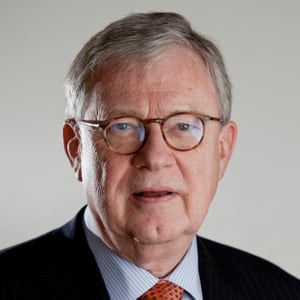
Senior Political Analyst, Washington Examiner
Michael Barone is a Senior Political Analyst for the Washington Examiner, where he writes a twice-weekly column and contributes to their Beltway Confidential blog. He is also a frequent contributor during Fox News Channel's election coverage.
Director of the Human Rights, Civil Rights, and Citizenship Prog, Constitutional Accountability Center
David joined CAC after serving as Program Director of Cardozo Law School's Floersheimer Center for Constitutional Democracy, and as an attorney with the Brennan Center for Justice at NYU School of Law, where he worked with Bert Neuborne on appellate briefs in constitutional cases involving the First Amendment and voting rights. Previously, David was an Acting Assistant Professor at NYU School of Law and practiced law at Emery Cuti Brinckerhoff & Abady, PC, where he litigated a wide range of constitutional and civil rights cases. David has also served as an attorney fellow for the Center for Reproductive Law and Policy and as a law clerk for the Hon. Rosemary Barkett on the U.S. Court of Appeals for the 11th Circuit. He is a graduate of Yale Law School, where he served as an editor on the Yale Law Review. His academic writings have appeared in the Yale Law Journal, the Boston University Law Review, the Emory Law Journal, the George Washington Law Review. Before receiving his law degree, David worked as a paralegal for the American Civil Liberties Union, where he helped Kathryn Kolbert prepare the briefs and argument in Planned Parenthood v. Casey. In 1993, David and Ms. Kolbert co-authored an article in the Temple Law Review titled "Responding to Planned Parenthood v. Casey: Establishing Neutrality Principles in State Constitutional Law." David received his undergraduate degree from Columbia University.

Senior Fellow and Director of Constitutional Studies, Manhattan Institute
Ilya Shapiro is a senior fellow and director of constitutional studies at the Manhattan Institute and a contributing editor of City Journal. Previously he was executive director and senior lecturer at the Georgetown Center for the Constitution, and before that a vice president of the Cato Institute.
Shapiro is the author of Lawless: The Miseducation of America’s Elites (2025) and Supreme Disorder: Judicial Nominations and the Politics of America’s Highest Court (2020), coauthor of Religious Liberties for Corporations? (2014), and editor of 11 volumes of the Cato Supreme Court Review (2008-18). He has contributed to a variety of academic, popular, and professional publications, including the Wall Street Journal, Harvard Journal of Law & Public Policy, Washington Post, Los Angeles Times, USA Today, National Review, and Newsweek. He also regularly provides commentary for various media outlets, writes the Shapiro’s Gavel newsletter on Substack, and once appeared on the Colbert Report.
Shapiro has testified many times before Congress and state legislatures and has filed more than 500 amicus curiae “friend of the court” briefs in the Supreme Court. He lectures regularly on behalf of the Federalist Society, is a member of the board of fellows of the Jewish Policy Center, was an inaugural Washington Fellow at the National Review Institute, and has been an adjunct law professor at the George Washington University and University of Mississippi. He is also the chairman of the board of advisers of the Mississippi Justice Institute, a barrister in the Edward Coke Appellate Inn of Court, and a former member of the Virginia Advisory Committee to the U.S. Commission on Civil Rights.
Earlier in his career, Shapiro was a special assistant/adviser to the Multi-National Force in Iraq on rule-of-law issues and practiced at Patton Boggs and Cleary Gottlieb. Before entering private practice, he clerked for Judge E. Grady Jolly of the U.S. Court of Appeals for the Fifth Circuit. He holds an AB from Princeton University, an MSc from the London School of Economics, and a JD from the University of Chicago Law School.

Senior Legal Fellow, Edwin Meese III Institute for the Rule of Law, Advancing American Freedom

Judge, United States Court of Appeals, Ninth Circuit
Judge Carlos Bea serves as a judge on the United States Court of Appeals for the Ninth Circuit. He received his Bachelor's Degree from Stanford University in 1956 and his J.D. from Stanford Law School in 1958. Judge Bea was born in San Sebastian, Spain, and immigrated with his family to Cuba in 1939. In 1952, he represented Cuba on the Cuban National basketball team in the Helsinki Olympics. Judge Bea became a naturalized citizen of the United States in 1958. He engaged in private practice in San Francisco, principally in the area of civil trials (jury and non-jury), from 1959-75 at Dunne, Phelps & Mills and from 1975-90 at Carlos Bea, A Law Corporation. He taught courses in civil litigation advocacy at Hastings College of Law and Stanford Law School. From 1990 to 2003, Judge Bea served as a judge of the San Francisco Superior Court. He was nominated by President George W. Bush to the United States Court of Appeals for the Ninth Circuit and was confirmed in 2003.
Judge Bea and his wife Louise reside in San Francisco, where they raised their four sons, Sebastian, Alexander, Nicholas, and Dominic.

President, Cass & Associates, PC
Ronald A. Cass is Dean Emeritus of Boston University School of Law (where he was Dean from 1990-2004), President of Cass & Associates, PC, former Vice-Chairman and Commissioner of the U.S. International Trade Commission, former faculty member at Boston University School of Law and the University of Virginia Law School, and Distinguished Senior Fellow at the C. Boyden Gray Center for the Study of the Administrative State. Dean Cass also sits as an arbitrator for commercial, international, and intellectual property rights disputes, and is a former United States member of the Panel of Conciliators of the International Centre for Settlement of Investment Disputes. He is a member of the Council of the Administrative Conference of the United States and has received seven presidential appointments, spanning Presidents Ronald Reagan to Donald J. Trump.
As a law professor, lecturer, and scholar, Dean Cass has been teaching and writing about a wide array of legal issues on topics such as administrative law and regulation, antitrust, constitutional law, communications, intellectual property, international trade, separation of powers, and legal process. He has published more than 160 scholarly books, chapters, articles, and papers, including a leading casebook on administrative law. Dean Cass has taught judges as well as students in schools of law, economics, business, and public policy and has held academic appointments in the United States, Europe, and Latin America.
In addition to his academic work, Dean Cass has participated in numerous important legal cases as an amicus, consultant, or expert, and has advised businesses, law firms, investment funds, and government agencies on a range of trade, antitrust, intellectual property, and regulatory issues. He has a broad range of affiliations with professional groups, and has received numerous honors, fellowships and awards.
Dean Cass is a graduate of the University of Virginia and the University of Chicago Law School.
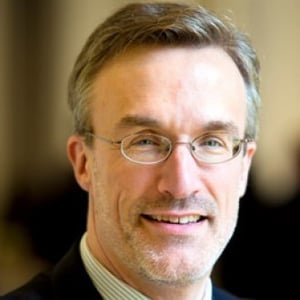
Edward B. Shils Professor of Law and Professor of Political Science; Director, Penn Program on Regulation, University of Pennsylvania Law School
Cary Coglianese is the Edward B. Shils Professor of Law and Professor of Political Science at the University of Pennsylvania, where he currently serves as the director of the Penn Program on Regulation and has served as the law school’s Deputy Dean for Academic Affairs. He specializes in the study of regulation and regulatory processes, with an emphasis on the empirical evaluation of alternative regulatory strategies and the role of public participation, negotiation, and business-government relations in policy making. His most recent books include: Achieving Regulatory Excellence; Does Regulation Kill Jobs?; Regulatory Breakdown: The Crisis of Confidence in U.S. Regulation; Import Safety: Regulatory Governance in the Global Economy; and Regulation and Regulatory Processes.
Prior to joining Penn Law, Coglianese spent a dozen years on the faculty at Harvard University’s John F. Kennedy School of Government. He also has taught as a visiting law professor at Stanford and Vanderbilt, founded the Law & Society Association’s international collaborative research network on regulatory governance, served as a founding editor of the peer-reviewed journal Regulation & Governance, and created and now advises the daily production of The Regulatory Review. The chair of the Administrative Conference of the United States' committee on rulemaking, he has led a National Science Foundation initiative on e-rulemaking, served on the ABA’s task force on improving Regulations.Gov, and chaired a task force on transparency and public participation in the regulatory process that offered a blueprint to the Obama Administration on open government. He is a co-chair of the American Bar Association’s administrative law section committee on e-government, past co-chair of the section's committee on rulemaking, and a past member of the section's Council. He currently serves as a member of a committee of the National Academies of Sciences, Engineering, and Medicine studying performance-based safety regulation and of an Aspen Institute dialogue on energy policy governance. He has served as a consultant to the Administrative Conference of the United States, Environment Canada, the Organization for Economic Cooperation and Development, the U.S. Department of Commerce, the U.S. Department of Transportation, and the U.S. Environmental Protection Agency.
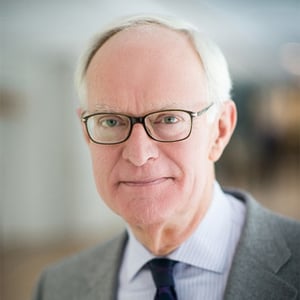
Distinguished Fellow, Hudson Institute
Christopher DeMuth is a distinguished fellow at Hudson Institute. He was president of the American Enterprise Institute for Public Policy Research (AEI) from 1986 to 2008 and was the D.C. Searle Senior Fellow at AEI from 2008 to 2011.
Mr. DeMuth was raised in Kenilworth, Illinois, and attended the Lawrenceville School (1964), Harvard College (A.B. 1968), and the University of Chicago Law School (J.D. 1973). He served as staff assistant to President Richard M. Nixon from 1969 to 1970, working first for Daniel P. Moynihan (then assistant to the President for Urban Affairs) on urban policy matters and then as chairman of the White House Task Force on Environmental Policy. Following law school, he practiced regulatory, antitrust, and general corporate law with Sidley & Austin in Chicago (1973-1976) and was associate general counsel of the Consolidated Rail Corporation (Conrail) in Philadelphia (1976-1977).
From 1977 to 1981, Mr. DeMuth was lecturer in public policy at the Kennedy School of Government at Harvard University, and director of the Harvard Faculty Project on Regulation. There he taught courses on law, economics, and regulatory policy and conducted and sponsored research on health, safety, environmental, and economic regulation.
Returning to Washington in 1981, Mr. DeMuth served as administrator for information and regulatory affairs in the U.S. Office of Management and Budget, and as executive director of the Presidential Task Force on Regulatory Relief during President Ronald Reagan’s first term of office. From 1984 to 1986, he was managing director of Lexecon Inc., a law-and-economics consulting firm; in 1986, he was also publisher and editor-in-chief of Regulation magazine. He was elected president of the American Enterprise Institute in December 1986.
Many of Mr. DeMuth’s articles, lectures, and occasional talks are posted on his website (https://www.ccdemuth.com).
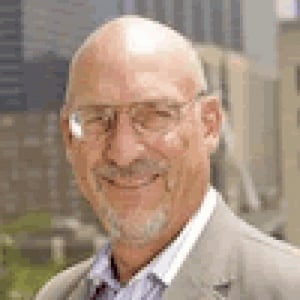
Professor of Criminology and Statistics, University of Pennsylvania
Richard A. Berk is a professor in the Departments of Statistics and Criminology at the University of Pennsylvania. He has a B.A. degree in psychology from Yale University and a Ph.D. in sociology from the Johns Hopkins University. He was previously a Distinguished Professor of Statistics at UCLA. He has also been on the faculty of the University of California Santa Barbara and Northwestern University. Professor Berk is an elected fellow of the American Statistical Association, the American Association for the Advancement of Science, and the Academy of Experimental Criminology. He has served on the National Research Council Committee on Applied and Theoretical Statistics and has been on the Board of Directors of the Social Science Research Council. He is frequently employed as an expert witness in civil litigation and two cases on which he worked were ultimately decided by the U.S. Supreme Court. Professor Berk’s interests include a wide range of policy-related matters: detecting violations of environmental regulations, properly allocating prison inmates to different security levels, forecasting which individuals on parole are likely to commit violent crimes, monitoring systems for consumer protection, and the role of race in capital cases. His work in applied statistics includes machine learning, causal inference, methods for evaluating the effectiveness of social programs, and the use of statistics in litigation.
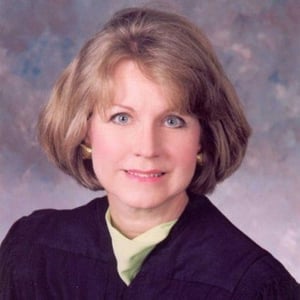
Judge, United States Court of Appeals, Fifth Circuit
Judge Edith Clement sits on the United States Court of Appeals for the Fifth Circuit. Judge Clement worked in a private practice as a maritime attorney in New Orleans, Louisiana, before being appointed in 1991 to the United States District Court for the Eastern District of Louisiana by President George H. W. Bush. In 2001, she was appointed by President George W. Bush to the United States Court of Appeals for the Fifth Circuit. Judge Clement is a member of the Maritime Law Association of the United States, the Federal Bar Association, the American Law Institute, the Federalist Society, the Tulane Law Schools Inn of Court, and the Committee on the Administrative Office of the Judicial Conference of the United States. She is a graduate of the University of Alabama and received her JD from Tulane Law School.
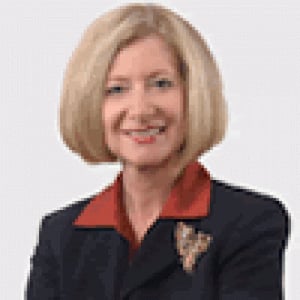
Partner, Krieg DeVault LLP
Deborah Daniels, former U.S. Attorney and U.S. Assistant Attorney General, has lengthy experience in criminal and civil investigations and public safety. Her work has included responsibilities at the U.S. Department of Justice directly related to the nation’s response to the September 11th attack on the U.S., data and communications interoperability, and the nation's ability to detect, prevent and respond to future terrorist acts. Ms. Daniels provides counsel to the firm’s public and private sector clients in matters affecting public safety, homeland security, disaster preparedness, leveraging of federal and state resources, federal and state regulatory compliance and internal investigations. She assists the firm’s clients in interacting with agencies of the federal government, including both the Executive Branch and the U.S. Congress, and advises clients ranging from government agencies to health care providers to other private sector entities on compliance and public policy matters.
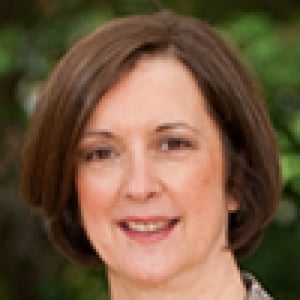
Assistant District Attorney, Philadelphia District Attorney
Sarah Hart has worked for over three decades in the criminal justice field at the federal, state and local levels.
From 1979-95, she served as a prosecutor in Philadelphia where (for 9 years) she represented the District Attorney in federal prison litigation involving mass releases of pretrial detainees. During this time, she provided substantial assistance to the U.S. Congress in drafting the Federal Prison Litigation Reform Act (PLRA).
From 1995-2001, Mrs. Hart served as the Chief Counsel for the Pennsylvania Department of Corrections where she successfully defended the constitutionality of the PLRA in the federal courts.
From 2001-2005, following unanimous Senate confirmation, she served as the Director of the National Institute of Justice (the research and evaluation arm of the U.S. Department of Justice) where, among other things, she developed the national $1 billion DNA initiative.
After an appointment as a Visiting Professor teaching graduate school courses at Rutgers University, she returned to Philadelphia to represent Philadelphia District Attorney in class action litigation concerning the Philadelphia Prison System. During this time she represented the Pennsylvania District Attorney’s Association in crafting comprehensive, bipartisan prison reform legislation in Pennsylvania that enacted sweeping changes in sentencing and parole practices. (Acts 81-84 of 2008).
Mrs. Hart previously served as Vice Chair of the Legal Affairs Committee of the American Corrections Association, a member of the Executive Committee of the Criminal Law Practice Group of the Federalist Society, a member of the Board of Directors of the Crime Victims Law Institute, and as a member of the Pennsylvania Supreme Court’s Appellate Procedural Rules Committee. She has also provided extensive training on the PLRA and corrections issues to the National Institute of Corrections, the National Association of Attorneys General, and the Association of State Correctional Administrators.
Mrs. Hart has published articles relating to corrections, forensics, and domestic violence. A recent publication focuses on the benefits and costs of prisoner class actions.
S. Hart, Evaluating Institutional Prisoners’ Rights Litigation: Costs and Benefits and Federalism Considerations, 11 U. Penn. J. Const. L. 73 (2008).
She is a graduate of Rutgers Law School and the University of Delaware.
Executive Director, Prison Law Office
Donald Specter is the Executive Director of the Prison Law Office at San Quentin, California. The Prison Law Office is a nonprofit law firm based in Berkeley, California that provides free legal services to California incarcerated offenders concerning their conditions of confinement. Mr. Specter has been lead counsel in numerous successful institutional reform cases challenging various conditions of confinement in California=s adult and juvenile prison systems. He has been chair of the California State Bar=s Commission on Corrections, was named Appellate Lawyer of the Week by the National Law Journal for his work in Brown v. Plata, 531 U.S. ___ (2011), has received the California Lawyers of the Year Award in 2006 and 2009 and was selected three times as one of the top 100 lawyers in California. Mr. Specter earned his B.A. in Economics from New College in Sarasota, Florida in 1974 and his J.D. from the University of San Francisco School of Law in 1978.
Former Senator, State of Alabama
Luther J. Strange, III is a former Republican member of the U.S. Senate from the state of Alabama. Strange was first appointed to the Senate position by Gov. Robert Bentley on February 9, 2017. He replaced Jeff Sessions, who was confirmed as United States Attorney General.
Strange is the former Republican Attorney General of Alabama. He was first elected to the statewide position in 2010 and assumed office on January 17, 2011. Strange's first four-year term ended on January 19, 2015, and he won re-election to a second term on November 4, 2014.
Prior to his election as Attorney General, Luther Strange practiced law in Birmingham, Alabama. In 2010, U.S. News-Best Lawyers "Best Law Firms" gave his firm a first-tier ranking, and the firm was named as one of the Top Ten Law Firms that Understand Economic Development by Southern Business & Development magazine.
Before establishing his own law firm, Strange was a partner with Bradley Arant Boult Cummings LLP. During his time in private practice, he was recognized in Best Lawyers in America® , named Best of the Bar by the Birmingham Business Journal, and called one of the "Best Lawyers" in Alabama by Birmingham magazine.
His tenure in office was marked by a strong emphasis on fighting public corruption, including the conviction and removal from office of the Alabama House Speaker in June 2016. He was also a leader in opposing costly overregulation and the expansion of the federal government at the expense of the states.
Luther Strange served as the court-appointed Coordinating Counsel for the Gulf Coast States in the historic Deepwater Horizon Oil spill litigation. Strange was actively involved in trying the case, which led to a landmark settlement agreement to compensate Alabama for both economic and environmental damages as a result of that disaster.
Among many civic commitments, he has served on the Advisory Board of the United States Merchant Marine Academy and as a Trustee of Talladega College, Alabama’s oldest historically black college.
An Eagle Scout since he was 13 and a recipient of the Distinguished Eagle Scout Award from the Boy Scouts of America in 2011, Strange is passionate about encouraging young people in Alabama to become involved in public service.
Strange received both his undergraduate and law degrees from Tulane University. He was a scholarship basketball player while earning his undergraduate degree at Tulane. In June of 2016, he was inducted into the Tulane Law School Hall of Fame.

Chief Judge, United States Court of Appeals, Eleventh Circuit
William H. Pryor Jr. serves as Chief Circuit Judge on the United States Court of Appeals for the Eleventh Circuit.
In 2013–18, he served on the United States Sentencing Commission and, in 2017–18, served as Acting Chair.
He has taught as a visiting professor at the University of Alabama School of Law and previously taught as an adjunct professor at the Cumberland School of Law of Samford University.
He served as the 45th Attorney General of Alabama from 1997 to 2004. When he took office, he was the youngest attorney general in the nation. In his reelection, he received the highest percentage of votes of any statewide candidate.
He graduated magna cum laude from Tulane Law School where he finished first in the common-law curriculum and was editor in chief of the Tulane Law Review. He then served as a law clerk for Judge John Minor Wisdom of the U.S. Court of Appeals for the Fifth Circuit.
He is a member of The American Law Institute and an Adviser for the RESTATEMENT OF THE LAW THIRD, CONFLICT OF LAWS. He is a coauthor with Bryan Garner, Justices Gorsuch and Kavanaugh, and several other judges of a treatise, THE LAW OF JUDICIAL PRECEDENT. He has published in the Yale Law Journal, Columbia Law Review, Virginia Law Review, Notre Dame Law Review, Harvard Journal of Law & Public Policy, Yale Law & Policy Review, George Mason Law Review, Florida Law Review, Alabama Law Review, Case Western Reserve Law Review, and Tulane Law Review. He has published op-eds in The Wall Street Journal, The New York Times, National Review, and USA Today. He has debated at National Lawyers’ Conventions of the Federalist Society (including on National Public Radio) and at the Oxford Union in the United Kingdom. And he is listed among several “widely admired judicial writers” in Bryan Garner’s The Redbook: A Manual on Legal Style.
He is a member of the Tulane Law School Hall of Fame and has received the Defender of the Constitution Award from the Heritage Foundation, the Jurist of the Year Award from the Texas Review of Law & Politics, and the St. Thomas More Award from the St. Thomas More Society of Atlanta. Judge Pryor is also a proud member of the National Society of the Sons of the American Revolution.
Shareholder, Maynard Cooper & Gale
Tommy’s trial practice concentrates on complex mass tort, environmental, and product liability cases, often handling the defense of class actions or mass consolidated cases throughout the South. He has handled cases in Alabama, Virginia, California, Texas, Ohio, West Virginia, Pennsylvania, Indiana, Illinois, Tennessee, Georgia, Mississippi and the District of Columbia. Tommy is active in the American Bar Association, having served as the Association’s President in 2008-2009. His skills as a litigator have been highly recognized throughout the years, including being listed in The Best Lawyers in America© and one of Alabama’s Top Ten attorneys in Super Lawyers®. He is a Fellow of the International Academy of Trial Lawyers, the Litigation Counsel of America and the American College of Environmental Lawyers.

Get Involved: Election Integrity and Election Laws
Co-Sponsored by the Birmingham Lawyers Chapter and the Birmingham Bar Association
Birmingham, ALAlabama Attorney General Candidate Forum
Chess M. Bedsole, Chris Christie, Alice Howze Martin, Allen P. Mendenhall
On May 2, 2018, the Montgomery Federalist Society and Faulkner University hosted candidates running for...
Panel III: The Future of Voting Rights
Michael Barone, David H. Gans, Ilya Shapiro, Hans A. Von Spakovsky
The Supreme Court’s ruling in Shelby County v. Holder, which disabled Section 5 of the Voting...
Administrative Law: Reining in Regulation or Letting Regulation Reign? Predictions and Prescriptions for Government
Carlos T. Bea, Ronald A. Cass, Cary Coglianese, Christopher C. DeMuth
The Administrative Law & Regulation Practice Group hosted this panel on "Reining in Regulation or...
Criminal Law: Prisoner Releases and the Role of the Courts
Richard A. Berk, Edith Brown Clement, Deborah J. Daniels, Sarah V. Hart, Donald Specter, Luther Johnson Strange
The Criminal Law & Procedure Practice Group hosted this panel on "Prisoner Releases and the...
Q& A With Brandon Falls
Alabama Courts Will Not Second-Guess Legislature’s Voting Procedures
Berton Spence
A holding that Alabama’s largest county has been collecting an occupational tax repealed by the...
Threats to Judicial Independence
Birmingham's Drug Court
Lunch With Jefferson County Commissioner Jim Carns
Birmingham, Alabama