
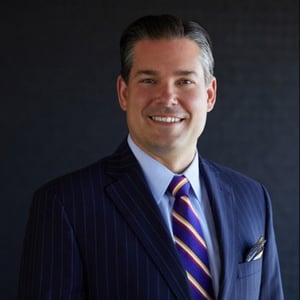
Partner, Graves Garrett Greim LLC
Edward “Eddie” Greim focuses his practice on complex commercial litigation, free speech and election law, and internal investigations and whistleblower claims. He has been recognized for his successful representation of businesses and individuals in commercial litigation while also being named a “go-to” lawyer on policy and constitutional issues.
Eddie was named a Constitutional and Election Law Trailblazer by the National Law Journal in 2020. His free speech and election law practice has included numerous constitutional challenges to election and campaign finance laws; representation of clients in state and federal ethics and campaign finance enforcement actions and investigations; initiative petition drafting and litigation; litigation and advice regarding First Amendment protections for petition circulation; representation of not-for-profit clients before state regulators; litigation of state and federal redistricting issues; and advice on campaign and election law compliance.
Eddie complements his trial work in complex, high-profile commercial and constitutional cases with oral advocacy and briefing in important appeals. Recognized as a Missouri Lawyers Media POWER 30 Appellate Attorney in 2021, he has argued before the Missouri and Kansas supreme courts multiple times, other state appellate courts across the country, and before the Sixth, Seventh, Eighth, and Tenth U.S. Courts of Appeals.
Eddie’s notable work for clients includes:
Recovering substantial compensation and injunctive relief for plaintiffs, in complex multiyear litigation, as lead counsel in the first and only nationwide class action certified against the Internal Revenue Service for violating taxpayer protection statutes when it targeted hundreds of groups based on their political viewpoints.
Successful First Amendment challenge to Missouri’s 2016 campaign finance restrictions.
Successful challenge to a vast, multiyear, secret criminal investigation into Wisconsin political groups and nonprofits, and follow-up challenge to expose role of state ethics board which secretly aided the investigation and was later dissolved by the legislature.
U.S. Supreme Court amicus brief for the National Republican Redistricting Trust in the 2019 Rucho litigation, and federal and state redistricting litigation and advice since 2011.
Challenges under the First Amendment in federal court, and in briefing to the Michigan Supreme Court on state constitutional grounds, to unprecedented emergency powers claimed by Michigan Governor in 2020.
Representation of numerous public officials and private citizens who are subject to “lawfare” attacks based on their political viewpoints or policy objectives.
Oversight of multiple internal investigations.
Eddie received his law degree from Harvard Law School in 2002, where he taught on the Board of Student Advisers, received the Dean’s Award for Leadership, and served as President of the Harvard Catholic Law Students Association. He received two bachelor’s degrees, summa cum laude, in economics and political science from the University of Missouri.
A native of Excelsior Springs, Missouri, Eddie lives in Kansas City with his family. He enjoys Missouri and military history. On many weekends, he can be found with his wife and daughters exploring sites of local interest. He enjoys reading and debating and has given presentations or organized discussions at numerous gatherings, formal and informal, of professional and personal interest.

Judge, United States Court of Appeals, District of Columbia Circuit
Judge Rao was appointed to the United States Court of Appeals for the District of Columbia Circuit in March 2019. She graduated from Yale College in 1995 and the University of Chicago Law School in 1999. Following graduation, she served as a law clerk to Judge J. Harvie Wilkinson III of the U.S. Court of Appeals for the Fourth Circuit and, in the 2001 October Term, as law clerk to Justice Clarence Thomas of the U.S. Supreme Court. Between her clerkships, Judge Rao served as counsel for nominations and constitutional law to the U.S. Senate Committee on the Judiciary. In 2002, she joined the international arbitration group of Clifford Chance LLP in London, England. From 2005-2006, she served as Special Assistant and Associate White House Counsel to President George W. Bush. From 2006 to 2017, Judge Rao was a professor at the Antonin Scalia Law School at George Mason University, where she taught constitutional law, legislation and statutory interpretation, and the history and foundations of the administrative state. In 2014, she founded the Center for the Study of the Administrative State, a non-profit Center that promotes academic scholarship and public policy debates about administrative law. In July 2017, she was appointed to serve as the Administrator of the Office of Information and Regulatory Affairs in the Office of Management and Budget. She served in this position until her appointment to the D.C. Circuit.

Founding Partner, Boyden Gray & Associates
Ambassador C. Boyden Gray is the founding partner of Boyden Gray & Associates, a law and strategy firm in Washington, D.C., focused on constitutional and regulatory issues.
Mr. Gray worked in the White House for twelve years, first as counsel to the Vice President during the Reagan administration and then as White House Counsel to President George H.W. Bush. In the Reagan administration, he was Counsel to the Presidential Task Force on Regulatory Relief, for which he wrote the original Executive Order 12291 requiring cost-benefit analysis and White House review of regulations (later renumbered as current EO 12866). In the George H.W. Bush Administration, Mr. Gray was in charge of judicial selection and was also instrumental in the enactment of the Clean Air Act Amendments of 1990, the Energy Policy Act of 1992, and a cap-and-trade system for acid rain emissions. In 1993, he received the Presidential Citizens Medal. Under President George W. Bush, Mr. Gray was U.S. Ambassador to the European Union and U.S. Special Envoy to Europe for Eurasian Energy.
Mr. Gray practiced law for 25 years at the law firm of Wilmer, Cutler & Pickering and was chairman of the Administrative Law and Regulatory Practice Section of the American Bar Association from 2000 to 2002. Early in his career, Mr. Gray helped to develop the Business Roundtable and served as its first counsel. He is an adjunct professor at Antonin Scalia Law School and a former adjunct professor at NYU Law School (teaching energy and environmental law). Mr. Gray is on the Board of Directors of the Atlantic Council, the Federalist Society, Reason Foundation, and the Trust for the National Mall.
Mr. Gray earned his A.B. magna cum laude from Harvard, where he was an editor of the Crimson, and his J.D. with high honors from the University of North Carolina at Chapel Hill, where he was editor-in-chief of the Law Review. Mr. Gray served in the United States Marine Corps, and after law school, he clerked for Earl Warren, Chief Justice of the United States Supreme Court.
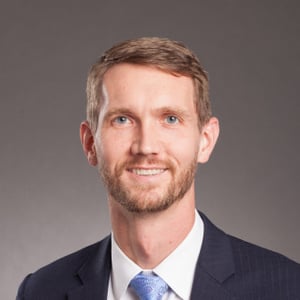
Senior Counsel for Environmental and Regulatory Affairs, Boeing
Adam Gustafson is a Senior Counsel for Environmental and Regulatory Affairs at Boeing.
Prior to joining Boeing, he served as Deputy General Counsel at the Environmental Protection Agency. Prior to that, he was a partner at Boyden Gray & Associates, where he represented States, federal judges, environmental groups, biofuel producers, agricultural interests, and public policy organizations, on such issues as the constitutional separation of powers, the First Amendment, automotive regulations, environmental computer models, healthcare regulation, and judicial deference to federal agencies.
Mr. Gustafson received his J.D. in 2009 from Yale Law School, where he was an editor of the Yale Law Journal, a managing editor of the Yale Journal of Law & the Humanities, and an executive editor of the symposium issue of the Harvard Journal of Law & Public Policy.
Mr. Gustafson served as a Vice President of the Yale Law School Federalist Society. He was a Coker Fellow, and his legal writing won the Joseph A. Chubb Competition Prize and the Edward D. Robbins Memorial Prize.
Mr. Gustafson graduated with high distinction in 2005 from the University of Virginia, where he was an Echols Scholar, a member of the Raven Society, a member of the rowing team, and a Lawn resident.
Before joining Boyden Gray & Associates, Mr. Gustafson was an associate at Cooper & Kirk, where he specialized in appellate litigation. Mr. Gustafson served as a law clerk to Judge Richard R. Clifton of the U.S. Court of Appeals for the Ninth Circuit, and to Judge Janice Rogers Brown of the U.S. Court of Appeals for the D.C. Circuit.

Director of Research, Coin Center
Peter is Director of Research at Coin Center, the leading non-profit research and advocacy group focused on the public policy issues facing cryptocurrency technologies such as Bitcoin. He is a graduate of NYU Law, as well as a self-taught designer and coder.
He drafts the Center’s public regulatory comments, and helps shape its research agenda. He has testified before Congress, briefed staff and members of the EU parliament and educated policymakers and regulatory staff around the world on the subject of cryptocurrency regulation and decentralized computing systems. Previously, he was a Google Policy Fellow and collaborated with various digital rights organizations on projects related to privacy, surveillance, and digital copyright law.
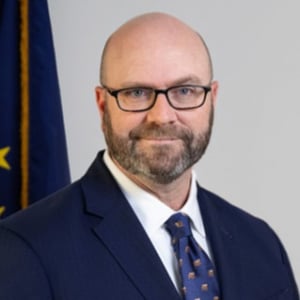
Attorney General, Alaska
Stephen J. Cox serves as the 28th Attorney General of the State of Alaska, where he oversees the state’s legal affairs and serves as the chief prosecutor with oversight of all district attorneys, general counsel to the Governor and executive branch, and represents the State in all civil and criminal cases in federal and state court. He brings to the role a proven record of public service at the highest levels of the U.S. Department of Justice, combined with deep experience in Alaska’s private sector and community life.
Before his appointment, he was Senior Vice President, Chief Legal and Strategy Officer of Bristol Bay Industrial—an investment platform of the Bristol Bay Native Corporation—acting as the chief legal officer for the industrial services portfolio on behalf of the Alaska Native shareholders in the Bristol Bay region. In that role, he led legal, compliance, and strategic planning for major energy, infrastructure, and utility projects across the State and in the Lower 48.
Earlier in his career, beginning in 2011, Cox served as in-house counsel for Apache Corporation, where he was the principal attorney for Apache Alaska and focused on new ventures and exploratory work in Cook Inlet, including seismic initiatives and ongoing regulatory coordination with state agencies.
Cox is deeply rooted in Anchorage’s community and faith life. He and his family attend Holy Family Old Cathedral in downtown Anchorage and support Mission Alaska, the Dominican friars’ outreach ministry under the Western Dominican Province. He was the founding board president and chairman of a new classical school in South Anchorage.
On the national stage, Cox held senior leadership roles in the U.S. Department of Justice under the Trump Administration. As Deputy Associate Attorney General, he co-chaired the DOJ’s Regulatory Reform Task Force and the Working Group on Corporate Enforcement and Accountability, and helped implement landmark policies aimed at curbing regulatory overreach and aligning enforcement with fairness and oversight. Later, as U.S. Attorney for the Eastern District of Texas, he oversaw prosecutions and civil litigation spanning 43 counties, prioritizing healthcare fraud, elder fraud, and violent crime while ensuring enforcement remained transparent and fair.
Earlier in his career, Cox practiced complex litigation at a major international law firm, served as counselor to the Director of U.S. Immigration and Customs Enforcement, and helped lead the William H. Webster Commission, which reviewed FBI counterterrorism intelligence and operations following the Fort Hood tragedy.
He began his legal career with a clerkship for Judge J. L. Edmondson of the U.S. Court of Appeals for the Eleventh Circuit. Cox earned a B.S. in Computer Science from Texas A&M University and a J.D., summa cum laude, from the University of Houston Law Center. He and his wife, Cristina, are raising their three children in Anchorage, and have made Alaska their home.
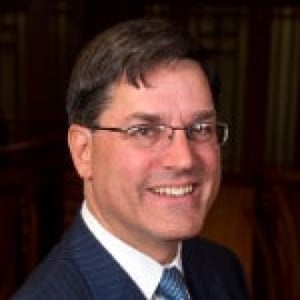
Vice President for Public Policy, American Forest and Paper Association
Paul Noe serves as Vice President for Public Policy at the American Forest and Paper Association. Paul has extensive regulatory, legislative and technical experience, including in environmental regulation, regulatory reform, renewable energy, biomass carbon neutrality, chemicals and product stewardship, workplace health and safety, and sustainability. He previously served as the Vice President of Regulatory Affairs at the Grocery Manufacturers Association.
Paul also has broad experience in public service, including as Counselor to the Administrator in the Office of Information and Regulatory Affairs, Office of Management and Budget (2001-2006), where he helped to lead the development of regulatory policy and White House review of regulations in the Administration of George W. Bush. He previously served as Senior Counsel to the U.S. Senate Committee on Governmental Affairs under Chairmen Fred Thompson, Ted Stevens and Bill Roth (1995-2001), where his work focused on reforming the regulatory process. He also has been a lawyer in private practice, most recently as a partner with C&M Capitolink LLC, as well as counsel in Crowell & Moring’s Environment and Natural Resources Group.
Paul currently serves as the Co-Chair of the Legislation Committee in the American Bar Association’s Section of Administrative Law and Regulatory Practice, and recently coauthored a chapter, “Beyond Process Excellence: Enhancing Societal Well-Being,” published in a book by Brookings Institution Press entitled, “Achieving Regulatory Excellence.” In the spring of 2016, he also served as a Policy Fellow at the University of Pennsylvania Law School, where he offered lectures in environmental law, advanced regulatory policy, legislation, and administrative law.
Paul is a graduate of The Georgetown University Law Center, where he was a John M. Olin fellow in law and economics and an editor on the law journal, and Williams College, where he was a member of Phi Beta Kappa.

Director, Program for Economic Research on Regulation, Senior Research Fellow, Mercatus Center
Dr. Patrick A. McLaughlin is the director of the Program for Economic Research on Regulation and a Senior Research Fellow at the Mercatus Center at George Mason University. His research focuses primarily on regulations and the regulatory process.
Dr. McLaughlin created and leads the RegData and QuantGov projects, deploying machine-learning and other tools of data science to quantify governance indicators found in federal and state regulations and other policy documents. The resulting database is freely available at QuantGov.org, and has facilitated pioneering empirical research by numerous third-party users on the causes and effects of regulation.
Dr. McLaughlin has authored more than a dozen peer-reviewed studies in diverse areas, including regulatory economics, administrative law, industrial organization, and international trade. His book, The Impact of Federal Regulation on the Fifty States (with Oliver Sherouse), is available for download here.
Dr. McLaughlin has given expert testimonies before Congress and state legislatures on topics ranging from the economic implications of regulatory accumulation to the potential impacts of regulatory reform. His research and op-eds have been featured in a wide range of media outlets including The Economist, C-SPAN, WSJ, Politico, and The Hill.
Prior to joining Mercatus, Dr. McLaughlin served as a Senior Economist at the Federal Railroad Administration in the United States Department of Transportation and as a Visiting Scholar at the Regulatory Studies Center at George Washington University. He holds a Ph.D. in economics from Clemson University.
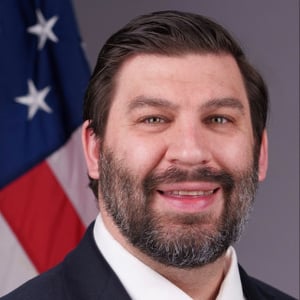
Deputy Counsel, the President
Gary currently is the Deputy Counsel to the President. He was previously a partner at the Dhillon Law Group and worked at the Department of the Interior and Federal Election Commission. He is a native of Virginia, and earned his B.A. and J.D. from the University of Virginia.

Armand is the founder & CEO of Belle, a Nashville-based tech company that provides on-demand preventive nail and foot care services. Prior to founding Belle, he spent four years in business strategy consulting and more than two years in private equity and venture capital, where he oversaw a venture portfolio of over 2,000 companies.

Executive Vice President, Goldwater Institute
Christina Sandefur is the Executive Vice President at the Goldwater Institute. She develops policies and litigates cases advancing healthcare freedom, free enterprise, private property rights, free speech, and taxpayer rights.
Christina is a co-drafter of the Right to Try initiative, now federal law, which protects terminally ill patients' right to try safe investigational treatments that have been prescribed by their physician but are not yet FDA-approved. She has won important victories for property rights in Arizona and works nationally to promote the Institute's Private Property Rights Protection Act, a state-level reform that requires government to pay owners when regulations destroy property rights and reduce property values.
Christina is the co-author of the book Cornerstone of Liberty: Private Property Rights in 21st Century America (2016). She is a frequent guest on national television and radio programs, has provided expert legal testimony to various legislative committees, and is a frequent speaker at conferences. She is the recipient of the 2018 Buckley Award in recognition of her leadership in the freedom movement, and she is an Advisory Board Member of the Network of enlightened Women. Christina serves on the board of the Phoenix Lawyers Chapter of the Federalist Society and is a member of the executive committee for the Federalist Society's Regulatory Transparency Project: FDA & Health.
Christina is a graduate of Michigan State University College of Law and Hillsdale College.
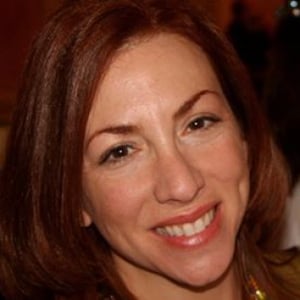
Vice President of Copyright and Legal Affairs, Motion Picture Association
Jennifer Pariser is the Vice President, Copyright and Legal Affairs at the Motion Picture Association. She provides counsel on a wide range of intellectual property and other legal issues for the association, oversees the studios’ relationship with academic institutions and runs its anti-piracy notice program. Jenny previously served as head of litigation at the RIAA and at Sony Music. Prior to that she was an associate with the firms Patterson, Belknap, Webb & Tyler and Debevoise & Plimpton in New York and also served as a judicial clerk to the Honorable Charles Tenney in the United States District Court for the Southern District of New York. She graduated from New York University Law School in 1989 where she was a member of the Law Review. She lectures extensively on copyright topics including at the Copyright Society of the USA, the American and New York Bar Associations, PLI and various law schools.

GRAMMY Award Winning Artist
Maria Schneider’s music has been hailed by critics as “evocative, majestic, magical, heart-stoppingly gorgeous, and beyond categorization.” She and her orchestra became widely known starting in 1994 when they released their first recording, Evanescence. There, Schneider began to develop her personal way of writing for what would become her 18-member collective, made up of many of the finest musicians in jazz today, tailoring her compositions to distinctly highlight the uniquely creative voices of the group. The Maria Schneider Orchestra has performed at festivals and concert halls worldwide. She herself has received numerous commissions and guest-conducting invites, working with over 90 groups from over 30 countries.
Schneider’s music blurs the lines between genres, making her long list of commissioners quite varied, stretching from Jazz at Lincoln Center, to The Saint Paul Chamber Orchestra, to collaborating with David Bowie. She is among a small few to have received GRAMMYS in multiple genres, have received the award in both jazz and classical categories, as well as for her work with David Bowie.
Schneider and her orchestra have a distinguished recording career with twelve GRAMMY nominations and five GRAMMY awards. Unique funding of projects has become a hallmark for Schneider through the trend-setting company, ArtistShare. Her album, Concert in the Garden (2004) became historic as the first recording to win a GRAMMY with Internet-only sales, even more significantly, it blazed the "crowd-funding" trail as ArtistShare’s first release. She’s been awarded many honors by the Jazz Journalists Association and DOWNBEAT and JAZZTIMES Critics and Readers Polls. In 2012, her alma mater, the University of Minnesota, presented Schneider with an honorary doctorate, and in 2014, ASCAP awarded her their esteemed Concert Music Award.
Schneider has become a strong voice for music advocacy and in 2014, testified before the US Congressional Subcommittee on Intellectual Property about digital rights. She has also appeared in CNN, participated in round-tables for the United States Copyright Office, and has been quoted in numerous publications for her views on Spotify, Pandora, YouTube, Google, digital rights, and music piracy. Most recently, she and concerned colleagues in New York have launched a widespread campaign on behalf of music-makers, MusicAnswers.org.
Her recent collaboration with her orchestra and David Bowie resulted in his single called, "Sue (Or In A Season of Crime),” and brought her a 2016 GRAMMY (Best Arrangement, Instruments and Vocals). Schneider and her orchestra also received a 2016 GRAMMY for their latest work, The Thompson Fields (Best Large Jazz Ensemble Album).

Professor of Law, Southern Illinois University School of Law
Professor Mark F. Schultz joined the faculty in 2003. He teaches and writes primarily in the area of intellectual property.
Professor Schultz is a frequent author and speaker known for his work on the law and economics of the global intellectual property system. In one of his most influential projects, he worked with the Organization for Economic Cooperation and Development (OECD) to construct a groundbreaking global trade secret protection index (the TSPI). The TSPI is influencing policy discussions on this cutting-edge topic in capitals around the world. Other recent projects have included an empirical study that quantified for the first time the backlogs in patent offices worldwide, a report on how patented innovation is meeting global health challenges, and the construction of a new global index of copyright strength.
Professor Schultz is an influential voice in public policy debates regarding intellectual property. He has testified before the U.S. Congress on copyright law at the invitation of the House Judiciary Committee and has briefed the staff of the U.S. Senate Judiciary Committee on trade secret legislation. He speaks frequently around the world about the connection between secure and effective intellectual property rights and flourishing national economies and individual lives, with invitations from the U.S. Patent and Trademark Office, the U.S. Trade Representative, and the U.S. Copyright Office, as well as numerous academic institutions, think tanks, and industry groups. He served as an NGO delegate to the World Intellectual Property Organization (WIPO) for several years during the WIPO Development Agenda talks. He is also one of the organizers of an ongoing multilateral diplomatic dialogue on best practices in national trade secret laws, and is co-founder of the Center for Protection of Intellectual Property (CPIP) at George Mason University in Washington, D.C.
Among the awards and recognition he has received for his scholarship was the School of Law's Outstanding Scholar of the Year award in 2008. He has been a distinguished visiting scholar at the University of Botswana and a visiting professor at DePaul University College of Law.
Professor Schultz graduated with honors from the George Washington University School of Law. Following law school, he was a judicial clerk for the Hon. Daniel M. Friedman of the United States Court of Appeals for the Federal Circuit in Washington, D.C., and the Hon. Eric G. Bruggink of the United States Court of Federal Claims. Prior to joining academia, he practiced law for a decade, serving as outside general counsel to several tech startups and helping technology companies to expand their businesses and commercialize their intellectual property in dozens of countries. He holds a B.A. in International Economics from George Washington University and has done PhD level coursework in development economics at Southern Illinois University.
He is active in leadership roles in local and national organizations. He has served as chair of the Federalist Society's Intellectual Property Practice Group and the AALS Section on Internet and Computer Law. He is an officer of the American Bar Association's International IP Committee of the International Law Section and the American Intellectual Property Law Association’s Trade Secret Law Committee. He currently is chair of the Academic Advisory Board of the Copyright Alliance.
Professor Schultz teaches Copyright Law, Trade Secret Law, Trademark Law, and a senior seminar on Intellectual Property and Global Development. He established and directs both the Specialization in Intellectual Property Law and the IP Semester in Practice Externship Program. He also co-founded a Legal Globalization Class, offered every other year, that takes students to South Africa and Botswana after spending a semester learning about the legal system, culture, history, and politics of southern Africa. The popular course is a once-in-a-lifetime experience that introduces students to leading lawyers, judges, government officials, and human rights advocates, taking them from Cape Town to Johannesburg to Gaborone as well as many popular destinations including game reserves, national parks, the Cape of Good Hope, and the Cradle of Humankind.

New Developments in Wisconsin’s John Doe Investigations
Edward D. Greim
Between 2010 and 2013, a team of Wisconsin state officials assembled by the Milwaukee County...
Regulatory Scorecard: A Conversation with Administrator Neomi Rao
Neomi Rao
In 2017, the U.S. experienced a dramatic shift in regulatory policy at the federal level....
En Banc D.C. Circuit Upholds CFPB Constitutionality
C. Boyden Gray, Adam Gustafson
On Wednesday, January 31, the full United States Court of Appeals for the District of...
Fintech and Federal Alternatives to State Money Transmission Licensing
Peter Van Valkenburgh
Today's money transmitters are Internet businesses. The money is digital, it might even be cryptocurrency....
Shining a Light on Regulatory Dark Matter: Regulating Through Guidance
Stephen Cox, Paul R. Noe
For many years, concerns have been raised that the development and use of guidance documents...
The 2017 Mercatus Report: The Implications of Regulating Over the Long-Term
Patrick McLaughlin
Federal regulations have accumulated over many decades, so much that it would require over three...
Deep Dive Episode 19 – Does the Migratory Bird Treaty Act Prohibit Incidental or Accidental Killing?
Gary Lawkowski
Pursuant to a modern interpretation of a 100-year old law, every American who owns a...
Regulatory Hurdles for Entrepreneurs: The Story of Project Belle
Armand Lauzon
Armand Lauzon created a cutting-edge business called Project Belle. Belle is a service that connects...
Off-Label Promotion and Free Speech in Medicine
Christina Sandefur
Federal regulation strictly limits how pharmaceutical companies share information about the legal use of their...
Deep Dive Episode 16 – Is the Newest Part of the Copyright Act Antiquated?
Jennifer L. Pariser, Maria Schneider, Mark F. Schultz
Is the Newest Part of the Copyright Act Antiquated? Unchaining Creativity and Innovation. Nearly twenty...