

Legal Fellow, Center for Constitutional Studies, Cato Institute
Brent Skorup is a legal fellow in the Cato Institute’s Robert A. Levy Center for Constitutional Studies.
Before joining Cato, he was a senior research fellow at the Mercatus Center at the George Mason University. His research areas include free speech, technology law, Fourth Amendment protections, regulation, and property law. Skorup has published pieces in economics and law journals and in popular media, including The Wall Street Journal, The New York Times, Bloomberg Law, Reuters, and Wired. He’s appeared as a TV and radio interview guest for news outlets like C‑SPAN, NPR, CBS News, ABC News, and CNBC Asia.
The Pennsylvania Supreme Court, a dissenting opinion at the Illinois Supreme Court, and the ALI's Restatement of the Law of Property have cited his legal research and he has testified as a technology and legal expert in legislative hearings in several states. Skorup has been appointed to several federal and state advisory bodies and he is currently a member of the Texas Advanced Air Mobility Advisory Committee.
Skorup has a BA in economics from Wheaton College and a law degree from the George Mason University School of Law, where he was articles editor for the Civil Rights Law Journal. He was a legal clerk at the FCC’s wireless bureau and Office of General Counsel and at the Energy and Commerce Committee in the U.S. House of Representatives.

Partner, Steptoe & Johnson LLP
Stewart Baker is a partner in the law firm of Steptoe & Johnson in Washington, D.C. From 2005 to 2009, he was the first Assistant Secretary for Policy at the Department of Homeland Security. His law practice covers cybersecurity, data protection, homeland security, and travel and foreign investment regulation; he has been awarded one patent.
Mr. Baker has been General Counsel of the National Security Agency and General Counsel of the commission that investigated WMD intelligence failures prior to the Iraq war. He is the author of Skating on Stilts, a book on terrorism, cybersecurity, and other technology issues; he also hosts the weekly Cyberlaw Podcast.
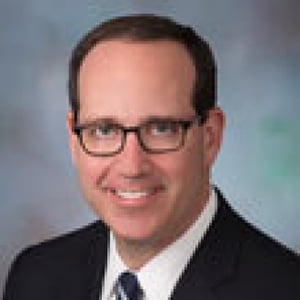
Counsel, Steptoe & Johnson LLP
Alan Cohn advises clients from a range of industries on cybersecurity, blockchain, and distributed ledger technology issues, and other national security and emerging technology issues. Mr. Cohn is co-chair of the firm’s Blockchain and Digital Currency practice. He serves as counsel to the Blockchain Alliance, a public-private forum established by a broad coalition of companies and organizations to help combat criminal activity on the blockchain, and advises companies and investors concerning a range of issues associated with the adoption and use of blockchain and distributed ledger technology. Mr. Cohn also coordinates the Coalition for Responsible Cybersecurity, which was formed by leading cybersecurity companies to prevent dual-use export control rules from harming defensive cybersecurity products, services, and technologies.
Prior to joining the firm, Mr. Cohn served in senior policy positions at the US Department of Homeland Security (DHS) for almost a decade, most recently as the assistant secretary for strategy, planning, analysis & risk and second-in-charge overall of the DHS Office of Policy. While at DHS, Mr. Cohn established the cyber policy office within the DHS Office of Policy, and helped shape department policy on issues such as cybersecurity information sharing, cybercrime and cyber-related sanctions, and cyber incident management. He also represented DHS on the Committee on Foreign Investments in the United States (CFIUS) and related national security review processes for foreign investments, acquisitions, and US license applications. Mr. Cohn also designed and led the first two Quadrennial Homeland Security Reviews—comprehensive year-long reviews of homeland security—and helped implement DHS Secretary Jeh Johnson’s Unity of Effort Initiative, a major corporate-level DHS governance, integration, and management reform effort.
Prior to government service, Mr. Cohn represented major corporations in federal and state court litigation, labor negotiations, and compliance matters involving federal agencies, including the US Department of Labor.

Executive Vice President, Chief Legal Officer, Gates Corporation
Matthew R. A. Heiman joined the Company in May 2026 and has served as the Company’s Chief Legal Officer and Corporate Secretary since June 2026. As Chief Legal Officer, Mr. Heiman is responsible for all legal functions for Gates, including securities and corporate governance, M&A, litigation, commercial, regulatory, compliance, patents and trademarks, real estate, employment and labor, sustainability and environmental matters. Prior to joining Gates, Mr. Heiman held senior legal leadership roles at Waystar, where he served as Chief Legal & Administrative Officer from 2023 to 2025 and as General Counsel and Corporate Secretary from 2020 to 2023. Prior to that, he was with Johnson Controls, where he served as Vice President, Corporate Secretary, and Associate General Counsel. Mr. Heiman has been a Senior Fellow for the National Security Institute at George Mason University’s Antonin Scalia School of Law since 2018.

Wayne A. Abernathy, Wild Bells
Wayne A. Abernathy is a former U.S. Treasury Assistant Secretary for Financial Institutions under President George W. Bush, receiving the Alexander Hamilton Award in recognition of his service. In that office he was also a member of the Board of Directors of the Securities Investor Protection Corporation. Prior to his work at the Treasury, Mr. Abernathy served as Staff Director of the Senate Banking Committee, under Chairman Phil Gramm.
Following his service at the Treasury, Mr. Abernathy worked for 15 years on the staff of the American Bankers Association, as Executive Vice President for Financial Institutions Policy and Regulatory Affairs.
Previous experience with the Senate Banking Committee includes serving as Staff Director of the Subcommittee on Securities during 1995-1998. From 1989 until 1994, Mr. Abernathy was a Republican economist for the committee. He previously worked as a senior legislative assistant for Senator Gramm during 1987-1989 and as an economist for the Banking Committee’s Subcommittee on International Finance and Monetary Policy during 1981-1986, under Chairman Jake Garn.
Mr. Abernathy earned his bachelor’s degree in International Studies from The Johns Hopkins University in 1978. In 1980, he received a master’s degree in International Studies from the School of Advanced International Studies of The Johns Hopkins University.
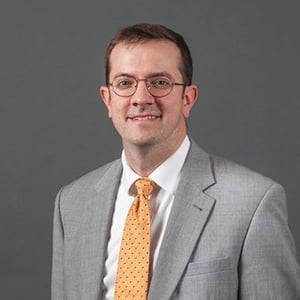
Associate Professor of Law, Antonin Scalia Law School, George Mason University
Associate Professor of Law J.W. Verret joined the Antonin Scalia Law School, George Mason University faculty in 2008. In 2013, he took leave for two years to serve as the Chief Economist and Senior Counsel for the U.S. House Committee on Financial Services. He received his JD and MA in Public Policy from Harvard Law School and the Harvard Kennedy School of Government, respectively, in 2006. While in law school, Professor Verret served an Olin Fellowship in Law and Economics at the Harvard Program on Corporate Governance under the guidance of Prof. Lucian Bebchuk.
Professor Verret then served as a law clerk for Vice-Chancellor John W. Noble of the Delaware Court of Chancery. Prior to joining the faculty at Scalia Law, Professor Verret was an associate in the SEC Enforcement Defense Practice Group at Skadden, Arps in Washington, D.C. He has written extensively on corporate law topics, including Delaware's Guidance, co-written with Chief Justice Myron T. Steele of the Delaware Supreme Court. His academic work has been featured in the Yale Journal on Regulation, The Business Lawyer, the Delaware Journal of Corporate Law, the Stanford Law Review, the University of Pennsylvania Journal of Business Law, and the Virginia Law and Business Review. Professor Verret was selected by the Northwestern Law School Searle Center on Law, Regulation, and Economic Growth for a 2009-2010 Searle-Kaufmann Research Fellowship.
Professor Verret is also a Senior Scholar at the Mercatus Center Working Group on Financial Markets, where he regularly briefs Congressional staff, members of Congress, SEC Commissioners and other financial regulatory agencies on financial regulation topics. He also directs the Corporate Federalism Initiative, where he obtains research grants for a network of students and faculty scholars who study the division between states and the federal government as sources of corporate law. Professor Verret has been invited to testify before various House and Senate Committees four times during the financial crisis of 2009 regarding all of the central provisions of the Obama Administration's 2009 financial regulatory reform proposals. For a full list of Professor Verret's C-Span appearances, including testimony before the U.S. House of Representatives and the U.S. Senate, see http://www.c-spanvideo.org/jwverret.
Professor Verret has been an invited panelist for various television appearances, including an interview on The NewsHour with Jim Lehrer. Professor Verret has been quoted in various media on financial regulation and corporate law topics, including the New York Times, CNN Money, the CNN Political Ticker, CNBC, ABC News, Investor's Business Daily, ESPN.com, The American Banker, The American Lawyer, The Huffington Post, CBS.com, and AP News. Professor Verret's op-eds have been featured in Forbes, The Chicago Tribune, The Orange County Register, and The Wall Street Journal. Professor Verret is also a regular guest contributor to three of the most noted corporate law and financial regulation law blogs: the Harvard Law School Corporate Governance and Financial Regulation Forum, Deallawyers.com, and The Conglomerate.

Deputy District Attorney, Philadelphia District Attorney's Office
Ronald Eisenberg heads the Law Division of the Philadelphia District Attorney's Office. The 60 lawyers in the division handle appeals, habeas corpus and civil litigation, and legislative matters. Mr. Eisenberg has appeared at all levels of the state and federal court system, and has argued several cases in the United States Supreme Court.
Mr. Eisenberg is a member of the Pennsylvania Supreme Court Investigating Grand Jury Task Force and the Advisory Committee for the Pennsylvania Suggested Standard Criminal Jury Instructions. He has represented his office on the Pennsylvania Advisory Committee on Wrongful Convictions, was an adjunct professor at Temple University School of Law, teaching legal writing and research, and has served on the Pennsylvania Criminal Rules and Appellate Rules Committees. He is a past president and current board member of the Association of Government Attorneys in Capital Litigation, a national organization of capital prosecutors.
Mr. Eisenberg received his bachelor's degree from Haverford College in 1978 and his law degree from the University of Pennsylvania Law School in 1981.
J.D., University of Pennsylvania
B.A., Haverford College

Associate, Baker Botts, LLP
Ellen Springer is an Associate at Baker Botts, LLP in Austin, TX. Before joining Baker Botts, she clerked for Chief Justice Nathan Hecht of the Texas Supreme Court. Ms. Springer received her B.A. from Georgetown and her J.D. from The University of Texas Law School.
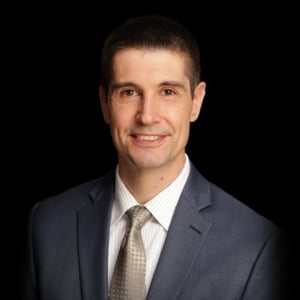
Partner, Cooper & Kirk, PLLC
Pete Patterson is a partner at Cooper & Kirk. His practice includes appellate litigation, constitutional litigation, commercial litigation, and administrative law. In addition, Mr. Patterson for a number of years taught an appellate litigation clinic at the University of Cincinnati College of Law. Mr. Patterson has argued in the U.S. Supreme Court and in nearly every regional federal circuit court of appeals.
Mr. Patterson has extensive experience in complex matters involving important questions of constitutional, statutory, and administrative law. He frequently has represented plaintiffs in cases alleging constitutional or statutory violations by federal, state, and local government officials. He also has represented plaintiffs in class action litigation against corporations and the federal government.
Mr. Patterson joined the firm in 2009. Prior to arriving at Cooper & Kirk, he served as a law clerk to Judge Jeffrey S. Sutton of the United States Court of Appeals for the Sixth Circuit. Mr. Patterson typically works from Cincinnati, Ohio.
Mr. Patterson received his J.D. from Stanford Law School in 2006, earning Order of the Coif honors for finishing in the top 10% of his class. There, he was a member of the Stanford Law Review, serving as an Articles Editor. He also participated in litigation before the United States Supreme Court through the Stanford Supreme Court Litigation Clinic.
Mr. Patterson graduated with University Honors from Carnegie Mellon University in 2000 with a B.S. in Information and Decision Systems. While at Carnegie Mellon, he wrote a regular column for the student newspaper and was a member of the football team.
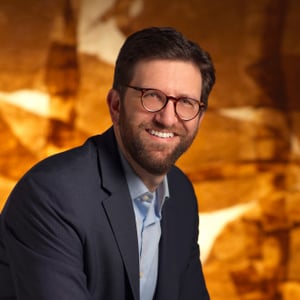
Joseph Tartakovsky, Author of The Lives of the Constitution: Ten Exceptional Minds that Shaped America's Supreme Law.
Joseph Tartakovsky is author of The Lives of the Constitution: Ten Exceptional Minds that Shaped America’s Supreme Law (2018) and the former Deputy Solicitor General of Nevada. His writing has appeared in the New York Times, Wall Street Journal, and Los Angeles Times.
Founder, Bunch O Balloons
Josh Malone quit his corporate job in 2006 to take his shot at the American (Inventor’s) Dream. Eight years later, savings depleted and orthodontics and college unfunded, he took one last swing before trudging back to the corporate world. And hit the homerun with Bunch O Balloons. His solution to the 63 year old problem of filling and tying water balloons instantly became the number one selling spring/summer toy. It was just as quickly knocked off resulting in a patent litigation now totaling 6 patents, 5 patent suits, 5 PTAB petitions/trials, 4 preliminary injunctions, and 8 appeals at the Federal Circuit. He is currently a Fellow with US Inventor working to restore the patent system.

Associate Dean for Academic Affairs, Austin E. Owen Research Scholar & Professor of Law, The University of Richmond School of Law
Dean Kristen Jakobsen Osenga teaches and writes in the areas of patent law, antitrust, and legislation and regulation. Some of her recent scholarship focuses on standard development organizations, patent eligible subject matter, patent licensing firms, litigation and remedies for patent infringement, and patent law reform. She has written numerous law review articles on these and other topics, as well as book chapters and op eds on various aspects of patent law. Additionally, she has spoken on these issues at many academic conferences and bar events. Dean Osenga is Chief Policy Counselor for the Inventors Defense Alliance, as well as an active member of the Federal Circuit Bar Association and the American Intellectual Property Law Association.
Dean Osenga received a B.S. degree in Biomedical Engineering from the University of Iowa, an M.S. degree in Electrical Engineering from Southern Illinois University – Carbondale, and a J.D. from the University of Illinois College of Law, where she graduated magna cum laude. After law school, she practiced at the law firm of Finnegan, Henderson, Farabow, Garrett, & Dunner LLP, (now Finnegan) where she did patent prosecution and litigation. She then clerked for the Judge Richard Linn of the U.S. Court of Appeals for the Federal Circuit. After clerking, she entered academia, teaching first at Chicago-Kent College of Law and then at the University of Richmond, where she has been since 2006. She has also been a Visiting Professor at Emory University School of Law and at William & Mary School of Law.

Janet Galeria is Senior Counsel for Litigation for the U.S. Chamber Litigation Center at the U.S. Chamber of Commerce. She also practiced law with the law firm of Sullivan & Cromwell, LLP. Ms. Galeria graduated from U.C. Berkeley School of Law before clerking for Judge Griffith of the United States Court of Appeals for the D.C. Circuit and Associate Justice Thomas on the Supreme Court of the United States.

Exploring Net Neutrality and the Implications of Repeal
Brent Skorup
For about a decade, some legal scholars have urged the Federal Communications Commission (FCC) to...
Discussion on the Wassenaar Arrangement
Stewart A. Baker, Alan Cohn, Matthew R. A. Heiman
Should software be regulated like a military weapon? That’s the direction in which most Western...
Deep Dive Episode 13 – Discussion on U.S. Treasury Reports
Wayne A. Abernathy, J.W. Verret
On Friday, October 6, Treasury issued the second of its reports to the President on...
Jenkins v. Hutton & Virginia v. LeBlanc - Post-Decision SCOTUScast
Ronald Eisenberg
In June, the Supreme Court issued per curiam opinions in two habeas cases: Jenkins v....
McLane Co. v. EEOC - Post-Decision SCOTUScast
Ellen Springer
On April 3, 2017, the Supreme Court decided McLane Co., Inc. v. Equal Employment Opportunity...
Heimlich Maneuver on Operation Choke Point?
Peter A. Patterson
On August 16, the Department of Justice issued a letter repudiating the Department’s participation in...
Davila v. Davis & McWilliams v. Dunn - Post-Decision SCOTUScast
Joseph Tartakovsky
In June 2017, the Supreme Court decided two cases involving habeas corpus petitions filed by...
Is There a "Death Squad" at the U.S. Patent Office?: Examining the PTAB
Josh Malone, Kristen Osenga, Brian OShaughnessy
In 2011, Congress created a new administrative tribunal in the U.S. Patent Office with the...
Kokesh v. Securities and Exchange Commission - Post-Decision SCOTUScast
Janet Galeria
On June 5, 2017, the Supreme Court decided Kokesh v. Securities and Exchange Commission. In...
TC Heartland LLC v. Kraft Foods Group Brands LLC - Post-Decision SCOTUScast
J Hartline
On May 22, 2017, the Supreme Court decided TC Heartland LLC v. Kraft Foods Group...