
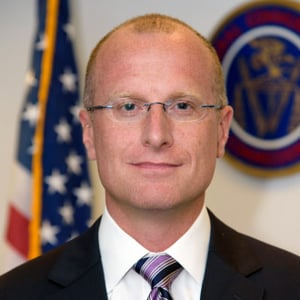
Chairman, Federal Communications Commission
Brendan Carr is the Chairman of the Federal Communications Commission. He previously served as the senior Republican Commissioner and as the FCC’s General Counsel. Nominated by both President Trump and President Biden, Carr has been confirmed unanimously by the Senate three times.
Described by Axios as “the FCC’s 5G crusader,” Carr has led the FCC’s work to modernize its infrastructure rules and accelerate the buildout of high-speed networks. His reforms cut billions of dollars in red tape, enabled the private sector to construct high-speed networks in communities across the country, and extended America’s global leadership in 5G.
Chairman Carr is also focused on expanding America’s skilled workforce—the tower climbers and construction crews needed to build next-gen networks. His jobs initiative promotes community colleges and apprenticeships as a pipeline for good-paying 5G jobs. He is recognizing America’s talented tower crews through a series of “5G Ready” Hard Hat presentations.
Chairman Carr leads a groundbreaking telehealth initiative at the FCC. The Connected Care Pilot Program supports the delivery of high-quality care to low-income Americans and veterans.
Chairman Carr’s time outside of Washington helps inform his approach to the job. He regularly hits the road to hear directly from community members and learn how changes in federal policies could help improve their lives.
Chairman Carr brings nearly 20 years of private and public sector experience in communications and tech policy to his position. Before joining the FCC as a staffer back in 2012, he worked as an attorney at Wiley Rein LLP in the firm’s appellate, litigation, and telecom practices. Previously, Chairman Carr clerked on the U.S. Court of Appeals for the Fourth Circuit for Judge Dennis Shedd. After attending Georgetown University for his undergrad, Chairman Carr earned his J.D. magna cum laude from the Catholic University of America’s Columbus School of Law where he served as an editor of the Catholic University Law Review.
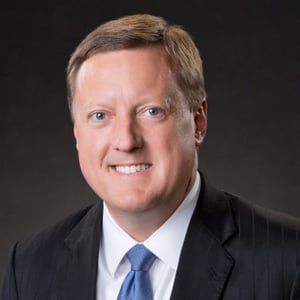
Senator and Chairman, Indiana Senate Utilities Committee, Indiana State Senate
An 8th generation Hoosier, Eric grew up on a grain and livestock farm, where he learned the value of hard work and experienced the risk and rewards of the commodity markets.
He earned a Bachelor’s Degree from Georgetown University and worked on President Ronald Reagan’s re-election campaign in the Office of Political Affairs at the Reagan-Bush ’84 Committee.
While earning his Juris Doctorate at the Indiana University School of Law, he clerked at the Bloomington law firm of McDonald, Barrett & Dakich.
He has been engaged in the private practice of law with offices in Bloomington since 1989 and Bedford since 2003. He is a member of the Monroe and Lawrence County Bar Associations, the Indiana State Bar Association, the Million Dollar Advocates Forum, the Multi-Million Dollar Advocates Forum, and founded and served as the first President of the Indiana Creditors Bar Association.
In 2002, he was elected to the Indiana House of Representatives, where he served until being elected to the Indiana State Senate in 2016. His legislative service has been recognized by, among others, the Indiana Judges Association (Champion of Justice Award), the Indiana Trial Lawyers Association (Legislator of the Year 2008 and 2015), the Indiana Pro Bono Commission (Randall T. Shepard Award), Kentucky Governor Ernie Fletcher (Kentucky Colonel), and Indiana Governor Mike Pence (Sagamore of the Wabash).
He currently serves as Chairman of the Senate Utilities Committee, Ranking Member of the Senate Judiciary and Commerce & Technology Committees, and as a member of the Senate Corrections & Criminal Law, Elections, and Family & Children Committees.
A nationally-recognized leader in energy policy, he serves as co-chairman of the Energy Supply Task Force of the National Conference of State Legislatures, as a member of the Executive Committee of the National Council on Electricity Policy, and holds a graduate certificate in Energy Policy Planning from the University of Idaho. He also serves as a member of the Federal Communication Commission Consumer Advisory Committee. He focuses on energy, telecommunications, and water policy interactions in Indiana and nationally.
He has served as a member of the Indiana Commission on Courts (2007—2011), the Indiana Probate Code Study Commission (2005—2007, 2013—2014, 2019—present), the Indiana Military Base Planning Council (2005—2019), the Board of Trustees of the Indiana Criminal Justice Institute (2006—2011), and the Indiana Public Defender Commission (2017—present). He represents Indiana as a Commissioner on The National Conference of Commissioners on Uniform State Laws (2018—present). As a member of the Indiana Supreme Court's Commercial Courts Committee (2019—present), he provides guidance to Indiana's Commercial Courts. He was appointed by the Indiana Supreme Court to serve on its Innovation Initiative (2019—present) to advise the Supreme Court on opportunities to increase efficiency and accessibility through innovative technology and case management, analysis of court reform, and development and testing of pilot programs related to court reform.
Eric frequently serves as a faculty member teaching continuing legal education courses, including for the Indiana State Bar Association and the Indiana Continuing Legal Education Forum. He enjoys teaching lawyers about new developments in the law and sharing his insights into the legislative process.
He is a registered civil mediator, having earned a civil mediation certificate from the Indiana University McKinney School of Law, studying under ADR expert John Krauss. Eric enjoys using the combination of his mediation skills and litigation experience to help parties settle cases and resolve disputes.
Eric is frequently appointed by judges to serve as a court-appointed fiduciary with responsibilities such as a trustee, federal multidistrict litigation plaintiffs’ steering committee member, special administrator, and personal representative.
A licensed Indiana title insurance producer, he founded Indiana Title Insurance Company in 2015 and serves as its President. His business experience also includes real estate, as President of White River Properties, Inc.; agriculture, as a partner in Koch Farms; and healthcare, as a former board member and Chairman of the Board of Dunn Memorial Hospital and St. Vincent Dunn Hospital.
He is a member of the Boards of Directors of Mid-Southern Savings Bank, FSB and its holding company Mid-Southern Bancorp, Inc. (NASDAQ: MSVB).
His leadership in the non-profit sector has included service as a member of the Board of Governors of the Society of Indiana Pioneers, as a member of the Executive Board of the Hoosier Trails Council of the Boy Scouts of America, as a member of the Mitchell Urban Enterprise Association Board, and as a member of the Georgetown University Alumni Admissions Committee.
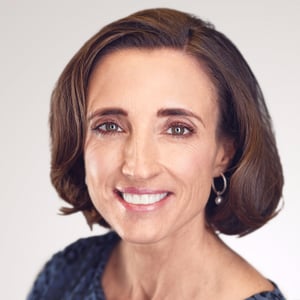
Senior Vice President, Strand Consult
Roslyn Layton, PhD is a leading international expert on technology policy. She is Senior Vice President of Strand Consult, an independent consultancy serving the global mobile telecom industry. She is also a Visiting Researcher at Aalborg University Copenhagen where she earned a doctoral thesis on network neutrality by measuring the outcome of the policy across 53 countries over 5 years. She served on the Presidential Transition Team for the Federal Communications Commission (FCC), and her work was critical to the FCC’s defense for the Restoring Internet Freedom Order. She has testified to the United States Senate and House on multiple topics including spectrum, broadband, mobile mergers, competition, and privacy. She founded the think tank China Tech Threat to study the problems of technology produced by the People’s Republic of China. She serves as the Program Chair for the Telecom Policy Research Conference, the leading interdisciplinary academic gathering. Her recent paper on rural broadband describes the empirical case for policy reform to recover network infrastructure costs from streaming video entertainment providers. She is a Senior Contributor to Forbes.

Judge, United States Court of Appeals, Second Circuit
Judge Menashi was appointed to the U.S. Court of Appeals for the Second Circuit on November 14, 2019. Previously, he served as special assistant and associate counsel to the President in the White House and as acting general counsel at the U.S. Department of Education. He was assistant professor of law at Scalia Law School, George Mason University, where he taught administrative law and civil procedure, and a research fellow at New York University School of Law and Georgetown University Law Center. He was also a partner at Kirkland & Ellis LLP in New York, where he practiced appellate and commercial litigation, and served as a law clerk to Justice Samuel Alito on the Supreme Court of the United States and to Judge Douglas Ginsburg on the U.S. Court of Appeals for the District of Columbia Circuit. He graduated from Stanford Law School, where he was elected to Order of the Coif and served as senior articles editor of the Stanford Law Review, and from Dartmouth College, where he was elected to Phi Beta Kappa.
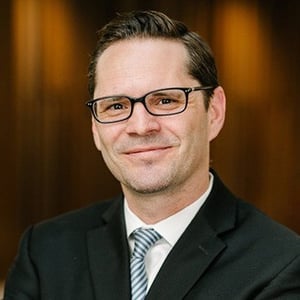
John J. Flynn Endowed Professor of Law, University of Utah S.J. Quinney College of Law
Christopher Peterson is the John J. Flynn Endowed Professor of Law at the University of Utah's S.J. Quinney College of Law. He previously served as a Special Advisor in the Office of the Director at the United States Consumer Financial Protection Bureau, as a Special Advisor in the Office of Legal Policy for Personnel and Readiness in the United States Department of Defense, and as Senior Counsel for Enforcement Policy and Strategy in the Consumer Financial Protection Bureau's Office of Enforcement. Professor Peterson has written dozens of scholarly articles and published three books on consumer finance. He has frequently testified in Congressional hearings and has presented his research to the Federal Deposit Insurance Corporation, the Federal Reserve Board of Governors, and at the White House in both Democratic and Republican administrations. He is a fellow of the American College of Consumer Financial Services Lawyers, the American Bar Association's Consumer Financial Services Committee, and serves on the community advisory board of the American Fintech Council. Professor Peterson is a recipient of the National Association of Consumer Agency Administrators’ Consumer Advocate of the Year award and the Pentagon’s Office of the Secretary of Defense Award for Excellence.
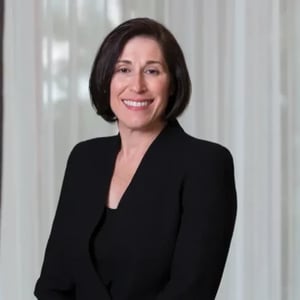
Partner, Alston & Bird
Nanci Weissgold is a co-leader of both Alston & Bird's Financial Services & Products Group and the firm’s Consumer Financial Services Team. As an acknowledged authority in her field, Nanci maintains a national practice on matters relating to consumer financial products and services and represent clients (including residential mortgage servicers, as well banks, non-bank consumer lenders, technology providers for the consumer financial services industry, AMC’s, and investors) in federal and state regulatory, supervisory, and enforcement matters. Nanci acts as regulatory counsel in connection with investments or acquisitions and perform compliance due diligence. Nanci is frequently called upon to provide litigation support and assist in the development of compliance management systems.
Nanci is a frequent speaker and presenter at legal and industry conferences and webinars, and has published numerous articles on mortgage banking, valuation, and consumer finance related topics. She served as articles editor of the Administrative Law Journal at American University. Nanci is a Fellow of the American College of Consumer Financial Services Lawyers and serves on the nominating committee for the Board of Regents. She is peer rated in the Martindale-Hubbell® directory as AV Preeminent®, the highest level of professional excellence. Nanci is nationally ranked by Chambers USA in Financial Services Regulation: Consumer Finance (Compliance), and in 2018, she was honored by the Burton Awards as a recipient of a “Law360 Distinguished Legal Writing Award.”

George Mason University Foundation Professor of Law, Antonin Scalia Law School, George Mason University
TODD J. ZYWICKI is George Mason University Foundation Professor of Law at Antonin Scalia Law School at George Mason University and Research Fellow of the George Mason Law and Economics Center. During the Fall 2023 semester he served as the Visiting Scholar in Conservative Thought and Policy for the Bruce Benson Center for the Study of Western Civilization at the University of Colorado-Boulder. From 2020-2021 he was Chair of the Consumer Financial Protection Bureau Taskforce on Federal Consumer Financial Law. In 2021 he was inducted to the American College of Consumer Financial Services Lawyers. He is also a Senior Fellow of the F.A. Hayek Program for the Advanced Study of Politics, Philosophy, and Economics at George Mason University and a former Senior Fellow of the Cato Institute. From 2015-2017 he was Executive Director of the George Mason Law and Economics Center. He served as Co-Editor of the Supreme Court Economic Review from 2006-2017. From 2003-2004, Professor Zywicki served as the Director of the Office of Policy Planning at the Federal Trade Commission. He has also taught at Vanderbilt University Law School, Georgetown University Law Center, Boston College Law School, Mississippi College School of Law, and China University of Political Science and Law.
Professor Zywicki clerked for Judge Jerry E. Smith of the U.S. Court of Appeals for the Fifth Circuit and worked as an associate at Alston & Bird in Atlanta, Georgia, where he practiced bankruptcy and commercial law. He received his J.D. from the University of Virginia, where he was executive editor of the Virginia Tax Review and John M. Olin Scholar in Law and Economics. Professor Zywicki also received an M.A. in Economics from Clemson University and an A.B. cum Laude with high honors in his major from Dartmouth College.
Professor Zywicki is also a Lone Mountain Fellow of the Property and Environment Research Center, a Fellow of the International Centre for Economic Research in Turin, Italy, and a former Senior Fellow of the Goldwater Institute. During the Fall 2008 Semester Professor Zywicki was the Searle Fellow of the George Mason University School of Law and was a 2008-09 W. Glenn Campbell and Rita Ricardo-Campbell National Fellow and the Arch W. Shaw National Fellow at the Hoover Institution on War, Revolution and Peace. He has lectured and consulted with government officials around the world, including Iceland, Italy, Japan, and Guatemala. In 2006 Professor Zywicki served as a Member of the United States Department of Justice Study Group on “Identifying Fraud, Abuse and Errors in the United States Bankruptcy System.”
Professor Zywicki is the author of more than 130 articles in leading law reviews and peer-reviewed economics journals. He is one of the Top 10 most-cited law professors in the field of Commercial Law and one of the Top 25 law professors on Twitter as measured by engagement levels. He is one of the Top 50 Most Downloaded Law Authors at the Social Science Research Network. He has testified multiple times before Congress on issues of consumer bankruptcy law and consumer credit and is a frequent commentator on legal issues in the print and broadcast media, including the Wall Street Journal, New York Times, The Washington Post, The Washington Times, Nightline, The Newshour with Jim Lehrer, Neil Cavuto Show, Fox & Friends, Smerconish, Fox News @ Night with Shannon Bream, Fox Business, CNN, CNBC, Bloomberg News, BBC, The Diane Rehm Show, Lou Dobbs Show, Jerry Doyle Show, and The Laura Ingraham Show.
Professor Zywicki is former Chairman and a current member of the Board of Directors of the Competitive Enterprise Institute, and is a member of the Board of Directors of the Institute for Humane Studies, Bill of Rights Institute, the Executive Committee for the Federalist Society's Financial Institutions and E-Commerce Practice Group, the Board of Trustees of the Foundation for Research on Economics and the Environment. He formerly served on the Governing Board and the Advisory Council for the Financial Services Research Program at George Washington University School of Business. He is currently the Chair of the Academic Advisory Council for the following organizations: The Bill of Rights Institute, the film “We the People in IMAX,” and the McCormick-Tribune Foundation “Freedom Museum” in Chicago, Illinois. He is a member of the Board of Visitors of Ralston College and was a member of the Board of Trustees of Yorktown University. From 2005-2009 he served as an elected Alumni Trustee of the Dartmouth College Board of Trustees.
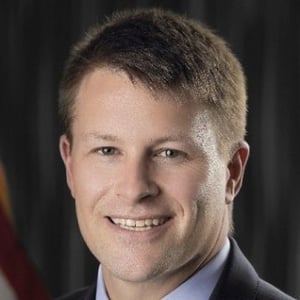
Managing Director, Banking Supervision and Regulation Group, Patomak Global Partners
Brian Johnson is Managing Director in the Banking Supervision and Regulation Group at Patomak Global Partners.
In this role, Mr. Johnson spearheads projects related to the regulation of consumer financial products under Keith Noreika, Executive Vice President and Chairman of the Banking Supervision and Regulation Group and former acting Comptroller of the Currency.
Prior to joining Patomak, Mr. Johnson was a partner in Alston & Bird LLP’s financial services and products group. There, he advised financial institutions on consumer finance regulatory issues relating to product compliance, examination, enforcement investigations, and compliance management systems, and on strategic engagement with independent federal regulatory agencies and with Congress.
Mr. Johnson previously served as Deputy Director of the Consumer Financial Protection Bureau (CFPB), where he oversaw the agency’s rulemaking, supervision, and enforcement activities. He conceived and led the creation of high-profile agency initiatives, including the Office of Innovation, Taskforce on Federal Consumer Financial Law, policy symposia series, and Start Small, Save Up emergency savings program. He also served as the CFPB representative to the Financial Stability Oversight Council Deputies’ Committee and advised on interagency matters involving the Federal Deposit Insurance Corporation and the Federal Financial Institutions Examination Council.
Mr. Johnson held various positions on Capitol Hill, including policy director and chief financial institutions counsel on the House Committee on Financial Services, where his portfolio covered consumer protection and credit, mortgage origination, credit reporting, banking, and data security. His efforts on the committee involved drafting legislation to provide regulatory relief to bank, credit union, and nondepository financial institutions, as well as conducting oversight of the activities of the CFPB, Financial Stability Oversight Council, Federal Deposit Insurance Corporation, Office of Financial Research, Office of the Comptroller of the Currency, Federal Reserve System, and National Credit Union Administration.
Mr. Johnson received his juris doctorate from the University of Virginia School of Law and his bachelor’s in economics from the University of Virginia.
Chairman, Federal Communications Commission
Brendan Carr is the Chairman of the Federal Communications Commission. He previously served as the senior Republican Commissioner and as the FCC’s General Counsel. Nominated by both President Trump and President Biden, Carr has been confirmed unanimously by the Senate three times.
Described by Axios as “the FCC’s 5G crusader,” Carr has led the FCC’s work to modernize its infrastructure rules and accelerate the buildout of high-speed networks. His reforms cut billions of dollars in red tape, enabled the private sector to construct high-speed networks in communities across the country, and extended America’s global leadership in 5G.
Chairman Carr is also focused on expanding America’s skilled workforce—the tower climbers and construction crews needed to build next-gen networks. His jobs initiative promotes community colleges and apprenticeships as a pipeline for good-paying 5G jobs. He is recognizing America’s talented tower crews through a series of “5G Ready” Hard Hat presentations.
Chairman Carr leads a groundbreaking telehealth initiative at the FCC. The Connected Care Pilot Program supports the delivery of high-quality care to low-income Americans and veterans.
Chairman Carr’s time outside of Washington helps inform his approach to the job. He regularly hits the road to hear directly from community members and learn how changes in federal policies could help improve their lives.
Chairman Carr brings nearly 20 years of private and public sector experience in communications and tech policy to his position. Before joining the FCC as a staffer back in 2012, he worked as an attorney at Wiley Rein LLP in the firm’s appellate, litigation, and telecom practices. Previously, Chairman Carr clerked on the U.S. Court of Appeals for the Fourth Circuit for Judge Dennis Shedd. After attending Georgetown University for his undergrad, Chairman Carr earned his J.D. magna cum laude from the Catholic University of America’s Columbus School of Law where he served as an editor of the Catholic University Law Review.

Furman Fellow, New York University School of Law
Daniel Francis is a Furman Fellow and Emile Noël Fellow at NYU School of Law, where he writes about competition and the public and private practices that shape it. His research focuses on antitrust and structural constitutional law, including the law of monopolization, as well as constitutional and other rules that affect government action in the market. He has a particular interest in competition in digital and high-technology markets.
Between May 2018 and January 2021, Daniel served in the antitrust arm of the Federal Trade Commission—an independent and bipartisan federal agency—as senior counsel, associate director for digital markets, and finally deputy director. He directed and managed a wide range of antitrust enforcement and policy activities at the FTC, including in particular those in high-technology and platform markets, and oversaw a number of the Bureau’s divisions and offices.
Daniel previously served as a Climenko Fellow and lecturer on law at Harvard Law School (2017–18), as associate editor of the International Journal of Constitutional Law (2016–18), and a Visiting Researcher at Harvard Law School (2014). He spent ten years in the private practice of antitrust law with two multinational law firms, where his work focused on the defense, aerospace, and oil and gas sectors. Daniel also previously taught a course on European Union constitutional law and political history at Harvard College. Daniel holds three degrees in law: a first law degree from Trinity College, Cambridge; a Master of Laws degree from Harvard Law School; and a doctorate from NYU School of Law, under the supervision of Gráinne de Búrca. He is admitted to the practice of law in New York and the District of Columbia.

Judge, United States Court of Appeals, District of Columbia Circuit
Judge Katsas was appointed to the D.C. Circuit in December 2017. He graduated from Princeton University and Harvard Law School, where he was an executive editor on the Harvard Law Review. Between 1989 and 1992, he served as a law clerk to Judge Edward Becker on the Third Circuit, to then-Judge Clarence Thomas on the D.C. Circuit, and to Justice Thomas on the Supreme Court. Between 1992 and 2001, he was an associate and then partner in the Washington office of Jones Day, where he specialized in appellate and complex civil litigation. Between 2001 and 2009, he served in many senior positions in the Department of Justice, including as Assistant Attorney General for the Civil Division and as Acting Associate Attorney General. In 2009, he returned to Jones Day. From January to December 2017, he served as Deputy Assistant to the President and Deputy Counsel to the President.
Before joining the bench, Judge Katsas argued more than 75 appeals, including three cases in the Supreme Court, 13 cases in the D.C. Circuit, and cases in every other federal court of appeals. By appointment of the Chief Justice, he served on the Advisory Committee on Appellate Rules from 2013 to 2017. In 2016, he was elected to membership in the American Academy of Appellate Lawyers.
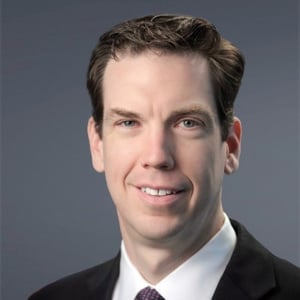
Partner, Fusion Law, PLLC
Paul is the founding partner of Fusion Law, PLLC. He has extensive experience with state, federal, and global regulators building coalitions and implementing policies to promote innovation in financial services. He is responsible for designing and implementing the first state (Arizona) and federal (CFPB) FinTech sandboxes in the United States. He also designed the CFPB no-action letter and trial disclosure policies. He helped found the first global regulatory innovation coalition (Global Financial Innovation Network) and led the founding of the first U.S. regulatory innovation coalition (American Consumer Financial Innovation Network). He served on the Financial Stability Oversight Council subcommittee on digital assets. He also has drafted state-level laws on blockchain and utility tokens.
Paul also has significant enforcement and litigation experience. He led many multi-state consumer protection enforcement matters as Civil Litigation Division Chief at the Arizona Attorney General’s Office.
Prior to his government service, Paul practiced law in the areas of securities litigation and transactional work for approximately six years at two well-known law firms. He also clerked on the U.S. Court of Appeals for the Fourth Circuit.

Chief Economist, The Phoenix Center for Advanced Legal & Economic Public Policy Studies
George S. Ford is the chief economist for the Phoenix Center for Advanced Legal and Economic Public Policy Studies, a nonprofit 501(c)(3) research organization that studies broad public-policy issues related to governance, social and economic conditions, with a particular emphasis on the law and economics of the digital age.
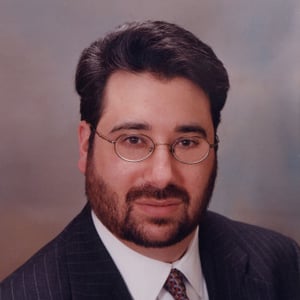
President, Phoenix Center for Advanced Legal and Economic Public Policy Studies
Lawrence J. Spiwak is President of the Phoenix Center for Advanced Legal & Economic Public Policy Studies, a non-profit 501(c)(3) organization that studies broad public-policy issues related to governance, social and economic conditions, with a particular emphasis on the law and economics of the digital age. Mr. Spiwak is a prolific scholar whose work is frequently cited by policymakers, major news media and academic journals around the world, and is in the top 1.3%of authors downloaded on the Social Science Research Network. Mr. Spiwak currently serves as the co-chair of the Federal Communications Bar Association’s (FCBA) committee responsible for overseeing the FEDERAL COMMUNICATIONS LAW JOURNAL and is a member of the program committee of the Telecommunications Policy Research Conference (“TPRC”). Mr. Spiwak is also the recipient of the FCBA’s Distinguished Service Award. Prior to joining the Phoenix Center, Mr. Spiwak was a Senior Attorney with the Competition Division in the FCC’s Office of General Counsel from 1994-1998. While in college, Mr. Spiwak was accepted into the Presidential Stay-In School program where he was responsible for delivering classified and confidential material among senior White House and Reagan Administration officials and received a full FBI security clearance. Mr. Spiwak received his B.A. with Special Honors from the George Washington University and his J.D. from the Benjamin N. Cardozo School of Law. Mr. Spiwak is a member in good standing of the bars of New York, Massachusetts, the District of Columbia, and the U.S. Court of Appeals for the D.C. Circuit.

Associate General Counsel & Corporate Secretary, Association of American Railroads
Tim Strafford serves as Associate General Counsel and Corporate Secretary of the Association of American Railroads (AAR). For two decades, Mr. Strafford’s legal practice has focused principally on the regulation of railroads, including issues related to economic regulation and federal preemption. At the AAR, he has been involved in the development of legislative and regulatory policy and standard setting measures for the freight rail industry. He has represented the railroad industry before the federal courts and federal regulatory agencies including the Surface Transportation Board (STB), Federal Railroad Administration, Federal Communications Commission, Pipeline and Hazardous Materials Administration, Federal Aviation Administration, Bureau of Indian Affairs and Customs and Border Protection.
Prior to joining the AAR in 2012, Mr. Strafford served as Chief of Staff to the Chairman of the STB. He worked as an attorney at the STB for 13 years, including a detail to the staff of the Transportation and Infrastructure Committee of the U.S. House of Representatives from October 2009 until July 2010.
Mr. Strafford received his Juris Doctor from American University in 1998, and a Bachelor of Arts with General Honors, in Political Science, from Rutgers University in 1995.

Laurence A. Tisch Professor of Law and Director, Classical Liberal Institute, New York University School of Law; Senior Fellow, The Civitas Institute, University of Texas at Austin
Richard A. Epstein is the inaugural Laurence A. Tisch Professor of Law at NYU School of Law. Prior to his joining the faculty, he was a visiting law professor at NYU from 2007 through 2009. He served as the Peter and Kirstin Bedford Senior Fellow at the Hoover Institution from 2000 to 2024. Since 2024 to the present he is a senior lecturer at the Civitas Institute at the University of Texas—Austin. Epstein is also the James Parker Hall Distinguished Service Professor of Law Emeritus and a senior lecturer at the University of Chicago. His initial law school appointment was at the University of Southern California from 1968 to 1972. Epstein received an LL.D., h.c. from the University of Ghent, 2003. He has been a member of the American Academy of Arts and Sciences since 1985 and was a Senior Fellow of the Center for Clinical Medical Ethics at the University of Chicago Division of Biological Sciences, also from 1983. to 2022 He served as editor of the Journal of Legal Studies from 1981 to 1991, and of the Journal of Law and Economics from 1991-2001. From 2001 to 2010 he was a director of the John M. Olin Program in Law and Economics at the University of Chicago.
His newest book, The Myth of Birthright Citizenship: What the Fourteenth Amendment Really Says was published in 2026 (Encounter Books). Prior to that he has published many books including, The Dubious Morality of the Modern Administrative State (Roman & Littlefield 2020).Earlier he published th Classical Liberal Constitution: The Uncertain Quest for Limited Government (Harvard 2014) iHis previous books include Design for Liberty: Private Property, Public Administration and the Rule of Law (Harvard 2011); The Case Against the Employee Free Choice Act (Hoover 2009); Supreme Neglect: How to Revive the Constitutional Protection of Property Rights (Oxford 2008); Antitrust Decrees in Theory and Practice: Why Less is More (AEI 2007); Overdose: How Excessive Government Regulation Stifles Pharmaceutical Innovation (Yale University Press. 2006); How Progressives Rewrote the Constitution (Cato 2006); Cases and Materials on Torts (Aspen Law & Business; 8th ed. 2004); Skepticism and Freedom: A Modern Case for Classical Liberalism (University of Chicago, 2003); Torts (Aspen Law & Business 1999); Principles for a Free Society: Reconciling Individual Liberty with the Common Good (Perseus Books, 1998): Mortal Peril: Our Inalienable Rights to Health Care (Addison-Wesley, 1997); Simple Rules for a Complex World (Harvard, 1995); Bargaining With the State (Princeton, 1993); Forbidden Grounds: The Case Against Employment Discrimination Laws (Harvard , 1992); Takings: Private Property and the Power of Eminent Domain (Harvard, 1985); and Modern Products Liability Law (Greenwood Press, 1980). He has also edited(with Catherine M. Sharkey) Cases and Materials on the Law of Torts (10th edition 2012).
Professor Epstein has written numerous articles on a wide range of legal and interdisciplinary subjects. He has taught courses in administrative law, antitrust law, civil procedure, communications, constitutional law, contracts, corporations, criminal law, employment discrimination law, environmental law, food and drug law health law and policy, legal history, labor law, property, real estate development and finance, jurisprudence, labor law; land use planning, patents, individual, estate and corporate taxation, Roman Law; torts, and workers' compensation.
Professor Epstein also writes a regular column for Civitas Institute, which also sponsors his podcast, The Libertarian with Charles C.W. Cooke, and Law Talk, with Cooke and John Yoo. He also does a podcast with John Batchelor. And appears regularly on the Freedom File with Judge Andrew Napolitano.

Laurence H. Silberman Chair in Constitutional Governance, American Enterprise Institute; Executive Director, Antonin Scalia Law School’s C. Boyden Gray Center for the Study of the Administrative State
Adam J. White is the Laurence H. Silberman Chair in Constitutional Governance and senior fellow at the American Enterprise Institute, where he focuses on the Supreme Court and the administrative state. He also directs the Antonin Scalia Law School’s C. Boyden Gray Center for the Study of the Administrative State.
He writes on regulation and constitutional government for a variety of publications. He practiced law in Washington, D.C., after clerking for the D.C. Circuit's Judge David Sentelle. He also has been chairman of the ABA's Administrative Law Section.
In 2021, he served on the Presidential Commission on the Supreme Court of the United States, where he criticized “Court packing” and other efforts to restructure the Supreme Court.
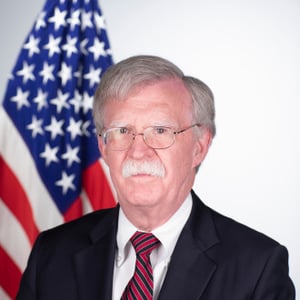
Former United States National Security Advisor
John R. Bolton served as Assistant to the President and National Security Advisor from April 2018 to September 2019.
Prior to his appointment, Ambassador Bolton served as a senior fellow at the American Enterprise Institute (AEI); of counsel at Kirkland & Ellis; a contributor to FOX News Channel and FOX Business Network; and his op-ed articles were regularly featured in major media publications.
Ambassador Bolton was appointed as United States Permanent Representative to the United Nations on August 1, 2005 and served until his resignation in December 2006. Prior to his appointment, Ambassador Bolton served as Under Secretary of State for Arms Control and International Security from May 2001 to May 2005.
Other positions he has previously held include Assistant Secretary for International Organization Affairs at the Department of State, 1989-1993; Assistant Attorney General, Department of Justice, 1985-1989; Assistant Administrator for Program and Policy Coordination, U.S. Agency for International Development, 1982-1983 and General Counsel, U.S. Agency for International Development, 1981-1982.
Ambassador Bolton is the author of Surrender is Not an Option: Defending America at the U.N. and Abroad, published by Simon and Shuster (November 2007) and How Barack Obama is Endangering our National Sovereignty, published by Encounter Books (April 2010).
Ambassador Bolton was born in Baltimore, Maryland. He graduated with a Bachelor of Arts degree, summa cum laude, Phi Beta Kappa, from Yale College in 1970, and received his Juris Doctor from Yale Law School in 1974. He currently resides in Maryland with his wife, Gretchen. They have one daughter, Jennifer Sarah, who also graduated from Yale College, and received her MBA and SM degrees from MIT in 2014 and is currently a senior manager at Nissan’s facility in Nashville.

Judge, United States Court of Appeals, Eighth Circuit
Pasco Middleton Bowman II is a federal judge on senior status on the United States Court of Appeals for the 8th Circuit. He joined the court in 1983 after being nominated by President Ronald Reagan to a seat vacated by Jesse Smith Henley. Bowman assumed senior status on August 1, 2003.
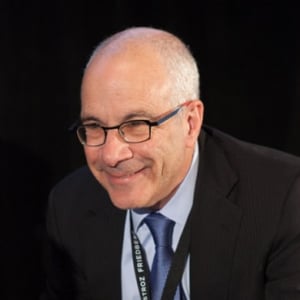
Senior Faculty, Arthur and Toni Rembe Rock Center for Corporate Governance, Stanford Law School
Joseph A. Grundfest, JD ’78, is a nationally prominent expert on capital markets, corporate governance, and securities litigation. His scholarship has been published in the Harvard, Yale, and Stanford law reviews, and he has been recognized as one of the most influential attorneys in the United States. Professor Grundfest founded the award-winning Stanford Securities Class Action Clearinghouse, which provides detailed, online information about the prosecution, defense, and settlement of federal class action securities fraud litigation. He launched Stanford Law School’s executive education programs and continues to co-direct Directors’ College, the nation’s leading venue for the continuing professional education of directors of publicly traded corporations. He is also a senior faculty member with the Arthur and Toni Rembe Rock Center for Corporate Governance. Additionally, he is co-founder and director of Financial Engines and a director of Kohlberg, Kravis, Roberts & Co.
Before joining the Stanford Law School faculty in 1990, Professor Grundfest was a commissioner of the Securities and Exchange Commission, served on the staff of the President’s Council of Economic Advisors as counsel and senior economist for legal and regulatory matters, and was an associate at Wilmer, Cutler & Pickering. Early in his career he was a research associate at the Brookings Institution and an economist and consultant with the RAND Corporation.
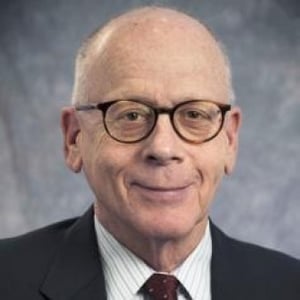
William B. Graham Distinguished Service Professor of Law, University of Chicago Law School
Saul Levmore came to the Law School from the University of Virginia. He was the Dean of the University of Chicago Law School from 2001 to 2009, and is the William B. Graham Distinguished Service Professor of Law. He has been a visiting professor at Yale, Harvard, Michigan, and Northwestern. He has taught and written about torts, corporations, copyright, non-profit organizations, comparative law, public choice, corporate tax, commercial law, insurance, and contracts. He is a member of the American Academy of Arts and Sciences, a past president of the American Law Deans Association, and a past trustee of the Law School Admissions Council and of the Skadden Foundation. He is currently the President of the American Law and Economics Association. Away from law, he has been an advisor on corporate governance issues and on development strategies and although his work continues to be related to law and economics, and especially public choice, across many fields he has also written books on aging and on games and puzzles.
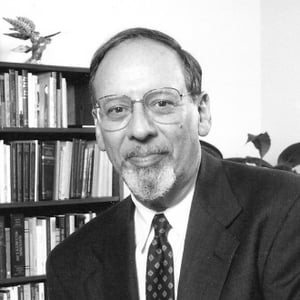
Dean Emeritus, George Mason School of Law
Lauded as a cultural laureate of the Commonwealth of Virginia, former Mason dean Henry G. Manne was the driving force behind the many innovations in legal education implemented at George Mason.
Professor Manne was designated one of the "founders" of the field of law and economics by the American Law and Economics Association. He launched the Law and Economics Center at Emory University and the University of Miami before bringing it to George Mason.
His monograph, An Intellectual History of the School of Law, George Mason University, traces the development of the law and economics movement and highlights the special contributions made by George Mason University School of Law to the movement. Professor Manne's other writings include such seminal works as Insider Trading and the Stock Market; Wall Street in Transition (with E. Solomon); and "Mergers and the Market for Corporate Control", Journal of Political Economy, April 1965. Professor Manne also designed and implemented at George Mason the nation's first system of fully integrated law school specialty track programs.
In August 2012, Dean Manne gave an oral history of his life, including his time at the Law and Economics Center, to the Securities and Exchange Commission Historical Society. An audio recording of the interview and transcript are available on the Society's website: audio (mp3); edited transcript (pdf).
He received a B.A. from Vanderbilt University (1950), J.D. from the University of Chicago (1952), J.S.D. from Yale University (1966), LL.D. from Seattle University (1987), and LL.D. from the Universidad Francesco Marroquin in Guatemala (1987).
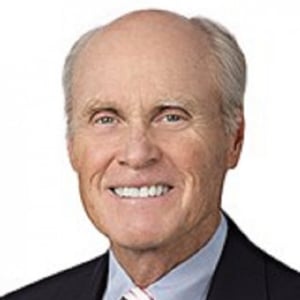
Former United States Assistant Attorney General, Civil Rights Division, United States Department of Justice
William Bradford served as the United States Assistant Attorney General for the Civil Rights Division from 1981 to 1988.
Reynolds was Senior Counsel in BakerBotts Antitrust and Competition division. He graduated with a LL.B. from Vanderbilt University Law School in 1967 where he was Order of the Coif and Editor-in-Chief of the Vanderbilt Law Review. In 1964, he received a B.A. from Yale University.
Reynolds passed away on September 14, 2019, in Seabrook Island, South Carolina at age 77.

Professor Emeritus, Paul M. Hebert Law Center, Louisiana State University
In memoriam
Dr. John Baker is Professor Emeritus of Law, and previously the Dale E. Bennett Professor of Law, at Louisiana State University Law School. He is currently Visiting Professor at Peking University School of Transnational Law (via Zoom) and has been Visiting Professor at The Center for the Constitution, Georgetown Law School (2013-2020). He has also been a Visiting Fellow at Oriel College, the University of Oxford (2012-2014) and taught at Blackfriars Hall, Oxford in 2014. Dr. Baker has also been an adjunct Fellow at the Heritage Foundation (Spring, 2008) and a Distinguished Scholar at the Catholic University of America Law School (2011-12). He has taught at Tulane Law School, George Mason Law School, Pepperdine Law School, New York Law School, Hong Kong University, and the University of Dallas, School of Management and also taught and/or lectured in 17 foreign countries. Notable among his foreign visits are the
following: Visiting Professor at the University of Lyon III (France) (1999-2011); Visiting Professor at the Universidad de los Andes, Chile (2012), as a Fulbright Specialist (2006); and a Fulbright Scholar at various universities in the Philippines. Dr. Baker received his J.D., with honors, from the University of Michigan Law School and his B.A., magna cum laude, from the University of Dallas. He also earned a Ph.D. in Political Thought from the University of London. Baker has taught over a dozen different subjects, mostly courses in public law. His main areas of interest are Constitutional Law (particularly federalism and separation of powers), Criminal Law, Anti-Terrorism Law, International Law, Health Care Law, Mediation, and Comparative Law.
In addition to law review articles and book chapters, Dr. Baker’s academic publications include Hall's Criminal Law: Cases and Materials (with Benson, Force and George; 5th ed. Michie, 1993); An Introduction to the Law of the United States (ed. with Levasseur; University Press of America, 1992). He has also published on Forbes.com, FoxNews.com, in The Washington Times, and a number of times in The Wall Street Journal. He argues in federal court, including two oral arguments in the U.S. Supreme Court. For many years, he co-taught courses for the Federalist Society on separation of powers with the late Supreme Court Justice Antonin Scalia. In September 2016, he co-taught a Supreme Court seminar in China with Justice Samuel Alito. Following law school, he served as a law clerk in federal district court and as an assistant district attorney in New Orleans before joining LSU in 1975. While a professor, he has been as a consultant to USAID, USIA (since rolled into the State Department), the Justice Department, the U.S. Senate Judiciary Subcommittee on Separation of Powers, and the Office of Planning in the White House. He served on an ABA Task Force which issued the report, The Federalization of Crime (1998) and later as a consultant to the “Bi-Partisan Task Force on the Over- federalization of Crime” (2012-2014) created by the U.S. House Judiciary Subcommittee on Crime. Dr. Baker was a co-founder of the first iteration (1995) of Stratfor Inc., a global intelligence agency. He co-authored its first book: The Intelligence Edge (with Friedman, Friedman and Chapman; Crown Books/Random House 1997). In 2022, he began a short, weekly video podcast available on YouTube and Rumble, The Baker Brief.
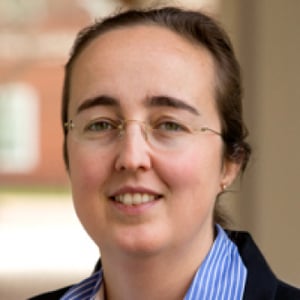
Assistant Professor of Political Science, Old Dominion University
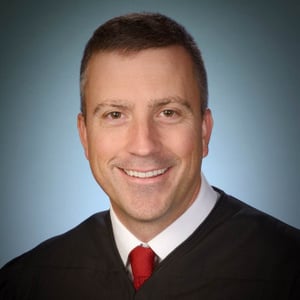
Judge, United States District Court, District of Columbia
Judge Trevor N. McFadden was appointed to the United States District Court for the District of Columbia in 2017. He received his B.A. in 2001 from Wheaton College, IL, magna cum laude. In 2006, he received his J.D. from the University of Virginia School of Law, where he graduated Order of the Coif and was an editor for the Virginia Law Review.
Following graduation from law school, Judge McFadden clerked for Judge Steven Colloton, U.S. Court of Appeals for the Eighth Circuit. He then joined the U.S. Department of Justice, where he served as Counsel to the Deputy Attorney General and as Assistant U.S. Attorney in the District of Columbia. Judge McFadden subsequently became a partner at Baker & McKenzie LLP in Washington, DC, where he focused on white collar investigations. He is also co-author of a treatise, Corporate Settlement Tools: DPAs, NPAs, and Cooperation Agreements.
After four years in private practice, Judge McFadden returned to the U.S. Department of Justice, where he was Deputy Assistant Attorney General and acted as the second-in-command of the Department's Criminal Division. As Deputy Assistant Attorney General, he managed the Division's Fraud and Appellate Sections.
Judge McFadden also has extensive experience in law enforcement. He served as an officer with the Fairfax County, VA, Police Department and as a deputy sheriff in Madison County, VA.
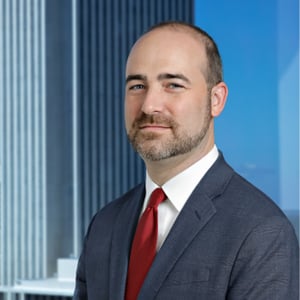
Partner, Shutts & Bowen LLP
Daniel Nordby is a partner in the Tallahassee office of Shutts & Bowen LLP, where he is a member of the Appellate Practice Group. His practice focuses on high-profile, high stakes matters of law and public policy, particularly in the areas of constitutional, appellate and administrative law.
Over the course of his career, Daniel has developed extensive experience in the area of government and administrative law. He is a Past Chair of the Florida Bar’s Administrative Law Section and has served on the Section’s Executive Council for more than a decade. Daniel has represented clients in some of Florida’s largest competitive procurements and has served as counsel of record in a variety of administrative and judicial proceedings involving the application of constitutional and administrative law principles. He has personally presented oral argument on multiple occasions before the Florida Supreme Court, Florida’s First District Court of Appeal, and the Federal Court of Appeals for the Eleventh Circuit on high-profile matters of constitutional law. A representative list of Daniel’s reported opinions in the state and federal courts is available here.
Daniel draws on his prior service in the public sector when representing businesses, individuals and governmental clients on their most challenging legal issues. As General Counsel to then-Governor Rick Scott from 2017-2019, Daniel provided oversight and strategic direction for all major litigation involving Florida’s executive branch agencies and advised Governor Scott on the appointment of more than 100 judges to Florida’s trial and appellate courts. Daniel’s career also includes service as General Counsel to the Florida House of Representatives, General Counsel to Florida’s Secretary of State, Assistant General Counsel to the Florida Department of Education, and Staff Attorney to the Florida Legislature’s Joint Administrative Procedures Committee.
Daniel continues his public service as a gubernatorial appointee to the Florida Supreme Court Judicial Nominating Commission. After serving on the Commission from 2012-2018 as a direct appointee of Governor Scott, Daniel was appointed by Governor DeSantis in July 2019 to a third term. He currently serves as Chair of the Florida Supreme Court Judicial Nominating Commission.
Daniel is also involved with several non-profit and community groups. He is a graduate of Leadership Florida (Connect VI), a member of Florida Blue Key, a member of the American Enterprise Institute’s Leaders Network, and a member of the James Madison Institute’s Inaugural Class of Leaders Fellows. Daniel is on the Steering Committee of the Tallahassee Lawyers Chapter of the Federalist Society for Law and Public Policy Studies and is a Past President of both its Tallahassee Lawyers Chapter and University of Florida Student Chapter. Daniel is an Eagle Scout and attends St. Peter’s Anglican Cathedral in Tallahassee.
Daniel is a “triple-Gator” with three degrees from the University of Florida: a J.D. (with high honors), a B.S. in Microbiology and Cell Science, and a B.A. in Classical Studies. He has been recognized as a Florida Super Lawyers “Rising Star” and has been named to the roster of Florida Legal Elite by Florida Trend magazine in the categories of “Government & Administrative Law,” “Best Government & Non-Profit Attorneys,” and ”Best Up & Coming Attorneys.”

Judge, United States Court of Appeals, Fifth Circuit
Andrew Oldham is a Circuit Judge on the United States Court of Appeals for the Fifth Circuit. Before ascending to the bench, Judge Oldham served as General Counsel to Texas Governor Greg Abbott, where he advised the Governor on a range of issues under federal and state law and managed litigation in which the Governor was an interested party. Before that he served as Deputy Solicitor General for the State of Texas, where he represented Texas in federal courts across the country, including twice before the United States Supreme Court. Before moving to Texas, Judge Oldham was an attorney at Kellogg Hansen Todd Figel & Frederick in Washington, D.C. His practice focused on appellate litigation in federal courts of appeals throughout the country. Before entering private practice, Judge Oldham served as a law clerk to Justice Samuel A. Alito, Jr., at the Supreme Court of the United States and to Judge David B. Sentelle of the U.S. Court of Appeals for the District of Columbia Circuit. He also worked as an attorney-adviser in the Office of Legal Counsel at the U.S. Department of Justice from 2006 to 2008. Judge Oldham earned a B.A. from the University of Virginia with highest honors, a Truman Scholarship for graduate school, an M. Phil., first class (with distinction), from Cambridge University, and a J.D., magna cum laude, from Harvard Law School.
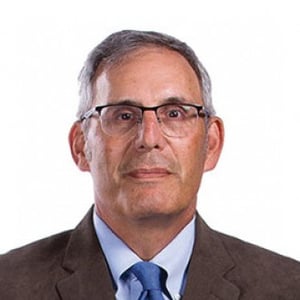
Harry Elwood Warren Scholar and Professor of Law, Boston University Law School
Jack Beermann’s scholarship focuses on two areas: civil rights litigation and administrative law. He is an authority on the circumstances under which state and local officials, and local governments, should be held liable for their constitutional violations. “What particularly fascinates me is studying the values underlying our public law system and how social movements and history have affected those values,” he says.
Professor Beermann has authored or co-authored four books on administrative law, including a widely-used casebook and the Emanuel Law Outline on the subject. He has also written extensively on the degree to which federal courts should defer to the legal determinations of federal agencies, on the problem of midnight rulemaking, in which outgoing administrations promulgate dozens of regulations at the end of their administrations and on the legal aspects of the funding crisis facing public employee pension funds in the United States.
His articles have appeared in prominent American journals such as the Stanford Law Review, UCLA Law Review, Duke Law Journal, and Boston University Law Review, and in foreign law journals including Germany’s Rechtstheorie and China’s Administrative Law Review. Recent articles include “The Public Pension Crisis” in the Washington & Lee Law Review, “Congressional Administration” in the San Diego Law Review and the “Constitutional Law of Presidential Transition” in the North Carolina Law Review. In 1998, he co-authored an article that examined civil rights violations in the popular television drama NYPD Blue and in 1993 he wrote “The Supreme Court’s Narrow View on Civil Rights” for the prestigious Supreme Court Review.
Before joining the Boston University faculty in 1984, Professor Beermann clerked for Judge Richard Cudahy of the United States Court of Appeals for the Seventh Circuit. In 2017, he was appointed as a public member of the Administrative Conference of the United States. In 2008, 2011 and 2014 he was visiting professor at Harvard Law School and in 1997, he was distinguished visiting professor at DePaul Law School. In 2004, 2005 and 2007, he taught at the Interdisciplinary Center in Herzliya, Israel, and in 2002, he taught at the China University of Political Science and Law in Beijing. He has lectured in Israel, Germany, Australia, Morocco, Portugal and Canada. At BU Law, Professor Beermann teaches administrative law, civil rights litigation, and constitutional law. In recent years, he has also taught introduction to American law (for foreign LLM students) and local government law.

Partner and Co-Chair, Constitutional and Appellate Law Practice Group, Gibson, Dunn & Crutcher LLP
Allyson N. Ho is a partner in the Dallas office of Gibson, Dunn & Crutcher LLP and co‐chair of the Firm’s nationwide Appellate and Constitutional Law practice group.
Mrs. Ho is “undoubtedly one of the premier appellate lawyers in the United States” (Chambers). She has presented over 100 oral arguments in federal and state courts nationwide, including multiple high‐stakes cases on behalf of business before the U.S. Supreme Court.
Her most significant winning arguments include a U.S. Supreme Court reversal worth billions of dollars for unionized employers in the Sixth Circuit; a U.S. Supreme Court reversal limiting the power of federal regulators; a multi‐billion dollar environmental win in the Fifth Circuit; a multi‐billion dollar commercial victory for the founder of a technology company in the Appellate Division of the New York Supreme Court; a billion dollar environmental win in the Houston Court of Appeals; a nine‐figure commercial victory in the Corpus Christi Court of Appeals; and a nine‐figure arbitration win in the Fifth Circuit.
Among her numerous accolades, Mrs. Ho is one of only a small group of appellate lawyers nationwide, and the only one in Texas, to be nationally ranked by Chambers every year for the past ten years (2012‐21). She is also one of the few appellate lawyers nationwide to be named to the BTI Client Service All‐Stars List, an honor bestowed by the corporate counsel community for lawyers “who stand above all the others in delivering the absolute best in client service.” She is also routinely named as a leading appellate lawyer by Benchmark, The Best Lawyers in America®, The Legal 500, Texas Super Lawyers, and D Magazine.
Mrs. Ho has received the Gregory S. Coleman Outstanding Appellate Lawyer Award (Texas Bar Foundation, June 22, 2018), been named a “Distinguished Leader” (Texas Lawyer, Sep. 1, 2017) and “Appellate MVP” (Law360, Nov. 23, 2015), and been recognized on the “Appellate Hot List” (National Law Journal, Nov. 16, 2015). In addition, she has been profiled in “Texas Powerhouse” (Law360, Aug. 2, 2021), “Texas Appellate Power Couple” (Texas Lawbook, January 7, 2021), “Litigators of the Week” (The American Lawyer, May 8, 2020), “Litigation Powerhouse” (Law360, Aug. 10, 2016), “Supreme Court Insider” (National Law Journal, July 21, 2016), “Supreme Court Specialists, Mostly Male, Dominated Arguments This Term” (National Law Journal, May 11, 2016), “Attorney of the Year Finalist” (Texas Lawyer, Nov. 2, 2015), “Litigation Department of the Year” (Texas Lawyer, June 1, 2015), “Employment Group of the Year” (Law360, Jan. 13, 2015), “A Supreme Month: Lawyer Credits Preparedness in Ability to Argue Two U.S. High Court Cases in Three Weeks” (Texas Lawyer, Dec. 8, 2014), “High Court Debuts for Two Lawyers” (National Law Journal, Nov. 3, 2014), “Women in Business Awards” (Dallas Business Journal, Aug 29, 2014), “Litigation Departments of the Year” (Texas Lawyer, June 2, 2014), “Winning Women” (Texas Lawyer, Aug. 22, 2011), and “High court practitioners: increasingly diverse” (National Law Journal, June 6, 2011).
Federal and State Appellate Practice
Mrs. Ho has argued a series of high stakes, landmark cases on behalf of the business community before the U.S. Supreme Court. National Law Journal called her a “Veteran SCOTUS Advocate” in the “upper echelons of Supreme Court practice.” Law360 named her a “Supreme Court Star” and “one of the nation’s preeminent appellate lawyers.” And EmpiricalSCOTUS.com ranked her among “the most successful attorneys that currently practice before the Court.” Mrs. Ho once argued two significant business cases before the Court within the span of 21 days—including a “significant ruling for employers” that “paved a new path for companies paying millions of dollars in retiree health care benefits” (Law360), as well as a landmark administrative law dispute in which “several justices agreed with Ho’s contention that SCOTUS should revisit and overrule its own precedent” (Law360). She also prevailed against the EEOC in a case that the employment defense bar called “good news for employers across the country.” And in “the most important patent case in modern history” according to patent law experts, her argument before the Court was credited for “pick[ing] up two votes that pundits thought unreachable.”
She has appeared before every federal court of appeals in the country, including en banc arguments before the Fourth and Sixth Circuits. She has successfully represented business clients in every circuit, including the First (Pruco Life Insurance Company), Second (Swiss Federation; Rite Aid), Third (Johnson & Johnson), Fourth (Genex Services), Fifth (United Space Alliance LLC; Elliott Co.; MERSCORP; 24 Hour Fitness USA, Inc.; Stream Energy; Health Management Systems), Sixth (Deutsche Bank; American Airlines; M&G Polymers), Seventh (Expedia), Eighth (Cotter), Ninth (Boeing; JP Morgan Chase Bank), Tenth (Mitchell International), Eleventh (AstraZeneca), D.C. (FedEx), and Federal (Repros Therapeutics) Circuits.
In addition, Mrs. Ho regularly appears in state appellate courts across the country. She has argued numerous cases in the Texas Supreme Court, Texas appellate courts in Dallas, Houston, San Antonio, Corpus Christi, and Eastland, and state appellate courts in Arizona, Michigan, New York, Ohio, Oklahoma, and West Virginia, prevailing on behalf of Ford Motor Company, PepsiCo, International Paper, Tenet, GameStop, Deutsche Bank, and Unit.
Government and Public Service Experience
Mrs. Ho has a distinguished record of experience at the highest levels of the federal government. She served as Special Assistant to President George W. Bush, Counselor to Attorney General John Ashcroft, and law clerk to Justice Sandra Day O’Connor of the U.S. Supreme Court and Judge Jacques L. Wiener Jr. of the U.S. Court of Appeals for the Fifth Circuit.
Her record of public service also includes appointments to various boards and commissions. Among the most notable are her election as a member of the Administrative Conference of the United States, a trustee of the United States Supreme Court Historical Society, and a trustee of the Texas Supreme Court Historical Society. She is also vice chair of the Federal Judicial Evaluation Committee, appointed by U.S. Senators John Cornyn and Ted Cruz to evaluate potential appointments of all federal judges and U.S. Attorneys in Texas, and has previously served on the U.S. Magistrate Judge Merit Selection Panel for the Northern District of Texas.
Other Background Information
An active pro bono litigator, Mrs. Ho works most frequently with the First Liberty Institute and as amicus counsel for the State and Local Legal Center, the National Organization for Victim Assistance, and the National Crime Victim Law Institute. She is a frequent public speaker and active member of the Federalist Society, the American Law Institute, and the Washington Legal Foundation’s Legal Policy Advisory Board.
Mrs. Ho graduated from Duke University magna cum laude with a B.A. in English, Rice University with an M.A. and Ph.D. in English Literature, and the University of Chicago Law School with high honors. She was a member of the Law Review and Order of the Coif. She and her husband Jim, a federal judge, have a twin daughter and son.
Judge, United States Court of Appeals, District of Columbia Circuit
Judge Katsas was appointed to the D.C. Circuit in December 2017. He graduated from Princeton University and Harvard Law School, where he was an executive editor on the Harvard Law Review. Between 1989 and 1992, he served as a law clerk to Judge Edward Becker on the Third Circuit, to then-Judge Clarence Thomas on the D.C. Circuit, and to Justice Thomas on the Supreme Court. Between 1992 and 2001, he was an associate and then partner in the Washington office of Jones Day, where he specialized in appellate and complex civil litigation. Between 2001 and 2009, he served in many senior positions in the Department of Justice, including as Assistant Attorney General for the Civil Division and as Acting Associate Attorney General. In 2009, he returned to Jones Day. From January to December 2017, he served as Deputy Assistant to the President and Deputy Counsel to the President.
Before joining the bench, Judge Katsas argued more than 75 appeals, including three cases in the Supreme Court, 13 cases in the D.C. Circuit, and cases in every other federal court of appeals. By appointment of the Chief Justice, he served on the Advisory Committee on Appellate Rules from 2013 to 2017. In 2016, he was elected to membership in the American Academy of Appellate Lawyers.

Deputy Secretary of Agriculture, U.S. Department of Agriculture
Judge Stephen Alexander Vaden was appointed as the Deputy Secretary of the U.S. Department of Agriculture on July 7, 2025. Alongside Secretary Brooke L. Rollins, Deputy Secretary Vaden leads the Department’s operations and implements policies that support America’s food and farm systems. A native of Union City, Tennessee, Deputy Secretary Vaden brings expertise in agricultural policy, law, and rural development. Previously, he served as a judge on the U.S. Court of International Trade and as General Counsel of USDA. Throughout Deputy Secretary Vaden’s time as General Counsel, he led successful Supreme Court litigation, advanced regulatory reform, and supported the implementation of the 2018 Farm Bill. He is a graduate of Yale Law School and Vanderbilt University. A public servant with strong agricultural roots, Deputy Secretary Vaden is committed to revitalizing rural America and ensuring an abundant, affordable, and safe U.S. food supply.

Professor of Law, University of Michigan Law School
Christopher J. Walker is a Professor of Law at the University of Michigan. Prior to joining Michigan law faculty in 2022, he spent a decade teaching at The Ohio State University Moritz College of Law. He previously clerked for Justice Anthony Kennedy of the U.S. Supreme Court, worked on the Civil Appellate Staff at the U.S. Department of Justice, and served on the Senate Judiciary Committee staff for the Gorsuch Supreme Court confirmation. Professor Walker’s research focuses on administrative law, regulation, and law and policy at the agency level. Outside the law school, he chaired the American Bar Association’s Section of Administrative Law and Regulatory Practice in 2020-21 and served as one of forty Public Members of the Administrative Conference of the United States from 2016-2022, and he continues to serve in both organizations in various capacities. He also works of counsel at the U.S. Chamber Litigation Center. In 2022, he received the Federalist Society’s Joseph Story Award.
Senior Vice President, Strand Consult
Roslyn Layton, PhD is a leading international expert on technology policy. She is Senior Vice President of Strand Consult, an independent consultancy serving the global mobile telecom industry. She is also a Visiting Researcher at Aalborg University Copenhagen where she earned a doctoral thesis on network neutrality by measuring the outcome of the policy across 53 countries over 5 years. She served on the Presidential Transition Team for the Federal Communications Commission (FCC), and her work was critical to the FCC’s defense for the Restoring Internet Freedom Order. She has testified to the United States Senate and House on multiple topics including spectrum, broadband, mobile mergers, competition, and privacy. She founded the think tank China Tech Threat to study the problems of technology produced by the People’s Republic of China. She serves as the Program Chair for the Telecom Policy Research Conference, the leading interdisciplinary academic gathering. Her recent paper on rural broadband describes the empirical case for policy reform to recover network infrastructure costs from streaming video entertainment providers. She is a Senior Contributor to Forbes.
Technology Policy Manager, R Street Institute
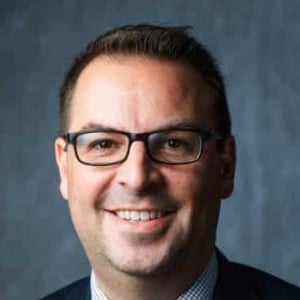
Associate Professor of Politics, Hillsdale College
Higher education is one of the few remaining environments where human beings can be at leisure to read, think, and study. Hillsdale College is one of the few remaining places in higher education where students are actively encouraged and required to engage in those activities. This opportunity to be at leisure to think about the most fundamental and pressing questions of modern life is precious and transformative.
As a first-year undergraduate at a liberal arts college, my own life was changed over several evenings of reading in the library about the history of the French Revolution. It was in that moment that I realized the importance of the perennial and perplexing questions in which we engage in the liberal arts setting. I switched my major to political science, history, and philosophy, and have never looked back.
In my graduate studies, I focused extensively on political theory, but my current thinking and research are directed to understanding the political institutions that determine how politics works in America. I am especially interested in understanding the modern administrative state, Congress, and political parties. We must grapple with the interaction of these institutions, and how they relate to the basic principles of American constitutionalism, if we want to preserve and restore constitutional government in the United States.
In my teaching, I aim to engage students in a common enterprise, where we think together and discuss fundamental questions. My goal is not to instruct, but to educate students. That requires active and thoughtful engagement rather than passively receiving information. I am blessed to be at a place like Hillsdale where the students are drawn to this model of education and thrive in such an environment.

Federalism and Broadband Spending: Finding the Right Approach
Brendan Carr, Eric Allan Koch, Roslyn Layton, Steven J. Menashi
The 2021 National Lawyers Convention took place November 11-13, 2021 at the Mayflower Hotel in...
Panel 2: What Does the CFPB's Future Hold?
Christopher L. Peterson, Nanci L. Weissgold, Todd J. Zywicki, Brian C. Johnson
On July 19, 2021, the Federalist Society's Financial Services and E-Commerce Practice Group sponsored an...
Questions of Federal Preemption
Brendan Carr, Daniel Francis, Gregory G. Katsas, Paul N. Watkins
Several states are considering how to regulate the content moderation practices of social media and...
The Staggers Act Turns Forty: Lessons Learned from Railroad Regulation
George Ford, Lawrence J. Spiwak, Timothy Strafford
October 14, 2020 marks the 40th anniversary of the enactment of the Staggers Rail Act...
Book Review: The Dubious Morality of Modern Administrative Law by Richard Epstein
Richard A. Epstein, Adam White
Richard Epstein’s The Dubious Morality of Modern Administrative Law examines how the growth of the...
Workshop on Problems of Insider Trading and Merger Regulations [Archive Collection]
John R. Bolton, Pasco M. Bowman, Joseph A. Grundfest, Saul Levmore, Henry G. Manne, Wm. Bradford Reynolds
On January 30-31, 1987, the Federalist Society hosted its annual National Lawyers Convention at the...
Session I: Revisiting the Antifederalists
John S. Baker, Michelle Kundmueller, Trevor N. McFadden, Daniel E. Nordby, Andrew Oldham
On January 31-February 1, 2020, The Federalist Society's Florida lawyers chapters hosted their annual Florida...
Rulemaking by Adjudication: Who Am I to Judge?
Jack Beermann, Allyson Newton Ho, Gregory G. Katsas, Stephen Alexander Vaden, Christopher J. Walker
When Congress delegates to a federal agency the responsibility for implementing, administering, and enforcing a...
Net Neutrality Without the FCC?: Why the FTC Can Regulate Broadband Effectively
Roslyn Layton, Tom W. Struble
Note from the Editor: This article argues that the FTC has jurisdiction over broadband and the...
Bureaucracy in America
Joseph Postell
Administrative agencies, and extensive regulation of the economy, have always existed in America. But from...