

Legal Director & General Counsel, Criminal Justice Legal Foundation
Kent S. Scheidegger has been the Legal Director of the Criminal Justice Legal Foundation since December 1986. He also served as Chairman of the Criminal Law Practice Group of the Federalist Society 2003 to 2005. His articles on criminal and constitutional law have been published in law reviews, national legal publications, and congressional reports. Legal arguments authored by Mr. Scheidegger have been cited and incorporated in several precedent-setting United States Supreme Court decisions.
After receiving a degree in physics with honors from New Mexico State University in 1976, Mr. Scheidegger served for six years in the United States Air Force as a Nuclear Research Officer. He took his law degree with distinction from the University of the Pacific, McGeorge School of Law in 1982 and practiced civil law in Northern California. He was general counsel of California Cooler, Inc. from 1984 until 1986, when he joined the Foundation.

Senior Scholar, Manhattan Institute; Professor of Law Emerita, University of San Diego
Gail Heriot is a Senior Scholar at the Manhattan Institute, a Professor of Law Emerita at the University of San Diego and the Chairman of the Board of the American Civil Rights Project. She served on the U.S. Commission on Civil Rights for 18 years. Her new book is entitled “Why We Walk on Eggshells: How Our Civil Rights Laws Stifle Our Public Discourse.”
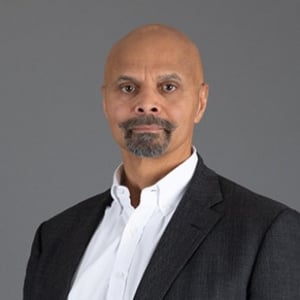
Partner, Benesch, Friedlander, Coplan & Aronoff LLP
Peter focuses his legal practice on representing management in employment-related litigation and in contract negotiations, NLRB proceedings, EEO matters and arbitration.
Peter Kirsanow is a partner with Benesch’s Labor & Employment Practice Group. He returned to Benesch in January 2008 after serving as a presidential appointee to the National Labor Relations Board (NLRB) in Washington D.C. for two years. While serving on the NLRB, he was involved with significant decisions including Oakwood Healthcare, Inc., Dana/Metaldyne and Oil Capital Sheet Metal, Inc. In addition, Peter testified before the Senate Judiciary Committee on the nominations of John Roberts, Samuel Alito, Sonia Sotomayor, Elena Kagan and Neil Gorsuch to the Supreme Court. He also continues to testify before and advise members of the U.S. Congress on employment law matters, most recently on November 18 before the House Subcommittee on Investigations and Oversight regarding disparate impact theory.
Peter was recently reappointed by the Majority Leader of the House of Representatives to his fourth consecutive six-year term on the U.S. Commission on Civil Rights. This is a part-time position which will expire in December 2025.
Recently, Peter and a team of Benesch attorneys served as lead counsel to the National Association of Manufacturers in litigation before the U.S. Circuit Court for the District of Columbia against the NLRB, challenging the Board’s Notice of Employer Rights Posting Rule. The court ruled in favor of Benesch’s client, striking down the NLRB’s Rule in its entirety. This ruling impacts over 6,000,000 employers nationwide which would have been subject to the posting requirement.
Additionally, Peter is past chair of the board of directors of the Center for New Black Leadership and is a member of Benesch’s Diversity & Inclusion Committee. This committee helps ensure that the firm promotes an environment in which differences are respected, employees are treated fairly, and individual skills and talents are valued.

Supreme Court Correspondent, The New York Times
Adam Liptak covers the Supreme Court for The New York Times. Liptak’s column on legal affairs, “Sidebar,” appears every other Tuesday.
A graduate of Yale College and Yale Law School, Liptak practiced law at a large New York City law firm and in the legal department of The New York Times Company before joining the paper’s news staff in 2002.
Liptak was a finalist for the Pulitzer Prize in explanatory reporting in 2009 for “American Exception,” a series of articles examining ways in which the American legal system differs from those of other developed nations. He received the 2010 Scripps Howard Award for Washington reporting for a five-part series on the Roberts Court.
He is the author of “To Have and Uphold: The Supreme Court and the Battle for Same-Sex Marriage.”
His journalism has appeared in The New Yorker, Vanity Fair, Business Week and Rolling Stone, and he has published articles in The Arizona Law Review, The Michigan Law Review and The New York University Annual Survey of American Law.
Liptak has taught courses at Yale, Columbia, the University of Chicago, Washington University in St. Louis, the University of Southern California and U.C.L.A. He is a member of the American Academy of Arts and Sciences.
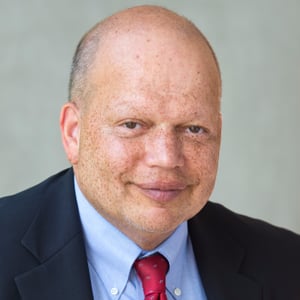
Julius L. Chambers Distinguished Professor of Law and Director of the Center for Civil Rights, University of North Carolina School of Law
Theodore M. Shaw is the Julius L. Chambers Distinguished Professor of Law and Director of the Center for Civil Rights at the University of North Carolina School of Law at Chapel Hill. Professor Shaw teaches Civil Procedure and Advanced Constitutional Law/Fourteenth Amendment. Before joining the faculty of UNC Law School, from 2008-2014 Professor Shaw taught at Columbia University Law School, where he was Professor of Professional Practice. During that time he was also “Of Counsel” to the law firm of Norton Rose Fulbright (formerly Fulbright & Jaworski, LLP). His practice involved civil litigation and representation of institutional clients on matters concerning diversity and civil rights.
Professor Shaw was the fifth Director-Counsel and President of the NAACP Legal Defense and Educational Fund, Inc., for which he worked in various capacities over the span of twenty-six years. He has litigated education, employment, voting rights, housing, police misconduct, capital punishment and other civil rights cases in trial and appellate courts, and in the United States Supreme Court.From 1982 until 1987, he litigated education, housing, and capital punishment cases and directed LDF's education litigation docket. In 1987, under the direction of LDF's third Director-Counsel, Julius Chambers, Mr. Shaw relocated to Los Angeles to establish LDF's Western Regional Office. In 1990, Mr. Shaw left LDF to join the faculty of the University of Michigan Law School, where he taught Constitutional Law, Civil Procedure and Civil Rights. While at Michigan, he played a key role in initiating a review of the law school's admissions practices and policies, and served on the faculty committee that promulgated the admissions program that was upheld by the U.S. Supreme Court in 2003 in Grutter v. Bollinger.
In 1993, Mr. Shaw returned to LDF as Associate Director-Counsel, and in 2004, he became LDF's fifth Director-Counsel. Mr. Shaw's legal career began as a Trial Attorney in the Honors Program of the United States Department of Justice, Civil Rights Division in Washington, D.C., where he worked from 1979 until 1982.
Mr. Shaw has testified on numerous occasions before Congress and before state and local legislatures. His human rights work has taken him to Africa, Asia, Europe, and South America. In addition to teaching at Columbia and at Michigan Law School, Professor Shaw held the 1997-1998 Haywood Burns Chair at CUNY School of Law at Queens College and the 2003 Phyllis Beck Chair at Temple Law School. He was a visiting scholar at the Constitution Center in Philadelphia in 2008-2009. He is a member of the faculty of the Practicing Law Institute (PLI).
Mr. Shaw served on the Obama Transition Team after the 2008 presidential election, as team leader for the Civil Rights Division of the Justice Department.

Thomas M. Siebel Senior Fellow, The Hoover Institution, Stanford University; Gary T. Schwartz Distinguished Professor of Law Emeritus, UCLA School of Law
Eugene Volokh is the Thomas M. Siebel Senior Fellow at the Hoover Institution (Stanford), as well as the Gary T. Schwartz Distinguished Professor of Law Emeritus and Distinguished Research Professor at UCLA School of Law. He recently retired from teaching at UCLA, after 30 years there, and is now focusing on research.
Volokh is the author of the textbooks The First Amendment and Related Statutes (8th ed. 2023), and Academic Legal Writing (5th ed. 2016), as well as over 100 academic law journal articles, mostly on First Amendment law. He is a member of The American Law Institute; the editor-in-chief of the Journal of Free Speech Law; and the creator and coauthor of The Volokh Conspiracy, a leading legal blog founded in 2002 (hosted at the Washington Post from 2014 to 2017 and now at Reason Magazine).

Hall v. Florida - Post-Decision SCOTUScast
Kent Scheidegger
On May 27, 2014, the Supreme Court issued its decision in Hall v. Florida. The...
Disparate Impact Analysis
Gail L. Heriot, Peter Kirsanow, Adam Liptak, Theodore M. Shaw
Under disparate impact analysis, certain practices might be considered discriminatory if they have a disproportionate...
When Good Laws Go Bad: College Sports and Title IX
Joe Bock, Christina Hoff Sommers
On September 30, 2010, the Rutgers-Newark Student Chapter of the Federalist Society hosted this event...
Is Criticizing Affirmative Action Illegal in Chicago?
Eugene Volokh
Is it illegal to criticize affirmative action in public places in Chicago? The Chicago City...