

Director of Policy Studies & Senior Fellow, The Free State Foundation
Seth L. Cooper is Director of Policy Studies & Senior Fellow at The Free State Foundation. His work on federal communications and technology policy at the Free State Foundation began in 2009.
With Randolph May, Mr. Cooper is the co-author of Modernizing Copyright Law for the Digital Age: Constitutional Foundations for Reform (2020) and Constitutional Foundations of Intellectual Property: A Natural Rights Perspective (2015), both published by Carolina Academic Press. Along with Mr. May, Mr. Cooper also co-authored A Reader on Net Neutrality and Restoring Internet Freedom (2018) and #CommActUpdate: A Communications Law Fit for the Digital Age (2017), both published by Free State Foundation Press. He previously contributed to two chapters in Communications Law and Policy in the Digital Age (2012), published by Carolina Academic Press. Mr. Cooper's work has also appeared in such publications as CommLaw Conspectus, the San Jose Mercury News, Forbes.com, the Des Moines Register, the Baltimore Sun, the Washington Examiner, and the Washington Times.
Mr. Cooper previously served as Director to the Telecommunications and Information Technology Task Force at the American Legislative Exchange Council (ALEC). Mr. Cooper served as judicial clerk to the Honorable James Johnson at the Washington State Supreme Court. His co-writings about the Washington Supreme Court have appeared in the Gonzaga Law Review and in Federalist Society publications. He has worked in law and policy staff positions at the Washington State Senate and at the Discovery Institute's Center for Science & Culture. Mr. Cooper is a 2009 Lincoln Fellow at the Claremont Institute. He also has worked in private practice in the State of Washington, handling civil legal matters involving personal injuries, small business, contracts, and wills, trusts, and estates.
Mr. Cooper earned his B.A. degree in Political Science from Pacific Lutheran University and received his J.D. from Seattle University School of Law.

President, The Free State Foundation
Randolph J. May is Founder and President of The Free State Foundation. The Free State Foundation is an independent, non-profit free market-oriented think tank founded in 2006.
From October 1999-May 2006, May was a Senior Fellow and Director of Communications Policy Studies at The Progress & Freedom Foundation, a Washington, DC-based think tank. Prior to joining PFF, he practiced communications, administrative, and regulatory law as a partner at major national law firms. From 1978 to 1981, May served as Assistant General Counsel and Associate General Counsel at the Federal Communication Commission.
May has held numerous leadership positions in bar associations. He is a past Chair of the American Bar Association’s Section of Administrative Law and Regulatory Practice. He is a Fellow of the National Academy of Public Administration. Mr. May also has served as a Public Member of the Administrative Conference of the United States and currently is a Senior Fellow at ACUS.
Mr. May has published more than two hundred articles and essays on communications, administrative and constitutional law topics. He is author of A Call for a Radical New Communications Policy: Proposals for Free Market Reform, and co-author of #CommActUpdate: A Communications Law Fit for the Digital Age and The Constitutional Foundations of Intellectual Property. Mr. May is editor of two books, Communications Law and Policy in the Digital Age: The Next Five Years and New Directions in Communications Policy. In addition, he is the co-editor of two other books, Net Neutrality or Net Neutering: Should Broadband Internet Services Be Regulated? and Communications Deregulation and FCC Reform. In the past, Mr. May has written regular columns on legal and regulatory affairs for Legal Times and the National Law Journal, leading national legal periodicals.
He received his A.B. from Duke University and his J.D. from Duke Law School, where he serves as a member of the Board of Visitors.

Professor of Law, Southern Illinois University School of Law
Professor Mark F. Schultz joined the faculty in 2003. He teaches and writes primarily in the area of intellectual property.
Professor Schultz is a frequent author and speaker known for his work on the law and economics of the global intellectual property system. In one of his most influential projects, he worked with the Organization for Economic Cooperation and Development (OECD) to construct a groundbreaking global trade secret protection index (the TSPI). The TSPI is influencing policy discussions on this cutting-edge topic in capitals around the world. Other recent projects have included an empirical study that quantified for the first time the backlogs in patent offices worldwide, a report on how patented innovation is meeting global health challenges, and the construction of a new global index of copyright strength.
Professor Schultz is an influential voice in public policy debates regarding intellectual property. He has testified before the U.S. Congress on copyright law at the invitation of the House Judiciary Committee and has briefed the staff of the U.S. Senate Judiciary Committee on trade secret legislation. He speaks frequently around the world about the connection between secure and effective intellectual property rights and flourishing national economies and individual lives, with invitations from the U.S. Patent and Trademark Office, the U.S. Trade Representative, and the U.S. Copyright Office, as well as numerous academic institutions, think tanks, and industry groups. He served as an NGO delegate to the World Intellectual Property Organization (WIPO) for several years during the WIPO Development Agenda talks. He is also one of the organizers of an ongoing multilateral diplomatic dialogue on best practices in national trade secret laws, and is co-founder of the Center for Protection of Intellectual Property (CPIP) at George Mason University in Washington, D.C.
Among the awards and recognition he has received for his scholarship was the School of Law's Outstanding Scholar of the Year award in 2008. He has been a distinguished visiting scholar at the University of Botswana and a visiting professor at DePaul University College of Law.
Professor Schultz graduated with honors from the George Washington University School of Law. Following law school, he was a judicial clerk for the Hon. Daniel M. Friedman of the United States Court of Appeals for the Federal Circuit in Washington, D.C., and the Hon. Eric G. Bruggink of the United States Court of Federal Claims. Prior to joining academia, he practiced law for a decade, serving as outside general counsel to several tech startups and helping technology companies to expand their businesses and commercialize their intellectual property in dozens of countries. He holds a B.A. in International Economics from George Washington University and has done PhD level coursework in development economics at Southern Illinois University.
He is active in leadership roles in local and national organizations. He has served as chair of the Federalist Society's Intellectual Property Practice Group and the AALS Section on Internet and Computer Law. He is an officer of the American Bar Association's International IP Committee of the International Law Section and the American Intellectual Property Law Association’s Trade Secret Law Committee. He currently is chair of the Academic Advisory Board of the Copyright Alliance.
Professor Schultz teaches Copyright Law, Trade Secret Law, Trademark Law, and a senior seminar on Intellectual Property and Global Development. He established and directs both the Specialization in Intellectual Property Law and the IP Semester in Practice Externship Program. He also co-founded a Legal Globalization Class, offered every other year, that takes students to South Africa and Botswana after spending a semester learning about the legal system, culture, history, and politics of southern Africa. The popular course is a once-in-a-lifetime experience that introduces students to leading lawyers, judges, government officials, and human rights advocates, taking them from Cape Town to Johannesburg to Gaborone as well as many popular destinations including game reserves, national parks, the Cape of Good Hope, and the Cradle of Humankind.
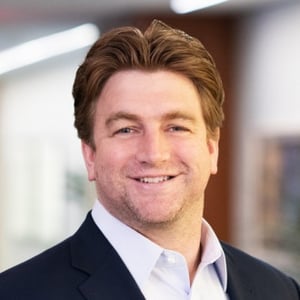
Founding Partner, Lodestar Law and Economics PLLC
Josh is the founder of Lodestar Law and Economics, PLLC. On January 1, 2013, the U.S. Senate unanimously confirmed Wright as a Commissioner of the Federal Trade Commission (FTC). He is a leading scholar in antitrust law, economics, intellectual property, regulation, and consumer protection, and has published more than 100 articles and book chapters, co-authored a leading antitrust casebook, and edited several book volumes focusing on these issues. Commentators have recognized Wright as “widely considered his generation’s greatest mind on antitrust law,” and his academic work ranks him as one of the most cited antitrust academics in the world. Wright was also awarded the Paul M. Bator Award by the Federalist Society in 2014 to “an academic who demonstrated excellence in legal scholarship, a commitment to teaching, a concern for students, and who has made a significant public impact.” Wright also served as the Executive Director of the Global Antitrust Institute, the world’s premiere academic institute focused upon antitrust education for judges and regulators and has taught hundreds of judges and thousands of regulators from dozens of countries.
Wright’s practice focuses upon helping clients solve complex competition, consumer protection, and regulatory problems by providing legal and economic analysis, strategic advice and counseling, and economic expert testimony.
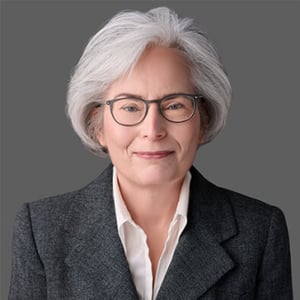
Partner, Rule Garza Howley LLP

Professor of Law, University of Baltimore School of Law (on leave); Senior Counsel, U.S. Department of Justice
Professor Dolin’s scholarship centers on patent law with a specific focus on how the patent regime affects innovation, especially in bio-pharmaceutical areas. His work in these areas includes a number of scholarly articles, presentations, amicus briefs, and congressional testimony.
Dr. Dolin is currently on leave from his academic duties while he serves as Senior Counsel in the Civil Rights Division of the United States Department of Justice.
From January 2020 to January 2022, Professor Dolin served as a resident Associate Justice of the Supreme Court of the Republic of Palau. In this role, he (together with other members of the Court) heard appeals in civil, criminal, administrative, and constitutional law matters.
Prior to joining the University of Baltimore School of Law, Professor Dolin held visiting appointments in other law schools. He also served as a law clerk to the Hon. Pauline Newman, of the U.S. Court of Appeals for the Federal Circuit and the late Hon. H. Emory Widener Jr., of the U.S. Court of Appeals for the Fourth Circuit.
Rumors that he has a real Russian bear in his office are entirely true.

Partner, Crowell & Moring LLP, Crowell & Moring LLP
Trevor K. Copeland is a partner in the law firm of Crowell & Moring LLP (formerly Brinks Gilson & Lione PC).
His patent prosecution experience includes work on medical devices, sunglasses, footwear, sprinklers and irrigation equipment, decorative statuary and water gardens, biotechnology and general mechanical arts. He works closely with clients having products in these areas to develop intellectual property acquisition and management strategies, as well as to protect new ideas and products while respecting the rights of others.
Mr. Copeland's further practice includes design protection, whereby clients are able to protect the unique and valuable ornamental designs of their products using patent, copyright, and/or trademark. He has also litigated utility patents on clients' behalf, and has worked on preliminary injunction lawsuits for both design and utility patents, including winning a preliminary injunction against a foreign company preparing to launch an infringing laser-level device with a suction base.
Mr. Copeland has former experience as a high school biology and chemistry teacher, and as a visiting scientist with a Fungal Biochemistry and Molecular Genetics Laboratory Group.

Associate, Brinks, Gilson, & Lione PC
Daniel A. Parrish is an inventor and engineer with four pending patents on neuro-stimulation treatments for obstructive sleep apnea, and multiple academic publications on the topic. He has worked in both legal and scientific roles at three med-tech startups, each a spinoff from the same medical device incubator, gaining additional experience with cataract and glaucoma treatments. In 2014, Mr. Parrish graduated with honors from the William Mitchell College of Law in St. Paul, Minnesota, where he held an editor position in Cybaris®, an intellectual property law review. He authored an article on a new USPTO post-grant procedure, published in the same journal. While in law school, he worked as a law clerk and completed an independent externship with two Minneapolis IP law firms. He holds a Bachelor of Science from the University of Minnesota, double majoring in Biomedical Engineering and Human Physiology.
J.D., cum laude, William Mitchell College of Law, 2014
B.S., Biomedical Engineering and Physiology, University of Minnesota, 2008
Professor of Law, University of Baltimore School of Law (on leave); Senior Counsel, U.S. Department of Justice
Professor Dolin’s scholarship centers on patent law with a specific focus on how the patent regime affects innovation, especially in bio-pharmaceutical areas. His work in these areas includes a number of scholarly articles, presentations, amicus briefs, and congressional testimony.
Dr. Dolin is currently on leave from his academic duties while he serves as Senior Counsel in the Civil Rights Division of the United States Department of Justice.
From January 2020 to January 2022, Professor Dolin served as a resident Associate Justice of the Supreme Court of the Republic of Palau. In this role, he (together with other members of the Court) heard appeals in civil, criminal, administrative, and constitutional law matters.
Prior to joining the University of Baltimore School of Law, Professor Dolin held visiting appointments in other law schools. He also served as a law clerk to the Hon. Pauline Newman, of the U.S. Court of Appeals for the Federal Circuit and the late Hon. H. Emory Widener Jr., of the U.S. Court of Appeals for the Fourth Circuit.
Rumors that he has a real Russian bear in his office are entirely true.
Vice President of Intellectual Property, Chief Patent Counsel, Celgene Corporation
Mr. Peter Cicala is the Chief Patent Counsel and Vice President of Intellectual Property at Celgene Corporation. His legal practice focuses on all aspects of pharmaceutical and biotechnology intellectual property law. He has extensive experience in patent litigation, prosecution, product lifecycle management, R&D collaborations and joint ventures in the pharma/biotech industry. Mr. Cicala has particular expertise with Hatch-Waxman Paragraph IV litigation as well as substantial experience with patent and regulatory litigation in Europe. Mr. Cicala has regularly participated in due diligence investigations, patent, trademark and copyright licensing, as well as M&A transactions and patent litigation settlements. Additionally, Mr. Cicala has over 10 years of experience as a medicinal chemist and has worked in drug development programs for several major pharmaceutical companies and universities.
Professor of Law, University of Baltimore School of Law (on leave); Senior Counsel, U.S. Department of Justice
Professor Dolin’s scholarship centers on patent law with a specific focus on how the patent regime affects innovation, especially in bio-pharmaceutical areas. His work in these areas includes a number of scholarly articles, presentations, amicus briefs, and congressional testimony.
Dr. Dolin is currently on leave from his academic duties while he serves as Senior Counsel in the Civil Rights Division of the United States Department of Justice.
From January 2020 to January 2022, Professor Dolin served as a resident Associate Justice of the Supreme Court of the Republic of Palau. In this role, he (together with other members of the Court) heard appeals in civil, criminal, administrative, and constitutional law matters.
Prior to joining the University of Baltimore School of Law, Professor Dolin held visiting appointments in other law schools. He also served as a law clerk to the Hon. Pauline Newman, of the U.S. Court of Appeals for the Federal Circuit and the late Hon. H. Emory Widener Jr., of the U.S. Court of Appeals for the Fourth Circuit.
Rumors that he has a real Russian bear in his office are entirely true.

Director, Sterne Kessler Goldstein & Fox PLLC
Robert Greene Sterne is a founding director of Sterne Kessler Goldstein & Fox. At the age of 26, and just one year out of law school, he set out to create a different kind of law firm—one that recognized the contributions of all its members and put a strong emphasis on scientific and technical knowledge. Now, nearly four decades later, Sterne has helped to nurture and grow this revolutionary idea into one of the top five largest intellectual property specialty firms in the country. And in so doing, he has established his place as one of the leading patent lawyers in the United States. In fact, Rob has been recognized by the Financial Times as one of the "Top Ten Most Innovative Lawyers in North America 2015," by Law360 as one of the "Top 25 Icons of IP," and among the country's "IP Trailblazers & Pioneers 2014" by the National Law Journal. He is highly respected by his peers and has received some of the most prestigious awards and rankings for professional excellence in intellectual property law.
Professor of Law, Southern Illinois University School of Law
Professor Mark F. Schultz joined the faculty in 2003. He teaches and writes primarily in the area of intellectual property.
Professor Schultz is a frequent author and speaker known for his work on the law and economics of the global intellectual property system. In one of his most influential projects, he worked with the Organization for Economic Cooperation and Development (OECD) to construct a groundbreaking global trade secret protection index (the TSPI). The TSPI is influencing policy discussions on this cutting-edge topic in capitals around the world. Other recent projects have included an empirical study that quantified for the first time the backlogs in patent offices worldwide, a report on how patented innovation is meeting global health challenges, and the construction of a new global index of copyright strength.
Professor Schultz is an influential voice in public policy debates regarding intellectual property. He has testified before the U.S. Congress on copyright law at the invitation of the House Judiciary Committee and has briefed the staff of the U.S. Senate Judiciary Committee on trade secret legislation. He speaks frequently around the world about the connection between secure and effective intellectual property rights and flourishing national economies and individual lives, with invitations from the U.S. Patent and Trademark Office, the U.S. Trade Representative, and the U.S. Copyright Office, as well as numerous academic institutions, think tanks, and industry groups. He served as an NGO delegate to the World Intellectual Property Organization (WIPO) for several years during the WIPO Development Agenda talks. He is also one of the organizers of an ongoing multilateral diplomatic dialogue on best practices in national trade secret laws, and is co-founder of the Center for Protection of Intellectual Property (CPIP) at George Mason University in Washington, D.C.
Among the awards and recognition he has received for his scholarship was the School of Law's Outstanding Scholar of the Year award in 2008. He has been a distinguished visiting scholar at the University of Botswana and a visiting professor at DePaul University College of Law.
Professor Schultz graduated with honors from the George Washington University School of Law. Following law school, he was a judicial clerk for the Hon. Daniel M. Friedman of the United States Court of Appeals for the Federal Circuit in Washington, D.C., and the Hon. Eric G. Bruggink of the United States Court of Federal Claims. Prior to joining academia, he practiced law for a decade, serving as outside general counsel to several tech startups and helping technology companies to expand their businesses and commercialize their intellectual property in dozens of countries. He holds a B.A. in International Economics from George Washington University and has done PhD level coursework in development economics at Southern Illinois University.
He is active in leadership roles in local and national organizations. He has served as chair of the Federalist Society's Intellectual Property Practice Group and the AALS Section on Internet and Computer Law. He is an officer of the American Bar Association's International IP Committee of the International Law Section and the American Intellectual Property Law Association’s Trade Secret Law Committee. He currently is chair of the Academic Advisory Board of the Copyright Alliance.
Professor Schultz teaches Copyright Law, Trade Secret Law, Trademark Law, and a senior seminar on Intellectual Property and Global Development. He established and directs both the Specialization in Intellectual Property Law and the IP Semester in Practice Externship Program. He also co-founded a Legal Globalization Class, offered every other year, that takes students to South Africa and Botswana after spending a semester learning about the legal system, culture, history, and politics of southern Africa. The popular course is a once-in-a-lifetime experience that introduces students to leading lawyers, judges, government officials, and human rights advocates, taking them from Cape Town to Johannesburg to Gaborone as well as many popular destinations including game reserves, national parks, the Cape of Good Hope, and the Cradle of Humankind.

H. Ross & Helen Workman Research Scholar, Director, Program in I, University of Illinois College of Law
Professor Jay P. Kesan's academic interests are in the areas of technology, law, and business. Specifically, his work focuses on patent law, intellectual property, entrepreneurship, cyberlaw, digital government (e-gov), agricultural biotechnology law, and biofuels regulation. His recent publications can be found on SSRN (Social Science Research Network).
At the University of Illinois, Professor Kesan is appointed in the College of Law, the Institute of Genomic Biology, the Department of Electrical & Computer Engineering, the Information Trust Institute, the Coordinated Science Laboratory, the College of Business, and the Department of Agricultural & Consumer Economics.
He directs the Program in Intellectual Property & Technology Law at the College of Law. At the Institute of Genomic Biology (IGB), he is group leader of the Business, Economics & Law of Genomic Biology (BioBEL) theme, and he directs research on biofuel law & regulation at the Energy Biosciences Institute (EBI).
Most recently, he served as a Thomas A. Edison Scholar at the U.S. Patent and Trademark Office (USPTO).
His recent awards include: Honorable Mention ($1,000 Award), Competition on Cyberdeterrence conducted by the National Research Council for work on “Thinking Through Active Defense in Cyberspace,” 2011; Microsoft Research Awards in 2011 and 2012 for work on technology standards and patent policy; Best Paper Award for Contributions to Foundations of Electronic Governance at the 4th International Conference on Theory and Practice of Electronic Governance (ICEGOV), Beijing, China, Oct. 25-28, 2010; Best Paper Award for "An Empirical Examination of Open Standards Development" (with R. Shah), 41st Hawaii International Conference on System Sciences (HICSS), 2008; Best Paper Award for "An Empirical Study of Open Standards" (with R. Shah) published in the Proceedings of the 8th Annual International Conference on Digital Government Research, 2007; and IBM Faculty Award in 2006.
His books include: Adopting Open Source Software, A Practical Guide (with Fitzgerald, Russo, Shaikh and Succi), MIT Press (2011); The Commercial Law of Intellectual Property (with Alces, Frisch and See), Aspen Publishing Co. (2003-2014 Cumm. Supp.) (treatise); Intellectual Property in Business Organizations (with Ghosh and Gruner), Lexis-Nexis Publishing Co. (2d ed. 2012) (unique and first-of-its-kind casebook on transactional IP); Defining Values for Research & Technology(Greenough, McConnaughay and Kesan (eds.)), Rowman & Littlefield Publishing (Fall 2006); Intellectual Property: Private Rights, the Public Interest, and the Regulation of Creative Activity (with Ghosh, Gruner & Reis), West Publishing Co. (2d ed. 2010) (casebook); Agricultural Biotechnology and Intellectual Property: Seeds of Change, Kesan (ed.), CABI Publishing Co., Oxford (2007).
He has received numerous, multi-year research grants/awards for his work in the areas of intellectual property and technology regulation from the National Science Foundation, The National Academy of Sciences—Board of Science, Technology and Economic Policy (STEP), the private sector, the U.S. Department of Agriculture, the Energy Biosciences Institute, the Federal Judicial Center, the Net Institute, the Coleman Foundation, and the University of Illinois Campus Research Board.
Professor Kesan continues to be professionally active in the areas of patent litigation and technology entrepreneurship. He was appointed by federal judges to serve as a special master in patent litigations, and has served as a technical and legal expert and/or counsel in patent matters. He also serves on the boards of directors/advisors of start-up technology companies.
He participated twice in panels at the Federal Trade Commission and the Department of Justice Hearings on the Implications of Competition and Patent Law and Policy. He testified about biofuel regulation issues before the U.S. House of Representatives Subcommittee on Energy and Environment, House Committee on Science, Space, and Technology. He has also worked with the U.S. Department of Commerce and the U.S. Civilian Research & Development Foundation on their intellectual property protection and technology commercialization activities in the former Soviet Union countries.
He is regular radio commentator for “Legal Issues in the News,” WILL-AM-FM Illinois Public Radio.
Professor Kesan was a JSPS Invited Fellow and visiting associate professor at the University of Tokyo, Japan and has also served as a Foreign Research Fellow at the Institute of Intellectual Property (IIP) in Tokyo, Japan. He has also taught as a visiting faculty at Georgetown University, DePaul University, Florida State University, and Seattle University.
He serves as faculty editor-in-chief of the University of Illinois Journal of Law, Technology & Policy, which published its inaugural issue in Spring 2001. He has also developed an online course on "Legal Issues in Technology Entrepreneurship," supported by a grant from the Coleman Foundation.
Professor Kesan received his J.D. summa cum laude from Georgetown University, where he received several awards including Order of the Coif and served as associate editor of the Georgetown Law Journal. After graduation, he clerked for Judge Patrick E. Higginbotham of the United States Court of Appeals for the Fifth Circuit.
Prior to attending law school, Jay Kesan – who also holds a Ph.D. in electrical and computer engineering – worked as a research scientist at the IBM T.J. Watson Research Center in New York. He is a registered patent attorney and practiced at the former firm of Pennie & Edmonds LLP in the areas of patent litigation and patent prosecution. In addition, he has published numerous scientific papers, and he has obtained several patents in the U.S. and abroad.

Chief Economist, Abundance Institute
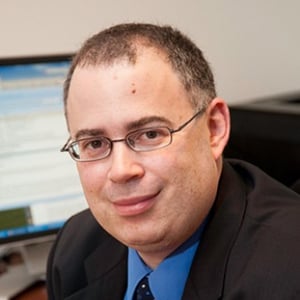
Vice Dean and Professor of Law, Villanova University School of Law
Professor Michael Risch joined the Villanova faculty in 2010 from the West Virginia University College of Law, where he directed the Entrepreneurship, Innovation and Law Program. Prior to joining the West Virginia faculty, he served as an Olin Fellow in Law at Stanford Law School. Professor Risch’s teaching and scholarship focus on intellectual property and internet law, with an emphasis on patents, trade secrets and information access. His articles have been published in the Stanford Law Review and Duke Law Journal, among others; online in the Yale Law Journal Online and PENNumbra; and less formally at the Madisonian, Prawfsblawg, and Patently-O blogs. Two of his articles have been cited by the United States Supreme Court. Professor Risch received his A.B. with honors and distinction in Public Policy and with distinction in Quantitative Economics from Stanford University, and his J.D. with high honors from the University of Chicago Law School. Prior to entering academia, he was a partner at intellectual property boutique Russo & Hale LLP in Palo Alto, California.
Vice President of Intellectual Property, Chief Patent Counsel, Celgene Corporation
Mr. Peter Cicala is the Chief Patent Counsel and Vice President of Intellectual Property at Celgene Corporation. His legal practice focuses on all aspects of pharmaceutical and biotechnology intellectual property law. He has extensive experience in patent litigation, prosecution, product lifecycle management, R&D collaborations and joint ventures in the pharma/biotech industry. Mr. Cicala has particular expertise with Hatch-Waxman Paragraph IV litigation as well as substantial experience with patent and regulatory litigation in Europe. Mr. Cicala has regularly participated in due diligence investigations, patent, trademark and copyright licensing, as well as M&A transactions and patent litigation settlements. Additionally, Mr. Cicala has over 10 years of experience as a medicinal chemist and has worked in drug development programs for several major pharmaceutical companies and universities.
Professor of Law, University of Baltimore School of Law (on leave); Senior Counsel, U.S. Department of Justice
Professor Dolin’s scholarship centers on patent law with a specific focus on how the patent regime affects innovation, especially in bio-pharmaceutical areas. His work in these areas includes a number of scholarly articles, presentations, amicus briefs, and congressional testimony.
Dr. Dolin is currently on leave from his academic duties while he serves as Senior Counsel in the Civil Rights Division of the United States Department of Justice.
From January 2020 to January 2022, Professor Dolin served as a resident Associate Justice of the Supreme Court of the Republic of Palau. In this role, he (together with other members of the Court) heard appeals in civil, criminal, administrative, and constitutional law matters.
Prior to joining the University of Baltimore School of Law, Professor Dolin held visiting appointments in other law schools. He also served as a law clerk to the Hon. Pauline Newman, of the U.S. Court of Appeals for the Federal Circuit and the late Hon. H. Emory Widener Jr., of the U.S. Court of Appeals for the Fourth Circuit.
Rumors that he has a real Russian bear in his office are entirely true.
Professor of Law, Southern Illinois University School of Law
Professor Mark F. Schultz joined the faculty in 2003. He teaches and writes primarily in the area of intellectual property.
Professor Schultz is a frequent author and speaker known for his work on the law and economics of the global intellectual property system. In one of his most influential projects, he worked with the Organization for Economic Cooperation and Development (OECD) to construct a groundbreaking global trade secret protection index (the TSPI). The TSPI is influencing policy discussions on this cutting-edge topic in capitals around the world. Other recent projects have included an empirical study that quantified for the first time the backlogs in patent offices worldwide, a report on how patented innovation is meeting global health challenges, and the construction of a new global index of copyright strength.
Professor Schultz is an influential voice in public policy debates regarding intellectual property. He has testified before the U.S. Congress on copyright law at the invitation of the House Judiciary Committee and has briefed the staff of the U.S. Senate Judiciary Committee on trade secret legislation. He speaks frequently around the world about the connection between secure and effective intellectual property rights and flourishing national economies and individual lives, with invitations from the U.S. Patent and Trademark Office, the U.S. Trade Representative, and the U.S. Copyright Office, as well as numerous academic institutions, think tanks, and industry groups. He served as an NGO delegate to the World Intellectual Property Organization (WIPO) for several years during the WIPO Development Agenda talks. He is also one of the organizers of an ongoing multilateral diplomatic dialogue on best practices in national trade secret laws, and is co-founder of the Center for Protection of Intellectual Property (CPIP) at George Mason University in Washington, D.C.
Among the awards and recognition he has received for his scholarship was the School of Law's Outstanding Scholar of the Year award in 2008. He has been a distinguished visiting scholar at the University of Botswana and a visiting professor at DePaul University College of Law.
Professor Schultz graduated with honors from the George Washington University School of Law. Following law school, he was a judicial clerk for the Hon. Daniel M. Friedman of the United States Court of Appeals for the Federal Circuit in Washington, D.C., and the Hon. Eric G. Bruggink of the United States Court of Federal Claims. Prior to joining academia, he practiced law for a decade, serving as outside general counsel to several tech startups and helping technology companies to expand their businesses and commercialize their intellectual property in dozens of countries. He holds a B.A. in International Economics from George Washington University and has done PhD level coursework in development economics at Southern Illinois University.
He is active in leadership roles in local and national organizations. He has served as chair of the Federalist Society's Intellectual Property Practice Group and the AALS Section on Internet and Computer Law. He is an officer of the American Bar Association's International IP Committee of the International Law Section and the American Intellectual Property Law Association’s Trade Secret Law Committee. He currently is chair of the Academic Advisory Board of the Copyright Alliance.
Professor Schultz teaches Copyright Law, Trade Secret Law, Trademark Law, and a senior seminar on Intellectual Property and Global Development. He established and directs both the Specialization in Intellectual Property Law and the IP Semester in Practice Externship Program. He also co-founded a Legal Globalization Class, offered every other year, that takes students to South Africa and Botswana after spending a semester learning about the legal system, culture, history, and politics of southern Africa. The popular course is a once-in-a-lifetime experience that introduces students to leading lawyers, judges, government officials, and human rights advocates, taking them from Cape Town to Johannesburg to Gaborone as well as many popular destinations including game reserves, national parks, the Cape of Good Hope, and the Cradle of Humankind.
Director, Sterne Kessler Goldstein & Fox PLLC
Robert Greene Sterne is a founding director of Sterne Kessler Goldstein & Fox. At the age of 26, and just one year out of law school, he set out to create a different kind of law firm—one that recognized the contributions of all its members and put a strong emphasis on scientific and technical knowledge. Now, nearly four decades later, Sterne has helped to nurture and grow this revolutionary idea into one of the top five largest intellectual property specialty firms in the country. And in so doing, he has established his place as one of the leading patent lawyers in the United States. In fact, Rob has been recognized by the Financial Times as one of the "Top Ten Most Innovative Lawyers in North America 2015," by Law360 as one of the "Top 25 Icons of IP," and among the country's "IP Trailblazers & Pioneers 2014" by the National Law Journal. He is highly respected by his peers and has received some of the most prestigious awards and rankings for professional excellence in intellectual property law.

2015 NLC Live Blog
The 2015 National Lawyers Convention is in full swing! (We were trending on Twitter.) This year...
The Constitutional Foundations of Intellectual Property -- A Natural Rights Perspective - Podcast
Seth L. Cooper, Randolph May, Mark F. Schultz
Protection of intellectual property (IP) rights is indispensable to maintaining a vibrant economy, especially in...
An Afternoon with Former FTC Commissioner Josh Wright - Podcast
Joshua D. Wright, Deborah A. Garza
Former Federal Trade Commissioner Josh Wright reflected on his recently-concluded tenure at the Commission on a...
The Costs of Patent Reform: Early Data and Abuses in the Uneven Playing Field of Post-Issuance Review
Gregory Dolin
Note from the Editor: This article is a critical examination of patent reform. As always,...
International Design Patent Filing Considerations After U.S. Entry into the Hague Agreement
Trevor K. Copeland, Daniel A. Parrish
Effective May 13, 2015, applicants can file international design patent applications in a single, standardized...
An Opportunity Missed?: Kimble v. Marvel Enterprises - Podcast
Gregory Dolin
In Kimble v. Marvel Enterprises, citing stare decisis, the Court held that a patent holder...
Administrative "Death Squads" for Patents? Assessing the New Administrative Procedures for Challenging Patents - Podcast
Peter Cicala, Gregory Dolin, Robert Greene Sterne, Mark F. Schultz
Property rights in patented inventions are being struck down at an unprecedented rate in a...
Administrative "Death Squads" for Patents? Assessing the New Administrative Procedures for Challenging Patents
Intellectual Property Practice Group and George Mason University School of Law's Center for the Protection of Intellectual Property
TeleforumDoes Patent Litigation Need a Federal Solution? - Podcast
Jay Kesan, Eli Dourado
The America Invents Act, the first substantial legislative changes to patent law, took effect two...
Hana Financial v. Hana Bank - Post-Decision SCOTUScast
Michael Risch
On January 21, 2014, the Supreme Court issued its decision in Hana Financial, Inc. v....