
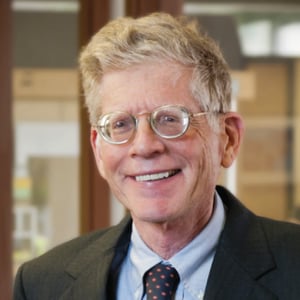
Professor of Law, University of Pittsburgh School of Law
Arthur D. Hellman, a professor of law (emeritus) at the University of Pittsburgh, is a nationally recognized scholar of the federal courts who has also written in the area of the First Amendment. His publications include numerous articles and several books, including casebooks in both areas, Federal Courts: Cases and Materials on Judicial Federalism and the Lawyering Process (5th edition 2022) (with David R. Stras, Ryan W. Scott, F. Andrew Hessick, and Derek T. Muller); and First Amendment Law: Freedom of Speech and Freedom of Religion (5th edition 2022) (with William D. Araiza, Thomas E. Baker, and Ashutosh A. Bhagwat).
In addition to his casebooks and academic writing, Processor Hellman has worked with the Judiciary Committees in the House and Senate in drafting federal courts legislation, including the most recent (2002) revision of the Judicial Conduct and Disability Act (Title 28, Chapter 16). The legislative histories of two major jurisdictional statutes – the Federal Courts Jurisdiction and Venue Clarification Act of 2011 and the “Holmes Group Fix” (enacted as part of the America Invents Act) – acknowledge his contributions.
Professor Hellman has testified as an invited witness at numerous hearings of both Judiciary Committees. His testimony has focused on a wide variety of legislative issues related to the federal courts, including the jurisdiction of the Supreme Court; proposals to divide the Ninth Circuit Court of Appeals; federal judicial discipline; unpublished appellate opinions; and the constitutionality of legislative restrictions on the powers of the federal courts.
In 2005 Professor Hellman was appointed as the inaugural holder of the Sally Ann Semenko Endowed Chair at the University. In 2002 he received the Chancellor’s Distinguished Research Award “as a faculty member who has an outstanding and continuing record of research and scholarly activity.”

Professor of Law, University of Baltimore School of Law (on leave); Senior Counsel, U.S. Department of Justice
Professor Dolin’s scholarship centers on patent law with a specific focus on how the patent regime affects innovation, especially in bio-pharmaceutical areas. His work in these areas includes a number of scholarly articles, presentations, amicus briefs, and congressional testimony.
Dr. Dolin is currently on leave from his academic duties while he serves as Senior Counsel in the Civil Rights Division of the United States Department of Justice.
From January 2020 to January 2022, Professor Dolin served as a resident Associate Justice of the Supreme Court of the Republic of Palau. In this role, he (together with other members of the Court) heard appeals in civil, criminal, administrative, and constitutional law matters.
Prior to joining the University of Baltimore School of Law, Professor Dolin held visiting appointments in other law schools. He also served as a law clerk to the Hon. Pauline Newman, of the U.S. Court of Appeals for the Federal Circuit and the late Hon. H. Emory Widener Jr., of the U.S. Court of Appeals for the Fourth Circuit.
Rumors that he has a real Russian bear in his office are entirely true.
Associate Professor, University of Akron School of Law
Professor Camilla A. Hrdy is Associate Professor of Law and Director of Faculty Research & Development at The University of Akron School of Law.
Her primary teaching areas are Intellectual Property Law, Trade Secret Law, Trademark Law, Patent Law, State and Local Government Law, and Civil Procedure (Due Process and Federalism).
Professor Hrdy’s research has focused on the role of federal, state, and local governments in promoting innovation and economic development; the history of United States patent law; the law and policy of trade secrets and unfair competition; and the relationship between intellectual property law, innovation, and human well-being.
Her articles have appeared or will soon appear in various law journals, including Stanford Law Review, Boston College Law Review, Florida Law Review, Colorado Law Review, Wisconsin Law Review, Lewis & Clark Law Review, and Berkeley Law & Technology Journal. She is a three-time recipient of the Thomas G. Byers Outstanding Faculty Scholarly Publication.
She is also a regular blogger on the IP scholarship blog, Written Description, where she writes on IP scholarship related to trade secrets, trademarks, patents, IP theory, the history of intellectual property in America, and numerous other topics.
Professor Hrdy holds a J.D. from Berkeley Law, a B.A. from Harvard University, and an M.Phil. in from the University of Cambridge, Department of History & Philosophy of Science. She received Harvard’s Hoopes prize, and a Redhead Prize from the University of Cambridge Department of History & Philosophy of Science.
Before coming to Akron Law, she was a resident fellow at the Yale Law School Information Society Project and a teaching fellow at the University of Pennsylvania Law School Center for Innovation, Technology & Competition.
She clerked for U.S. District Judge Janis Graham Jack in the Southern District of Texas.
Student Fellow, Information Society Project, Yale Law School
Ben Picozzi is a J.D. candidate in the class of 2016 at Yale Law School. His interests include patent law and innovation policy. He is an Articles Editor for the Yale Journal of International Law.
Prior to law school, Ben worked at the International Intellectual Property Institute, a nonprofit organization promoting creative uses of intellectual property in developing countries. He received a B.A. in Philosophy from Stanford in 2010.

Associate Professor, Boston College Law School
David Olson is an associate professor and the Faculty Director of the Program on Innovation and Entrepreneurship. He teaches patent law, intellectual property law, antitrust law, and various seminars. His research and writing primarily focus on patents, copyrights, antitrust, and incentives for innovation and competition. Since joining BC Law in 2007, he has been recognized for his teaching excellence and contributions. In 2011, he received the Business & Law Society Faculty Award for Achievement in Business & Law. In 2012, he received the Professor Emil Slizewski Award for Faculty Excellence. For one semester in 2015, Olson served as a visiting professor at Pontifical Catholic University, Rio de Janeiro, Brazil, where he conducted research and taught a course on intellectual property.
Olson has published scholarly articles on patent law, copyright law, antitrust, music licensing, and first amendment copyright issues. His writing has been cited in Supreme Court and other legal opinions. He has testified before the U.S. Congress on matters of drug patents, FDA regulation, and antitrust.
The media frequently seeks Olson’s insights and opinions. He has been quoted in the Wall Street Journal, Associated Press, and Reuters, among others. He has appeared as a guest panelist on WBUR’s Radio Boston, WAMU's Kojo Namdi Show, and Public Radio Canada. His op-eds have appeared in the Chicago Tribune, Washington Times, and The Hill.
Olson came to Boston College from Stanford Law School's Center for Internet and Society, where he conducted research on patent law and litigated copyright fair use impact cases. Before entering academia, Olson practiced law as a patent litigator. He clerked for Judge Jerry Smith of the U.S. Court of Appeals for the Fifth Circuit.
Partner, Sullivan & Cromwell LLP
Garrard Beeney is co-head of the Firm’s Intellectual Property and Technology Group and a member of the Firm’s Managing Partners Committee. Mr. Beeney has been inducted as a Fellow of the American College of Trial Lawyers. He is counsel in the two major patent cases to be argued before the U.S. Supreme Court in 2016.
Mr. Beeney has litigated intellectual property and licensing cases throughout the country in both federal and state courts. Mr. Beeney also represents clients before U.S. and European competition law authorities, particularly in the area of the intersection between intellectual property and competition laws. In addition to trying patent and antitrust cases, Mr. Beeney has argued appellate cases in various courts, including in the U.S. Supreme Court, the Federal Circuit and the Second Circuit Courts of Appeal, and the Supreme Court of Arkansas. He represents both plaintiffs and defendants in infringement actions, and advises plaintiffs on patent selection in pre-suit due diligence. Mr. Beeney also frequently advises on licensing issues and IP monetization, and has represented patent holders in the formation of licensing pools, including those related to the AVC, MPEG-2, MPEG-4, DVD, LTE, ATSC, VC-9, IEEE 1394 and other technologies.
In addition to the “Litigator of the Week” award noted below, Mr. Beeney has been recognized as one of the “Top 10 Oral Advocates of the Year” in the Federal Circuit Court of Appeals, as an “Innovative U.S. Lawyer” by the Financial Times and in IAM Patent 1000 – The World’s Leading Patent Practitioners (2014, 2015), which commented that Mr. Beeney is “one of the best in the business.” IAM added that peers comment, “When there is something you can’t do, you send it to him.” The 2014 edition of IAM added that Mr. Beeney is “one of the best trial lawyers on the planet”, and he “sounds the part, looks the part, is always prepared and persuasive, with especially brilliant opening and closing presentations.” He is a recipient of the Burton Award for legal scholarship, and has received the Adele Warnock and other awards for his community service.
Mr. Beeney also is regularly recognized as a leading lawyer in the intellectual property and antitrust fields, among others, by leading industry publications, including The Best Lawyers in America, The Legal 500 United States and New York Super Lawyers.
Mr. Beeney has been a speaker at various professional associations, including the American Intellectual Property Law Association, the American Bar Association, the Licensing Executives Society and Law Seminars International. He has written and contributed chapters to several books, including Business and Commercial Litigation in Federal Courts, Commercial Litigation in New York State Courts and On the Merits: Current Issues in Competition Law and Policy. Mr. Beeney has taught various trial advocacy courses, including serving as a member of the faculty at the National Trial Skills Program of the National Institute for Trial Advocacy. He is also a member of Law360’s 2013 Intellectual Property Editorial Advisory Board.
Mr. Beeney’s public service activities include having served for more than a decade as the deputy mayor of Irvington, New York. He is chairman of the board of Mercado Global, a not-for-profit working to improve the lives of impoverished artisans in Central America, and he regularly represents clients in pro bono litigation, including in a recent successful First Amendment trial and in a matter involving child adoption in Arkansas, the latter of which he successfully argued before the Supreme Court of Arkansas in March 2011.
Partner, Jenner & Block
Matthew S. Hellman is a litigator. He has been lead counsel in dozens of appellate matters, and has presented arguments in the U.S. Supreme Court, the U.S. Courts of Appeals, and in state appellate courts. In addition, he routinely presents arguments in the trial courts. Mr. Hellman’s cases involve a variety of issues such as commercial law, intellectual property and administrative law. He has argued important cases for corporations like Marriott, GE and General Dynamics.
In 2010, Law360 recognized Mr. Hellman as a “Rising Legal Star” in the practice of Appellate Law. In 2007, Jenner & Block recognized Mr. Hellman with the Albert E. Jenner, Jr. Pro Bono Award, which annually recognizes attorneys in the Firm with a strong commitment to pro bono or public service work. He has argued or supervised more than a dozen pro bono cases in the courts of appeals, including two capital cases.
Mr. Hellman is member of the firm’s Appellate and Supreme Court Practice. He is also a member of the Edward Coke Appellate Inn of Court, and an Associate Trustee for the Washington Lawyer’s Committee for Civil Rights and Urban Affairs. He serves as the Co-Chair of the DC Hiring and the Hiring Executive Committees and is also a member of the Associate Development and Evaluation Committee and the Finance Committee.

Co-Director, Center for Intellectual Property & Entrepreneurship, University of Missouri School of Law
Professor Crouch is Associate Professor of Law at the University of Missouri School of Law. Prior to joining the MU Law Faculty, he was a patent attorney at McDonnell Boehnen Hulbert & Berghoff LLP in Chicago, Illinois, and taught at Boston University Law School. He has worked on cases involving various technologies including computer memory and hardware, circuit design, software, networking, mobile and internet telephony, automotive technologies, lens design, bearings, HVAC systems, and business methods. He is also the editor of the popular patent law weblog: Patently-O .
Professor Crouch received his BSE in mechanical engineering cum laude from Princeton University, where he also earned a certificate in engineering management systems. He then earned his JD cum laude from the University of Chicago Law School. While at the University of Chicago, he was a Microsoft, Merck, & Pfizer scholar and a member of the Olin program in law and economics.
Prior to attending law school, Professor Crouch worked as a technical consultant for manufacturing firms in New England, as a research fellow at NASA’s Glenn Research Center, as a software developer at the Mayo Clinic’s department of biomedical imaging, and as a Peace Corps Volunteer in Ghana, West Africa. Dennis Crouch grew up on a farm near Pittsburg, Kansas.
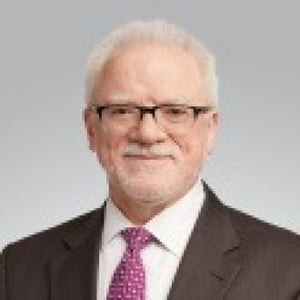
Partner, Williams & John LTD
David L. Applegate is a partner of Williams & John Ltd., where he chairs the firm's intellectual property practice group and is a member of the commercial litigation practice group. He focuses his practice on patent, trademark, copyright, trade secret, unfair competition, and business litigation and arbitration, and on U. S. Supreme Court and related amicus brief practice.
Mr. Applegate is a Fellow of Litigation Counsel of America, the Intellectual Property Institute, and the Diversity Law Institute; a Senior Master Member of the Richard Linn American Inn of Court; a Past President of the Chicago Lincoln American Inn of Court; and a Legal Policy Advisor to The Heartland Institute. He is "AV Preeminent" peer review rated by Martindale-Hubbell, reflecting the highest peer recognition for both ethical standards and legal ability, and has been named by his peers for inclusion in Illinois Leading Lawyers and IllinoisSuper Lawyers in both commercial and intellectual property litigation for decades.
Throughout his career, Mr. Applegate has represented corporations and individuals as both plaintiffs and defendants in state and federal litigation at the trial and appellate levels. He has tried multiple cases to verdict in both jury and bench trials nationwide and has argued appeals in the Illinois appellate courts and the U.S. Court of Appeals for the Seventh and Federal Circuits; his amicus brief was cited twice in the U. S. Supreme Court’s 5-4 majority opinion in the Janus case. Mr. Applegate also has extensive commercial arbitration and private mediation experience in both national and international dispute resolution forums, and is a former member of the Chicago International Dispute Resolution Association. In 2001, the U. S. District Court for the Northern District of Illinois and the Chicago Chapter of the Federal Bar Association recognized him for his outstanding individual commitment to pro bono service to indigent clients throughout the Northern District of Illinois.
In addition to his legal practice, Mr. Applegate has written and spoken frequently on matters of law and public policy, including on both local and national television and radio. He is an avid collector and amateur historian of original comic strip and editorial cartoon art, and has written extensively in that field as well for over three decades.
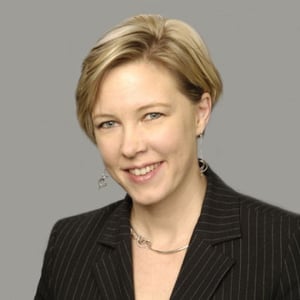
Clinical Professor and Senior Scholar and Senior Fellow for Copyright Research and Policy of C-IP2, Antonin Scalia Law School, George Mason University
Sandra Aistars is Senior Fellow for Copyright Research and Policy and a Senior Scholar at the Center for Intellectual Property x Innovation Policy (C-IP2). She also leads the law school’s Arts & Entertainment Advocacy Program. Professor Aistars has over twenty years of advocacy experience on behalf of copyright and other intellectual property owners. She has served on trade missions and been an industry advisor to the Department of Commerce on intellectual property implications for international trade negotiations; worked on legislative and regulatory matters worldwide; frequently testified before Congress and federal agencies regarding intellectual property matters; chaired cross-industry coalitions and technology standards efforts; and is regularly tapped by government agencies to lecture in U.S. government-sponsored study tours for visiting legislators, judges, prosecutors, and regulators.
Immediately prior to joining Scalia Law, Professor Aistars was the Chief Executive Officer of the Copyright Alliance – a nonprofit, public interest organization that represents the interests of artists and creators across the creative spectrum. While at Scalia Law, she continues to collaborate with the Copyright Alliance as a member of its Academic Advisory Board. Professor Aistars currently serves on the boards of the Washington Area Lawyers for the Arts (WALA) and the Howard Intellectual Property Program (HIPP), and she has previously served as trustee of the Copyright Society of the USA (CSUSA). Professor Aistars has also previously served as Vice President and Associate General Counsel at Time Warner Inc. She began her legal career in private practice at Weil, Gotshal and Manges LLP.

Samuel H. McCoy II Professor of Law, University of Virginia School of Law
John F. Duffy is the Samuel H. McCoy II Professor of Law and Class of 1966 Research Professor of Law at the University of Virginia School of Law, where he teaches administrative law, torts and intellectual property. Professor Duffy has published articles on a wide range of administrative law and regulatory issues in journals such as University of Chicago Law Review, Yale Law Journal, Stanford Law Review, Virginia Law Review, Columbia Law Review, Texas Law Review, Northwestern University Law Review, NYU Law Review, University of Pennsylvania Law Review and the Supreme Court Review. His 1998 article Administrative Common Law in Judicial Review, 77 Tex. L. Rev. 113 (1998), was one of the first articles to criticize the Chevron doctrine as being irreconcilable with § 706 of the APA; it won the American Bar Association’s Scholarship Award in Administrative Law. His 2008 article “Are Administrative Patent Judges Unconstitutional?” was covered on National Public Radio), in the New York Times (Adam Liptak, In One Flaw, Questions on Validity of 46 Judges, May 6, 2008), and in the Wall Street Journal (Dan Slater, Patently Unconstitutional, May 6, 2008). The NYT and WSJ agreed that he was “a different kind of law professor,” “one of the lucky few” whose “writings actually wind up changing the law.”
As an attorney in the courts, Duffy has twice successfully convinced the Supreme Court to overturn lower court doctrines that had been applied in many cases over decades but that were unanimously held to be irreconcilable with Supreme Court precedents. See TC Heartland v. Kraft Foods Group Brands, 581 U.S. 258 (2017); KSR v. Teleflex, 550 U.S. 398 (2007).
Prior to entering legal academics, Duffy clerked on the D.C. Circuit for Stephen Williams and on the Supreme Court for Antonin Scalia. While clerking, he became known as Justice Scalia’s “hapless law clerk,” who had been tasked with unearthing three-quarters of a century of legislative history that made “no difference” to the outcome in an otherwise forgettable case. See Conroy v. Aniskoff, 507 U.S. 511, 527-28 (1993) (Scalia, J., concurring in the judgment).
In earlier days, Duffy enjoyed being a professional blackjack player unwelcome in all Atlantic City casinos and a semi-professional road runner (best marathon time 2:24:33). He holds an A.B. in physics from Harvard and a J.D. from the University of Chicago.

Special Counsel, Hunton Andrews Kurth
After serving on the United State Court of Appeals for the D. C. Circuit from 2005, Judge Griffith stepped down from the bench in 2020. Currently he is a Lecturer on Law at Harvard Law School, a Fellow at the Wheatley Institute at Brigham Young University, and Special Counsel in the Washington, DC office of the law firm of Hunton Andrews Kurth. Most recently, he was a member of President Biden's Commission on the Supreme Court. He is the author of Civic Charity and the Constitution , and the co-author, along with former judges Michael Luttig and Michael McConnell, of Lost, Not Stolen: The Conservative Case that Trump Lost and Biden Won the 2020 Presidential Election. https://lostnotstolen.org/ . Before being appointed to the D. C. Circuit, Judge Griffith was the General Counsel at BYU; Senate Legal Counsel, the non-partisan chief legal officer of the U. S. Senate; and a partner at Wiley, Rein & Fielding. Long active in rule-of-law programs in former communist nations, Judge Griffith is a member of the international advisory board of the CEELI Institute in Prague. He is a graduate of BYU and the University of Virginia School of Law and is a member of the American Law Institute.
Elvin R. Latty Professor of Law, Duke University School of Law
Arti Rai, Elvin R. Latty Professor of Law and co-Director, Duke Law Center for Innovation Policy, is an internationally recognized expert in intellectual property (IP) law, administrative law, and health policy. Rai has also taught at Harvard, Yale, and the University of Pennsylvania law schools. Rai's research on IP law and policy in biotechnology, pharmaceuticals, and software has been funded by NIH, the Kauffman Foundation, and the Woodrow Wilson Center. She has published over 50 articles, essays, and book chapters on IP law, administrative law, and health policy. Her publications have appeared in both peer-reviewed journals and law reviews, including Science, the New England Journal of Medicine, the Journal of Legal Studies, Nature Biotechnology, and the Columbia, Georgetown, and Northwestern law reviews. She is the editor of Intellectual Property Law and Biotechnology: Critical Concepts (Edward Elgar, 2011) and the co-author of a 2012 Kauffman Foundation monograph on cost-effective health care innovation.
From 2009-2010, Rai served as the Administrator of the Office of External Affairs at the U.S. Patent and Trademark Office (USPTO). As External Affairs Administrator, Rai led policy analysis of the patent reform legislation that ultimately became the America Invents Act and worked to establish the USPTO’s Office of the Chief Economist. Prior to that time, she had served on President-Elect Obama’s transition team reviewing the USPTO. Prior to entering academia, Rai clerked for the Honorable Marilyn Hall Patel of the U.S. District Court for the Northern District of California; was a litigation associate at Jenner & Block (doing patent litigation as well as other litigation); and was a litigator at the Federal Programs Branch of the U.S. Department of Justice's Civil Division.
Rai regularly testifies before Congress and relevant administrative bodies on IP law and policy issues and regularly advises federal agencies on IP policy issues raised by the research that they fund. She is a member of the National Advisory Council for Human Genome Research and of an Expert Advisory Council to the Defense Advanced Projects Research Agency (DARPA). Rai is a public member of the Administrative Conference of the United States, a member of the American Law Institute, and co-chair of the IP Committee of the Administrative Law Section of the ABA. Rai is currently a member of the Institute of Medicine Committee on Strategies for Responsible Sharing of Clinical Trial Data and has served on, or as a reviewer for, numerous National Academies of Science committees. In 2011, Rai won the World Technology Network Award for Law.
Rai graduated from Harvard College, magna cum laude, with a degree in biochemistry and history (history and science), attended Harvard Medical School for the 1987-1988 academic year, and received her J.D., cum laude, from Harvard Law School in 1991. Rai's moot court team at Harvard Law School won Best Brief and Team honors at the school's prestigious Ames Moot Court Competition.
Associate Professor, Boston College Law School
David Olson is an associate professor and the Faculty Director of the Program on Innovation and Entrepreneurship. He teaches patent law, intellectual property law, antitrust law, and various seminars. His research and writing primarily focus on patents, copyrights, antitrust, and incentives for innovation and competition. Since joining BC Law in 2007, he has been recognized for his teaching excellence and contributions. In 2011, he received the Business & Law Society Faculty Award for Achievement in Business & Law. In 2012, he received the Professor Emil Slizewski Award for Faculty Excellence. For one semester in 2015, Olson served as a visiting professor at Pontifical Catholic University, Rio de Janeiro, Brazil, where he conducted research and taught a course on intellectual property.
Olson has published scholarly articles on patent law, copyright law, antitrust, music licensing, and first amendment copyright issues. His writing has been cited in Supreme Court and other legal opinions. He has testified before the U.S. Congress on matters of drug patents, FDA regulation, and antitrust.
The media frequently seeks Olson’s insights and opinions. He has been quoted in the Wall Street Journal, Associated Press, and Reuters, among others. He has appeared as a guest panelist on WBUR’s Radio Boston, WAMU's Kojo Namdi Show, and Public Radio Canada. His op-eds have appeared in the Chicago Tribune, Washington Times, and The Hill.
Olson came to Boston College from Stanford Law School's Center for Internet and Society, where he conducted research on patent law and litigated copyright fair use impact cases. Before entering academia, Olson practiced law as a patent litigator. He clerked for Judge Jerry Smith of the U.S. Court of Appeals for the Fifth Circuit.
Professor of Law, University of Baltimore School of Law (on leave); Senior Counsel, U.S. Department of Justice
Professor Dolin’s scholarship centers on patent law with a specific focus on how the patent regime affects innovation, especially in bio-pharmaceutical areas. His work in these areas includes a number of scholarly articles, presentations, amicus briefs, and congressional testimony.
Dr. Dolin is currently on leave from his academic duties while he serves as Senior Counsel in the Civil Rights Division of the United States Department of Justice.
From January 2020 to January 2022, Professor Dolin served as a resident Associate Justice of the Supreme Court of the Republic of Palau. In this role, he (together with other members of the Court) heard appeals in civil, criminal, administrative, and constitutional law matters.
Prior to joining the University of Baltimore School of Law, Professor Dolin held visiting appointments in other law schools. He also served as a law clerk to the Hon. Pauline Newman, of the U.S. Court of Appeals for the Federal Circuit and the late Hon. H. Emory Widener Jr., of the U.S. Court of Appeals for the Fourth Circuit.
Rumors that he has a real Russian bear in his office are entirely true.
Associate Professor, University of Akron School of Law
Professor Camilla A. Hrdy is Associate Professor of Law and Director of Faculty Research & Development at The University of Akron School of Law.
Her primary teaching areas are Intellectual Property Law, Trade Secret Law, Trademark Law, Patent Law, State and Local Government Law, and Civil Procedure (Due Process and Federalism).
Professor Hrdy’s research has focused on the role of federal, state, and local governments in promoting innovation and economic development; the history of United States patent law; the law and policy of trade secrets and unfair competition; and the relationship between intellectual property law, innovation, and human well-being.
Her articles have appeared or will soon appear in various law journals, including Stanford Law Review, Boston College Law Review, Florida Law Review, Colorado Law Review, Wisconsin Law Review, Lewis & Clark Law Review, and Berkeley Law & Technology Journal. She is a three-time recipient of the Thomas G. Byers Outstanding Faculty Scholarly Publication.
She is also a regular blogger on the IP scholarship blog, Written Description, where she writes on IP scholarship related to trade secrets, trademarks, patents, IP theory, the history of intellectual property in America, and numerous other topics.
Professor Hrdy holds a J.D. from Berkeley Law, a B.A. from Harvard University, and an M.Phil. in from the University of Cambridge, Department of History & Philosophy of Science. She received Harvard’s Hoopes prize, and a Redhead Prize from the University of Cambridge Department of History & Philosophy of Science.
Before coming to Akron Law, she was a resident fellow at the Yale Law School Information Society Project and a teaching fellow at the University of Pennsylvania Law School Center for Innovation, Technology & Competition.
She clerked for U.S. District Judge Janis Graham Jack in the Southern District of Texas.
Associate Professor, Boston College Law School
David Olson is an associate professor and the Faculty Director of the Program on Innovation and Entrepreneurship. He teaches patent law, intellectual property law, antitrust law, and various seminars. His research and writing primarily focus on patents, copyrights, antitrust, and incentives for innovation and competition. Since joining BC Law in 2007, he has been recognized for his teaching excellence and contributions. In 2011, he received the Business & Law Society Faculty Award for Achievement in Business & Law. In 2012, he received the Professor Emil Slizewski Award for Faculty Excellence. For one semester in 2015, Olson served as a visiting professor at Pontifical Catholic University, Rio de Janeiro, Brazil, where he conducted research and taught a course on intellectual property.
Olson has published scholarly articles on patent law, copyright law, antitrust, music licensing, and first amendment copyright issues. His writing has been cited in Supreme Court and other legal opinions. He has testified before the U.S. Congress on matters of drug patents, FDA regulation, and antitrust.
The media frequently seeks Olson’s insights and opinions. He has been quoted in the Wall Street Journal, Associated Press, and Reuters, among others. He has appeared as a guest panelist on WBUR’s Radio Boston, WAMU's Kojo Namdi Show, and Public Radio Canada. His op-eds have appeared in the Chicago Tribune, Washington Times, and The Hill.
Olson came to Boston College from Stanford Law School's Center for Internet and Society, where he conducted research on patent law and litigated copyright fair use impact cases. Before entering academia, Olson practiced law as a patent litigator. He clerked for Judge Jerry Smith of the U.S. Court of Appeals for the Fifth Circuit.
Student Fellow, Information Society Project, Yale Law School
Ben Picozzi is a J.D. candidate in the class of 2016 at Yale Law School. His interests include patent law and innovation policy. He is an Articles Editor for the Yale Journal of International Law.
Prior to law school, Ben worked at the International Intellectual Property Institute, a nonprofit organization promoting creative uses of intellectual property in developing countries. He received a B.A. in Philosophy from Stanford in 2010.
Partner, Sullivan & Cromwell LLP
Garrard Beeney is co-head of the Firm’s Intellectual Property and Technology Group and a member of the Firm’s Managing Partners Committee. Mr. Beeney has been inducted as a Fellow of the American College of Trial Lawyers. He is counsel in the two major patent cases to be argued before the U.S. Supreme Court in 2016.
Mr. Beeney has litigated intellectual property and licensing cases throughout the country in both federal and state courts. Mr. Beeney also represents clients before U.S. and European competition law authorities, particularly in the area of the intersection between intellectual property and competition laws. In addition to trying patent and antitrust cases, Mr. Beeney has argued appellate cases in various courts, including in the U.S. Supreme Court, the Federal Circuit and the Second Circuit Courts of Appeal, and the Supreme Court of Arkansas. He represents both plaintiffs and defendants in infringement actions, and advises plaintiffs on patent selection in pre-suit due diligence. Mr. Beeney also frequently advises on licensing issues and IP monetization, and has represented patent holders in the formation of licensing pools, including those related to the AVC, MPEG-2, MPEG-4, DVD, LTE, ATSC, VC-9, IEEE 1394 and other technologies.
In addition to the “Litigator of the Week” award noted below, Mr. Beeney has been recognized as one of the “Top 10 Oral Advocates of the Year” in the Federal Circuit Court of Appeals, as an “Innovative U.S. Lawyer” by the Financial Times and in IAM Patent 1000 – The World’s Leading Patent Practitioners (2014, 2015), which commented that Mr. Beeney is “one of the best in the business.” IAM added that peers comment, “When there is something you can’t do, you send it to him.” The 2014 edition of IAM added that Mr. Beeney is “one of the best trial lawyers on the planet”, and he “sounds the part, looks the part, is always prepared and persuasive, with especially brilliant opening and closing presentations.” He is a recipient of the Burton Award for legal scholarship, and has received the Adele Warnock and other awards for his community service.
Mr. Beeney also is regularly recognized as a leading lawyer in the intellectual property and antitrust fields, among others, by leading industry publications, including The Best Lawyers in America, The Legal 500 United States and New York Super Lawyers.
Mr. Beeney has been a speaker at various professional associations, including the American Intellectual Property Law Association, the American Bar Association, the Licensing Executives Society and Law Seminars International. He has written and contributed chapters to several books, including Business and Commercial Litigation in Federal Courts, Commercial Litigation in New York State Courts and On the Merits: Current Issues in Competition Law and Policy. Mr. Beeney has taught various trial advocacy courses, including serving as a member of the faculty at the National Trial Skills Program of the National Institute for Trial Advocacy. He is also a member of Law360’s 2013 Intellectual Property Editorial Advisory Board.
Mr. Beeney’s public service activities include having served for more than a decade as the deputy mayor of Irvington, New York. He is chairman of the board of Mercado Global, a not-for-profit working to improve the lives of impoverished artisans in Central America, and he regularly represents clients in pro bono litigation, including in a recent successful First Amendment trial and in a matter involving child adoption in Arkansas, the latter of which he successfully argued before the Supreme Court of Arkansas in March 2011.
Co-Director, Center for Intellectual Property & Entrepreneurship, University of Missouri School of Law
Professor Crouch is Associate Professor of Law at the University of Missouri School of Law. Prior to joining the MU Law Faculty, he was a patent attorney at McDonnell Boehnen Hulbert & Berghoff LLP in Chicago, Illinois, and taught at Boston University Law School. He has worked on cases involving various technologies including computer memory and hardware, circuit design, software, networking, mobile and internet telephony, automotive technologies, lens design, bearings, HVAC systems, and business methods. He is also the editor of the popular patent law weblog: Patently-O .
Professor Crouch received his BSE in mechanical engineering cum laude from Princeton University, where he also earned a certificate in engineering management systems. He then earned his JD cum laude from the University of Chicago Law School. While at the University of Chicago, he was a Microsoft, Merck, & Pfizer scholar and a member of the Olin program in law and economics.
Prior to attending law school, Professor Crouch worked as a technical consultant for manufacturing firms in New England, as a research fellow at NASA’s Glenn Research Center, as a software developer at the Mayo Clinic’s department of biomedical imaging, and as a Peace Corps Volunteer in Ghana, West Africa. Dennis Crouch grew up on a farm near Pittsburg, Kansas.
Partner, Jenner & Block
Matthew S. Hellman is a litigator. He has been lead counsel in dozens of appellate matters, and has presented arguments in the U.S. Supreme Court, the U.S. Courts of Appeals, and in state appellate courts. In addition, he routinely presents arguments in the trial courts. Mr. Hellman’s cases involve a variety of issues such as commercial law, intellectual property and administrative law. He has argued important cases for corporations like Marriott, GE and General Dynamics.
In 2010, Law360 recognized Mr. Hellman as a “Rising Legal Star” in the practice of Appellate Law. In 2007, Jenner & Block recognized Mr. Hellman with the Albert E. Jenner, Jr. Pro Bono Award, which annually recognizes attorneys in the Firm with a strong commitment to pro bono or public service work. He has argued or supervised more than a dozen pro bono cases in the courts of appeals, including two capital cases.
Mr. Hellman is member of the firm’s Appellate and Supreme Court Practice. He is also a member of the Edward Coke Appellate Inn of Court, and an Associate Trustee for the Washington Lawyer’s Committee for Civil Rights and Urban Affairs. He serves as the Co-Chair of the DC Hiring and the Hiring Executive Committees and is also a member of the Associate Development and Evaluation Committee and the Finance Committee.

The Fraudulent Joinder Prevention Act of 2016: A New Standard and a New Rationale for an Old Doctrine
Arthur D. Hellman
Note from the Editor: This article discusses the doctrine of fraudulent joinder and an ongoing attempt to...
Taking Private Property? Examining the Patent Review Process - Podcast
Gregory Dolin, Camilla Hrdy, Ben Picozzi, David S. Olson
The 2011 America Invents Act created provisions for Inter Partes Review (“IPR”) and Post Grant...
Taking Private Property? Examining the Patent Review Process
Intellectual Property Practice Group Teleforum
TeleforumTopics
Still, the Court Hears What It Wants to Hear
In Cuozzo Speed Technologies, LLC, v. Michelle K. Lee, Under Secretary of Commerce for...
Intellectual Property in the Supreme Court - Podcast
Garrard R. Beeney, Matthew S. Hellman, Dennis Crouch
Continuing the trend of recent years, this Term the Supreme Court is hearing a number...
Intellectual Property in the Supreme Court
TeleforumTopics
What's the Deal with Cuozzo v. Lee?
Currently pending on the docket of the United States Supreme Court is the case of Cuozzo...
What’s at Stake in Cuozzo v. Lee?: The View of the Petitioner
David L. Applegate
Currently pending on the docket of the United States Supreme Court is the case of...
Intellectual Property: The Role of Congress and Executive Agencies in 21st Century IP Regimes
Sandra Aistars, John F. Duffy, Thomas B. Griffith, Arti K. Rai, David S. Olson
The Constitution specifically vests power in Congress to grant authors and inventors exclusive rights in...
Topics
The Copyright Alliance That Shaped Our Constitution
Congress is considering reforms to our copyright laws, including some that involve compensation for copyrighted...