
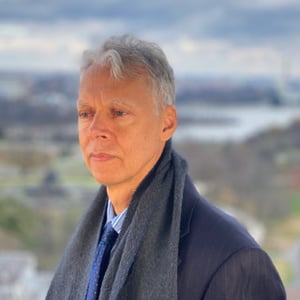
Emeritus Professor and Editor, Emory University and First Things magazine
Mark Bauerlein is an editor at First Things and Professor of English Emeritus at Emory University, where he taught since earning his PhD in English at UCLA in 1989. From 2003 to 2005 he served as Director of the Office of Research and Analysis at the National Endowment for the Arts. He has written or edited 12 books, including Literary Criticism: An Autopsy (1997), The Pragmatic Mind: Explorations in the Psychology of Belief (1997), Negrophobia: A Race Riot in Atlanta, 1906 (2001), The Dumbest Generation: How the Digital Age Stupefies Young Americans and Jeopardizes Our Future (2008), and The Dumbest Generation Grows Up: From Stupefied Youth to Dangerous Adults (2022). His essays have appeared in PMLA, Philosophy and Literature, Partisan Review, Wilson Quarterly, Commentary, and New Criterion, and his commentaries and reviews in the Wall Street Journal, New York Times, Washington Post, Boston Globe, Weekly Standard, Politico, Vox, Slate, The Guardian, Chronicle of Higher Education, and other national periodicals. He has done more than 500 media interviews, including Fox & Friends, CNN, BBC World Today, NPR All Things Considered, ABC Nightline, 20/20, PBS NOVA, and The New Yorker podcast. He hosts a podcast at First Things, which focusses on recent books and runs twice a week. In January 2023, he was appointed a Trustee of New College Florida by Governor DeSantis.
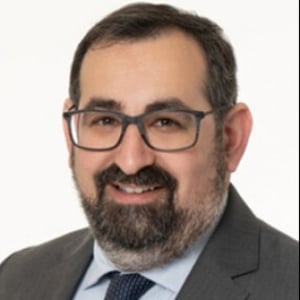
Research Scholar in Law and Executive Director, Center for Academic Freedom and Free Speech, Yale Law School
Joe Cohn is a research scholar in law at Yale Law school and the executive director of the Center for Academic Freedom and Free Speech (CAFFS).
Cohn has served as a staff attorney at the AIDS Law Project of Pennsylvania, a staff attorney for the Court of Appeals for the 3rd Circuit, an adjunct professor of law at the University of Pennsylvania Law School, where he supervised law students representing clients in litigation in state and federal courts, and as the interim legal director for ACLU affiliates in Nevada and Utah.
A majority of Cohn’s career has been dedicated to defending civil liberties on college campuses and free expression in society at large. As the Foundation for Individual Rights and Expression’s (FIRE’s) founding legislative and policy director, from 2012 to 2023, he testified on numerous occasions in legislatures across America and in Congress, drafted legislation on campus free speech, campus due process, and academic freedom that has been enacted in states across the country. Immediately before joining CAFFS, Cohn advocated for open inquiry, viewpoint diversity, and constructive disagreement in higher education as Heterodox Academy’s director of policy.
Cohn writes extensively on civil liberties, with articles published in a wide array of media outlets, including the Wall Street Journal, the Washington Post, Newsweek, the Hill, the New York Daily News, the Chicago Tribune, the Las Vegas Review Journal, the Minnesota Star Tribune, the Chronicle of Higher Education, Inside Higher Ed, and the Volokh Conspiracy.
He earned his bachelor of arts from the University of Nevada at Las Vegas in 2000. He is a 2004 graduate of the University of Pennsylvania Carey School of Law and the Fels Institute of Government Administration, where he earned his J.D. and M.A. in Government Administration.
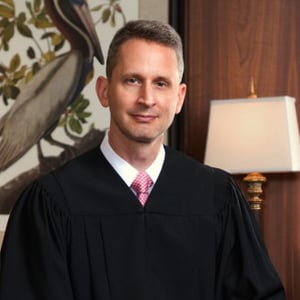
Judge, United States Court of Appeals, Fifth Circuit
Judge Duncan received his B.A. from Louisiana State University in 1994, his J.D. from the Paul M. Hebert Law Center at Louisiana State University in 1997, and his LL.M. from Columbia Law School in 2004.
After graduating from law school, he clerked for Louisiana-based Circuit Judge John Malcolm Duhé Jr. of the United States Court of Appeals for the Fifth Circuit.
From 2008–2012, Duncan served as Appellate Chief for Louisiana's Attorney General's office. From 2012–2014, he served as general counsel of the Becket Fund for Religious Liberty. From 2004-2008, he was an assistant professor of law at the University of Mississippi School of Law.
Before becoming a judge, Duncan practiced at the Washington, D.C. firm of Schaerr Duncan LLP, where he was a founding partner. He was appointed by President Trump to the United States Court of Appeals for the Fifth Circuit on May 1, 2018.
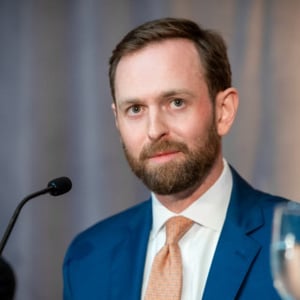
Commissioner, Federal Trade Commission
Andrew N. Ferguson was sworn in April 2, 2024 as a Commissioner of the Federal Trade Commission. President Joe Biden named Ferguson to a term that expires on September 25, 2030.
Ferguson most recently served as solicitor general of the Commonwealth of Virginia. Prior to that position, he served as chief counsel to U.S. Sen. Mitch McConnell of Kentucky, the Republican leader, and as a Republican counsel on the U.S. Senate Judiciary Committee. He also practiced law at several Washington, D.C. law firms. He earned his undergraduate degree and law degree from the University of Virginia. After law school, Ferguson clerked for Judge Karen L. Henderson on the U.S. Court of Appeals for the D.C. Circuit and U.S. Supreme Court Justice Clarence Thomas.
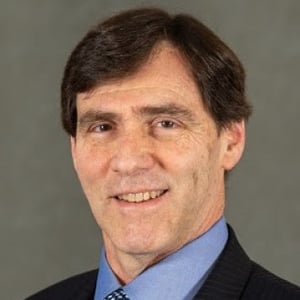
Professor of Business and Professor of Law (by courtesy) | Executive Director, Georgetown Institute for the Study of Markets and Ethics McDonough School of Business, Georgetown University
John Hasnas is a professor of business at Georgetown's McDonough School of Business and a professor of law (by courtesy) at Georgetown University Law Center in Washington, DC, where he teaches courses in ethics and law.
Professor Hasnas is also the executive director of the Georgetown Institute for the Study of Markets and Ethics, whose tripartite mission is to produce high-quality research on matters related to the ethics of market activity, improve ethics pedagogy, and educate the broader, non-academic community about ethical issues related to the functioning of markets.
Professor Hasnas has held previous appointments as associate professor of law at George Mason University School of Law, visiting associate professor of law at Duke University School of Law and the Washington College of Law at American University, and Law and Humanities Fellow at Temple University School of Law. Professor Hasnas has also been a visiting scholar at the Kennedy Institute of Ethics in Washington, DC and the Social Philosophy and Policy Center in Bowling Green, Ohio.
He received his B.A. in Philosophy from Lafayette College, his J.D. and Ph.D. in Legal Philosophy from Duke University, and his LL.M. in Legal Education from Temple Law School. His scholarship concerns ethics and white collar crime, jurisprudence, and legal history.
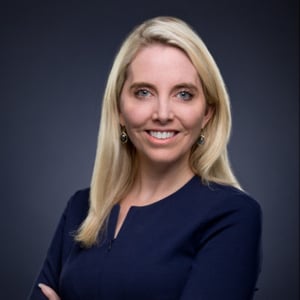
Co-Chair, Republican National Lawyers Association
Jennifer Bukowsky is a syndicated talk radio host, Co-Chair of the Republican National Lawyers Association, and Vice-Chair of the Missouri Republican Party.
An accomplished criminal defense attorney, Jennifer has handled more than 1,400 cases ranging from trespass to first-degree murder. She clerked for Missouri Supreme Court Judge Mary R. Russell, served as an Assistant Public Defender, and later built her own firm before launching Show-Me Defenders in 2021.
Her contributions have been widely recognized with awards including the David J. Dixon Appellate Advocacy Award, the President’s Service Award from the Missouri Association of Criminal Defense Attorneys, the Distinguished Recent Alumni Award from the University of Missouri School of Law, and “20 Under 40” honors from the Columbia Business Times. She has helped shape Missouri law as a member of committees that revised the Criminal Code and drafted the state’s expungement bill—both now enacted.
A leader in conservative legal circles, Jennifer serves on the Missouri Supreme Court’s Task Force on Criminal Justice and the Show-Me Institute Board, previously taught the Innocence Clinic at Mizzou, and has deployed multiple times as an election attorney for the Republican National Lawyers Association.
A University of Missouri School of Law graduate with highest honors and Order of the Coif membership, she also holds bachelor’s and master’s degrees in accountancy and is a licensed CPA. She lives in Columbia, Missouri, with her husband and two sons.
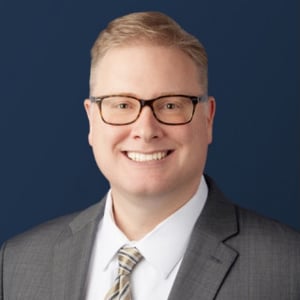
Senior Legal Fellow, Pacific Legal Foundation
Steve Davis is a Senior Legal Fellow in Pacific Legal Foundation’s Constitutional Scholarship group and chair's the Federalist Society's Property Rights Practice Group Executive Committee. Steve’s work at PLF focuses on the study of the U.S. Constitution’s protection of property rights, and he plans and conducts Pacific Legal Foundation-sponsored conferences, symposia, and academic workshops on property rights issues and the Constitution. He enjoys pursuing constitutional scholarship research, writing, and speaking and is a frequent speaker at law and history seminars.
Prior to joining PLF, Steve litigated all stages of property rights cases in federal trial and appellate courts in private practice at large and small law firms. He filed property rights claims on behalf of hundreds of private property owners who own land in over a dozen states against the federal government, litigating those claims through trial and appeal. He also maintained a robust amicus-party practice in the U.S. Supreme Court, filing briefs on behalf of many legal scholars and public-interest groups.
Beginning in 2006, Steve served as an Assistant United States Attorney for the Eastern District of Missouri, litigating civil rights, constitutional tort, tort, and employment discrimination claims in federal district court and the Eighth Circuit Court of Appeals.
Following law school, Steve began his legal career pursing his passion for public policy and the legislative process in the Missouri legislature, where he served first as chief of staff to the minority leader of the Missouri House of Representatives and then was twice elected by the members of the House as the House’s 62nd Chief Clerk and Administrator.
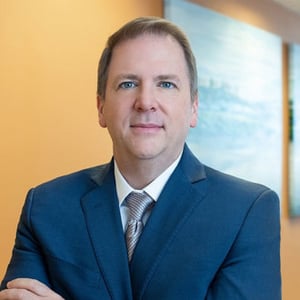
Partner, Stinson LLP
Chuck draws on 25 years’ experience litigating and negotiating very high profile cases, primarily involving some sort of government action, to help offer clients a broad and insightful perspective on Missouri's government and judiciary.
In its annual 100+ List, The Missouri Times newspaper said: Chuck Hatfield's "time at the highest levels of state government have made him very sought after as an attorney in private practice. There is probably no attorney who knows more members of the judiciary and the executive branch in the state. He is also known for his quick wit on social media and willingness to take on tough cases." He has personally handled more than a dozen major cases before the Missouri Supreme Court. Chuck regularly appears before administrative agencies as well as trial and appellate courts at both the state and federal levels.
In his regulatory practice, Chuck has handled matters involving every department of Missouri government. As an outgrowth of his regulatory- based litigation, Chuck is a highly rated commercial litigator. He defends complex high-stakes litigation including class actions involving regulated industries such as securities, insurance and merchandising practices. He chairs the firm’s Financial Services and Class Action Litigation division and its Government Solutions group.
Chuck understands the importance of providing great legal service and value to his clients. As an attorney certified in Legal Project Management (LPM), he has been trained in matter budgeting and management in order to provide transparency and efficiency to his clients.
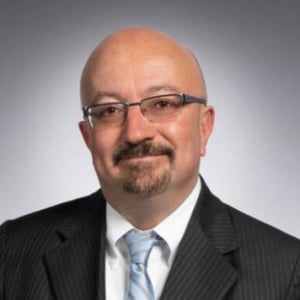
Earl F. Nelson Professor of Law, University of Missouri at Columbia School of Law
Gary Myers is the Earl F. Nelson Professor of Law at the School of Law. Myers received his juris doctor with honors from Duke University School of Law and graduated summa cum laudewith a bachelor’s degree in economics from New York University. He also earned an MA in economics from the Duke University Graduate School as part of a joint degree program while at Duke. Myers was an article editor on the Duke Law Journaland was a member of the Moot Court Board. After graduation, he served as a law clerk for Judge Gerald Tjoflat of the U.S. Court of Appeals for the Eleventh Circuit in Jacksonville, Fla. He then practiced complex commercial litigation with the Atlanta law firm of Powell, Goldstein, Frazer & Murphy, which has since merged with the Bryan Cave law firm.
Before serving as the sixteenth dean at the School of Law from 2012 to 2016, Myers was a long-time member of the faculty at the University of Mississippi School of Law. At Mississippi, Myers held the Ray & Louise Stewart Lectureship and served as its first associate dean for research. Myers has been a visiting professor of law at the College of William & Mary School of Law and Tulane University School of Law. He also served as a Distinguished Visiting Professor of Law at the Loyola University School of Law in New Orleans.
Myers is an elected member of the American Law Institute, a member of the American Law and Economics Association, and a member of the American Intellectual Property Law Association. He is the author or coauthor of a series of five books: (1) Intellectual Property: Cases & Materials (West 4th edition 2012); (2) Principles of Intellectual Property (West 2d edition 2012); (3) Entertainment Law: Cases & Materials (West 5th edition 2016); (4) Intellectual Property: Questions & Answers (LexisNexis 2d edition 2014); and (5) The Intersection of Intellectual Property & Antitrust Law (West 2007). He is also the author of more than a dozen articles, including publications in the Duke Law Journal, the Minnesota Law Review, the Washington & Lee Law Review, the Columbia-VLA Journal of Law & the Arts and the Journal of Intellectual Property Law.
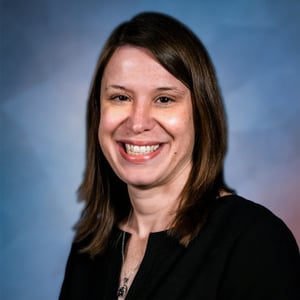
Senior Director of Strategic Partnerships, First Liberty Institute
Lisa Budzynski Ezell is the former Vice President and Director of the Federalist Society’s Lawyers Chapters. In this role, she managed a growing network of over 90 lawyers chapters nationwide, including oversight of leadership recruitment, chapter programming, state conferences, civics education outreach, and young lawyers activities. She holds a Bachelor of Arts degree from Saint Mary’s College in Political Science and History and a Master of Public Policy from George Mason University.

McCormick Professor of Jurisprudence; Director, James Madison Program, Princeton University
Robert P. George is McCormick Professor of Jurisprudence and Director of the James Madison Program in American Ideals and Institutions at Princeton University. He has several times been a Visiting Professor at Harvard Law School. He has served as Chairman of the U.S. Commission on International Religious Freedom and on the U.S. Commission on Civil Rights and the President’s Council on Bioethics. He has also served as the U.S. member of UNESCO’s World Commission on the Ethics of Scientific Knowledge and Technology. He was a Judicial Fellow at the Supreme Court of the United States, where he received the Justice Tom C. Clark Award. A Phi Beta Kappa graduate of Swarthmore, he holds the degrees of J.D. and M.T.S. from Harvard University and the degrees of D.Phil., B.C.L., D.C.L., and D.Litt. from Oxford University, in addition to twenty-one honorary doctorates. He is a recipient of the U.S. Presidential Citizens Medal, the Honorific Medal for the Defense of Human Rights of the Republic of Poland, the Canterbury Medal of the Becket Fund for Religious Liberty, the Bradley Prize, the Irving Kristol Award of the American Enterprise Institute, and Princeton University’s President’s Award for Distinguished Teaching. His books include Making Men Moral: Civil Liberties and Public Morality and In Defense of Natural Law (both published by Oxford University Press), as well as The Clash of Orthodoxies and Conscience and Its Enemies (both published by ISI Books).
President, The William and Flora Hewlett Foundation; Lecturer in, Stanford Law School
Larry Kramer joined Stanford Law School in 2004 as Richard E. Lang Professor of Law and Dean. As the school’s 12th dean, he has spearheaded significant educational reforms, including dramatically expanding joint degree programs as part of a multidisciplinary approach to legal studies, enlarging the clinical education program to promote reflective lawyering, revamping programs to foster a public service ethos, and building the international law program to support a growing emphasis on globalization in legal practice.
Dean Kramer has written and taught in such varied fields as constitutional law, conflict of laws, civil procedure, federalism and its history, and the role of courts in society. He is a fellow of the American Academy of Arts and Sciences and a member of the American Philosophical Society and the American Law Institute. In December 2008, Equal Justice Works named Dean Kramer to its Board of Directors. He has appointments (by courtesy) with the Stanford University Department of History and with the Graduate School of Business. Before joining the Stanford faculty, Dean Kramer served as Associate Dean for Research and Academics and Russell D. Niles Professor of Law at New York University School of Law; professor of law at the University of Chicago and University of Michigan law schools; and consultant for Mayer, Brown, Rowe & Maw LLP. Early in his career, Dean Kramer clerked for Justice William J. Brennan Jr. of the U.S. Supreme Court and Judge Henry J. Friendly of the U.S. Court of Appeals for the Second Circuit.

Richard and Frances Mallery Professor of Law and Faculty Director, Constitutional Law Center, Stanford Law School
Michael W. McConnell is the Richard and Frances Mallery Professor and Faculty Director of the Constitutional Law Center at Stanford Law School, and a Senior Fellow at the Hoover Institution. From 2002 to 2009, he served as a Circuit Judge on the United States Court of Appeals for the Tenth Circuit. He was nominated by President George W. Bush, a Republican, and confirmed by a Democratic Senate by unanimous consent. McConnell has previously held chaired professorships at the University of Chicago and the University of Utah, and visiting professorships at Harvard and NYU. He teaches courses on constitutional law, constitutional history, First Amendment, and interpretive theory. He has published widely in the fields of constitutional law and theory, especially church and state, equal protection, and separation of powers. His book, “The President Who Would Not Be King: Executive Power Under the Constitution,” was published by Princeton University Press in 2020, based on the Tanner Lectures in Human Values, which he delivered at Princeton in 2019. His latest book, co-authored with Nathan Chapman, “Agreeing to Disagree: How the Establishment Clause Protects Religious Diversity and Freedom of Conscience,” was published by Oxford University Press in mid-2023. McConnell has argued sixteen cases in the United States Supreme Court, most recently Carney v. Adams (2020). defending a provision of the Delaware Constitution requiring political balance on that state’s courts. More recently, he was co-counsel in Gonzalez v. Google. He earned his B.A. from Michigan State University and his J.D. from the University of Chicago, and has received honorary degrees from Notre Dame University and Michigan State. He served as law clerk to Supreme Court Justice William J. Brennan, Jr. and D.C. Circuit Chief Judge J. Skelly Wright. He has been Assistant General Counsel of the Office of Management & Budget, Assistant to the Solicitor General of the Department of Justice, and a member of the President’s Intelligence Oversight Board. He is Senior of Counsel to the law firm Wilson, Sonsini, Goodrich & Rosati, and is co-chair of Meta’s Oversight Review Board.
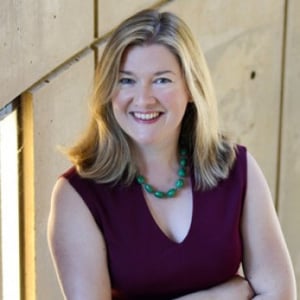
Carl and Shelia Spaeth Professor of Law; Associate Dean for Research and Intellectual Life, Stanford Law School
Bernadette Meyler, JD ’03, is a scholar of British and American constitutional law and of law and the humanities. She returned in 2013 to Stanford Law School, where she had previously served as Leah Kaplan Visiting Professor in Human Rights. Her research and teaching bring together the sometimes surprisingly divided fields of legal history and law and literature. They also examine the long history of constitutionalism, reaching back into the English common law ancestry of the U.S. Constitution. Professor Meyler’s current book projects stem from these respective areas of her scholarship. Theaters of Pardoning (Cornell UP, forthcoming 2019) demonstrates that the representation of pardoning tracks changing conceptions of sovereignty within the plays and politics of seventeenth-century England. In doing so, the book considers how the shared audiences of dramatic and historical tragicomedy—whether Kings, students at the Inns of Court, or potential jurors—brought concepts from the literary into the legal arena and back again. Common Law Originalism shifts to the American context, looking at the multiple eighteenth-century common law meanings—both colonial and English—of various constitutional terms and phrases. Based on this variety, as well as on the practices of common law interpretation with which members of the Founding generation were familiar, the book argues that we should, in large part, reject the pursuit of a singular and determinate original meaning; instead, it contends, we must embrace a more vigorous debate in the present over contested constitutional meanings. Professor Meyler is also the co-editor of several collections of essays in law and the humanities designed to introduce scholars and students to the field, including, with Elizabeth Anker, New Directions in Law and Literature (Oxford UP, 2017) and, with Simon Stern and Maksymilian Del Mar, The Oxford Handbook of Law and the Humanities (Oxford UP, forthcoming 2019).
After receiving her BA in Literature with a focus on Classics at Harvard University, Professor Meyler obtained her JD from Stanford Law School and completed a PhD in English at UC, Irvine as a Mellon Fellow in Humanistic Studies and a Chancellor’s Fellow. Following law school, Professor Meyler clerked for the Hon. Robert A. Katzmann of the U.S. Court of Appeals for the Second Circuit.
Professor Meyler previously taught at Cornell University, where she served, most recently, as Professor of Law and English and Faculty Director of Research at the Cornell Law School. She also visited Princeton University as the inaugural Mellon/LAPA Fellow in Law and the Humanities.
Co-President, Stanford Student Chapter

Fox News Political Analyst and Columnist for The Daily Beast, New York Post & USA Today
A FOX News political analyst and columnist for the The Daily Beast, Kirsten Powers brings a unique perspective to her commentary from her real-world experience working in politics and business. The Women's Media Center has called her "powerful" and "a trailblazer." Powers is also a member of USA Today's Board of Contributors where she writes on politics, culture, women's rights/feminism, and faith.
Kirsten Powers' political career began answering phones for Bill Clinton?s 1992 presidential campaign. Following his win, she joined the Clinton-Gore transition team. She landed at the White House in 1993 where she moved quickly through the ranks to become Deputy Assistant U.S. Trade Representative for Public Affairs. After serving as America Online's Vice President of International Communications, Powers returned to politics as Press Secretary to Andrew Cuomo's 2002 governor's race before turning to political commentary and writing.
Since joining FOX News in 2003, Powers has been featured on the O'Reilly Factor, Special Report with Bret Baier, Fox News Sunday, and other FOX programming. Powers provided 2008 election coverage from the primaries to the inauguration of President Barack Obama. She covered election night for the 2010 mid-term elections and 2012 GOP primary. Her writing has been published in the Wall Street Journal, USA Today, the New York Observer, The Daily Beast, The New York Post, and Ellemagazine.
Known for providing independent-minded analysis and insight on the cultural and political issues of the day, Powers pierces through partisan rhetoric and gives the honest analysis Americans desire in a political and media environment that has become increasingly divisive. A coveted keynote speaker, Powers delivers timely, insightful talks, performed with same real-world relevance that has propelled her successful career.

Professor of Law, Georgetown University Law Center
Nicholas Quinn Rosenkranz teaches constitutional law and federal jurisdiction, and he writes articles for the Harvard Law Review and the Stanford Law Review.
He is currently developing a new theory of constitutional interpretation and judicial review. The first installment, entitledThe Subjects of the Constitution, was published in the Stanford Law Review in May of 2010, and it is among the most downloaded articles about constitutional interpretation, judicial review, and/or federal courts in the history of SSRN. The second installment, The Objects of the Constitution, was published in May of 2011, also in the Stanford Law Review. And the comprehensive version is forthcoming as a book by Oxford University Press.
Rosenkranz has served and advised the federal government in a variety of capacities. He clerked for Judge Frank H. Easterbrook on the U.S. Court of Appeals for the Seventh Circuit (1999-2000) and for Justice Anthony M. Kennedy at the U.S. Supreme Court (October Term 2001). He served as an Attorney-Advisor at the Office of Legal Counsel in the U.S. Department of Justice (November 2002 - July 2004). He often testifies before Congress as a constitutional expert—most recently before the House Financial Services Oversight Subcommittee, regarding the Obama Administration's use of bank settlement agreements to circumvent the Appropriations Clause. He has also filed briefs and presented oral argument before the U.S. Supreme Court. His most recent Supreme Court brief, in Los Angeles v. Patel, was cited by Justice Alito in dissent.
Rosenkranz is a member of the New York Bar and the U.S. Supreme Court Bar. He is a Senior Fellow at the Cato Institute. He serves on the Board of Directors of the Foundation for Individual Rights in Education (FIRE). He is a founding member of Heterodox Academy and a member of its Executive Committee. He also serves on the Board of Directors of the Federalist Society and as the faculty advisor to the Georgetown chapter.
Associate Dean for Administration and Professor of Law, Chapman University School of Law

Legal Scholar and Solo Practitioner
Jack received his B.A. in History from the University of Virginia in 1977, graduating with Highest Distinction. After graduating Yale Law School in 1980, he served active duty in the U.S. Army's JAG Corps, rising to the rank of Major, where he represented the United States in more than 250 cases.
He practiced for a decade as an Associate for Bradley Arant in Birmingham, Alabama. He proudly served the State of Alabama in the Office of the Attorney General, both as Deputy and Assistant Attorney General, handling complex civil and criminal litigation cases for the people of Alabama. In 2000, he won the "Best Brief Award" from the National Association of Attorneys General for his brief in a case decided by the U.S. Supreme Court, James Alexander v. Martha Sandoval – a case he won. He was Special Assistant to the Inspector General for the Corporation for National and Community Service, Visiting Legal Fellow for the Center for Judicial and Legal Studies for the Heritage Foundation, Of Counsel at Strickland Brockington Lewis, a solo practitioner, and General Counsel for Indigo Energy.
Most recently, he "re-upped" for military service, volunteering his legal services to the Georgia State Defense Force where twice each month he provided legal services for National Guardsmen who were being deployed. He wore his military uniform for the last time in October 2024.
Jack Park passed away on March 16, 2026.

Panel 4: Academic Freedom in Higher Education: The Role of States Defending Freedom of Thought
Mark Bauerlein, Joe Cohn, Stuart Kyle Duncan, Andrew N. Ferguson, John Hasnas
What policies and practices can states adopt to encourage freedom of thought within higher education?...
Panel Two: Defending Unpopular Clients: The Ethics of Targeting Attorneys, Firms, and Clients for Reprisals
Jennifer K. Bukowsky, Stephen Davis, Charles Hatfield, Gary Myers
The 2022 Missouri Chapters Conference took place on January 24, 2022, at the Missouri State...
Lunch and Keynote Address: What Causes, and What Might Cure, Campus Illiberalism?
Lisa Ezell, Robert P. George
Featuring: Prof. Robert P. George, Princeton University Introduction: Lisa Ezell, Vice President & Director, Lawyers...
Why Does Free Speech Matter?
Should colleges encourage free speech on campus? Federalist Society student members and professors weigh in...
A Conversation on Intellectual Diversity
Larry Kramer, Michael W. McConnell, Bernadette Meyler, Michael Rubin
Why make a big deal out of intellectual diversity in academia, anyway? What are its...
Interview with Kirsten Powers
Kirsten Powers, Nicholas Quinn Rosenkranz
On November 14, 2015, during the Federalist Society's 2015 National Lawyers Convention in Washington, DC,...
Advancing Heterodoxy
It is hard to exaggerate how homogeneous are political views in the academic world. Law...
The Politically Correct University
Richard E. Redding, John J. Park
Professor Richard E. Redding, Associate Dean for Administration and Professor of Law at Chapman University...