
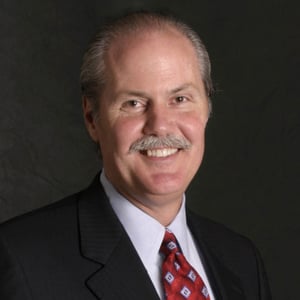
Chairman and Founding General Counsel, Institute for Justice
William H. (Chip) Mellor serves as chairman and founding general counsel of the Institute for Justice, which he co-founded in 1991. He was IJ’s president and general counsel from 1991 to 2015. He has litigated cutting-edge constitutional cases nationwide protecting economic liberty, property rights, school choice and the First Amendment, notably achieving the first federal appellate court victory for economic liberty under the 14th Amendment since the New Deal by overturning Tennessee’s prohibition on retail casket sales.
Under Mellor’s leadership IJ pioneered a new approach to strategic public interest litigation that combines courtroom advocacy with award-winning media relations, activism and strategic research to secure constitutional protection for individual rights. He grew IJ from a five-person startup into the National Law Firm for Liberty with a staff of nearly 100, including over 40 attorneys, and an annual budget of $20 million. IJ is headquartered in Arlington, Virginia, and has offices in Arizona, Florida, Illinois, Minnesota, Texas and Washington state.
While Mellor was president, IJ litigated five U.S. Supreme Court cases, winning all but one: In Zelman v. Simmons-Harris, IJ successfully defended Cleveland’s school choice program from a lawsuit brought by the teachers’ unions and other school choice opponents, establishing the constitutionality of school vouchers. In Granholm v. Heald, the Supreme Court struck down New York’s ban on interstate wine sales, allowing small wineries and consumers represented by IJ to successfully challenge a government-imposed wholesale wine and liquor monopoly. In Kelo v. City of New London, the Supreme Court ruled against IJ in a controversial 5–4 decision that held private property can be taken for private development. IJ mobilized unprecedented public outrage over the decision to secure legislative reforms or state supreme court decisions in 46 states that strengthened protection for property rights. In Arizona Christian School Tuition Organization v. Winn, the Supreme Court dismissed an Establishment Clause challenge to Arizona’s scholarship tax credit program because the Court recognized that individuals who donate to private, nonprofit scholarship-granting organizations spend their own money—not state funds. In Arizona Freedom Club PAC v. Bennett, the Supreme Court struck down a key provision of Arizona’s system of government-funded campaigns, which showered money on campaigns that took government funding when privately financed and independent speakers opposing them spoke more than the government wanted.
Mellor co-authored with the Cato Institute’s Robert Levy The Dirty Dozen: How Twelve Supreme Court Cases Radically Expanded Government and Eroded Freedom, which examines 12 Supreme Court cases that effectively amended the Constitution and profoundly reshaped the role of government in America. In The Dirty Dozen, Mellor and Levy argue for judicial engagement and for a Supreme Court that will protect individual rights and restore limits on government power.
Mellor launched the Institute for Justice Clinic on Entrepreneurship at the University of Chicago in 1998 and IJ’s Center for Judicial Engagement in 2011.
Mellor’s work has appeared in the Wall Street Journal, Washington Post, New York Times, USA Today, Financial Times, Los Angeles Times, Chicago Tribune, Philadelphia Inquirer, Boston Globe, New York Post, National Law Journal, Reason, National Review, Investor’s Business Daily, and all the major television and radio networks. In a 2012 broadcast of his Fox Business show Stossel, John Stossel named Mellor a “Champion of Freedom.”
Prior to founding IJ, Mellor served as president of the Pacific Research Institute for Public Policy, a nationally recognized think tank located in San Francisco. Under his leadership, the Institute commissioned and published path-breaking books on economic liberty, property rights, and technology and the First Amendment that formed the long-term, strategic litigation blueprint for the Institute for Justice.
Mellor also served in the Reagan Administration as deputy general counsel for legislation and regulations in the Department of Energy, and from 1979 to 1983 he practiced public interest law with Mountain States Legal Foundation in Denver. Mellor received his J.D. from the University of Denver School of Law in 1977. He graduated from Ohio State University in 1973.
Read Mellor’s speech launching the Institute for Justice: “The Quest for Justice: Natural Rights and the Future of Public Interest Law.”
Mellor was awarded the Bradley Prize in 2012, was recognized by the American Bar Association as a Legal Rebel – an individual who remakes their corner of the legal profession – and was profiled in the Wall Street Journal Weekend Interview on January 7, 2012, as well as in Reason magazine in March 2008.
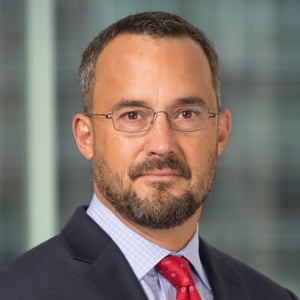
Senior Vice President for Legal Studies, Cato Institute
Clark Neily is senior vice president for legal studies at the Cato Institute. His areas of interest include constitutional law, overcriminalization, civil forfeiture, police accountability, and gun rights. Neily is the author of Terms of Engagement: How Our Courts Should Enforce the Constitution’s Promise of Limited Government. His writing has appeared in the Wall Street Journal, Forbes, and National Review Online, as well as various law reviews, including the Harvard Journal of Law and Public Policy, George Mason Law Review, Georgetown Journal of Law and Public Policy, NYU Journal of Law and Liberty, and Texas Review of Law and Politics. Neily is a frequent guest speaker and lecturer for the Federalist Society, Institute for Humane Studies, and American Constitution Society.
Before joining Cato in 2017, Neily was a senior attorney and constitutional litigator at the Institute for Justice and director of the Institute’s Center for Judicial Engagement. He is also an adjunct professor at the University of Texas School of Law, where he teaches constitutional litigation and public-interest law.
Neily served as co-counsel in District of Columbia v. Heller, the historic case in which the Supreme Court held for the first time that the Second Amendment protects an individual right to own a gun for self-defense.
Neily began his legal career as a law clerk to Judge Royce Lamberth on the U.S. District Court for the District of Columbia. After that he spent four years in the trial department of the Dallas-based firm Thompson & Knight. Neily received his undergraduate and law degrees from the University of Texas, where he was Chief Articles Editor of the Texas Law Review.
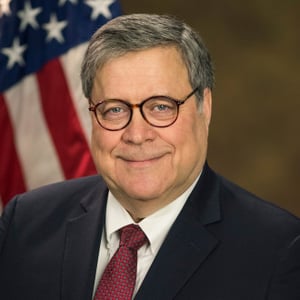
Former United States Attorney General
William P. Barr was born on May 23, 1950 in New York City. Mr. Barr received his A.B. in government from Columbia University in 1971 and his M.A. in government and Chinese studies in 1973. From 1973 to 1977, he served in the Central Intelligence Agency before receiving his J.D. with highest honors from George Washington University Law School in 1977.
In 1978, Mr. Barr served as a law clerk under Judge Malcolm Wilkey of the U.S. Court of Appeals for the District of Columbia Circuit. Following his clerkship, Mr. Barr joined the Washington, D.C. office of the law firm of Shaw, Pittman, Potts & Trowbridge as an associate. He left the firm to work in the White House under President Ronald Reagan from 1982 to 1983 on the domestic policy staff, then returned to the law firm and became a partner in 1985.
Under President George H.W. Bush, Mr. Barr served as the Deputy Attorney General from 1990 to 1991; the Assistant Attorney General of the Office of Legal Counsel from 1989 to 1990; and the 77th Attorney General of the United States from 1991 to 1993. While serving at the Department, Mr. Barr helped create programs and strategies to reduce violent crime and was responsible for establishing new enforcement policies in a number of areas including financial institutions, civil rights, and antitrust merger guidelines. Mr. Barr also led the Department’s response to the Savings & Loan crisis; oversaw the investigation of the Pan Am 103 bombing; directed the successful response to the Talladega prison uprising and hostage taking; and coordinated counter-terrorism activities during the First Gulf War.
From 1994 to 2000, Mr. Barr served as Executive Vice President and General Counsel for GTE Corporation. Mr. Barr then served as Executive Vice President and General Counsel of Verizon from 2000 to 2008. At both GTE and Verizon, Mr. Barr led the legal, regulatory, and government affairs activities of the companies.
After retiring from Verizon in 2008, Mr. Barr advised major corporations on government enforcement matters, as well as regulatory litigation. Mr. Barr served as Of Counsel at Kirkland & Ellis LLP in 2009 and rejoined the firm in 2017.
President Donald Trump announced his intention to nominate Mr. Barr on December 7, 2018, and he was confirmed as the 85th Attorney General of the United States by the U.S. Senate on February 14, 2019. U.S. Supreme Court Chief Justice John Roberts administered the oath of office. Mr. Barr joins John Crittenden (1841 and 1850-1853) as one of only two people in U.S. history to serve twice as Attorney General.
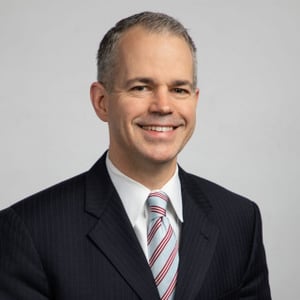
Senior Attorney, Institute for Justice
Michael Bindas is a senior attorney with the Institute for Justice (IJ) and leads IJ’s educational choice team. In this role, he oversees a talented group of IJ attorneys who help policymakers design constitutionally defensible educational choice programs and who defend educational choice programs in courtrooms nationwide. He joined IJ in 2005.
Michael was part of IJ’s litigation team in Espinoza v. Montana Department of Revenue, in which the U.S. Supreme Court held the exclusion of religious options from Montana’s educational choice program unconstitutional, and he led IJ’s defense of the Choice Scholarship Program for elementary and secondary students in Douglas County, Colorado. He also successfully challenged Washington’s denial of special education services to children in religious schools, as well as the state’s exclusion of sectarian options from its state work study program. Currently, he leads IJ’s team in Carson v. Makin, challenging Maine’s exclusion of religious options from its educational choice program.
Prior to leading IJ’s educational choice team, Michael litigated extensively to secure economic liberty, property rights, and freedom of speech throughout the nation. He was counsel of record at the U.S. Supreme Court for Kimbrough Fine Wine & Spirits in Tennessee Wine and Spirits Retailers Association v. Thomas, a successful challenge to Tennessee’s durational residency requirements for retail liquor licenses. He also led successful challenges to the municipal sign codes of St. Louis, Mo. and Norfolk, Va., after those cities attempted to silence protests of their abusive eminent domain practices.
Prior to joining IJ, Michael spent three years as an attorney with Perkins Coie LLP. He is a former law clerk to Judge Rhesa Hawkins Barksdale of the U.S. Court of Appeals for the Fifth Circuit and served as an engineer officer in the United States Army and Pennsylvania Army National Guard before beginning his legal career.
Michael received his law degree cum laude from the University of Pennsylvania Law School in 2001, where he served as Articles Editor for the Journal of Constitutional Law and was elected to the Order of the Coif. He received his undergraduate degree from the United States Military Academy at West Point in 1995.
Senior Vice President for Legal Studies, Cato Institute
Clark Neily is senior vice president for legal studies at the Cato Institute. His areas of interest include constitutional law, overcriminalization, civil forfeiture, police accountability, and gun rights. Neily is the author of Terms of Engagement: How Our Courts Should Enforce the Constitution’s Promise of Limited Government. His writing has appeared in the Wall Street Journal, Forbes, and National Review Online, as well as various law reviews, including the Harvard Journal of Law and Public Policy, George Mason Law Review, Georgetown Journal of Law and Public Policy, NYU Journal of Law and Liberty, and Texas Review of Law and Politics. Neily is a frequent guest speaker and lecturer for the Federalist Society, Institute for Humane Studies, and American Constitution Society.
Before joining Cato in 2017, Neily was a senior attorney and constitutional litigator at the Institute for Justice and director of the Institute’s Center for Judicial Engagement. He is also an adjunct professor at the University of Texas School of Law, where he teaches constitutional litigation and public-interest law.
Neily served as co-counsel in District of Columbia v. Heller, the historic case in which the Supreme Court held for the first time that the Second Amendment protects an individual right to own a gun for self-defense.
Neily began his legal career as a law clerk to Judge Royce Lamberth on the U.S. District Court for the District of Columbia. After that he spent four years in the trial department of the Dallas-based firm Thompson & Knight. Neily received his undergraduate and law degrees from the University of Texas, where he was Chief Articles Editor of the Texas Law Review.
Senior Vice President for Legal Studies, Cato Institute
Clark Neily is senior vice president for legal studies at the Cato Institute. His areas of interest include constitutional law, overcriminalization, civil forfeiture, police accountability, and gun rights. Neily is the author of Terms of Engagement: How Our Courts Should Enforce the Constitution’s Promise of Limited Government. His writing has appeared in the Wall Street Journal, Forbes, and National Review Online, as well as various law reviews, including the Harvard Journal of Law and Public Policy, George Mason Law Review, Georgetown Journal of Law and Public Policy, NYU Journal of Law and Liberty, and Texas Review of Law and Politics. Neily is a frequent guest speaker and lecturer for the Federalist Society, Institute for Humane Studies, and American Constitution Society.
Before joining Cato in 2017, Neily was a senior attorney and constitutional litigator at the Institute for Justice and director of the Institute’s Center for Judicial Engagement. He is also an adjunct professor at the University of Texas School of Law, where he teaches constitutional litigation and public-interest law.
Neily served as co-counsel in District of Columbia v. Heller, the historic case in which the Supreme Court held for the first time that the Second Amendment protects an individual right to own a gun for self-defense.
Neily began his legal career as a law clerk to Judge Royce Lamberth on the U.S. District Court for the District of Columbia. After that he spent four years in the trial department of the Dallas-based firm Thompson & Knight. Neily received his undergraduate and law degrees from the University of Texas, where he was Chief Articles Editor of the Texas Law Review.

Clayton J. and Henry R. Barber Professor of Law, Northwestern University Pritzker School of Law and Co-Chairman, Board of Directors, The Federalist Society
STEVEN GOW CALABRESI is the Clayton J. & Henry R. Barber Professor at Northwestern Pritzker School of Law. He has also co-taught in the Fall semester at Yale Law School from 2013 to the present. Calabresi clerked for Justice Antonin Scalia and Judges Robert H. Bork and Ralph K. Winter. He was a Special Assistant to Attorney General Meese from 1985 to 1987 and worked with Ken Cribb as his deputy in 1987 on the second floor of the West Wing of the Reagan White House. Calabresi has written books on presidential power and comparative constitutional law and the origins of judicial review. He and Gary Lawson are the co-editors of a casebook on U.S. Constitutional Law, and Calabresi is also the co-editor of a casebook on comparative constitutional law. He has written over seventy law review articles since 1990.
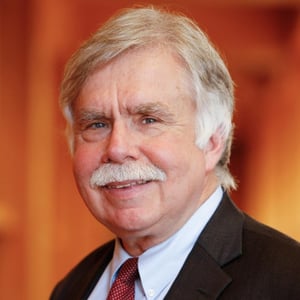
Professor of Law, Marquette Univeristy Law School
J. Gordon Hylton joined the Marquette Law School faculty in 1995 after teaching at IIT Chicago-Kent and Washington University. He is a native of Giles County, Virginia, and a graduate of Giles High School. He holds a degree in History and English from Oberlin College; a J.D. and an M.A. in History from the University of Virginia; and a PhD in the History of American Civilization from Harvard University. Following law school, he clerked for Justice Albertis S. Harrison and Chief Justice Lawrence I'Anson of the Virginia Supreme Court and worked for the Massachusetts Commission Against Discrimination.
In addition to teaching at the law school, Professor Hylton also teaches a junior seminar on American Constitutional History in the Marquette undergraduate Honors Program. From 1997 to 2001, he taught courses in legal and constitutional history and the history of sport in the Marquette History Department. He has also been a visiting professor at Washington University, Washington & Lee University, and the University of Virginia. In the Fall of 2000 he was a Fulbright Senior Lecturer in Law at Kyiv-Mohyla Academy in Kiev, Ukraine. From 2001 to 2003, he taught in the program in comparative and international law offered by Marquette and the University of Queensland.
Professor Hylton was the chair of the committee that created the current MULS Sports Law program, and from 1997 to 1999, he served as interim director of the National Sports Law Institute. He is currently a member of the NSLI Board of Advisers and a member of the Sports Lawyers Association.
His current research interests focus on the history of the legal profession, the history of civil rights, and the legal history of American sports. Beginning in 2009, he will be a visiting professor each fall semester at the University of Virginia where he is also affiliated with the Carter G. Woodson Institute for African-American and African Studies.
B.A., Oberlin College; M.A. & J.D., University of Virginia; PhD, Harvard
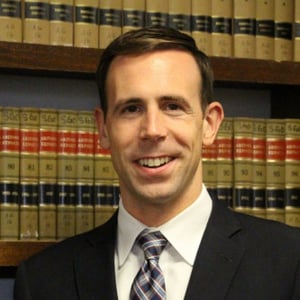
Shareholder, Greenberg Traurig, LLP
Dominic E. Draye has litigated at every level of the state and federal judiciary—from state trial court to the Supreme Court of the United States. His practice focuses on constitutional, regulatory, and environmental matters, and he has represented clients in both the public and private sectors. In the federal appellate courts, Mr. Draye has represented clients in the Second, Fifth, Seventh, Ninth, and D.C. Circuits.
Before joining Greenberg, Mr. Draye served as the Solicitor General of Arizona, where he briefed and argued the State’s highest-profile civil and criminal appeals and served as lead counsel for several multi-state coalitions litigating over agency rulemaking in the D.C. Circuit. Prior to government service, Mr. Draye was a litigator in the Washington, D.C., office of Kirkland & Ellis LLP, where his practice focused on legal issues and appeals.
Mr. Draye is a sought-after speaker on topics of administrative and constitutional law. He clerked for Hon. Edith H. Jones on the United States Court of Appeals for the Fifth Circuit and attended the University of Pennsylvania Law School.
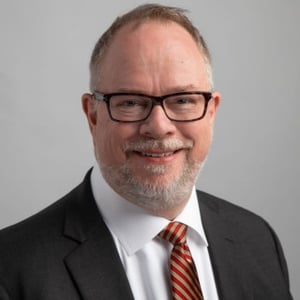
Managing Attorney of the Washington Office, Institute for Justice
William R. Maurer is the Managing Attorney of the Washington state office of the Institute for Justice, which engages in litigation in the areas of economic liberty, private property rights, educational choice, & freedom of speech.
Maurer is an advocate against the criminalization of poverty and the governmental use of the criminal and civil enforcement systems to raise revenue. He was lead counsel in a class action challenging the use of tickets to raise revenue in the city of Pagedale, Missouri. The suit resulted in a federal consent decree that reformed the city’s ticketing and municipal court system. He regularly speaks, teaches, and writes about the abuse of fines and fees in the criminal justice system. He was a participant in summits on taxation by citation put on by the White House and Department of Justice during the Obama Administration. His work on the issue includes serving as an advisory board member of the Fines and Fees Justice Center.
In addition to his work on criminal and civil justice reform, Maurer is a First Amendment litigator. In 2011, he successfully argued before the U.S. Supreme Court that Arizona’s punitive campaign financing regime was unconstitutional. Before the Washington Supreme Court, he successfully argued against efforts to classify radio commentary as a contribution under the state’s campaign finance law.
His cases and advocacy have been covered in the Washington Post, the New York Times, the Economist, the Wall Street Journal, and other major media outlets.
Maurer was named a “Washington Superlawyer” by Washington Law & Politics Magazine for several years. He is a chapter author in numerous legal reference works and has written several articles for law reviews and legal publications across the country.
Prior to joining IJ-WA, Maurer clerked for Washington Supreme Court Justice Richard Sanders and then practiced law at Perkins Coie LLP. Maurer received his law degree in 1994 from the University of Wisconsin – Madison, where he was an editor of the Wisconsin Law Review. He received his BA from Bard College in 1989.
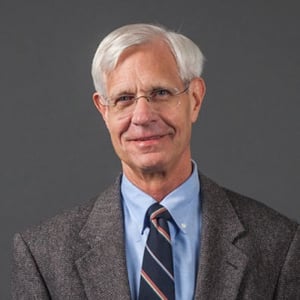
Distinguished University Professor, Antonin Scalia Law School, George Mason University
University Professor Nelson Lund is the author of Rousseau’s Rejuvenation of Political Philosophy: A New Introduction. He has also written widely in the field of constitutional law, including articles on constitutional interpretation, federalism, separation of powers, the Second Amendment, the Commerce Clause, the Speech or Debate Clause, the Equal Protection Clause, and the Uniformity Clause. In addition, he has published articles in the fields of employment discrimination and civil rights, the legal regulation of medical ethics, and the application of economic analysis to legal institutions and legal ethics.
Professor Lund graduated from St. John's College in Annapolis, Maryland, after which he received an MA in philosophy from the Catholic University of America and a PhD in political science from Harvard University. He left the faculty of the University of Chicago to attend its law school, where he served as executive editor of the University of Chicago Law Review and chapter chairman of the Federalist Society for Law and Public Policy Studies. After law school, he held positions at the United States Department of Justice in the Office of the Solicitor General and the Office of Legal Counsel. He also served as a law clerk to the Honorable Patrick E. Higginbotham of the United States Court of Appeals for the Fifth Circuit and to the Honorable Sandra Day O'Connor of the United States Supreme Court. Following his clerkship with Justice O'Connor, Professor Lund served in the White House as associate counsel to the president from 1989 to 1992.
Since joining the faculty at George Mason University's Antonin Scalia Law School, Professor Lund has taught Constitutional Law, Legislation, Federal Election Law, Employment Discrimination, State and Local Government, and seminars on the Second Amendment and on a variety of topics in Jurisprudence.
Senior Vice President for Legal Studies, Cato Institute
Clark Neily is senior vice president for legal studies at the Cato Institute. His areas of interest include constitutional law, overcriminalization, civil forfeiture, police accountability, and gun rights. Neily is the author of Terms of Engagement: How Our Courts Should Enforce the Constitution’s Promise of Limited Government. His writing has appeared in the Wall Street Journal, Forbes, and National Review Online, as well as various law reviews, including the Harvard Journal of Law and Public Policy, George Mason Law Review, Georgetown Journal of Law and Public Policy, NYU Journal of Law and Liberty, and Texas Review of Law and Politics. Neily is a frequent guest speaker and lecturer for the Federalist Society, Institute for Humane Studies, and American Constitution Society.
Before joining Cato in 2017, Neily was a senior attorney and constitutional litigator at the Institute for Justice and director of the Institute’s Center for Judicial Engagement. He is also an adjunct professor at the University of Texas School of Law, where he teaches constitutional litigation and public-interest law.
Neily served as co-counsel in District of Columbia v. Heller, the historic case in which the Supreme Court held for the first time that the Second Amendment protects an individual right to own a gun for self-defense.
Neily began his legal career as a law clerk to Judge Royce Lamberth on the U.S. District Court for the District of Columbia. After that he spent four years in the trial department of the Dallas-based firm Thompson & Knight. Neily received his undergraduate and law degrees from the University of Texas, where he was Chief Articles Editor of the Texas Law Review.
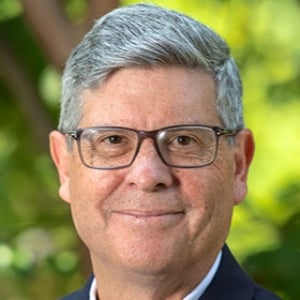
E. Claiborne Robins Distinguished Chair in Law, University of Richmond School of Law
Professor Kurt Lash teaches and writes about constitutional law. Founder and director of the Richmond Program on the American Constitution, Professor Lash has published widely on the subjects of constitutional law and constitutional history, including The Fourteenth Amendment and the Privileges or Immunities of American Citizenship (Cambridge University Press, 2014), The Lost History of the Ninth Amendment (Oxford University Press, 2009), and The American First Amendment in the Twenty-first Century: Cases and Materials(with William W. Van Alstyne) (5th ed., Foundation Press, 2014). An elected member of the American Law Institute, Professor Lash’s work has appeared in numerous legal journals including the Stanford Law Journal, Georgetown Law Journal, Virginia Law Review, andNotre Dame Law Review. He has been a visiting professor at Northwestern University School of Law and is the former director of the University of Illinois College of Law Program in Constitutional Theory, History, and Law.

Should We Legalize Marijuana? A Drug War Policy Debate
Phoenix, ArizonaThe Dirty Dozen: How the Twelve Worst Supreme Court Cases Radically Expanded Government and Eroded Freedom
The Second Amendment & Economic Liberty
Health Care Reform
McDonald v. City of Chicago – Post-Argument Debate SCOTUScast
Clark Neily, Steven G. Calabresi, J. Gordon Hylton
On March 2, 2010, the Supreme Court heard oral argument in McDonald v. City of...
Fair Elections Now Act
Dominic Draye, William R. Maurer
Brought to you by the Free Speech & Election Law Practice Group Congress is considering...
Puget Sound Annual Dinner
Seattle, WashingtonMcDonald v. City of Chicago – Cert Granted SCOTUScast Debate
Nelson Lund, Clark Neily, Kurt T. Lash
On September 30, 2009, the Supreme Court granted certiorari in the case of McDonald v....
Federal and Washington State Economic Liberty in Regards to the P&I Clause of the Constitution
The Second Amendment & Its Incorporation