

Florida Office Managing Attorney, Institute for Justice
Justin Pearson is the Institute’s Florida Office Managing Attorney. He also coordinates aspects of the Institute’s national economic liberty efforts and personally directs IJ’s National Street Vending Initiative. Justin has devoted his career to vindicating the constitutional rights of small-business owners, and he has victoriously litigated on their behalf in trial and appellate courts across the nation.
Justin often wins in novel ways. He was the lead counsel in a federal appellate court victory vindicating the right of a Florida dairy creamery to tell the truth on its labels, which was the first victorious First Amendment challenge to a food standard of identity in U.S. history. His win against Little Rock’s ban on taxi competition was based on a provision in the Arkansas Constitution that had not been successfully relied upon in over half a century. And his victory against Fort Pierce’s food truck ban included the first preliminary injunction ever issued in this type of challenge anywhere in the nation.
In addition to litigation, Justin has testified to Florida Senate and House committees dozens of times, and provisions suggested by Justin have been enacted into law. The successful bills that Justin has actively supported include Florida’s 2021 cottage food, home-based business, and local occupational licensing reforms, Florida’s historic 2020 occupational licensing reform (which repealed the most occupational licensing barriers in U.S. history), Florida’s 2019 repeal of the certificate of need requirement for hospitals, Florida’s 2019 Fresh Start reform making it easier for individuals with criminal records to obtain employment, and Florida’s 2016 overhaul of its civil forfeiture laws.
Justin’s work has appeared in countless media outlets, and Justin has spoken to scores of law schools and attorney organizations across the nation. The law schools that have hosted Justin’s talks include Yale, the University of Chicago, Duke, NYU, Notre Dame, and the University of Michigan, among many others.
Prior to joining IJ, Justin founded and managed his own law practice to advocate for small-business owners, and Justin’s law practice was successful for many years before he made the decision to join IJ in 2012 to better fight against government power gone awry.
Justin received his law degree with honors from the University of Miami in 2002, where he was the Research and Writing Editor for, and was published in, the University of Miami Business Law Review. Justin received his undergraduate degree in business management from North Carolina State University. Justin has been honored by the Daily Business Review and Law.com for being one of South Florida’s “Most Effective Lawyers.”

Deputy Litigation Director, Institute for Justice
Robert McNamara serves as Deputy Litigation Director with the Institute for Justice. He joined the Institute in August 2006 and litigates cutting-edge constitutional cases protecting free speech, property rights, economic liberty and other individual liberties in both federal and state courts.
Robert’s work has resulted in court victories for property owners fighting eminent domain abuse, tour guides fighting unconstitutional restrictions on their speech, taxi drivers seeking the right to own their own business, and many others. Robert also litigates in defense of innovation and entrepreneurship in medical care and was co-counsel in Flynn v. Holder, IJ’s landmark challenge to the federal prohibition on compensating bone marrow donors.
Robert’s writing has been published by outlets including The New York Times, The Wall Street Journal, The Washington Post and dozens more nationwide. His opinions and views on legal issues have been featured in radio and television programs ranging from National Public Radio’s All Things Considered to Fox News Channel’s Hannity & Colmes.
Robert is a graduate of Boston University and the New York University School of Law, where he was a founding member and eventual editor-in-chief of the NYU Journal of Law & Liberty. He currently lives in Virginia with his wife and children.
Robert McNamara is a member of the Virginia bar.
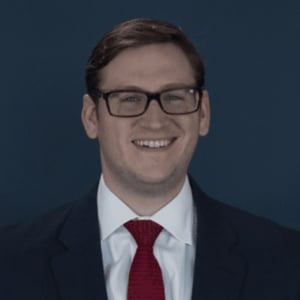
Attorney, Pacific Legal Foundation
Daniel Woislaw joined Pacific Legal Foundation in the spring of 2019. A passionate advocate for individual liberty, he focuses his litigation on property rights, economic liberty, and regulatory overreach. He was inspired as a student by the works of free-market economists and classical liberal political philosophers such as F.A. Hayek and Frédéric Bastiat.
As a former public defender, Daniel gained a great deal of experience arguing constitutional questions surrounding Fourth, Fifth, and Sixth Amendment rights in trial courts in southern Virginia. Before that, he worked as a legal aid attorney under a grant from the Department of Justice to represent elderly victims of crime and abuse.
His initial interest in pursuing a career litigating for a free society developed while studying at The Antonin Scalia Law School at George Mason University, from which he graduated magna cum laude in the spring of 2016. During his tenure, he was the senior research editor of George Mason’s Civil Rights Law Journal, served on the school’s moot court board, and spent one summer as a Charles Koch Fellow. He has published scholarly articles on the topics of unreasonable searches and sovereign immunity, with more in progress.
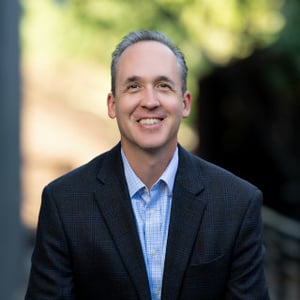
Legal Director, The Center for the Rights of Abused Children
Tim Keller is a lawyer who works to ensure all abused and abandoned children are safe and have access to their constitutionally guaranteed rights.
As senior vice president and legal director at the Center for the Rights of Abused Children, Tim’s public interest legal work seeks to defend the constitutional rights of children to be safe from abuse, to prompt timely placement with permanent parents, and to assure a child’s representation by legal counsel. In addition to constitutional litigation, Tim oversees the lawyers in the Center for the Rights of Abused Children’s one-of-a-kind pro bono Children’s Law Clinic and guides its policy initiatives.
When he and his wife, Lisa, hosted a teenage exchange student from Brazil several years ago, they realized how much they enjoyed helping a child thrive. The two felt called to help more kids. Over the following years, Tim and Lisa would become foster parents. Today, they enjoy offering respite care for children in foster care.
Intensely motivated by his time fostering children who’d been abused and neglected, Tim sees his work to ensure children have a constitutional right to counsel as a matter of life and death. As such, he’s particularly proud that in 2021 the Center for the Rights of Abused Children secured the rights of all children in Arizona’s foster system to be represented by legal counsel.
Before joining the Center for the Rights of Abused Children, Tim worked for nearly 20 years at the Institute for Justice. He served as lead counsel in Arizona Christian School Tuition Organization v. Winn, a U.S. Supreme Court victory that protected Arizona’s pioneering school scholarship program. Tim also led the team that secured a U.S. Supreme Court victory in Espinoza v. Montana Department of Revenue, which prevents states from discriminating against religious families and schools in educational choice programs. He has also litigated economic liberty and property rights cases in state and federal courts.
Tim earned his bachelor’s and law degrees from Arizona State University. He clerked for Robert D. Myers, at the time the presiding judge of the Maricopa County Superior Court, and for Ann A. Scott Timmer on the Arizona Court of Appeals.
Tim and Lisa live in Chandler, Ariz., with their four sons, Daniel, Benjamin, Ethan and Noah, and a miniature schnauzer named Gus who has more than 12,000 Instagram followers. The Kellers have traveled to 49 of the 50 United States, and are always looking for recommendations for new card or board games for family game nights.

Senior Vice President for Legal Studies, Cato Institute
Clark Neily is senior vice president for legal studies at the Cato Institute. His areas of interest include constitutional law, overcriminalization, civil forfeiture, police accountability, and gun rights. Neily is the author of Terms of Engagement: How Our Courts Should Enforce the Constitution’s Promise of Limited Government. His writing has appeared in the Wall Street Journal, Forbes, and National Review Online, as well as various law reviews, including the Harvard Journal of Law and Public Policy, George Mason Law Review, Georgetown Journal of Law and Public Policy, NYU Journal of Law and Liberty, and Texas Review of Law and Politics. Neily is a frequent guest speaker and lecturer for the Federalist Society, Institute for Humane Studies, and American Constitution Society.
Before joining Cato in 2017, Neily was a senior attorney and constitutional litigator at the Institute for Justice and director of the Institute’s Center for Judicial Engagement. He is also an adjunct professor at the University of Texas School of Law, where he teaches constitutional litigation and public-interest law.
Neily served as co-counsel in District of Columbia v. Heller, the historic case in which the Supreme Court held for the first time that the Second Amendment protects an individual right to own a gun for self-defense.
Neily began his legal career as a law clerk to Judge Royce Lamberth on the U.S. District Court for the District of Columbia. After that he spent four years in the trial department of the Dallas-based firm Thompson & Knight. Neily received his undergraduate and law degrees from the University of Texas, where he was Chief Articles Editor of the Texas Law Review.
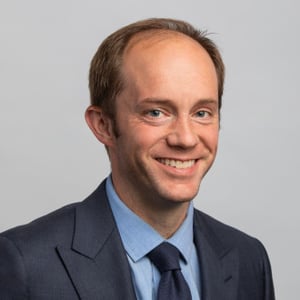
Attorney, Institute for Justice
Jeffrey Redfern joined the Institute for Justice in 2016, and he litigates constitutional cases protecting property rights and free speech.
Before joining IJ, Jeffrey was a member of the appellate group at Mayer Brown LLP, where he authored briefs on various constitutional issues in the U.S. Supreme Court and in lower federal and state courts. He has argued cases before the First and Seventh Circuits. Jeffrey clerked for Judge Laurence Silberman of the U.S. Court of Appeals for the D.C. Circuit.
Jeffrey earned his J.D., cum laude, from Harvard Law School in 2012. Between his first and second years of law school, he clerked at IJ’s Minnesota office. That experience inspired him to file his own pro se constitutional lawsuit against the government while still in school. (After over two years of litigation, the government finally provided the relief he requested.)
Before law school, Jeffrey taught English at a prep school in Southern California. He earned his MA in humanities from the University of Chicago in 2006 and his BA in English, magna cum laude, from Carleton College in 2005. Jeffrey enjoys competitive distance running, and he has a marathon personal best of 2 hours and 30 minutes.
Deputy Litigation Director, Institute for Justice
Robert McNamara serves as Deputy Litigation Director with the Institute for Justice. He joined the Institute in August 2006 and litigates cutting-edge constitutional cases protecting free speech, property rights, economic liberty and other individual liberties in both federal and state courts.
Robert’s work has resulted in court victories for property owners fighting eminent domain abuse, tour guides fighting unconstitutional restrictions on their speech, taxi drivers seeking the right to own their own business, and many others. Robert also litigates in defense of innovation and entrepreneurship in medical care and was co-counsel in Flynn v. Holder, IJ’s landmark challenge to the federal prohibition on compensating bone marrow donors.
Robert’s writing has been published by outlets including The New York Times, The Wall Street Journal, The Washington Post and dozens more nationwide. His opinions and views on legal issues have been featured in radio and television programs ranging from National Public Radio’s All Things Considered to Fox News Channel’s Hannity & Colmes.
Robert is a graduate of Boston University and the New York University School of Law, where he was a founding member and eventual editor-in-chief of the NYU Journal of Law & Liberty. He currently lives in Virginia with his wife and children.
Robert McNamara is a member of the Virginia bar.
Attorney, Pacific Legal Foundation
Daniel Woislaw joined Pacific Legal Foundation in the spring of 2019. A passionate advocate for individual liberty, he focuses his litigation on property rights, economic liberty, and regulatory overreach. He was inspired as a student by the works of free-market economists and classical liberal political philosophers such as F.A. Hayek and Frédéric Bastiat.
As a former public defender, Daniel gained a great deal of experience arguing constitutional questions surrounding Fourth, Fifth, and Sixth Amendment rights in trial courts in southern Virginia. Before that, he worked as a legal aid attorney under a grant from the Department of Justice to represent elderly victims of crime and abuse.
His initial interest in pursuing a career litigating for a free society developed while studying at The Antonin Scalia Law School at George Mason University, from which he graduated magna cum laude in the spring of 2016. During his tenure, he was the senior research editor of George Mason’s Civil Rights Law Journal, served on the school’s moot court board, and spent one summer as a Charles Koch Fellow. He has published scholarly articles on the topics of unreasonable searches and sovereign immunity, with more in progress.

Senior Attorney, Institute for Justice
Erica Smith is a senior attorney with the Institute for Justice. She joined IJ in August 2011 and litigates cutting-edge constitutional cases protecting economic liberty, school choice, and free speech in federal and state courts.
Erica’s economic liberty work has a special focus on “food freedom.” Erica won Wisconsin home bakers the constitutional right to legally sell their goods in Kivirist v. Wisconsin Department of Agriculture. As a result, hundreds of home bakers across the state can now sell their cookies, cakes, and muffins without fear of fines or jail time. Erica also successfully defended the rights of home bakers and canners to fight against Minnesota’s arbitrary restrictions on selling their goods in Astramecki v. Minnesota Department of Agriculture. Erica is currently suing New Jersey—the last state to have a ban on selling homemade food. Erica’s legislative activities have also helped change the homemade food laws of several states.
Erica’s educational choice work gives parents the opportunity to guide the education of their children. She was the lead attorney representing families in Asociación de Maestros v. Departamento de Educación, where she persuaded the Puerto Rico Supreme Court to reject a teachers union’s challenge to the Commonwealth’s new voucher program. Erica was also part of the winning teams that protected both Georgia and New Hampshire’s tax-credit scholarship programs at the state supreme courts in Gaddy v. Georgia Department of Revenue and Duncan v. State of New Hampshire. She is currently fighting to protect Montana’s school choice program at the U.S. Supreme Court. In addition, Erica testifies as to the constitutionality of other educational choice programs across the country.
Erica’s free speech work includes her successful defense of a family’s right to use signs to advertise its gym in Fears v. City of Sacramento. She was part of the team that successfully defended Central Radio Company’s right to protest the illegal taking of its land in Central Radio Co. v. City of Norfolk. Most recently, Erica won the right of a family-owned video game store to advertise using a 9-foot inflatable Mario in Fisher v. Town of Orange Park.
Erica has appeared on CBS Sunday Morning, CBS This Morning, and Fox & Friends, and her writing has been published in the Washington Times, New York Post, Times-Free Press, The Virginian-Pilot, National Law Journal, and Federalist Society Review. She has also been quoted in media outlets across the nation, including the New York Times and Washington Post.
Before joining IJ, Erica served as a law clerk for the Honorable Terrence Boyle of the U.S. District Court for the Eastern District of North Carolina.
Erica received her law degree cum laude from the University of Pennsylvania Law School in 2010. Erica received her undergraduate degree summa cum laude from Stony Brook University’s Honors College in 2007, where she studied literature and journalism.
Senior Vice President for Legal Studies, Cato Institute
Clark Neily is senior vice president for legal studies at the Cato Institute. His areas of interest include constitutional law, overcriminalization, civil forfeiture, police accountability, and gun rights. Neily is the author of Terms of Engagement: How Our Courts Should Enforce the Constitution’s Promise of Limited Government. His writing has appeared in the Wall Street Journal, Forbes, and National Review Online, as well as various law reviews, including the Harvard Journal of Law and Public Policy, George Mason Law Review, Georgetown Journal of Law and Public Policy, NYU Journal of Law and Liberty, and Texas Review of Law and Politics. Neily is a frequent guest speaker and lecturer for the Federalist Society, Institute for Humane Studies, and American Constitution Society.
Before joining Cato in 2017, Neily was a senior attorney and constitutional litigator at the Institute for Justice and director of the Institute’s Center for Judicial Engagement. He is also an adjunct professor at the University of Texas School of Law, where he teaches constitutional litigation and public-interest law.
Neily served as co-counsel in District of Columbia v. Heller, the historic case in which the Supreme Court held for the first time that the Second Amendment protects an individual right to own a gun for self-defense.
Neily began his legal career as a law clerk to Judge Royce Lamberth on the U.S. District Court for the District of Columbia. After that he spent four years in the trial department of the Dallas-based firm Thompson & Knight. Neily received his undergraduate and law degrees from the University of Texas, where he was Chief Articles Editor of the Texas Law Review.
Attorney, Institute for Justice
Jeffrey Redfern joined the Institute for Justice in 2016, and he litigates constitutional cases protecting property rights and free speech.
Before joining IJ, Jeffrey was a member of the appellate group at Mayer Brown LLP, where he authored briefs on various constitutional issues in the U.S. Supreme Court and in lower federal and state courts. He has argued cases before the First and Seventh Circuits. Jeffrey clerked for Judge Laurence Silberman of the U.S. Court of Appeals for the D.C. Circuit.
Jeffrey earned his J.D., cum laude, from Harvard Law School in 2012. Between his first and second years of law school, he clerked at IJ’s Minnesota office. That experience inspired him to file his own pro se constitutional lawsuit against the government while still in school. (After over two years of litigation, the government finally provided the relief he requested.)
Before law school, Jeffrey taught English at a prep school in Southern California. He earned his MA in humanities from the University of Chicago in 2006 and his BA in English, magna cum laude, from Carleton College in 2005. Jeffrey enjoys competitive distance running, and he has a marathon personal best of 2 hours and 30 minutes.

Executive Vice President, Goldwater Institute
Christina Sandefur is the Executive Vice President at the Goldwater Institute. She develops policies and litigates cases advancing healthcare freedom, free enterprise, private property rights, free speech, and taxpayer rights.
Christina is a co-drafter of the Right to Try initiative, now federal law, which protects terminally ill patients' right to try safe investigational treatments that have been prescribed by their physician but are not yet FDA-approved. She has won important victories for property rights in Arizona and works nationally to promote the Institute's Private Property Rights Protection Act, a state-level reform that requires government to pay owners when regulations destroy property rights and reduce property values.
Christina is the co-author of the book Cornerstone of Liberty: Private Property Rights in 21st Century America (2016). She is a frequent guest on national television and radio programs, has provided expert legal testimony to various legislative committees, and is a frequent speaker at conferences. She is the recipient of the 2018 Buckley Award in recognition of her leadership in the freedom movement, and she is an Advisory Board Member of the Network of enlightened Women. Christina serves on the board of the Phoenix Lawyers Chapter of the Federalist Society and is a member of the executive committee for the Federalist Society's Regulatory Transparency Project: FDA & Health.
Christina is a graduate of Michigan State University College of Law and Hillsdale College.
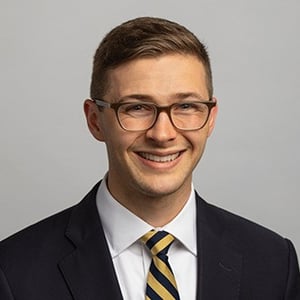
Attorney, Institute for Justice
Josh Windham is an attorney at the Institute for Justice.
Originally from Charlotte, Josh joined the Institute’s headquarters office in 2016. He received his law degree in 2016 from the University of North Carolina School of Law, where he served as president of the Federalist Society and as judicial extern to the Honorable Robert Numbers in the Eastern District of North Carolina. Josh graduated summa cum laude from North Carolina State University in 2013 with a Bachelor of Arts in History. He is an avid sports fan and dessert lover.
Josh is licensed in North Carolina.

Deregulation Roundup: A Review of Florida’s New Occupational Licensing Reform
Tallahassee Lawyers Chapter - Online Event
Just Compensation: A Suggestion or a Requirement?
Robert J. McNamara, Daniel Woislaw
Can states unilaterally decide not to pay takings judgments? Some states think so. Louisiana and...
Espinoza v. Montana Department of Revenue - Post-Argument SCOTUScast
Erica Smith
This SCOTUScast addresses the January 22 Supreme Court argument in Espinoza v. Montana Department of Revenue. ...
Just Compensation: A Suggestion or a Requirement?
TeleforumTopics
State Supreme Courts Protect Economic Liberty
This has been a big week for fans of state constitutional law. Georgia and Pennsylvania...
Is There a "Police Power" Exception to the Fifth Amendment's Just Compensation Clause?
Clark Neily, Jeffrey H. Redfern
Police in Greenwood Village, CO, chased a shoplifting suspect into a home belonging to Leo...
A Virtual Conversation with Tim Keller: Espinoza v. Montana & School Choice in Vermont
Vermont Lawyers Chapter- Online Event
Is There a "Police Power" Exception to the Fifth Amendment's Just Compensation Clause?
TeleforumDeep Dive Episode 97 – Certificate of Need Laws and Healthcare Access
Christina Sandefur, Josh Windham
38 states have certificate of need (CON) laws which make it illegal for healthcare providers...
Topics
Salgado v. United States: Will the Supreme Court Require the Department of Justice to Follow the Plain Text of CAFRA’s Attorneys’ Fees Provision?
On April 3rd, the Supreme Court is scheduled to review a crucial petition for a...