
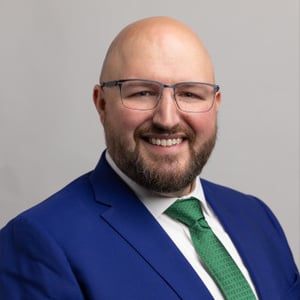
Senior Attorney, Institute for Justice
Patrick Jaicomo is a Senior Attorney with the Institute for Justice and one of the leaders of IJ’s Project on Immunity and Accountability. Through the project, Patrick works to dismantle judicially created immunity doctrines and ensure that government officials are held accountable when they violate the Constitution.
In November 2020, Patrick argued the police brutality case Brownback v. King before the U.S. Supreme Court. In March 2024, Patrick returned to the high court for the First Amendment retaliation case Gonzalez v. Trevino and again in October 2024, when the court granted, vacated, and reversed the denial of a similar retaliation claim in Murphy v. Schmitt. Patrick has litigated immunity and accountability issues—including qualified immunity, judicial immunity, and the restriction of constitutional claims against federal workers—across the United States and at every level of the court system.
Before joining IJ, Patrick was a litigator at a private firm in Grand Rapids, Michigan, where he cultivated a civil rights practice and handled a variety of cases in state and federal court. He earned his law degree from the University of Chicago and a degree in economics and political science from the University of Notre Dame.
Patrick was born and raised in rural, Steuben County, Indiana, where he met his wife and IJ colleague, Kenzie. The Jaicomos live in Arlington, Virginia, with their lovely daughter, Cora.
Patrick’s work has been featured in numerous publications, including the New York Times, Wall Street Journal, Washington Post, and USA Today. He has also appeared on numerous podcasts and television programs, authored academic articles, and frequently gives presentations on his areas of expertise.
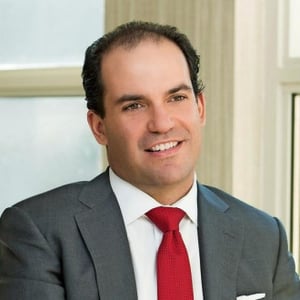
Partner, Latham & Watkins LLP
Roman Martinez is a partner in the Washington, D.C. office of Latham & Watkins. As a member of the firm’s Supreme Court and Appellate Practice, he focuses primarily on appeals in the Supreme Court of the United States, the United States Courts of Appeals, and state appellate courts. Mr. Martinez has handled civil and criminal matters involving a wide range of constitutional, statutory, and administrative law issues, and he has argued cases in the Supreme Court and the D.C., Sixth, Ninth, and Federal Circuits, among other courts.
Mr. Martinez’s appellate practice encompasses civil and criminal matters spanning virtually all areas of law. He recently rejoined Latham after serving as an Assistant to the Solicitor General at the US Department of Justice. In that role, he represented the United States in litigation before the Supreme Court and advised the Solicitor General on the government’s appellate litigation throughout the country.
Mr. Martinez has personally argued seven cases in the Supreme Court, including important cases in the fields of patent law, criminal law, civil rights, and civil procedure. He has filed over 75 briefs in the Supreme Court involving a wide range of legal issues, including administrative, tax, securities, intellectual property, criminal, environmental, education, civil rights, immigration, and First Amendment law.
Over the past year, Mr. Martinez has led Latham appellate teams in cases involving the Administrative Procedure Act, securities, ERISA, products liability, and employment law. Earlier this year, he successfully persuaded the Supreme Court to reject the State of Connecticut’s high-profile effort to reinstate the murder conviction of Michael Skakel. He frequently consults with clients to develop creative approaches to difficult legal questions that arise in and out of litigation.
Mr. Martinez’s extensive pro bono practice focuses chiefly on administrative law challenges to unlawful agency action by the Department of Veterans Affairs, as well as on criminal defense appeals. In 2018, he persuaded the Supreme Court to grant certiorari on behalf of a veteran seeking judicial review of an unlawful regulation promulgated by the Department of Veterans Affairs.
Before joining Latham, Mr. Martinez served as a law clerk to Chief Justice John G. Roberts of the Supreme Court of the United States and to then Judge Brett M. Kavanaugh of the D.C. Circuit.
From 2002 to 2005, Mr. Martinez served as an advisor on the Iraqi political and constitutional process, in various roles at the White House, at the US Embassy and Coalition Provisional Authority in Iraq, and at the Department of Defense. He received the Secretary of Defense Medal for the Global War on Terrorism and the US Department of Defense Distinguished Public Service Award for his service in Iraq.
Mr. Martinez is a member of the Edward Coke Appellate Inn of Court, and he serves on the US Chamber of Commerce's Administrative Law & Government Litigation Advisory Committee. He previously served as a member of the D.C. Circuit’s Advisory Committee on Procedures, and he now serves on the US District Court for the District of Columbia’s Committee on Grievances. His writing has appeared in The Wall Street Journal, The Washington Post, and other publications. He has appeared as a guest on the PBS NewsHour and other television programs to discuss the Supreme Court.
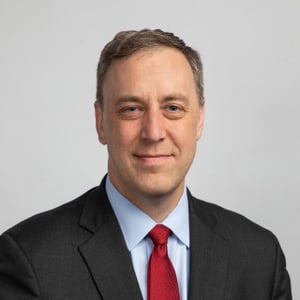
Florida Office Managing Attorney, Institute for Justice
Justin Pearson is the Institute’s Florida Office Managing Attorney. He also coordinates aspects of the Institute’s national economic liberty efforts and personally directs IJ’s National Street Vending Initiative. Justin has devoted his career to vindicating the constitutional rights of small-business owners, and he has victoriously litigated on their behalf in trial and appellate courts across the nation.
Justin often wins in novel ways. He was the lead counsel in a federal appellate court victory vindicating the right of a Florida dairy creamery to tell the truth on its labels, which was the first victorious First Amendment challenge to a food standard of identity in U.S. history. His win against Little Rock’s ban on taxi competition was based on a provision in the Arkansas Constitution that had not been successfully relied upon in over half a century. And his victory against Fort Pierce’s food truck ban included the first preliminary injunction ever issued in this type of challenge anywhere in the nation.
In addition to litigation, Justin has testified to Florida Senate and House committees dozens of times, and provisions suggested by Justin have been enacted into law. The successful bills that Justin has actively supported include Florida’s 2021 cottage food, home-based business, and local occupational licensing reforms, Florida’s historic 2020 occupational licensing reform (which repealed the most occupational licensing barriers in U.S. history), Florida’s 2019 repeal of the certificate of need requirement for hospitals, Florida’s 2019 Fresh Start reform making it easier for individuals with criminal records to obtain employment, and Florida’s 2016 overhaul of its civil forfeiture laws.
Justin’s work has appeared in countless media outlets, and Justin has spoken to scores of law schools and attorney organizations across the nation. The law schools that have hosted Justin’s talks include Yale, the University of Chicago, Duke, NYU, Notre Dame, and the University of Michigan, among many others.
Prior to joining IJ, Justin founded and managed his own law practice to advocate for small-business owners, and Justin’s law practice was successful for many years before he made the decision to join IJ in 2012 to better fight against government power gone awry.
Justin received his law degree with honors from the University of Miami in 2002, where he was the Research and Writing Editor for, and was published in, the University of Miami Business Law Review. Justin received his undergraduate degree in business management from North Carolina State University. Justin has been honored by the Daily Business Review and Law.com for being one of South Florida’s “Most Effective Lawyers.”
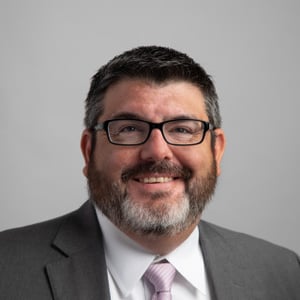
Senior Attorney, Institute for Justice
Paul Avelar is the Managing Attorney of the Institute for Justice Arizona Office. He joined the Institute in March 2010 and litigates free speech, property rights, economic liberty, school choice and other constitutional cases in federal and state courts.
As the head of IJ’s national Braiding Freedom Initiative, Paul represents natural hair braiders across the country to protect their right to earn an honest living. The Initiative uses lawsuits, activism and research to remove laws that require potential braiders to undergo hundreds of costly training hours just to braid hair. Since IJ launched the Braiding Freedom Initiative in 2014, 12 additional states have freed braiders from unnecessary licensing burdens. Paul drafted the model Natural Hair Braiding Protection Act, which has been adopted in Arkansas, Indiana, Iowa, Kentucky, Nebraska, New Hampshire, Texas and South Dakota. He is currently representing braiders in Missouri, where state laws infringe upon their right to earn an honest living.
In his free speech work, Paul has challenged numerous laws that trample First Amendment rights. In Arizona Freedom Club PAC v. Bennett, he represented candidates and independent groups in a successful U.S. Supreme Court challenge to the “matching funds” provision of Arizona’s publicly financed elections system. He represented grassroots groups and individuals in Arizona, Mississippi and Washington, where state laws burdened their political speech by requiring them to register with the government, to navigate complex regulations and to face fines and possible criminal penalties merely because they talked about political issues. In Washington, Paul protected a lawyer’s right to defend, pro-bono, the First Amendment rights of political speakers. Through litigation and legislation, Paul leads the fight against abusive civil forfeiture laws in Arizona and elsewhere.
Paul also co-authored the most comprehensive published study of economic liberty protections in the Arizona Constitution. The Chief Justice of the Arizona Supreme Court appointed Paul to the Task Force on the Review of the Role and Governance Structure of the State Bar of Arizona, where he dissented from the majority report and called on leaders to substantially reform the Bar and state regulation of the practice of law. He often speaks at law schools across the country about constitutional issues and his work at IJ.
Prior to joining IJ-AZ, Paul worked as an attorney in Philadelphia. He clerked for Judge Roger Miner on the 2nd U.S. Circuit Court of Appeals, Justice Andrew Hurwitz on the Arizona Supreme Court, and Judge Daniel Barker on the Arizona Court of Appeals.
Paul graduated manga cum laude from the Arizona State University College of Law in 2004 and was elected to the Order of the Coif. He received his undergraduate degree from Princeton University in 2000.
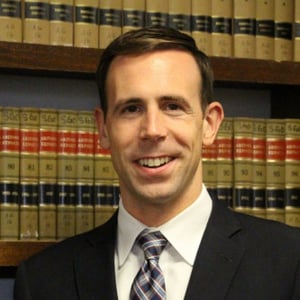
Shareholder, Greenberg Traurig, LLP
Dominic E. Draye has litigated at every level of the state and federal judiciary—from state trial court to the Supreme Court of the United States. His practice focuses on constitutional, regulatory, and environmental matters, and he has represented clients in both the public and private sectors. In the federal appellate courts, Mr. Draye has represented clients in the Second, Fifth, Seventh, Ninth, and D.C. Circuits.
Before joining Greenberg, Mr. Draye served as the Solicitor General of Arizona, where he briefed and argued the State’s highest-profile civil and criminal appeals and served as lead counsel for several multi-state coalitions litigating over agency rulemaking in the D.C. Circuit. Prior to government service, Mr. Draye was a litigator in the Washington, D.C., office of Kirkland & Ellis LLP, where his practice focused on legal issues and appeals.
Mr. Draye is a sought-after speaker on topics of administrative and constitutional law. He clerked for Hon. Edith H. Jones on the United States Court of Appeals for the Fifth Circuit and attended the University of Pennsylvania Law School.
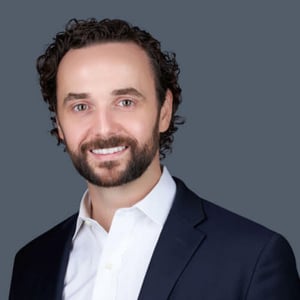
Managing Partner, Statecraft
Kory Langhofer is the Managing Attorney at Statecraft PLLC, a law firm focusing on government and political law. His practice is concentrated in campaign finance, constitutional litigation, and political matters. He has previously worked as a federal prosecutor, as litigation counsel to the presidential campaigns for Mitt Romney and Donald Trump, and as general counsel for the 2016-2017 presidential transition team.
Kory received his A.B. in political science, summa cum laude, from the University of Illinois at Urbana-Champaign. He received his J.D. from Yale Law School, where he served as an Editor of The Yale Law Journal.
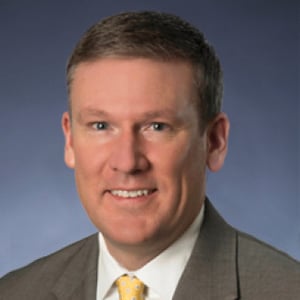
Senior Advisor, Wilkinson Barker Knauer LLP
Mr. Clark is a Senior Advisor at Wilkinson Barker Knauer, LLP. He has extensive experience in energy and utility policy at the federal and state level. He provides clients with analysis and strategic advice on a variety regulatory and public policy matters affecting their businesses. He specializes in working with clients in the energy and telecommunications industries and at the nexus of state and federal jurisdictional issues.
Having been appointed by President Obama, and unanimously confirmed by the U.S. Senate, Mr. Clark served from 2012 to 2016 as a Commissioner of the Federal Energy Regulatory Commission. While at the FERC, Mr. Clark worked on matters that are at the forefront of energy policy, such as: electricity reliability, electricity-natural gas industry coordination, oversight of the nation’s Regional Transmission Organizations, electricity grid cyber and physical security regulations, major enforcement actions, energy infrastructure permitting, the integration of renewables and energy storage, FERC Order 1000 implementation, and wholesale electricity market reforms. From 2001 to 2012 he was a Commissioner of the North Dakota Public Service Commission, including over 5 years as its Chairman. During his tenure at the North Dakota Commission, Mr. Clark oversaw numerous proceedings related to the state’s historic emergence as a leader in American energy production. In 2010, he was selected by his regulatory peers across the nation to serve a term as President of the National Association of Regulatory Utility Commissioners. He also served a three-year term as Chairman of the NARUC Telecommunications Committee. Through his various regulatory positions, he has testified multiple times before Committees of both the US House and US Senate on matters related to energy and telecommunications.
From 1999 to 2000, Mr. Clark was Labor Commissioner of the State of North Dakota and a member of the Cabinet of Gov. Ed Schafer. In 1994 he was one of the youngest people ever elected to the North Dakota legislature, representing a portion of the City of Fargo for two terms in the State House of Representatives. He is a graduate, with honor, from North Dakota State University and holds a master’s degree from the University of North Dakota. In addition to his work at Wilkinson Barker Knauer, LLP, Mr. Clark serves as a non-employee independent director on the Board of Directors of NorthWestern Energy Corporation. Having attained the rank of Eagle Scout in his youth, Mr. Clark has been a long-time volunteer with and supporter of the Boy Scouts of America.
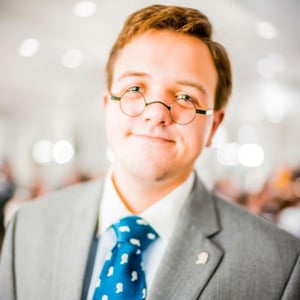
Adam Griffin is a graduate of the University of North Carolina School of Law. During law school, he served as a research assistant to Professor Stephen E. Sachs and UNC Law Dean Martin Brinkley. After law school, Adam spent two years litigating for liberty at the Institute for Justice as an inaugural Law and Liberty Fellow. He then served as a law clerk to Chief Judge Richard E. Myers in the United States District Court for the Eastern District of North Carolina, and previously worked at Pacific Legal Foundation and the Civil Rights Division of the Department of Justice.
Vice President, Regulatory Affairs, NRG Energy
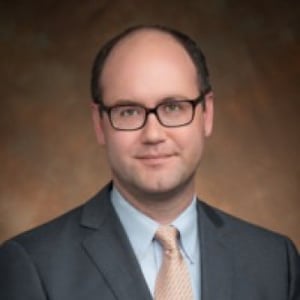
Travis Kavulla joined NRG after a decade of work as a policy wonk and government regulator. Previously, Travis headed up energy and environmental policy for the R Street Institute, a think tank, and before that was twice elected to public office as a utility commissioner in Montana. Travis has also held leadership roles in national policy circles, including as president of the National Association of Regulatory Utility Commissioners. During his work in public life, Travis has written dozens of articles and speeches on electricity policy and regulation.
Senior Attorney, Institute for Justice
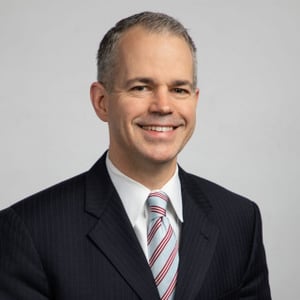
Michael Bindas is a senior attorney with the Institute for Justice (IJ) and leads IJ’s educational choice team. In this role, he oversees a talented group of IJ attorneys who help policymakers design constitutionally defensible educational choice programs and who defend educational choice programs in courtrooms nationwide. He joined IJ in 2005.
Michael was part of IJ’s litigation team in Espinoza v. Montana Department of Revenue, in which the U.S. Supreme Court held the exclusion of religious options from Montana’s educational choice program unconstitutional, and he led IJ’s defense of the Choice Scholarship Program for elementary and secondary students in Douglas County, Colorado. He also successfully challenged Washington’s denial of special education services to children in religious schools, as well as the state’s exclusion of sectarian options from its state work study program. Currently, he leads IJ’s team in Carson v. Makin, challenging Maine’s exclusion of religious options from its educational choice program.
Prior to leading IJ’s educational choice team, Michael litigated extensively to secure economic liberty, property rights, and freedom of speech throughout the nation. He was counsel of record at the U.S. Supreme Court for Kimbrough Fine Wine & Spirits in Tennessee Wine and Spirits Retailers Association v. Thomas, a successful challenge to Tennessee’s durational residency requirements for retail liquor licenses. He also led successful challenges to the municipal sign codes of St. Louis, Mo. and Norfolk, Va., after those cities attempted to silence protests of their abusive eminent domain practices.
Prior to joining IJ, Michael spent three years as an attorney with Perkins Coie LLP. He is a former law clerk to Judge Rhesa Hawkins Barksdale of the U.S. Court of Appeals for the Fifth Circuit and served as an engineer officer in the United States Army and Pennsylvania Army National Guard before beginning his legal career.
Michael received his law degree cum laude from the University of Pennsylvania Law School in 2001, where he served as Articles Editor for the Journal of Constitutional Law and was elected to the Order of the Coif. He received his undergraduate degree from the United States Military Academy at West Point in 1995.
Senior Advisor, Wilkinson Barker Knauer LLP
Mr. Clark is a Senior Advisor at Wilkinson Barker Knauer, LLP. He has extensive experience in energy and utility policy at the federal and state level. He provides clients with analysis and strategic advice on a variety regulatory and public policy matters affecting their businesses. He specializes in working with clients in the energy and telecommunications industries and at the nexus of state and federal jurisdictional issues.
Having been appointed by President Obama, and unanimously confirmed by the U.S. Senate, Mr. Clark served from 2012 to 2016 as a Commissioner of the Federal Energy Regulatory Commission. While at the FERC, Mr. Clark worked on matters that are at the forefront of energy policy, such as: electricity reliability, electricity-natural gas industry coordination, oversight of the nation’s Regional Transmission Organizations, electricity grid cyber and physical security regulations, major enforcement actions, energy infrastructure permitting, the integration of renewables and energy storage, FERC Order 1000 implementation, and wholesale electricity market reforms. From 2001 to 2012 he was a Commissioner of the North Dakota Public Service Commission, including over 5 years as its Chairman. During his tenure at the North Dakota Commission, Mr. Clark oversaw numerous proceedings related to the state’s historic emergence as a leader in American energy production. In 2010, he was selected by his regulatory peers across the nation to serve a term as President of the National Association of Regulatory Utility Commissioners. He also served a three-year term as Chairman of the NARUC Telecommunications Committee. Through his various regulatory positions, he has testified multiple times before Committees of both the US House and US Senate on matters related to energy and telecommunications.
From 1999 to 2000, Mr. Clark was Labor Commissioner of the State of North Dakota and a member of the Cabinet of Gov. Ed Schafer. In 1994 he was one of the youngest people ever elected to the North Dakota legislature, representing a portion of the City of Fargo for two terms in the State House of Representatives. He is a graduate, with honor, from North Dakota State University and holds a master’s degree from the University of North Dakota. In addition to his work at Wilkinson Barker Knauer, LLP, Mr. Clark serves as a non-employee independent director on the Board of Directors of NorthWestern Energy Corporation. Having attained the rank of Eagle Scout in his youth, Mr. Clark has been a long-time volunteer with and supporter of the Boy Scouts of America.
Adam Griffin is a graduate of the University of North Carolina School of Law. During law school, he served as a research assistant to Professor Stephen E. Sachs and UNC Law Dean Martin Brinkley. After law school, Adam spent two years litigating for liberty at the Institute for Justice as an inaugural Law and Liberty Fellow. He then served as a law clerk to Chief Judge Richard E. Myers in the United States District Court for the Eastern District of North Carolina, and previously worked at Pacific Legal Foundation and the Civil Rights Division of the Department of Justice.
Vice President, Regulatory Affairs, NRG Energy
Travis Kavulla joined NRG after a decade of work as a policy wonk and government regulator. Previously, Travis headed up energy and environmental policy for the R Street Institute, a think tank, and before that was twice elected to public office as a utility commissioner in Montana. Travis has also held leadership roles in national policy circles, including as president of the National Association of Regulatory Utility Commissioners. During his work in public life, Travis has written dozens of articles and speeches on electricity policy and regulation.
Senior Attorney, Institute for Justice
Michael Bindas is a senior attorney with the Institute for Justice (IJ) and leads IJ’s educational choice team. In this role, he oversees a talented group of IJ attorneys who help policymakers design constitutionally defensible educational choice programs and who defend educational choice programs in courtrooms nationwide. He joined IJ in 2005.
Michael was part of IJ’s litigation team in Espinoza v. Montana Department of Revenue, in which the U.S. Supreme Court held the exclusion of religious options from Montana’s educational choice program unconstitutional, and he led IJ’s defense of the Choice Scholarship Program for elementary and secondary students in Douglas County, Colorado. He also successfully challenged Washington’s denial of special education services to children in religious schools, as well as the state’s exclusion of sectarian options from its state work study program. Currently, he leads IJ’s team in Carson v. Makin, challenging Maine’s exclusion of religious options from its educational choice program.
Prior to leading IJ’s educational choice team, Michael litigated extensively to secure economic liberty, property rights, and freedom of speech throughout the nation. He was counsel of record at the U.S. Supreme Court for Kimbrough Fine Wine & Spirits in Tennessee Wine and Spirits Retailers Association v. Thomas, a successful challenge to Tennessee’s durational residency requirements for retail liquor licenses. He also led successful challenges to the municipal sign codes of St. Louis, Mo. and Norfolk, Va., after those cities attempted to silence protests of their abusive eminent domain practices.
Prior to joining IJ, Michael spent three years as an attorney with Perkins Coie LLP. He is a former law clerk to Judge Rhesa Hawkins Barksdale of the U.S. Court of Appeals for the Fifth Circuit and served as an engineer officer in the United States Army and Pennsylvania Army National Guard before beginning his legal career.
Michael received his law degree cum laude from the University of Pennsylvania Law School in 2001, where he served as Articles Editor for the Journal of Constitutional Law and was elected to the Order of the Coif. He received his undergraduate degree from the United States Military Academy at West Point in 1995.
Senior Attorney, Institute for Justice
Michael Bindas is a senior attorney with the Institute for Justice (IJ) and leads IJ’s educational choice team. In this role, he oversees a talented group of IJ attorneys who help policymakers design constitutionally defensible educational choice programs and who defend educational choice programs in courtrooms nationwide. He joined IJ in 2005.
Michael was part of IJ’s litigation team in Espinoza v. Montana Department of Revenue, in which the U.S. Supreme Court held the exclusion of religious options from Montana’s educational choice program unconstitutional, and he led IJ’s defense of the Choice Scholarship Program for elementary and secondary students in Douglas County, Colorado. He also successfully challenged Washington’s denial of special education services to children in religious schools, as well as the state’s exclusion of sectarian options from its state work study program. Currently, he leads IJ’s team in Carson v. Makin, challenging Maine’s exclusion of religious options from its educational choice program.
Prior to leading IJ’s educational choice team, Michael litigated extensively to secure economic liberty, property rights, and freedom of speech throughout the nation. He was counsel of record at the U.S. Supreme Court for Kimbrough Fine Wine & Spirits in Tennessee Wine and Spirits Retailers Association v. Thomas, a successful challenge to Tennessee’s durational residency requirements for retail liquor licenses. He also led successful challenges to the municipal sign codes of St. Louis, Mo. and Norfolk, Va., after those cities attempted to silence protests of their abusive eminent domain practices.
Prior to joining IJ, Michael spent three years as an attorney with Perkins Coie LLP. He is a former law clerk to Judge Rhesa Hawkins Barksdale of the U.S. Court of Appeals for the Fifth Circuit and served as an engineer officer in the United States Army and Pennsylvania Army National Guard before beginning his legal career.
Michael received his law degree cum laude from the University of Pennsylvania Law School in 2001, where he served as Articles Editor for the Journal of Constitutional Law and was elected to the Order of the Coif. He received his undergraduate degree from the United States Military Academy at West Point in 1995.

Courthouse Steps Preview: Brownback v. King
TeleforumPennsylvania Judicial Engagement State Forum
Philadelphia Lawyers Chapter - Online Event
Occupational Licenses: An Infringement on Economic Liberties & The Free Market
Southwest Florida Lawyers Chapter - Online Event
2020 SCOTUS Review
Phoenix Lawyers Chapter
Topics
Only mostly dead? New Cert Petition presents Supreme Court with an opportunity to revisit the Privileges or Immunities Clause
A new petition for certiorari filed by the Institute for Justice asks the Supreme Court...
Retooling Energy Regulations: Who Decides?
Anthony T. Clark, Adam F. Griffin, Travis Kavulla
On July 16, 2020, the Federal Energy Regulatory Commission (FERC) revised its regulations governing qualifying...
Retooling Energy Regulations: Who Decides?
TeleforumCourthouse Steps Decision Teleforum: Espinoza v. Montana Department of Revenue
Michael Bindas
On June 30, the Supreme Court released its decision in the case of Espinoza v....
Espinoza v. Montana Department of Revenue - Post-Decision SCOTUScast
Michael Bindas
On June 30, the Supreme Court released its decision in the case of Espinoza v....
Courthouse Steps Decision Teleforum: Espinoza v. Montana Department of Revenue
Teleforum