
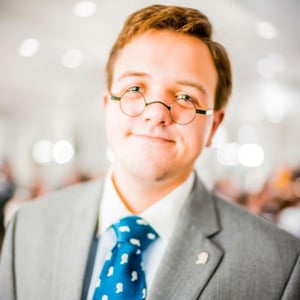
Adam Griffin is a graduate of the University of North Carolina School of Law. During law school, he served as a research assistant to Professor Stephen E. Sachs and UNC Law Dean Martin Brinkley. After law school, Adam spent two years litigating for liberty at the Institute for Justice as an inaugural Law and Liberty Fellow. He then served as a law clerk to Chief Judge Richard E. Myers in the United States District Court for the Eastern District of North Carolina, and previously worked at Pacific Legal Foundation and the Civil Rights Division of the Department of Justice.
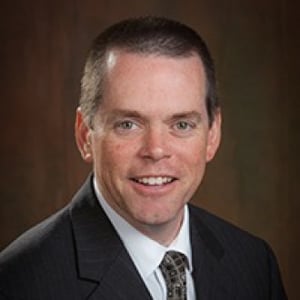
Associate Professor of Law,, St. Thomas University College of Law
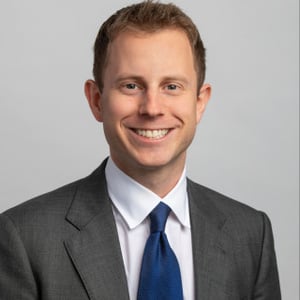
Attorney, Institute for Justice
Andrew Ward is an attorney with the Institute for Justice. He is a leader in IJ’s new Fresh Start practice, which challenges laws that unfairly prevent people with criminal records from earning an honest living.
Before joining IJ, Andrew clerked for Judge Edward Korman of the U.S. District Court for the Eastern District of New York. He has also been a litigation associate at the New York office of Sullivan & Cromwell and a law clerk to Judge Raymond Gruender of the U.S. Court of Appeals for the Eighth Circuit.

Attorney, Institute for Justice
Anya Bidwell (née Cherkasova) leads IJ’s Project on Immunity and Accountability (“PIA”). Through this project, Anya works to promote judicial engagement and ensure that government officials are held to account when they violate individuals’ constitutional rights. Anya also serves as an adviser on the American Law Institute’s Restatement of the Law, Constitutional Torts project.
One of Anya’s PIA cases—Gonzalez v. Trevino—was heard by the United States Supreme Court on March 20, 2024. She argued the case for the petitioner, with the goal of convincing the Justices that retaliatory arrests not involving on-the-spot decisions by police officers should be actionable under the First Amendment regardless of probable cause. The decision is expected in June.
This was Anya’s third appearance before the U.S. Supreme Court. She second-chaired Brownback v. King (an excessive force case) and Tennessee Wine & Spirits Retailers Association v. Thomas (a commerce clause case) in November 2020 and January 2019 respectfully.
Before joining IJ, Anya worked for a top national law firm, handling cases in trial and appellate courts. She earned her J.D. with honors from the University of Texas. Two years prior to entering law school, Anya received a master’s degree in Global Policy Studies, also from the University of Texas, and wrote a thesis on asymmetric warfare.
Anya spent her childhood in Ukraine and Kyrgyzstan. At 16, she left her family behind and came to America on a university scholarship. Her upbringing motivated her to study law and become an advocate for a strong, independent judiciary.
Anya’s work has been featured in numerous publications, including the Washington Post, the Wall Street Journal, the New York Times, USA Today, and the Guardian. She is also the host of live recordings of our Short Circuit podcast and a co-producer of our documentary-style podcast Bound by Oath.
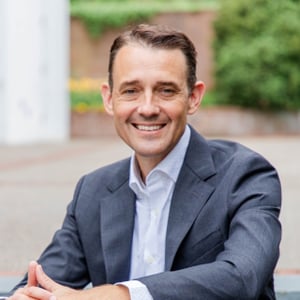
Senior Vice President, Strategic Initiatives & Special Counsel to the President, Alliance Defending Freedom
Ryan Bangert serves as senior vice president for strategic initiatives and special counsel to the president at Alliance Defending Freedom. He oversees ADF’s regulatory practice, government relations, and corporate engagement teams. He also advises executive leadership with strategic initiatives and appears as counsel for ADF clients.
Before joining ADF, Bangert served as deputy first assistant attorney general and deputy for legal counsel in the office of the Texas attorney general. In those roles, he oversaw the state’s Special Litigation Unit, which handled critical litigation against the federal government, and oversaw multiple divisions within the office. Prior to that, he served as deputy for civil litigation for Missouri Attorney General Josh Hawley, overseeing the state’s civil litigation divisions, including the consumer protection and antitrust divisions, with over 200 attorneys and staff. During his time in government service, Bangert handled a diverse array of matters involving Big Tech, election law, civil rights, multistate antitrust and consumer protection investigations, and many other issues.
Prior to his government service, Bangert was a litigation partner at Baker Botts L.L.P., where he was a member of the firm’s commercial litigation and appellate practice sections. A seasoned trial attorney, The Texas Lawyer ranked the verdict Bangert achieved in the Janvey v. Maldonado case as the #1 verdict in the securities category for 2015-2019, and The National Law Journal ranked it in its “Top 100 Verdicts of 2015.” He was named a “Texas Rising Star” for multiple years by Texas Lawyer and Law and Politics magazines. While at Baker Botts, he was a volunteer attorney for ADF and served as amicus counsel in numerous cases, including Trinity Lutheran v. Comer and Salazar v. Buono, receiving the firm’s Opus Justitae Award in recognition of his outstanding commitment to pro bono service.
Bangert earned his J.D. from Southern Methodist University, where he was a Hatton Sumner’s scholar and graduated first in his class. He also participated in ADF’s Blackstone program and is a Blackstone Fellow. Following law school, he clerked for the Honorable Patrick E. Higginbotham on the Fifth Circuit Court of Appeals.
Bangert is a member of the Philadelphia Society and Federalist Society. He is admitted to practice law in Texas, California (inactive), Missouri (inactive), the U.S. Supreme Court and numerous federal district and appellate courts. A frequent op-ed contributor, his work has appeared in National Review, Daily Wire, The Hill, Washington Examiner, The Federalist, Fox News, and RealClear Religion. He speaks nationally on constitutional, cultural, and religious liberty issues.
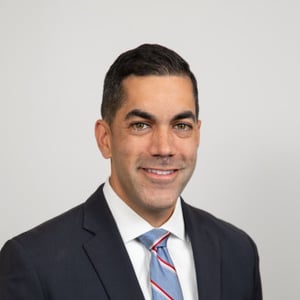
Managing Attorney, Institute for Justice
Arif Panju serves as a managing attorney with the Institute for Justice. He leads IJ’s Texas office and litigates cases involving free speech, property rights, economic liberty, and educational choice.
Arif is co-counsel in the case of Carson v. Makin in the U.S. Supreme Court. Carson is a challenge to Maine’s exclusion of religious educational options from the state’s school choice program.
Arif’s work has resulted in court victories in both federal and state court. He vindicated the free speech rights of tour guides in Billups v. City of Charleston. He secured a victory for economic liberty in Brantley v. Kuntz, freeing hairbraiding schools in Texas from onerous restrictions and paving the way for the abolishment of the state’s braiding license at the Texas Legislature. In Patel v. Texas Department of Licensing and Regulation, Arif helped secure a landmark victory in the Texas Supreme Court, establishing a new test for reviewing the constitutionality of economic regulations.
Arif’s work at IJ has been featured by outlets including The Wall Street Journal, New York Times, Washington Post, The Atlantic, Texas Tribune, and dozens more nationwide. His opinions and views on legal issues have been published in several outlets, including the Dallas Morning News, Austin American-Statesman, and USA Today. Arif sits on the board for the Freedom of Information Foundation of Texas.
Arif graduated law school with honors from Southern Methodist University. During law school he clerked on the United States Senate Committee on the Judiciary. Arif lives in Austin, Texas.
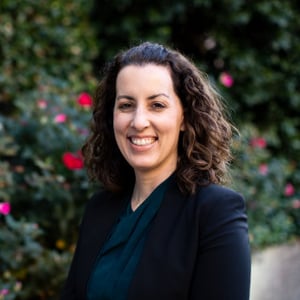
Counsel, Becket Law
Rebekah Ricketts joined Becket as counsel in 2022. Her practice focuses on First Amendment and appellate litigation.
Before joining Becket, Becky served as an Assistant U.S. Attorney for the Northern District of Texas, where she prosecuted a wide range of violent crimes and cyber offenses, including sex trafficking, cyberstalking, carjacking, kidnapping, firearms offenses, and drug trafficking. As Human Trafficking Coordinator, she led the District’s efforts to reconstitute the North Texas Trafficking Task Force, a cross-agency task force led by Homeland Security Investigations. She also obtained the first criminal indictment and guilty plea under the Fight Online Sex Trafficking Act (FOSTA), in a case against the owner of a commercial sex website.
Before that, Becky was an associate at Gibson, Dunn & Crutcher LLP in Dallas, where she practiced appellate and constitutional law, complex commercial litigation, and administrative law. While at the firm, Becky argued cases in federal and state court and worked on numerous high-profile appeals, including a landmark Fifth Circuit reversal of a $663 million False Claims Act judgment. She also maintained an active pro bono docket of religious liberty cases.
Becky served as a law clerk to Justice Clarence Thomas of the Supreme Court of the United States, Judge José A. Cabranes of the United States Court of Appeals for the Second Circuit, and Judge Richard J. Sullivan, then of the United States District Court for the Southern District of New York. She earned her J.D. from Yale Law School, where she was a Book Reviews & Features Editor of the Yale Law Journal, and her B.A. from the University of Texas at Austin, where she graduated with High Honors and was awarded the Harry S. Truman Scholarship.
Becky lives in the great state of Texas with her husband and two young daughters.

Counsel, First Liberty
Keisha Russell is Counsel with First Liberty Institute, concentrating on religious liberty matters and First Amendment rights.
Keisha attended Emory University School of Law, where she was heavily involved in Emory’s prestigious Center for the Study of Law and Religion. She served on the Emory Journal of Law & Religion and two moot court teams. She was a law clerk for the Center’s Restoring Religious Freedom Project where she worked on religious liberty litigation. In her final year of law school, Keisha worked as a law clerk for the American Center for Law and Justice (ACLJ) on national and international matters affecting Israel. Keisha was a 2017 Emory University Graduating Woman of Excellence.
Prior to joining First Liberty, Keisha was a 2011 Teach For America corps member in Atlanta Public Schools. As an elementary special education teacher, she taught students with ADD, emotional behavioral disorders, and learning disabilities. Keisha is most passionate about protecting religious freedom for children in America’s schools.
Keisha’s religious liberty commentary has been published in FoxNews.com, Washington Examiner, The Daily Signal, Real Clear Religion, The Richmond Times-Dispatch, Houston Chronicle, and others. She’s been a guest on FOX & Friends, CBN, and other local stations.
Keisha earned a Bachelor’s in Communications from University of Central Florida and a Master’s in Teaching from the University of Southern California.
Keisha is licensed to practice law in New York, Texas, and Florida.
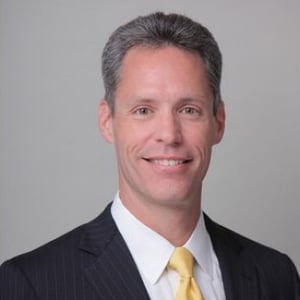
Judge, United States District Court for the Southern District of Texas
Prior to joining the bench, Drew Tipton was a partner at Baker Hostetler, LLP in Houston, Texas, where his practice focused on complex labor and employment and trade secret litigation. Before joining Baker Hostetler in 1999, Judge Tipton was in private practice with Marek, Griffin, & Knaupp, LLP and Littler Mendelson, PC. Judge Tipton also served 5 years in the United States Marine Corps Reserve. Upon graduation from law school, Judge Tipton served as a law clerk to Judge John D. Rainey of the United States District Court for the Southern District of Texas. Judge Tipton earned his B.A. from Texas A&M University and his J.D. from South Texas College of Law Houston.
Director of Litigation, Texas Public Policy Foundation
Chance Weldon is a Senior Attorney and the Director of Litigation for the Center for the American Future at the Texas Public Policy Foundation.
Chance was one of the first attorneys hired by former litigation director Rob Henneke in 2015. Since joining the Foundation, Chance has worked on some of its most important cases. From protecting the rights of property owners along the Red River in North Texas (Aderholt v. BLM) to striking down the City of Austin’s onerous short-term rental regulations in Zaatari v. City of Austin, to defending peoples’ ability to maintain their property without suffering ruinous penalties in F.P. Development, LLC v. Canton, to reinvigorating the Commerce Clause in TPPF’s litigation against the Federal Government’s Eviction Moratorium and Vaccine Mandate, Chance has been at the forefront of protecting constitutional rights in Texas and across the country.
Before joining the Foundation, Chance served as a fellow at the Pacific Legal Foundation in Sacramento, California and the Institute for Justice in Austin, Texas. As a fellow, he worked on wide breadth of litigation involving economic liberty, free speech, school choice, and private property rights.
A Houston native, Chance earned his J.D. from the University of Houston, where he was awarded the Dean’s Merit Scholarship for all three years. Prior to law school, he received a B.A. in Philosophy and Political Science from the University of Houston. He is licensed to practice law in Texas, California (inactive status), the United States Supreme Court, and the United States Courts of Appeals for the Fifth, Sixth, and Seventh Circuits.
Senior Vice President, Strategic Initiatives & Special Counsel to the President, Alliance Defending Freedom
Ryan Bangert serves as senior vice president for strategic initiatives and special counsel to the president at Alliance Defending Freedom. He oversees ADF’s regulatory practice, government relations, and corporate engagement teams. He also advises executive leadership with strategic initiatives and appears as counsel for ADF clients.
Before joining ADF, Bangert served as deputy first assistant attorney general and deputy for legal counsel in the office of the Texas attorney general. In those roles, he oversaw the state’s Special Litigation Unit, which handled critical litigation against the federal government, and oversaw multiple divisions within the office. Prior to that, he served as deputy for civil litigation for Missouri Attorney General Josh Hawley, overseeing the state’s civil litigation divisions, including the consumer protection and antitrust divisions, with over 200 attorneys and staff. During his time in government service, Bangert handled a diverse array of matters involving Big Tech, election law, civil rights, multistate antitrust and consumer protection investigations, and many other issues.
Prior to his government service, Bangert was a litigation partner at Baker Botts L.L.P., where he was a member of the firm’s commercial litigation and appellate practice sections. A seasoned trial attorney, The Texas Lawyer ranked the verdict Bangert achieved in the Janvey v. Maldonado case as the #1 verdict in the securities category for 2015-2019, and The National Law Journal ranked it in its “Top 100 Verdicts of 2015.” He was named a “Texas Rising Star” for multiple years by Texas Lawyer and Law and Politics magazines. While at Baker Botts, he was a volunteer attorney for ADF and served as amicus counsel in numerous cases, including Trinity Lutheran v. Comer and Salazar v. Buono, receiving the firm’s Opus Justitae Award in recognition of his outstanding commitment to pro bono service.
Bangert earned his J.D. from Southern Methodist University, where he was a Hatton Sumner’s scholar and graduated first in his class. He also participated in ADF’s Blackstone program and is a Blackstone Fellow. Following law school, he clerked for the Honorable Patrick E. Higginbotham on the Fifth Circuit Court of Appeals.
Bangert is a member of the Philadelphia Society and Federalist Society. He is admitted to practice law in Texas, California (inactive), Missouri (inactive), the U.S. Supreme Court and numerous federal district and appellate courts. A frequent op-ed contributor, his work has appeared in National Review, Daily Wire, The Hill, Washington Examiner, The Federalist, Fox News, and RealClear Religion. He speaks nationally on constitutional, cultural, and religious liberty issues.
Managing Attorney, Institute for Justice
Arif Panju serves as a managing attorney with the Institute for Justice. He leads IJ’s Texas office and litigates cases involving free speech, property rights, economic liberty, and educational choice.
Arif is co-counsel in the case of Carson v. Makin in the U.S. Supreme Court. Carson is a challenge to Maine’s exclusion of religious educational options from the state’s school choice program.
Arif’s work has resulted in court victories in both federal and state court. He vindicated the free speech rights of tour guides in Billups v. City of Charleston. He secured a victory for economic liberty in Brantley v. Kuntz, freeing hairbraiding schools in Texas from onerous restrictions and paving the way for the abolishment of the state’s braiding license at the Texas Legislature. In Patel v. Texas Department of Licensing and Regulation, Arif helped secure a landmark victory in the Texas Supreme Court, establishing a new test for reviewing the constitutionality of economic regulations.
Arif’s work at IJ has been featured by outlets including The Wall Street Journal, New York Times, Washington Post, The Atlantic, Texas Tribune, and dozens more nationwide. His opinions and views on legal issues have been published in several outlets, including the Dallas Morning News, Austin American-Statesman, and USA Today. Arif sits on the board for the Freedom of Information Foundation of Texas.
Arif graduated law school with honors from Southern Methodist University. During law school he clerked on the United States Senate Committee on the Judiciary. Arif lives in Austin, Texas.
Counsel, Becket Law
Rebekah Ricketts joined Becket as counsel in 2022. Her practice focuses on First Amendment and appellate litigation.
Before joining Becket, Becky served as an Assistant U.S. Attorney for the Northern District of Texas, where she prosecuted a wide range of violent crimes and cyber offenses, including sex trafficking, cyberstalking, carjacking, kidnapping, firearms offenses, and drug trafficking. As Human Trafficking Coordinator, she led the District’s efforts to reconstitute the North Texas Trafficking Task Force, a cross-agency task force led by Homeland Security Investigations. She also obtained the first criminal indictment and guilty plea under the Fight Online Sex Trafficking Act (FOSTA), in a case against the owner of a commercial sex website.
Before that, Becky was an associate at Gibson, Dunn & Crutcher LLP in Dallas, where she practiced appellate and constitutional law, complex commercial litigation, and administrative law. While at the firm, Becky argued cases in federal and state court and worked on numerous high-profile appeals, including a landmark Fifth Circuit reversal of a $663 million False Claims Act judgment. She also maintained an active pro bono docket of religious liberty cases.
Becky served as a law clerk to Justice Clarence Thomas of the Supreme Court of the United States, Judge José A. Cabranes of the United States Court of Appeals for the Second Circuit, and Judge Richard J. Sullivan, then of the United States District Court for the Southern District of New York. She earned her J.D. from Yale Law School, where she was a Book Reviews & Features Editor of the Yale Law Journal, and her B.A. from the University of Texas at Austin, where she graduated with High Honors and was awarded the Harry S. Truman Scholarship.
Becky lives in the great state of Texas with her husband and two young daughters.
Counsel, First Liberty
Keisha Russell is Counsel with First Liberty Institute, concentrating on religious liberty matters and First Amendment rights.
Keisha attended Emory University School of Law, where she was heavily involved in Emory’s prestigious Center for the Study of Law and Religion. She served on the Emory Journal of Law & Religion and two moot court teams. She was a law clerk for the Center’s Restoring Religious Freedom Project where she worked on religious liberty litigation. In her final year of law school, Keisha worked as a law clerk for the American Center for Law and Justice (ACLJ) on national and international matters affecting Israel. Keisha was a 2017 Emory University Graduating Woman of Excellence.
Prior to joining First Liberty, Keisha was a 2011 Teach For America corps member in Atlanta Public Schools. As an elementary special education teacher, she taught students with ADD, emotional behavioral disorders, and learning disabilities. Keisha is most passionate about protecting religious freedom for children in America’s schools.
Keisha’s religious liberty commentary has been published in FoxNews.com, Washington Examiner, The Daily Signal, Real Clear Religion, The Richmond Times-Dispatch, Houston Chronicle, and others. She’s been a guest on FOX & Friends, CBN, and other local stations.
Keisha earned a Bachelor’s in Communications from University of Central Florida and a Master’s in Teaching from the University of Southern California.
Keisha is licensed to practice law in New York, Texas, and Florida.
Judge, United States District Court for the Southern District of Texas
Prior to joining the bench, Drew Tipton was a partner at Baker Hostetler, LLP in Houston, Texas, where his practice focused on complex labor and employment and trade secret litigation. Before joining Baker Hostetler in 1999, Judge Tipton was in private practice with Marek, Griffin, & Knaupp, LLP and Littler Mendelson, PC. Judge Tipton also served 5 years in the United States Marine Corps Reserve. Upon graduation from law school, Judge Tipton served as a law clerk to Judge John D. Rainey of the United States District Court for the Southern District of Texas. Judge Tipton earned his B.A. from Texas A&M University and his J.D. from South Texas College of Law Houston.
Director of Litigation, Texas Public Policy Foundation
Chance Weldon is a Senior Attorney and the Director of Litigation for the Center for the American Future at the Texas Public Policy Foundation.
Chance was one of the first attorneys hired by former litigation director Rob Henneke in 2015. Since joining the Foundation, Chance has worked on some of its most important cases. From protecting the rights of property owners along the Red River in North Texas (Aderholt v. BLM) to striking down the City of Austin’s onerous short-term rental regulations in Zaatari v. City of Austin, to defending peoples’ ability to maintain their property without suffering ruinous penalties in F.P. Development, LLC v. Canton, to reinvigorating the Commerce Clause in TPPF’s litigation against the Federal Government’s Eviction Moratorium and Vaccine Mandate, Chance has been at the forefront of protecting constitutional rights in Texas and across the country.
Before joining the Foundation, Chance served as a fellow at the Pacific Legal Foundation in Sacramento, California and the Institute for Justice in Austin, Texas. As a fellow, he worked on wide breadth of litigation involving economic liberty, free speech, school choice, and private property rights.
A Houston native, Chance earned his J.D. from the University of Houston, where he was awarded the Dean’s Merit Scholarship for all three years. Prior to law school, he received a B.A. in Philosophy and Political Science from the University of Houston. He is licensed to practice law in Texas, California (inactive status), the United States Supreme Court, and the United States Courts of Appeals for the Fifth, Sixth, and Seventh Circuits.
Adam Griffin is a graduate of the University of North Carolina School of Law. During law school, he served as a research assistant to Professor Stephen E. Sachs and UNC Law Dean Martin Brinkley. After law school, Adam spent two years litigating for liberty at the Institute for Justice as an inaugural Law and Liberty Fellow. He then served as a law clerk to Chief Judge Richard E. Myers in the United States District Court for the Eastern District of North Carolina, and previously worked at Pacific Legal Foundation and the Civil Rights Division of the Department of Justice.
Associate Professor of Law,, St. Thomas University College of Law
Attorney, Institute for Justice
Andrew Ward is an attorney with the Institute for Justice. He is a leader in IJ’s new Fresh Start practice, which challenges laws that unfairly prevent people with criminal records from earning an honest living.
Before joining IJ, Andrew clerked for Judge Edward Korman of the U.S. District Court for the Eastern District of New York. He has also been a litigation associate at the New York office of Sullivan & Cromwell and a law clerk to Judge Raymond Gruender of the U.S. Court of Appeals for the Eighth Circuit.
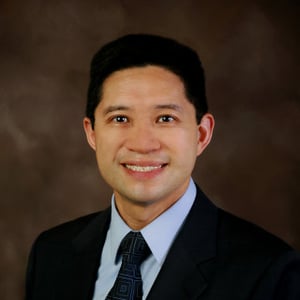
Founder, Original Jurisdiction
David Lat is a lawyer turned writer. He publishes Original Jurisdiction, a newsletter on Substack about law and legal affairs, and he writes for newspapers and magazines, including the New York Times, Washington Post, and Wall Street Journal. Prior to launching Original Jurisdiction, David founded Above the Law, one of the nation's most widely read legal news websites, and Underneath Their Robes, a popular blog about federal judges that he wrote under a pseudonym. He is also the author of a novel set in the world of the federal courts, Supreme Ambitions. Before entering the media world, David worked as a federal prosecutor in Newark, New Jersey; a litigation associate at Wachtell, Lipton, Rosen & Katz, in New York; and a law clerk to Judge Diarmuid F. O’Scannlain of the U.S. Court of Appeals for the Ninth Circuit. David graduated from Harvard College and Yale Law School, where he served as an editor of the Yale Law Journal.
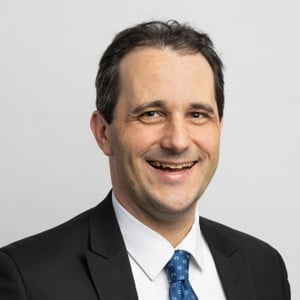
Director, Center for Judicial Engagement, Institute for Justice
Anthony Sanders is the Director of the Center for Judicial Engagement (CJE) at the Institute for Justice and a senior attorney. He joined IJ in 2010. As CJE’s director, he educates the public about the proper role of judges in enforcing constitutional limits on the size and scope of government. As a senior attorney he litigates cutting-edge constitutional cases protecting economic liberty, private property, freedom of speech and other individual liberties in both federal and state courts across the country.
One area of Anthony’s expertise is on using state constitutions to protect individual rights. He is the author of the book, published by University of Michigan Press, Baby Ninth Amendments: How Americans Embraced Unenumerated Rights and Why It Matters. He has also written several law review articles on state constitutional law, unenumerated rights, judicial review, economic liberty, property rights, international law, and other subjects. His work has appeared in publications such as the Iowa Law Review, Minnesota Law Review, American University Law Review, and Rutgers Law Review, and he has published opinion pieces in leading media outlets across the country. Further, he frequently speaks to various audiences on these matters and others, including judicial engagement, free speech, civil forfeiture, and the continuing importance of Magna Carta. Additionally, he hosts the weekly Short Circuit podcast, which often records live in front of law student audiences.
Anthony has litigated several cases in various state courts on state constitutional protections, as well as in federal courts on matters such as economic liberty, free speech, administrative law, and fines and fees abuse. Prior to joining IJ, Anthony served as a law clerk to Justice W. William Leaphart on the Montana Supreme Court. Anthony also worked for several years in private practice in Chicago where he was an active member of the Chicago Bar Association and chaired its Civil Rights Committee.
Anthony received his law degree cum laude from the University of Minnesota Law School in 2004, where he served as an articles submission editor for the Minnesota Law Review. He received his undergraduate degree from Hamline University in St. Paul, Minnesota, and his master’s degree from the University of Wisconsin-Madison. A dual U.S. and U.K. citizen, Anthony grew up on the islands of Vashon in Washington State, and Alderney in the British Channel Islands.
Senior Vice President, Strategic Initiatives & Special Counsel to the President, Alliance Defending Freedom
Ryan Bangert serves as senior vice president for strategic initiatives and special counsel to the president at Alliance Defending Freedom. He oversees ADF’s regulatory practice, government relations, and corporate engagement teams. He also advises executive leadership with strategic initiatives and appears as counsel for ADF clients.
Before joining ADF, Bangert served as deputy first assistant attorney general and deputy for legal counsel in the office of the Texas attorney general. In those roles, he oversaw the state’s Special Litigation Unit, which handled critical litigation against the federal government, and oversaw multiple divisions within the office. Prior to that, he served as deputy for civil litigation for Missouri Attorney General Josh Hawley, overseeing the state’s civil litigation divisions, including the consumer protection and antitrust divisions, with over 200 attorneys and staff. During his time in government service, Bangert handled a diverse array of matters involving Big Tech, election law, civil rights, multistate antitrust and consumer protection investigations, and many other issues.
Prior to his government service, Bangert was a litigation partner at Baker Botts L.L.P., where he was a member of the firm’s commercial litigation and appellate practice sections. A seasoned trial attorney, The Texas Lawyer ranked the verdict Bangert achieved in the Janvey v. Maldonado case as the #1 verdict in the securities category for 2015-2019, and The National Law Journal ranked it in its “Top 100 Verdicts of 2015.” He was named a “Texas Rising Star” for multiple years by Texas Lawyer and Law and Politics magazines. While at Baker Botts, he was a volunteer attorney for ADF and served as amicus counsel in numerous cases, including Trinity Lutheran v. Comer and Salazar v. Buono, receiving the firm’s Opus Justitae Award in recognition of his outstanding commitment to pro bono service.
Bangert earned his J.D. from Southern Methodist University, where he was a Hatton Sumner’s scholar and graduated first in his class. He also participated in ADF’s Blackstone program and is a Blackstone Fellow. Following law school, he clerked for the Honorable Patrick E. Higginbotham on the Fifth Circuit Court of Appeals.
Bangert is a member of the Philadelphia Society and Federalist Society. He is admitted to practice law in Texas, California (inactive), Missouri (inactive), the U.S. Supreme Court and numerous federal district and appellate courts. A frequent op-ed contributor, his work has appeared in National Review, Daily Wire, The Hill, Washington Examiner, The Federalist, Fox News, and RealClear Religion. He speaks nationally on constitutional, cultural, and religious liberty issues.
Managing Attorney, Institute for Justice
Arif Panju serves as a managing attorney with the Institute for Justice. He leads IJ’s Texas office and litigates cases involving free speech, property rights, economic liberty, and educational choice.
Arif is co-counsel in the case of Carson v. Makin in the U.S. Supreme Court. Carson is a challenge to Maine’s exclusion of religious educational options from the state’s school choice program.
Arif’s work has resulted in court victories in both federal and state court. He vindicated the free speech rights of tour guides in Billups v. City of Charleston. He secured a victory for economic liberty in Brantley v. Kuntz, freeing hairbraiding schools in Texas from onerous restrictions and paving the way for the abolishment of the state’s braiding license at the Texas Legislature. In Patel v. Texas Department of Licensing and Regulation, Arif helped secure a landmark victory in the Texas Supreme Court, establishing a new test for reviewing the constitutionality of economic regulations.
Arif’s work at IJ has been featured by outlets including The Wall Street Journal, New York Times, Washington Post, The Atlantic, Texas Tribune, and dozens more nationwide. His opinions and views on legal issues have been published in several outlets, including the Dallas Morning News, Austin American-Statesman, and USA Today. Arif sits on the board for the Freedom of Information Foundation of Texas.
Arif graduated law school with honors from Southern Methodist University. During law school he clerked on the United States Senate Committee on the Judiciary. Arif lives in Austin, Texas.
Counsel, Becket Law
Rebekah Ricketts joined Becket as counsel in 2022. Her practice focuses on First Amendment and appellate litigation.
Before joining Becket, Becky served as an Assistant U.S. Attorney for the Northern District of Texas, where she prosecuted a wide range of violent crimes and cyber offenses, including sex trafficking, cyberstalking, carjacking, kidnapping, firearms offenses, and drug trafficking. As Human Trafficking Coordinator, she led the District’s efforts to reconstitute the North Texas Trafficking Task Force, a cross-agency task force led by Homeland Security Investigations. She also obtained the first criminal indictment and guilty plea under the Fight Online Sex Trafficking Act (FOSTA), in a case against the owner of a commercial sex website.
Before that, Becky was an associate at Gibson, Dunn & Crutcher LLP in Dallas, where she practiced appellate and constitutional law, complex commercial litigation, and administrative law. While at the firm, Becky argued cases in federal and state court and worked on numerous high-profile appeals, including a landmark Fifth Circuit reversal of a $663 million False Claims Act judgment. She also maintained an active pro bono docket of religious liberty cases.
Becky served as a law clerk to Justice Clarence Thomas of the Supreme Court of the United States, Judge José A. Cabranes of the United States Court of Appeals for the Second Circuit, and Judge Richard J. Sullivan, then of the United States District Court for the Southern District of New York. She earned her J.D. from Yale Law School, where she was a Book Reviews & Features Editor of the Yale Law Journal, and her B.A. from the University of Texas at Austin, where she graduated with High Honors and was awarded the Harry S. Truman Scholarship.
Becky lives in the great state of Texas with her husband and two young daughters.
Counsel, First Liberty
Keisha Russell is Counsel with First Liberty Institute, concentrating on religious liberty matters and First Amendment rights.
Keisha attended Emory University School of Law, where she was heavily involved in Emory’s prestigious Center for the Study of Law and Religion. She served on the Emory Journal of Law & Religion and two moot court teams. She was a law clerk for the Center’s Restoring Religious Freedom Project where she worked on religious liberty litigation. In her final year of law school, Keisha worked as a law clerk for the American Center for Law and Justice (ACLJ) on national and international matters affecting Israel. Keisha was a 2017 Emory University Graduating Woman of Excellence.
Prior to joining First Liberty, Keisha was a 2011 Teach For America corps member in Atlanta Public Schools. As an elementary special education teacher, she taught students with ADD, emotional behavioral disorders, and learning disabilities. Keisha is most passionate about protecting religious freedom for children in America’s schools.
Keisha’s religious liberty commentary has been published in FoxNews.com, Washington Examiner, The Daily Signal, Real Clear Religion, The Richmond Times-Dispatch, Houston Chronicle, and others. She’s been a guest on FOX & Friends, CBN, and other local stations.
Keisha earned a Bachelor’s in Communications from University of Central Florida and a Master’s in Teaching from the University of Southern California.
Keisha is licensed to practice law in New York, Texas, and Florida.
Judge, United States District Court for the Southern District of Texas
Prior to joining the bench, Drew Tipton was a partner at Baker Hostetler, LLP in Houston, Texas, where his practice focused on complex labor and employment and trade secret litigation. Before joining Baker Hostetler in 1999, Judge Tipton was in private practice with Marek, Griffin, & Knaupp, LLP and Littler Mendelson, PC. Judge Tipton also served 5 years in the United States Marine Corps Reserve. Upon graduation from law school, Judge Tipton served as a law clerk to Judge John D. Rainey of the United States District Court for the Southern District of Texas. Judge Tipton earned his B.A. from Texas A&M University and his J.D. from South Texas College of Law Houston.
Director of Litigation, Texas Public Policy Foundation
Chance Weldon is a Senior Attorney and the Director of Litigation for the Center for the American Future at the Texas Public Policy Foundation.
Chance was one of the first attorneys hired by former litigation director Rob Henneke in 2015. Since joining the Foundation, Chance has worked on some of its most important cases. From protecting the rights of property owners along the Red River in North Texas (Aderholt v. BLM) to striking down the City of Austin’s onerous short-term rental regulations in Zaatari v. City of Austin, to defending peoples’ ability to maintain their property without suffering ruinous penalties in F.P. Development, LLC v. Canton, to reinvigorating the Commerce Clause in TPPF’s litigation against the Federal Government’s Eviction Moratorium and Vaccine Mandate, Chance has been at the forefront of protecting constitutional rights in Texas and across the country.
Before joining the Foundation, Chance served as a fellow at the Pacific Legal Foundation in Sacramento, California and the Institute for Justice in Austin, Texas. As a fellow, he worked on wide breadth of litigation involving economic liberty, free speech, school choice, and private property rights.
A Houston native, Chance earned his J.D. from the University of Houston, where he was awarded the Dean’s Merit Scholarship for all three years. Prior to law school, he received a B.A. in Philosophy and Political Science from the University of Houston. He is licensed to practice law in Texas, California (inactive status), the United States Supreme Court, and the United States Courts of Appeals for the Fifth, Sixth, and Seventh Circuits.
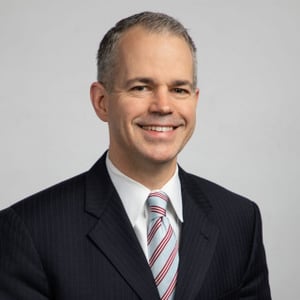
Senior Attorney, Institute for Justice
Michael Bindas is a senior attorney with the Institute for Justice (IJ) and leads IJ’s educational choice team. In this role, he oversees a talented group of IJ attorneys who help policymakers design constitutionally defensible educational choice programs and who defend educational choice programs in courtrooms nationwide. He joined IJ in 2005.
Michael was part of IJ’s litigation team in Espinoza v. Montana Department of Revenue, in which the U.S. Supreme Court held the exclusion of religious options from Montana’s educational choice program unconstitutional, and he led IJ’s defense of the Choice Scholarship Program for elementary and secondary students in Douglas County, Colorado. He also successfully challenged Washington’s denial of special education services to children in religious schools, as well as the state’s exclusion of sectarian options from its state work study program. Currently, he leads IJ’s team in Carson v. Makin, challenging Maine’s exclusion of religious options from its educational choice program.
Prior to leading IJ’s educational choice team, Michael litigated extensively to secure economic liberty, property rights, and freedom of speech throughout the nation. He was counsel of record at the U.S. Supreme Court for Kimbrough Fine Wine & Spirits in Tennessee Wine and Spirits Retailers Association v. Thomas, a successful challenge to Tennessee’s durational residency requirements for retail liquor licenses. He also led successful challenges to the municipal sign codes of St. Louis, Mo. and Norfolk, Va., after those cities attempted to silence protests of their abusive eminent domain practices.
Prior to joining IJ, Michael spent three years as an attorney with Perkins Coie LLP. He is a former law clerk to Judge Rhesa Hawkins Barksdale of the U.S. Court of Appeals for the Fifth Circuit and served as an engineer officer in the United States Army and Pennsylvania Army National Guard before beginning his legal career.
Michael received his law degree cum laude from the University of Pennsylvania Law School in 2001, where he served as Articles Editor for the Journal of Constitutional Law and was elected to the Order of the Coif. He received his undergraduate degree from the United States Military Academy at West Point in 1995.
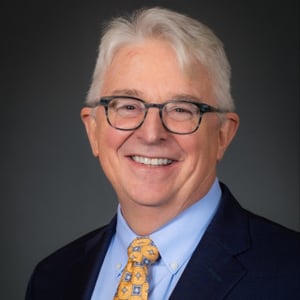
Co-Founder, Defense of Freedom Institute
Jim Blew is a co-founder of DFI, the Defense of Freedom Institute for Public Policy Studies, and president of DFI Action. These DC-based nonprofits promote education freedom, civil rights, and a limited federal role in education and workforce development.
Jim served as U.S. assistant secretary for policy and budget under Betsy DeVos. Prior to his federal service, he worked in state-based education reform for more than 20 years, including leadership roles at StudentsFirst, 50CAN, and the predecessor to the American Federation for Children. He also helped guide the education reform investments of the Walton Family Foundation for nearly a decade until 2014. Before committing himself full time to education reform, Jim worked at political and communications firms in New York and California. He holds a bachelor’s degree from Occidental College and a master’s in business administration from the Yale School of Management.
Vice President and Legal Director, Americans United for Separation of Church and State
Richard B. Katskee is the Vice President and Legal Director at Americans United for Separation of Church and State.
Richard is a nationally recognized First Amendment expert and advocate. He has litigated cases under the First Amendment’s Establishment, Free Exercise, and Free Speech Clauses in appellate and trial courts throughout the country, including challenging creationism in the public schools; religiously based discrimination in public accommodations, healthcare, foster care, and the workplace; presentation of official prayer at governmental meetings and functions; and the provision of federal funding for social services that include religious content.
Journalist Lauri Lebo has described Richard as “a First Amendment expert known for his encyclopedic knowledge and the engaging prose he brings to his legal briefs.” Pulitzer Prize-winning author Edward Humes has added that Richard’s “elegantly written briefs are legendary, veritable beach reading in a field better known for its ponderous prose.” Richard is also an accomplished oral advocate who has argued cases before the U.S. Supreme Court, the U.S. Courts of Appeals for the Second, Third, Fifth, Sixth, Ninth and D.C. Circuits, and federal district courts and state courts across the country.
Richard formerly specialized in constitutional litigation as a member of the Supreme Court & Appellate practice at Mayer Brown LLP in Washington, D.C. He also previously served as deputy director of the Program Legal Group in the U.S. Department of Education’s Office for Civil Rights, where he led the development of policy initiatives to implement federal antidiscrimination laws in the nation’s schools, colleges and universities.
Richard received his Juris Doctor from the Yale Law School (where he was an articles editor on the Yale Law Journal), his master’s degree in political science from Harvard University (where he was a National Science Foundation Graduate Fellow) and his bachelor’s degree with highest distinction and high honors from the University of Michigan. He clerked for Judge Stephen Reinhardt on the U.S. Court of Appeals for the Ninth Circuit and for Judge Guido Calabresi on the U.S. Court of Appeals for the Second Circuit; he was a Eugene P. Beard Graduate Fellow in Ethics at Harvard’s Edmond J. Safra Foundation Center for Ethics; he taught courses in professional and political ethics at the John F. Kennedy School of Government and at Harvard College; and he served as an adjunct associate professor of church–state law at the American University Washington College of Law.
Richard is a member of the American Law Institute and an adviser to the Restatement of the Law: Children and the Law. He is Special Adviser to, and former Co-Chair of, the Religious Liberty Committee of the American Bar Association’s Section of Civil Rights and Social Justice. He serves on the Board of Advisers for a new National Museum of American Religion and formerly served on the Board of Directors for the National Center for Science Education. He is a Visiting Fellow with the Council of Independent Colleges. And he regularly delivers guest lectures and participates as a panelist at universities and legal, educational and scientific associations across the country.
Director, Center for Judicial Engagement, Institute for Justice
Anthony Sanders is the Director of the Center for Judicial Engagement (CJE) at the Institute for Justice and a senior attorney. He joined IJ in 2010. As CJE’s director, he educates the public about the proper role of judges in enforcing constitutional limits on the size and scope of government. As a senior attorney he litigates cutting-edge constitutional cases protecting economic liberty, private property, freedom of speech and other individual liberties in both federal and state courts across the country.
One area of Anthony’s expertise is on using state constitutions to protect individual rights. He is the author of the book, published by University of Michigan Press, Baby Ninth Amendments: How Americans Embraced Unenumerated Rights and Why It Matters. He has also written several law review articles on state constitutional law, unenumerated rights, judicial review, economic liberty, property rights, international law, and other subjects. His work has appeared in publications such as the Iowa Law Review, Minnesota Law Review, American University Law Review, and Rutgers Law Review, and he has published opinion pieces in leading media outlets across the country. Further, he frequently speaks to various audiences on these matters and others, including judicial engagement, free speech, civil forfeiture, and the continuing importance of Magna Carta. Additionally, he hosts the weekly Short Circuit podcast, which often records live in front of law student audiences.
Anthony has litigated several cases in various state courts on state constitutional protections, as well as in federal courts on matters such as economic liberty, free speech, administrative law, and fines and fees abuse. Prior to joining IJ, Anthony served as a law clerk to Justice W. William Leaphart on the Montana Supreme Court. Anthony also worked for several years in private practice in Chicago where he was an active member of the Chicago Bar Association and chaired its Civil Rights Committee.
Anthony received his law degree cum laude from the University of Minnesota Law School in 2004, where he served as an articles submission editor for the Minnesota Law Review. He received his undergraduate degree from Hamline University in St. Paul, Minnesota, and his master’s degree from the University of Wisconsin-Madison. A dual U.S. and U.K. citizen, Anthony grew up on the islands of Vashon in Washington State, and Alderney in the British Channel Islands.

Tiwari v. Friedlander: Which Rational Basis Test is it Anyway?
Adam F. Griffin, David Upham, Andrew H. Ward
In Tiwari v. Friedlander, the Petitioners ask the Supreme Court to grant certiorari to address...
State Court Docket Watch: Bauserman v. Unemployment Insurance Agency
Anya Bidwell
Late last term, the United States Supreme Court all but eliminated the ability of individuals...
Tiwari v. Friedlander: Which Rational Basis Test is it Anyway?
TeleforumTopics
Valancourt Books v. Garland
On Oct 13, 2022, the DC Circuit Court of Appeals heard argument in a case...
Young Lawyers Panel – Career Opportunities in Constitutional Litigation
Ryan L. Bangert, Arif Panju, Rebekah Perry Ricketts, Keisha Toni Russell, Drew B. Tipton, Chance Dean Weldon
Ryan Bangert, Senior Counsel and Vice President for Legal Strategy, Alliance Defending Freedom Arif Panju,...
Young Lawyers Panel – Career Opportunities in Constitutional Litigation
Ryan L. Bangert, Arif Panju, Rebekah Perry Ricketts, Keisha Toni Russell, Drew B. Tipton, Chance Dean Weldon
Ryan Bangert, Senior Counsel and Vice President for Legal Strategy, Alliance Defending Freedom Arif Panju,...
Live - Short Circuit Podcast by the Institute for Justice
Columbia Student Chapter
New York, NYYoung Lawyers Panel – Career Opportunities in Constitutional Litigation
Eighth Annual Texas Chapters Conference
Austin, TXDebate on School Choice after Carson v. Makin
Washington, DCInstitute for Justice's "Short Circuit" Live Podcast Event
Montana Student Chapter
Missoula, MT