
Kathleen Q. Abernathy recently returned to Wilkinson Barker Knauer LLP as special counsel. She was previously elected to the Board of Directors of Frontier Communications as an independent director in 2006 following her term as a Commissioner at the Federal Communications Commission from 2001 to 2005. In 2010 she joined the company as Chief Legal Officer and Executive Vice President, Regulatory and Governmental Affairs. Prior to her term as an FCC Commissioner, Ms. Abernathy worked for a number of different telecommunications companies and law firms. She has received numerous awards in recognition of her professional accomplishments and has taught as an adjunct professor at Georgetown University Law Center and Catholic University’s Columbus School of Law. She received her B.S. from Marquette University and her J.D. from Catholic University’s Columbus School of Law.
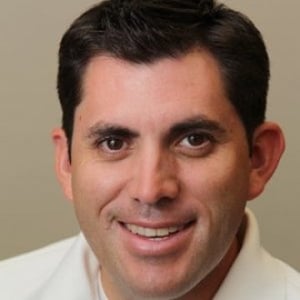
Senior Vice President, Federal Government Relations, Verizon
Joining Verizon in 2005, Mr. Fisher currently serves as Senior Vice President of Federal Government Relations. He manages Verizon's advocacy and relations in the United States Congress, the Administration and the company's interaction with over two dozen state and local groups such as the National Governors Association, National Conference of Mayors, and the National Council of State Legislators. He is also responsible for overseeing Verizon’s federal, state and local tax policy advocacy. In this position, he coordinates Verizon's overall legislative and Administration strategy, implementation and policy development relating to a wide range of telecommunications and business issues that impact the company. Mr. Fisher is also Vice-Chairman of Verizon’s Political Action Committee.
Before joining Verizon, Mr. Fisher was Director of Government Affairs for Clear Channel Communications (now iHeart Media). Joining Clear Channel in 2003, Mr. Fisher assisted with the opening of Clear Channel’s Washington, DC office and helped establish the company’s public policy positions on a number of broadcasting related issues before Congress.
From 1997-2003, Mr. Fisher served on the staff of United States Senator John McCain. He served as a Professional Staff Member on the Senate Commerce, Science and Transportation Committee where he worked on the Subcommittee on Communications. In this role, Mr. Fisher advised then Chairman McCain on a wide-range of telecommunications issues that included: wireline, wireless, cable, satellite, broadcasting, and high tech. He also advised the staff of other Members of the Committee and assisted with the drafting of major telecommunications legislation.
Prior to working on the Senate Commerce Committee, Mr. Fisher served on the personal staff of Senator McCain’s office in Phoenix, AZ. As Legislative Liaison, Mr. Fisher worked closely with city, county, and statewide elected officials on federal policy that affected Arizona and its localities. Before working in the Senator’s state office, Mr. Fisher worked on Senator McCain’s 1998 reelection campaign where he helped coordinate grassroots efforts, get out the vote program and fundraising.
Mr. Fisher is also a veteran of political campaigns having served as a campaign manager for a Republican Congressional candidate and as a consultant to various local and statewide campaigns in Arizona. He has also served as an informal policy advisor to three Republican Presidential campaigns.
Mr. Fisher is on the board of the National Association of Manufacturers, a member of the U.S. Chamber Public Affairs Council and an alumni of the American Council on Germany. Outside of the office, Mr. Fisher and his wife are co-founders of a Virginia 501(c)(3) non-profit called Operation Christmas Hope which serves underprivileged families in Alexandria. He also co-founded the Multiple Myeloma Charity Classic, a charity golf event that has raised over $1,000,000 in the last 7 years for Multiple Myeloma cancer research. Robert and his family attend Christ the King Church in Alexandria where he a member of the Finance Committee. Mr. Fisher, his wife Rebecca Fisher, and their two children, Savannah and Cole, reside in Alexandria, VA. Robert graduated from Arizona State University in 1997 with a B.A. in Political Science.
Executive Director, National Consumers League
Sally Greenberg joined the National Consumers League as Executive Director on October 1, 2007. The League’s focus is on five key priority areas: fraud, child labor, LifeSmarts, health care, especially the safe use of medications and medication adherence, and food safety and nutrition. Ms. Greenberg has testified numerous times before Congress on consumer protection issues, including on product safety, fraud, excessive fees on car rentals, consumer rip-offs in calling cards and in support of protections for farmworker children. Ms. Greenberg is our primary spokesperson on a variety of issues.
Ms. Greenberg came to NCL from Consumers Union, where she worked from 1997-2007 on product liability and food safety issues, along with auto and product safety. Previously, Ms. Greenberg worked at the U.S. Department of Justice Foreign Claims Settlement Commission and prior to that, she spent a decade serving as the Eastern States Civil Rights Counsel for the Anti-Defamation League, based in Boston.
Ms. Greenberg was president of the Women’s Bar Association of Massachusetts and the Women’s Bar Foundation, and served on several gubernatorial commissions in Massachusetts. Ms. Greenberg served for many years on the board of directors of the Alliance for Justice, and HALT, an organization whose mission is the protection of the rights of consumers in their interactions with lawyers and the legal system. Ms. Greenberg is a member of the Reagan-Udall Foundation Board, a nonprofit established by Congress to support the mission of the FDA and help equip the agency with the highest caliber regulatory science and technology. She also serves on the board of the Keystone Center, which helps leaders in health, energy, environment and education battle contentious issues with a consensus-based approach. Ms. Greenberg also served for over a decade on the board of directors of Trillium Asset Management, the oldest and largest investment management firm dedicated to socially responsible investing.

Visiting Fellow, Center for Internet, Communications, and Techno, American Enterprise Institute
Bret Swanson is a visiting fellow at AEI’s Center for Internet, Communications, and Technology Policy and president of Entropy Economics LLC, a strategic research firm specializing in technology, innovation, and the global economy. He advises investors and technology companies, focusing on the Internet ecosystem and the broadband networks and applications that drive it. Mr. Swanson is also a scholar at the US Chamber of Commerce Foundation, where, since 2005, his research has centered on economic growth and policies that encourage it. For eight years Mr. Swanson advised technology investors as executive editor of the Gilder Technology Report and later was a senior fellow at the Progress & Freedom Foundation, where he directed the Center for Global Innovation. Mr. Swanson began his career as an aide to former senator Richard Lugar (R-IN) and was then an economic analyst for former representative Jack Kemp (R-NY) at Empower America.

Director of Global Outreach, Florida Chamber of Commerce
Alice Ancona heads the Florida Chamber’s international efforts and is responsible for developing and implementing programs that foster global trade and investment for Florida. She is responsible for promoting the Chamber’s international trade agenda, including reducing barriers to trade, promoting efforts to expand trade opportunities for Florida businesses and products, and expanded development of our trade infrastructure to federal and state, elected and appointed officials, staff and agencies as well as within the business community.
Ms. Ancona serves as the lead advocate to accomplish the goals set forth in the Florida Trade & Logistics Study 2.0 (TL2) through the newly created Florida Trade and Logistics Institute which actively works to expand Florida’s role as a global trade hub. She also serves as staff to the Chamber’s International Business Council and International Policy Committee which develops policy positions and recommendations on international trade and investment and works to promote Florida’s global competitiveness through advocacy.
Prior to joining the Florida Chamber Ms. Ancona was Senior Vice President of Governmental Affairs at the Greater Miami Chamber of Commerce. She was the Chamber’s chief advocate and served as the principal a liaison between the Chamber and public sector on a wide range of public policy issues and was responsible for development, management and implementation of the Chamber’s public policy positions and advocacy strategies.
Ms. Ancona has experience in planning, developing, and implementing export programs and strategies for U.S. based companies; identifying and exploring export opportunities in overseas markets and market access problems affecting trade and has contributed to international trade research efforts. She has worked with a number of international trade stakeholders, business organizations, universities, and other strategic partners to advance and promote support for international trade and free trade agreements. These include developing grassroots international trade initiatives and activities designed to raise awareness of the benefits of international trade. Utilizing her diverse experiences in policy development, program management, and public affairs at local, federal, and international levels, she has integrated counseling on the design of effective policies and programs with traditional advocacy for implementation through legislative or administrative action.
Ms. Ancona is Vice Chair of Freight Transportation Advisory Committee (FTAC) of the Miami MPO, Regional Freight Advisory Committee member (RFAC) of the Southeast Florida Transportation Council (SEFTC), serves on the 2014-2015 Board of Directors for World Trade Center Miami, is member of the International Policy Committee of the U.S. Chamber of Commerce, member of the Florida International Trade Partnership and Recipient of the 2014 International Women’s Day Award from World Trade Center Miami.
Vice President of Global Innovation Policy, Information Technology & Innovation Foundation
Stephen Ezell is vice president, global innovation policy, at the Information Technology and Innovation Foundation (ITIF). He focuses on science and technology policy, international competitiveness, trade, manufacturing, and services issues.
He is the coauthor of Innovating in a Service-Driven Economy: Insights, Application, and Practice (Palgrave Macmillan, 2015) and Innovation Economics: The Race for Global Advantage (Yale, 2012).
Ezell comes to ITIF from Peer Insight, an innovation research and consulting firm he cofounded in 2003 to study the practice of innovation in service industries. At Peer Insight, Ezell led the Global Service Innovation Consortium, published multiple research papers on service innovation, and researched national service innovation policies being implemented by governments worldwide.
Prior to forming Peer Insight, Ezell worked in the New Service Development group at the NASDAQ Stock Market, where he spearheaded the creation of the NASDAQ Market Intelligence Desk and the NASDAQ Corporate Services Network, services for NASDAQ-listed corporations. Previously, Ezell cofounded two successful innovation ventures, the high-tech services firm Brivo Systems and Lynx Capital, a boutique investment bank.
Ezell holds a B.S. from the School of Foreign Service at Georgetown University, with an honors certificate from Georgetown’s Landegger International Business Diplomacy program.
Senior Economic Policy Advisor, AFL-CIO
Thomas Palley is senior economic policy adviser to the AFL-CIO. He was formerly chief economist with the US – China Economic and Security Review Commission. Dr. Palley is the author of numerous journal and magazine articles and several books, including From Financial Crisis to Stagnation: The Destruction of Shared Prosperity and the Role of Economics(Cambridge University Press, 2012) and Plenty of Nothing: The Downsizing of the American Dream and the Case for Structural Keynesianism (Princeton University Press, 1998). He holds a B.A. degree from Oxford University and a M.A. degree in international relations and Ph.D. in economics, both from Yale University. His writings on economics are available at www.thomaspalley.com.

Jay Van Andel Senior Policy Analyst in Trade Policy, Center for, The Heritage Foundation
Bryan Riley is a full-time advocate for free trade through his research and writing for The Heritage Foundation. He brings years of experience in trade and economic issues to his role as Jay Van Andel senior analyst in trade policy.
Working in Heritage’s Center for Trade and Economics, Riley contributes to the influential Index of Economic Freedom, which the think tank publishes annually in partnership with The Wall Street Journal. The 2011 edition measured 183 countries across 10 specific factors of economic freedom: The higher the score, the lower the level of government interference.
Canada retained its top ranking for economic freedom among North American nations measured in 2010, moving up one slot in the world rankings to sixth. The United States continued to lose ground with a ninth-place finish. The U.S. score of 77.8 was down 0.2 points—largely the result of big government spending increases and passage of a restrictive health care law. In the 2010 Index, the United States dropped from the ranks of economically “free” nations into the “mostly free” category.
Riley’s background includes management of grassroots campaigns in support of trade pacts such as the North American Free Trade Agreement, popularly known as NAFTA. When minivans became popular in the 1990s, for example, he helped defeat efforts to reclassify them as “cargo vehicles” instead of “passenger vehicles.” The “cargo” label would have subjected minivans and SUVs to an import tax of 25 percent.
Riley, who joined Heritage in 2010, especially enjoys serving as a myth-buster who counters inaccurate, misleading misinformation that hoodwinks the public and undermines free trade.
He grew up in Manhattan, Kansas. He holds a bachelor’s degree in economics from Kansas State University and a master’s degree in economics from the University of Southern California. He currently resides in Washington, D.C., returning to the nation’s capital after several years in Kansas.
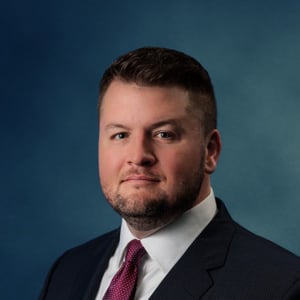
Mr. Morgan Wood Streetman is the founder and principal of Streetman Law in Tampa, Florida. Mr. Streetman is licensed to practice law in Florida and Mississippi, where he was born. He is also licensed to practice before all federal courts in the Northern and Middle Districts of Florida, the Northern and Southern Districts of Mississippi, and the United States Court of Appeals for the Fifth Circuit.
Mr. Streetman has a wealth of experience in business transactions and disputes. He advises small and closely-held businesses on all of their legal needs, which range from contracts with customers and vendors, to employee relations and human resources issues, to shareholder or member disputes, just to name a few.
Part of Mr. Streetman’s business practice is his focus on representing construction-related businesses and individuals. He has handled every aspect of construction law, including drafting contracts, helping individuals obtain proper licensing, construction liens, construction defect claims, and payment and performance bond claims against surety bonding companies.
Mr. Streetman represents individuals who have been injured by another’s negligence, which includes everything from car and trucking accidents, to dog bites, to a landlord’s allowing a criminal assailant to enter an apartment building common area and viciously attack a tenant by failing to secure common areas with locks and keys.
Mr. Streetman received his law degree from Duke University in Durham, North Carolina and his undergraduate degree in Economics from the University of Florida in Gainesville. While at the University of Florida, Mr. Streetman was honored with election to the Phi Beta Kappa Society, which is the nation’s oldest and most prestigious academic honor society. The Society invites less than 1 percent of graduating seniors to become members.
Principal Attorney, Woodring Law Firm
Mr. Daniel Woodring has lived in Florida for almost 30 years, but was born in Philadelphia, Pennsylvania. In Florida, he has lived and worked in Pensacola, Clearwater, Jacksonville, Gainesville and Tallahassee. His wife Jean, who is also an attorney, was born in Miami, and grew up in Ft. Myers. They have a son and a daughter.
Mr. Woodring is recognized as a Florida Super Lawyer, an honor given to fewer than 5% of Florida Attorneys, and holds an Avvo “Superb” rating. Mr. Woodring also has an AV Preeminent® Peer Reviewrating. AV®, AV Preeminent® are registered certification marks of Reed Elsevier Properties Inc., used in accordance with the Martindale-Hubbell certification procedures, standards and policies, and the ratings are explained at www.martindale.com/ratings.
Mr. Woodring is a member of the Florida and Georgia Bars, and is admitted to practice before the Florida Federal Southern, Middle and Northern District Courts, the Eleventh Circuit Court of Appeals and the U.S. Supreme Court. He has worked at the trial level on cases in many of Florida’s 20 judicial circuits, in addition to cases in state administrative tribunals. He has argued cases at the Florida Supreme Court and Florida District Courts of Appeal, and has briefed cases at the U.S. Supreme Court.
He graduated from the University of Florida, College of Law with a Juris Doctorate, Cum Laude, and received his B.A. degree from Clearwater Christian College, Summa Cum Laude.
After law school, Mr. Woodring was in private practice doing general civil and appellate work. He then left for a two year appellate clerkship at the First District Court of Appeal. During his time at the court, he worked on cases including, but not limited to: criminal; family law; administrative law; workers’ compensation; business and civil law; constitutional law.
Mr. Woodring next worked as a counsel in the Executive Office of the Governor, Office of the General Counsel. During his time in Governor Bush’s Legal Office he had diverse responsibilities, including oversight and strategic litigation management of significant legal matters at numerous Governor’s agencies, including the Department of Education, Department of Management Services, Department of Business and Professional Regulation, Department of Health, Agency for Health Care Administration, Department of Children and Families, Department of Community Affairs, Department of Elder affairs, Agency for Workforce Innovation, Department of Transportation, and the Department of State.
He was also legally responsible for topics as disparate as emergency operations; advising the Governor on the selection of judges; implementation of civil service reform; reform of workers’ compensation; budget and appropriation matters; Indian gaming law; and legally advising the Florida Cabinet sitting in its many capacities, such as the Florida Land and Water Adjudicatory Commission.
Mr. Daniel Woodring was then offered the opportunity to be General Counsel for the Florida Department of Education, which encompassed Pre-K though 12th grade, community colleges(now State colleges) and the Florida University System. He was also the first General Counsel for the Florida Board of Governors, when that Board was constitutionally created to manage the State University System.
During almost five years at the Department of Education, Mr. Woodring advised and litigated on matters including, but not limited to: constitutional challenges to Florida’s education programs, including Opportunity Scholarships and the charter school approval and appeal process; doing away with race as a preference in university admissions and state contracting; teacher and professional discipline cases; union, labor and employment matters; state procurement and bid protest proceedings; administrative rule challenges and rule making proceedings; IDEA and Section 504 proceedings; public records, government in the sunshine and ethical matters; contract negotiations and disputes.
Since 2007, Mr. Woodring has been back in private practice as the principal of the Woodring Law Firm, located in Tallahassee, Florida, but with a statewide practice, including Pensacola, Jacksonville, Gainesville, Tampa Bay, Orlando, West Palm Beach, Ft. Myers, Ft. Lauderdale, and Miami. He concentrates his practice on appeals; constitutional cases in both state and federal court; education law matters, including charter school represention; Business litigation; and state administrative matters, including state procurement, regulation and licensing, rule challenges and proposed rule making, although he also handles cases in many other areas.
Please look at the individual practice areas on the left menu for more information.
Mr. Woodring is a member of the Appellate, Administrative, and Governmental Lawyer sections of the Florida Bar and served as Chair of the Education Law Committee of the Florida Bar.

Member, Eckert Seamans Cherin & Mellott, LLC
Earl Comstock has more than two decades of direct experience with the question of the proper regulatory treatment of broadband Internet access services. He was one of the principal Senate staff responsible for the negotiation and drafting of the Telecommunications Act of 1996 (Pub. L. 104 – 104). During the four years of Congressional debate that led up to the Telecommunications Act, Mr. Comstock served as chief counsel for Senator Ted Stevens (R – AK) and as special counsel for telecommunications on the Senate Committee on Commerce, Science, and Transportation.
In addition to the Telecommunications Act, Mr. Comstock also participated in the negotiation and drafting of the Cable Television Consumer Protection and Competition Act of 1992 (Pub. L. 102 – 385); the Omnibus Budget Reconciliation Act of 1993 (Pub. L. 103 – 66) which created spectrum auctions and commercial mobile services; the Balanced Budget Act of 1997 (Pub. L. 105 – 33) which established the high definition television transition; the Internet Tax Freedom Act (Pub. L. 105 – 277, Division C, Title XI); and the ORBIT Act (Pub. L. 106 – 180), which privatized INTELSAT.
Since leaving Capitol Hill at the end of 1997 Mr. Comstock has been an attorney in private practice and a consultant on telecommunications and Internet policy. He was also President and CEO of COMPTEL, an industry trade organization representing competitive telecommunications and Internet companies, from 2005 to 2007.
With respect to the regulatory treatment of broadband Internet access services, Mr. Comstock testified before the Federal Communications Commission (FCC) during the agency deliberations that led to the Stevens Report; represented EarthLink in the proceedings that led to the Cable Modem Declaratory Ruling and during the legal challenges of that ruling in the U.S. Court of Appeals for the Ninth Circuit and the Supreme Court (National Cable & Telecommunications Assoc. v. Brand X Internet Services, 545 U.S. 967 (2005)); and presently represents Full Service Network and TruConnect in the pending challenge of the FCC’s Open Internet Order in the U.S. Court of Appeals for the District of Columbia Circuit (Case No. 15-1151, which has been consolidated with other challenges under Case No. 15-1063).
Mr. Comstock has recently left the law firm of Eckert Seamans Cherin & Mellott to become general counsel for a start-up company.
Partner, Wilkinson Barker Knauer LLP
Kelly Donohue has worked on media and broadcast matters for over a decade, with a particular emphasis on broadcast law. She routinely files pleadings on behalf of clients in application and rulemaking proceedings, and handles matters relating to new station licensing, renewals, changes in communities of license, ownership and attribution, assignments and transfers, facility changes, EEO compliance, sponsorship identification and contest rules. Prior to joining the firm, Ms. Donohue spent seven years at the Federal Communications Commission, where she served as an Assistant Division Chief in the Audio Division of the FCC’s Media Bureau and as Special Counsel in the Enforcement Bureau, Office of the Bureau Chief.
Ms. Donohue also manages a growing trademark practice, counseling clients on the selection and clearance of trademarks, and preparing, filing and prosecuting federal trademark and service mark applications. She also negotiates trademark licensing, settlement and consent agreements. Ms. Donohue is well-versed in other intellectual property matters as well, and has counseled clients on issues relating to music licensing, fair use principles under copyright law, and DMCA takedown provisions.
More recently, Ms. Donohue has discovered her passion for working with start-ups and tech companies, ranging from app developers to creators of connected devices (i.e. Internet of Things). It is in this space that Ms. Donohue brings together her broad legal experience, creative "can do" thinking and strong communications skills to find innovative, cost-effective solutions to the legal hurdles new companies often face. She has provided both formal and informal guidance to dozens of companies on issues relating to intellectual property, privacy, regulatory compliance, and corporate structure/governance.
Ms. Donohue herself has an entrepreneurial spirit. She began her career as a professional musician and continues to write music and perform regularly with her “kindie” rock band, Here Comes Trouble. She has won numerous awards for her songwriting and vocal arrangements, including placements in the Mid-Atlantic Songwriting Contest and International Songwriting Competition.

Partner, Gibson Dunn & Crutcher LLP
Miguel A. Estrada is a partner in the Washington, D.C. office of Gibson, Dunn & Crutcher.
Mr. Estrada has represented clients before federal and state courts throughout the country in a broad range of matters. He has argued 24 cases before the United States Supreme Court, and briefed many others. He has also argued dozens of appeals in the lower federal courts.
Best Lawyers® recognized Mr. Estrada as a 2020 Lawyer of the Year in Intellectual Property Litigation and as a Lawyer of the Year in Appellate Practice. He has been recognized by Benchmark Litigation as a 2020 U.S. Appellate Litigation “Star”. In 2014, The American Lawyer named Mr. Estrada a “Litigator of the Year,” praising his “brains and tenacity” and noting he is the lawyer to call for “a tough, potentially unwinnable case.” From 2014-2021, Chambers & Partners has named him as one of a handful of attorneys that it ranked in the top tier among the nation’s leading appellate lawyers. Chambers & Partners noted that “clients are impressed by his intellect and ability, with one saying, ‘His papers are just blindingly clear in what they say and devastating in how they marshal the arguments.’” The Atlantic described his oral argument in a 2014 high-profile separation-of-powers case as “one of the most dazzling arguments the marble chamber has heard in many years.”
Mr. Estrada was selected by his peers for inclusion in the 2020 edition of The Best Lawyers in America® in the area of Appellate Law, in addition to previous recognition by the publication in the specialties of Bet-the-Company Litigation, Commercial Litigation and Criminal Defense: White Collar, Intellectual Property Litigation, and Regulatory Enforcement Litigation in the areas of SEC, Telecom, and Energy. In 2017, he was elected as a member of the American Law Institute. In 2021, Mr. Estrada was named among the Lawdragon 500 Leading Lawyers in America. In 2004, Legal Times named him one of the top 12 appellate litigators in the D.C. area, noting that “people who follow appellate practice in Washington have known for several years that Estrada . . . is one of the best around.” Also in 2004, Washingtonian Magazine named him one of the top constitutional law lawyers “who could become one of the legends of the Supreme Court bar.”
Mr. Estrada joined Gibson Dunn in 1997, after serving for five years as Assistant to the Solicitor General of the United States. He previously served as Assistant U.S. Attorney and Deputy Chief of the Appellate Section, U.S. Attorney’s Office, Southern District of New York. In those capacities, Mr. Estrada represented the government in numerous jury trials and in many appeals before the U.S. Court of Appeals for the Second Circuit. Before joining the U.S. Attorney’s Office, Mr. Estrada practiced corporate law in New York with Wachtell, Lipton, Rosen & Katz.
Mr. Estrada is a Trustee of the Supreme Court Historical Society. He was formerly a member of the Board of Visitors of Harvard Law School.
Mr. Estrada served as a law clerk to the Honorable Anthony M. Kennedy in the U.S. Supreme Court from 1988 to 1989 and to the Honorable Amalya L. Kearse in the U.S. Court of Appeals for the Second Circuit from 1986 to 1987. He received a J.D. degree magna cum laude in 1986 from Harvard Law School, where he was editor of the Harvard Law Review. Mr. Estrada graduated with an A.B. degree magna cum laude and Phi Beta Kappa in 1983 from Columbia College, New York. He is fluent in Spanish and proficient in French.
Representative Supreme Court matters include:
In 2011, the Supreme Court appointed Mr. Estrada to brief and argue two criminal cases –Dorsey v. United States and Hill v. United States – in which the Solicitor General declined to defend the judgments of the court of appeals. Mr. Estrada was appointed to argue the position that the Solicitor General had declined to defend.
Mr. Estrada was also part of the team that successfully presented then Governor Bush’s position to the Supreme Court in Bush v. Gore (2000). Other cases that Mr. Estrada handled in the Supreme Court include Granholm v. Heald (2005) (dormant Commerce Clause and Twenty-First Amendment), Vermont Agency of Natural Resources v. United States ex rel. Stevens (2000) (False Claims Act, Article III standing and Eleventh Amendment immunity), Old Chief v. United States (1997) (rules of evidence), United States v. Mezzanatto (1995) (evidence and plea bargaining), United States v. Robertson (1995) (constitutional limits on Congress’s Commerce Clause powers), Citizens Bank of Maryland v. Strumpf (1995) (bankruptcy law), and NOW, Inc. v. Scheidler (1994) (RICO).
Recent Court of Appeals matters include:
In addition, Mr. Estrada is lead appellate counsel to Vivendi S.A. in two securities-fraud appeals from jury verdicts that are currently pending in the Second Circuit, and to the National Association of Broadcasters in a challenge to certain procedures promulgated by the FCC in connection with the upcoming Spectrum Auction. Mr. Estrada also recently presented argument before the D.C. Circuit on behalf of the tobacco industry in a first amendment challenge to certain compelled disclosures that were imposed as part of the government’s long-running civil RICO case against the industry.
Other matters:
Senior Vice President, Strand Consult
Roslyn Layton, PhD is a leading international expert on technology policy. She is Senior Vice President of Strand Consult, an independent consultancy serving the global mobile telecom industry. She is also a Visiting Researcher at Aalborg University Copenhagen where she earned a doctoral thesis on network neutrality by measuring the outcome of the policy across 53 countries over 5 years. She served on the Presidential Transition Team for the Federal Communications Commission (FCC), and her work was critical to the FCC’s defense for the Restoring Internet Freedom Order. She has testified to the United States Senate and House on multiple topics including spectrum, broadband, mobile mergers, competition, and privacy. She founded the think tank China Tech Threat to study the problems of technology produced by the People’s Republic of China. She serves as the Program Chair for the Telecom Policy Research Conference, the leading interdisciplinary academic gathering. Her recent paper on rural broadband describes the empirical case for policy reform to recover network infrastructure costs from streaming video entertainment providers. She is a Senior Contributor to Forbes.
Judge, U.S. Court of Appeals, District of Columbia Circuit
Judge Sentelle was appointed United States Circuit Judge in October 1987, served as Chief Judge from February 11, 2008 until February 11, 2013, and took senior status on February 12, 2013. He is a 1968 graduate of the University of North Carolina Law School. Following law school, he practiced with the firm of Uzzell & DuMont until he became an Assistant U.S. Attorney in Charlotte, N.C. in 1970. From 1974 to 1977, he served as a North Carolina State District Judge but left the bench in 1977 to become a partner with the firm of Tucker, Hicks, Sentelle, Moon & Hodge. In 1985, Judge Sentelle joined the U.S. District Court, Western District of North Carolina, in Asheville, where he served until his appointment to the D.C. Circuit. Judge Sentelle was the Presiding Judge of the Special Division for the Purpose of Appointing Independent Counsels (1992-2006). He also served as the Chair of the U.S. Judicial Conference's Executive Committee (2010-2013). Judge Sentelle served for over 20 years as President of the Edward Bennett Williams Inn of the American Inns of Court.
U.S. Court of Appeals, Sixth Circuit
Danny Julián Boggs is a Judge on the United States Court of Appeals for the Sixth Circuit. He was appointed to a newly created seat on that court on January 29, 1986 by President Ronald Reagan, confirmed by the U.S. Senate on March 3, and received his commission on March 25. He served as the Chief Judge of the Sixth Circuit from 2003 to 2009.
Professor of the Practice of Law, Stanford Law School
Doug Melamed practiced law for 43 years before spending the 2014-15 academic year at the Law School as the Herman Phleger Visiting Professor of Law. He was appointed Professor of the Practice of Law in 2015.
From 2009 until 2014, Professor Melamed was Senior Vice President and General Counsel of Intel Corporation and was responsible for overseeing Intel’s legal, government affairs and corporate affairs departments. Prior to joining Intel in 2009, he was a partner in the Washington, D.C., office of WilmerHale, a global law firm in which he served as a chair of the Antitrust and Competition Practice Group. His practice included appellate and trial court litigation, counseling, and representing clients in matters before government law enforcement and regulatory agencies. He joined WilmerHale’s predecessor in 1971. From 1996 to 2001, Professor Melamed served in the U.S. Department of Justice as Acting Assistant Attorney General in charge of the Antitrust Division and, before that, as Principal Deputy Assistant Attorney General.
Professor Melamed has received numerous professional awards and honors. He has been the Distinguished Visitor from Practice and an adjunct professor at the Georgetown University Law Center, and he has authored numerous articles on antitrust and on law and economics. He is a member of the boards of directors of the Nasdaq exchanges and the American Law Institute and a Contributing Editor of the Antitrust Law Journal. He was for many years a member of the Yale University Council and a member of the board of trustees of Sidwell Friends School in Washington, D.C. After graduating from law school, he clerked for Judge Charles M. Merrill of the U.S. Court of Appeals for the Ninth Circuit.

Professor of Law, Boston University School of Law
The son of an economics professor, Michael Meurer knew by the time he was 13 that he, too, wanted to teach at the university level. An S.B., J.D. and Ph.D. later, he became an economics professor at Duke University and later a law professor at the University of Buffalo. He came to Boston University School of Law in 1999, where he has taught courses in patents, intellectual property and public policy toward the high-tech industry. "It's a special privilege to be able to speak three times a week to an attentive and thoughtful audience," he says.
Professor Meurer has received several grants and fellowships, including two grants from the Pew Charitable Trust, a Ford Foundation grant, an Olin Faculty Fellowship at Yale Law School and a postdoctoral fellowship at AT&T Bell Labs. He has served as an expert witness for the Federal Trade Commission on a merger case presenting issues related to patent licensing. He also has consulted with government officials from developing countries about antitrust law, and taught short courses in American intellectual property law at the law faculties of the University of Victoria and the National University of Singapore. "I'm excited by the prospect of having a positive influence on American technology law and policy," Professor Meurer says. Outside of work, he enjoys playing and watching basketball.
Partner and Lecturer
Adam Mortara graduated from the University of Chicago in 1996 with a B.Sc. in chemistry. He then attended Magdalene College, Cambridge, where he received a masters degree in astrophysics on a British Marshall Scholarship.
Mr. Mortara graduated from the University of Chicago Law School with highest honors in 2001. Following graduation, he clerked for Judge Patrick Higginbotham of the U.S. Court of Appeals for the Fifth Circuit and then for Justice Clarence Thomas of the Supreme Court of the United States. After his clerkships, he was a Temple Bar Scholar of the American Inns of Court.
From 2003 to 2020, Mr. Mortara was with Bartlit Beck LLP where he tried high stakes intellectual property cases and, more notably, Students For Fair Admissions v. Harvard. He retired from Bartlit Beck and founded Lawfair LLC, a civil and voting rights firm. He has been a Lecturer in Law at the University of Chicago Law School since 2007, where he teaches Federal Habeas Corpus, Federal Jurisdiction, Criminal Procedure, and Writing for the Judiciary.
Vice President - Chief IP Counsel, Intellectual Ventures
Phyllis T. Turner-Brim is Vice President, Chief IP Counsel of Intellectual Ventures headquartered in Bellevue, WA.
In this role, Phyllis is responsible for managing and coordinating legal services supporting patent asset acquisitions and divestitures, licensing, prosecution and related transactions. Phyllis’ current team consists of over fifty-five attorneys, para-professionals, assistants and clerks. Immediately prior to this post, Phyllis was Licensing Attorney Director – Program Development at IV.
Prior to joining IV, Phyllis had dual legal and business roles as IP Counsel and Director of RFID Strategy and Licensing at Intermec Technologies Corporation. In her legal role as IP Counsel, Phyllis had responsibility for managing and providing a full spectrum of intellectual property services and related legal counseling including, managing the IP Legal budget, selecting and managing outside prosecution counsel, managing and developing licensing programs, docketing and litigation support. In her business role as Director of RFID Strategy and Licensing, Phyllis had the general management responsibility for Intermec’s RFID BU. In this regard, Phyllis was responsible for driving RFID revenue, developing and implementing product strategy and roadmaps, managing internal and external partner relationships, developing and managing budget, and managing all business unit functions and personnel.
From 2000 to 2004, Phyllis was Associate General Counsel – Intellectual Property at Cabot Microelectronics Corporation. In this position, Ms. Turner-Brim established a full service intellectual property department as part of a corporate “spin-off,” and had responsibility for the corporate intellectual property function worldwide. In addition, Phyllis was responsible for providing legal counseling in the areas of Labor and Employment, Product Stewardship, Environmental Law, and Immigration.
Prior to her post at Intermec, Phyllis served briefly as Assistant General Counsel, Intellectual Property for Wal-Mart Stores, Inc. in Bentonville, Arkansas. She has also served as Intellectual Property Attorney for Amoco Corporation (now BP), and as an associate attorney at the IP boutique firm of McAndrews, Held and Malloy, Ltd.
Phyllis is a 1993 graduate of the University of Cincinnati Law School, and a 1986 honors graduate of the Illinois Institute of Technology (B.S. Chemical Engineering). She has served as a lecturer/presenter on several topics including, developing business focused licensing programs, diversity in the law, recruitment and retention of minorities and women in technical professions, chemical patent drafting, IP strategy development, career development and personal risk taking. Phyllis accepted an invitation to join the Board of Trustees for the AIPLEF in 2013. She has also been a member of the Board of Trustees for the Snohomish County YMCA since 2012 and in 2011, she was elected to Board of Trustees for Trinity Lutheran College in Everett, WA. Prior to pursuing a career in the law, Ms. Turner-Brim held technical management positions with General Electric Co. and Procter and Gamble Co.

Co-Founder, Able Lending
Evan Baehr is the cofounder of Able, an online lender to small businesses. It launched June 2014 with the Wall Street Journal'sWeekend Interview and on TechCrunch. His passion at Able is to serve the Fortune 5 Million – the 5.8 million small businesses that represent the backbone of the American economy. His previous startup was Outbox, a consumer internet company aiming to takeover the US Postal Service and backed by venture capitalists Peter Thiel and Mike Maples, featured on Fox News, CNN, TechCrunch, FastCompany, Wall Street Journal, INC, the New York Times, and on Jay Leno.
He has worked on the Facebook platform under Sheryl Sandberg, helping shape a vision to make life better by making it social, and for Peter Thiel building a political data company. He’s an honors graduate of Princeton’s Woodrow Wilson School, Yale Divinity School, and Harvard Business School.
He has worked for the American Enterprise Institute’s Charles Murray, the Ethics and Public Policy Center, the Becket Fund for Religious Liberty, and the White House Office of Faith-Based Initiatives, served as a legislative aid on the House Appropriations Committee under Rep. Frank Wolf, was Chief of Staff on the Congressional Human Rights Caucus, under which he wrote the International Marriage Broker Regulation Act, and was the failed candidate for Princeton’s City Council, despite receiving more votes than George W. Bush.
He has served on the board of the Manhattan Institute’s Adam Smith Society, the New Canaan Society, the Rivendell Institute, and Harvard Business School's FIELD Program, and is a mentor with First Round Capital's Dorm Room Fund. He cofounded the Hoover Institute’s Rising Fellows Program, Harvard Business School’s Ideas@Work, Princetonians in the Nation’s Service, and the Yale Forum on Faith and Politics. He is the recipient of the Lily Endowment Thesis Prize, the Blackstone Legal Fellowship, and Princeton’s James Madison Fellowship. He lives in Austin, TX, with his wife, Kristina Scurry Baehr, a patent litigator, and children Cooper and Madeleine.

Judge, United States Court of Appeals, Ninth Circuit
Judge Carlos Bea serves as a judge on the United States Court of Appeals for the Ninth Circuit. He received his Bachelor's Degree from Stanford University in 1956 and his J.D. from Stanford Law School in 1958. Judge Bea was born in San Sebastian, Spain, and immigrated with his family to Cuba in 1939. In 1952, he represented Cuba on the Cuban National basketball team in the Helsinki Olympics. Judge Bea became a naturalized citizen of the United States in 1958. He engaged in private practice in San Francisco, principally in the area of civil trials (jury and non-jury), from 1959-75 at Dunne, Phelps & Mills and from 1975-90 at Carlos Bea, A Law Corporation. He taught courses in civil litigation advocacy at Hastings College of Law and Stanford Law School. From 1990 to 2003, Judge Bea served as a judge of the San Francisco Superior Court. He was nominated by President George W. Bush to the United States Court of Appeals for the Ninth Circuit and was confirmed in 2003.
Judge Bea and his wife Louise reside in San Francisco, where they raised their four sons, Sebastian, Alexander, Nicholas, and Dominic.
Chief Legal Officer, Paradigm
Principal, DeGroot Legal
Mr. DeGroot represents businesses in complex litigation, focusing on licensing, insurance, intellectual property, contract disputes, and toxic torts. He has experience in cases involving fraud, breach of contract, unfair competition, patents, business torts, mergers and acquisitions, creditors’ rights, and bankruptcy. He has extensive experience in all aspects of civil litigation, both in federal and state courts, including prejudgment remedies, discovery, trial, appeals, arbitration and mediation.
Mr. DeGroot works with clients in a variety of industries, including financial institutions, insurance, software, construction, semiconductors, and real estate.
Policy Counsel, Lyft

Associate Professor, University of Idaho College of Law
Stephen R. Miller joined the faculty of the University of Idaho College of Law in 2011. Prof. Miller received his undergraduate degree from Brown University, a master’s degree in city and regional planning from the University of California, Berkeley, and his J.D. from the University of California, Hastings College of Law. While in law school, Prof. Miller was senior articles editor of the Constitutional Law Quarterly. Prof. Miller also worked for a land use and environmental law firm in San Francisco, California prior to joining the faculty. His research interests include economic development, sustainable development, land use, environmental law, and local government law.
His academic works have been published by or are forthcoming from Cambridge University Press, Harvard Environmental Law Review, and a number of other law reviews and professional journals. In 2013, he was named Faculty Advisor of the Year by the Idaho Law Review and also received the Alumni Award for Faculty Excellence. In addition to his academic writings, Prof. Miller also blogs at Land Use Prof Blog, and writes an occasional column for the Idaho Statesman Business Insider.
Prof. Miller also runs the College of Law's Economic Development Clinic, which maintains the student-written blog Idaho NEXT. In 2013, the Clinic received the Planning Excellence Award for Best Practice from the Idaho chapter of the American Planning Association for Area of City Impact Agreements in Idaho. In 2014, the Clinic released Agritourism at the Rural-Urban Interface: A National Overview of Legal Issues with 20 Proposals for Idaho. In addition, the Clinic has been credited by state officials with popularizing the use of New Markets Tax Credits financing in Idaho, a financing tool that has already helped fund $50 million in investment in low income communities throughout the state.
Prof. Miller is also active in the community. He presently serves as a commissioner on the Boise City Planning and Zoning Commission and as a board member of the Joyce Ivy Foundation, which provides educational opportunities for talented high school students.

Professor of Law, Antonin Scalia Law School, George Mason University
Adam Mossoff is Professor of Law at Antonin Scalia Law School, George Mason University. He has published extensively on why patents, copyrights, and other intellectual property rights have been—and should be—legally secured to innovators and creators as property rights. His scholarship has been relied on by the United States Supreme Court, by lower federal courts, and by U.S. federal agencies. He has been invited to testify numerous times before the U.S. Senate and the House of Representatives on intellectual property legislation. His writings on intellectual property policy have also appeared in the Wall Street Journal, New York Times, Forbes, Investors Business Daily, and in other media outlets. His journal articles can be downloaded here.
Professor Mossoff is a longstanding member of the Executive Committee of the Intellectual Property Practice Group of the Federalist Society, on which he served as Chairperson from 2016-2018, and he is Chair of the Intellectual Property Working Group of the Regulatory Transparency Project of the Federalist Society. He is a Senior Fellow and Chair of the Forum for Intellectual Property at the Hudson Institute, a Visiting Intellectual Property Fellow at the Heritage Foundation, and a member of the Board of Directors of the Center for Intellectual Property Understanding. He is a member of the Intellectual Property Rights Policy Committee of ANSI and he has served as Chair and Vice-Chair of the Intellectual Property Committee of the IEEE-USA, on which he remains a member in good standing.

Laurence A. Tisch Professor of Law and Director, Classical Liberal Institute, New York University School of Law; Senior Fellow, The Civitas Institute, University of Texas at Austin
Richard A. Epstein is the inaugural Laurence A. Tisch Professor of Law at NYU School of Law. Prior to his joining the faculty, he was a visiting law professor at NYU from 2007 through 2009. He served as the Peter and Kirstin Bedford Senior Fellow at the Hoover Institution from 2000 to 2024. Since 2024 to the present he is a senior lecturer at the Civitas Institute at the University of Texas—Austin. Epstein is also the James Parker Hall Distinguished Service Professor of Law Emeritus and a senior lecturer at the University of Chicago. His initial law school appointment was at the University of Southern California from 1968 to 1972. Epstein received an LL.D., h.c. from the University of Ghent, 2003. He has been a member of the American Academy of Arts and Sciences since 1985 and was a Senior Fellow of the Center for Clinical Medical Ethics at the University of Chicago Division of Biological Sciences, also from 1983. to 2022 He served as editor of the Journal of Legal Studies from 1981 to 1991, and of the Journal of Law and Economics from 1991-2001. From 2001 to 2010 he was a director of the John M. Olin Program in Law and Economics at the University of Chicago.
His newest book, The Myth of Birthright Citizenship: What the Fourteenth Amendment Really Says was published in 2026 (Encounter Books). Prior to that he has published many books including, The Dubious Morality of the Modern Administrative State (Roman & Littlefield 2020).Earlier he published th Classical Liberal Constitution: The Uncertain Quest for Limited Government (Harvard 2014) iHis previous books include Design for Liberty: Private Property, Public Administration and the Rule of Law (Harvard 2011); The Case Against the Employee Free Choice Act (Hoover 2009); Supreme Neglect: How to Revive the Constitutional Protection of Property Rights (Oxford 2008); Antitrust Decrees in Theory and Practice: Why Less is More (AEI 2007); Overdose: How Excessive Government Regulation Stifles Pharmaceutical Innovation (Yale University Press. 2006); How Progressives Rewrote the Constitution (Cato 2006); Cases and Materials on Torts (Aspen Law & Business; 8th ed. 2004); Skepticism and Freedom: A Modern Case for Classical Liberalism (University of Chicago, 2003); Torts (Aspen Law & Business 1999); Principles for a Free Society: Reconciling Individual Liberty with the Common Good (Perseus Books, 1998): Mortal Peril: Our Inalienable Rights to Health Care (Addison-Wesley, 1997); Simple Rules for a Complex World (Harvard, 1995); Bargaining With the State (Princeton, 1993); Forbidden Grounds: The Case Against Employment Discrimination Laws (Harvard , 1992); Takings: Private Property and the Power of Eminent Domain (Harvard, 1985); and Modern Products Liability Law (Greenwood Press, 1980). He has also edited(with Catherine M. Sharkey) Cases and Materials on the Law of Torts (10th edition 2012).
Professor Epstein has written numerous articles on a wide range of legal and interdisciplinary subjects. He has taught courses in administrative law, antitrust law, civil procedure, communications, constitutional law, contracts, corporations, criminal law, employment discrimination law, environmental law, food and drug law health law and policy, legal history, labor law, property, real estate development and finance, jurisprudence, labor law; land use planning, patents, individual, estate and corporate taxation, Roman Law; torts, and workers' compensation.
Professor Epstein also writes a regular column for Civitas Institute, which also sponsors his podcast, The Libertarian with Charles C.W. Cooke, and Law Talk, with Cooke and John Yoo. He also does a podcast with John Batchelor. And appears regularly on the Freedom File with Judge Andrew Napolitano.
Professor of Law, Antonin Scalia Law School, George Mason University
Adam Mossoff is Professor of Law at Antonin Scalia Law School, George Mason University. He has published extensively on why patents, copyrights, and other intellectual property rights have been—and should be—legally secured to innovators and creators as property rights. His scholarship has been relied on by the United States Supreme Court, by lower federal courts, and by U.S. federal agencies. He has been invited to testify numerous times before the U.S. Senate and the House of Representatives on intellectual property legislation. His writings on intellectual property policy have also appeared in the Wall Street Journal, New York Times, Forbes, Investors Business Daily, and in other media outlets. His journal articles can be downloaded here.
Professor Mossoff is a longstanding member of the Executive Committee of the Intellectual Property Practice Group of the Federalist Society, on which he served as Chairperson from 2016-2018, and he is Chair of the Intellectual Property Working Group of the Regulatory Transparency Project of the Federalist Society. He is a Senior Fellow and Chair of the Forum for Intellectual Property at the Hudson Institute, a Visiting Intellectual Property Fellow at the Heritage Foundation, and a member of the Board of Directors of the Center for Intellectual Property Understanding. He is a member of the Intellectual Property Rights Policy Committee of ANSI and he has served as Chair and Vice-Chair of the Intellectual Property Committee of the IEEE-USA, on which he remains a member in good standing.

Executive Vice President, The Federalist Society
Dean Reuter is Executive Vice President at the Federalist Society for Law and Public Policy Studies. He has served in two federal government agency Offices of the Inspector General, as Counsel to the Inspector General and Deputy Inspector General, responsible for policing the use of federal funds granted and contracted through those agencies. As such, he helped conduct and oversee criminal investigations across the country. He is the principal author of the non-fiction book, The Hidden Nazi: The Untold Story of America's Deal with the Devil, and editor of Liberty’s Nemesis: The Unchecked Expansion of the State and Confronting Terror: 9/11 and the Future of American National Security. He was appointed by the President and served as Vice-Chairman of the Board of Directors of the Corporation for National and Community Service, and recently served as an appointee on the U.S. Commission on Presidential Scholars. He is a graduate of Hood College (BA with Honors) and the University of Maryland School of Law.

President, Cass & Associates, PC
Ronald A. Cass is Dean Emeritus of Boston University School of Law (where he was Dean from 1990-2004), President of Cass & Associates, PC, former Vice-Chairman and Commissioner of the U.S. International Trade Commission, former faculty member at Boston University School of Law and the University of Virginia Law School, and Distinguished Senior Fellow at the C. Boyden Gray Center for the Study of the Administrative State. Dean Cass also sits as an arbitrator for commercial, international, and intellectual property rights disputes, and is a former United States member of the Panel of Conciliators of the International Centre for Settlement of Investment Disputes. He is a member of the Council of the Administrative Conference of the United States and has received seven presidential appointments, spanning Presidents Ronald Reagan to Donald J. Trump.
As a law professor, lecturer, and scholar, Dean Cass has been teaching and writing about a wide array of legal issues on topics such as administrative law and regulation, antitrust, constitutional law, communications, intellectual property, international trade, separation of powers, and legal process. He has published more than 160 scholarly books, chapters, articles, and papers, including a leading casebook on administrative law. Dean Cass has taught judges as well as students in schools of law, economics, business, and public policy and has held academic appointments in the United States, Europe, and Latin America.
In addition to his academic work, Dean Cass has participated in numerous important legal cases as an amicus, consultant, or expert, and has advised businesses, law firms, investment funds, and government agencies on a range of trade, antitrust, intellectual property, and regulatory issues. He has a broad range of affiliations with professional groups, and has received numerous honors, fellowships and awards.
Dean Cass is a graduate of the University of Virginia and the University of Chicago Law School.

Stevenson Bernard Professor, George Washington University Law School
The Honorable F. Scott Kieff is the Stevenson Bernard Professor at George Washington University Law School and a Visiting Fellow at Stanford University’s Hoover Institution.
He served as Commissioner of the U.S. International Trade Commission from 2013-2017. He also served during the Bush, Obama, and Trump Administrations in the part-time leadership of the national security defense-intelligence community.
He was previously a professor of law and medicine at Washington University in Saint Louis and a Senior Fellow at Hoover. A former law clerk to U.S. Circuit Judge Giles S. Rich, he is a graduate of Penn Law School and MIT, where he studied molecular biology and microeconomics. He was elected to the European Academy of Sciences and Arts in 2012 and the Academia Europaea in 2024.
His private sector work through Kieff Strategies LLC (www.kieffstrategies.com) provides neutral services including mediation and compliance, and expert services including crisis management, advising, and testimony.
Managing Member, Aviation Perspectives LLC
Partner, Rule Garza Howley LLP
Rick began his career in the 1980s in the Antitrust Division of the U.S. Department of Justice, becoming the Assistant Attorney General in charge of the Division from 1986-89 – the youngest person ever to be confirmed by the Senate to that position. Over the last 30+ years since leaving the Division, Rick has led the antitrust practices at several leading D.C. and New York firms including Covington & Burling and Paul, Weiss.
During his time in private practice, Rick has represented major multi-national companies and executives in virtually every industry – from, among others, agricultural and animal health (Monsanto, Elanco) to energy (ExxonMobil) to defense contractors (Northrop Grumman, United Technologies) to professional sports (NFL, NBA, MLB) to technology platforms (Microsoft, Nuance) to pharmaceutical manufacturers (Eli Lilly, Pfizer) to health insurers (Cigna). (For a complete list of industry experience, click here.)
Rick has represented his clients before the Antitrust Division, the Federal Trade Commission, State Attorneys General and major foreign antitrust regulators in connection with many of the most notable merger investigations, including Exxon’s merger with Mobil, US Airways’ merger with American Airlines, and Cigna’s acquisition of Express Scripts. At the same time, Rick has represented clients in some of most prominent government investigations of the last quarter century, including leading the team that settled the Government’s monopolization case against Microsoft and defending international companies and executives in major antitrust criminal investigations.
For four decades, Rick has been at the forefront of antitrust law and is uniquely capable of advising clients on the antitrust regulatory environment affecting the way they do business globally. As agencies and rules have evolved, he has helped clients to understand the dynamic legal framework, to assess the legal risk and rewards associated with a range of competitive strategies, and to work with government bodies to take advantage of, and ensure appropriate compliance with, the regulations governing the clients’ chosen strategy.
Partner, Drinker Biddle & Reath LLP
Robert A. Skitol is a senior partner in the Antitrust Team within the firm's Commercial Litigation Practice Group. He has over 35 years' experience in all facets of antitrust and trade regulation. He has litigated major antitrust cases, guided numerous mergers, acquisitions, and joint ventures through intensive antitrust reviews at the FTC and the U.S. Department of Justice and coordinated multinational antitrust reviews of several major transnational transactions. He has represented clients in both FTC and Department of Justice antitrust investigations, and has provided in-depth counseling with regard to antitrust and related ramifications of proposed collaborations, distribution and pricing arrangements.
Major clients that Bob has represented include Hewlett-Packard Company, Agilent Technologies, Inc., ABB Inc., James Hardie Industries, Philips Medical Systems, The Stroh Brewery Company, Schindler Elevator Corporation, Susquehanna Broadcasting Company and the VITA Standards Organization. He served as a special consultant on competition policy to the Government of Jamaica, and participated in drafting the Jamaica Competition Act.
Bob received his undergraduate degree magna cum laude from Hobart College in 1967 and graduated from New York University Law School in 1970 Order of the Coif. He has written and lectured extensively in the antitrust and trade regulation field. He co-authored the book titled Mergers in the New Antitrust Era, published 1985, contributed to Business Opportunities in the United States, 1991, and founded and co-edited International Merger Law, a monthly journal. He has been a frequent contributor of articles to the ABA Antitrust Law Journal, the ABA Antitrust Source and other publications. He is a member of the ABA Section of Antitrust Law (past co-chair of the Computer Industry Committee), the DC Bar Antitrust and Trade Regulation Committee (past chairman), and a member of the board of directors of The American Antitrust Institute.

The Barriers to the American Innovation Economy
Kathleen Q. Abernathy, Robert Fisher, Sally Greenberg, Abbott (Tad) Lipsky, Bret Swanson
The Fifth Annual Executive Branch Review Conference will examine the changing and often convoluted relationship...
Florida and the Future of Trade Policy
Alice Ancona, Stephen Ezell, Thomas Palley, Bryan Riley, Morgan W. Streetman, Daniel Woodring
This panel, Florida and the Future of Trade Policy, was held on February 4, 2017,...
Telecommunications: Broadband Re-regulation: The Battle Returns to the Courts
Earl W. Comstock, Kelly A. Donohue, Miguel A. Estrada, Roslyn Layton, Robert Quinn, David B. Sentelle
Panelists will examine the impact of the FCC's Open Internet Order and reclassification of broadband...
Panel II: Current Issues in Patent Law
Danny J. Boggs, A. Douglas Melamed, Michael J. Meurer, Adam K. Mortara, Phyllis Turner-Brim
Our patent system has historically been thought to be an engine of innovation, but it...
Government Regulation in the Sharing Economy
Evan Baehr, Carlos T. Bea, Katie Biber, David DeGroot, Andrea Ambrose Lobato, Stephen R. Miller
In the innovation economy, entrants often confront increased regulatory hurdles, particularly on a state level, as...
Alice Corp. v. CLS Bank - Podcast
Adam Mossoff
The rise of the software industry following the personal computer revolution in the early 1980s...
Patent Rights: A Spark or Hindrance for the Economy? - Podcast
Richard A. Epstein, Adam Mossoff, Dean Reuter
Innovation and entrepreneurship are integral to America’s economic strength, and the U.S. patent system has...
Antitrust Enforcement as Regulation?
Ronald A. Cass, F. Scott Kieff, James T. Miller, Charles "Rick" Rule, Robert Skitol
The popular press is full of reports of a renewed vigor in parts of our...