
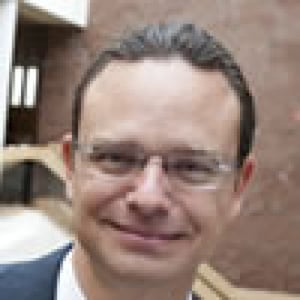
Associate Professor of Law, UMKC School of Law
A struggling Spanish guitar and didgeridoo playing former naval officer, Tim Lynch joined the faculty as an associate professor in summer 2011.
Prior to joining the faculty, Professor Lynch taught as a visiting assistant professor at the Indiana University Maurer School of Law. His scholarship is principally in the areas of international capital markets and international trade. He teaches the courses International Trade Law and Finance, International Business Transactions, Conflicts of Law, and International Environmental Law.
Tim received his JD from Harvard Law School, his MBA from Indiana University’s Kelley School of Business and his BA from the University of Chicago, where he majored in Arabic and Islamic studies and spent much of his time training and captaining the university’s rowing team.
Prior to entering academia, Professor Lynch was an associate attorney at Coudert Brothers in New York largely representing institutions in international investment transactions and development projects. After living in Japan for several years, and then living out of a pickup truck while traveling around North America for a year, he became the executive manager for the Public Works Department of the Emirate of Abu Dhabi, where he managed the construction of several grand-scale public works projects.
When he is not struggling with the guitar or the didge, Professor Lynch devotes far too much time and money learning how to turn wood and playing with his three young boys.
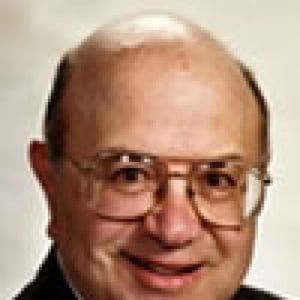
Professor of Economics, Indiana University-Purdue University Indianapolis
Professor Spechler's research field is comparative economic systems. He investigates the economies of different countries (developed capitalist, communist, emerging, and under-developed) and compares them to each other at a point in time, and to themselves over time.
His recent research has been on the transitional economies of the former Soviet bloc. He is currently using these countries to explain why some countries agree to form regional economic trading groups (blocs) and why others resist efforts to integrate their economies with a broader group.
Spechler is the only American economist working full-time on the economies of post-Soviet Central Asia. He has been a consultant for the World Bank, Asian Development Bank, the Global Development Network, USAID, and other U.S. governmental agencies. He is also Book Review Editor for Comparative Economic Studies. His new book The Political Economy of Reform in Central Asia: Uzbekistan and Its Neighbors will be published soon by Routledge (U.K.)
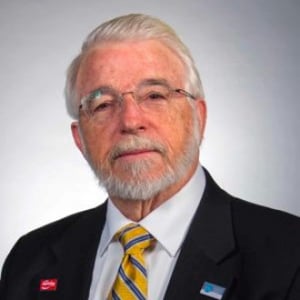
Founder; Chairman Emeritus, Competitive Enterprise Institute
Fred L. Smith, Jr. is the founder and Chairman Emeritus of the Competitive Enterprise Institute. He served as president from 1984 to 2013 and is currently the Director of CEI’s Center for Advancing Capitalism.
His public policy research has covered a wide range of topics, including regulatory reform, free market environmentalism, antitrust law, and international finance and comparative economics. Smith’s current focus is bringing leaders in the business and academic worlds together to defend capitalism and craft narratives that highlight the moral legitimacy of free markets.
His many published works include chapters in the books “Field Guide to Effective Communication” (2004), “Corporate Aftershock: The Public Policy Lessons from the Collapse of Enron and Other Major Corporations” (2003), “Ecology, Liberty, & Property: A Free Market Environmental Reader” (2000), “The Future of Financial Privacy: Private Choices versus Political Rules” (1999), “Environmental Politics: Public Costs, Private Rewards” (1992), and “Steering The Elephant: How Washington Works” (1987). His academic articles have appeared in journals such as Harvard Journal of Law and Economics and Knowledge, Technology, and Policy.
Smith has also written widely for leading newspapers and magazines such as The Wall Street Journal, Washington Post, USA Today, National Journal, Economic Affairs, and Forbes. He has also made hundreds of television and radio appearances on networks such as ABC, CNBC, CNN, Fox News, National Public Radio, and Radio America, among others.
Before founding CEI, Smith served as Director of Government Relations for the Council for a Competitive Economy, as a senior economist for the Association of American Railroads, and for five years as a Senior Policy Analyst at the Environmental Protection Agency. He is currently a member of the Board of Directors of the Competitive Enterprise Institute, the American Conservative Union, and the American Council on Science and Health and a member of the Foundation for Economic Education’s Faculty Network.
Smith graduated with top honors and holds a Bachelors of Science in Theoretical Mathematics and Political Science from Tulane University. He has also done graduate work in mathematics and applied mathematical economics at Harvard, SUNY at Buffalo, and the University of Pennsylvania.
Associate Professor of Law, UMKC School of Law
A struggling Spanish guitar and didgeridoo playing former naval officer, Tim Lynch joined the faculty as an associate professor in summer 2011.
Prior to joining the faculty, Professor Lynch taught as a visiting assistant professor at the Indiana University Maurer School of Law. His scholarship is principally in the areas of international capital markets and international trade. He teaches the courses International Trade Law and Finance, International Business Transactions, Conflicts of Law, and International Environmental Law.
Tim received his JD from Harvard Law School, his MBA from Indiana University’s Kelley School of Business and his BA from the University of Chicago, where he majored in Arabic and Islamic studies and spent much of his time training and captaining the university’s rowing team.
Prior to entering academia, Professor Lynch was an associate attorney at Coudert Brothers in New York largely representing institutions in international investment transactions and development projects. After living in Japan for several years, and then living out of a pickup truck while traveling around North America for a year, he became the executive manager for the Public Works Department of the Emirate of Abu Dhabi, where he managed the construction of several grand-scale public works projects.
When he is not struggling with the guitar or the didge, Professor Lynch devotes far too much time and money learning how to turn wood and playing with his three young boys.
Professor of Economics, Indiana University-Purdue University Indianapolis
Professor Spechler's research field is comparative economic systems. He investigates the economies of different countries (developed capitalist, communist, emerging, and under-developed) and compares them to each other at a point in time, and to themselves over time.
His recent research has been on the transitional economies of the former Soviet bloc. He is currently using these countries to explain why some countries agree to form regional economic trading groups (blocs) and why others resist efforts to integrate their economies with a broader group.
Spechler is the only American economist working full-time on the economies of post-Soviet Central Asia. He has been a consultant for the World Bank, Asian Development Bank, the Global Development Network, USAID, and other U.S. governmental agencies. He is also Book Review Editor for Comparative Economic Studies. His new book The Political Economy of Reform in Central Asia: Uzbekistan and Its Neighbors will be published soon by Routledge (U.K.)
Founder; Chairman Emeritus, Competitive Enterprise Institute
Fred L. Smith, Jr. is the founder and Chairman Emeritus of the Competitive Enterprise Institute. He served as president from 1984 to 2013 and is currently the Director of CEI’s Center for Advancing Capitalism.
His public policy research has covered a wide range of topics, including regulatory reform, free market environmentalism, antitrust law, and international finance and comparative economics. Smith’s current focus is bringing leaders in the business and academic worlds together to defend capitalism and craft narratives that highlight the moral legitimacy of free markets.
His many published works include chapters in the books “Field Guide to Effective Communication” (2004), “Corporate Aftershock: The Public Policy Lessons from the Collapse of Enron and Other Major Corporations” (2003), “Ecology, Liberty, & Property: A Free Market Environmental Reader” (2000), “The Future of Financial Privacy: Private Choices versus Political Rules” (1999), “Environmental Politics: Public Costs, Private Rewards” (1992), and “Steering The Elephant: How Washington Works” (1987). His academic articles have appeared in journals such as Harvard Journal of Law and Economics and Knowledge, Technology, and Policy.
Smith has also written widely for leading newspapers and magazines such as The Wall Street Journal, Washington Post, USA Today, National Journal, Economic Affairs, and Forbes. He has also made hundreds of television and radio appearances on networks such as ABC, CNBC, CNN, Fox News, National Public Radio, and Radio America, among others.
Before founding CEI, Smith served as Director of Government Relations for the Council for a Competitive Economy, as a senior economist for the Association of American Railroads, and for five years as a Senior Policy Analyst at the Environmental Protection Agency. He is currently a member of the Board of Directors of the Competitive Enterprise Institute, the American Conservative Union, and the American Council on Science and Health and a member of the Foundation for Economic Education’s Faculty Network.
Smith graduated with top honors and holds a Bachelors of Science in Theoretical Mathematics and Political Science from Tulane University. He has also done graduate work in mathematics and applied mathematical economics at Harvard, SUNY at Buffalo, and the University of Pennsylvania.
Associate Professor of Law, UMKC School of Law
A struggling Spanish guitar and didgeridoo playing former naval officer, Tim Lynch joined the faculty as an associate professor in summer 2011.
Prior to joining the faculty, Professor Lynch taught as a visiting assistant professor at the Indiana University Maurer School of Law. His scholarship is principally in the areas of international capital markets and international trade. He teaches the courses International Trade Law and Finance, International Business Transactions, Conflicts of Law, and International Environmental Law.
Tim received his JD from Harvard Law School, his MBA from Indiana University’s Kelley School of Business and his BA from the University of Chicago, where he majored in Arabic and Islamic studies and spent much of his time training and captaining the university’s rowing team.
Prior to entering academia, Professor Lynch was an associate attorney at Coudert Brothers in New York largely representing institutions in international investment transactions and development projects. After living in Japan for several years, and then living out of a pickup truck while traveling around North America for a year, he became the executive manager for the Public Works Department of the Emirate of Abu Dhabi, where he managed the construction of several grand-scale public works projects.
When he is not struggling with the guitar or the didge, Professor Lynch devotes far too much time and money learning how to turn wood and playing with his three young boys.
Founder; Chairman Emeritus, Competitive Enterprise Institute
Fred L. Smith, Jr. is the founder and Chairman Emeritus of the Competitive Enterprise Institute. He served as president from 1984 to 2013 and is currently the Director of CEI’s Center for Advancing Capitalism.
His public policy research has covered a wide range of topics, including regulatory reform, free market environmentalism, antitrust law, and international finance and comparative economics. Smith’s current focus is bringing leaders in the business and academic worlds together to defend capitalism and craft narratives that highlight the moral legitimacy of free markets.
His many published works include chapters in the books “Field Guide to Effective Communication” (2004), “Corporate Aftershock: The Public Policy Lessons from the Collapse of Enron and Other Major Corporations” (2003), “Ecology, Liberty, & Property: A Free Market Environmental Reader” (2000), “The Future of Financial Privacy: Private Choices versus Political Rules” (1999), “Environmental Politics: Public Costs, Private Rewards” (1992), and “Steering The Elephant: How Washington Works” (1987). His academic articles have appeared in journals such as Harvard Journal of Law and Economics and Knowledge, Technology, and Policy.
Smith has also written widely for leading newspapers and magazines such as The Wall Street Journal, Washington Post, USA Today, National Journal, Economic Affairs, and Forbes. He has also made hundreds of television and radio appearances on networks such as ABC, CNBC, CNN, Fox News, National Public Radio, and Radio America, among others.
Before founding CEI, Smith served as Director of Government Relations for the Council for a Competitive Economy, as a senior economist for the Association of American Railroads, and for five years as a Senior Policy Analyst at the Environmental Protection Agency. He is currently a member of the Board of Directors of the Competitive Enterprise Institute, the American Conservative Union, and the American Council on Science and Health and a member of the Foundation for Economic Education’s Faculty Network.
Smith graduated with top honors and holds a Bachelors of Science in Theoretical Mathematics and Political Science from Tulane University. He has also done graduate work in mathematics and applied mathematical economics at Harvard, SUNY at Buffalo, and the University of Pennsylvania.
Professor of Economics, Indiana University-Purdue University Indianapolis
Professor Spechler's research field is comparative economic systems. He investigates the economies of different countries (developed capitalist, communist, emerging, and under-developed) and compares them to each other at a point in time, and to themselves over time.
His recent research has been on the transitional economies of the former Soviet bloc. He is currently using these countries to explain why some countries agree to form regional economic trading groups (blocs) and why others resist efforts to integrate their economies with a broader group.
Spechler is the only American economist working full-time on the economies of post-Soviet Central Asia. He has been a consultant for the World Bank, Asian Development Bank, the Global Development Network, USAID, and other U.S. governmental agencies. He is also Book Review Editor for Comparative Economic Studies. His new book The Political Economy of Reform in Central Asia: Uzbekistan and Its Neighbors will be published soon by Routledge (U.K.)
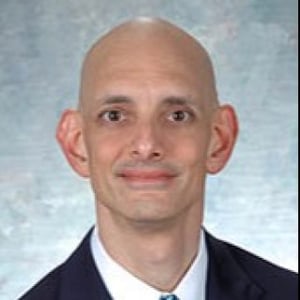
Distinguished Professor and Lawrence A. Jegen III Professor, Indiana University Robert H. McKinney School of Law
Gerard N. Magliocca is a Distinguished Professor and the Lawrence A. Jegen III Professor at the Indiana University Robert H. McKinney School of Law. Professor Magliocca is the author of five books on constitutional law. His next book will be about Justice Robert Jackson’s landmark concurring opinion in Youngstown Sheet and Tube Company v. Sawyer. His biography of Justice Bushrod Washington won the Erwin N. Griswold Prize from the Supreme Court Historical Society.
Professor Magliocca received his undergraduate degree from Stanford and his law degree from Yale. He joined the faculty in 2001 after two years as an attorney and one year as a law clerk for Judge Guido Calabresi on the United States Court of Appeals for the Second Circuit. In 2008, Professor Magliocca held the Fulbright-Dow Distinguished Research Chair of the Roosevelt Study Center in Middelburg, The Netherlands. He was a Fellow at the Washington Library at Mount Vernon from 2019-2021.

The Financial Crisis: Will More Governmental Stimulus and Regulation Save Our Economy?
Benjamin Blair, Timothy E. Lynch, Martin Spechler, Fred L. Smith
The Indiana-Bloomington Student Chapter hosted this debate on "The Financial Crisis: Will More Governmental Stimulus...
The Financial Crisis: Will More Governmental Stimulus and Regulation Save Our Economy?
Benjamin Blair, Timothy E. Lynch, Martin Spechler, Fred L. Smith
The Indiana-Bloomington Student Chapter hosted this debate on "The Financial Crisis: Will More Governmental Stimulus...
The Financial Crisis: Will More Governmental Stimulus and Regulation Save Our Economy?
Indiana - Bloomington Student Chapter
Bloomington, INThe Chief Justice on Capitol Hill: Opening a Dialogue Between The Branches
A Summary of, and Comments on: "Are We Seeing Global Warming?"
Jason E. Schaff
Dr. Klaus Hasselmann's recent article in Science1 provides a clear and accurate summary of the...