
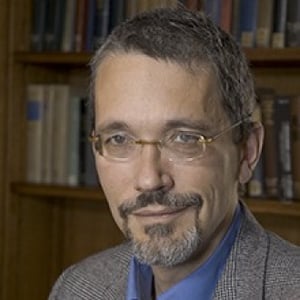
William K. Townsend Professor of Law, Yale Law School
Ian Ayres is a lawyer and an economist. He is the William K. Townsend Professor at Yale Law School, the Anne Urowsky Professorial Fellow in Law, and a Professor at Yale’s School of Management.
Professor Ayres has been a columnist for Forbes magazine, a commentator on public radio’s Marketplace, and a contributor to the New York Times’ Freakonomics Blog. His research has been featured on PrimeTime Live, Oprah and Good Morning America and in Time and Vogue magazines. Ian is a co-founder of stickK.com, a web site that helps you stick to your goals. In an Illinois post-conviction proceeding, Ayres helped convince a court to vacate his client’s death sentence.
In 2020, Harvard University Press will publish Ian’s twelfth book, “Disarmed By Choice: Liberating Individuals to Reduce Gun Violence” (with Fredrick Vars). Ian has also published over 100 articles on a wide range of topics including several empirical studies.
In 2006, he was elected to the American Academy of Arts and Sciences. His book with Greg Klass, Insincere Promises: The Law of Misrepresented Intent, won the 2006 Scribes book award “for the best work of legal scholarship published during the previous year.” Professor Ayres has been ranked as one of the most prolific and most-cited law professors of his generation. (See James Lindgren & Daniel Seltzer, The Most Prolific Law Professors and Faculties, 71 CHI.-KENT L. REV. 781 (1996); Fred R. Shapiro, The Most-Cited Legal Scholars, 29 J. LEGAL STUD. 409 (2000).) The Chronicle of Higher Education referred to Ayres as “a law-and-economics guru.”
He was born and raised in Kansas City, Missouri, received his B.A. (majoring in Russian studies and economics) and J.D. from Yale and his Ph.D in economics from M.I.T. Professor Ayres and clerked for the Honorable James K. Logan of the Tenth Circuit Court of Appeals. He has previously taught at Harvard, Illinois, Northwestern, Stanford and Virginia law schools and has been a research fellow of the American Bar Foundation and Columbia. From 2002 to 2009, he was the editor of the Journal of Law, Economics and Organization.
His two most cited law review articles are Fair Driving: Gender and Race Discrimination in Retail Car Negotiations, 104 Harvard Law Review 817 (1991) and Filling Gaps in Incomplete Contracts: An Economic Theory of Default Rules, 99 Yale Law Journal 87 (1989) (with Robert Gertner).
Excerpts of his publications as well as audio and video clips can be found on the internet at: www.ianayres.com.
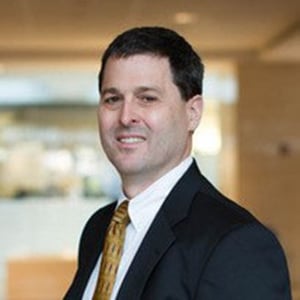
Scott K. Ginsburg Professor of Health Law & Policy, Georgetown University
David A. Hyman, M.D., J.D., is the Scott K. Ginsburg Professor of Health Law & Policy at Georgetown University. Professor Hyman focuses his research and writing on the regulation and financing of health care. He teaches or has taught health care regulation, civil procedure, insurance, medical malpractice, law & economics, professional responsibility, and tax policy.
While serving as Special Counsel to the Federal Trade Commission, Professor Hyman was principal author and project leader for the first joint report ever issued by the Federal Trade Commission and Department of Justice, “Improving Health Care: A Dose of Competition” (2004). He is also the author of Medicare Meets Mephistopheles, which was selected by the U.S. Chamber of Commerce/National Chamber Foundation as one of the top ten books of 2007, and the co-author (with Charles Silver) of Overcharged: Why Americans Pay Too Much for Health Care (2018). He has published widely in student-edited law reviews and peer-reviewed medical, health policy, law, and economics journals.
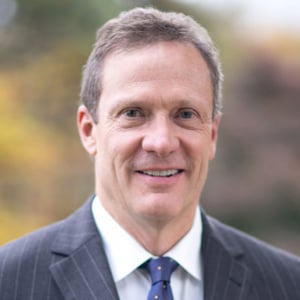
Blaine T. Phillips Distinguished Professor in Environmental Law, University of Virginia School of Law
Law and economics expert Jason Scott Johnston joined the Virginia Law faculty in 2010 and is the Blaine T. Phillips Distinguished Professor in Environmental Law. He formerly served as the the Nicholas E. Chimicles Research Professor in Business Law and Regulation at Virginia Law, and the Robert G. Fuller, Jr. Professor of Law and director of the Program on Law, Environment and Economy at the University of Pennsylvania Law School.
Johnston’s scholarship has examined subjects ranging from natural resources law to torts and contracts. He has published dozens of articles in law journals, such as the Yale Law Journal, and in peer-reviewed economics journals, such as the Journal of Law, Economics and Organization. He is currently working on a book that critically analyzes the foundations of global warming law and policy, a series of articles on the economics of regulatory science and another series of articles on various aspects of the law and economics of consumer protection. He has served on the Board of Directors of the American Law and Economics Association, on the National Science Foundation’s Law and Social Science grant review panel, and on the Board of the Searle Civil Justice Institute. He won Penn Law’s Robert A. Gorman Award for Teaching Excellence in 2003.
After earning his A.B. from Dartmouth College and both his J.D. and Ph.D. (economics) from the University of Michigan, Johnston clerked for Judge Gilbert S. Merritt on the U.S. Court of Appeals for the Sixth Circuit. He then taught at Vermont Law School and Vanderbilt Law School before joining Penn’s faculty. He has been a visiting professor or held fellowship appointments at Yale Law School, the University of Southern California Gould School of Law, the American Academy in Berlin and the Property and Environment Research Center.
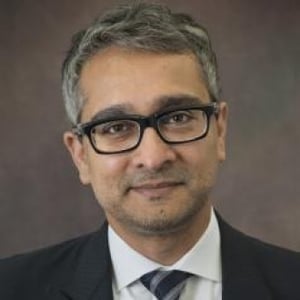
Lee and Brena Freeman Professor of Law, University of Chicago Law School
Anup Malani is the Lee and Brena Freeman Professor at the University of Chicago Law School and a Professor at the Pritzker School of Medicine. He is also a Research Associate at the National Bureau of Economic Research in Boston, a Senior Fellow at the Schaeffer Center at the University of Southern California, and an editor at the Journal of Law and Economics.
Malani is the co-founder and Faculty Director of the International Innovation Corps, a social service program that sends teams of University of Chicago and foreign university graduates to work on innovative development projects with government officials in India and Brazil.
Malani has a PhD in economics and a JD, both from University of Chicago. He clerked for Judge Stephen Williams on the US Court of Appeals for District of Columbia and Justice Sandra Day O’Connor on the US Supreme Court.
Malani conducts research in law and economics, health economics and development economics. His law and economics research focuses on judicial behavior, measuring the welfare impact of laws, and, recently legal implications of blockchain. His health economics research focuses on the value of medical innovation and health care insurance, control of infectious diseases, placebo effects, and conflicts of interest in medicine. Malani’s development economics work focuses on health care supply and financing in India and the growth of and quality of life in urban slums. He is the principal investigator on the Indian Health Insurance Experiment, an 11,000 household randomized controlled trial of health insurance in Karnataka, India, and on a large-scale impact evaluation of Mission Kakatiya, a major effort to expand rainfall capture as means of irrigation in Telangana, India. Malani’s research has been published in leading journals in a number of different fields, including the Proceedings of the National Academy of Sciences, the Journal of Political Economy, the Journal of Econometrics, the Harvard Law Review, the University of Chicago Law Review, the Archives of Internal Medicine, and Theoretical Population Biology. Malani teaches courses in commercial law, health law, the canons of American legal thought, law and economics and law and development in the Law School and a PhD course in law and economics in the Economics Department.

Former President & CEO, The Federalist Society for Law and Public Policy Studies
Eugene B. Meyer, former President and CEO of the Federalist Society, has served as Executive Director, CEO, and/or President of the organization for more than 40 years. He is responsible for shepherding the organization from a small group of law students to a community of 90,000 lawyers, law students, academics, judges, and others interested in the rule of law. The Society now includes a Student Chapter at nearly every ABA-accredited law school in the country and Lawyers Chapters in 220 major cities across the nation. Gene earned his B.A. in history at Yale in 1975 and his M.A. in political science from the London School of Economics in 1976. Gene currently serves on the boards of the U.S. Chess Center, the Holman Foundation, the Sarah Scaife Foundation, and the advisory board of the Adam Smith Society. He holds the title of International Chess Master.
William K. Townsend Professor of Law, Yale Law School
Ian Ayres is a lawyer and an economist. He is the William K. Townsend Professor at Yale Law School, the Anne Urowsky Professorial Fellow in Law, and a Professor at Yale’s School of Management.
Professor Ayres has been a columnist for Forbes magazine, a commentator on public radio’s Marketplace, and a contributor to the New York Times’ Freakonomics Blog. His research has been featured on PrimeTime Live, Oprah and Good Morning America and in Time and Vogue magazines. Ian is a co-founder of stickK.com, a web site that helps you stick to your goals. In an Illinois post-conviction proceeding, Ayres helped convince a court to vacate his client’s death sentence.
In 2020, Harvard University Press will publish Ian’s twelfth book, “Disarmed By Choice: Liberating Individuals to Reduce Gun Violence” (with Fredrick Vars). Ian has also published over 100 articles on a wide range of topics including several empirical studies.
In 2006, he was elected to the American Academy of Arts and Sciences. His book with Greg Klass, Insincere Promises: The Law of Misrepresented Intent, won the 2006 Scribes book award “for the best work of legal scholarship published during the previous year.” Professor Ayres has been ranked as one of the most prolific and most-cited law professors of his generation. (See James Lindgren & Daniel Seltzer, The Most Prolific Law Professors and Faculties, 71 CHI.-KENT L. REV. 781 (1996); Fred R. Shapiro, The Most-Cited Legal Scholars, 29 J. LEGAL STUD. 409 (2000).) The Chronicle of Higher Education referred to Ayres as “a law-and-economics guru.”
He was born and raised in Kansas City, Missouri, received his B.A. (majoring in Russian studies and economics) and J.D. from Yale and his Ph.D in economics from M.I.T. Professor Ayres and clerked for the Honorable James K. Logan of the Tenth Circuit Court of Appeals. He has previously taught at Harvard, Illinois, Northwestern, Stanford and Virginia law schools and has been a research fellow of the American Bar Foundation and Columbia. From 2002 to 2009, he was the editor of the Journal of Law, Economics and Organization.
His two most cited law review articles are Fair Driving: Gender and Race Discrimination in Retail Car Negotiations, 104 Harvard Law Review 817 (1991) and Filling Gaps in Incomplete Contracts: An Economic Theory of Default Rules, 99 Yale Law Journal 87 (1989) (with Robert Gertner).
Excerpts of his publications as well as audio and video clips can be found on the internet at: www.ianayres.com.
Scott K. Ginsburg Professor of Health Law & Policy, Georgetown University
David A. Hyman, M.D., J.D., is the Scott K. Ginsburg Professor of Health Law & Policy at Georgetown University. Professor Hyman focuses his research and writing on the regulation and financing of health care. He teaches or has taught health care regulation, civil procedure, insurance, medical malpractice, law & economics, professional responsibility, and tax policy.
While serving as Special Counsel to the Federal Trade Commission, Professor Hyman was principal author and project leader for the first joint report ever issued by the Federal Trade Commission and Department of Justice, “Improving Health Care: A Dose of Competition” (2004). He is also the author of Medicare Meets Mephistopheles, which was selected by the U.S. Chamber of Commerce/National Chamber Foundation as one of the top ten books of 2007, and the co-author (with Charles Silver) of Overcharged: Why Americans Pay Too Much for Health Care (2018). He has published widely in student-edited law reviews and peer-reviewed medical, health policy, law, and economics journals.
Blaine T. Phillips Distinguished Professor in Environmental Law, University of Virginia School of Law
Law and economics expert Jason Scott Johnston joined the Virginia Law faculty in 2010 and is the Blaine T. Phillips Distinguished Professor in Environmental Law. He formerly served as the the Nicholas E. Chimicles Research Professor in Business Law and Regulation at Virginia Law, and the Robert G. Fuller, Jr. Professor of Law and director of the Program on Law, Environment and Economy at the University of Pennsylvania Law School.
Johnston’s scholarship has examined subjects ranging from natural resources law to torts and contracts. He has published dozens of articles in law journals, such as the Yale Law Journal, and in peer-reviewed economics journals, such as the Journal of Law, Economics and Organization. He is currently working on a book that critically analyzes the foundations of global warming law and policy, a series of articles on the economics of regulatory science and another series of articles on various aspects of the law and economics of consumer protection. He has served on the Board of Directors of the American Law and Economics Association, on the National Science Foundation’s Law and Social Science grant review panel, and on the Board of the Searle Civil Justice Institute. He won Penn Law’s Robert A. Gorman Award for Teaching Excellence in 2003.
After earning his A.B. from Dartmouth College and both his J.D. and Ph.D. (economics) from the University of Michigan, Johnston clerked for Judge Gilbert S. Merritt on the U.S. Court of Appeals for the Sixth Circuit. He then taught at Vermont Law School and Vanderbilt Law School before joining Penn’s faculty. He has been a visiting professor or held fellowship appointments at Yale Law School, the University of Southern California Gould School of Law, the American Academy in Berlin and the Property and Environment Research Center.
Lee and Brena Freeman Professor of Law, University of Chicago Law School
Anup Malani is the Lee and Brena Freeman Professor at the University of Chicago Law School and a Professor at the Pritzker School of Medicine. He is also a Research Associate at the National Bureau of Economic Research in Boston, a Senior Fellow at the Schaeffer Center at the University of Southern California, and an editor at the Journal of Law and Economics.
Malani is the co-founder and Faculty Director of the International Innovation Corps, a social service program that sends teams of University of Chicago and foreign university graduates to work on innovative development projects with government officials in India and Brazil.
Malani has a PhD in economics and a JD, both from University of Chicago. He clerked for Judge Stephen Williams on the US Court of Appeals for District of Columbia and Justice Sandra Day O’Connor on the US Supreme Court.
Malani conducts research in law and economics, health economics and development economics. His law and economics research focuses on judicial behavior, measuring the welfare impact of laws, and, recently legal implications of blockchain. His health economics research focuses on the value of medical innovation and health care insurance, control of infectious diseases, placebo effects, and conflicts of interest in medicine. Malani’s development economics work focuses on health care supply and financing in India and the growth of and quality of life in urban slums. He is the principal investigator on the Indian Health Insurance Experiment, an 11,000 household randomized controlled trial of health insurance in Karnataka, India, and on a large-scale impact evaluation of Mission Kakatiya, a major effort to expand rainfall capture as means of irrigation in Telangana, India. Malani’s research has been published in leading journals in a number of different fields, including the Proceedings of the National Academy of Sciences, the Journal of Political Economy, the Journal of Econometrics, the Harvard Law Review, the University of Chicago Law Review, the Archives of Internal Medicine, and Theoretical Population Biology. Malani teaches courses in commercial law, health law, the canons of American legal thought, law and economics and law and development in the Law School and a PhD course in law and economics in the Economics Department.
Former President & CEO, The Federalist Society for Law and Public Policy Studies
Eugene B. Meyer, former President and CEO of the Federalist Society, has served as Executive Director, CEO, and/or President of the organization for more than 40 years. He is responsible for shepherding the organization from a small group of law students to a community of 90,000 lawyers, law students, academics, judges, and others interested in the rule of law. The Society now includes a Student Chapter at nearly every ABA-accredited law school in the country and Lawyers Chapters in 220 major cities across the nation. Gene earned his B.A. in history at Yale in 1975 and his M.A. in political science from the London School of Economics in 1976. Gene currently serves on the boards of the U.S. Chess Center, the Holman Foundation, the Sarah Scaife Foundation, and the advisory board of the Adam Smith Society. He holds the title of International Chess Master.
Associate Professor of Law, Southwestern Law School
Combining his training in law and medicine, Ryan Abbott has served as a consultant on health care policy and regulation, intellectual property, health care financing, and clinical research design for international organizations, academic institutions and private enterprises including the World Health Organization, World Intellectual Property Organization and University of California, Los Angeles. A licensed physician, attorney, patent agent and acupuncturist, he has considerable experience in the fields of public health, food and drug law, as well as technology transfer and development. Beginning with the Fall 2012 academic year, he brings that expertise to the Southwestern faculty.
After earning both his undergraduate and Master of Traditional Oriental Medicine degrees, summa cum laude, Professor Abbott went on to complete his M.D. degree at the University of California, San Diego School of Medicine, where he received the Weiss Medical Research Scholarship for research in Preventive Medicine. He also pursued his law degree at Yale Law School, where he was Editor and Submissions Editor of Yale Journal of Law and Technology and Yale Journal of Health Policy, Law, and Ethics, and the recipient of the Kirby Simon Fellowship for International Human Rights Work.
Just prior to joining Southwestern, Professor Abbott was a Resident Physician in Internal Medicine at Santa Clara Valley Medical Center, and recently served as Director of Research and Project Management at Nova Worldwide Consulting, a firm specializing in technical assistance and advice to governments and international organizations on the design and implementation of legislation and programs with respect to international trade, industrial development and intellectual property rights, and as Principal Investigator of biomedical research studies at UCLA.
Professor Abbott enjoys sharing his experience with his students. "As someone with a background in both law and medicine, I hope to provide students with a multidisciplinary approach to considering the complex issues they will face as attorneys," Professor Abbott explains. "This will help students to consider client issues from a variety of perspectives. Health care law is an important subject for lawyers; health care spending now makes up more than 18 percent of GDP, and a growing number of attorneys are finding health care related employment."
Professor Abbott has published widely on issues associated with health care law and intellectual property protection in legal, medical and scientific peer-reviewed journals. His current research is in the field of Bioinformatics, focused on the intellectual property implications of innovations related to human biological processes.

Laurence A. Tisch Professor of Law and Director, Classical Liberal Institute, New York University School of Law; Director, Classical Liberal Institute, Civitas Institute University of Texas at Austin
Richard A. Epstein is the Laurence A. Tisch Professor of Law, at New York University, a senior research fellow at the Civitas Institute at the University of Texas Austin, and a senior Lecturer, the University of Chicago. He received an LL.D., h.c . from the University of Ghent, 2003 , and an LLD h.c . from the University of Siegen in 2018 and the Bradley Prize in 2011. He has been a member of the American Academy of Arts and Sciences since 1985. He has edited both the Journal of Legal Studies (1981-1991) and the Journal of Law and Economics (1991-2001). He is also a founder and director of the Classical Liberal Institute at NYU Law School. His most recent book is The Classical Liberal Constitution: The Uncertain Quest for Limited Government (2014). His other books include Takings: Private Property and the Power of Eminent Domain ( 1985); Bargaining with the State (1993); Simple Rules for a Complex World (1995); Principles for a Free Society: Reconciling Individual Liberty and the Common Good (1998); Skepticism and Freedom: A Modern Theory of Classical Liberalism (2003); Design for Liberty: Private Property, Public Administration and the Rule of Law (2011), and most recently, The Myth of Birthright citizenship—and Beyond (2026). He has taught courses in , administrative law, antitrust, constitutional, contracts, environmental law, land use planning; real property, torts and water law. He has written and spoken extensively on a wide range of topics, and is writes a regular column for Defining Ideas.
Dean and CEO, Southwestern Law School
A legal education trailblazer many times over, Susan Westerberg Prager is Southwestern's 11th Dean and Chief Executive Officer, and the first woman in the history of the law school to serve in the post. She joined Southwestern in Fall 2013 following five years as Executive Director and Chief Executive Officer of the Association of American Law Schools (AALS). Dean Prager previously served in several leadership positions in higher education, including 16 years as Dean of UCLA School of Law.
"Southwestern is a remarkable place, with a rich tradition of making a difference in the futures of its students," Dean Prager said. "The law school's innovative and collaborative spirit is part of its DNA. The faculty and countless graduates are committed to helping today's students contribute to the complex and challenging worlds they will occupy as professionals. I feel privileged to have been asked to lead Southwestern Law School at this challenging and exciting time in legal education."
Early in her career, Dean Prager worked for California's senior U.S. Senator and minority whip Thomas Kuchel, Congressman Pete McCloskey, and California Assemblyman John Veneman from Modesto. She went on to complete her J.D. degree at UCLA School of Law, where she served as Editor-in-Chief of theUCLA Law Review.
Dean Prager practiced law in North Carolina and then returned to her alma mater in 1972 as a member of the UCLA law faculty, teaching in the areas of community property, family law, wills and trusts, and historic preservation. When she was named Dean a decade later, she was the first female law dean in the University of California system and one of only two women serving in that capacity in the entire country. She served from 1982 to 1998, the longest tenure of any law dean in UCLA history, and was also the first UCLA graduate to serve in the post.
Dean Prager worked with the UCLA law faculty and university administration to strengthen the intellectual environment and operation of the law school. She cultivated a culture of excellence in both research and teaching, furthered diversity within the student body, and oversaw the appointment of dynamic new faculty and endowed chair holders. She enhanced the curriculum in areas such as international, environmental, public interest, entertainment and corporate law, and spearheaded the expansion of the clinical program. Her legacy includes two major building projects, the Clinical Wing and the Hugh & Hazel Darling Law Library, as well as major advancements in technology, the launch of the law school's first major fundraising efforts, and the successful completion of one of the University of California's first major building project public-private partnerships. Upon her departure from the deanship, the law school established a named faculty chair in her honor.
While at UCLA, Dean Prager became the second woman ever elected as President of the AALS, and also served on the governing boards of the Law School Admission Council and the Council of the American Bar Association Section of Legal Education and Admissions to the Bar.
In 1999, Dean Prager left the legal academy to pursue other opportunities in higher education, serving as Provost of Dartmouth College and as President of Occidental College in Los Angeles. In 2008, she was named Executive Director and Chief Executive Officer of the AALS, the nation's principal representative of America's law schools and the scholarly society of the law teaching profession. As the top administrator of the organization, she worked with the volunteer executive board and faculty committees in evaluating schools for membership and providing programs designed to enhance law deans, faculty and administrators' effectiveness, including the AALS Annual Meeting, the largest gathering of law professors in the world. Under her leadership, the AALS furthered its core values; brought issues of importance to law schools before legislative bodies, courts and administrative agencies; and influenced the debate over the standards for law school accreditation.
Dean Prager was a trustee of Stanford University for 14 years, and has been a member of the Board of Directors of the Pacific Mutual Holding Company (Pacific Life) since 1979, the Access Group (non-profit student loan corporation) and the American Council on Legal Education, and was a member of the California Commission on Campaign Financing and the California Community Colleges Commission on Innovation. An outspoken advocate for intellectual and racial diversity throughout her career, Dean Prager has counseled community groups and legislators and testified before congressional subcommittees in the affirmative action debate.
The recipient of the Los Angeles Mexican American Legal Defense and Education Fund's (MALDEF) 1997 Legal Services Award, Dean Prager was honored with the Los Angeles Israel Cancer Research Fund's Women of Action Award (1996), and the Madrina Award of the UCLA Latino Alumni Association (1998). On the occasion of the conclusion of her tenure as Dean, the UCLA Law Alumni Association presented her with its first Lifetime Achievement Award. She later received The Edward A. Dickson Award, the highest award of the greater UCLA Alumni Association.
H.H. Macaulay Endowed Professor of Economics, Clemson College of Business
Thomas Hazlett is the Hugh H. Macaulay Endowed Professor of Economics at Clemson University. He has previously held faculty positions at George Mason University, the University of California, Davis, and the Wharton School, and served as Chief Economist of the Federal Communications Commission. A noted expert in regulatory economics and information markets, his research has appeared in academic forums such as the Journal of Law & Economics, RAND Journal of Economics, the Journal of Financial Economics, the University of Pennsylvania Law Review and the Columbia Law Review. He has also written for such popular periodicals as the Wall Street Journal, The Economist, Slate, the N.Y. Times, N.Y. Daily News, Reuters.com, Business Week, The New Republic and the Financial Times. His most recent book, The Political Spectrum: The Tumultuous Liberation of Wireless Technology, from Herbert Hoover to the Smartphone, (Yale, 2017), was featured as one of the top tech books of the year at CES 2018.
William K. Townsend Professor of Law, Yale Law School
Ian Ayres is a lawyer and an economist. He is the William K. Townsend Professor at Yale Law School, the Anne Urowsky Professorial Fellow in Law, and a Professor at Yale’s School of Management.
Professor Ayres has been a columnist for Forbes magazine, a commentator on public radio’s Marketplace, and a contributor to the New York Times’ Freakonomics Blog. His research has been featured on PrimeTime Live, Oprah and Good Morning America and in Time and Vogue magazines. Ian is a co-founder of stickK.com, a web site that helps you stick to your goals. In an Illinois post-conviction proceeding, Ayres helped convince a court to vacate his client’s death sentence.
In 2020, Harvard University Press will publish Ian’s twelfth book, “Disarmed By Choice: Liberating Individuals to Reduce Gun Violence” (with Fredrick Vars). Ian has also published over 100 articles on a wide range of topics including several empirical studies.
In 2006, he was elected to the American Academy of Arts and Sciences. His book with Greg Klass, Insincere Promises: The Law of Misrepresented Intent, won the 2006 Scribes book award “for the best work of legal scholarship published during the previous year.” Professor Ayres has been ranked as one of the most prolific and most-cited law professors of his generation. (See James Lindgren & Daniel Seltzer, The Most Prolific Law Professors and Faculties, 71 CHI.-KENT L. REV. 781 (1996); Fred R. Shapiro, The Most-Cited Legal Scholars, 29 J. LEGAL STUD. 409 (2000).) The Chronicle of Higher Education referred to Ayres as “a law-and-economics guru.”
He was born and raised in Kansas City, Missouri, received his B.A. (majoring in Russian studies and economics) and J.D. from Yale and his Ph.D in economics from M.I.T. Professor Ayres and clerked for the Honorable James K. Logan of the Tenth Circuit Court of Appeals. He has previously taught at Harvard, Illinois, Northwestern, Stanford and Virginia law schools and has been a research fellow of the American Bar Foundation and Columbia. From 2002 to 2009, he was the editor of the Journal of Law, Economics and Organization.
His two most cited law review articles are Fair Driving: Gender and Race Discrimination in Retail Car Negotiations, 104 Harvard Law Review 817 (1991) and Filling Gaps in Incomplete Contracts: An Economic Theory of Default Rules, 99 Yale Law Journal 87 (1989) (with Robert Gertner).
Excerpts of his publications as well as audio and video clips can be found on the internet at: www.ianayres.com.
Scott K. Ginsburg Professor of Health Law & Policy, Georgetown University
David A. Hyman, M.D., J.D., is the Scott K. Ginsburg Professor of Health Law & Policy at Georgetown University. Professor Hyman focuses his research and writing on the regulation and financing of health care. He teaches or has taught health care regulation, civil procedure, insurance, medical malpractice, law & economics, professional responsibility, and tax policy.
While serving as Special Counsel to the Federal Trade Commission, Professor Hyman was principal author and project leader for the first joint report ever issued by the Federal Trade Commission and Department of Justice, “Improving Health Care: A Dose of Competition” (2004). He is also the author of Medicare Meets Mephistopheles, which was selected by the U.S. Chamber of Commerce/National Chamber Foundation as one of the top ten books of 2007, and the co-author (with Charles Silver) of Overcharged: Why Americans Pay Too Much for Health Care (2018). He has published widely in student-edited law reviews and peer-reviewed medical, health policy, law, and economics journals.
Blaine T. Phillips Distinguished Professor in Environmental Law, University of Virginia School of Law
Law and economics expert Jason Scott Johnston joined the Virginia Law faculty in 2010 and is the Blaine T. Phillips Distinguished Professor in Environmental Law. He formerly served as the the Nicholas E. Chimicles Research Professor in Business Law and Regulation at Virginia Law, and the Robert G. Fuller, Jr. Professor of Law and director of the Program on Law, Environment and Economy at the University of Pennsylvania Law School.
Johnston’s scholarship has examined subjects ranging from natural resources law to torts and contracts. He has published dozens of articles in law journals, such as the Yale Law Journal, and in peer-reviewed economics journals, such as the Journal of Law, Economics and Organization. He is currently working on a book that critically analyzes the foundations of global warming law and policy, a series of articles on the economics of regulatory science and another series of articles on various aspects of the law and economics of consumer protection. He has served on the Board of Directors of the American Law and Economics Association, on the National Science Foundation’s Law and Social Science grant review panel, and on the Board of the Searle Civil Justice Institute. He won Penn Law’s Robert A. Gorman Award for Teaching Excellence in 2003.
After earning his A.B. from Dartmouth College and both his J.D. and Ph.D. (economics) from the University of Michigan, Johnston clerked for Judge Gilbert S. Merritt on the U.S. Court of Appeals for the Sixth Circuit. He then taught at Vermont Law School and Vanderbilt Law School before joining Penn’s faculty. He has been a visiting professor or held fellowship appointments at Yale Law School, the University of Southern California Gould School of Law, the American Academy in Berlin and the Property and Environment Research Center.
Lee and Brena Freeman Professor of Law, University of Chicago Law School
Anup Malani is the Lee and Brena Freeman Professor at the University of Chicago Law School and a Professor at the Pritzker School of Medicine. He is also a Research Associate at the National Bureau of Economic Research in Boston, a Senior Fellow at the Schaeffer Center at the University of Southern California, and an editor at the Journal of Law and Economics.
Malani is the co-founder and Faculty Director of the International Innovation Corps, a social service program that sends teams of University of Chicago and foreign university graduates to work on innovative development projects with government officials in India and Brazil.
Malani has a PhD in economics and a JD, both from University of Chicago. He clerked for Judge Stephen Williams on the US Court of Appeals for District of Columbia and Justice Sandra Day O’Connor on the US Supreme Court.
Malani conducts research in law and economics, health economics and development economics. His law and economics research focuses on judicial behavior, measuring the welfare impact of laws, and, recently legal implications of blockchain. His health economics research focuses on the value of medical innovation and health care insurance, control of infectious diseases, placebo effects, and conflicts of interest in medicine. Malani’s development economics work focuses on health care supply and financing in India and the growth of and quality of life in urban slums. He is the principal investigator on the Indian Health Insurance Experiment, an 11,000 household randomized controlled trial of health insurance in Karnataka, India, and on a large-scale impact evaluation of Mission Kakatiya, a major effort to expand rainfall capture as means of irrigation in Telangana, India. Malani’s research has been published in leading journals in a number of different fields, including the Proceedings of the National Academy of Sciences, the Journal of Political Economy, the Journal of Econometrics, the Harvard Law Review, the University of Chicago Law Review, the Archives of Internal Medicine, and Theoretical Population Biology. Malani teaches courses in commercial law, health law, the canons of American legal thought, law and economics and law and development in the Law School and a PhD course in law and economics in the Economics Department.
Former President & CEO, The Federalist Society for Law and Public Policy Studies
Eugene B. Meyer, former President and CEO of the Federalist Society, has served as Executive Director, CEO, and/or President of the organization for more than 40 years. He is responsible for shepherding the organization from a small group of law students to a community of 90,000 lawyers, law students, academics, judges, and others interested in the rule of law. The Society now includes a Student Chapter at nearly every ABA-accredited law school in the country and Lawyers Chapters in 220 major cities across the nation. Gene earned his B.A. in history at Yale in 1975 and his M.A. in political science from the London School of Economics in 1976. Gene currently serves on the boards of the U.S. Chess Center, the Holman Foundation, the Sarah Scaife Foundation, and the advisory board of the Adam Smith Society. He holds the title of International Chess Master.
Associate Professor of Law, Southwestern Law School
Combining his training in law and medicine, Ryan Abbott has served as a consultant on health care policy and regulation, intellectual property, health care financing, and clinical research design for international organizations, academic institutions and private enterprises including the World Health Organization, World Intellectual Property Organization and University of California, Los Angeles. A licensed physician, attorney, patent agent and acupuncturist, he has considerable experience in the fields of public health, food and drug law, as well as technology transfer and development. Beginning with the Fall 2012 academic year, he brings that expertise to the Southwestern faculty.
After earning both his undergraduate and Master of Traditional Oriental Medicine degrees, summa cum laude, Professor Abbott went on to complete his M.D. degree at the University of California, San Diego School of Medicine, where he received the Weiss Medical Research Scholarship for research in Preventive Medicine. He also pursued his law degree at Yale Law School, where he was Editor and Submissions Editor of Yale Journal of Law and Technology and Yale Journal of Health Policy, Law, and Ethics, and the recipient of the Kirby Simon Fellowship for International Human Rights Work.
Just prior to joining Southwestern, Professor Abbott was a Resident Physician in Internal Medicine at Santa Clara Valley Medical Center, and recently served as Director of Research and Project Management at Nova Worldwide Consulting, a firm specializing in technical assistance and advice to governments and international organizations on the design and implementation of legislation and programs with respect to international trade, industrial development and intellectual property rights, and as Principal Investigator of biomedical research studies at UCLA.
Professor Abbott enjoys sharing his experience with his students. "As someone with a background in both law and medicine, I hope to provide students with a multidisciplinary approach to considering the complex issues they will face as attorneys," Professor Abbott explains. "This will help students to consider client issues from a variety of perspectives. Health care law is an important subject for lawyers; health care spending now makes up more than 18 percent of GDP, and a growing number of attorneys are finding health care related employment."
Professor Abbott has published widely on issues associated with health care law and intellectual property protection in legal, medical and scientific peer-reviewed journals. His current research is in the field of Bioinformatics, focused on the intellectual property implications of innovations related to human biological processes.
Laurence A. Tisch Professor of Law and Director, Classical Liberal Institute, New York University School of Law; Director, Classical Liberal Institute, Civitas Institute University of Texas at Austin
Richard A. Epstein is the Laurence A. Tisch Professor of Law, at New York University, a senior research fellow at the Civitas Institute at the University of Texas Austin, and a senior Lecturer, the University of Chicago. He received an LL.D., h.c . from the University of Ghent, 2003 , and an LLD h.c . from the University of Siegen in 2018 and the Bradley Prize in 2011. He has been a member of the American Academy of Arts and Sciences since 1985. He has edited both the Journal of Legal Studies (1981-1991) and the Journal of Law and Economics (1991-2001). He is also a founder and director of the Classical Liberal Institute at NYU Law School. His most recent book is The Classical Liberal Constitution: The Uncertain Quest for Limited Government (2014). His other books include Takings: Private Property and the Power of Eminent Domain ( 1985); Bargaining with the State (1993); Simple Rules for a Complex World (1995); Principles for a Free Society: Reconciling Individual Liberty and the Common Good (1998); Skepticism and Freedom: A Modern Theory of Classical Liberalism (2003); Design for Liberty: Private Property, Public Administration and the Rule of Law (2011), and most recently, The Myth of Birthright citizenship—and Beyond (2026). He has taught courses in , administrative law, antitrust, constitutional, contracts, environmental law, land use planning; real property, torts and water law. He has written and spoken extensively on a wide range of topics, and is writes a regular column for Defining Ideas.
Dean and CEO, Southwestern Law School
A legal education trailblazer many times over, Susan Westerberg Prager is Southwestern's 11th Dean and Chief Executive Officer, and the first woman in the history of the law school to serve in the post. She joined Southwestern in Fall 2013 following five years as Executive Director and Chief Executive Officer of the Association of American Law Schools (AALS). Dean Prager previously served in several leadership positions in higher education, including 16 years as Dean of UCLA School of Law.
"Southwestern is a remarkable place, with a rich tradition of making a difference in the futures of its students," Dean Prager said. "The law school's innovative and collaborative spirit is part of its DNA. The faculty and countless graduates are committed to helping today's students contribute to the complex and challenging worlds they will occupy as professionals. I feel privileged to have been asked to lead Southwestern Law School at this challenging and exciting time in legal education."
Early in her career, Dean Prager worked for California's senior U.S. Senator and minority whip Thomas Kuchel, Congressman Pete McCloskey, and California Assemblyman John Veneman from Modesto. She went on to complete her J.D. degree at UCLA School of Law, where she served as Editor-in-Chief of theUCLA Law Review.
Dean Prager practiced law in North Carolina and then returned to her alma mater in 1972 as a member of the UCLA law faculty, teaching in the areas of community property, family law, wills and trusts, and historic preservation. When she was named Dean a decade later, she was the first female law dean in the University of California system and one of only two women serving in that capacity in the entire country. She served from 1982 to 1998, the longest tenure of any law dean in UCLA history, and was also the first UCLA graduate to serve in the post.
Dean Prager worked with the UCLA law faculty and university administration to strengthen the intellectual environment and operation of the law school. She cultivated a culture of excellence in both research and teaching, furthered diversity within the student body, and oversaw the appointment of dynamic new faculty and endowed chair holders. She enhanced the curriculum in areas such as international, environmental, public interest, entertainment and corporate law, and spearheaded the expansion of the clinical program. Her legacy includes two major building projects, the Clinical Wing and the Hugh & Hazel Darling Law Library, as well as major advancements in technology, the launch of the law school's first major fundraising efforts, and the successful completion of one of the University of California's first major building project public-private partnerships. Upon her departure from the deanship, the law school established a named faculty chair in her honor.
While at UCLA, Dean Prager became the second woman ever elected as President of the AALS, and also served on the governing boards of the Law School Admission Council and the Council of the American Bar Association Section of Legal Education and Admissions to the Bar.
In 1999, Dean Prager left the legal academy to pursue other opportunities in higher education, serving as Provost of Dartmouth College and as President of Occidental College in Los Angeles. In 2008, she was named Executive Director and Chief Executive Officer of the AALS, the nation's principal representative of America's law schools and the scholarly society of the law teaching profession. As the top administrator of the organization, she worked with the volunteer executive board and faculty committees in evaluating schools for membership and providing programs designed to enhance law deans, faculty and administrators' effectiveness, including the AALS Annual Meeting, the largest gathering of law professors in the world. Under her leadership, the AALS furthered its core values; brought issues of importance to law schools before legislative bodies, courts and administrative agencies; and influenced the debate over the standards for law school accreditation.
Dean Prager was a trustee of Stanford University for 14 years, and has been a member of the Board of Directors of the Pacific Mutual Holding Company (Pacific Life) since 1979, the Access Group (non-profit student loan corporation) and the American Council on Legal Education, and was a member of the California Commission on Campaign Financing and the California Community Colleges Commission on Innovation. An outspoken advocate for intellectual and racial diversity throughout her career, Dean Prager has counseled community groups and legislators and testified before congressional subcommittees in the affirmative action debate.
The recipient of the Los Angeles Mexican American Legal Defense and Education Fund's (MALDEF) 1997 Legal Services Award, Dean Prager was honored with the Los Angeles Israel Cancer Research Fund's Women of Action Award (1996), and the Madrina Award of the UCLA Latino Alumni Association (1998). On the occasion of the conclusion of her tenure as Dean, the UCLA Law Alumni Association presented her with its first Lifetime Achievement Award. She later received The Edward A. Dickson Award, the highest award of the greater UCLA Alumni Association.
William K. Townsend Professor of Law, Yale Law School
Ian Ayres is a lawyer and an economist. He is the William K. Townsend Professor at Yale Law School, the Anne Urowsky Professorial Fellow in Law, and a Professor at Yale’s School of Management.
Professor Ayres has been a columnist for Forbes magazine, a commentator on public radio’s Marketplace, and a contributor to the New York Times’ Freakonomics Blog. His research has been featured on PrimeTime Live, Oprah and Good Morning America and in Time and Vogue magazines. Ian is a co-founder of stickK.com, a web site that helps you stick to your goals. In an Illinois post-conviction proceeding, Ayres helped convince a court to vacate his client’s death sentence.
In 2020, Harvard University Press will publish Ian’s twelfth book, “Disarmed By Choice: Liberating Individuals to Reduce Gun Violence” (with Fredrick Vars). Ian has also published over 100 articles on a wide range of topics including several empirical studies.
In 2006, he was elected to the American Academy of Arts and Sciences. His book with Greg Klass, Insincere Promises: The Law of Misrepresented Intent, won the 2006 Scribes book award “for the best work of legal scholarship published during the previous year.” Professor Ayres has been ranked as one of the most prolific and most-cited law professors of his generation. (See James Lindgren & Daniel Seltzer, The Most Prolific Law Professors and Faculties, 71 CHI.-KENT L. REV. 781 (1996); Fred R. Shapiro, The Most-Cited Legal Scholars, 29 J. LEGAL STUD. 409 (2000).) The Chronicle of Higher Education referred to Ayres as “a law-and-economics guru.”
He was born and raised in Kansas City, Missouri, received his B.A. (majoring in Russian studies and economics) and J.D. from Yale and his Ph.D in economics from M.I.T. Professor Ayres and clerked for the Honorable James K. Logan of the Tenth Circuit Court of Appeals. He has previously taught at Harvard, Illinois, Northwestern, Stanford and Virginia law schools and has been a research fellow of the American Bar Foundation and Columbia. From 2002 to 2009, he was the editor of the Journal of Law, Economics and Organization.
His two most cited law review articles are Fair Driving: Gender and Race Discrimination in Retail Car Negotiations, 104 Harvard Law Review 817 (1991) and Filling Gaps in Incomplete Contracts: An Economic Theory of Default Rules, 99 Yale Law Journal 87 (1989) (with Robert Gertner).
Excerpts of his publications as well as audio and video clips can be found on the internet at: www.ianayres.com.
Milton R. Underwood Chair in Free Enterprise, Vanderbilt University Law School
Brian Fitzpatrick is the Milton R. Underwood Chair in Free Enterprise and Professor of Law at Vanderbilt Law School, where his research focuses on class action litigation, federal courts, judicial selection, and constitutional law. He is best known for his empirical studies of class action settlements as well as his book The Conservative Case for Class Actions (University of Chicago Press, 2019). Professor Fitzpatrick joined Vanderbilt's law faculty in 2007 after serving as the John M. Olin Fellow at New York University School of Law. He graduated first in his class from Harvard Law School and went on to clerk for Judge Diarmuid O'Scannlain on the U.S. Court of Appeals for the Ninth Circuit and Justice Antonin Scalia on the U.S. Supreme Court. After his clerkships, Professor Fitzpatrick practiced commercial and appellate litigation for several years at Sidley Austin in Washington, D.C., and served as Special Counsel for Supreme Court Nominations to U.S. Senator John Cornyn. Before earning his law degree, Fitzpatrick graduated summa cum laude with a bachelor's of science in chemical engineering from the University of Notre Dame. He has received the Hall-Hartman Outstanding Professor Award, which recognizes excellence in classroom teaching, for his Civil Procedure and Federal Courts courses.

Government vs. Private Decisionmaking
Ian Ayres, David Hyman, Jason Johnston, Anup Malani, Eugene B. Meyer
The Federalist Society's COVID-19 & the Law Conference began with a panel discussion on "Government...
Government vs. Private Decisionmaking
Ian Ayres, David Hyman, Jason Johnston, Anup Malani, Eugene B. Meyer
The Federalist Society's COVID-19 & the Law Conference began with a panel discussion on "Government...
Government vs. Private Decisionmaking
COVID-19 & the Law Conference
COVID-19 & the Law Conference
Virtual Conference
Government vs. Private Decisionmaking
COVID-19 & the Law Conference
Government vs. Private Decisionmaking
FDA Involvement in Off-Label Drug Use
Ryan Abbott, Richard A. Epstein, Susan Prager
On January 13, 2014 the Southwestern Law School Federalist Society student chapter hosted a debate...
FDA Involvement in Off-Label Drug Use
Southwestern Student Chapter
Los Angeles, CAThe Merits of Fisher v. Texas
Allocating Radio Spectrum for the "Mobile Data Tsunami"
Thomas Hazlett
I. A Mobile Data Tsunami? The mobile sector is said to face a looming spectrum...