
Attorney General of Tennessee
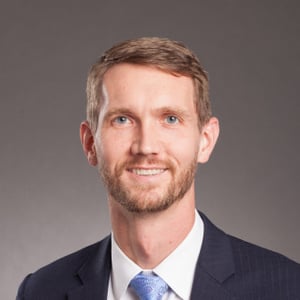
Jonathan Skrmetti was sworn in to an eight-year term as Tennessee’s Attorney General and Reporter on September 1, 2022.
Prior to his current role, General Skrmetti served as Chief Counsel to Governor Bill Lee and as Chief Deputy Attorney General to his predecessor, Tennessee Attorney General Herbert Slatery.
Before working for the State of Tennessee, General Skrmetti was a partner at Butler Snow LLP in Memphis. His legal career began with nearly a decade as a federal prosecutor. He worked at the Civil Rights Division at Main Justice and then at the Memphis U.S. Attorney’s Office and prosecuted sex traffickers, corrupt government officials, and violent white supremacists. In addition, General Skrmetti taught cyberlaw as an adjunct professor at the University of Memphis.
General Skrmetti earned honors degrees from George Washington University, the University of Oxford, and Harvard Law School, where he was editor-in-chief of the Harvard Journal of Law & Public Policy. Following law school, Jonathan clerked for Judge Steven Colloton on the U.S. Court of Appeals for the Eighth Circuit. He lives in Franklin, Tennessee, with his wife and four children.
General Counsel, xAI and X

Trial Lawyer, Bennett Legal
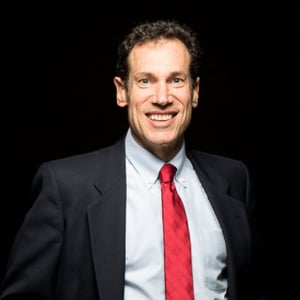
Charles Bennett is the driving force behind Bennett Legal, a nationally recognized law firm specializing in winning Personal Injury cases. He is one of the nation’s top trial attorneys and consultants. He is invited to speak and teach nationwide, educating lawyers on tactics, tips, and procedures that empower them to take on the insurance companies and get significantly improved results. Charles has secured record-breaking results in a variety of categories, including: commercial/18-wheeler crashes, wrongful deaths with a specialty in negligent landlord cases, traumatic brain damage cases, motor vehicle crashes, and workplace injuries.
Charles is highly regarded among his peers as a top lawyer in his field. Whenever other trial lawyers face complex cases and need guidance, they turn to Charles Bennett for his expert advice. He has gained extensive knowledge and experience as a principal of Trial Structure LLC, an educational corporation that catered specifically to trial lawyers. He worked on thousands of cases with a diverse range of lawyers across the nation. He is known as the “lawyer’s lawyer” because of his reputation for trial skills and collaberation. Lawyers often partner with him on their difficult cases to maximize the results.
Charles is now the captain of the Justice College, an institution whose mission is to empower lawyers to face billion-dollar insurance companies without feeling overwhelmed. Charles and the instructors at the Justice College form a special forces unit of trial excellence capable of defeating any insurance team they face. The Justice College graduates become lifelong members of a tribe that share experiences to help the community stay at the top of their game and increase case value.
Charles is a cum laude graduate of SMU Dedman School of Law. Before pursuing law, he had an outstanding career as a college basketball player at Midwestern State University, where he exhibited excellent leadership skills and athleticism. He played professional basketball in Europe. Playing at the professional level necessitates an incredible work ethic, the ability to cooperate and work as a team, and competitiveness that he now applies in the courtroom with spectacular success.
During law school, Charles’s amazed everyone with his initiative and capability by obtaining international arbitration awards for professional basketball players and agents. Recognized as a member of The National Trial Lawyers Top 40 Under 40 and nominated as a Rising Star by Thomson Reuters, Charles’s legal acumen and commitment to excellence make him your best choice when you can’t afford to lose.
He and the Bennett Legal team actively engage in charitable events, reflecting their commitment to giving back and building meaningful connections within their local communities.
Partner, The Loree Law Firm
Philip J. Loree Jr. is the principal of The Loree Law Firm. He has 30 years of experience representing clients in complex disputes before federal and state trial and appellate courts, and arbitration panels, particularly in domestic and international arbitration-law, reinsurance, insurance, and other business and commercial disputes.
Before forming Loree & Loree in 2008 he practiced for nearly 17 years with one of the leading reinsurance practice groups in the United States, and was a litigation partner at two prominent New York City law firms, Rosenman & Colin LLP (now Katten-Muchin Rosenman LLP) and Cadwalader, Wickersham & Taft LLP. When Philip J. Loree Sr. retired from the practice of law in 2020, Philip J. Loree Jr. (“Mr. Loree” or “Loree”) continued the practice of Loree & Loree as The Loree Law Firm.
Mr. Loree has extensive experience arbitrating and litigating matters involving nearly every significant, reinsurance-related issue, including statutory and GAAP reinsurance accounting; transfer of insurance risk; independent auditor liability; fraud and rescission; London Market disputes; pool administration; insolvencies; follow-the- fortunes and follow-the-settlements; allocation of environmental liability and asbestos settlements; number of occurrences; trigger of coverage; multi-year policy issues; interpretation of reinsurance contracts and insurance policies; underwriting practices; reserving; set off; late notice; pre-hearing and pre-answer security; utmost good faith; bad faith; allocation and recovery of declaratory judgment expenses; and liability of intermediaries, managing general agents and brokers. He has also handled coverage litigation. He has counseled clients in contentious and non-contentious matters involving insurance coverage; regulatory compliance; Office of Foreign Asset Control (“OFAC”) sanctions; reinsurance or insurance coverage for hurricane or storm damage; commutations; internal reinsurance reviews; contract and policy interpretation; Bermuda Form polices; property insurance, including insurance of a major oil rig; life reinsurance; life settlements; risk transfer; and other issues.
He has also represented and counseled clients in arbitration and litigation concerning commercial and business contracts, business torts, and fraudulent transfers.
As a partner at Cadwalader, Wickersham & Taft LLP he played key roles in a number of high-profile matters. He was a member of the four-partner trial team that obtained a $1.1 billion arbitration award in favor of a large, Japanese insurance and reinsurance company against Fortress Re, Inc., the manager of what was once one of the world’s largest aviation reinsurance pools. The arbitration concerned, among other things, Fortress Re’s accounting and reporting practices for financial reinsurance, and the $1.1 billion award is reputed to be the largest in the history of reinsurance arbitration.
He was also a key member of the team that represented the same Japanese insurance and reinsurance company in the related action it brought against Deloitte & Touche, LLP, the independent auditor of the Fortress Re Pool, seeking more than $1 billion in damages. That matter resulted in what was at the time reputed to be the second largest settlement of an independent auditor liability case in history. He and his former partners also represented a large, international reinsurance company in an internal review of finite reinsurance transactions that resulted in a restatement of earnings.
Mr. Loree also has extensive experience and expertise in practice and procedure under the Federal Arbitration Act, including matters arising under the Convention on the Recognition and Enforcement of Foreign Arbitral Awards, and is a recognized commentator on U.S. arbitration-law matters. He has represented clients in numerous proceedings involving the enforcement of arbitration agreements and the confirmation and vacatur of arbitration awards arising out of industry, commercial, business contract, employment, and trust arbitrations.
He argued Nationwide Mut. Ins. Co. v. Home Ins. Co., 429 F.3d 640 (6th Cir. 2005), which rejected an evident partiality and excess of powers challenge to a favorable award he helped his client obtain. Considering for the first time what legal standard should apply to an evident partiality challenge based on a party-appointed arbitrator’s alleged failure to disclose purported conflicts of interest, the United States Court of Appeals for the Sixth Circuit rejected the challenging party’s argument that the district court applied the wrong standard. Courts, treatises and commentators have cited Nationwide extensively.
As a Loree & Loree partner he obtained on behalf of an English client partial vacatur of a reinsurance arbitration award in the United States District Court for the Southern District of New York. The final award provided that the arbitration panel would remain constituted until the parties agreed that it should disband. When the arbitration panel would not disband after resolving all issues the parties submitted to it, his client petitioned the Court for an order vacating the retention-of-jurisdiction provision and confirming all other aspects of the award. He successfully convinced the Court to grant the petition in its entirety and hold that the retention-of-jurisdiction provision exceeded the arbitrators’ authority under Section 10(a)(4) of the Federal Arbitration Act. See KX Re Co. v. General Reinsurance Corp., 08 Civ. 7807 (SAS), 2008 WL 4904882 (S.D.N.Y. Nov. 14, 2008).
Loree argued on behalf of the prevailing party Certain Underwriting Members of Lloyds of London v. State of Florida, Department of Financial Services, 892 F.3d 501, 503-04 (2d Cir. 2018) in which the United States Court of Appeals for the Second Circuit held that “a party seeking to vacate an award under Section 10(a)(2) must sustain a higher burden to prove evident partiality on the part of an arbitrator who is appointed by a party and who is expected to espouse the view or perspective of the appointing party.” Id. “An undisclosed relationship between a party and its party- appointed arbitrator constitutes evident partiality, such that vacatur of the award is appropriate if[,]” explained the Court: “(1) the relationship violates the contractual requirement of disinterestedness [or another contractual requirement of the arbitration agreement]; or (2) it prejudicially affects the award.” 892 F.3d at 504 (citations omitted). (Read more about the case here.)
Loree is a prolific and skilled writer. He has written extensively on reinsurance and arbitration-related matters, and is the editor-in-chief of the Arbitration Law Forum (formerly the Loree Reinsurance and Arbitration Law Forum) (http://www.LoreeLawFirm.com/blog), which regularly posts online articles of interest concerning reinsurance and commercial and industry arbitration. In addition to the more than 300 articles he has published in The Arbitration Law Forum (and in its predecessor, the Loree Reinsurance and Arbitration Law Forum), he has written articles published in the New York Law Journal, the National Law Journal, U.S. Insurer, Global Reinsurer, and other publications, as well as several articles for Alternatives to the High Cost of Litigation, the newsletter of the International Institute for Conflict Prevention and Resolution (“CPR”).
Mr. Loree’s publications include:
CPR conducted in 2020 several video conference interviews of Loree, and his friend, former trial judge, and fellow arbitration-law practitioner, Richard D. Faulkner, about various controversial arbitration issues pertaining to matters the U.S. Supreme Court either has been asked to hear. Links to those videos can be accessed here.
Mr. Loree’s speaking engagements include:
The Loree Law Firm’s predecessor practice, Loree & Loree, was selected by Expertise.com out of a group of 1,763 persons or firms reviewed as one of Expertise.com’s top 18 “Arbitrators & Mediators” in New York City for 2019, and now for 2020. (See here and here.)
His comments on arbitration matters have been quoted by Global Arbitration Review, a London-based trade publication that covers international arbitration; Business Insurance, and U.S. Law Week.
Loree obtained his B.A. from New York University in 1986 and his J.D. from Brooklyn Law School in 1989, where he was the Editor-in-Chief of the Brooklyn Journal of International Law, a Dean’s Merit Scholar, and a member of the Dean’s List.
He is admitted to practice in the State of New York, and in the United States District Courts for the Southern and Eastern Districts of New York, the United States District Court for the District of Connecticut, and the United States Courts of Appeals for the Second, Sixth, and Eighth Circuits.
Former Deputy Attorney General for Virginia
Kennerly Davis has over forty years of experience in corporate management, public service, and the private practice of law. He has held senior executive positions in a Fortune 500 electric and gas company. He has served as Deputy Attorney General for the Commonwealth of Virginia, and as a legislative aide to a U.S. Senator and a U.S. Congressman. He practiced law for 25 years with Hunton Andrews Kurth LLP.
Davis is active in the Federalist Society as a member of the Regulatory Process Working Group of the Regulatory Transparency Project, and as a member of the Execuitve Committee of the Administrative Law and Regulation Practice Group. He is active in the national Alumni Free Speech Alliance, and involved in AFSA-chapter initiatives, including litigation, to publicize and correct the serious legal problems created by university Diversity, Equity, and Inclusion programs and the anonymous bias reporting systems used to enforce those DEI programs.
Davis writes and speaks on a wide variety of topics, including those related to the Founding of America, the natural rights foundation of our Republic, the constitutional rule of law, equal protection and free speech, DEI programs and bias reporting systems, capitalism, regulation and regulatory reform, and economic development. His articles have appeared in The Wall Street Journal, the Washington Examiner, the Richmond Times-Dispatch, The Federalist Society Review, the FedSoc Blog, Real Clear Energy, Townhall, the Daily Caller, reports of the Center for Strategic & International Studies, and other publications. He appears frequently on radio, podcasts, and television.
Davis graduated with honors from Cornell University with an A.B. degree in Government. He earned an M.A. degree from Pembroke College, Oxford, in Philosophy, Politics, and Economics. He was awarded a J.D. degree from Harvard Law School, and an M.B.A. degree from Virginia Commonwealth University.
Davis lives in Richmond, Virginia. He can be contacted by email: j.kendavis@verizon.net, and by phone: (804) 624-8525.
Senior Counsel for Environmental and Regulatory Affairs, Boeing
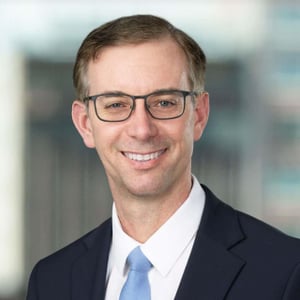
Adam Gustafson is a Senior Counsel for Environmental and Regulatory Affairs at Boeing.
Prior to joining Boeing, he served as Deputy General Counsel at the Environmental Protection Agency. Prior to that, he was a partner at Boyden Gray & Associates, where he represented States, federal judges, environmental groups, biofuel producers, agricultural interests, and public policy organizations, on such issues as the constitutional separation of powers, the First Amendment, automotive regulations, environmental computer models, healthcare regulation, and judicial deference to federal agencies.
Mr. Gustafson received his J.D. in 2009 from Yale Law School, where he was an editor of the Yale Law Journal, a managing editor of the Yale Journal of Law & the Humanities, and an executive editor of the symposium issue of the Harvard Journal of Law & Public Policy.
Mr. Gustafson served as a Vice President of the Yale Law School Federalist Society. He was a Coker Fellow, and his legal writing won the Joseph A. Chubb Competition Prize and the Edward D. Robbins Memorial Prize.
Mr. Gustafson graduated with high distinction in 2005 from the University of Virginia, where he was an Echols Scholar, a member of the Raven Society, a member of the rowing team, and a Lawn resident.
Before joining Boyden Gray & Associates, Mr. Gustafson was an associate at Cooper & Kirk, where he specialized in appellate litigation. Mr. Gustafson served as a law clerk to Judge Richard R. Clifton of the U.S. Court of Appeals for the Ninth Circuit, and to Judge Janice Rogers Brown of the U.S. Court of Appeals for the D.C. Circuit.
Ceres, Accelerator for Sustainable Capital Markets
John Kostyack is Founder and Principal at Kostyack Strategies, a consultancy helping NGOs and foundations achieve their climate change and clean energy policy goals. His experience includes over three decades in nonprofit management and leadership of policy advocacy campaigns as well as representation of NGO and private sector clients in federal and state courts. He now leverages that experience and relationships with leaders in NGOs, government, the clean technology sector and philanthropy to help clients design and execute advocacy campaign strategies. His current work focuses on helping clients persuade regulators to promote sustainable investing and procurement, address climate-related risks to financial stability and establish oversight of carbon offsets markets.
Associate, Gibson, Dunn & Crutcher
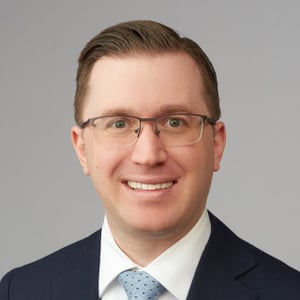
Brian A. Richman is an associate in the Washington, D.C. office of Gibson, Dunn & Crutcher. He practices in the firm’s Litigation Department, and is a member of the Appellate and Constitutional Law and Administrative Law and Regulatory practice groups.
Mr. Richman represents clients in high-stakes appellate, administrative law, and litigation matters. His practice includes litigating cutting-edge constitutional and administrative law issues, challenging agency rulemakings, and defending against government enforcement actions, along with other complex litigation matters. He has extensive experience in the financial services sector.
Before joining the firm, Mr. Richman clerked for Judge Stephen F. Williams of the U.S. Court of Appeals for the District of Columbia Circuit. He also practiced at a New York law firm, where he focused on commercial litigation and white collar defense and investigations. Mr. Richman is a former securities compliance officer at Goldman Sachs, and has handled numerous regulatory matters involving the SEC, CFTC, FERC, FINRA, and the Federal Reserve.
Mr. Richman received his JD from Yale Law School, where he was a lead editor on the Yale Journal on Regulation, and a semi-finalist in both the Morris Tyler Moot Court of Appeals and Thomas Swan Barristers’ Union Mock Trial Competition. In 2011, Mr. Richman graduated from Cornell University with a B.S., with honors, in Policy Analysis and Management.
Mr. Richman is admitted to practice in New York and the District of Columbia. He is also admitted to the United States Courts of Appeals for the Second and D.C. Circuits, and the U.S. District Courts for the Southern and Eastern Districts of New York.
The George Washington University, GW Procurement Law Alumnus

Distinguished University Professor, Antonin Scalia Law School, George Mason University
University Professor Nelson Lund is the author of Rousseau’s Rejuvenation of Political Philosophy: A New Introduction. He has also written widely in the field of constitutional law, including articles on constitutional interpretation, federalism, separation of powers, the Second Amendment, the Commerce Clause, the Speech or Debate Clause, the Equal Protection Clause, and the Uniformity Clause. In addition, he has published articles in the fields of employment discrimination and civil rights, the legal regulation of medical ethics, and the application of economic analysis to legal institutions and legal ethics.
Professor Lund graduated from St. John's College in Annapolis, Maryland, after which he received an MA in philosophy from the Catholic University of America and a PhD in political science from Harvard University. He left the faculty of the University of Chicago to attend its law school, where he served as executive editor of the University of Chicago Law Review and chapter chairman of the Federalist Society for Law and Public Policy Studies. After law school, he held positions at the United States Department of Justice in the Office of the Solicitor General and the Office of Legal Counsel. He also served as a law clerk to the Honorable Patrick E. Higginbotham of the United States Court of Appeals for the Fifth Circuit and to the Honorable Sandra Day O'Connor of the United States Supreme Court. Following his clerkship with Justice O'Connor, Professor Lund served in the White House as associate counsel to the president from 1989 to 1992.
Since joining the faculty at George Mason University's Antonin Scalia Law School, Professor Lund has taught Constitutional Law, Legislation, Federal Election Law, Employment Discrimination, State and Local Government, and seminars on the Second Amendment and on a variety of topics in Jurisprudence.

Professor of Law, South Texas College of Law Houston
Josh Blackman is a national thought leader on constitutional law and the United States Supreme Court. Josh’s work was quoted during two presidential impeachment trials. He has testified before Congress and advises federal and state lawmakers. Josh regularly appears on TV, including NBC, CBS, ABC, Fox, and the BBC. Josh is also a frequent guest on NPR and other syndicated radio programs. He has published commentaries in the New York Times, Wall Street Journal, Washington Post, and leading national publications.
Since 2012, Josh has served as a professor at the South Texas College of Law Houston. He holds the Centennial Chair of Constitutional Law. Josh is an Adjunct Fellow at the Manhattan Institute. Josh has written more than seven dozen law review articles that have been cited more than a thousand times. Josh was selected as the Jurist of the Year by the Texas Journal of Law & Public Policy, received the inaugural Meese III Originalism Award, and was awarded the Inaugural Joseph Story Award. Josh was selected by Forbes Magazine for the “30 Under 30” in Law and Policy. Josh is the President of the Harlan Institute, and founded FantasySCOTUS, the Internet’s Premier Supreme Court Fantasy League. He blogs at the Volokh Conspiracyand posts@JoshMBlackman.
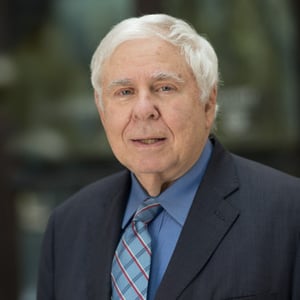
W. St. John Garwood and W. St. John Garwood, Jr. Centennial Chair and Professor of Government, University of Texas at Austin School of Law
Sanford Levinson, who holds the W. St. John Garwood and W. St. John Garwood, Jr. Centennial Chair in Law, joined the University of Texas Law School in 1980. Previously a member of the Department of Politics at Princeton University, he is also a Professor in the Department of Government at the University of Texas. Levinson is the author of approximately 400 articles, book reviews, or commentaries in professional and popular journals--and a regular contributor to the popular blog Balkinization. He has also written six books: Constitutional Faith (1988, winner of the Scribes Award, 2d edition 2011); Written in Stone: Public Monuments in Changing Societies (1998); Wrestling With Diversity (2003); Our Undemocratic Constitution: Where the Constitution Goes Wrong (and How We the People Can Correct It)(2006); Framed: America's 51 Constitutions and the Crisis of Governance (2012); An Argument Open to All: Reading the Federalist in the 21st Century (2015); and, with Cynthia Levinson, Fault Lines in the Constitution: The Framers, Their Fights, and teh Flaws that Affect Us Today (forthcoming, September 2017). Edited or co-edited books include a leading constitutional law casebook, Processes of Constitutional Decisionmaking (6th ed. 2015, with Paul Brest, Jack Balkin, Akhil Amar, and Reva Siegel); Nullification and Secession in Modern Constitutional Thought (2016); Reading Law and Literature: A Hermeneutic Reader (1988, with Steven Mallioux); Responding to Imperfection: The Theory and Practice of Constitutional Amendment (1995); Constitutional Stupidities, Constitutional Tragedies (1998, with William Eskridge); Legal Canons (2000, with Jack Balkin); The Louisiana Purchase and American Expansion (2005, with Batholomew Sparrow); Torture: A Collection (2004, revised paperback edition, 2006); and The Oxford Handbook on the United States Constitution (with Mark Tushnet and Mark Graber, 2015). He received the Lifetime Achievement Award from the Law and Courts Section of the American Political Science Association in 2010.
He has been a visiting faculty member of the Boston University, Georgetown, Harvard, New York University, and Yale law schools in the United States and has taught abroad in programs of law in London; Paris; Jerusalem; Auckland, New Zealand; and Melbourne, Australia. He was a Fellow at the Institute for Advanced Study in Princeton in 1985-86 and a Member of the Ethics in the Professions Program at Harvard in 1991-92. He is also affiliated with the Shalom Hartman Institute of Jewish Philosophy in Jerusalem. A member of the American Law Institute, Levinson was elected to the American Academy of Arts and Sciences in 2001. He is married to Cynthia Y. Levinson, a writer of children's literature, and has two daughters and four grandchildren.

Justice, Supreme Court of Arizona
Clint Bolick was appointed by Governor Doug Ducey in January 2016 to serve on the Arizona Supreme Court and was retained by the voters in 2018 and 2024.
Prior to joining the Court, Justice Bolick litigated constitutional cases in state and federal courts from coast to coast, including the U.S. Supreme Court. Among other positions, he served as Vice President for Litigation at the Goldwater Institute and as Co-founder and Vice President for Litigation at the Institute for Justice. He has litigated in support of school choice, freedom of enterprise, private property rights, freedom of speech, and federalism, and against racial classifications and government subsidies.
Justice Bolick received his Juris Doctor degree from the University of California at Davis, where he has been recognized as a distinguished alumnus, and his Bachelor of Arts degree magna cum laude from Drew University. He serves as a research fellow with the Hoover Institution. Among other honors, he was named one of the 90 Greatest DC Lawyers in the Last 30 Years by Legal Times in 2008, received a Bradley Prize in 2006, and was recognized as one of the nation’s three lawyers of the year by American Lawyer in 2002 for his successful defense of school vouchers in Zelman v. Simmons-Harris.
Justice Bolick is a prolific author of a dozen books and hundreds of articles. Among his most recent books are Unshackled: Freeing America’s K-12 Education System: Immigration Wars: Forging an American Solution, co-authored with former Florida Governor Jeb Bush; and David’s Hammer: The Case for an Activist Judiciary. Bolick serves as an adjunct professor of constitutional law at Arizona State University’s Sandra Day O’Connor School of Law and has served as a lecturer at Harvard University’s John F. Kennedy School of Government.
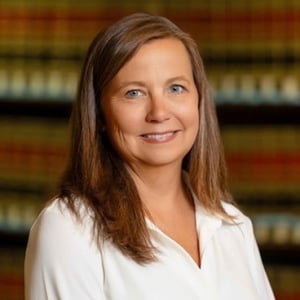
John P. Murphy Foundation Professor of Law and Associate Dean for External Engagement, University of Notre Dame Law School
Nicole Stelle Garnett is the John P. Murphy Foundation Professor of Law at Notre Dame Law School, where she also serves as the Associate Dean for External Engagement and directs the Notre Dame Education Law Project. Her teaching and research focus on education law and policy, religious liberty, and topics related to property law (especially land use and urban development policies). In addition to dozens of articles on these subjects, she is the author of Lost Classroom, Lost Community: Catholic Schools' Importance in Urban America (University of Chicago Press, 2014) and Ordering the City: Land Use, Policing and the Restoration of Urban America (Yale University Press, 2009).
Garnett received her B.A. with distinction in Political Science from Stanford University and her J.D. from Yale Law School. After law school, she clerked for the Honorable Morris S. Arnold of the United States Court of Appeals for the Eighth Circuit and for Associate Justice Clarence Thomas of the Supreme Court of the United States. Before joining the law school faculty in 1999, she worked for two years as a staff attorney at the Institute for Justice, a non-profit public-interest law firm in Washington, D.C., where she helped to defend the constitutionality of the nation's first private-school-choice programs.
At Notre Dame, Garnett is a faculty fellow in the Institute for Educational Initiatives, Kellogg Institute for International Studies, Fitzgerald Institute for Real Estate, and deNicola Center for Ethics and Culture. She also is an elected member of the American Law Institute and a Senior Fellow at the Manhattan Institute.

William H. Rehnquist Fellow, Cooper & Kirk PLLC
Kate Hardiman works full time as a William H. Rehnquist Fellow at Cooper & Kirk PLLC while pursuing her J.D. through Georgetown Law's evening program. At Georgetown, she is a member of the Federalist Society and the Journal of Law & Public Policy. Kate earned her B.A. summa cum laude and M.Ed. from the University of Notre Dame. Before law school, she taught 9-12 grade English and Religion through Notre Dame's Alliance for Catholic Education (ACE) program. Kate is the co-author of Unshackled: Freeing America's K-12 Education System and her writing on education has been published in the Washington Examiner, Real Clear Books, Education Post, The College Fix, and Minding the Campus.

Vice President, Edwin Meese III Institute for the Rule of Law, Advancing American Freedom
John G. Malcolm oversees Advancing American Freedom’s work to increase understanding of the Constitution and the rule of law as Vice President of the organization’s Edwin Meese III Institute for the Rule of Law. Malcolm brings to the challenge a wealth of legal expertise and experience in both the public and private sectors.
Prior to joining Advancing American Freedom in 2025, Malcolm was the Vice President of the Institute for Constitutional Government and the Director of the Meese Center for Legal and Judicial Studies at the Heritage Foundation. Prior to joining Heritage in 2012, Malcolm was general counsel at the U.S. Commission on International Religious Freedom, as well as a distinguished practitioner in residence at Pepperdine Law School. From 2004 to 2009, Malcolm was executive vice president and director of worldwide anti-piracy operations for the Motion Picture Association.
Malcolm served as a deputy assistant attorney general in the Department of Justice’s Criminal Division from 2001 to 2004, where he oversaw sections on computer crime and intellectual property, domestic security, child exploitation and obscenity, and special investigations. Immediately prior to that, he was a founding partner in the Atlanta law firm of Malcolm & Schroeder, LLP.
From 1990 to 1997, Malcolm was an assistant U.S. attorney in Atlanta, assigned to the fraud and public corruption section, and also an associate independent counsel, investigating fraud and abuse in the Department of Housing and Urban Development. He was honored with the Director’s Award for Superior Performance for his work in connection with the successful prosecution of Walter Leroy Moody Jr., who assassinated an 11th Circuit judge and the head of the Savannah chapter of the NAACP.
A graduate of Harvard Law School and Columbia College, Malcolm began his career as a law clerk to a federal district court judge and a federal appellate court judge, and as an associate at the Atlanta-based law firm of Sutherland, Asbill & Brennan (new Eversheds Sutherland).
Malcolm, who resides in Washington, D.C., serves on the Board of Trustees of the Washington National Opera and is a Senate-confirmed member of the Board of Directors of the Legal Services Corporation, the largest funder of civil legal aid in the United States.

Emanuel S. Heller Professor of Law, University of California at Berkeley; Thomas Smith Senior Research Fellow, The Civitas Institute, University of Texas at Austin
John Yoo is the Emanuel Heller Professor of Law at the University of California at Berkeley. He is also the Thomas Smith Senior Research Fellow, Civitas Institute, at the University of Texas at Austin. He is also a Nonresident Senior Fellow at the American Enterprise Institute.
His most recent book, The Politically Incorrect Guide to the Supreme Court, co-authored with Robert Delahunty, was published in 2023. Professor Yoo’s other books include Defender-in-Chief: Trump’s Fight for Presidential Power; Striking Power: How Cyber, Robots, and Space Weapons Change the Rules for War; Point of Attack: Preventive War, International Law, and Global Welfare; and Crisis and Command: A History of Executive Power from George Washington to George Bush.
He is a co-author of volumes 1 and 2 of R. Rossum, G. Tarr, V. Munoz & J. Yoo American Constitution Law (Routledge, 2026), and a co-editor of the eight-volume series on the 250th anniversary of the American Revolution, We Hold These Truths, with Yuval Levin and Adam White of the American Enterprise Institute.
Professor Yoo has published more than 100 articles in academic journals on subjects including national security, constitutional law, international law, and the Supreme Court. He also regularly contributes to the editorial pages of the Wall Street Journal, New York Times, Washington Post, Los Angeles Times, and National Review, among others.
Professor Yoo has served in all three branches of government. He was an official in the U.S. Department of Justice, where he worked on national security and terrorism issues after the 9/11 attacks. He served as general counsel of the U.S. Senate Judiciary Committee. He has been a law clerk for Supreme Court Justice Clarence Thomas and federal appeals Judge Laurence Silberman. He has been a visiting professor at the University of Texas at Austin’s School of Civic Leadership, Seoul National University, the Interdisciplinary Center Herzliya, Keio University, Trento University, the University of Chicago, and the Free University of Amsterdam.
Professor Yoo supervises the Public Law and Policy Program and the California Constitution Center. He also serves on the boards of Founding Forward, the Washington Legal Foundation, the Pacific Legal Foundation, the Ulysses Grant Institute, the Federalist Society’s Separation of Powers and Federalism Division, the Universidad Cientifica del Sur Law School, and the Asia-Pacific Law Institute at Seoul National University. He is a winner of the Federalist Society’s Paul Bator award and the Heritage Foundation’s Edwin Meese III Originalism Lectureship.
Professor Yoo graduated from Yale Law School and summa cum laude from Harvard College.
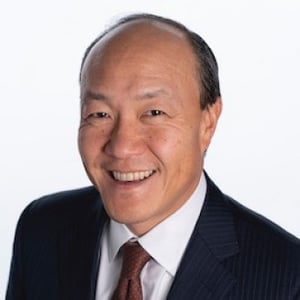
President, U.S. Chamber of Commerce Institute for Legal Reform
Harold H. Kim was elected president of the U.S. Chamber Institute for Legal Reform (ILR) in December 2019, after nearly 12 years of holding a senior leadership position within ILR. Under Kim, the Institute will continue to be a comprehensive, multifaceted global legal reform campaign with cutting-edge advocacy, research, communications, and voter education initiatives.
Kim is responsible for providing strategy, policy guidance, programmatic management, and leadership for ILR’s comprehensive program aimed at improving the nation’s litigation climate.
Before joining ILR, Kim was special assistant to the president in the White House Office of Legislative Affairs. There he served as former President George W. Bush’s liaison to the Senate on matters involving national security, the judiciary, civil justice reform, intellectual property, and criminal law enforcement. During his tenure, he helped win confirmation for several of President Bush’s judicial and executive nominees and worked closely with Congress to advance the administration’s policy priorities.
From 2003 to 2007, Kim served as counsel to the Senate Judiciary Committee, deputy chief counsel to the late ranking member Arlen Specter, and senior committee counsel for then-Chairman Orrin Hatch. During the passage of the 2005 Class Action Fairness Act, Kim was the committee’s chief civil counsel and advised Republican members during the bill’s committee markup and Senate floor action. He also advised committee members in the areas of asbestos, class action, medical malpractice, and bankruptcy litigation reform.
Prior to government service, Kim was a senior litigation associate at the Washington, D.C.-based law firm of Patton Boggs, LLP.
Kim is an elected member of the American Law Institute and the International Association of Defense Counsel. He is a graduate of the University of California, Irvine, and earned a J.D. from The Catholic University of America.
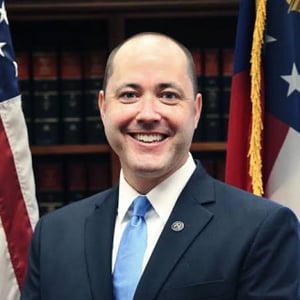
Attorney General, State of Georgia
Christopher M. Carr was appointed by Governor Nathan Deal and sworn into office as Georgia's 54th Attorney General on November 1, 2016. On November 6, 2018, Carr was elected by the people of Georgia to serve a full four-year term.
As Attorney General, Carr believes he has no more solemn duty than to protect and defend the Constitution of the United States, the Constitution and laws of the State of Georgia and the interests of the people of the State of Georgia. He also believes that his office must play a significant role in protecting Georgians. Since taking office in 2016, Carr has made it a priority to combat opioid misuse, gang violence, human trafficking, elder abuse and consumer fraud. He established and leads the Statewide Opioid Task Force – which now has more than 400 members – and the Georgia Anti-Gang Network – which is focused on strengthening multi-jurisdictional investigations and prosecutions. To help prevent our older, at-risk adults from falling victim to scams, Carr created the Georgia Consumer Protection Guide for Older Adults, and he works every day to make sure older, at-risk adults and all consumers are protected from exploitation in any form. Carr is also a champion for the state’s Sunshine Laws, working each day to ensure that government operates openly and transparently. In 2019, he announced the creation of the state's first-ever Human Trafficking Prosecution Unit at the Department of Law. Under his leadership, the unit will work with statewide partners to aggressively combat buyers and traffickers.
Carr appoints all members of the Georgia Consumer Advisory Board and is a member of the Georgia Board of Homeland Security. He served on Georgia’s Judicial Nominating Commission, the body charged with recommending candidates to the Governor to fill judicial vacancies, from 2011 through 2018, and the Executive Committee for the Georgia Older Adults Cabinet from 2016 - 2018. A dedicated member of the National Association of Attorneys General, Carr currently serves on the Human Trafficking, Substance Abuse and Presidential Initiative Committees (focused on elder abuse in 2017-18 and natural disasters in 2018-19) where he collaborates with his colleagues to shape the association's policies in these respective areas.
Carr previously served as Commissioner of the Georgia Department of Economic Development (GDEcD) under Governor Deal from November 2013 to November 2016. As Commissioner, Carr led the state agency responsible for creating jobs and investment in Georgia through business recruitment, retention and expansion, international trade and tourism, as well as the arts, film and music industries. During Carr's three-year tenure at GDEcD, the state of Georgia was recognized as the top state in the nation in which to do business for three consecutive years. In addition, GDEcD helped facilitate 1,069 projects across the state that represent approximately $14.4 billion in investment and the creation of more than 84,000 jobs. In 2015, GDEcD was recognized as the top economic development agency in the country.
Prior to joining GDEcD, Carr was Chief of Staff for U.S. Senator Johnny Isakson for six years. During his time in Washington, Carr advised the Senator on federal legislation, numerous judicial nominees for the U.S. Supreme Court and lower federal courts in Georgia and across the country.
Carr began his career with Georgia Pacific, then practiced law with Alston & Bird LLP in Atlanta and later served as Vice President and General Counsel for the Georgia Public Policy Foundation.
A graduate from the University of Georgia’s Terry College of Business and Lumpkin School of Law, Carr is admitted to practice law in Georgia.

James Madison Distinguished Professor of Law and Class of 1941 Research Professor of Law, University of Virginia School of Law
Professor John C. Harrison is the James Madison Distinguished Professor of Law and Class of 1941 Research Professor of Law at the University of Virginia School of Law. He joined the faculty at University of Virginia in 1993 as an associate professor of law after a distinguished career with the U.S. Department of Justice. His teaching subjects include constitutional history, federal courts, remedies, corporations, civil procedure, legislation and property. In 2008 he was on leave from the Law School to serve as counselor on international law in the Office of the Legal Adviser at the U.S. Department of State.
A 1977 graduate of the University of Virginia, Harrison earned his law degree in 1980 at Yale, where he served as editor of the Yale Law Journal and editor and articles editor of the Yale Studies in World Public Order. He was an associate at Patton Boggs & Blow in Washington, D.C., and clerked for Judge Robert Bork on the U.S. Court of Appeals for the District of Columbia Circuit. He worked with the Department of Justice from 1983-93, serving in numerous capacities, including deputy assistant attorney general in the Office of Legal Counsel (1990-93).

Open Minds with Hon. Jonathan Skrmetti & James Burnham
Jonathan Skrmetti, James M. Burnham
Jonathan Skrmetti, Attorney General of Tennessee, joins James Burnham to discuss the ways his educational...
Recent Supreme Court Decisions: Implications for the Business World
Charles Bennett, Philip J. Loree
The U.S. Supreme Court continues to shape arbitration law through a strict interpretation of the...
Explainer Episode 66 - Strategic Petroleum Reserve
John Kennerly Davis
Earlier this year, the U.S. Energy Information Administration reported that the nation’s Strategic Petroleum Reserve,...
A Discussion on the FAR Council's Federal Supplier Climate Risks and Resilience Proposed Rule
Adam Gustafson, John Kostyack, Brian Richman, Markus Speidel
What happens when the Administration’s “whole-of-government approach” to climate change meets federal contracting? The Department...
Bruen’s Preliminary Preservation of the Second Amendment
Nelson Lund
A well regulated Militia, being necessary to the security of a free State, the right...
Revisiting Jacobson
Josh Blackman, Sanford V. Levinson
In 1905, the U.S. Supreme Court decided Jacobson v. Massachusetts, upholding a state's ability to enforce compulsory...
Book Review: Unshackled: Freeing America's K-12 Education System
Clint Bolick, Nicole Stelle Garnett, Kate Hardiman Rhodes
Education policy has long been a bi-partisan priority, and education has played a significant role in...
The Insurrection Act, Executive Authority, and More
John G. Malcolm, John C. Yoo
The Insurrection Act of 1807 empowers the President of the United States to deploy U.S....
COVID Liability Issues
Harold H. Kim, Christopher M. Carr
COVID-19 has changed life as we know it in innumerable ways. But what can we...
COVID-19, State Power, and Civil Liberties: An Historical Perspective
John C. Harrison
In 1787, there existed a well-developed body of law on the subject of infectious diseases. Over the...