

Director, Herbert A. Stiefel Center for Trade Policy Studies, Cato Institute
Dan Ikenson is director of Cato's Herbert A. Stiefel Center for Trade Policy Studies, where he coordinates and conducts research on all manner of international trade and investment policy. Since joining Cato in 2000, Ikenson has authored dozens of papers on various aspects of trade policy, focusing his research on U.S.-China trade relations; bilateral and multilateral trade agreements and institutions; globalization; U.S. manufacturing issues; trade politics; and trade remedies, such as the antidumping regime.
Ikenson has been involved in international trade since 1990. Before joining the Cato Institute in 2000, he was director of international trade planning for an international accounting and business advisory firm. In 1997 he cofounded and was a principal at an international trade consulting firm in Washington,.and from 1990 to 1997 he was a trade policy and antidumping analyst at a few international trade law practices. In addition to his many studies and articles, Ikenson is coauthor of the book Antidumping Exposed: The Devilish Details of Unfair Trade Law. He has testified before congressional committees on a variety of policy matter and has appeared on numerous television news programs and networks, including PBS, CNN, CNBC, Bloomberg TV, MSNBC, ABC News, Fox News, Fox Business News, and NPR. His articles have been published in widely circulated newspapers and magazines, including the Wall Street Journal, the Los Angeles Times, USA Today, the Chicago Tribune, the Washington Times, the Detroit News, Forbes, and National Review.
Ikenson holds a MA in economics from George Washington University.
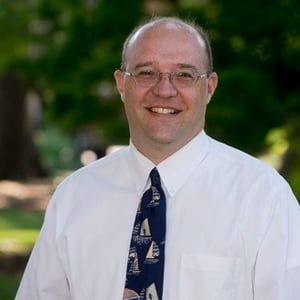
Associate Professor of History, Campbell University
Courses Taught: Western Civilization, U.S. History, Civil War, American Military Experience, and World Maritime History
Fields of Interest: Military and Maritime History; Maritime Industry Policy, and World History

Laurence H. Silberman Chair in Constitutional Governance, American Enterprise Institute; Executive Director, Antonin Scalia Law School’s C. Boyden Gray Center for the Study of the Administrative State
Adam J. White is the Laurence H. Silberman Chair in Constitutional Governance and senior fellow at the American Enterprise Institute, where he focuses on the Supreme Court and the administrative state. He also directs the Antonin Scalia Law School’s C. Boyden Gray Center for the Study of the Administrative State.
He writes on regulation and constitutional government for a variety of publications. He practiced law in Washington, D.C., after clerking for the D.C. Circuit's Judge David Sentelle. He also has been chairman of the ABA's Administrative Law Section.
In 2021, he served on the Presidential Commission on the Supreme Court of the United States, where he criticized “Court packing” and other efforts to restructure the Supreme Court.

Former Member of the European Parliament, South East England Constituency

President, Congress of Catalan Culture Foundation
Michael Strubell was born in 1949 in Oxford (UK). His father was English and his mother was and still is Catalan. They met during her family´s exile in England following the Spanish Civil War.
He has a degree in Psychology and Physiology (PPP) from Oxford University, an M.Sc. in Psychology of Education from the Institute of Education, London University, and a degree in Psychology from the Universitat Autònoma de Barcelona, where he also received a Diploma in Advanced Studies.
His main fields of research have been language policy and planning and related topics, especially in the field of European minority languages.
He taught at international schools for eight years, before moving to Barcelona to work for the restored Catalan government (1980 to 1999), where he held several posts in the language planning agency, devoted to the promotion and recovery of Catalan. He is a member (and former secretary) of the Consell Social de la Llengua Catalana.
From 1999 to his retirement in 2014 he lectured at the UOC (Universitat Oberta de Catalunya) in Barcelona in language planning and sociolinguistics. He was deputy director of the Estudis d'Humanitats i Filologia, and from 2001 to 2004 he was the director of the Humanities degree programme. He was a co-author of the White Paper on the Humanities degree (2005) written for ANECA, Spain’s Universities quality agency. He was executive Secretary and later Director of the Linguamón-UOC Chair in Multilingualism (2009-2014).
He is author (or co-author) of dozens of academic papers, and of eight books, as well as several Reports for European institutions. He has sat on the editorial boards of four academic journals in the fields of language policy and sociolinguistics.
He has been a consultant for the Council of Europe and the Organisation for Security and Cooperation in Europe, for language-policy-related missions to Kazakhstan, Estonia, Latvia, Croatia, the Russian Federation and other countries. He helped draft several sets of “Recommendations” on the rights of National Minorities, for the OSCE, and coordinated half a dozen European research projects.
Outside the academic world he is a board member of several private foundations in the fields of language, culture and the handicapped.
Without ever being a member of a political party, he has been actively involved in the Catalan independence movement. He chaired Catalunya 2003, a political association calling for greater self-government (2002 - 2005). Since 2007 he has been a member of anotherplatform, Sobirania i Progrés, promoting the democratic path towards the freedom of the Catalan people. He was one of the founders, in 2009, of the Assemblea Nacional Catalana, a grassroots organisation working for Catalonia's independence. It grew rapidly to over 30,000 members and, since 2012, has organised historic rallies and marches, particularly on Catalonia’s National Day (September 11) each year.
He is married, has two sons and a daughter, and his main hobbies are mushroom hunting, listening to classical music and hill-walking. He lives with his wife between Barcelona and Palamós (on the Costa Brava).
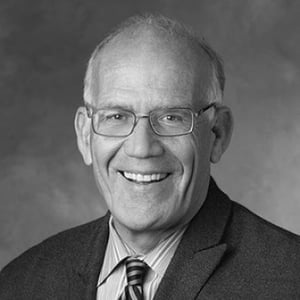
Martin and Illie Anderson Senior Fellow, Hoover Institution
Victor Davis Hanson is the Martin and Illie Anderson Senior Fellow at the Hoover Institution; his focus is classics and military history.
Hanson was a National Endowment for the Humanities fellow at the Center for Advanced Studies in the Behavioral Sciences, Stanford, California (1992–93), a visiting professor of classics at Stanford University (1991–92), the annual Wayne and Marcia Buske Distinguished Visiting Fellow in History at Hillsdale College (2004–), the Visiting Shifron Professor of Military History at the US Naval Academy (2002–3),and the William Simon Visiting Professor of Public Policy at Pepperdine University (2010).
In 1991 he was awarded an American Philological Association Excellence in Teaching Award. He received the Eric Breindel Award for Excellence in Opinion Journalism (2002), presented the Manhattan's Institute's Wriston Lecture (2004), and was awarded the National Humanities Medal (2007) and the Bradley Prize (2008).
Hanson is the author of hundreds of articles, book reviews, and newspaper editorials on Greek, agrarian, and military history and essays on contemporary culture. He has written or edited twenty-four books, the latest of which is The Case for Trump (Basic Books, 2019). His other books include The Second World Wars (Basic Books, 2017); The Savior Generals: How Five Great Commanders Saved Wars That Were Lost - from Ancient Greece to Iraq (Bloomsbury 2013); The End of Sparta (Bloomsbury, 2011); The Father of Us All: War and History, Ancient and Modern (Bloomsbury, 2010); Makers of Ancient Strategy: From the Persian Wars to the Fall of Rome (ed.) (Princeton, 2010); The Other Greeks (California, 1998); The Soul of Battle (Free Press, 1999); Carnage and Culture (Doubleday, 2001); Ripples of Battle (Doubleday, 2003); A War Like No Other (Random House, 2005); The Western Way of War (Alfred Knopf, 1989; 2nd paperback ed., University of California Press, 2000); The Wars of the Ancient Greeks (Cassell, 1999; paperback ed., 2001); and Mexifornia: A State of Becoming (Encounter, 2003), as well as two books on family farming, Fields without Dreams (Free Press, 1995) and The Land Was Everything (Free Press, 1998). Currently, he is a syndicated columnist for Tribune Media Services and a weekly columnist for the National Review Online.
Hanson received a BA in classics at the University of California, Santa Cruz (1975), was a fellow at the American School of Classical Studies, Athens (1977–78), and received his PhD in classics from Stanford University (1980).
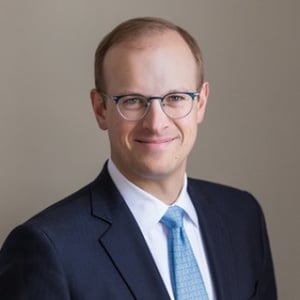
Partner, Consovoy McCarthy Park PLLC
Jeffrey Harris is an experienced litigator who focuses on constitutional, appellate, and regulatory matters. He is currently a partner at Consovoy McCarthy Park PLLC. In 2015, he was named to the Legal Times list of “D.C.’s Rising Stars,” which identified “some of the most accomplished young attorneys in the D.C. area.” Mr. Harris previously served as Associate Administrator of the Office of Information and Regulatory Affairs (OIRA). In that role, he was second in charge of the 50-person office within the Executive Office of the President that reviews all significant federal regulatory actions and coordinates regulatory policy across the federal government.
Before his government service, Mr. Harris was a partner at Bancroft PLLC and Kirkland & Ellis LLP, where his practice focused on Supreme Court, appellate, and complex litigation. Mr. Harris has extensive experience litigating before the U.S. Supreme Court. He has been the lead drafter of more than 100 merits briefs, amicus briefs, and certiorari-stage briefs, and he has contributed to 10 wins in cases before the Court.
Mr. Harris has also litigated numerous high-profile cases in the federal courts of appeals, federal and state trial courts, administrative agencies, and arbitral tribunals. He has successfully argued before the U.S. Courts of Appeals for the Sixth, Ninth, Eleventh, and D.C. Circuits, achieving wins on behalf of airlines, telecommunications providers, and pro bono clients. He has also argued numerous dispositive motions in federal district court and has participated in the trial of a significant voting rights case.
Mr. Harris served as a law clerk to Chief Justice John G. Roberts, Jr., of the U.S. Supreme Court, and Judges David Sentelle and Laurence Silberman of the U.S. Court of Appeals for the D.C. Circuit. He earned his J.D. magna cum laude from Harvard Law School and his A.B. magna cum laude from Georgetown University. He is a member of the District of Columbia and Virginia bars.
Laurence H. Silberman Chair in Constitutional Governance, American Enterprise Institute; Executive Director, Antonin Scalia Law School’s C. Boyden Gray Center for the Study of the Administrative State
Adam J. White is the Laurence H. Silberman Chair in Constitutional Governance and senior fellow at the American Enterprise Institute, where he focuses on the Supreme Court and the administrative state. He also directs the Antonin Scalia Law School’s C. Boyden Gray Center for the Study of the Administrative State.
He writes on regulation and constitutional government for a variety of publications. He practiced law in Washington, D.C., after clerking for the D.C. Circuit's Judge David Sentelle. He also has been chairman of the ABA's Administrative Law Section.
In 2021, he served on the Presidential Commission on the Supreme Court of the United States, where he criticized “Court packing” and other efforts to restructure the Supreme Court.

Laurence A. Tisch Professor of Law and Director, Classical Liberal Institute, New York University School of Law; Director, Classical Liberal Institute, Civitas Institute University of Texas at Austin
Richard A. Epstein is the inaugural Laurence A. Tisch Professor of Law at NYU School of Law. Prior to his joining the faculty, he was a visiting law professor at NYU from 2007 through 2009. He served as the Peter and Kirstin Bedford Senior Fellow at the Hoover Institution from 2000 to 2024. Since 2024 to the present he is a senior lecturer at the Civitas Institute at the University of Texas—Austin. Epstein is also the James Parker Hall Distinguished Service Professor of Law Emeritus and a senior lecturer at the University of Chicago. His initial law school appointment was at the University of Southern California from 1968 to 1972. Epstein received an LL.D., h.c. from the University of Ghent, 2003. He has been a member of the American Academy of Arts and Sciences since 1985 and was a Senior Fellow of the Center for Clinical Medical Ethics at the University of Chicago Division of Biological Sciences, also from 1983. to 2022 He served as editor of the Journal of Legal Studies from 1981 to 1991, and of the Journal of Law and Economics from 1991-2001. From 2001 to 2010 he was a director of the John M. Olin Program in Law and Economics at the University of Chicago.
His newest book, The Myth of Birthright Citizenship: What the Fourteenth Amendment Really Says was published in 2026 (Encounter Books). Prior to that he has published many books including, The Dubious Morality of the Modern Administrative State (Roman & Littlefield 2020).Earlier he published th Classical Liberal Constitution: The Uncertain Quest for Limited Government (Harvard 2014) iHis previous books include Design for Liberty: Private Property, Public Administration and the Rule of Law (Harvard 2011); The Case Against the Employee Free Choice Act (Hoover 2009); Supreme Neglect: How to Revive the Constitutional Protection of Property Rights (Oxford 2008); Antitrust Decrees in Theory and Practice: Why Less is More (AEI 2007); Overdose: How Excessive Government Regulation Stifles Pharmaceutical Innovation (Yale University Press. 2006); How Progressives Rewrote the Constitution (Cato 2006); Cases and Materials on Torts (Aspen Law & Business; 8th ed. 2004); Skepticism and Freedom: A Modern Case for Classical Liberalism (University of Chicago, 2003); Torts (Aspen Law & Business 1999); Principles for a Free Society: Reconciling Individual Liberty with the Common Good (Perseus Books, 1998): Mortal Peril: Our Inalienable Rights to Health Care (Addison-Wesley, 1997); Simple Rules for a Complex World (Harvard, 1995); Bargaining With the State (Princeton, 1993); Forbidden Grounds: The Case Against Employment Discrimination Laws (Harvard , 1992); Takings: Private Property and the Power of Eminent Domain (Harvard, 1985); and Modern Products Liability Law (Greenwood Press, 1980). He has also edited(with Catherine M. Sharkey) Cases and Materials on the Law of Torts (10th edition 2012).
Professor Epstein has written numerous articles on a wide range of legal and interdisciplinary subjects. He has taught courses in administrative law, antitrust law, civil procedure, communications, constitutional law, contracts, corporations, criminal law, employment discrimination law, environmental law, food and drug law health law and policy, legal history, labor law, property, real estate development and finance, jurisprudence, labor law; land use planning, patents, individual, estate and corporate taxation, Roman Law; torts, and workers' compensation.
Professor Epstein also writes a regular column for Civitas Institute, which also sponsors his podcast, The Libertarian with Charles C.W. Cooke, and Law Talk, with Cooke and John Yoo. He also does a podcast with John Batchelor. And appears regularly on the Freedom File with Judge Andrew Napolitano.
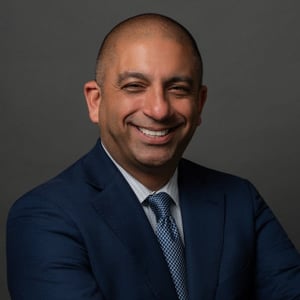
Founder and Executive Director, National Security Institute; Assistant Professor of Law, Antonin Scalia Law School, George Mason University
Jamil N. Jaffer is the Founder and Executive Director of the National Security Institute at the Antonin Scalia Law School at George Mason University where he also serves as an Assistant Professor of Law, Director of the National Security Law and Policy Program, and Director of the Cyber, Intelligence, and National Security LLM Program. Jamil also teaches classes on counterterrorism, intelligence, surveillance, cybersecurity, and other national security matters, as well as a summer course held abroad with U.S. Supreme Court Justice Neil M. Gorsuch. Jamil is also affiliated with Stanford University’s Center for International Security and Cooperation and previously served as a Visiting Fellow at the Hoover Institution from 2016 to 2019.
Jamil is also a Venture Partner with Paladin Capital Group, where he assists the firm with investments across the full range of its themes and theses, including a focus on dual-use national security technologies. Jamil also serves on the board of directors of RangeForce, a cybersecurity training and readiness platform startup and Tozny, a digital identity startup, and on the advisory boards of U.S. Strategic Metals, North America’s largest primary producer of cobalt, a critical mineral used in EV batteries, aerospace, and other national security applications; and Constella Intelligence, a deep and dark web intelligence startup. Jamil also serves as an advisor to Beacon Global Strategies, a strategic advisory firm and Duco, a technology platform startup that connects corporations with geopolitical and international business experts. Jamil is also the managing director of Trigraph Caveat Capital, a private investment vehicle.
Among other things, Jamil currently serves on the Board of Directors for the Greater Washington Board of Trade, the Board of Advisors for the Global Cyber Alliance, and the Advisory Board of the Foundation for the Defense of Democracies’ Center on Cyber and Tech Innovation, the Executive Committee of the Reagan Institute Strategy Group. Jamil is also a Fellow at the Academy for Judaic, Christian, and Islamic Studies, an advisor to the Concordia Summit, and is a member of the Board of Directors for the Center for Intelligence Policy, the Board of Directors of Speech First, and the Executive Committee of the International Law and National Security Practice Group of the Federalist Society.
Immediately prior to his current positions, from 2015-2021, Jamil served as a senior business leader at IronNet Cybersecurity, helping take the company from a bootstrapped first-year technology products startup through two rounds of venture capital fundraising, growing from 40 employees to over 300, and through its listing on New York Stock Exchange. In his role as IronNet's Senior Vice President for Strategy, Partnerships & Corporate Development, Jamil worked directly for the co-CEOs of the company, Gen (ret.) Keith B. Alexander, the former Director of the National Security Agency and Founding Commander of U.S. Cyber Command, and Bill Welch, the former COO of Zscaler and Duo; in that role, Jamil led all of the company’s strategic and technology partnership efforts, including developing go-to-market and technology integration plans with some of the largest cloud platforms and cybersecurity companies in the market, evaluating potential acquisition targets, and developing overall corporate strategy and thought leadership around collective security and collaborative defense in the cyber arena.
Prior to his time at IronNet, Jamil served on the leadership team of the Senate Foreign Relations Committee as Chief Counsel and Senior Advisor under Chairman Bob Corker (R-TN), where he worked on key national security and foreign policy issues, including leading the drafting of the proposed Authorization for the Use of Military Force against ISIS in 2014 and 2015, the AUMF against Syria in 2013, and revisions to the 9/11 AUMF against al Qaeda. Jamil was also the lead architect of the Iran Nuclear Agreement Review Act and two sanctions laws against Russia for its first intervention in Ukraine.
Prior to joining SFRC, Jamil served as Senior Counsel to the House Permanent Select Committee on Intelligence under Chairman Mike Rogers (R-MI) where he led the committee’s oversight of NSA surveillance, NRO intelligence issues, and NGA analytic and collection matters, as well as intelligence community-wide counterterrorism issues. Jamil was also the lead architect of the Cyber Intelligence Sharing and Protection Act, the nation’s first cyber threat intelligence sharing legislation that was signed into law in 2015.
In the Bush Administration, Jamil served in the White House as an Associate Counsel to the President, handling Defense Department, State Department, and intelligence community matters, and serving as one of the White House Counsel’s primary representatives to the National Security Council Deputies Committee.
Prior to the White House, Jamil served on the leadership team of the Justice Department’s National Security Division as Counsel to the Assistant Attorney General for National Security, where he focused on counterterrorism and intelligence matters. At NSD, Jamil helped lead the division’s work on In re: Directives, the first ever two-party litigated matter in the FISA Court and the second case before the FISA Court of Review in its 30-year history. Jamil also led NSD’s efforts on the President’s Comprehensive National Cybersecurity Initiative (CNCI), including the drafting of NSPD-54/HSPD-23, and related classified matters, and advised the National Security Agency (NSA) and U.S. Cyber Command’s predecessor organization, the Joint Function Component Command for Network Warfare (JFCC-NW), on matters related to cyber intelligence collection and offensive cyber activities. For his work on these matters, Jamil was awarded the Assistant Attorney General’s Award for Special Initiative and was among the group of lawyers awarded the Director of National Intelligence’s 2008 Legal Award (Team of the Year – Cyber Legal).
Jamil also served in other positions in the Justice Department, including in the Office of Legal Policy, where he worked on the confirmations of Chief Justice John G. Roberts, Jr. and Justice Samuel A. Alito, Jr. to the United States Supreme Court.
Jamil also served as a lawyer in private practice at Kellogg Huber, a Washington, DC-based litigation boutique, as a policy advisor to Congressman Bob Goodlatte (R-VA), and as a staff member or senior advisor on a number of political campaigns, including two presidential campaigns and a presidential transition team. While in law school, Jamil was a member of the University of Chicago Law Review, managing editor of the Chicago Journal of International Law, and National Symposium Editor of the Harvard Journal of Law & Public Policy. Following law school, Jamil served as a law clerk to Judge Edith H. Jones of the United States Court of Appeals for the Fifth Circuit and, later in his career, as a law clerk to then-Judge Neil M. Gorsuch when he first joined the United States Court of Appeals for the Tenth Circuit as well as a law clerk to Justice Neil Gorsuch when he joined the U.S. Supreme Court.
Jamil has published multiple op-eds and academic articles on national security, foreign policy, cybersecurity, counterterrorism, encryption, and intelligence matters, and is the co-author of a book chapter with former NSA Director Gen. (Ret.) Keith B. Alexander on national security and the press in National Security, Leaks, and the Freedom of the Press: The Pentagon Papers Fifty Years On (2021) and a book chapter with former CIA Director Gen. (ret.) Mike Hayden on ISIS, al Qaeda, and other international terrorist groups in Choosing to Lead: American Foreign Policy for a Disordered World (2015). Jamil has also written book chapters on cybersecurity and surveillance, as well as op-eds and policy papers with former Attorney General Michael B. Mukasey, former National Counterterrorism Center Director Matt Olsen, and Congressman Mike Waltz (R-FL), among others.
Jamil has previously taught graduate-level courses in intelligence law and policy at George Washington University’s Elliott School of International Affairs and the National Intelligence University, served an outside advisor to the Cyberspace Solarium Commission, and has recently testified before committees of the U.S. Senate and House of Representatives on China, cybersecurity, counterterrorism, and other national security matters. Jamil has also recently appeared on a range of national television and radio outlets including CNN, Fox News, Fox Business, MSNBC, Bloomberg, PBS, Voice of America, and National Public Radio, and in various print and online publications, including the Wall Street Journal, New York Times, and the Washington Post on a range of national security matters including cybersecurity, counterterrorism, surveillance, encryption, privacy, and foreign policy issues.
Jamil holds degrees from UCLA (BA, cum laude), the University of Chicago Law School (JD, with honors), and the United States Naval War College (MA, with distinction).

Founder and CEO, Luta Security
Katie Moussouris, a noted authority on vulnerability disclosure and bug bounties, founded Luta Security which specializes in sustainable process improvement for handling vulnerabilities.
Ms. Moussouris's work includes helping the US Department of Defense start the government's first bug bounty program, called "Hack the Pentagon," and advised on the DoD's ongoing vulnerability disclosure program. This was based on years of discussions with DoD officials, following her creation of Microsoft's first bug bounty programs.
Ms. Moussouris is also part of the official US Wassenaar delegation to successfully renegotiate a controversial export control agreement that threatened to interfere with internet defense. Her earlier Microsoft work encompassed industry-leading initiatives such as Microsoft's bug bounty programs and Microsoft Vulnerability Research.
Ms. Moussouris is also a subject matter expert for the US National Body of the International Standards Organization (ISO) in vuln disclosure (29147), vuln handling processes (30111), and secure development (27034). Ms. Moussouris is a visiting scholar with MIT Sloan School, doing research on the vulnerability economy and exploit market. She is a New America Foundation Fellow and Harvard Belfer Affiliate. Ms. Moussouris is on the CFP review board for RSA, O'Reilly Security Conference, Shakacon, Hack in the Box, and is an adviser to the Center for Democracy and Technology.
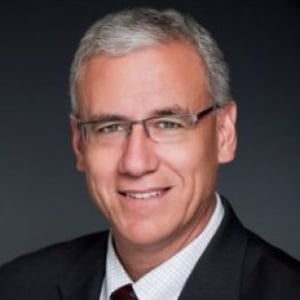
Chief Information Security Officer, Amazon Web Services
Mark Ryland works for the Amazon Web Services as Chief Information Security Officer and leads a team of cloud security experts, interfacing with customers, partners, and internal teams to advance the mission of AWS and cloud security.
Mr. Ryland has more than 24 years of experience in the technology industry, beginning with Microsoft Federal Systems in the USA, where he began his technical career as a Senior Architectural Engineer in 1991. He continued at Microsoft for ten years, serving in a variety of software engineering and technical marketing roles in the Systems Group. In the late 1990s he started and ran the first standards organization at Microsoft, serving as Director of Standards Strategy until 2000. Subsequently, Ryland served as CTO of two start-up companies, as well as Vice-President and Director of the Washington DC office of a Seattle-based public policy group. He rejoined Microsoft in 2008 as National Standards Officer for the USA, later switching back to an engineering role as a principal program manager in Microsoft’s identity and access team, before joining AWS.

Director of Cybersecurity Policy, Microsoft
Jacob Crisp is a member of Microsoft’s US Government Affairs team in Washington, D.C. As Director for Cybersecurity Policy, he plays a key role in Microsoft’s cybersecurity and lawful access policy work in the United States, working with policymakers and influencers on key cybersecurity and lawful access issues relevant to Microsoft and the global IT ecosystem. Prior to joining the company, Jacob was co-founder and CEO of a venture-backed technology startup. During almost a decade of government service, Jacob also served as a senior staffer — Policy Director, Deputy General Counsel and Deputy Staff Director — on the House Intelligence and Homeland Security Committees, a President’sDaily Brief (PDB) briefer to the White House and a Central Intelligence Agency officer. In those roles, Jacob played a formative part in the development and execution of key domestic and national security policies, including information sharing and annual intelligence and defense authorization legislation, threat analysis and mitigation, counterterrorism, cybersecurity and technology innovation.
Partner, Consovoy McCarthy Park PLLC
Jeffrey Harris is an experienced litigator who focuses on constitutional, appellate, and regulatory matters. He is currently a partner at Consovoy McCarthy Park PLLC. In 2015, he was named to the Legal Times list of “D.C.’s Rising Stars,” which identified “some of the most accomplished young attorneys in the D.C. area.” Mr. Harris previously served as Associate Administrator of the Office of Information and Regulatory Affairs (OIRA). In that role, he was second in charge of the 50-person office within the Executive Office of the President that reviews all significant federal regulatory actions and coordinates regulatory policy across the federal government.
Before his government service, Mr. Harris was a partner at Bancroft PLLC and Kirkland & Ellis LLP, where his practice focused on Supreme Court, appellate, and complex litigation. Mr. Harris has extensive experience litigating before the U.S. Supreme Court. He has been the lead drafter of more than 100 merits briefs, amicus briefs, and certiorari-stage briefs, and he has contributed to 10 wins in cases before the Court.
Mr. Harris has also litigated numerous high-profile cases in the federal courts of appeals, federal and state trial courts, administrative agencies, and arbitral tribunals. He has successfully argued before the U.S. Courts of Appeals for the Sixth, Ninth, Eleventh, and D.C. Circuits, achieving wins on behalf of airlines, telecommunications providers, and pro bono clients. He has also argued numerous dispositive motions in federal district court and has participated in the trial of a significant voting rights case.
Mr. Harris served as a law clerk to Chief Justice John G. Roberts, Jr., of the U.S. Supreme Court, and Judges David Sentelle and Laurence Silberman of the U.S. Court of Appeals for the D.C. Circuit. He earned his J.D. magna cum laude from Harvard Law School and his A.B. magna cum laude from Georgetown University. He is a member of the District of Columbia and Virginia bars.

Partner, Holtzman Vogel Baran Torchinsky & Josefiak PLLC
Jason Torchinsky is a partner at Holtzman Vogel Josefiak PLLC, specializing in campaign finance, election law, lobbying disclosure and issue advocacy groups. Politico recently named him one of the “50 Politicos to Watch,” and in 2007, Campaigns and Elections Magazine named him a “Rising Star of Politics.”
In addition to his practice counseling clients on compliance with campaign finance, ethics laws, lobbying disclosure and election laws, Mr. Torchinsky has served as lead counsel in a number of litigation matters. Representative matters in the redistricting area include Louisiana House of Representatives v. Holder (D.D.C.) (Section 5 pre-clearance action), City of Sandy Springs v. Holder (D.D.C.) (Section 5 bailout action), and Fletcher v. Lamone (D. Md.) (challenging Maryland’s Congressional Districting map). In the campaign finance context, he is currently representing clients in Alliance for America’s Future v. State (Nevada Supreme Court) and Van Hollen v. Federal Election Commission (D.D.C.) (Representing intervenor defendants). He has also represented Virginia candidates in recounts and voter registration challenges before various Virginia Circuit Courts.
Mr. Torchinsky frequently lectures on campaign finance redistricting and ethics related subjects and provides commentary to the media on election related matters.
Prior to joining the firm, Mr. Torchinsky was Counsel to the Assistant Attorney General for the Civil Rights Division at the United States Department of Justice. During the 2004 election cycle, he served as Deputy General Counsel to Bush-Cheney ’04 and Deputy General Counsel to the 2005 Presidential Inaugural Committee.
He holds a B.A. in Government and Public Policy from the College of William and Mary and a J.D. from the College of William and Mary School of Law. He is a member of the Virginia Bar, the District of Columbia Bar, the Republican National Lawyers Association and the Federalist Society.
Laurence H. Silberman Chair in Constitutional Governance, American Enterprise Institute; Executive Director, Antonin Scalia Law School’s C. Boyden Gray Center for the Study of the Administrative State
Adam J. White is the Laurence H. Silberman Chair in Constitutional Governance and senior fellow at the American Enterprise Institute, where he focuses on the Supreme Court and the administrative state. He also directs the Antonin Scalia Law School’s C. Boyden Gray Center for the Study of the Administrative State.
He writes on regulation and constitutional government for a variety of publications. He practiced law in Washington, D.C., after clerking for the D.C. Circuit's Judge David Sentelle. He also has been chairman of the ABA's Administrative Law Section.
In 2021, he served on the Presidential Commission on the Supreme Court of the United States, where he criticized “Court packing” and other efforts to restructure the Supreme Court.
Partner, Consovoy McCarthy Park PLLC
Jeffrey Harris is an experienced litigator who focuses on constitutional, appellate, and regulatory matters. He is currently a partner at Consovoy McCarthy Park PLLC. In 2015, he was named to the Legal Times list of “D.C.’s Rising Stars,” which identified “some of the most accomplished young attorneys in the D.C. area.” Mr. Harris previously served as Associate Administrator of the Office of Information and Regulatory Affairs (OIRA). In that role, he was second in charge of the 50-person office within the Executive Office of the President that reviews all significant federal regulatory actions and coordinates regulatory policy across the federal government.
Before his government service, Mr. Harris was a partner at Bancroft PLLC and Kirkland & Ellis LLP, where his practice focused on Supreme Court, appellate, and complex litigation. Mr. Harris has extensive experience litigating before the U.S. Supreme Court. He has been the lead drafter of more than 100 merits briefs, amicus briefs, and certiorari-stage briefs, and he has contributed to 10 wins in cases before the Court.
Mr. Harris has also litigated numerous high-profile cases in the federal courts of appeals, federal and state trial courts, administrative agencies, and arbitral tribunals. He has successfully argued before the U.S. Courts of Appeals for the Sixth, Ninth, Eleventh, and D.C. Circuits, achieving wins on behalf of airlines, telecommunications providers, and pro bono clients. He has also argued numerous dispositive motions in federal district court and has participated in the trial of a significant voting rights case.
Mr. Harris served as a law clerk to Chief Justice John G. Roberts, Jr., of the U.S. Supreme Court, and Judges David Sentelle and Laurence Silberman of the U.S. Court of Appeals for the D.C. Circuit. He earned his J.D. magna cum laude from Harvard Law School and his A.B. magna cum laude from Georgetown University. He is a member of the District of Columbia and Virginia bars.
Laurence H. Silberman Chair in Constitutional Governance, American Enterprise Institute; Executive Director, Antonin Scalia Law School’s C. Boyden Gray Center for the Study of the Administrative State
Adam J. White is the Laurence H. Silberman Chair in Constitutional Governance and senior fellow at the American Enterprise Institute, where he focuses on the Supreme Court and the administrative state. He also directs the Antonin Scalia Law School’s C. Boyden Gray Center for the Study of the Administrative State.
He writes on regulation and constitutional government for a variety of publications. He practiced law in Washington, D.C., after clerking for the D.C. Circuit's Judge David Sentelle. He also has been chairman of the ABA's Administrative Law Section.
In 2021, he served on the Presidential Commission on the Supreme Court of the United States, where he criticized “Court packing” and other efforts to restructure the Supreme Court.
Director of Cybersecurity Policy, Microsoft
Jacob Crisp is a member of Microsoft’s US Government Affairs team in Washington, D.C. As Director for Cybersecurity Policy, he plays a key role in Microsoft’s cybersecurity and lawful access policy work in the United States, working with policymakers and influencers on key cybersecurity and lawful access issues relevant to Microsoft and the global IT ecosystem. Prior to joining the company, Jacob was co-founder and CEO of a venture-backed technology startup. During almost a decade of government service, Jacob also served as a senior staffer — Policy Director, Deputy General Counsel and Deputy Staff Director — on the House Intelligence and Homeland Security Committees, a President’sDaily Brief (PDB) briefer to the White House and a Central Intelligence Agency officer. In those roles, Jacob played a formative part in the development and execution of key domestic and national security policies, including information sharing and annual intelligence and defense authorization legislation, threat analysis and mitigation, counterterrorism, cybersecurity and technology innovation.
Laurence A. Tisch Professor of Law and Director, Classical Liberal Institute, New York University School of Law; Director, Classical Liberal Institute, Civitas Institute University of Texas at Austin
Richard A. Epstein is the inaugural Laurence A. Tisch Professor of Law at NYU School of Law. Prior to his joining the faculty, he was a visiting law professor at NYU from 2007 through 2009. He served as the Peter and Kirstin Bedford Senior Fellow at the Hoover Institution from 2000 to 2024. Since 2024 to the present he is a senior lecturer at the Civitas Institute at the University of Texas—Austin. Epstein is also the James Parker Hall Distinguished Service Professor of Law Emeritus and a senior lecturer at the University of Chicago. His initial law school appointment was at the University of Southern California from 1968 to 1972. Epstein received an LL.D., h.c. from the University of Ghent, 2003. He has been a member of the American Academy of Arts and Sciences since 1985 and was a Senior Fellow of the Center for Clinical Medical Ethics at the University of Chicago Division of Biological Sciences, also from 1983. to 2022 He served as editor of the Journal of Legal Studies from 1981 to 1991, and of the Journal of Law and Economics from 1991-2001. From 2001 to 2010 he was a director of the John M. Olin Program in Law and Economics at the University of Chicago.
His newest book, The Myth of Birthright Citizenship: What the Fourteenth Amendment Really Says was published in 2026 (Encounter Books). Prior to that he has published many books including, The Dubious Morality of the Modern Administrative State (Roman & Littlefield 2020).Earlier he published th Classical Liberal Constitution: The Uncertain Quest for Limited Government (Harvard 2014) iHis previous books include Design for Liberty: Private Property, Public Administration and the Rule of Law (Harvard 2011); The Case Against the Employee Free Choice Act (Hoover 2009); Supreme Neglect: How to Revive the Constitutional Protection of Property Rights (Oxford 2008); Antitrust Decrees in Theory and Practice: Why Less is More (AEI 2007); Overdose: How Excessive Government Regulation Stifles Pharmaceutical Innovation (Yale University Press. 2006); How Progressives Rewrote the Constitution (Cato 2006); Cases and Materials on Torts (Aspen Law & Business; 8th ed. 2004); Skepticism and Freedom: A Modern Case for Classical Liberalism (University of Chicago, 2003); Torts (Aspen Law & Business 1999); Principles for a Free Society: Reconciling Individual Liberty with the Common Good (Perseus Books, 1998): Mortal Peril: Our Inalienable Rights to Health Care (Addison-Wesley, 1997); Simple Rules for a Complex World (Harvard, 1995); Bargaining With the State (Princeton, 1993); Forbidden Grounds: The Case Against Employment Discrimination Laws (Harvard , 1992); Takings: Private Property and the Power of Eminent Domain (Harvard, 1985); and Modern Products Liability Law (Greenwood Press, 1980). He has also edited(with Catherine M. Sharkey) Cases and Materials on the Law of Torts (10th edition 2012).
Professor Epstein has written numerous articles on a wide range of legal and interdisciplinary subjects. He has taught courses in administrative law, antitrust law, civil procedure, communications, constitutional law, contracts, corporations, criminal law, employment discrimination law, environmental law, food and drug law health law and policy, legal history, labor law, property, real estate development and finance, jurisprudence, labor law; land use planning, patents, individual, estate and corporate taxation, Roman Law; torts, and workers' compensation.
Professor Epstein also writes a regular column for Civitas Institute, which also sponsors his podcast, The Libertarian with Charles C.W. Cooke, and Law Talk, with Cooke and John Yoo. He also does a podcast with John Batchelor. And appears regularly on the Freedom File with Judge Andrew Napolitano.
Founder and Executive Director, National Security Institute; Assistant Professor of Law, Antonin Scalia Law School, George Mason University
Jamil N. Jaffer is the Founder and Executive Director of the National Security Institute at the Antonin Scalia Law School at George Mason University where he also serves as an Assistant Professor of Law, Director of the National Security Law and Policy Program, and Director of the Cyber, Intelligence, and National Security LLM Program. Jamil also teaches classes on counterterrorism, intelligence, surveillance, cybersecurity, and other national security matters, as well as a summer course held abroad with U.S. Supreme Court Justice Neil M. Gorsuch. Jamil is also affiliated with Stanford University’s Center for International Security and Cooperation and previously served as a Visiting Fellow at the Hoover Institution from 2016 to 2019.
Jamil is also a Venture Partner with Paladin Capital Group, where he assists the firm with investments across the full range of its themes and theses, including a focus on dual-use national security technologies. Jamil also serves on the board of directors of RangeForce, a cybersecurity training and readiness platform startup and Tozny, a digital identity startup, and on the advisory boards of U.S. Strategic Metals, North America’s largest primary producer of cobalt, a critical mineral used in EV batteries, aerospace, and other national security applications; and Constella Intelligence, a deep and dark web intelligence startup. Jamil also serves as an advisor to Beacon Global Strategies, a strategic advisory firm and Duco, a technology platform startup that connects corporations with geopolitical and international business experts. Jamil is also the managing director of Trigraph Caveat Capital, a private investment vehicle.
Among other things, Jamil currently serves on the Board of Directors for the Greater Washington Board of Trade, the Board of Advisors for the Global Cyber Alliance, and the Advisory Board of the Foundation for the Defense of Democracies’ Center on Cyber and Tech Innovation, the Executive Committee of the Reagan Institute Strategy Group. Jamil is also a Fellow at the Academy for Judaic, Christian, and Islamic Studies, an advisor to the Concordia Summit, and is a member of the Board of Directors for the Center for Intelligence Policy, the Board of Directors of Speech First, and the Executive Committee of the International Law and National Security Practice Group of the Federalist Society.
Immediately prior to his current positions, from 2015-2021, Jamil served as a senior business leader at IronNet Cybersecurity, helping take the company from a bootstrapped first-year technology products startup through two rounds of venture capital fundraising, growing from 40 employees to over 300, and through its listing on New York Stock Exchange. In his role as IronNet's Senior Vice President for Strategy, Partnerships & Corporate Development, Jamil worked directly for the co-CEOs of the company, Gen (ret.) Keith B. Alexander, the former Director of the National Security Agency and Founding Commander of U.S. Cyber Command, and Bill Welch, the former COO of Zscaler and Duo; in that role, Jamil led all of the company’s strategic and technology partnership efforts, including developing go-to-market and technology integration plans with some of the largest cloud platforms and cybersecurity companies in the market, evaluating potential acquisition targets, and developing overall corporate strategy and thought leadership around collective security and collaborative defense in the cyber arena.
Prior to his time at IronNet, Jamil served on the leadership team of the Senate Foreign Relations Committee as Chief Counsel and Senior Advisor under Chairman Bob Corker (R-TN), where he worked on key national security and foreign policy issues, including leading the drafting of the proposed Authorization for the Use of Military Force against ISIS in 2014 and 2015, the AUMF against Syria in 2013, and revisions to the 9/11 AUMF against al Qaeda. Jamil was also the lead architect of the Iran Nuclear Agreement Review Act and two sanctions laws against Russia for its first intervention in Ukraine.
Prior to joining SFRC, Jamil served as Senior Counsel to the House Permanent Select Committee on Intelligence under Chairman Mike Rogers (R-MI) where he led the committee’s oversight of NSA surveillance, NRO intelligence issues, and NGA analytic and collection matters, as well as intelligence community-wide counterterrorism issues. Jamil was also the lead architect of the Cyber Intelligence Sharing and Protection Act, the nation’s first cyber threat intelligence sharing legislation that was signed into law in 2015.
In the Bush Administration, Jamil served in the White House as an Associate Counsel to the President, handling Defense Department, State Department, and intelligence community matters, and serving as one of the White House Counsel’s primary representatives to the National Security Council Deputies Committee.
Prior to the White House, Jamil served on the leadership team of the Justice Department’s National Security Division as Counsel to the Assistant Attorney General for National Security, where he focused on counterterrorism and intelligence matters. At NSD, Jamil helped lead the division’s work on In re: Directives, the first ever two-party litigated matter in the FISA Court and the second case before the FISA Court of Review in its 30-year history. Jamil also led NSD’s efforts on the President’s Comprehensive National Cybersecurity Initiative (CNCI), including the drafting of NSPD-54/HSPD-23, and related classified matters, and advised the National Security Agency (NSA) and U.S. Cyber Command’s predecessor organization, the Joint Function Component Command for Network Warfare (JFCC-NW), on matters related to cyber intelligence collection and offensive cyber activities. For his work on these matters, Jamil was awarded the Assistant Attorney General’s Award for Special Initiative and was among the group of lawyers awarded the Director of National Intelligence’s 2008 Legal Award (Team of the Year – Cyber Legal).
Jamil also served in other positions in the Justice Department, including in the Office of Legal Policy, where he worked on the confirmations of Chief Justice John G. Roberts, Jr. and Justice Samuel A. Alito, Jr. to the United States Supreme Court.
Jamil also served as a lawyer in private practice at Kellogg Huber, a Washington, DC-based litigation boutique, as a policy advisor to Congressman Bob Goodlatte (R-VA), and as a staff member or senior advisor on a number of political campaigns, including two presidential campaigns and a presidential transition team. While in law school, Jamil was a member of the University of Chicago Law Review, managing editor of the Chicago Journal of International Law, and National Symposium Editor of the Harvard Journal of Law & Public Policy. Following law school, Jamil served as a law clerk to Judge Edith H. Jones of the United States Court of Appeals for the Fifth Circuit and, later in his career, as a law clerk to then-Judge Neil M. Gorsuch when he first joined the United States Court of Appeals for the Tenth Circuit as well as a law clerk to Justice Neil Gorsuch when he joined the U.S. Supreme Court.
Jamil has published multiple op-eds and academic articles on national security, foreign policy, cybersecurity, counterterrorism, encryption, and intelligence matters, and is the co-author of a book chapter with former NSA Director Gen. (Ret.) Keith B. Alexander on national security and the press in National Security, Leaks, and the Freedom of the Press: The Pentagon Papers Fifty Years On (2021) and a book chapter with former CIA Director Gen. (ret.) Mike Hayden on ISIS, al Qaeda, and other international terrorist groups in Choosing to Lead: American Foreign Policy for a Disordered World (2015). Jamil has also written book chapters on cybersecurity and surveillance, as well as op-eds and policy papers with former Attorney General Michael B. Mukasey, former National Counterterrorism Center Director Matt Olsen, and Congressman Mike Waltz (R-FL), among others.
Jamil has previously taught graduate-level courses in intelligence law and policy at George Washington University’s Elliott School of International Affairs and the National Intelligence University, served an outside advisor to the Cyberspace Solarium Commission, and has recently testified before committees of the U.S. Senate and House of Representatives on China, cybersecurity, counterterrorism, and other national security matters. Jamil has also recently appeared on a range of national television and radio outlets including CNN, Fox News, Fox Business, MSNBC, Bloomberg, PBS, Voice of America, and National Public Radio, and in various print and online publications, including the Wall Street Journal, New York Times, and the Washington Post on a range of national security matters including cybersecurity, counterterrorism, surveillance, encryption, privacy, and foreign policy issues.
Jamil holds degrees from UCLA (BA, cum laude), the University of Chicago Law School (JD, with honors), and the United States Naval War College (MA, with distinction).
Founder and CEO, Luta Security
Katie Moussouris, a noted authority on vulnerability disclosure and bug bounties, founded Luta Security which specializes in sustainable process improvement for handling vulnerabilities.
Ms. Moussouris's work includes helping the US Department of Defense start the government's first bug bounty program, called "Hack the Pentagon," and advised on the DoD's ongoing vulnerability disclosure program. This was based on years of discussions with DoD officials, following her creation of Microsoft's first bug bounty programs.
Ms. Moussouris is also part of the official US Wassenaar delegation to successfully renegotiate a controversial export control agreement that threatened to interfere with internet defense. Her earlier Microsoft work encompassed industry-leading initiatives such as Microsoft's bug bounty programs and Microsoft Vulnerability Research.
Ms. Moussouris is also a subject matter expert for the US National Body of the International Standards Organization (ISO) in vuln disclosure (29147), vuln handling processes (30111), and secure development (27034). Ms. Moussouris is a visiting scholar with MIT Sloan School, doing research on the vulnerability economy and exploit market. She is a New America Foundation Fellow and Harvard Belfer Affiliate. Ms. Moussouris is on the CFP review board for RSA, O'Reilly Security Conference, Shakacon, Hack in the Box, and is an adviser to the Center for Democracy and Technology.
Chief Information Security Officer, Amazon Web Services
Mark Ryland works for the Amazon Web Services as Chief Information Security Officer and leads a team of cloud security experts, interfacing with customers, partners, and internal teams to advance the mission of AWS and cloud security.
Mr. Ryland has more than 24 years of experience in the technology industry, beginning with Microsoft Federal Systems in the USA, where he began his technical career as a Senior Architectural Engineer in 1991. He continued at Microsoft for ten years, serving in a variety of software engineering and technical marketing roles in the Systems Group. In the late 1990s he started and ran the first standards organization at Microsoft, serving as Director of Standards Strategy until 2000. Subsequently, Ryland served as CTO of two start-up companies, as well as Vice-President and Director of the Washington DC office of a Seattle-based public policy group. He rejoined Microsoft in 2008 as National Standards Officer for the USA, later switching back to an engineering role as a principal program manager in Microsoft’s identity and access team, before joining AWS.

Is It Time to Repeal the Jones Act? [POLICYbrief]
Daniel J. Ikenson, Sal Mercogliano
The Merchant Marine Act of 1920, also known as the Jones Act, has governed the...
Topics
Originalism and Changes in Technology
The Patent and Copyright Clause, Article I, § 8m, cl. 8 provides that “The Congress...
SCOTUS RoundUp
Capitol Hill Chapter Event
Washington, DCKisor v. Wilkie [SCOTUSbrief]
Adam White
In 2006, Vietnam veteran James Kisor appealed the denial of his disability benefits by the...
Secession: Sovereignty & Nationalism [POLICYbrief]
Nigel Farage, Michael Strubell, Victor Davis Hanson
With over two dozen active separatist movements in Europe alone, the concepts of sovereignty and...
Are “Regulatory Budgets” Paying Off? A Year Two Look-Back at Executive Order 13771
Jeffrey M. Harris, Adam White
On January 30, 2017, President Trump signed Executive Order 13771 titled, “Presidential Executive Order on...
Are “Regulatory Budgets” Paying Off? A Year Two Look-Back at Executive Order 13771
Administrative Law & Regulation Practice Group and Regulatory Transparency Project Teleforum
TeleforumPanel I: The Tech Titans' Role in Cybersecurity
Richard A. Epstein, Jamil N. Jaffer, Katie Moussouris, Mark Ryland, Jacob Crisp
This panel will focus on questions such as what measures major companies can take, individually...
Panel I: The Tech Titans' Role in Cybersecurity
Tech Titans and National Security: West Coast Edition
Stanford, CATech Titans and National Security: West Coast Edition
Co-Sponsored by International & National Security Law Practice Group, National Security Institute at George Mason University and The Hoover Institution at Stanford University
Stanford, CA