

Senior Attorney and Counsel for Special Projects, Competitive Enterprise Institute
CEI’s Counsel for Special Projects is Hans Bader. Coming to CEI in 2003, Hans’s prior casework has included suits involving the First Amendment, federalism, and civil rights issues. He graduated from the University of Virginia with a B.A. in economics and history, and later earned his J.D. from Harvard Law School. Just before joining CEI, Hans was Senior Counsel at the Center for Individual Rights.
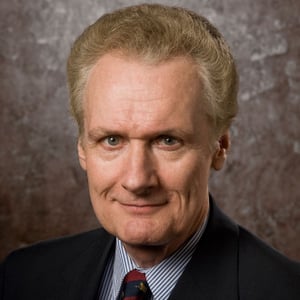
Vice President for Legal Affairs, Cato Institute
Roger Pilon is the Cato’s Institute’s vice president for legal affairs, the founding director of Cato’s Robert A. Levy Center for Constitutional Studies, the inaugural holder of Cato’s B. Kenneth Simon Chair in Constitutional Studies, and the founding publisher of the Cato Supreme Court Review.
Prior to joining Cato, Pilon held five senior posts in the Reagan administration, including at State and Justice, and was a national fellow at Stanford’s Hoover Institution. In 1989 the Bicentennial Commission presented him with its Benjamin Franklin Award for excellence in writing on the U.S. Constitution. In 2001 Columbia University’s School of General Studies awarded him its Alumni Medal of Distinction. Pilon lectures and debates at universities and law schools across the country and testifies often before Congress.
His writing has appeared in the Wall Street Journal, the Washington Post, the New York Times, the Los Angeles Times, Legal Times, National Law Journal, Harvard Journal of Law and Public Policy, Stanford Law and Policy Review, and elsewhere. He has appeared on ABC’s Nightline, CBS’s 60 Minutes II, Fox News Channel, NPR, CNN, MSNBC, CNBC, C-SPAN, and other media.
Pilon holds a BA from Columbia University, an MA and a PhD from the University of Chicago, and a JD from the George Washington University School of Law.
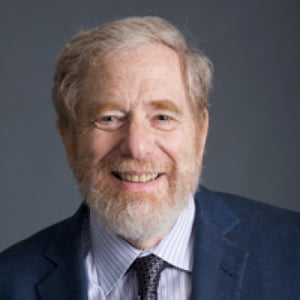
Carmack Waterhouse Professor of Constitutional Law, Georgetown Law
After graduating from Harvard Law School in 1971, Professor Seidman served as a law clerk for J. Skelly Wright of the D.C. Circuit and U.S. Supreme Court Justice Thurgood Marshall. He then was a staff attorney with the D.C. Public Defender Service until joining the Law Center faculty in 1976. He teaches a variety of courses in the fields of constitutional and criminal law. He is co-author of a constitutional law casebook and the author of many articles concerning criminal justice and constitutional law. His most recent books are Silence and Freedom (Stanford 2007), Our Unsettled Constitution: A New Defense of Constitutionalism and Judicial Review (Yale 2001) and Equal Protection of the Laws (Foundation 2002).
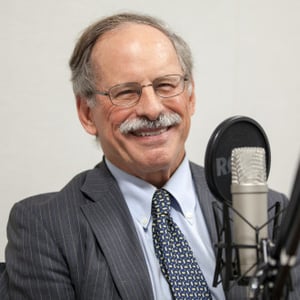
Freelance Journalist and Author
Stuart Taylor, Jr. is a Washington writer focusing on legal and policy issues and a National Journal contributing editor. He occasionally practices law.
Taylor has coauthored three books. All have been acclaimed by commentators across the ideological spectrum. In January 2017, KC Johnson and Taylor authored The Campus Rape Frenzy: The Attack on Due Process at America's Universities. In 2012, Richard Sander and Taylor authored Mismatch: How Affirmative Action Hurts Students It's Intended to Help, and Why Universities Won't Admit It. In 2007, Taylor and Johnson authored Until Proven Innocent: Political Correctness and the Shameful Injustices of the Duke Lacrosse Rape Fraud. Sander and Taylor have also filed amicus briefs in Supreme Court cases involving admissions preferences.
Since 1980, Taylor has done reporting and commentary about issues ranging from the biggest Supreme Court cases to race, voting rights, mindlessly excessive criminal penalties, guilt-presuming campus rape processes, journalistic bias, the death penalty, war powers, gerrymandering, guns, polarization, civil liberties, national security, torture, campaign finance, education, impeachment, and other issues. He has often been called one of the nation's best legal journalists and is known for challenging both liberal and conservative conventional wisdom.
Taylor was a reporter for The New York Times from 1980-1988, covering legal affairs and then the Supreme Court. He wrote commentaries and long features for The American Lawyer, Legal Times and their affiliates from 1989-1997, and for National Journal and Newsweek from 1998 through 2010. He has written (less often) on a freelance basis for numerous publications since 2010. He has written op-eds for The Washington Post, The New York Times, The Wall Street Journal, The Los Angeles Times, USA Today, and The New York Daily News and longer commentaries for RealClearPolitics, The Atlantic, The New Republic, the (late) Weekly Standard, National Review, Slate, The Daily Beast, Harper’s, Reader’s Digest, Time and other magazines. He has been interviewed on all major television and radio networks. He taught “Law and the News Media” at Stanford Law School in 2011 and 2012 and practices law on occasion.
Taylor graduated from Princeton University in 1970 with an A.B. in History. After working as a reporter for the Baltimore Evening Sun and Sun from 1971-1974, he moved to Harvard Law School, was a Harvard Law Review note editor, and graduated in 1977 at the top of his class, with high honors. He also won a Frederick Sheldon Traveling Fellowship and traveled around the world in 1977-1978 while studying freedom of the press in the United Kingdom and Kenya.
Taylor practiced law with Wilmer, Cutler & Pickering, in Washington, D.C., from 1977-1980 before returning to journalism in 1980 by joining the Washington Bureau of The New York Times.
Taylor's journalism honors include the 2009 Northern California Innocence Project Media Award for his work on the Duke lacrosse rape fraud; a 2002 National Headliner Award for best special magazine column on one subject; and a share of The American Lawyer’s National Magazine Award for a March 1990 special issue on the drug war. He was a National Magazine Award finalist in 1993 and 1997 and was nominated by The New York Times for a Pulitzer Prize in 1988.
Shareholder, Jackson Lewis PC
Paul DeCamp is a Shareholder in the Washington, D.C. Region office of Jackson Lewis P.C. and leader of the firm’s Wage and Hour Practice Group. His practice focuses exclusively on management-side wage and hour law.
Mr. DeCamp devotes much of his practice to complex litigation, including class, collective, and hybrid actions. He has served as lead or co-counsel in scores of class and putative class cases around the country involving such industries as restaurants, pharmaceutical sales, financial services, retail, medical supplies, security, health care, information technology, and aerospace. Mr. DeCamp also defends federal and state agency investigations, conducts preventive compliance reviews, and provides day-to-day advice and counsel regarding such issues as exempt/non-exempt classification, permissible pay deductions, measuring working time, regular rate calculations for premium overtime pay, determining proper pay and duties for tipped employees, complying with state laws concerning meal and rest periods, and independent contractor status. He has provided extensive wage and hour guidance in a variety of industries including restaurants and hospitality, retail, wholesale distribution, health care, financial services, oil and gas, and government contracting.
Before joining Jackson Lewis, Mr. DeCamp served as Administrator of the U.S. Department of Labor’s Wage and Hour Division, the chief federal officer responsible for interpreting and enforcing the Nation’s wage and hour laws on behalf of roughly 135 million workers in 7.3 million workplaces around the country. Appointed by the President, he was in charge of a federal agency with close to 1,300 employees in more than 220 offices nationwide, operating on an annual budget of more than $170 million.
Mr. DeCamp has testified in Congress on a variety of wage and hour topics, most recently in 2014. He is a frequent speaker at seminars and conferences across the country, as well as an author of numerous articles and book chapters regarding wage and hour law and litigation. He is a member of the American Employment Law Council and the editorial advisory board for Thompson Publishing Group’s four Fair Labor Standards Act publications. Since 2011, Mr. DeCamp has been listed as one of the country's leading labor and employment lawyers in Chambers USA: America's Leading Lawyers for Business. He has also been selected for inclusion in Virginia Super Lawyers since 2013, after having been listed twice in Virginia Super Lawyers Rising Stars. OS Restaurant Partners (now Bloomin’ Brands), which operates Outback Steakhouse and Carrabba’s Italian Grill, among other restaurant concepts, has twice recognized Mr. DeCamp’s team at Jackson Lewis as “Purveyor of the Year.”
Mr. DeCamp received his A.B. in Government, magna cum laude, from Harvard College in 1992. In 1995, he earned his J.D. from the Columbia University School of Law, where he was a Notes Editor for the Columbia Law Review and the Director of the First-Year Moot Court Program. After law school, he clerked for the Honorable Alan E. Norris of the U.S. Court of Appeals for the Sixth Circuit.

Thomas M. Siebel Senior Fellow, The Hoover Institution, Stanford University; Gary T. Schwartz Distinguished Professor of Law Emeritus, UCLA School of Law
Eugene Volokh is the Thomas M. Siebel Senior Fellow at the Hoover Institution (Stanford), as well as the Gary T. Schwartz Distinguished Professor of Law Emeritus and Distinguished Research Professor at UCLA School of Law. He recently retired from teaching at UCLA, after 30 years there, and is now focusing on research.
Volokh is the author of the textbooks The First Amendment and Related Statutes (8th ed. 2023), and Academic Legal Writing (5th ed. 2016), as well as over 100 academic law journal articles, mostly on First Amendment law. He is a member of The American Law Institute; the editor-in-chief of the Journal of Free Speech Law; and the creator and coauthor of The Volokh Conspiracy, a leading legal blog founded in 2002 (hosted at the Washington Post from 2014 to 2017 and now at Reason Magazine).

Panel II: Racial Preferences and Promoting Diversity: Are These Policies Taking Us in the Right Direction?
Civil Rights in the United States
Washington, DCOvertime Collection and Class Actions: The Need for Reform
Paul DeCamp
In years past, when a recently-terminated employee walked into an attorney’s office to discuss possible...
Is Criticizing Affirmative Action Illegal in Chicago?
Eugene Volokh
Is it illegal to criticize affirmative action in public places in Chicago? The Chicago City...