

President, Becket Fund for Religious Liberty; Professor of Law and Co-Director of the Center for Religious Liberty, Catholic University; Visiting Professor, Harvard Law School
Mark joined the Becket team in 2011 and splits his time as Associate Professor at The Catholic University of America, Columbus School of Law, and as Visiting Professor at Harvard Law School. Mark teaches constitutional law, religious liberty, torts, and evidence. He has been voted Teacher of the Year three years in a row by the Law School’s Student Bar Association.
Mark has broad experience litigating First Amendment religious exercise and free speech cases. He has represented the winning parties in a variety of Supreme Court First Amendment cases including Hobby Lobby, Little Sisters, Wheaton College, and Holt. In January 2014, Mark argued before the Supreme Court in McCullen v. Coakley, a First Amendment challenge to a Massachusetts speech restriction outside of abortion clinics. The Justices ruled in favor of his clients 9-0. Mark also led a successful eight-year litigation battle against Governor Blagojevich’s effort to force religious pharmacists to distribute the morning-after and week-after pills.
Mark’s academic writing focuses on the First and Fourteenth Amendments, and has appeared in a variety of prestigious journals, including the Harvard Law Review.
Mark is a widely sought after speaker on constitutional issues, particularly concerning abortion and the First Amendment. Professor Rienzi has been invited to discuss these issues at Harvard Law School, Columbia University Law School, Georgetown University Law Center, Boston College Law School, Notre Dame Law School, the National Press Club, and the Capitol. He has been quoted on constitutional law issues on NPR, in the Washington Times, The New York Daily News, and the Chicago Sun-Times. Mark has also been featured on the Kelly File, Fox News Sunday, Your World with Neil Cavuto, Geraldo at Large, CNN Tonight, CNN Live, Andrea Mitchell Reports, and Wall Street Journal Live.
Prior to joining Becket, Mark served as counsel for the litigation department and the intellectual property litigation practice group of WilmerHale LLP. His practice focused on complex civil and appellate litigation with a particular emphasis on intellectual property and First Amendment issues. Prior to joining WilmerHale, he served as law clerk to the Hon. Stephen F. Williams, senior circuit judge for the U.S. Court of Appeals for the D.C. Circuit. Prior to that, Mark was an editor of the Harvard Law Review, and earned his J.D. from Harvard Law School and B.A. from Princeton University, both with honors.

Director of the Program in Human Rights, Catholic University of America
William L. Saunders is Chair Emeritus of the Religious Liberties Practice Group of the Federalist Society. He is also a religious liberty and human rights scholar as well as director of the Center for Human rights at The Catholic University of America. He is Law Fellow with the Institute for Human Ecology, Professor and Director of the Program in Human Rights in the School of Arts & Sciences and Co-director of the Center for Religious Liberty at the Columbus School of Law. Before joining The Catholic University of America, Mr. Saunders served as Senior Vice President and Senior Counsel with Americans United for Life for ten years. From 1999 to 2009, he was Senior Fellow in Bioethics and Human Rights Counsel at the Family Research Council.
Mr. Saunders attended the University of North Carolina at Chapel Hill on a Morehead scholarship. He obtained his degree in law from the Harvard Law School.
Mr. Saunders was featured in Harvard’s first Guide to Conservative Public Interest Law in 2003 and again in the 2008 edition. He served on Harvard’s Advisory Committee for its 2008 celebration of public interest law. A member of the Supreme Court bar, he has authored numerous legal briefs in state, federal, foreign, and international courts.
Mr. Saunders’ book, Unborn Human Life and Fundamental Rights: Leading Constitutional Cases Under Scrutiny, was published in 2019. His articles and book chapters have been published by the university presses of Harvard, Villanova, Brigham Young, Fordham, Georgetown, Houston, Scranton, and the Catholic University of America, as well as by the Intercollegiate Studies Institute, Freedom House, Greenhaven Press, Rowan & Littlefield, Praeger, St. Augustine’s, and Intervarsity press. He has given lectures and participated in debates at many colleges, universities, and law schools, including Princeton, Harvard, Georgetown, and Notre Dame. He delivered the annual J. Michael Miller Lecture at the University of St. Thomas (on international law) in February 2007, the annual R. Wayne Kraft Memorial Lecture (on bioethics) at DeSales University in February 2004 and the annual James Moore Lecture (on human rights violations in Sudan) at Millikin University in 1999. He has also lectured, and/or has been published, in many foreign countries, including Italy, Germany, Poland, Austria, Spain, Greece, Slovakia, Mexico, Qatar, Malaysia, Romania, the Philippines, Hong Kong, and the United Kingdom.
In addition to speaking and writing frequently on bioethics topics, Mr. Saunders has submitted testimony to the President’s Council on Bioethics, as well as to UNESCO’s Committee on Bioethics, and has briefed Congressional staff and state legislatures. He is a regular columnist for the National Catholic Bioethics Quarterly.
Mr. Saunders has appeared often in the media, including BBC World News, CNN, Fox News, Vatican Radio, and National Public Radio. His articles on issues have appeared in a variety of journals, such as First Things, Human Events, Human Life Review, The Legal Times, Communio, The Family in America: A Journal of Public Policy, Ethics & Medics, and Touchstone.
Mr. Saunders served on the official United States delegation to the UN Special Session on Children in 2001/02. In 2011, he was a speaker at an official briefing at the UN, addressing the topic, why euthanasia is not a human right.
In 2004, he served on the NGO Working Committee in connection with the Doha Intergovernmental Conference for the Family.
Mr. Saunders is Senior Fellow with the Religious Freedom Institute, and Affiliated Scholar with the Pellegrino Center for Clinical Ethics at the Georgetown University School of Medicine. He is President of the Fellowship of Catholic Scholars and a member of the boards of the International Association of Catholic Bioethicists, the International Right to Life Federation, the Institute on Religion and Democracy, and the Society of Catholic Social Scientists.
In 1999, Mr. Saunders founded Sudan Relief and Rescue, Inc., to aid the persecuted church in Sudan. He has worked for and written on behalf of the persecuted church for many years.
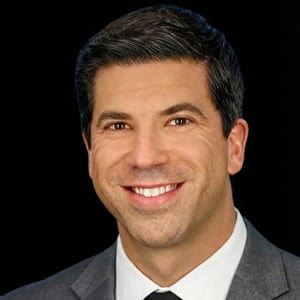
Judge, United States District Court, Southern District of Florida
On April 4, 2019, Judge Altman was confirmed to a seat on the U.S. District Court for the Southern District of Florida. At 36, he became the youngest federal district court judge in the country—and the youngest federal judge ever appointed in the Southern District of Florida.
Judge Altman received a BA from Columbia University, where he played quarterback on the football team and pitched for the baseball team—earning All-Ivy honors. Judge Altman received his JD from the Yale Law School, where he was projects editor of the Yale Law Journal. After law school, the Judge clerked on the 11th Circuit Court of Appeals for the Honorable Stanley Marcus.
Judge Altman then became a federal prosecutor at the U.S. Attorney’s Office in Miami, where he twice received the Director of the Executive Office of U.S. Attorneys’ Award for Superior Performance by a federal prosecutor. In 2013, Judge Altman was named “Federal Prosecutor of the Year” by the Miami-Dade Chiefs of Police and the Law Enforcement Officers’ Charitable Foundation.
In 2014, Judge Altman became a partner at the Miami law firm of Podhurst Orseck, where he represented the victims of airplane crashes and bank fraud conspiracies.

Senior Fellow and Director of Constitutional Studies, Manhattan Institute
Ilya Shapiro is a senior fellow and director of constitutional studies at the Manhattan Institute and a contributing editor of City Journal. Previously he was executive director and senior lecturer at the Georgetown Center for the Constitution, and before that a vice president of the Cato Institute.
Shapiro is the author of Lawless: The Miseducation of America’s Elites (2025) and Supreme Disorder: Judicial Nominations and the Politics of America’s Highest Court (2020), coauthor of Religious Liberties for Corporations? (2014), and editor of 11 volumes of the Cato Supreme Court Review (2008-18). He has contributed to a variety of academic, popular, and professional publications, including the Wall Street Journal, Harvard Journal of Law & Public Policy, Washington Post, Los Angeles Times, USA Today, National Review, and Newsweek. He also regularly provides commentary for various media outlets, writes the Shapiro’s Gavel newsletter on Substack, and once appeared on the Colbert Report.
Shapiro has testified many times before Congress and state legislatures and has filed more than 500 amicus curiae “friend of the court” briefs in the Supreme Court. He lectures regularly on behalf of the Federalist Society, is a member of the board of fellows of the Jewish Policy Center, was an inaugural Washington Fellow at the National Review Institute, and has been an adjunct law professor at the George Washington University and University of Mississippi. He is also the chairman of the board of advisers of the Mississippi Justice Institute, a barrister in the Edward Coke Appellate Inn of Court, and a former member of the Virginia Advisory Committee to the U.S. Commission on Civil Rights.
Earlier in his career, Shapiro was a special assistant/adviser to the Multi-National Force in Iraq on rule-of-law issues and practiced at Patton Boggs and Cleary Gottlieb. Before entering private practice, he clerked for Judge E. Grady Jolly of the U.S. Court of Appeals for the Fifth Circuit. He holds an AB from Princeton University, an MSc from the London School of Economics, and a JD from the University of Chicago Law School.
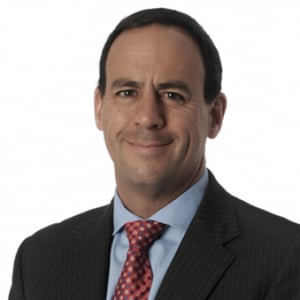
Shareholder, Greenberg Traurig LLP
Troy A. Eid focuses his litigation, mediation and transactional practice on government enforcement, investigations and compliance, environmental law, energy and natural resource development, and Federal Indian law and Native American and Alaska Native tribal law. Troy is a trusted advocate and mediator in the Rocky Mountain West and in federal, state and tribal trial and appellate courtrooms across the country.
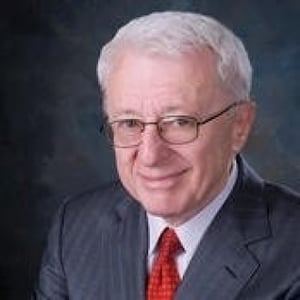
Director, Project for International Religious Liberty, Hudson Institute
Michael J. Horowitz is director of Hudson Institute's Project for Civil Justice Reform and Project for International Religious Liberty. He served as general counsel for the Office of Management and Budget (OMB) under the Reagan Administration, and has taught law at the University of Mississippi and Georgetown. He has also practiced private law as a partner at national law firms. Horowitz joined Hudson Institute as a Senior Fellow where he has put together left-right coalitions on a wide variety of foreign and domestic issues. He has written frequently and is regularly called to testify and consult with Congress.

United States Court of Appeals, Fourth Circuit
James Harvie Wilkinson III is an Article III federal judge on the United States Court of Appeals for the Fourth Circuit. He joined the Court in 1984 after being nominated by President Ronald Reagan.
Born in New York City, New York, Wilkinson graduated from Yale University with his Bachelor's degree in 1967. Wilkinson served in the United States Army from 1968 to 1969 and received his Juris Doctor degree from the University of Virginia School of Law in 1972.
On the recommendation of Virginia U.S. Senator John Warner, Wilkinson was nominated to the United States Court of Appeals for the Fourth Circuit by President Ronald Reagan on January 30, 1984 to a seat vacated by John Butzner, Jr.,. Wilkinson was confirmed by the Senate on August 9, 1984 on a Senate vote and received commission on August 13, 1984. Wilkinson served as the Chief Judge of the Court from 1996 to 2003.

Dr. John Eastman is the former Henry Salvatori Professor of Law & Community Service and former Dean at Chapman University's Dale E. Fowler School of Law, where he had been a member of the faculty since 1999, specializing in Constitutional Law, Legal History, and Property. He is a founding director of the Center for Constitutional Jurisprudence, a public interest law firm affiliated with the Claremont Institute that he founded in 1999. He has a Ph.D. in Government from the Claremont Graduate School and a J.D. from the University of Chicago Law School, and a B.A. in Politics and Economics from the University of Dallas. He serves as the Chairman of the Board of the National Organization for Marriage.
Prior to joining the Chapman law faculty, Dr. Eastman served as a law clerk to the Honorable Clarence Thomas, Associate Justice, Supreme Court of the United States, and to the Honorable J. Michael Luttig, Judge, United States Court of Appeals for the Fourth Circuit and practiced law with the national law firm of Kirkland & Ellis. Dr. Eastman has also represented numerous clients in important constitutional law matters and has argued before the Supreme Court. On behalf of the Claremont Institute Center for Constitutional Jurisprudence, he has participated as amicus curiae before the Supreme Court of the United States, U.S. Courts of Appeals, and State Supreme Courts in more than one hundred cases of constitutional significance, including Boy Scouts of America v. Dale, Zelman v. Simmons-Harris (the school vouchers case), Kelo v. New London, Ct. (eminent domain), and Van Orden v. Perry (the 10 Commandments case). He has also appeared as an expert legal commentator on numerous television and radio programs, including C-SPAN, Fox News, PBS, NewsHour, and The O'Reilly Factor.
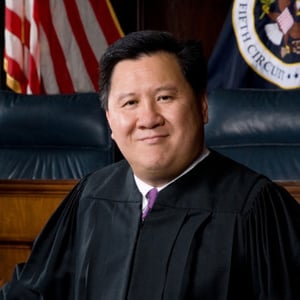
Judge, United States Court of Appeals, Fifth Circuit
James C. Ho is a Circuit Judge on the U.S. Court of Appeals for the Fifth Circuit. Before taking the bench on January 4, 2018, he was a partner and co-chair of the national Appellate and Constitutional Law practice group of Gibson, Dunn & Crutcher LLP.
As an appellate litigator for over a decade, including three years as the Solicitor General of Texas, Judge Ho presented 50 oral arguments in federal and state courts nationwide. He won numerous appeals, including three merits cases at the U.S. Supreme Court. He was routinely ranked among the nation’s leading lawyers by Benchmark, Chambers, Law360, The Legal 500, and The National Law Journal, among other publications. His work has been cited favorably by courts at every level of both the federal and state judiciaries. He won a Best Brief Award from the National Association of Attorneys General for every year that he served as solicitor general, and he is the only state solicitor general in history to be invited by the U.S. Supreme Court to express the views of a state.
Judge Ho has served in all three branches of the federal government. On the Senate Judiciary Committee, he served as chief counsel of the Subcommittees on the Constitution and Immigration under Senator John Cornyn. At the Justice Department, he served as Special Assistant to the Assistant Attorney General for Civil Rights and an attorney-advisor at the Office of Legal Counsel. He clerked for Judge Jerry E. Smith of the U.S. Court of Appeals for the Fifth Circuit and Justice Clarence Thomas of the U.S. Supreme Court.
His record of public service also includes appointments as vice chair of the Federal Judicial Evaluation Committee in Texas and co-chair of the National Asian Pacific American Bar Association Judiciary Committee, and as a member of the U.S. Magistrate Judge Merit Selection Panel for the Northern District of Texas, the U.S. delegation to the United Nations Committee on the Elimination of Racial Discrimination, and the Continuity of Government Commission.
In addition, Judge Ho has served as an Adjunct Professor of Law at the University of Texas School of Law, where he taught seminars on U.S. Supreme Court Litigation and Religious Liberty. He has authored numerous articles in respected law reviews nationwide, including an annual feature on exemplary judicial writing for The Green Bag Almanac & Reader. He previously served as senior editor of The Green Bag and as co-editor of Pub. L. Misc.
Judge Ho graduated from Stanford University with honors and a B.A. in Public Policy in 1995, and the University of Chicago Law School with high honors in 1999. Before law school, he was a legislative aide to California State Senator Quentin Kopp. He and his wife Allyson live in Dallas, Texas, with their twin daughter and son.
Senior Fellow and Director of Constitutional Studies, Manhattan Institute
Ilya Shapiro is a senior fellow and director of constitutional studies at the Manhattan Institute and a contributing editor of City Journal. Previously he was executive director and senior lecturer at the Georgetown Center for the Constitution, and before that a vice president of the Cato Institute.
Shapiro is the author of Lawless: The Miseducation of America’s Elites (2025) and Supreme Disorder: Judicial Nominations and the Politics of America’s Highest Court (2020), coauthor of Religious Liberties for Corporations? (2014), and editor of 11 volumes of the Cato Supreme Court Review (2008-18). He has contributed to a variety of academic, popular, and professional publications, including the Wall Street Journal, Harvard Journal of Law & Public Policy, Washington Post, Los Angeles Times, USA Today, National Review, and Newsweek. He also regularly provides commentary for various media outlets, writes the Shapiro’s Gavel newsletter on Substack, and once appeared on the Colbert Report.
Shapiro has testified many times before Congress and state legislatures and has filed more than 500 amicus curiae “friend of the court” briefs in the Supreme Court. He lectures regularly on behalf of the Federalist Society, is a member of the board of fellows of the Jewish Policy Center, was an inaugural Washington Fellow at the National Review Institute, and has been an adjunct law professor at the George Washington University and University of Mississippi. He is also the chairman of the board of advisers of the Mississippi Justice Institute, a barrister in the Edward Coke Appellate Inn of Court, and a former member of the Virginia Advisory Committee to the U.S. Commission on Civil Rights.
Earlier in his career, Shapiro was a special assistant/adviser to the Multi-National Force in Iraq on rule-of-law issues and practiced at Patton Boggs and Cleary Gottlieb. Before entering private practice, he clerked for Judge E. Grady Jolly of the U.S. Court of Appeals for the Fifth Circuit. He holds an AB from Princeton University, an MSc from the London School of Economics, and a JD from the University of Chicago Law School.
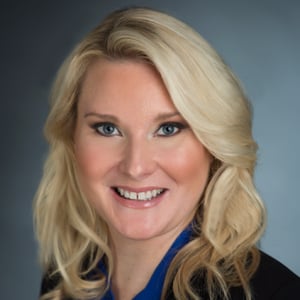
President, Constitutional Accountability Center
Elizabeth is Constitutional Accountability Center’s President. From 2008-2016, she served as CAC's Chief Counsel, representing the Center as well as clients including preeminent constitutional scholars and historians, state and local government organizations, and groups such as the League of Women Voters and the AARP. She frequently participates in Supreme Court litigation and her legal brief writing has been recognized as “exemplary” by the Green Bag Almanac & Reader. Elizabeth has also argued several important cases in the federal courts of appeals on a range of issues, including immigration law, habeas corpus, and sovereign immunity. She joined CAC from private practice at Quinn Emanuel Urquhart & Sullivan in San Francisco, where she was an attorney working with former Stanford Law School Dean Kathleen Sullivan in the firm’s Supreme Court/appellate practice. Previously, Elizabeth was a supervising attorney and teaching fellow at the Georgetown University Law Center appellate litigation clinic, a law clerk for Judge James R. Browning of the U.S. Court of Appeals for the Ninth Circuit, and a lawyer at Pillsbury Winthrop Shaw Pittman, a law firm in Washington. She has appeared as a legal expert for NBC, ABC, PBS, CNN, Fox News, the BBC, Current TV, and NPR, among other outlets. Elizabeth has been quoted extensively in the print media and is a regular contributor to the ABA’s Preview of United States Supreme Court Cases. Her writings have appeared in The New York Times, Reuters, USA Today, Politico, CNN.com, Slate, and on numerous political and legal blogs, such as Huffington Post, SCOTUSblog, and ACSblog. She has also published in the UCLA Journal of Environmental Law & Policy, Syracuse Law Review, The Cato Institute’s Supreme Court Review, and the Yale Journal of International Law. Elizabeth is a graduate of Yale Law School.

Emanuel S. Heller Professor of Law, University of California at Berkeley; Thomas Smith Senior Research Fellow, The Civitas Institute, University of Texas at Austin
John Yoo is the Emanuel Heller Professor of Law at the University of California at Berkeley. He is also the Thomas Smith Senior Research Fellow, Civitas Institute, at the University of Texas at Austin. He is also a Nonresident Senior Fellow at the American Enterprise Institute.
His most recent book, The Politically Incorrect Guide to the Supreme Court, co-authored with Robert Delahunty, was published in 2023. Professor Yoo’s other books include Defender-in-Chief: Trump’s Fight for Presidential Power; Striking Power: How Cyber, Robots, and Space Weapons Change the Rules for War; Point of Attack: Preventive War, International Law, and Global Welfare; and Crisis and Command: A History of Executive Power from George Washington to George Bush.
He is a co-author of volumes 1 and 2 of R. Rossum, G. Tarr, V. Munoz & J. Yoo American Constitution Law (Routledge, 2026), and a co-editor of the eight-volume series on the 250th anniversary of the American Revolution, We Hold These Truths, with Yuval Levin and Adam White of the American Enterprise Institute.
Professor Yoo has published more than 100 articles in academic journals on subjects including national security, constitutional law, international law, and the Supreme Court. He also regularly contributes to the editorial pages of the Wall Street Journal, New York Times, Washington Post, Los Angeles Times, and National Review, among others.
Professor Yoo has served in all three branches of government. He was an official in the U.S. Department of Justice, where he worked on national security and terrorism issues after the 9/11 attacks. He served as general counsel of the U.S. Senate Judiciary Committee. He has been a law clerk for Supreme Court Justice Clarence Thomas and federal appeals Judge Laurence Silberman. He has been a visiting professor at the University of Texas at Austin’s School of Civic Leadership, Seoul National University, the Interdisciplinary Center Herzliya, Keio University, Trento University, the University of Chicago, and the Free University of Amsterdam.
Professor Yoo supervises the Public Law and Policy Program and the California Constitution Center. He also serves on the boards of Founding Forward, the Washington Legal Foundation, the Pacific Legal Foundation, the Ulysses Grant Institute, the Federalist Society’s Separation of Powers and Federalism Division, the Universidad Cientifica del Sur Law School, and the Asia-Pacific Law Institute at Seoul National University. He is a winner of the Federalist Society’s Paul Bator award and the Heritage Foundation’s Edwin Meese III Originalism Lectureship.
Professor Yoo graduated from Yale Law School and summa cum laude from Harvard College.
Partner, Jones Day
Christopher DiPompeo's practice focuses on complex litigation and appellate advocacy in the context of business restructurings and chapter 11 bankruptcies. He has significant experience across a variety of industries, including financial services, government contracts, gaming, and municipal government. Chris regularly counsels clients in connection with issues relating to bankruptcy jurisdiction and venue, the automatic stay, post-petition financing, and complex commercial contracts.
In 2013 and 2014, Chris was a member of the Jones Day team representing the City of Detroit, Michigan in its historic chapter 9 bankruptcy case. He played a significant role in many aspects of the chapter 9 case, including litigation over the City's eligibility for bankruptcy, its request to obtain post-petition financing, and confirmation of its plan of adjustment. Chris also played a lead role in the City's lawsuit challenging the legality of $1.4 billion of pension obligation certificates of participation issued by the City in 2005 and 2006. Most recently, he has represented major creditors of Energy Future Holdings Corp., Caesars Entertainment Operating Company, General Motors, and the Commonwealth of Puerto Rico.
Prior to joining Jones Day, Chris served as a law clerk for the Chief Justice of the United States, John G. Roberts Jr., and for Judge Paul V. Niemeyer of the United States Court of Appeals for the Fourth Circuit. In 2012, he was awarded a Temple Bar Scholarship, through which he traveled to London to work alongside some of the most senior members of the English bar and judiciary.
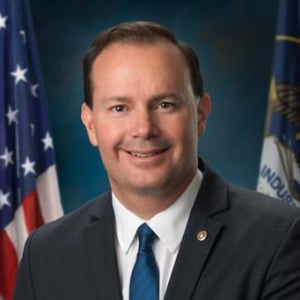
United States Senator, Utah
Elected in 2010 as Utah's 16th Senator, Mike Lee has spent his career defending the basic liberties of Americans and Utahns as a tireless advocate for our founding constitutional principles.
Senator Lee acquired a deep respect for the Constitution early on. His father, Rex Lee, who served as the Solicitor General under President Ronald Reagan, would often discuss varied aspects of judicial and constitutional doctrine around the kitchen table, from Due Process to the uses of Executive Plenary Power. He attended most of his father's arguments before the U.S. Supreme Court, giving him a unique, hands-on experience and understanding of government up close.
Lee graduated from Brigham Young University with a Bachelor of Science in Political Science, and served as BYU's Student Body President in his senior year. He graduated from BYU's Law School in 1997 and went on to serve as law clerk to Judge Dee Benson of the U.S. District Court for the District of Utah, and then with future Supreme Court Justice Judge Samuel A. Alito, Jr. on the U.S. Court of Appeals for the Third Circuit.
Lee spent several years as an attorney with the law firm Sidley & Austin specializing in appellate and Supreme Court litigation, and then served as an Assistant U.S. Attorney in Salt Lake City arguing cases before the U.S. Court of Appeals for the Tenth Circuit.
Lee served the state of Utah as Governor Jon Huntsman's General Counsel and was later honored to reunite with Justice Alito, now on the Supreme Court, for a one-year clerkship. He returned to private practice in 2007.
Throughout his career, Lee earned a reputation as an outstanding practitioner of the law based on his sound judgment, abilities in the courtroom, and thorough understanding of the Constitution.
Today, Lee fights to preserve America's proud founding document in the United States Senate. He advocates efforts to support constitutionally limited government, fiscal responsibility, individual liberty, and economic prosperity.
Lee is a member of the Judiciary Committee, and serves as Chairman of the Antitrust, Competition Policy and Consumer Rights Subcommittee protecting business competition and personal freedom.
He also oversees issues critical to Utah as the Chairman of the Water and Power Subcommittee of the Energy and Natural Resources Committee. He serves on the Commerce Committee and the Joint Economic Committee, as well.
In the 114th Congress, Lee also began his tenure as Chairman of the Senate Steering Committee, where he works with his Republican colleagues in the Senate to introduce bold and innovative solutions to issues facing the American people.
Lee and his wife Sharon live in Alpine, Utah, with their three children. He is a member of The Church of Jesus Christ of Latter-day Saints and served a two-year mission for the Church in the Texas Rio Grande Valley.
Senior Fellow, The Manhattan Institute
Kay S. Hymowitz is the William E. Simon Fellow at the Manhattan Institute and a contributing editor of City Journal. She writes extensively on childhood, family issues, poverty, and cultural change in America. Hymowitz is the author of Manning Up: How the Rise of Women Has Turned Men into Boys (2011), Marriage and Caste in America: Separate and Unequal Families in a Post-Marital Age (2006), andLiberation’s Children: Parents and Kids in a Postmodern Age (2004), among others. She has written for the New York Times, Washington Post, Wall Street Journal, The New Republic, New York Newsday, Public Interest, The Wilson Quarterly, and Commentary.
Hymowitz has presented her work at many conferences, sits on the board of the journals National Affairs and The Future of Children, and has been interviewed on numerous radio and TV programs. Hymowitz holds a B.A. in English literature from Brandeis University and an M.A. in English literature from Columbia University.
President, University of Virginia School of Law Student Chapter
Dan graduated summa cum laude from the University of Ottawa in 2013 with a Specialization in Economics and Minor in History. At UVA, he is a Hardy Cross Dillard Scholar and serves on the Editorial Board of the Journal of Law and Politics. Dan spent his 2L summer at Abrams & Bayliss LLP, a litigation boutique in Wilmington, Delaware.

Judge, United States Court of Appeals, D.C. Circuit
Judge Randolph was confirmed by the Senate and appointed to the United States Court of Appeals for the District of Columbia Circuit by President George H. W. Bush in July 1990.
Judge Randolph received his B.S. degree in 1966 from Drexel University, majoring in economics and basic engineering. At Drexel, he was president of the debate society, vice president of the Student Senate, and a member of the varsity wrestling squad. In 1969, he received his J.D. from the University of Pennsylvania, summa cum laude. Judge Randolph ranked first in his law school class all three years and was managing editor of the Law Review.
After graduation, Judge Randolph served as a law clerk to Judge Henry J. Friendly of the United States Court of Appeals for the Second Circuit in New York.
Admitted to the California Bar in 1970 (and to the District of Columbia bar in 1973), Judge Randolph worked as Assistant to the Solicitor General, U.S. Department of Justice, in Washington, D.C., 1970-1973.
After two years in private practice, Judge Randolph was named Deputy Solicitor General of the United States, a position he held from 1975-1977.
In 1979, Judge Randolph was appointed Special Counsel to the Committee on Standards of Official Conduct (the Ethics Committee) of the United States House of Representatives, remaining in this position until 1980.
In the 1980s, Judge Randolph held a number of positions while in private practice, including Special Assistant Attorney General for the states of New Mexico (1985 90), Utah (1986-1990) and Montana (1983-1990). He also served as a Member of the Advisory Panel of the Federal Courts Study Committee.
From 1971-1990, Judge Randolph argued 23 times in the United States Supreme Court, winning 20 of his cases.
As an Adjunct Professor of Law at Georgetown University Law Center from 1974-1978 he taught courses in civil procedure and injunctions. In 1992 he taught a course in constitutional law. He is a Distinguished Adjunct Professor of Law at George Mason School of Law and for the past ten years has been teaching First Amendment law. He also serves on the Judicial Advisory Board of the George Mason University Law and Economics Center.
From 1993 through 1995 Judge Randolph was a member of the Committee on Codes of Conduct of the Judicial Conference of the United States, and from 1995 to 1998 served as the Committee's chairman. He also served as the judicial liaison to the American Bar Association’s Administrative Law Section.
Judge Randolph is a member of the Board of Visitors at Drexel University Law School and was named to the “Drexel One Hundred” as a leading alumnus. In 2002 he was presented the James Wilson Award by the University of Pennsylvania Law School. In November 2005 he delivered the Fifth Annual Barbara K. Olson Memorial Lecture at the Annual Lawyers Convention of the Federalist Society. He has published numerous articles, the most recent of which is in the June 2006 issue of the Harvard Journal of Law and Public Policy.
Judge Randolph is married to the Honorable Eileen J. O’Connor, formerly Assistant Attorney General, Tax Division, U.S. Department of Justice. His son John Trevor Randolph is an investment banker in New York. His daughter Cynthia Lee Randolph is an artist living in San Francisco.
President, University of Virginia School of Law Student Chapter
Founder and President, Center for Neighborhood Enterprise
Robert (Bob) Woodson is Founder and President of the Center for Neighborhood Enterprise and one of America’s most influential leaders on issues of poverty and upward mobility. He chose the word “enterprise” in naming the organization because he believes strongly that market-based principles should also operate in the social economy.
Woodson was instrumental in paving the way for resident management and ownership of public housing, brought together task forces of grassroots groups to advise the 104th Congress, the Pennsylvania Legislature, and the Wisconsin Assembly on welfare reform, and helped create Violence-Free Zones that operate in many of the nation’s most troubled schools and communities.
More recently, he has taken Wisconsin Congressman Paul Ryan on a “listening and learning” tour of some of America’s most impoverished neighborhoods in an effort to move beyond the traditional conservative and liberal understanding of how to address the needs of the poor.
Woodson is frequently featured as a social commentator in print and on-air media, including The News Hour with Jim Lehrer, The O’Reilly Factor, the Garrison Show and other national and local broadcasts. He is the only person ever to receive both the liberal and conservative world’s most prestigious awards – the John D. and Catherine T. MacArthur “Genius” Fellowship and the Lynde and Harry Bradley Foundation Prize, as well as the Presidential Citizens Medal.
He has written several books, including The Triumphs of Joseph: How Today’s Community Healers are Reviving Our Streets and Neighborhood.
Arnold I. Shure Professor of Law, University of Chicago Law School
Deputy Editorial Page Editor, Foreign Affairs Columnist, The Wall Street Journal
Bret Stephens writes “Global View,” the weekly foreign-affairs column of The Wall Street Journal, for which he won the 2013 Pulitzer Prize for distinguished commentary. He is the paper’s deputy editorial-page editor, responsible for the opinion content of its overseas editions, as well as a member of the editorial board. Previously, he was editor-in-chief of the Jerusalem Post, a position he assumed in 2002 at the age of 28. He was raised in Mexico City, educated at the University of Chicago and the London School of Economics, and lives with his family in New York.

Religious Liberty and the Court: Looking Ahead to the 2024-2025 Term
Mark L. Rienzi, William L. Saunders
The Federalist Society is proud to host Mark Rienzi, President of the Becket Fund and...
Topics
Religious Advertising Bans: Has the Time Finally Arrived for Supreme Court Review?
In theory, the First Amendment prevents the government from banning speech based on viewpoint. But...
Luncheon & Remarks
Roy Kalman Altman
Zionism: An Indigenous People’s Fight for its Ancient Homeland Judge Altman led us on a...
Feddie Night Festivus: Shapiro vs. Everybody
Ilya Shapiro
The Federalist Society's Student Division &University of Tennessee College of Law Student Chapter present Feddie Night...
Did the Law Cause Columbine? [Archive Collection]
Ann Beeson, Troy A. Eid, Michael J. Horowitz, William F. Kilpatrick, George Nicholson, James Rapp, J. Harvie Wilkinson
On August 13, 1999, the Federalist Society's Criminal Law & Procedure Practice Group sponsored a...
Federalism & Separation of Powers: Emergency Powers and the Rule of Law
John C. Eastman, James C. Ho, Ilya Shapiro, Elizabeth B. Wydra, John C. Yoo
On November 13, 2020, The Federalist Society's Federalism & Separation of Powers Practice Group hosted...
Courthouse Steps Decision Teleforum: The American Legion v. American Humanist Association
Christopher DiPompeo
For decades, the law surrounding the constitutionality of monuments and memorials has been in disarray,...
Written Out of History: The Forgotten Founders Who Fought Big Government
Mike S. Lee
In the earliest days of our nation, a handful of unsung heroes—including women, slaves, and...
Panel II: The Family
Kay S. Hymowitz, Dan McBride, A. Raymond Randolph, Robert M. Smith, W Wilcox, Robert L. Woodson, Mary Anne Case
It is oddly controversial to identify the breakdown of the family unit as a central...
America In Retreat: The New Isolationism and the Coming Global Disorder - Podcast
Bret Stephens
In December 2011 the last American soldier left Iraq. “We’re leaving behind a sovereign, stable,...