
William Cranch Research Professor of Law, The George Washington University Law School
Bradford R. Clark teaches and writes in the areas of civil procedure, constitutional structure, federal courts, and foreign relations. His scholarship has appeared in leading journals including California Law Review, Columbia Law Review, Harvard Law Review, Texas Law Review, University of Chicago Law Review, University of Pennsylvania Law Review, and Virginia Law Review. His book, The Law of Nations and the United States Constitution (co-authored with Anthony J. Bellia Jr.), was published in 2017 by Oxford University Press. Professor Clark has been a visiting professor at Harvard Law School and the University of Michigan Law School. Professor Clark also served as a special master appointed by the Supreme Court to make recommendations in an original action between states, Alabama, et al. v. North Carolina, Orig. No. 132.
Before joining the law school faculty, Professor Clark spent several years practicing law in the Washington, D.C. office of Gibson, Dunn & Crutcher, where he specialized in trial and appellate litigation. Previously, he served as an attorney adviser in the Department of Justice’s Office of Legal Counsel, where he provided legal advice to the president, the attorney general, and the heads of executive departments. Professor Clark also served as a law clerk to The Honorable Robert H. Bork of the U.S. Court of Appeals for the D.C. Circuit and to The Honorable Antonin Scalia of the Supreme Court of the United States.
Senior Director, Liberty & National Security Program, Brennan Center for Justice at New York University Law School
Elizabeth (Liza) Goitein is senior director of the Brennan Center for Justice’s Liberty & National Security Program.
Goitein is a nationally-recognized expert on presidential emergency powers, government surveillance, and government secrecy. Her writing has been featured in major newspapers and magazines including the New York Times, Washington Post, Wall Street Journal, USA Today, Los Angeles Times, The Atlantic Magazine, and The New Republic, and she has appeared frequently on MSNBC, CNN, and NPR. She has testified on several occasions before the Senate and House Judiciary Committees.
Before coming to the Brennan Center, Goitein served as counsel to Senator Russ Feingold, chairman of the Constitution Subcommittee of the Senate Judiciary Committee, and as a trial attorney in the Federal Programs Branch of the Civil Division of the Department of Justice. Goitein graduated from Yale Law School and clerked for the Honorable Michael Daly Hawkins on the U.S. Court of Appeals for the Ninth Circuit. In 2021–22, she was a member of the inaugural class of Senior Practitioner Fellows at the University of Chicago’s Center for Effective Government.
Judge, United States Court of Appeals, Fifth Circuit
Judge Smith was appointed U.S. Circuit Judge for the Fifth Circuit by President Reagan and entered on duty in January 1988. He attended public schools in Lubbock, Texas, and graduated from Yale University, receiving a B.A. in 1969 and a J.D. in 1972.
Judge Smith was a Law Clerk to U.S. District Judge Halbert Woodward, Northern District of Texas, 1972-1973; with the Houston law firm of Fulbright & Jaworski as an Associate, 1973-1981, and as Partner, 1981-1984; and as City Attorney, City of Houston, 1984-1988. He was Chairman, Civil Service Commission, City of Houston, 1982-1984; and a Director, Harris County Housing Authority, 1978-1980.
Judge Smith lives in Houston and is married to Mary Jane Smith and has four children: Ruth Ann, Clark, J.J., and Brandon. He formerly was Chair of the Advisory Committee on Federal Rules of Evidence of the Judicial Conference of the United States. He assists LexisNexis/Matthew Bender & Co. in periodic revisions of several chapters of Moore’s Federal Practice.
Agnes Williams Sesquicentennial Professor of Federal Courts, Georgetown Law
Stephen I. Vladeck is a professor of law at the Georgetown University Law Center, and is a nationally recognized expert on the federal courts; the Supreme Court; national security law; and military justice.
Vladeck is author of the New York Times bestselling book, “The Shadow Docket: How the Supreme Court Uses Stealth Rulings to Amass Power and Undermine the Republic,” which won the 2023 Writers’ League of Texas Book Award for Non-Fiction and was a finalist for the 2024 ABA Silver Gavel Award for Media and the Arts. Vladeck is also a highly regarded appellate advocate, having argued three cases before the U.S. Supreme Court and over a dozen before various lower federal civilian and military courts. He has received numerous awards for his influential and widely cited legal scholarship, his prolific popular writing, his teaching, and his service to the legal profession—including the 2024 University of Texas President’s Research Impact Award and his selection by the Order of the Coif to serve as its Distinguished Visiting Professor for 2025.
Vladeck is CNN’s Supreme Court analyst and editor and author of “One First,” a popular weekly newsletter about the Supreme Court. Together with Bobby Chesney, Vladeck co-hosts the popular and award-winning “National Security Law Podcast.” He is also a co-author of Aspen Publishers’ leading national security law and counterterrorism law casebooks. And he is a member of the Board of Trustees of EarthJustice—the nation’s premier nonprofit public interest environmental law organization.
Vladeck graduated from Yale Law School in 2004—where he was executive editor of the Yale Law Journal and won the Harlan Fiske Stone Prize for outstanding moot court oralist and shared the Potter Stewart Prize for best moot court team performance. After law school, he clerked for the Honorable Marsha S. Berzon on the U.S. Court of Appeals for the Ninth Circuit and the Honorable Rosemary Barkett on the U.S. Court of Appeals for the Eleventh Circuit. He earned a B.A. summa cum laude with Highest Distinction in History and Mathematics from Amherst College in 2001—where he wrote his senior thesis on “Leipzig’s Shadow: The War Crimes Trials of the First World War and Their Implications from Nuremberg to the Present.” A native New Yorker and hopeless Mets fan, Vladeck lives in the District with his wife, Karen (Founder and Managing Partner of Risepoint Search Partners); their daughters, Madeleine and Sydney; and their eleven-year-old pug, Roxanna.
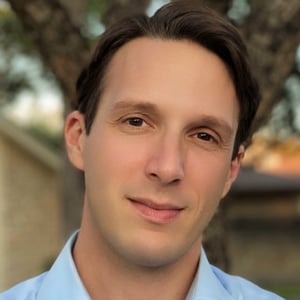
Senior Lecturer; Director, The Robert S. Strauss Center for International Security and Law, The University of Texas at Austin School of Law
Adam Klein is Director of the Strauss Center and Director of Strauss’ Program on Technology, Security, and Global Affairs. Adam also serves as a Senior Lecturer at the School of Law. Before joining the Strauss Center, Adam served as Chairman of the United States Privacy and Civil Liberties Oversight Board, the independent, bipartisan federal agency responsible for overseeing counterterrorism programs at the NSA, FBI, CIA, Department of Homeland Security, and other federal agencies. As the Board’s Senate-confirmed Chairman, he oversaw its oversight and advice engagements with other federal agencies, while also serving as the Board’s chief executive officer.
Before entering government, Adam was the Robert M. Gates Senior Fellow at the Center for a New American Security, a bipartisan national-security research institution in Washington, DC. There, his research focused on government surveillance, intelligence powers, and national security law. Previously, Adam practiced law at Wilmer Cutler Pickering Hale & Dorr, LLP and served as a law clerk to Justice Antonin Scalia of the U.S. Supreme Court and Judge Brett Kavanaugh of the U.S. Court of Appeals for the D.C. Circuit. He has also worked on national-security policy at the RAND Corporation, the 9/11 Public Discourse Project (the non-profit successor to the 9/11 Commission), and in the U.S. Congress. He received his BA from Northwestern University and his JD from Columbia Law School.
Adam is a former Council on Foreign Relations International Affairs Fellow and Robert Bosch Foundation Fellow in Berlin. He speaks German and French.
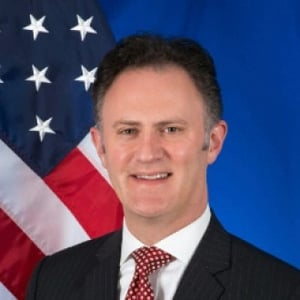
Founder and Principal, Fillmore Global Strategies LLC
Ambassador Nathan A. Sales is the founder and principal of Fillmore Global Strategies LLC, a consultancy that provides legal and strategic advisory services on matters at the intersection of law, policy, and diplomacy.
From 2017 to 2021, Ambassador Sales served at the U.S. Department of State as Under Secretary for Civilian Security, Democracy, and Human Rights (acting). He oversaw nine bureaus and offices led by Senate-confirmed principals, with 1,300 employees and a combined foreign assistance budget of more than $5 billion annually, and the mission of preventing and countering threats to civilian security, including terrorism, mass atrocities, and violations of human rights and the rule of law.
Concurrently, Ambassador Sales was Ambassador-at-Large and Coordinator for Counterterrorism. After being nominated by the President and unanimously confirmed by the U.S. Senate, he was sworn in on August 10, 2017. He served as the principal adviser to the Secretary of State on international counterterrorism matters, and led the State Department’s Counterterrorism Bureau, a 200-person team with an annual foreign assistance budget of $400 million. He was also the Special Presidential Envoy to the Global Coalition to Defeat ISIS, leading U.S. relations with the 83-member Coalition and efforts to ensure the lasting defeat of ISIS in the Middle East and around the world.
While at the State Department, Ambassador Sales led the elements of the U.S. government’s China strategy promoting democratic values and human rights, including with respect to Hong Kong and Xinjiang. He oversaw the development and implementation of a wide range of U.S. government sanctions, including Global Magnitsky actions and Executive Order 13,936, targeting those responsible for undermining Hong Kong’s freedoms and autonomy. Ambassador Sales was the architect of the landmark 2017 UN Security Council Resolution 2396 on terrorist travel, and successfully pressed NATO to make counterterrorism a core Alliance mission. He led diplomatic engagements to persuade a dozen key partners in Europe and the Americas to designate Hizballah as a terrorist organization in its entirety. He launched the Western Hemisphere Counterterrorism Ministerial, in which heads of state and minister-level officials meet bianually to coordinate efforts against terrorist threats in the region. He led the U.S. government’s international efforts to combat white supremacist terrorism. Under his leadership, the State Department imposed terrorism sanctions on the Russian Imperial Movement – the first-ever U.S. designation of white supremacist terrorists.
Before joining the State Department, Ambassador Sales was Of Counsel at the law firm Kirkland & Ellis LLP (formerly Bancroft PLLC). He was also a tenured law professor, teaching and writing in the fields of administrative law, constitutional law, and national security law. His scholarship has been cited by the U.S. Supreme Court multiple times.
Ambassador Sales previously was Deputy Assistant Secretary for Policy at the U.S. Department of Homeland Security. He led DHS’s efforts to draft and implement legislation that strengthened the security of and expanded the Visa Waiver Program (which allows citizens of certain countries to travel to the United States without a visa). He headed the U.S. delegation in talks with seven countries to implement the new security measures and was the Secretary of Homeland Security’s Special Envoy to South Korea.
Ambassador Sales also served at the Office of Legal Policy at the U.S. Department of Justice, where he worked on regulatory initiatives, counterterrorism, and judicial confirmations. In 2005, he managed DOJ’s “war room” for the confirmation of Chief Justice John Roberts. He received the Attorney General’s Award for Exceptional Service – the Justice Department’s highest honor – for his role in drafting the USA PATRIOT Act, as well as the Attorney General’s Distinguished Service Award for his work on judicial confirmations.
In addition to his work at Fillmore Global Strategies, Ambassador Sales is a nonresident senior fellow at the Atlantic Council and a senior advisor at the Soufan Group, a global intelligence and security consultancy. He serves on a number of advisory boards, including for the Counter-Extremism Project (a nonprofit and nonpartisan international policy organization formed to combat the growing threat from extremist ideologies), the Secure Community Network (the official safety and security organization for the North American Jewish community), and the Sue J. Henry Center for Pre-Law Education at Miami University.
An Ohio native, Ambassador Sales received his B.A., summa cum laude, from Miami University in Oxford, Ohio, where he was elected to Phi Beta Kappa. He earned his J.D., magna cum laude, from Duke Law School, where he was Research Editor of the Duke Law Journal and joined the Order of the Coif. After law school, he clerked for the Honorable David B. Sentelle of the U.S. Court of Appeals for the DC Circuit.
Partner, Stone Pigman Walther Wittmann LLC
Mr. Thomson concentrates his practice in white collar criminal defense, government investigations, and corporate compliance. He has tried over 50 criminal trials to verdict in federal and state courts, and has experience in appellate litigation. His practice also includes civil litigation and information security. Prior to joining Stone Pigman, Mr. Thomson had a 23 year career as a federal prosecutor with the U.S. Department of Justice. He served on special assignment with the National Security Agency, where he worked on matters involving information assurance and intelligence collection.
Prior to private practice, Mr. Thomson was recognized numerous times by government agencies, including a Special Commendation Award given by the U.S. Attorney General for completing the Justice Department's Leadership Excellence and Achievement Program; Special Commendation by FBI Director for outstanding performance for successful corruption prosecution after Hurricane Katrina; Special Award from the U.S. Postal Service for prosecution of corrupt employee; Special Award by New Orleans Police Department, ATF and U.S. Department of Justice for his contributions to Project Exile; and Special Awards for Outstanding Contributions to Drug Law Enforcement from the Drug Enforcement Administration.
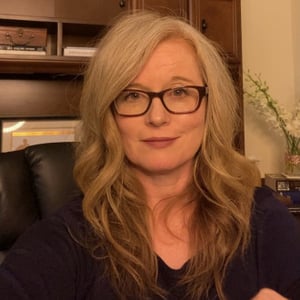
Executive Director of the Military Law and Policy Institute and AMVETS Legal Clinic
Professor Rotunda is regarded as a leading expert in military law and currently teaches Law of War and a Family Violence Clinic. She is the author of Honor Bound: Inside the Guantanamo Trials, published by Carolina Academic Press (2008). She directed the Clinic for Legal Assistance to Service Members at George Mason School of Law, where she and her students successfully represented military families in various legal disputes, including Physical Evaluation Boards and Traumatic Service Group Life Insurance Appeals. Rotunda has recovered hundreds of thousands of dollars for disabled troops.
Professor Rotunda began her career in the US Army JAG Corps and has since been recruited by the National Veterans Legal Services Program (NVLSP) to produce a series of instructional DVDs about military law. She has also authored a coordinating outline and co-authored NVLSP's forthcoming book regarding military administrative/disability proceedings, to be published by Lexis Nexis. She remains in the Army Reserves and holds the rank of Major. Rotunda has served in several missions related to the Global War on Terror: she served in Guantanamo Bay, was the legal advisor to a team of investigators pursuing leads in the war on terror, served as a prosecutor at the Office of Military Commissions, represented wounded troops at Walter Reed Army Medical Center, and was the lawyer assigned to Jessica Lynch after Lynch's rescue.
Professor Rotunda is an avid writer and advocate for soldiers. She has written op-eds for The Christian Science Monitor, The Wall Street Journal, The Chicago Tribune, and The Washington Times. She is a regular television and radio commentator regarding military law and the ongoing trials in Guantanamo Bay. She has appeared on more than 20 nationally-syndicated radio shows, including The Michael Reagan Show, The Dennis Miller Show, and the Jim Bohannon Show. Rotunda has also appeared on national and international television news programs, including Hannity's America, the Brit Hume Report, and Al Jazeera.
B.A., University of Wyoming; J.D., University of Wyoming College of Law
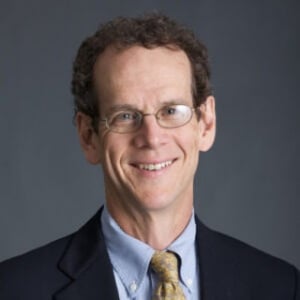
Hon. George J. Mitchell Professor in Law and Public Policy, Georgetown Law
David Cole is the Honorable George J. Mitchell Professor in Law and Public Policy and former National Legal Director of the American Civil Liberties Union (ACLU). He writes about and teaches constitutional law, freedom of speech, and constitutional criminal procedure. He is a regular contributor to The New York Review of Books and is the legal affairs correspondent for The Nation.
David has published widely in law journals and the popular press, including The Yale Law Journal, California Law Review, Stanford Law Review, The New York Times, The Washington Post, The New Yorker, The Atlantic, and The New Republic. He is the author or editor of ten books, several of which have won awards. Less Safe, Less Free: Why America Is Losing the War on Terror, published in 2007, and co-authored with Jules Lobel, won the Palmer Civil Liberties Prize for best book on national security and civil liberties. Enemy Aliens: Double Standards and Constitutional Freedoms in the War on Terrorism received the American Book Award in 2004. No Equal Justice: Race and Class in the American Criminal Justice System was named Best Non-Fiction Book of 1999 by the Boston Book Review and best book on an issue of national policy in1999 by the American Political Science Association.
David received his bachelor’s degree and law degree from Yale University. He worked as a staff attorney for the Center for Constitutional Rights from 1985 to 1990. He has continued to litigate as a professor and, from 2017 to 2024, as National Legal Director of the ACLU. He has litigated many significant constitutional cases at the Supreme Court, including Texas v. Johnson (1989), which extended First Amendment protection to flag burning; Bostock v. Clayton County (2020), which held that discrimination on the basis of sexual orientation and gender identity are prohibited forms of sex discrimination under Title VII; Mahanoy Area Sch. Dist. v. B.L. (2021), which protected student online speech from school discipline; and National Rifle Association v. Vullo (2024), which held that government officials violate the First Amendment when they use their regulatory authority to coerce private parties to blacklist a disfavored political group.
David has received two honorary degrees and numerous awards for his work, including the inaugural Norman Dorsen Presidential Prize from the ACLU for lifetime commitment to civil liberties. The late New York Times columnist Anthony Lewis called David “one of the country’s great legal voices for civil liberties today.” Nat Hentoff called him “a one-man Committee of Correspondence in the tradition of patriot Sam Adams.”
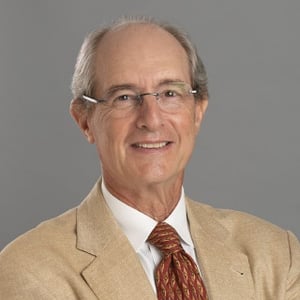
Professor of Practice, Cardozo School of Law
Gabor Rona received his B.A. from Brandeis University, J.D. from Vermont Law School and LL.M from Columbia Law School.
As the former International Legal Director of Human Rights First, he advised Human Rights First programs on questions of international law and coordinates international human rights litigation. He also represented Human Rights First with governments, intergovernmental and non-governmental organizations, the media and the public on matters of international human rights and international humanitarian law (the law of armed conflict).
Before Human Rights First, Rona was a Legal Advisor in the Legal Division of the International Committee of the Red Cross (ICRC) in Geneva. At the ICRC he focused on the application of international humanitarian and human rights law in the context of counter-terrorism policies and practices. He represented the ICRC in intergovernmental, nongovernmental, academic and public forums and his articles on the topic have appeared in the Financial Times, the Fletcher Forum on World Affairs and the Chicago Journal of International Law, among other publications. In addition, he represented the ICRC in connection with the establishment of international and other criminal tribunals, including the International Criminal Court. He has also taught International Humanitarian Law, International Human Rights Law and International Criminal Law at the International Institute of Human Rights in Strasbourg, France, the University Centre for International Humanitarian Law in Geneva, Switzerland and Columbia Law School in New York.
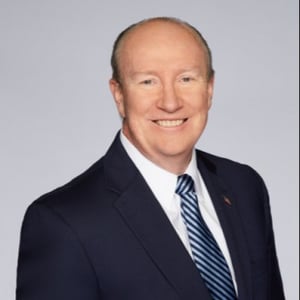
Senior Fellow, National Review
Bestselling author Andrew C. McCarthy is a contributing editor at National Review, a senior fellow at National Review Institute, and a Fox News contributor. He is a former Chief Assistant United States Attorney in the Southern District of New York and led the terrorism prosecution against the “Blind Sheikh” (Omar Abdel Rahman) and eleven other jihadists for conducting a war of urban terrorism against the United States that included the 1993 World Trade Center bombing and a plot to bomb New York City landmarks. During is 20-year career as a prosecutor, he received numerous honors, including the Justice Department’s highest awards. Andy speaks and writes widely on law and national security, radical Islam, politics, and culture. He has testified before Congress as an expert on issues of constitutional law, counterterrorism, and law-enforcement. He is a columnist for The Hill, and his essays and book reviews appear frequently at The New Criterion. His most recent New York Times bestselling book is Ball of Collusion (Encounter Books, 2019), about the Russiagate controversy (an updated version was published in 2020). His other books include Willful Blindness (2008), The Grand Jihad (2010), Spring Fever: The Illusion of Islamic Democracy (2012), and Faithless Execution (2014). He has also written several pamphlets in the Broadside series published by Encounter Books, most recently Islam and Free Speech (2015).
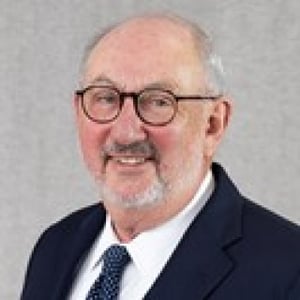
Partner, McGuireWoods LLP
George Terwilliger is co-head of the firm's white collar practice and leads the firm's Strategic Response and Crisis Management practice group. Following his fifteen years of public service in the US Department of Justice, where he began as a law clerk and concluded as Acting Attorney General, George has provided counsel in government and internal investigations, agency enforcement proceedings and in civil and criminal litigation. He has represented many of the nation's and the world's largest corporations, including major financial institutions, energy companies, public institutions as well as leading business and government officials, including members of the US Senate and House as well as cabinet officials. He has also represented lawyers and corporate legal departments in investigations. As a result of both his private sector work and government positions, George is called upon to provide counsel as well as commentary to government officials, Congress and private organizations on national security, homeland defense, terrorism, and other public policy and legal issues. George's work regularly involves providing counsel in the executive suites and boardrooms of major corporations.
In private practice for international law firms, George has represented national and international financial, energy, telecommunications, industrial and healthcare companies. He is a recognized expert in leading credible corporate internal investigations and his experience designing and executing both targeted and global legal compliance reviews has involved work in more than 60 countries around the globe. George is an expert on the Foreign Corrupt Practices Act and regularly provides counsel to companies addressing FCPA issues. No stranger to high stakes litigation and crisis events, George helped lead the Bush-Cheney legal team in the 2000 Florida vote recount, served as special outside counsel to a Senate committee investigating vote fraud allegations, served as counsel to an executive commission on gambling, and has represented many clients in politically charged election law and similar cases. He has guided corporations and individual through high stakes matters of intense public interest. He represented an incumbent president in First Amendment litigation concerning the right to have an inaugural prayer said in a public ceremony.
At the Department of Justice, George served for 10 years as a frontline federal prosecutor, handling hundreds of investigations, trials and appeals, including in white collar and national security cases. President Ronald Reagan appointed him as a U.S. attorney, and he next served as the deputy attorney general and as acting attorney general during the George H.W. Bush administration. As Deputy Attorney General, George ran the Justice Department's operations, overseeing all the nation's federal prosecutors, as well as the FBI and other law enforcement agencies. He also had leadership responsibility in several national and international crises, including a hostage-taking in a federal prison and the federal law enforcement response to domestic unrest in Los Angeles. In several instances, he personally handled negotiations of high-profile criminal and civil matters in the United States and abroad.
Partner, Sidley Austin LLP
BRADFORD A. BERENSON is a litigator in the Washington, D.C., office whose practice focuses on the defense of white collar criminal cases, investigations by government agencies and congressional committees, and other civil or constitutional matters that present unusual legal, public relations, or political risks. He has defended criminal cases at every stage of development, from internal investigations and grand jury proceedings through trials, sentencings, and appeals. Mr. Berenson’s practice has included criminal matters in the fraud, environmental, health care, pharmaceutical, and public corruption areas. In addition, Mr. Berenson served as a consultant to Independent Counsel David M. Barrett in the prosecution of former HUD Secretary Henry Cisneros. He has also handled a variety of civil and appellate cases in federal court.
From January 2001 through January 2003, Mr. Berenson served as Associate Counsel to the President of the United States. In the White House, he worked on a wide variety of legal, legislative and policy issues associated with the Bush Administration’s relations with Congress, its justice and domestic policy initiatives, and the war on terrorism. These included judicial selection, responses to congressional oversight and investigations, the USA Patriot Act, the Military Order authorizing the use of military commissions, detainee and anti-terrorism litigation, presidential action against terrorist financing, and the creation of the new Department of Homeland Security.
Mr. Berenson has also provided commentary on legal matters in the mainstream media, publishing articles in the Wall Street Journal, Los Angeles Times and Washington Times and making appearances on news and public affairs programming on ABC, NBC, CBS, PBS, NPR, CNN and Fox News Channel. He was a consultant to ABC News in connection with the departures of Chief Justice Rehnquist and Justice O’Connor from the Supreme Court and the nominations of Chief Justice Roberts, Harriet Miers and Justice Alito.
Mr. Berenson holds a B.A., summa cum laude, from Yale University, and a J.D., magna cum laude, from Harvard Law School, where he was Supreme Court editor of the Harvard Law Review. Following graduation, he clerked for Judge Laurence H. Silberman of the U.S. Court of Appeals for the District of Columbia Circuit and Justice Anthony M. Kennedy of the United States Supreme Court.
Partner, McGuireWoods LLP
Andrew is a former Supreme Court clerk for Justice Sandra Day O’Connor and a former federal prosecutor with more than 25 years of experience in civil and criminal litigation. He represents clients in federal and state courts in complex civil litigation and in rulemaking and investigations before numerous federal and state agencies, including the Department of Justice, Environmental Protection Agency, Federal Trade Commission, Federal Election Commission, Federal Communications Commission and state attorneys general.
Professor from Practice, Georgetown University Law Center
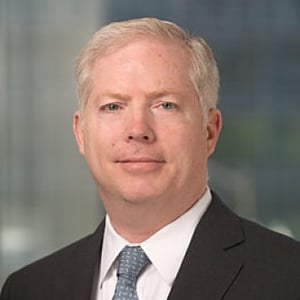
Adjunct Scholar and Former Director, Project On Criminal Justice, Cato Institute
Tim Lynch is an attorney specializing in criminal law, constitutional law, and civil liberties. He is an adjunct scholar at the Cato Institute and the former director of Cato’s Project on Criminal Justice. His research interests include all aspects of constitutional criminal procedure, overcriminalization, the drug war, and police and prosecutorial misconduct. In 2000, he served on the National Committee to Prevent Wrongful Executions. Lynch also prepares amicus briefs before appellate courts and the U.S. Supreme Court in cases involving constitutional rights. He is the editor of In the Name of Justice: Leading Experts Reexamine the Classic Article “The Aims of the Criminal Law” and After Prohibition: An Adult Approach to Drug Policies in the 21st Century.
Lynch has published a variety of articles in both the law journals and in opinion pieces for the New York Times, the Washington Post, the Wall Street Journal, the Los Angeles Times, and other newspapers. He has appeared on The PBS NewsHour, NBC Nightly News, ABC World News Tonight, and C-SPAN’s Washington Journal. Lynch is a member of the Virginia, District of Columbia, and Supreme Court bars. He earned both a BS and a JD from Marquette University.
Mr. Lynch can be reached via his personal website.

Laurence A. Tisch Professor of Law and Director, Classical Liberal Institute, New York University School of Law; Director, Classical Liberal Institute, Civitas Institute University of Texas at Austin
Richard A. Epstein is the inaugural Laurence A. Tisch Professor of Law at NYU School of Law. Prior to his joining the faculty, he was a visiting law professor at NYU from 2007 through 2009. He served as the Peter and Kirstin Bedford Senior Fellow at the Hoover Institution from 2000 to 2024. Since 2024 to the present he is a senior lecturer at the Civitas Institute at the University of Texas—Austin. Epstein is also the James Parker Hall Distinguished Service Professor of Law Emeritus and a senior lecturer at the University of Chicago. His initial law school appointment was at the University of Southern California from 1968 to 1972. Epstein received an LL.D., h.c. from the University of Ghent, 2003. He has been a member of the American Academy of Arts and Sciences since 1985 and was a Senior Fellow of the Center for Clinical Medical Ethics at the University of Chicago Division of Biological Sciences, also from 1983. to 2022 He served as editor of the Journal of Legal Studies from 1981 to 1991, and of the Journal of Law and Economics from 1991-2001. From 2001 to 2010 he was a director of the John M. Olin Program in Law and Economics at the University of Chicago.
His newest book, The Myth of Birthright Citizenship: What the Fourteenth Amendment Really Says was published in 2026 (Encounter Books). Prior to that he has published many books including, The Dubious Morality of the Modern Administrative State (Roman & Littlefield 2020).Earlier he published th Classical Liberal Constitution: The Uncertain Quest for Limited Government (Harvard 2014) iHis previous books include Design for Liberty: Private Property, Public Administration and the Rule of Law (Harvard 2011); The Case Against the Employee Free Choice Act (Hoover 2009); Supreme Neglect: How to Revive the Constitutional Protection of Property Rights (Oxford 2008); Antitrust Decrees in Theory and Practice: Why Less is More (AEI 2007); Overdose: How Excessive Government Regulation Stifles Pharmaceutical Innovation (Yale University Press. 2006); How Progressives Rewrote the Constitution (Cato 2006); Cases and Materials on Torts (Aspen Law & Business; 8th ed. 2004); Skepticism and Freedom: A Modern Case for Classical Liberalism (University of Chicago, 2003); Torts (Aspen Law & Business 1999); Principles for a Free Society: Reconciling Individual Liberty with the Common Good (Perseus Books, 1998): Mortal Peril: Our Inalienable Rights to Health Care (Addison-Wesley, 1997); Simple Rules for a Complex World (Harvard, 1995); Bargaining With the State (Princeton, 1993); Forbidden Grounds: The Case Against Employment Discrimination Laws (Harvard , 1992); Takings: Private Property and the Power of Eminent Domain (Harvard, 1985); and Modern Products Liability Law (Greenwood Press, 1980). He has also edited(with Catherine M. Sharkey) Cases and Materials on the Law of Torts (10th edition 2012).
Professor Epstein has written numerous articles on a wide range of legal and interdisciplinary subjects. He has taught courses in administrative law, antitrust law, civil procedure, communications, constitutional law, contracts, corporations, criminal law, employment discrimination law, environmental law, food and drug law health law and policy, legal history, labor law, property, real estate development and finance, jurisprudence, labor law; land use planning, patents, individual, estate and corporate taxation, Roman Law; torts, and workers' compensation.
Professor Epstein also writes a regular column for Civitas Institute, which also sponsors his podcast, The Libertarian with Charles C.W. Cooke, and Law Talk, with Cooke and John Yoo. He also does a podcast with John Batchelor. And appears regularly on the Freedom File with Judge Andrew Napolitano.
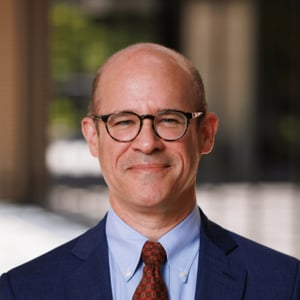
Professor of Law, Stanford Law School
Orin S. Kerr is a Professor of Law at Stanford Law School, where he teaches and writes in the areas of criminal procedure and computer crime law. Kerr earned mechanical engineering degrees from Princeton University and Stanford University before graduating with a J.D. from Harvard Law School. He is a former law clerk to Justice Anthony M. Kennedy at the United States Supreme Court and Judge Leonard I. Garth of the U.S. Court of Appeals for the Third Circuit.
Senior Fellow, National Review
Bestselling author Andrew C. McCarthy is a contributing editor at National Review, a senior fellow at National Review Institute, and a Fox News contributor. He is a former Chief Assistant United States Attorney in the Southern District of New York and led the terrorism prosecution against the “Blind Sheikh” (Omar Abdel Rahman) and eleven other jihadists for conducting a war of urban terrorism against the United States that included the 1993 World Trade Center bombing and a plot to bomb New York City landmarks. During is 20-year career as a prosecutor, he received numerous honors, including the Justice Department’s highest awards. Andy speaks and writes widely on law and national security, radical Islam, politics, and culture. He has testified before Congress as an expert on issues of constitutional law, counterterrorism, and law-enforcement. He is a columnist for The Hill, and his essays and book reviews appear frequently at The New Criterion. His most recent New York Times bestselling book is Ball of Collusion (Encounter Books, 2019), about the Russiagate controversy (an updated version was published in 2020). His other books include Willful Blindness (2008), The Grand Jihad (2010), Spring Fever: The Illusion of Islamic Democracy (2012), and Faithless Execution (2014). He has also written several pamphlets in the Broadside series published by Encounter Books, most recently Islam and Free Speech (2015).
President and Dean, Franklin Pierce Law Center
Dean Hutson was born in North Muskegon, Michigan. He was commissioned in the U.S. Navy upon graduation from Michigan State University in 1969. He graduated from the University of Minnesota Law School in 1972. Upon admission to the State Bar of Michigan, he attended the Naval Justice School in Newport, R.I. In 1973, he was assigned to the Law Center in Corpus Christi, TX, where he served as Chief Defense Counsel and Chief Trial Counsel. In 1975, he was transferred to Naval Air Station, Point Mugu, CA. He served as the Station legal officer for two years before returning to Newport to serve as an instructor at the Naval Justice School, where he taught Civil Law, Procedure, and Evidence.
In 1980, Dean Hutson attended Georgetown University Law Center where he earned a Master of Laws degree in labor law. He was then assigned as a legislative counsel in the first of three tours in the Office of Legislative Affairs for the Navy. In 1984, he was assigned to the Portsmouth Naval Shipyard in Kittery, ME, where he served both as Staff Judge Advocate and Administrative Officer.
Dean Hutson assumed duty as Executive Officer of the Naval Legal Service Office, Newport, RI, in 1987. In 1989, he returned to Washington, DC, to serve as Staff Judge Advocate and Executive Assistant to the Commander, Naval Investigative Command.
In August, 1989, Dean Hutson moved to the Office of Legislative Affairs as Director of Legislation. Between October, 1992, and November, 1993, he was assigned as the Executive Assistant to the Judge Advocate General of the Navy. In November, 1993, he resumed duty in the Office of Legislative Affairs.
In August, 1994, he assumed duty as Commanding Officer, Naval Legal Service Office, Europe and Southwest Asia, located in Naples, Italy. In July, 1996, Dean Hutson returned to the Naval Justice School as Commanding Officer. He was promoted to the rank of Rear Admiral, and assumed duties as the Judge Advocate General of the Navy in May, 1997. He also served as the DOD/JCS Representative for Ocean Policy.
Dean Hutson was awarded the Distinguished Service Medal, the Legion of Merit (with three gold stars), Meritorious Service Medal (with two gold stars), Navy Commendation Medal, and Navy Achievement Medal.
BA, Michigan State University
JD, Minnesota Law School
LLM, Georgetown University Law Center
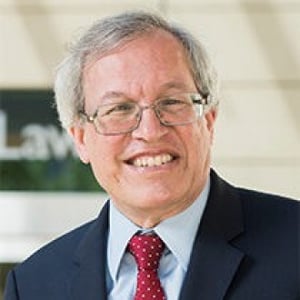
Dean and Jesse H. Choper Distinguished Professor of Law, UC Berkeley School of Law
Erwin Chemerinsky became the 13th Dean of Berkeley Law on July 1, 2017, when he joined the faculty as the Jesse H. Choper Distinguished Professor of Law.
Prior to assuming this position, from 2008-2017, he was the founding Dean and Distinguished Professor of Law, and Raymond Pryke Professor of First Amendment Law, at University of California, Irvine School of Law, with a joint appointment in Political Science. Before that he was the Alston and Bird Professor of Law and Political Science at Duke University from 2004-2008, and from 1983-2004 was a professor at the University of Southern California Law School, including as the Sydney M. Irmas Professor of Public Interest Law, Legal Ethics, and Political Science. He also has taught at DePaul College of Law and UCLA Law School.
He is the author of eleven books, including leading casebooks and treatises about constitutional law, criminal procedure, and federal jurisdiction. His most recent books are, We the People: A Progressive Reading of the Constitution for the Twenty-First Century (Picador Macmillan) published in November 2018, and two books published by Yale University Press in 2017, Closing the Courthouse Doors: How Your Constitutional Rights Became Unenforceable and Free Speech on Campus (with Howard Gillman).
He also is the author of more than 200 law review articles. He writes a regular column for the Sacramento Bee, monthly columns for the ABA Journal and the Daily Journal, and frequent op-eds in newspapers across the country. He frequently argues appellate cases, including in the United States Supreme Court.
In 2016, he was named a fellow of the American Academy of Arts and Sciences. In 2017, National Jurist magazine again named Dean Chemerinsky as the most influential person in legal education in the United States.
William Cranch Research Professor of Law, The George Washington University Law School
Bradford R. Clark teaches and writes in the areas of civil procedure, constitutional structure, federal courts, and foreign relations. His scholarship has appeared in leading journals including California Law Review, Columbia Law Review, Harvard Law Review, Texas Law Review, University of Chicago Law Review, University of Pennsylvania Law Review, and Virginia Law Review. His book, The Law of Nations and the United States Constitution (co-authored with Anthony J. Bellia Jr.), was published in 2017 by Oxford University Press. Professor Clark has been a visiting professor at Harvard Law School and the University of Michigan Law School. Professor Clark also served as a special master appointed by the Supreme Court to make recommendations in an original action between states, Alabama, et al. v. North Carolina, Orig. No. 132.
Before joining the law school faculty, Professor Clark spent several years practicing law in the Washington, D.C. office of Gibson, Dunn & Crutcher, where he specialized in trial and appellate litigation. Previously, he served as an attorney adviser in the Department of Justice’s Office of Legal Counsel, where he provided legal advice to the president, the attorney general, and the heads of executive departments. Professor Clark also served as a law clerk to The Honorable Robert H. Bork of the U.S. Court of Appeals for the D.C. Circuit and to The Honorable Antonin Scalia of the Supreme Court of the United States.
Senior Director, Liberty & National Security Program, Brennan Center for Justice at New York University Law School
Elizabeth (Liza) Goitein is senior director of the Brennan Center for Justice’s Liberty & National Security Program.
Goitein is a nationally-recognized expert on presidential emergency powers, government surveillance, and government secrecy. Her writing has been featured in major newspapers and magazines including the New York Times, Washington Post, Wall Street Journal, USA Today, Los Angeles Times, The Atlantic Magazine, and The New Republic, and she has appeared frequently on MSNBC, CNN, and NPR. She has testified on several occasions before the Senate and House Judiciary Committees.
Before coming to the Brennan Center, Goitein served as counsel to Senator Russ Feingold, chairman of the Constitution Subcommittee of the Senate Judiciary Committee, and as a trial attorney in the Federal Programs Branch of the Civil Division of the Department of Justice. Goitein graduated from Yale Law School and clerked for the Honorable Michael Daly Hawkins on the U.S. Court of Appeals for the Ninth Circuit. In 2021–22, she was a member of the inaugural class of Senior Practitioner Fellows at the University of Chicago’s Center for Effective Government.
Senior Lecturer; Director, The Robert S. Strauss Center for International Security and Law, The University of Texas at Austin School of Law
Adam Klein is Director of the Strauss Center and Director of Strauss’ Program on Technology, Security, and Global Affairs. Adam also serves as a Senior Lecturer at the School of Law. Before joining the Strauss Center, Adam served as Chairman of the United States Privacy and Civil Liberties Oversight Board, the independent, bipartisan federal agency responsible for overseeing counterterrorism programs at the NSA, FBI, CIA, Department of Homeland Security, and other federal agencies. As the Board’s Senate-confirmed Chairman, he oversaw its oversight and advice engagements with other federal agencies, while also serving as the Board’s chief executive officer.
Before entering government, Adam was the Robert M. Gates Senior Fellow at the Center for a New American Security, a bipartisan national-security research institution in Washington, DC. There, his research focused on government surveillance, intelligence powers, and national security law. Previously, Adam practiced law at Wilmer Cutler Pickering Hale & Dorr, LLP and served as a law clerk to Justice Antonin Scalia of the U.S. Supreme Court and Judge Brett Kavanaugh of the U.S. Court of Appeals for the D.C. Circuit. He has also worked on national-security policy at the RAND Corporation, the 9/11 Public Discourse Project (the non-profit successor to the 9/11 Commission), and in the U.S. Congress. He received his BA from Northwestern University and his JD from Columbia Law School.
Adam is a former Council on Foreign Relations International Affairs Fellow and Robert Bosch Foundation Fellow in Berlin. He speaks German and French.
Judge, United States Court of Appeals, Fifth Circuit
Judge Smith was appointed U.S. Circuit Judge for the Fifth Circuit by President Reagan and entered on duty in January 1988. He attended public schools in Lubbock, Texas, and graduated from Yale University, receiving a B.A. in 1969 and a J.D. in 1972.
Judge Smith was a Law Clerk to U.S. District Judge Halbert Woodward, Northern District of Texas, 1972-1973; with the Houston law firm of Fulbright & Jaworski as an Associate, 1973-1981, and as Partner, 1981-1984; and as City Attorney, City of Houston, 1984-1988. He was Chairman, Civil Service Commission, City of Houston, 1982-1984; and a Director, Harris County Housing Authority, 1978-1980.
Judge Smith lives in Houston and is married to Mary Jane Smith and has four children: Ruth Ann, Clark, J.J., and Brandon. He formerly was Chair of the Advisory Committee on Federal Rules of Evidence of the Judicial Conference of the United States. He assists LexisNexis/Matthew Bender & Co. in periodic revisions of several chapters of Moore’s Federal Practice.
Agnes Williams Sesquicentennial Professor of Federal Courts, Georgetown Law
Stephen I. Vladeck is a professor of law at the Georgetown University Law Center, and is a nationally recognized expert on the federal courts; the Supreme Court; national security law; and military justice.
Vladeck is author of the New York Times bestselling book, “The Shadow Docket: How the Supreme Court Uses Stealth Rulings to Amass Power and Undermine the Republic,” which won the 2023 Writers’ League of Texas Book Award for Non-Fiction and was a finalist for the 2024 ABA Silver Gavel Award for Media and the Arts. Vladeck is also a highly regarded appellate advocate, having argued three cases before the U.S. Supreme Court and over a dozen before various lower federal civilian and military courts. He has received numerous awards for his influential and widely cited legal scholarship, his prolific popular writing, his teaching, and his service to the legal profession—including the 2024 University of Texas President’s Research Impact Award and his selection by the Order of the Coif to serve as its Distinguished Visiting Professor for 2025.
Vladeck is CNN’s Supreme Court analyst and editor and author of “One First,” a popular weekly newsletter about the Supreme Court. Together with Bobby Chesney, Vladeck co-hosts the popular and award-winning “National Security Law Podcast.” He is also a co-author of Aspen Publishers’ leading national security law and counterterrorism law casebooks. And he is a member of the Board of Trustees of EarthJustice—the nation’s premier nonprofit public interest environmental law organization.
Vladeck graduated from Yale Law School in 2004—where he was executive editor of the Yale Law Journal and won the Harlan Fiske Stone Prize for outstanding moot court oralist and shared the Potter Stewart Prize for best moot court team performance. After law school, he clerked for the Honorable Marsha S. Berzon on the U.S. Court of Appeals for the Ninth Circuit and the Honorable Rosemary Barkett on the U.S. Court of Appeals for the Eleventh Circuit. He earned a B.A. summa cum laude with Highest Distinction in History and Mathematics from Amherst College in 2001—where he wrote his senior thesis on “Leipzig’s Shadow: The War Crimes Trials of the First World War and Their Implications from Nuremberg to the Present.” A native New Yorker and hopeless Mets fan, Vladeck lives in the District with his wife, Karen (Founder and Managing Partner of Risepoint Search Partners); their daughters, Madeleine and Sydney; and their eleven-year-old pug, Roxanna.

International & National Security Law: Justice Scalia’s Jurisprudence and National Security
Bradford R. Clark, Elizabeth Goitein, Jerry E. Smith, Stephen I. Vladeck, Adam I. Klein
This panel will consider Justice Scalia's legacy in national security law, revisiting his opinions in...
International & National Security Law: Justice Scalia’s Jurisprudence and National Security
2016 National Lawyers Convention
Washington, DCNathan A. Sales Privacy and Civil Liberties Oversight Board Testimony
Nathan A. Sales
Workshop Regarding Surveillance Programs Operated Pursuant to Section 215 of the USA PATRIOT Act and...
A Comprehensive Strategy Targeting Recidivist Criminals with Continuous Real-Time GPS Monitoring: Is Reverse Engineering Crime Control Possible?
Peter M. Thomson
One of the most pressing criminal justice challenges facing the nation is reducing the incidence...
The Civilian Trial of Khalid Sheikh Mohammed
Kyndra Kaye Rotunda, David D. Cole, Gabor Rona, Andrew McCarthy, George J. Terwilliger
Last updated at 4:00 PM on Wednesday, February 1, 2010 On November 13, 2009, Attorney General Eric...
Boumediene v. Bush
Bradford A. Berenson, Andrew G. McBride, Martin S. Lederman, Tim Lynch
Boumediene v. Bush arises on a writ of habeas corpus filed on behalf of Lakmar...
Al-Marri: Al-Qaeda Prisoner Dentention Case
Richard A. Epstein, Orin S. Kerr, Andrew McCarthy, John D. Hutson, Erwin Chemerinsky
On June 11, 2007, the Fourth Circuit Court of Appeals decided the case of al-Marri v. Wright....
Bar Watch Bulletin February 12, 2006
The American Bar Association's Midyear Meeting takes place in Chicago from Wednesday, February 8 until...