

James Monroe Distinguished Professor of Law and Albert Clark Tate, Jr., Professor of Law, University of Virginia School of Law
Professor Saikrishna Prakash’s scholarship focuses on separation of powers, particularly executive powers. He teaches Constitutional Law, Foreign Relations Law and Presidential Powers at the Law School.
Prakash’s most recent book, “The Living Presidency: An Originalist Argument Against Its Ever-Expanding Powers,” was published by Harvard Belknap Press in 2020. He also authored “Imperial from the Beginning: The Constitution of the Original Executive” (Yale University Press, 2015). The former book focuses on the modern presidency while the latter considers the presidency of the Founders.
Prakash has authored over 75 law review articles. Among them are “Of Synchronicity and Supreme Law” in the Harvard Law Review, “The Indefensible Duty to Defend” in the Columbia Law Review, and “50 States, 50 Attorneys General and 50 Approaches to the Duty to Defend” and “The Executive Power Over Foreign Affairs” in the Yale Law Journal.
Prakash has published op-eds in The New York Times, The Wall Street Journal and the Los Angeles Times. At the request of Democrats and Republicans, he has testified before Congress on matters of presidential removal, the Mueller Report and how Congress might better check the presidency. He is currently a Miller Center Senior Fellow. In 2015, he received the Roger Traynor award for faculty scholarship. In the same year, he received an honorable mention from the American Society of Legal Writers for his book “Imperial from the Beginning.” He has given named lectures at William & Mary Law School, Princeton University and Toledo Law School, and keynote addresses at several conferences.
Prakash majored in economics and political science at Stanford University. At Yale Law School, he served as senior editor of the Yale Law Journal and received the John M. Olin Fellowship in Law, Economics and Public Policy. He subsequently clerked for Judge Laurence H. Silberman of the U.S. Court of Appeals for the District of Columbia Circuit and for Justice Clarence Thomas of the U.S. Supreme Court. After practicing in New York for two years, he served as a visiting professor at the University of Illinois College of Law and as an associate professor at Boston University School of Law. He then spent several years at the University of San Diego School of Law as the Herzog Research Professor of Law. Prakash has been a visiting professor at Northwestern University and the University of Chicago. He also has served as a James Madison Fellow at Princeton University and Visiting Research Fellow at the Hoover Institution of War & Peace at Stanford University.

Executive Vice President, The Federalist Society
Dean Reuter is Executive Vice President at the Federalist Society for Law and Public Policy Studies. He has served in two federal government agency Offices of the Inspector General, as Counsel to the Inspector General and Deputy Inspector General, responsible for policing the use of federal funds granted and contracted through those agencies. As such, he helped conduct and oversee criminal investigations across the country. He is the principal author of the non-fiction book, The Hidden Nazi: The Untold Story of America's Deal with the Devil, and editor of Liberty’s Nemesis: The Unchecked Expansion of the State and Confronting Terror: 9/11 and the Future of American National Security. He was appointed by the President and served as Vice-Chairman of the Board of Directors of the Corporation for National and Community Service, and recently served as an appointee on the U.S. Commission on Presidential Scholars. He is a graduate of Hood College (BA with Honors) and the University of Maryland School of Law.

Emanuel S. Heller Professor of Law, University of California at Berkeley; Thomas Smith Senior Research Fellow, The Civitas Institute, University of Texas at Austin
John Yoo is the Emanuel Heller Professor of Law at the University of California at Berkeley. He is also the Thomas Smith Senior Research Fellow, Civitas Institute, at the University of Texas at Austin. He is also a Nonresident Senior Fellow at the American Enterprise Institute.
His most recent book, The Politically Incorrect Guide to the Supreme Court, co-authored with Robert Delahunty, was published in 2023. Professor Yoo’s other books include Defender-in-Chief: Trump’s Fight for Presidential Power; Striking Power: How Cyber, Robots, and Space Weapons Change the Rules for War; Point of Attack: Preventive War, International Law, and Global Welfare; and Crisis and Command: A History of Executive Power from George Washington to George Bush.
He is a co-author of volumes 1 and 2 of R. Rossum, G. Tarr, V. Munoz & J. Yoo American Constitution Law (Routledge, 2026), and a co-editor of the eight-volume series on the 250th anniversary of the American Revolution, We Hold These Truths, with Yuval Levin and Adam White of the American Enterprise Institute.
Professor Yoo has published more than 100 articles in academic journals on subjects including national security, constitutional law, international law, and the Supreme Court. He also regularly contributes to the editorial pages of the Wall Street Journal, New York Times, Washington Post, Los Angeles Times, and National Review, among others.
Professor Yoo has served in all three branches of government. He was an official in the U.S. Department of Justice, where he worked on national security and terrorism issues after the 9/11 attacks. He served as general counsel of the U.S. Senate Judiciary Committee. He has been a law clerk for Supreme Court Justice Clarence Thomas and federal appeals Judge Laurence Silberman. He has been a visiting professor at the University of Texas at Austin’s School of Civic Leadership, Seoul National University, the Interdisciplinary Center Herzliya, Keio University, Trento University, the University of Chicago, and the Free University of Amsterdam.
Professor Yoo supervises the Public Law and Policy Program and the California Constitution Center. He also serves on the boards of Founding Forward, the Washington Legal Foundation, the Pacific Legal Foundation, the Ulysses Grant Institute, the Federalist Society’s Separation of Powers and Federalism Division, the Universidad Cientifica del Sur Law School, and the Asia-Pacific Law Institute at Seoul National University. He is a winner of the Federalist Society’s Paul Bator award and the Heritage Foundation’s Edwin Meese III Originalism Lectureship.
Professor Yoo graduated from Yale Law School and summa cum laude from Harvard College.
James Monroe Distinguished Professor of Law and Albert Clark Tate, Jr., Professor of Law, University of Virginia School of Law
Professor Saikrishna Prakash’s scholarship focuses on separation of powers, particularly executive powers. He teaches Constitutional Law, Foreign Relations Law and Presidential Powers at the Law School.
Prakash’s most recent book, “The Living Presidency: An Originalist Argument Against Its Ever-Expanding Powers,” was published by Harvard Belknap Press in 2020. He also authored “Imperial from the Beginning: The Constitution of the Original Executive” (Yale University Press, 2015). The former book focuses on the modern presidency while the latter considers the presidency of the Founders.
Prakash has authored over 75 law review articles. Among them are “Of Synchronicity and Supreme Law” in the Harvard Law Review, “The Indefensible Duty to Defend” in the Columbia Law Review, and “50 States, 50 Attorneys General and 50 Approaches to the Duty to Defend” and “The Executive Power Over Foreign Affairs” in the Yale Law Journal.
Prakash has published op-eds in The New York Times, The Wall Street Journal and the Los Angeles Times. At the request of Democrats and Republicans, he has testified before Congress on matters of presidential removal, the Mueller Report and how Congress might better check the presidency. He is currently a Miller Center Senior Fellow. In 2015, he received the Roger Traynor award for faculty scholarship. In the same year, he received an honorable mention from the American Society of Legal Writers for his book “Imperial from the Beginning.” He has given named lectures at William & Mary Law School, Princeton University and Toledo Law School, and keynote addresses at several conferences.
Prakash majored in economics and political science at Stanford University. At Yale Law School, he served as senior editor of the Yale Law Journal and received the John M. Olin Fellowship in Law, Economics and Public Policy. He subsequently clerked for Judge Laurence H. Silberman of the U.S. Court of Appeals for the District of Columbia Circuit and for Justice Clarence Thomas of the U.S. Supreme Court. After practicing in New York for two years, he served as a visiting professor at the University of Illinois College of Law and as an associate professor at Boston University School of Law. He then spent several years at the University of San Diego School of Law as the Herzog Research Professor of Law. Prakash has been a visiting professor at Northwestern University and the University of Chicago. He also has served as a James Madison Fellow at Princeton University and Visiting Research Fellow at the Hoover Institution of War & Peace at Stanford University.
Emanuel S. Heller Professor of Law, University of California at Berkeley; Thomas Smith Senior Research Fellow, The Civitas Institute, University of Texas at Austin
John Yoo is the Emanuel Heller Professor of Law at the University of California at Berkeley. He is also the Thomas Smith Senior Research Fellow, Civitas Institute, at the University of Texas at Austin. He is also a Nonresident Senior Fellow at the American Enterprise Institute.
His most recent book, The Politically Incorrect Guide to the Supreme Court, co-authored with Robert Delahunty, was published in 2023. Professor Yoo’s other books include Defender-in-Chief: Trump’s Fight for Presidential Power; Striking Power: How Cyber, Robots, and Space Weapons Change the Rules for War; Point of Attack: Preventive War, International Law, and Global Welfare; and Crisis and Command: A History of Executive Power from George Washington to George Bush.
He is a co-author of volumes 1 and 2 of R. Rossum, G. Tarr, V. Munoz & J. Yoo American Constitution Law (Routledge, 2026), and a co-editor of the eight-volume series on the 250th anniversary of the American Revolution, We Hold These Truths, with Yuval Levin and Adam White of the American Enterprise Institute.
Professor Yoo has published more than 100 articles in academic journals on subjects including national security, constitutional law, international law, and the Supreme Court. He also regularly contributes to the editorial pages of the Wall Street Journal, New York Times, Washington Post, Los Angeles Times, and National Review, among others.
Professor Yoo has served in all three branches of government. He was an official in the U.S. Department of Justice, where he worked on national security and terrorism issues after the 9/11 attacks. He served as general counsel of the U.S. Senate Judiciary Committee. He has been a law clerk for Supreme Court Justice Clarence Thomas and federal appeals Judge Laurence Silberman. He has been a visiting professor at the University of Texas at Austin’s School of Civic Leadership, Seoul National University, the Interdisciplinary Center Herzliya, Keio University, Trento University, the University of Chicago, and the Free University of Amsterdam.
Professor Yoo supervises the Public Law and Policy Program and the California Constitution Center. He also serves on the boards of Founding Forward, the Washington Legal Foundation, the Pacific Legal Foundation, the Ulysses Grant Institute, the Federalist Society’s Separation of Powers and Federalism Division, the Universidad Cientifica del Sur Law School, and the Asia-Pacific Law Institute at Seoul National University. He is a winner of the Federalist Society’s Paul Bator award and the Heritage Foundation’s Edwin Meese III Originalism Lectureship.
Professor Yoo graduated from Yale Law School and summa cum laude from Harvard College.
James Monroe Distinguished Professor of Law and Albert Clark Tate, Jr., Professor of Law, University of Virginia School of Law
Professor Saikrishna Prakash’s scholarship focuses on separation of powers, particularly executive powers. He teaches Constitutional Law, Foreign Relations Law and Presidential Powers at the Law School.
Prakash’s most recent book, “The Living Presidency: An Originalist Argument Against Its Ever-Expanding Powers,” was published by Harvard Belknap Press in 2020. He also authored “Imperial from the Beginning: The Constitution of the Original Executive” (Yale University Press, 2015). The former book focuses on the modern presidency while the latter considers the presidency of the Founders.
Prakash has authored over 75 law review articles. Among them are “Of Synchronicity and Supreme Law” in the Harvard Law Review, “The Indefensible Duty to Defend” in the Columbia Law Review, and “50 States, 50 Attorneys General and 50 Approaches to the Duty to Defend” and “The Executive Power Over Foreign Affairs” in the Yale Law Journal.
Prakash has published op-eds in The New York Times, The Wall Street Journal and the Los Angeles Times. At the request of Democrats and Republicans, he has testified before Congress on matters of presidential removal, the Mueller Report and how Congress might better check the presidency. He is currently a Miller Center Senior Fellow. In 2015, he received the Roger Traynor award for faculty scholarship. In the same year, he received an honorable mention from the American Society of Legal Writers for his book “Imperial from the Beginning.” He has given named lectures at William & Mary Law School, Princeton University and Toledo Law School, and keynote addresses at several conferences.
Prakash majored in economics and political science at Stanford University. At Yale Law School, he served as senior editor of the Yale Law Journal and received the John M. Olin Fellowship in Law, Economics and Public Policy. He subsequently clerked for Judge Laurence H. Silberman of the U.S. Court of Appeals for the District of Columbia Circuit and for Justice Clarence Thomas of the U.S. Supreme Court. After practicing in New York for two years, he served as a visiting professor at the University of Illinois College of Law and as an associate professor at Boston University School of Law. He then spent several years at the University of San Diego School of Law as the Herzog Research Professor of Law. Prakash has been a visiting professor at Northwestern University and the University of Chicago. He also has served as a James Madison Fellow at Princeton University and Visiting Research Fellow at the Hoover Institution of War & Peace at Stanford University.
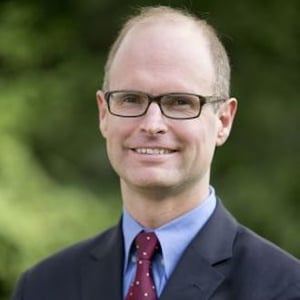
Professor of Law, Temple University Beasley School of Law
Professor Craig Green has taught and written in the fields of Administrative Law, American Legal History, Civil Procedure, Constitutional Law, and Federal Courts; he has also taught in the field of Reproductive Rights. Other teaching interests include Conflicts of Law, Remedies, Civil Procedure II, Complex Civil Litigation, Civil and Political Rights, First Amendment, Separation of Powers, Legislation, Federalism, Constitutional History, History of American Judging, and Sentencing. In 2009 and 2015, Green received Temple Law School’s George P. Williams Award as “Outstanding Professor of the Year,” and in 2010 he received Temple University’s Lindback Award for Distinguished Teaching.
Green’s research has addressed the role of federal courts in overseeing the executive branch, and the significance of iconic cases like Erie v. Tompkins in legal discourse. He has published articles concerning wartime detention, federal common law, judicial activism, precedential interpretation, equal protection, the federal sentencing guidelines, constitutional history, the economic recession of 2008, and customary international law. He has been invited to present research to the Sentencing Commission’s legal staff, as a keynote speaker at the Japanese-American Society for Legal Studies Annual Meeting in Kyoto, as a participant in the Turkish Institute for Justice’s conference “The Balance Between Freedom and Security in Fighting against Terrorism,” and as an organizing panelist for the British Association of Nineteenth-Century Americanists at the University of Warwick. In 2012, Green received Temple Law School’s Friel-Scanlan Award for Outstanding Scholarship.
In 2018, Green received a Ph.D from Princeton University’s History Department for completing his dissertation, “Creating American Land: A Territorial History from the Albany Plan to the U.S. Constitution.” The dissertation seeks to explain (1) how the United States’ imperial legal structure emerged from Revolution’s anti-imperial moment, (2) how American states and statehood emerged from the legal destruction of British colonies, (3) how Native American ideas about territory influenced and were affected by the law of Britain and the United States, and (4) what “law” meant in a context where institutional enforcement was most often impossible.
Green has an active interest in appellate litigation, and has served on moot courts for Supreme Court advocates at the University of Pennsylvania’s Supreme Court Institute, the Georgetown Law Center’s Supreme Court Institute, the National Association of Attorneys General, and law firms in Washington D.C.

Vice President, Edwin Meese III Institute for the Rule of Law, Advancing American Freedom
John G. Malcolm oversees Advancing American Freedom’s work to increase understanding of the Constitution and the rule of law as Vice President of the organization’s Edwin Meese III Institute for the Rule of Law. Malcolm brings to the challenge a wealth of legal expertise and experience in both the public and private sectors.
Prior to joining Advancing American Freedom in 2025, Malcolm was the Vice President of the Institute for Constitutional Government and the Director of the Meese Center for Legal and Judicial Studies at the Heritage Foundation. Prior to joining Heritage in 2012, Malcolm was general counsel at the U.S. Commission on International Religious Freedom, as well as a distinguished practitioner in residence at Pepperdine Law School. From 2004 to 2009, Malcolm was executive vice president and director of worldwide anti-piracy operations for the Motion Picture Association.
Malcolm served as a deputy assistant attorney general in the Department of Justice’s Criminal Division from 2001 to 2004, where he oversaw sections on computer crime and intellectual property, domestic security, child exploitation and obscenity, and special investigations. Immediately prior to that, he was a founding partner in the Atlanta law firm of Malcolm & Schroeder, LLP.
From 1990 to 1997, Malcolm was an assistant U.S. attorney in Atlanta, assigned to the fraud and public corruption section, and also an associate independent counsel, investigating fraud and abuse in the Department of Housing and Urban Development. He was honored with the Director’s Award for Superior Performance for his work in connection with the successful prosecution of Walter Leroy Moody Jr., who assassinated an 11th Circuit judge and the head of the Savannah chapter of the NAACP.
A graduate of Harvard Law School and Columbia College, Malcolm began his career as a law clerk to a federal district court judge and a federal appellate court judge, and as an associate at the Atlanta-based law firm of Sutherland, Asbill & Brennan (new Eversheds Sutherland).
Malcolm, who resides in Washington, D.C., serves on the Board of Trustees of the Washington National Opera and is a Senate-confirmed member of the Board of Directors of the Legal Services Corporation, the largest funder of civil legal aid in the United States.
Emanuel S. Heller Professor of Law, University of California at Berkeley; Thomas Smith Senior Research Fellow, The Civitas Institute, University of Texas at Austin
John Yoo is the Emanuel Heller Professor of Law at the University of California at Berkeley. He is also the Thomas Smith Senior Research Fellow, Civitas Institute, at the University of Texas at Austin. He is also a Nonresident Senior Fellow at the American Enterprise Institute.
His most recent book, The Politically Incorrect Guide to the Supreme Court, co-authored with Robert Delahunty, was published in 2023. Professor Yoo’s other books include Defender-in-Chief: Trump’s Fight for Presidential Power; Striking Power: How Cyber, Robots, and Space Weapons Change the Rules for War; Point of Attack: Preventive War, International Law, and Global Welfare; and Crisis and Command: A History of Executive Power from George Washington to George Bush.
He is a co-author of volumes 1 and 2 of R. Rossum, G. Tarr, V. Munoz & J. Yoo American Constitution Law (Routledge, 2026), and a co-editor of the eight-volume series on the 250th anniversary of the American Revolution, We Hold These Truths, with Yuval Levin and Adam White of the American Enterprise Institute.
Professor Yoo has published more than 100 articles in academic journals on subjects including national security, constitutional law, international law, and the Supreme Court. He also regularly contributes to the editorial pages of the Wall Street Journal, New York Times, Washington Post, Los Angeles Times, and National Review, among others.
Professor Yoo has served in all three branches of government. He was an official in the U.S. Department of Justice, where he worked on national security and terrorism issues after the 9/11 attacks. He served as general counsel of the U.S. Senate Judiciary Committee. He has been a law clerk for Supreme Court Justice Clarence Thomas and federal appeals Judge Laurence Silberman. He has been a visiting professor at the University of Texas at Austin’s School of Civic Leadership, Seoul National University, the Interdisciplinary Center Herzliya, Keio University, Trento University, the University of Chicago, and the Free University of Amsterdam.
Professor Yoo supervises the Public Law and Policy Program and the California Constitution Center. He also serves on the boards of Founding Forward, the Washington Legal Foundation, the Pacific Legal Foundation, the Ulysses Grant Institute, the Federalist Society’s Separation of Powers and Federalism Division, the Universidad Cientifica del Sur Law School, and the Asia-Pacific Law Institute at Seoul National University. He is a winner of the Federalist Society’s Paul Bator award and the Heritage Foundation’s Edwin Meese III Originalism Lectureship.
Professor Yoo graduated from Yale Law School and summa cum laude from Harvard College.
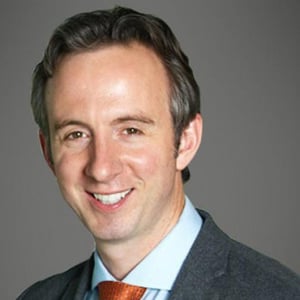
Professor of Law, University of Minnesota Law School
Professor James W. Coleman is a scholar of energy law. He specializes in North American energy infrastructure, transport, and trade. He is also a nonresident senior fellow at the American Enterprise Institute focused on energy policy.
Professor Coleman has testified before Congress on steps to speed up energy infrastructure permits. He also worked with a team of experts as part of Alberta's Royalty Review to revise the Canadian province's management of its vast oil and gas resources.
Before joining Minnesota, Professor Coleman taught at Southern Methodist University's Dedman School of Law, the University of Calgary’s law and business schools, and Harvard Law School. Earlier, he practiced environmental and appellate law at Sidley Austin in Washington, D.C., and clerked for the Honorable Steven M. Colloton of the U.S. Court of Appeals for the Eighth Circuit.
Professor Coleman received two degrees from Harvard University—a J.D. (cum laude) and B.A. in biology (magna cum laude with highest honors in the field). As a result of his undergraduate thesis on butterfly genetics, which required fieldwork in Central Asia, a species of lycaenid butterfly was named after him—Agrodiaetus ripartii colemani.
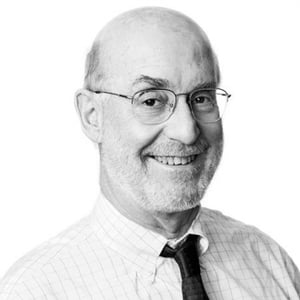
Director, Climate & Clean Air Program, Natural Resources Defense Council
David Doniger has been at the forefront of the battle against air pollution and global climate change since he joined NRDC in 1978. He helped formulate the Montreal Protocol, an international agreement designed to stop the depletion of the earth's ozone layer, as well as several essential amendments to the Clean Air Act. In 1993, he left NRDC to serve on the White House Council on Environmental Quality, followed by key posts at the U.S. Environmental Protection Agency. He rejoined NRDC in 2001 and has since been working to defend the Clean Air Act from assaults in Congress. He is based in Washington, D.C.

Director, GW Regulatory Studies Center & Distinguished Professor of Practice, Trachtenberg School of Public Policy & Public Administration, The George Washington University
Susan Dudley is the Founder and Director of the George Washington University Regulatory Studies Center, established in 2009 to raise awareness of regulations’ effects and improve regulatory policy through research, education, and outreach. She is also a distinguished professor of practice in the Trachtenberg School of Public Policy and Public Administration. She is past-president of the Society for Benefit Cost Analysis, a senior fellow of the Administrative Conference of the United States, and on the Regulatory Transparency Project Regulatory Practice Working Group. Her book, Regulation: A Primer, with Jerry Brito, is available on Amazon.com.
From April 2007 through January 2009, Professor Dudley served as the Presidentially-appointed Administrator of the Office of Information and Regulatory Affairs in the U.S. Office of Management and Budget and was responsible for the review of draft executive branch regulations under Executive Order 12866, the collection of federal-government-wide information under the Paperwork Reduction Act, the development and implementation of government-wide policies in the areas of information policy, privacy, and statistical policy, and international regulatory cooperation efforts.
Prior to OIRA, she directed the Regulatory Studies Program at the Mercatus Center at George Mason University, and taught courses on regulation at the George Mason University School of Law. Earlier in her career, Professor Dudley served as an economist at OIRA, as well as the Environmental Protection Agency and the Commodity Futures Trading Commission. She was also a consultant to government and private clients at Economists Incorporated. She holds a Master of Science degree from the Sloan School of Management at MIT and a Bachelor of Science degree (summa cum laude) in Resource Economics from the University of Massachusetts, Amherst.
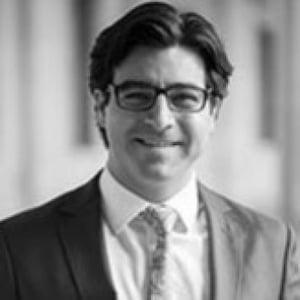
Vice President of Policy and Advocacy, Citizens For Responsible Energy Solutions
Charles Hernick is the Vice President of Policy and Advocacy at Citizens for Responsible Energy Solutions (CRES) in Washington DC. Charles leads CRES Forum’s policy work and executes strategies to advance clean energy solutions and innovative approaches to reducing carbon emissions.
Charles is an energy expert who understands emerging clean technologies, market barriers, and policies and regulations. For over a decade he has worked at the crossroads of economic development, energy, and natural resource management across the U.S. and on the ground in over a dozen countries in Africa, Latin America, and the Caribbean. Before joining CRES, he advised executive-level decision-makers at the U.S. Environmental Protection Agency and U.S. Agency for International Development on energy and environmental issues, and identified project-level opportunities for clean energy expansion.
He is also a climate change expert who has integrated climate change considerations into U.S. government programs and policies and has authored climate mitigation and adaptation best practice guidelines for over a dozen development sectors.
Charles was the Republican candidate for U.S. House of Representatives in Virginia’s 8th Congressional District in the November 2016 election. He routinely advises candidates seeking public office on energy and economic growth.
He is a frequent guest on radio shows and webcasts, in university classrooms, and at international workshops to discuss clean energy and associated economic, national security, and environmental issues. He conducts interviews in English or Spanish.
Charles as an M.A. in International Relations and Environmental Policy from Boston University and a B.S. in Ecology, Evolution, and Behavior from the University of Minnesota.

Vice President, Networks, The Federalist Society for Law and Public Policy Studies
Nathan Kaczmarek is Vice President for Networks at the Federalist Society. He began his legal career in Detroit representing nationwide clients in all phases of healthcare litigation and complex medical malpractice claims. He has since served as a Senior Legal and Policy Advisor in the U.S. House of Representatives and as Counsel for the Subcommittee on Regulatory Affairs and Federal Management in the U.S. Senate. Prior to overseeing the Networks, he was Director of the Practice Groups, the Regulatory Transparency Project, and the Article I Initiative for the Federalist Society.
Nathan holds degrees from Hillsdale College and Thomas M. Cooley Law School. He is a Liaison Representative for The Administrative Conference of the United States. He also serves as Vice President of the Associates of St. John Bosco, a Virginia based non-profit dedicated to Catholic high school and college students.
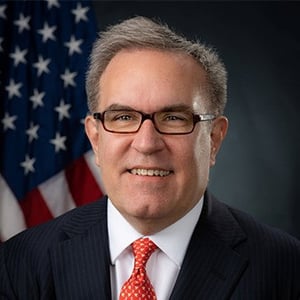
Holland & Hart, Partner
On February 28, 2019, the U.S. Senate confirmed Andrew Wheeler as the fifteenth Administrator of the Environmental Protection Agency. President Donald J. Trump had announced his appointment as the Acting EPA Administrator on July 5, 2018. Mr. Wheeler had previously been confirmed by the U.S. Senate as the EPA Deputy Administrator on April 12, 2018.
Mr. Wheeler has dedicated his career to advancing sound environmental policies. He began his career during the George H. W. Bush Administration as a Special Assistant in EPA’s Pollution Prevention and Toxics office.
He was a Principal and the team leader of the Energy and Environment Practice Group at FaegreBD Consulting, as well as Counsel at Faegre Baker Daniels law firm, where he practiced since 2009. He also served as the Co-chair of the Energy and Natural Resources Industry team across the entire firm.
Prior to his work with the firm, Mr. Wheeler served for six years as the Majority Staff Director and Chief Counsel, as well as the Minority Staff Director, of the Senate Committee on Environment and Public Works. Before his time at the full Senate EPW Committee, Mr. Wheeler served in a similar capacity for six years for the Subcommittee on Clean Air, Climate Change, Wetlands and Nuclear Safety.
Mr. Wheeler is the past Chairman of the National Energy Resource Organization (NERO) and a Stennis Fellow. Mr. Wheeler is also an Eagle Scout.
Mr. Wheeler is from Fairfield, Ohio. He completed his law degree at Washington University in St. Louis, his MBA at George Mason University, and his undergraduate work at Case Western Reserve University in English and Biology.
Professor of Law, University of Minnesota Law School
Professor James W. Coleman is a scholar of energy law. He specializes in North American energy infrastructure, transport, and trade. He is also a nonresident senior fellow at the American Enterprise Institute focused on energy policy.
Professor Coleman has testified before Congress on steps to speed up energy infrastructure permits. He also worked with a team of experts as part of Alberta's Royalty Review to revise the Canadian province's management of its vast oil and gas resources.
Before joining Minnesota, Professor Coleman taught at Southern Methodist University's Dedman School of Law, the University of Calgary’s law and business schools, and Harvard Law School. Earlier, he practiced environmental and appellate law at Sidley Austin in Washington, D.C., and clerked for the Honorable Steven M. Colloton of the U.S. Court of Appeals for the Eighth Circuit.
Professor Coleman received two degrees from Harvard University—a J.D. (cum laude) and B.A. in biology (magna cum laude with highest honors in the field). As a result of his undergraduate thesis on butterfly genetics, which required fieldwork in Central Asia, a species of lycaenid butterfly was named after him—Agrodiaetus ripartii colemani.
Director, Climate & Clean Air Program, Natural Resources Defense Council
David Doniger has been at the forefront of the battle against air pollution and global climate change since he joined NRDC in 1978. He helped formulate the Montreal Protocol, an international agreement designed to stop the depletion of the earth's ozone layer, as well as several essential amendments to the Clean Air Act. In 1993, he left NRDC to serve on the White House Council on Environmental Quality, followed by key posts at the U.S. Environmental Protection Agency. He rejoined NRDC in 2001 and has since been working to defend the Clean Air Act from assaults in Congress. He is based in Washington, D.C.
Vice President of Policy and Advocacy, Citizens For Responsible Energy Solutions
Charles Hernick is the Vice President of Policy and Advocacy at Citizens for Responsible Energy Solutions (CRES) in Washington DC. Charles leads CRES Forum’s policy work and executes strategies to advance clean energy solutions and innovative approaches to reducing carbon emissions.
Charles is an energy expert who understands emerging clean technologies, market barriers, and policies and regulations. For over a decade he has worked at the crossroads of economic development, energy, and natural resource management across the U.S. and on the ground in over a dozen countries in Africa, Latin America, and the Caribbean. Before joining CRES, he advised executive-level decision-makers at the U.S. Environmental Protection Agency and U.S. Agency for International Development on energy and environmental issues, and identified project-level opportunities for clean energy expansion.
He is also a climate change expert who has integrated climate change considerations into U.S. government programs and policies and has authored climate mitigation and adaptation best practice guidelines for over a dozen development sectors.
Charles was the Republican candidate for U.S. House of Representatives in Virginia’s 8th Congressional District in the November 2016 election. He routinely advises candidates seeking public office on energy and economic growth.
He is a frequent guest on radio shows and webcasts, in university classrooms, and at international workshops to discuss clean energy and associated economic, national security, and environmental issues. He conducts interviews in English or Spanish.
Charles as an M.A. in International Relations and Environmental Policy from Boston University and a B.S. in Ecology, Evolution, and Behavior from the University of Minnesota.
Holland & Hart, Partner
On February 28, 2019, the U.S. Senate confirmed Andrew Wheeler as the fifteenth Administrator of the Environmental Protection Agency. President Donald J. Trump had announced his appointment as the Acting EPA Administrator on July 5, 2018. Mr. Wheeler had previously been confirmed by the U.S. Senate as the EPA Deputy Administrator on April 12, 2018.
Mr. Wheeler has dedicated his career to advancing sound environmental policies. He began his career during the George H. W. Bush Administration as a Special Assistant in EPA’s Pollution Prevention and Toxics office.
He was a Principal and the team leader of the Energy and Environment Practice Group at FaegreBD Consulting, as well as Counsel at Faegre Baker Daniels law firm, where he practiced since 2009. He also served as the Co-chair of the Energy and Natural Resources Industry team across the entire firm.
Prior to his work with the firm, Mr. Wheeler served for six years as the Majority Staff Director and Chief Counsel, as well as the Minority Staff Director, of the Senate Committee on Environment and Public Works. Before his time at the full Senate EPW Committee, Mr. Wheeler served in a similar capacity for six years for the Subcommittee on Clean Air, Climate Change, Wetlands and Nuclear Safety.
Mr. Wheeler is the past Chairman of the National Energy Resource Organization (NERO) and a Stennis Fellow. Mr. Wheeler is also an Eagle Scout.
Mr. Wheeler is from Fairfield, Ohio. He completed his law degree at Washington University in St. Louis, his MBA at George Mason University, and his undergraduate work at Case Western Reserve University in English and Biology.
Director, GW Regulatory Studies Center & Distinguished Professor of Practice, Trachtenberg School of Public Policy & Public Administration, The George Washington University
Susan Dudley is the Founder and Director of the George Washington University Regulatory Studies Center, established in 2009 to raise awareness of regulations’ effects and improve regulatory policy through research, education, and outreach. She is also a distinguished professor of practice in the Trachtenberg School of Public Policy and Public Administration. She is past-president of the Society for Benefit Cost Analysis, a senior fellow of the Administrative Conference of the United States, and on the Regulatory Transparency Project Regulatory Practice Working Group. Her book, Regulation: A Primer, with Jerry Brito, is available on Amazon.com.
From April 2007 through January 2009, Professor Dudley served as the Presidentially-appointed Administrator of the Office of Information and Regulatory Affairs in the U.S. Office of Management and Budget and was responsible for the review of draft executive branch regulations under Executive Order 12866, the collection of federal-government-wide information under the Paperwork Reduction Act, the development and implementation of government-wide policies in the areas of information policy, privacy, and statistical policy, and international regulatory cooperation efforts.
Prior to OIRA, she directed the Regulatory Studies Program at the Mercatus Center at George Mason University, and taught courses on regulation at the George Mason University School of Law. Earlier in her career, Professor Dudley served as an economist at OIRA, as well as the Environmental Protection Agency and the Commodity Futures Trading Commission. She was also a consultant to government and private clients at Economists Incorporated. She holds a Master of Science degree from the Sloan School of Management at MIT and a Bachelor of Science degree (summa cum laude) in Resource Economics from the University of Massachusetts, Amherst.
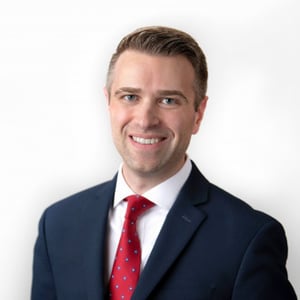
Managing Partner, Cramer Multhauf LLP
Attorney Matthew Fernholz focuses his practice on commercial litigation, trust and fiduciary disputes, business torts, trade secrets, non-compete agreements, defamation, and appellate work. In addition, he has developed one of the preeminent political and election law practices in the State of Wisconsin, and has handled several high-profile matters, from representing candidates for statewide office, successfully challenging the Governor’s emergency powers, arguing before the Wisconsin Elections Commission, and representing the Speaker of the Assembly.
Matthew frequently and successfully tries cases to verdict, and believes a lawyer unwilling to try a case should not take on a client in a litigation matter. In addition to this trial work, he has handled dozens of appeals, and countless dispositive motions.
His work has also been published in law review journals and newspapers alike.
James Monroe Distinguished Professor of Law and Albert Clark Tate, Jr., Professor of Law, University of Virginia School of Law
Professor Saikrishna Prakash’s scholarship focuses on separation of powers, particularly executive powers. He teaches Constitutional Law, Foreign Relations Law and Presidential Powers at the Law School.
Prakash’s most recent book, “The Living Presidency: An Originalist Argument Against Its Ever-Expanding Powers,” was published by Harvard Belknap Press in 2020. He also authored “Imperial from the Beginning: The Constitution of the Original Executive” (Yale University Press, 2015). The former book focuses on the modern presidency while the latter considers the presidency of the Founders.
Prakash has authored over 75 law review articles. Among them are “Of Synchronicity and Supreme Law” in the Harvard Law Review, “The Indefensible Duty to Defend” in the Columbia Law Review, and “50 States, 50 Attorneys General and 50 Approaches to the Duty to Defend” and “The Executive Power Over Foreign Affairs” in the Yale Law Journal.
Prakash has published op-eds in The New York Times, The Wall Street Journal and the Los Angeles Times. At the request of Democrats and Republicans, he has testified before Congress on matters of presidential removal, the Mueller Report and how Congress might better check the presidency. He is currently a Miller Center Senior Fellow. In 2015, he received the Roger Traynor award for faculty scholarship. In the same year, he received an honorable mention from the American Society of Legal Writers for his book “Imperial from the Beginning.” He has given named lectures at William & Mary Law School, Princeton University and Toledo Law School, and keynote addresses at several conferences.
Prakash majored in economics and political science at Stanford University. At Yale Law School, he served as senior editor of the Yale Law Journal and received the John M. Olin Fellowship in Law, Economics and Public Policy. He subsequently clerked for Judge Laurence H. Silberman of the U.S. Court of Appeals for the District of Columbia Circuit and for Justice Clarence Thomas of the U.S. Supreme Court. After practicing in New York for two years, he served as a visiting professor at the University of Illinois College of Law and as an associate professor at Boston University School of Law. He then spent several years at the University of San Diego School of Law as the Herzog Research Professor of Law. Prakash has been a visiting professor at Northwestern University and the University of Chicago. He also has served as a James Madison Fellow at Princeton University and Visiting Research Fellow at the Hoover Institution of War & Peace at Stanford University.
Emanuel S. Heller Professor of Law, University of California at Berkeley; Thomas Smith Senior Research Fellow, The Civitas Institute, University of Texas at Austin
John Yoo is the Emanuel Heller Professor of Law at the University of California at Berkeley. He is also the Thomas Smith Senior Research Fellow, Civitas Institute, at the University of Texas at Austin. He is also a Nonresident Senior Fellow at the American Enterprise Institute.
His most recent book, The Politically Incorrect Guide to the Supreme Court, co-authored with Robert Delahunty, was published in 2023. Professor Yoo’s other books include Defender-in-Chief: Trump’s Fight for Presidential Power; Striking Power: How Cyber, Robots, and Space Weapons Change the Rules for War; Point of Attack: Preventive War, International Law, and Global Welfare; and Crisis and Command: A History of Executive Power from George Washington to George Bush.
He is a co-author of volumes 1 and 2 of R. Rossum, G. Tarr, V. Munoz & J. Yoo American Constitution Law (Routledge, 2026), and a co-editor of the eight-volume series on the 250th anniversary of the American Revolution, We Hold These Truths, with Yuval Levin and Adam White of the American Enterprise Institute.
Professor Yoo has published more than 100 articles in academic journals on subjects including national security, constitutional law, international law, and the Supreme Court. He also regularly contributes to the editorial pages of the Wall Street Journal, New York Times, Washington Post, Los Angeles Times, and National Review, among others.
Professor Yoo has served in all three branches of government. He was an official in the U.S. Department of Justice, where he worked on national security and terrorism issues after the 9/11 attacks. He served as general counsel of the U.S. Senate Judiciary Committee. He has been a law clerk for Supreme Court Justice Clarence Thomas and federal appeals Judge Laurence Silberman. He has been a visiting professor at the University of Texas at Austin’s School of Civic Leadership, Seoul National University, the Interdisciplinary Center Herzliya, Keio University, Trento University, the University of Chicago, and the Free University of Amsterdam.
Professor Yoo supervises the Public Law and Policy Program and the California Constitution Center. He also serves on the boards of Founding Forward, the Washington Legal Foundation, the Pacific Legal Foundation, the Ulysses Grant Institute, the Federalist Society’s Separation of Powers and Federalism Division, the Universidad Cientifica del Sur Law School, and the Asia-Pacific Law Institute at Seoul National University. He is a winner of the Federalist Society’s Paul Bator award and the Heritage Foundation’s Edwin Meese III Originalism Lectureship.
Professor Yoo graduated from Yale Law School and summa cum laude from Harvard College.
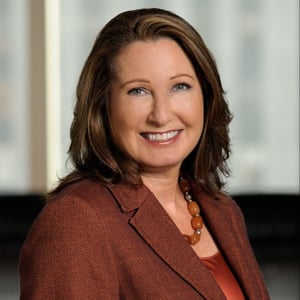
President, Americas and Global Chief Legal Officer, Merkle Science
Mary Beth Buchanan is currently President, Americas and Global Chief Legal Officer at Merkle Science. She was former General Counsel for Kraken Cryptocurrency Exchange. She was a partner at Bryan Cave LLP in the firm’s White Collar Defense and Investigations and Securities Litigation and Enforcement Client Service Groups. She concentrated her practice on white collar criminal defense, SEC and FINRA enforcement matters, corporate and accounting fraud, internal investigations, corporate compliance, foreign corrupt practices violations, Congressional investigations and complex civil litigation.
Ms. Buchanan served as the United States Attorney for the Western District of Pennsylvania from September 2001 to November 2009, having been appointed by President George W. Bush. She is the only woman in Pennsylvania's history to be presidentially appointed to this position. As the United States Attorney, Ms. Buchanan oversaw the prosecution of more than 5,000 cases, including corporate and securities fraud, bank fraud, foreign corrupt practices, false claims, money laundering, health care fraud, public corruption and a broad range of violent crimes. Prior to that time, Ms. Buchanan spent more than 13 years as an Assistant United States Attorney litigating criminal, civil and appellate cases.
During her tenure as the United States Attorney, Ms. Buchanan also held several posts at the DOJ, including serving as the director of the Executive Office for United States Attorneys, acting director of the DOJ’s Office on Violence Against Women and chair of the Attorney General’s Advisory Committee. Ms. Buchanan also served on the U.S. Sentencing Commission's Organizational Guidelines Advisory Committee, which made recommendations to the Commission for amendments to the Sentencing Guidelines for Business Organizations.
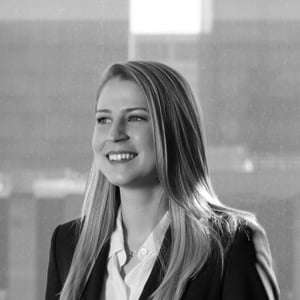
Associate, Bryan Cave Leighton Paisner LLP
Brooke Cook is a member of the firm’s Commercial Disputes and Investigations, Financial Regulation, and White Collar Practice Groups. She serves as counsel in a variety of complex commercial litigation matters in both state and federal court, including business litigation, commercial contract disputes, real estate litigation, and employment litigation. Her practice also includes representing both individuals and large companies in government enforcement actions and investigations. Ms. Cook also maintains an active pro bono practice.
Ms. Cook was a summer associate in Bryan Cave Leighton Paisner’s New York office in 2016. Prior to joining the firm, Ms. Cook was a judicial intern to the Honorable Norman K. Moon of the United States District Court for the Western District of Virginia and an extern for the U.S. Attorney’s Office for the Central District of California in the criminal division. During law school, Ms. Cook served as a Dillard Fellow for the Legal Research and Writing program at the University of Virginia School of Law where she assisted first year law students with drafting legal memoranda and appellate briefs and judged an appellate oral argument competition. She was also the assistant managing editor for the Journal of Law & Politics.
Before law school, Ms. Cook worked in public policy in Washington, D.C.
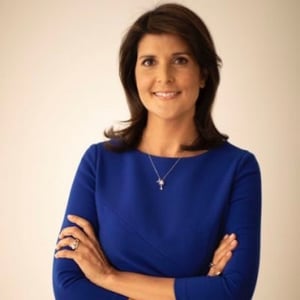
Former United States Ambassador to the United Nations; Former Governor of South Carolina; Author, With All Due Respect: Defending America with Grit and Grace
Nikki Haley is the former U.S. ambassador to the United Nations in the Trump administration. She is the 29th person to serve in the position.
President Donald Trump asked Haley to serve in the position on November 23, 2016. She was confirmed by the U.S. Senate on January 24, 2017 and served until December 2018.
Haley previously served as the 116th governor of South Carolina from 2011 to 2017. From 2005 to 2010, Haley served in the South Carolina House of Representatives, representing District 87, Lexington County.

The True Extent of Executive Power
Courtney Stone Mirski, Saikrishna Prakash, Dean Reuter, John C. Yoo
On October 20, 2020, the Federalist Society's Georgetown Law Student Chapter and the Regulatory Transparency...
Deep Dive Episode 145 – The True Extent of Executive Power
Saikrishna Prakash, John C. Yoo
On October 20, 2020, the Federalist Society’s Georgetown Law Student Chapter and the Regulatory Transparency...
Necessary & Proper Episode 58: Debate: The True Extent of Presidential Power
John C. Yoo, Saikrishna Prakash, Craig Green
On October 29, the Penn and Temple Student Chapters of the Federalist Society hosted former officemates...
The Executive Branch, the Supreme Court, and More
John G. Malcolm, John C. Yoo
Join us as John Malcolm and John Yoo discuss recent Supreme Court news, the 25th...
It Can Be Done Live: The Future of Our Earth
James W. Coleman, David D. Doniger, Susan E. Dudley, Charles Hernick, Nathan Kaczmarek, Andrew Wheeler
The creators of the award-winning documentary, They Say It Can't Be Done, in partnership with the...
Deep Dive Episode 138 – It Can Be Done Live: The Future of Our Earth
James W. Coleman, David D. Doniger, Charles Hernick, Andrew Wheeler, Susan E. Dudley
The creators of the award-winning documentary, They Say It Can’t Be Done, in partnership with...
Recent Trends in the Roberts Court
Matthew M. Fernholz
On August 18, 2020, the Federalist Society's Milwaukee Lawyers Chapter hosted a virtual event on...
The True Extent of Executive Power
Saikrishna Prakash, John C. Yoo
In this Teleforum, two of the nation’s leading scholars of presidential power — and former...
A Discussion with Hon. Nikki Haley
Mary Beth Buchanan, Brooke Cook Wilson, Nikki R. Haley
On January 16, 2020, the Federalist Society's New York City Lawyers and Young Lawyers Chapters...
Topics
Welcome to the New “Explainer Podcast”
American governments are facing several growing problems – such as how to address climate change...