

President and General Counsel, New Civil Liberties Alliance
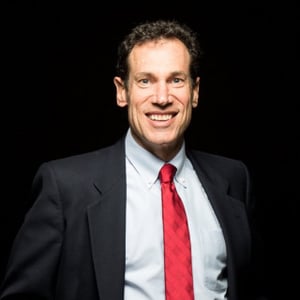
NCLA’s President and General Counsel, Mark Chenoweth, has observed the administrative state up close and personal from perches in all four branches of the federal government. Mark served as the first chief of staff to Congressman Mike Pompeo, as legal counsel to Commissioner Anne Northup at the U.S. Consumer Product Safety Commission, as an attorney advisor in the Office of Legal Policy at the U.S. Department of Justice, and as a law clerk to the Hon. Danny J. Boggs on the U.S. Court of Appeals for the Sixth Circuit.
Mark has worked in several different roles in the private sector as well. He began his legal career in D.C. as a regulatory associate at Wilmer, Cutler & Pickering. He then returned to his home state of Kansas to serve as in-house counsel for Koch Industries. Most recently he spent over four years as general counsel of the Washington Legal Foundation.
Mark is a graduate of Yale College and the University of Chicago Law School, where he co-founded the Institute for Justice Clinic on Entrepreneurship and became a Tony Patiño Fellow. Mark has been widely quoted and/or published in newspapers and websites including the New York Times, San Francisco Chronicle, New Hampshire Union Leader, and Metropolitan Corporate Counsel. He has also had recurring op-eds in the Los Angeles Daily Journal, and at Forbes.com.
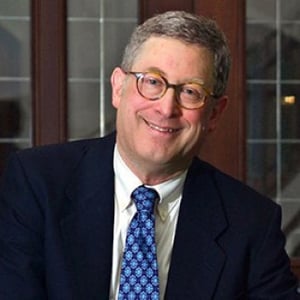
William R. Orthwein Distinguished Professor of Law, Washington University in St. Louis School of Law
Professor Ronald M. Levin is a nationally known scholar who specializes in administrative law and related public law issues. He is the co-author of a casebook on state and federal administrative law, now in its third edition, as well as a nutshell on administrative law and process, now in its fifth edition. Formerly the law school's associate dean, he has published numerous articles and book chapters on administrative law topics, including judicial review, rulemaking, and legislative reform of the regulatory process. He also has written about the law of legislation, lobbying, and legislative ethics. Among his professional affiliations, Professor Levin has chaired the ABA Section of Administrative Law and Regulatory Practice and served as the ABA's advisor to the drafting committee to revise the Model State Administrative Procedure Act. He also has chaired the Section on Administrative Law and the Section on Legislation of the Association of American Law Schools (AALS). Currently a public member of the Administrative Conference of the United States (ACUS), he previously served as a consultant to ACUS and to the Supreme Court of Indonesia. Before joining the law faculty, Professor Levin clerked for the Hon. John C. Godbold, U.S. Court of Appeals for the Fifth Circuit, and practiced for three years in Washington, D.C., with the firm of Sutherland, Asbill & Brennan.
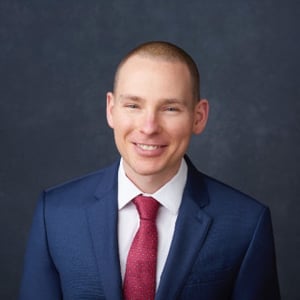
Shareholder & Co-Chair of the Workplace Policy Institute, Littler Mendelson P.C.
Alexander T. MacDonald advises employers on all aspects of the employment and labor landscape, focusing on emerging legislation and regulation. He has extensive experience advising businesses on worker classification, arbitration, the administrative and regulatory process, and the future of work. He frequently writes, publishes, and speaks on these subjects. His work has been cited by scholars and appellate courts. He is a recognized voice for the management perspective.
Alexander is a co-chair of the Workplace Policy Institute (WPI) team. With WPI, he advises employers on legislative, administrative, and regulatory developments at the state and federal level. He advocates for employers in the regulatory and administrative process. He also helps employers protect their businesses by understanding and anticipating cutting-edge legal developments.
Alexander also has extensive experience in traditional labor law. He represents management in all aspects of labor-management relations, including unfair labor practice charges, grievance arbitrations, representation elections, contract negotiations, and related litigation, including litigation in the U.S. courts of appeals.
Before joining Littler, Alexander served as the director, future of work, for a major technology company. He also worked in a national labor and employment law firm and a major public-sector general counsel’s office. He was a law clerk to the senior judges in the District of Columbia Court of Appeals.
He is also a veteran of the U.S. Air Force. He served in Operations Enduring Freedom and Iraqi Freedom. In law school, he graduated first in his class
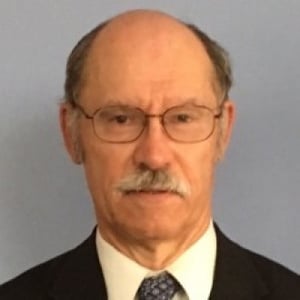
Professorial Lecturer in Law, George Washington University Law School
Theodore C. (Ted) Hirt was an attorney in the Department of Justice's Civil Division from August 1979 to March 2016. He was in its Federal Programs Branch from 1979 to 2008 (trial attorney, senior trial counsel, assistant director), and then in its Office of Immigration Litigation from 2008 to 2016 (trial attorney and senior litigation counsel). Among his responsibilities (September 2001 to March 2016) was being an advisor to the Assistant Attorneys General for the Civil Division, who serve ex officio on the Civil Rules Advisory Committee. Mr. Hirt’s areas of specialization include First Amendment issues, internet and telecommunications law, and electronic discovery. From 1976 to 1979, he was an associate at Fried, Frank, Harris, Shriver & Kampelman. From 1975 to 1976 he was an attorney in the Prehearing Division of the Michigan Court of Appeals.
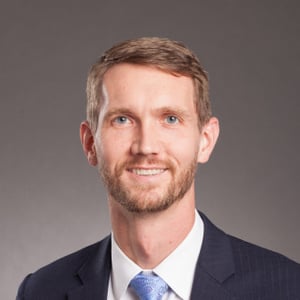
Senior Counsel for Environmental and Regulatory Affairs, Boeing
Adam Gustafson is a Senior Counsel for Environmental and Regulatory Affairs at Boeing.
Prior to joining Boeing, he served as Deputy General Counsel at the Environmental Protection Agency. Prior to that, he was a partner at Boyden Gray & Associates, where he represented States, federal judges, environmental groups, biofuel producers, agricultural interests, and public policy organizations, on such issues as the constitutional separation of powers, the First Amendment, automotive regulations, environmental computer models, healthcare regulation, and judicial deference to federal agencies.
Mr. Gustafson received his J.D. in 2009 from Yale Law School, where he was an editor of the Yale Law Journal, a managing editor of the Yale Journal of Law & the Humanities, and an executive editor of the symposium issue of the Harvard Journal of Law & Public Policy.
Mr. Gustafson served as a Vice President of the Yale Law School Federalist Society. He was a Coker Fellow, and his legal writing won the Joseph A. Chubb Competition Prize and the Edward D. Robbins Memorial Prize.
Mr. Gustafson graduated with high distinction in 2005 from the University of Virginia, where he was an Echols Scholar, a member of the Raven Society, a member of the rowing team, and a Lawn resident.
Before joining Boyden Gray & Associates, Mr. Gustafson was an associate at Cooper & Kirk, where he specialized in appellate litigation. Mr. Gustafson served as a law clerk to Judge Richard R. Clifton of the U.S. Court of Appeals for the Ninth Circuit, and to Judge Janice Rogers Brown of the U.S. Court of Appeals for the D.C. Circuit.
Ceres, Accelerator for Sustainable Capital Markets
John Kostyack is Founder and Principal at Kostyack Strategies, a consultancy helping NGOs and foundations achieve their climate change and clean energy policy goals. His experience includes over three decades in nonprofit management and leadership of policy advocacy campaigns as well as representation of NGO and private sector clients in federal and state courts. He now leverages that experience and relationships with leaders in NGOs, government, the clean technology sector and philanthropy to help clients design and execute advocacy campaign strategies. His current work focuses on helping clients persuade regulators to promote sustainable investing and procurement, address climate-related risks to financial stability and establish oversight of carbon offsets markets.
Associate, Gibson, Dunn & Crutcher
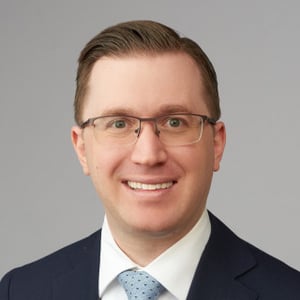
Brian A. Richman is an associate in the Washington, D.C. office of Gibson, Dunn & Crutcher. He practices in the firm’s Litigation Department, and is a member of the Appellate and Constitutional Law and Administrative Law and Regulatory practice groups.
Mr. Richman represents clients in high-stakes appellate, administrative law, and litigation matters. His practice includes litigating cutting-edge constitutional and administrative law issues, challenging agency rulemakings, and defending against government enforcement actions, along with other complex litigation matters. He has extensive experience in the financial services sector.
Before joining the firm, Mr. Richman clerked for Judge Stephen F. Williams of the U.S. Court of Appeals for the District of Columbia Circuit. He also practiced at a New York law firm, where he focused on commercial litigation and white collar defense and investigations. Mr. Richman is a former securities compliance officer at Goldman Sachs, and has handled numerous regulatory matters involving the SEC, CFTC, FERC, FINRA, and the Federal Reserve.
Mr. Richman received his JD from Yale Law School, where he was a lead editor on the Yale Journal on Regulation, and a semi-finalist in both the Morris Tyler Moot Court of Appeals and Thomas Swan Barristers’ Union Mock Trial Competition. In 2011, Mr. Richman graduated from Cornell University with a B.S., with honors, in Policy Analysis and Management.
Mr. Richman is admitted to practice in New York and the District of Columbia. He is also admitted to the United States Courts of Appeals for the Second and D.C. Circuits, and the U.S. District Courts for the Southern and Eastern Districts of New York.
The George Washington University, GW Procurement Law Alumnus

Topics
Eighth Circuit “Beets” Back EPA Effort on Pesticides: What are the Implications for Administrative Law?
On November 2, a three-judge panel of the Eighth Circuit issued a unanimous opinion in...
Topics
Is the NLRB Unconstitutional? The Courts May Finally Decide.
This term, the U.S. Supreme Court is set to hear three major cases involving the...
Should The Chevron Doctrine Stand?
Mark Chenoweth, Ronald M. Levin
Chevron v. NRDC (1984) and subsequent precedents held that courts should defer to agency interpretations of ambiguous statutes. This judicial deference to administrative agencies, often called Chevron Deference has been a topic of great debate. Two experts, Mark Chenoweth and Ronald Levin, took on this debate via a variety of mediums -blogs, videos, etc. while additional experts chimed in with Amicus Briefs, culminating in an audience vote on which side convinced them.
The Labor Law Enigma: Article III, Judicial Power, and the National Labor Relations Board
Alexander T. MacDonald
Axon Enterprises v. FTC[1] wasn’t supposed to be about labor law. In fact, it wasn’t...
Topics
Congress Should Prepare to Lead on Regulation
The Supreme Court recently ended President Biden’s student loan forgiveness program, ruling that federal law...
Is Congress a Salvageable Institution?
Ted Hirt
A review of Philip A. Wallach, Why Congress (Oxford University Press 2023) Constitutional law...
Topics
The Demise of the SEC’s Adjudication System
This post was originally published at Notice & Comment. Earlier this month on a Friday...
Topics
Chevron Is Dead, Long Live Chevron
The Supreme Court has agreed to revisit Chevron v. Natural Resources Defense Council (1984), the...
Topics
Supreme Court Holds That Federal District Courts Have Jurisdiction To Hear Structural Challenges To FTC And SEC
This blog post has been reprinted with permission from Gibson Dunn’s website. The Supreme...
A Discussion on the FAR Council's Federal Supplier Climate Risks and Resilience Proposed Rule
Adam Gustafson, John Kostyack, Brian Richman, Markus Speidel
What happens when the Administration’s “whole-of-government approach” to climate change meets federal contracting? The Department...