
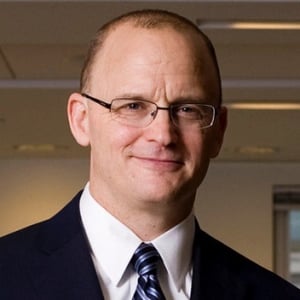
Partner, Latham & Watkins LLP
Gregory Garre is a partner in the Washington, D.C. office of Latham & Watkins and Global Chair of the firm's Supreme Court and Appellate Practice Group. He recently served as the 44th Solicitor General of the United States. As Solicitor General, he was the federal government's top lawyer before the Supreme Court and was responsible for overseeing the government's litigation in the federal appellate courts. Prior to his nomination by the President and unanimous confirmation as Solicitor General by the Senate, he served as Principal Deputy Solicitor General from 2005 to 2008, and then as Acting Solicitor General. In addition, he served as an Assistant to the Solicitor General from 2000 to 2004. He is the only person to have held all of those positions within the Office of the Solicitor General.
Mr. Garre has argued 29 cases before the Supreme Court, including two cases during the current term, and has served as counsel of record in hundreds of cases before the Court. During the past term, he won each of the cases he argued as Solicitor General, including the landmark case of Ashcroft v. Iqbal, which clarified the gateway requirements for civil litigation in the federal courts, as well as FCC v. Fox Television Stations, and Winter v. NRDC. He has also argued and briefed cases involving a wide array of other nationally important matters, including in the areas of administrative law, alien tort statute, antitrust, business and employment law, education, environmental law, First Amendment, intellectual property, international law, media and telecommunications, separation of powers and voting rights.
Mr. Garre has also successfully argued numerous cases before the federal courts of appeals, including some of the most significant cases heard by the appellate courts in recent years. And, as Acting Solicitor General, he successfully argued on behalf of the government in the first adversarial appeal heard by the Foreign Intelligence Surveillance Court of Review in its 30-year history.
Mr. Garre has received numerous awards for his public service, including the Attorney General's Medallion for his service as Solicitor General and the Navy's Distinguished Public Service Award-the Navy's highest civilian honor-for his successful argument in Winter v. NRDC, which secured a path-marking Supreme Court ruling overturning an order that restrained critically important naval exercises. He has also received the Attorney General's Distinguished Service Award, the Attorney General's Award for Excellence in Furthering Interests of US National Security, and additional honors from the Department of Justice for his work on nationally important litigation matters.
In November 2009, Mr. Garre was named to Washingtonian Magazine's list of top Supreme Court lawyers. In 2006, he was named to The American Lawyer's "Fab 50" list of top litigators under the age of 45 expected to be "leading the field for years to come." And in 2005, he was named to Chambers USA's list of leading appellate litigators in Washington, D.C.
Mr. Garre received his JD degree with high honors from the George Washington University Law School, where he served as editor-in-chief of the law review and was selected to Order of the Coif, and his BA degree cum laude from Dartmouth College, where he was a Rufus Choate Scholar. Following his graduation from law school, he served as a law clerk to Chief Justice William H. Rehnquist, and to Judge Anthony J. Scirica of the United States Court of Appeals for the Third Circuit.
Mr. Garre is a member of the advisory board of the Georgetown University Law School Supreme Court Institute and of the Edward Coke Appellate Inn of Court. He has taught constitutional law and Supreme Court practice for many years at the George Washington University Law School. He has testified before Congress and speaks frequently on issues related to the Supreme Court and appellate practice.

Litigation Associate, Weil, Gotshal & Manges LLP
Jill Jacobson is an Appeals and Strategic Counseling and Complex Commercial Litigation associate at Weil, Gotshal & Manges LLP. She is a former law clerk to Judge Aileen M. Cannon on the District Court for the Southern District of Florida and a future law clerk to Judge Elizabeth L. Branch on the Court of Appeals for the Eleventh Circuit.
Jill a fellow emeritus at the Independent Women's Law Center and a Senior Contributor at Young Voices. She has also been a Litigation Contractor at the Institute for Justice. She holds a J.D. from Boston College Law School and a Masters from Northeastern University.
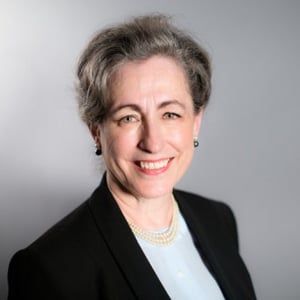
Senior Litigation Counsel, New Civil Liberties Alliance
Peggy Little, Senior Counsel at New Civil Liberties Alliance, a new public interest law firm challenging the administrative state founded in 2017 by Professor Philip Hamburger, has over three decades of experience as a trial and appellate litigator in complex, high-stakes regulatory, mass-tort, class-action, products liability, securities, commercial and civil rights litigation representing individuals and high-profile litigants including Fortune 50 companies, financial institutions, public companies, and universities in state and federal courts, including the United States Supreme Court.
Peggy is a graduate of Yale College and Yale Law School, where she was awarded the Potter Stewart Prize. She was a law clerk to the Hon. Ralph K. Winter on the U.S. Court of Appeals for the Second Circuit. Prior to starting her own trial and appellate law firm in 1997, where she was appellate consulting counsel to the New Haven firefighters in Ricci v.DeStefano, a landmark 2009 United States Supreme Court decision, Peggy was a partner at Tyler, Cooper & Alcorn in New Haven, Connecticut. From 2004 to early 2018, Peggy directed, part-time, the Federalist Society Pro Bono Center.
Peggy has participated in many national conferences and symposia addressing issues of current importance in constitutional law – specifically state and federal constitutional questions regarding the separation of powers and the first amendment – and regularly speaks, blogs and publishes on the topic of the unconstitutional exercise of governmental power. In May of 2017, she presented her paper, Pirates at the Parchment Gates, to a conference of state and federal judges at the Law and Economics Center at the Antonin Scalia Law School. Her work has been published by law reviews, legal publications, the Federalist Society, the Wall Street Journal, Law and Liberty and the Manhattan Institute.
Recent publications include: How the SEC silences its critics, The SEC should listen to Sen. Cotton, Lucia v. SEC, Opening Salvos in the Opioid Litigation Wars, Straight Dope on the Opioid Crisis

Senior Litigation Counsel, New Civil Liberties Alliance
Margaret Harker litigates for a public interest law firm. She has significant experience in government investigations and litigation, having served in the three branches of our government. Previously, she led complex Congressional investigations for the House Committee on Oversight and Government Reform—including the only government-wide investigation into federal agencies’ strategy (or lack thereof) to counter Chinese Communist Party political warfare against America.
Prior to her time on Capitol Hill, Harker served in the U.S. Department of Justice. She was an Assistant United States Attorney in both the Eastern District of Tennessee and the Eastern District of Virginia. She was a Trial Attorney in the National Security Division, Counterintelligence and Export Control Section, with an emphasis on the administration and enforcement of the Foreign Agents Registration Act.
Harker clerked for the Honorable Henry E. Hudson, U.S. District Court for the Eastern District of Virginia and the Honorable Randolph A. Beales, Court of Appeals of Virginia.
Earlier in her career, she studied in Beijing, China, and worked at the U.S. Chamber of Commerce’s China Center.

Writer and Editor, Tablet Magazine
Park MacDougald is Editor and Senior Writer at The Scroll, Tablet’s daily afternoon newsletter, a fellow at the Manhattan Institute, and a former recipient of the Novak Fellowship from The Fund for American Studies. His writing has appeared in Tablet, City Journal, New York Magazine, The Washington Examiner, and UnHerd.

Fellow, National Security Institute, Antonin Scalia Law School, George Mason University
Vince Vitkowsky chaired the Executive Committee of the Federalist Society’s International and National Security Law and Policy Practice Group for over a decade. He is also a Fellow at the National Security Institute of George Mason University Law School. Vince spent 45 years in private practice, primarily in AmLaw 100/200 firms and their spin-offs. His practice included domestic and international commercial arbitration and litigation, as well as cyber risks and liabilities. Vince's current focus is on national security policy, artificial intelligence, cybersecurity, and counterterrorism. He has often written and spoken on national security and other public policy issues. Among other affiliations, Vince has been an Adjunct Fellow at the Center for Law and Counterterrorism of the Foundation for the Defense of Democracies, a member of the Executive Committee of the American Branch of the International Law Association, and Co-Chair of the Committee on Interventions and Trial Observations of the International Bar Association’s Human Rights Institute. He received his B.A. from Northwestern University and his J.D. from Cornell Law School.

Former Deputy Attorney General for Virginia
Kennerly Davis has over forty years of experience in corporate management, public service, and the private practice of law. He has held senior executive positions in a Fortune 500 electric and gas company. He has served as Deputy Attorney General for the Commonwealth of Virginia, and as a legislative aide to a U.S. Senator and a U.S. Congressman. He practiced law for 25 years with Hunton Andrews Kurth LLP.
Davis is active in the Federalist Society as a member of the Regulatory Process Working Group of the Regulatory Transparency Project, and as a member of the Execuitve Committee of the Administrative Law and Regulation Practice Group. He is active in the national Alumni Free Speech Alliance, and involved in AFSA-chapter initiatives, including litigation, to publicize and correct the serious legal problems created by university Diversity, Equity, and Inclusion programs and the anonymous bias reporting systems used to enforce those DEI programs.
Davis writes and speaks on a wide variety of topics, including those related to the Founding of America, the natural rights foundation of our Republic, the constitutional rule of law, equal protection and free speech, DEI programs and bias reporting systems, capitalism, regulation and regulatory reform, and economic development. His articles have appeared in The Wall Street Journal, the Washington Examiner, the Richmond Times-Dispatch, The Federalist Society Review, the FedSoc Blog, Real Clear Energy, Townhall, the Daily Caller, reports of the Center for Strategic & International Studies, and other publications. He appears frequently on radio, podcasts, and television.
Davis graduated with honors from Cornell University with an A.B. degree in Government. He earned an M.A. degree from Pembroke College, Oxford, in Philosophy, Politics, and Economics. He was awarded a J.D. degree from Harvard Law School, and an M.B.A. degree from Virginia Commonwealth University.
Davis lives in Richmond, Virginia. He can be contacted by email: j.kendavis@verizon.net, and by phone: (804) 624-8525.
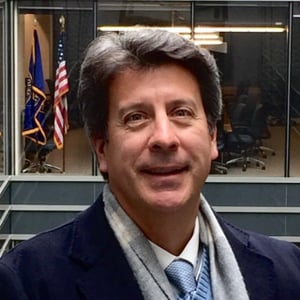
Senior Counsel, Committee on Oversight and Government Reform, U.S. House of Representatives
Daniel Flores is a Senior Counsel on the Republican staff of the Committee on Oversight and Government Reform, U.S. House of Representatives. Prior to his current position, he served in the House as Chief Counsel for the House Judiciary Committee's Subcommittee on Regulatory Reform, Commercial and Antitrust Law. Before coming to the House, he served as an Acting Associate Deputy General Counsel for the U.S. Environmental Protection Agency and in other roles in EPA's Office of General Counsel, as a Senior Trial Attorney for the U.S. Department of Justice, Environment and Natural Resources Division, and as an attorney in private practice in Washington, D.C. He serves as a House liaison to the Administrative Conference of the United States and has served on the Council of the American Bar Association’s Section on Administrative Law & Regulatory Practice.

Founder & CEO, Norm AI
John Nay is the founder of Norm Ai after a decade of research at the intersection of AI & Law, most recently at Stanford. He was also the founding CEO of Brooklyn Investment Group, an AI-powered investment software platform and SEC Registered Investment Adviser, where he is now Chairman.
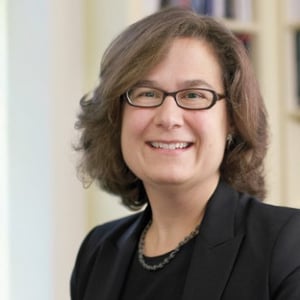
Segal Family Professor of Regulatory Law and Policy, New York University School of Law
Catherine Sharkey is the Segal Family Professor of Regulatory Law and Policy at NYU School of Law. She is a leading authority on torts, products liability, artificial intelligence in federal administrative agencies, public nuisance, punitive damages, and federal preemption of state tort law. She is a Senior Fellow of the Administrative Conference of the United States (ACUS), a member of its Roundtable on Artificial Intelligence in Federal Agencies, author of Algorithmic Tools in Retrospective Review (2023) and co-author of Government by Algorithm: Artificial Intelligence in Federal Administrative Agencies (2020). Sharkey is co-author of Cases and Materials on Torts (13th edition, 2024) and Business, Defamation, and Privacy Torts (1st ed., forthcoming 2025), and co-editor of Foundations of Tort Law (2nd edition, 2009). She is an elected member of the American Law Institute and an adviser to the Restatement Third, Torts: Liability for Economic Harm and Restatement Third, Torts: Remedies projects.
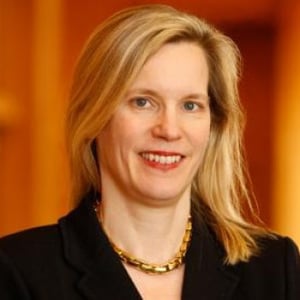
John S. Battle Professor of Law, University of Virginia School of Law
Julia D. Mahoney teaches courses in property, government finance, constitutional law and nonprofit organizations. A graduate of Yale Law School, she joined the University of Virginia faculty as an associate professor in 1999 and is now John S. Battle Professor of Law. She has also taught at the University of Southern California Law School and the University of Chicago Law School, and before entering the legal academy, practiced law at the New York firm Wachtell, Lipton, Rosen & Katz. Her scholarly articles include works on land preservation, eminent domain, health care reform and property rights in human biological materials.

Professor of Law, Northwestern University Pritzker School of Law
Joshua Kleinfeld teaches and writes about political, legal, and moral philosophy, criminal law, and criminal procedure. He also practices law in Northwestern's Juvenile Criminal Defense Clinic. He is a full professor with tenure at the Northwestern Pritzker School of the Law and (by courtesy) in Northwestern’s philosophy department. In 2017-18, he was a visiting professor at Harvard and Stanford Law Schools. He is the recipient of the Bator Award, given annually to one American law professor under the age of 40 who has demonstrated "excellence in legal scholarship, a commitment to teaching, a concern for students, and who has made a significant public impact."
In philosophy, Kleinfeld's research focuses on the idea of "embodied ethical life," as developed in the socio-theoretic tradition of Hegel, Weber, and Durkheim. This tradition aims to understand and critique social life by bringing to light the normative ideas implicit in social practices and institutions. In law, this means that the most interesting philosophical concepts are often those reflected or actualized in legal practice – in the law as judges and lawyers think of it and wield it.
In criminal law and procedure, Kleinfeld has developed a theory known as "reconstructivism," which holds that the chief office of criminal law is not to dole out retributive justice, nor to optimize crime and cost control, but to reconstruct a violated normative order in the wake of a crime. This work, which draws on the thought of Hegel, Durkheim, Jean Hampton, and Antony Duff, develops an alternative to retributive and utilitarian theories of criminal law by focusing on the distinctive social function and sense of justice at work in the criminal system.
Kleinfeld is also involved in practical criminal justice reform. In this vein, he defends children accused of homicide in the Northwestern Juvenile Criminal Defense clinic and assists in litigation efforts meant to reform American criminal law through the courts. He has also developed a view of criminal justice reform known as "democratization," which holds that the root of the American criminal justice crisis is a set of bureaucratic attitudes, structures, and incentives divorced from the American public’s concerns and sense of justice, and that the primary solution is to make criminal justice more community-focused and responsive to lay influences. Working with others, he has developed a number of policy proposals meant to reform American criminal justice in a democratic direction.
Kleinfeld holds a JD from Yale Law School, a PhD in philosophy from the Goethe University of Frankfurt (supervised by Axel Honneth, Klaus Günther, and Rainer Forst), and a BA in philosophy from Yale College. He clerked for Judge J. Harvie Wilkinson on the United States Court of Appeals for the Fourth Circuit; Judge Janice Rogers Brown on the United States Court of Appeals for the D.C. Circuit; and President (chief justice) Aharon Barak of the Supreme Court of Israel. He worked as an Associate at Debevoise & Plimpton LLP in Frankfurt, Germany, in the area of corporate criminal law. Before law school, he worked as a Senior Research Analyst at the White House’s Council on Bioethics.
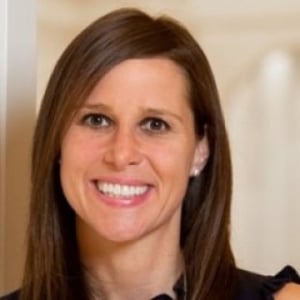
Chief Legal Officer, IEX Group, Inc.
Rachel Barnett oversees all legal and compliance matters for IEX Group, Inc. She is an experienced lawyer who has held a wide variety of roles as in-house General Counsel and within private practice.
Rachel joined IEX from Brooks Brothers where she served as General Counsel and Secretary overseeing its global legal affairs. She played a critical role selling America's oldest retail brand after it had filed for bankruptcy during the COVID pandemic. Before Brooks Brothers in 2019, Rachel was a member of the Board of Directors and General Counsel of Travelzoo, a publicly traded global media company and online marketplace for travel deals and experiences.
Prior to going in-house, Rachel worked as an attorney at Skadden, Arps, Slate, Meagher and Flom, LLP where she specialized in litigation matters, including merger and acquisition litigation, shareholder derivative lawsuits and securities fraud class actions at both the trial court and appellate levels.
Rachel is a current Lecturer in Law at Columbia Law School where she also earned her Juris Doctor degree. She is member of the bar in both New York and Delaware and received a Bachelor of Science degree from Cornell University.
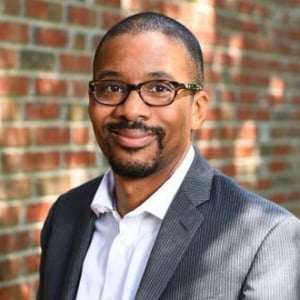
Agnes Williams Sesquicentennial Professor of Financial Technology, Georgetown Law
Chris Brummer is the Agnes Williams Sesquicentennial Professor of Financial Technology at Georgetown University Law Center and the Faculty Director of Georgetown’s Institute of International Economic Law. As a professor, advisor, board member and advocate, Chris has lent his expertise to policymakers, founders, startups, and nonprofits around the world grappling with some of the most challenging puzzles facing innovation, regulation, and inclusion. His work has been featured in The New York Times, CNN, Marketwatch, Fast Company, The Wall Street Journal, Bloomberg, Yahoo Money, Roll Call, Cointelegraph, and Coin Desk, among others.
Chris’s public service and volunteer work extend across government. In addition to serving as a member of the Commodity Futures Trading Commission’s Subcommittee on Virtual Currencies and the Consultative Working Group for the European Securities and Markets Authority’s Financial Innovation Standing Committee, Chris has served as a member of the National Adjudicatory Council of FINRA. Most recently, he served as a member of the Biden-Harris Transition team, assisting in leading work streams relating to financial technology, racial equity and systemic risk for the Treasury ART. He is currently the Co-Chair of CNAS Task Force on FinTech, Crypto, and National Security.
A frequent speaker and lecturer, Chris was asked to deliver the keynote speech for the SEC’s Black History celebration in 2021, FinCEN’s Black History celebration in 2022, and the Office of the Comptroller of the Currency’s celebration in 2023.
Chris graduated summa cum laude from Washington University in St. Louis, holds a J.D. with honors from Columbia Law School and a Ph.D. from the University of Chicago. He is the author or editor of several books, including Cryptoassets: Legal, Regulatory and Monetary Perspectives and Fintech Law in a Nutshell.
Chris is the host of CQ Roll Call’s Fintech Beat podcast, and founder of Washington DC’s Fintech Week, an annual free event for the public.
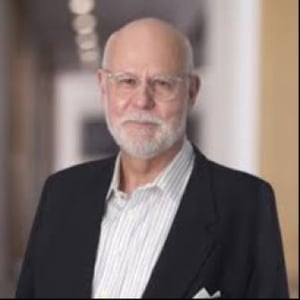
Partner, Foley & Lardner LLP
Patrick Daugherty is a senior corporate and securities law partner of Foley & Lardner LLP, based in Chicago. He also is an adjunct professor of Cornell Law School, where he teaches in residence each Fall Term.
Mr. Daugherty is a member of the Bar in New York, the District of Columbia, North Carolina, Michigan and Illinois. Credentialing organizations have named him “Lawyer of the Year” in both Michigan (2007) and Illinois (2022). A graduate of Northwestern University and of Cornell Law School (Class of 1981), he clerked for SDNY Chief Judge Lloyd F. MacMahon for a year before entering private practice. Mr. Daugherty also served as Counsel to SEC Commissioner Edward H. Fleischman in Washington, D.C., from 1986 to 1989. An Emeritus Member of the American Law Institute, he is the author, co-author or editor of several books and many articles on securities regulation and new financial products.
Mr. Daugherty believes that he was the first lawyer inside the SEC to join the Federalist Society when he became a member in the late 1980s. A mainstay of the Chicago Lawyers Chapter, at the national level of the Society he serves on the Executive Committee for the Financial Services & E-Commerce Practice Group.

Partner, WilmerHale
William McLucas joined the firm after serving for more than eight years as Director of Enforcement for the Securities and Exchange Commission—longer than any other Enforcement Division Director in Commission history. He represents public companies, investment banks, accounting firms and advisors to mutual funds facing a variety of corporate and market crises, as well as Securities and Exchange Commission investigations.
In 1977, Mr. McLucas joined the Securities and Exchange Commission's Division of Enforcement. He led the Division's Staff in numerous high-profile investigations and landmark enforcement actions, including hundreds of insider trading cases and numerous inquiries and proceedings involving public companies, accounting firms, investment banks, and participants in the municipal securities markets.
In addition, Mr. McLucas has overseen numerous audit committee and special committee inquiries, and has also represented numerous corporate executives and directors in connection with Securities and Exchange Commission investigations.
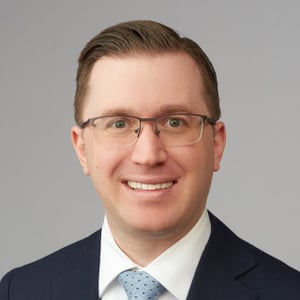
Associate, Gibson, Dunn & Crutcher
Brian A. Richman is an associate in the Washington, D.C. office of Gibson, Dunn & Crutcher. He practices in the firm’s Litigation Department, and is a member of the Appellate and Constitutional Law and Administrative Law and Regulatory practice groups.
Mr. Richman represents clients in high-stakes appellate, administrative law, and litigation matters. His practice includes litigating cutting-edge constitutional and administrative law issues, challenging agency rulemakings, and defending against government enforcement actions, along with other complex litigation matters. He has extensive experience in the financial services sector.
Before joining the firm, Mr. Richman clerked for Judge Stephen F. Williams of the U.S. Court of Appeals for the District of Columbia Circuit. He also practiced at a New York law firm, where he focused on commercial litigation and white collar defense and investigations. Mr. Richman is a former securities compliance officer at Goldman Sachs, and has handled numerous regulatory matters involving the SEC, CFTC, FERC, FINRA, and the Federal Reserve.
Mr. Richman received his JD from Yale Law School, where he was a lead editor on the Yale Journal on Regulation, and a semi-finalist in both the Morris Tyler Moot Court of Appeals and Thomas Swan Barristers’ Union Mock Trial Competition. In 2011, Mr. Richman graduated from Cornell University with a B.S., with honors, in Policy Analysis and Management.
Mr. Richman is admitted to practice in New York and the District of Columbia. He is also admitted to the United States Courts of Appeals for the Second and D.C. Circuits, and the U.S. District Courts for the Southern and Eastern Districts of New York.
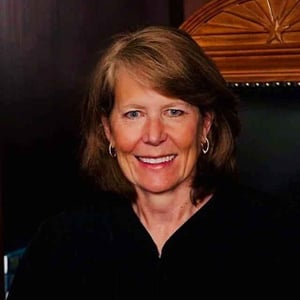
Presiding Disciplinary Judge, Arizona Supreme Court
Margaret H. Downie is the Presiding Disciplinary Judge for the Arizona Supreme Court — presiding over formal attorney discipline, disability, and reinstatement proceedings. Judge Downie previously served as Executive Director of the Arizona Commission on Judicial Conduct and Staff Director of the Arizona Supreme Court’s Judicial Ethics Advisory Committee. From 2008 to 2017, Judge Downie was a judge on the Arizona Court of Appeals, Division One. Prior to that, she spent 11 years on the Maricopa County Superior Court, where she was Associate Presiding Judge and Civil Presiding Judge.
Judge Downie graduated with a B.A. degree, magna cum laude, from the University of Arkansas at Little Rock. She received her J.D. degree, magna cum laude, from Georgetown University in Washington, D.C. After law school, Judge Downie worked in the civil litigation department of Jennings, Strouss & Salmon in Phoenix. Thereafter, she spent almost ten years in the lawyer regulation department of the State Bar of Arizona, ultimately serving as Chief Bar Counsel.

Shareholder, Greenberg Traurig
Greenberg Traurig Phoenix Litigation chair Andy Halaby advises clients on professional responsibility and related matters, including discipline defense, disqualification, and lawyer liability matters, as well as issues and opportunities arising from Arizona’s Alternative Business Structure (ABS) law. He has served on the Arizona Supreme Court's Task Forces on Lawyer Ethics, Professionalism, and the Unauthorized Practice of Law, and Judicial Performance Review, and chaired the State Bar of Arizona's Conflict Case Committee. Andy also practices extensively in intellectual property litigation. A former professional engineer registered with the United States Patent and Trademark Office, Andy has served as lead counsel in dozens of patent infringement and other IP matters. His published work has been cited in, among other things, treatises on intellectual property law, remedies, evidence, professional responsibility and the First Amendment, as well as in numerous scholarly articles. He has taught multiple semesters of Professional Responsibility, Patent Litigation, and other courses at the Sandra Day O’Connor College of Law at Arizona State University.

Judge, Arizona Court of Appeals, Division One
The Honorable Jennifer M. Perkins began service on the Arizona Court of Appeals, Division One, on October 30, 2017. At the time of her appointment by Governor Douglas Ducey, Judge Perkins was Assistant Solicitor General for the State of Arizona.
Judge Perkins was born in Portales, New Mexico, and primarily raised in Albuquerque. She attended the prestigious Albuquerque Academy from 1988-1995, before moving to Washington D.C. to attend the Elliott School of International Affairs at the George Washington University as a National Merit Scholar. Therafter, she relocated again to Dallas, Texas, and earned her juris doctor from the SMU Dedman School of Law, graduating cum laude in 2002.
Judge Perkins started her career at the law firm of Browning & Peifer (now Peifer, Hanson, Mullins, and Baker) in Albuquerque, New Mexico. While there, she litigated complex commercial matters including class action plaintiff and defense work, and assisted with employment and contract litigation. In 2003, the judge accompanied the Honorable James O. Browning in transitioning to the federal district court bench, serving as his first law clerk.
After her clerkship, Judge Perkins moved to Arizona to work for the Institute for Justice, Arizona Chapter, a public interest law firm. She spent five years with IJ-AZ litigating civil rights cases in Arizona and across the country. In 2009, the judge became Disciplinary Counsel for the Arizona Commission on Judicial Conduct, where she reviewed and prosecuted ethics complaints against state court judges throughout Arizona. After five years serving the state in this capacity, Judge Perkins entered private practice by joining an appellate law firm in Phoenix. While there, she worked on state and federal appeals involving a wide range of legal subjects, including complex business disputes, property rights, judicial ethics, and personal injury matters.
In January 2015, Judge Perkins joined the Office of the Arizona Attorney General to serve as the first Assistant Solicitor General; in that capacity, she was responsible for oversight of Attorney General Opinions and served as ethics counsel to the entire office. In addition to these two primary roles, the judge assisted on a variety of matters including trial and appellate litigation of election-related matters; federal appellate litigation with the Federalism Unit; state criminal appeals; and drafting amicus briefs on behalf of Arizona in state and federal courts.
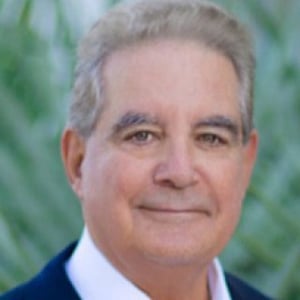
Chairman, Secura/Isaac Group
William “Bill” Isaac served as Chairman of the FDIC during one of the most important and tumultuous periods in US banking history. Some 3,000 banks and thrifts failed during the 1980s, including Continental Illinois and nine of the ten largest banks in Texas. In addition to the failures of many of the largest regional banks throughout the US, most of the money center banks in the US were on the watch list due in large part to the enormous amount of loans on their books to less developed countries.
President Carter appointed Bill Isaac to the board of the FDIC in 1978. He was confirmed by the Senate at the age of 34. President Reagan named him Chairman of the FDIC two years later, making him the youngest FDIC board member and Chairman in history. Bill Isaac also served as Chairman of the Federal Financial Institutions Examination Council (1983-85), as a member of the Depository Institutions Deregulation Committee (1981–85), and on the Vice President’s Task Group on Regulation of Financial Services (1984).
Bill Isaac is currently Chairman and principal owner of three premier consulting firms, Secura/Isaac Consulting, Blue SaaS Solutions, and Secura/Isaac Talent Advisors. He is a member of the boards of directors of Emigrant Bank and New York Private Bank & Trust and serves as Chairman of Sarasota Private Trust and Cleveland Private Trust, all of which are owned by Howard Milstein and his family.
After completing his service as Chairman of the FDIC at the end of 1985, Bill Isaac founded The Secura Group, a leading consulting firm, which he sold in 2008. He served as Chairman of the Board of Fifth Third Bancorp, one of the nation’s leading banks, and worked as Senior Managing Director at FTI Consulting from 2011 to 2019. He then joined Howard Milstein in the financial services business. Bill Isaac is a former board member at TSYS, a leading payment processing company that today is part of Global Payments. He has served on the boards of Amex Bank, The Associates (a finance company formerly owned by Ford Motor Company), credit reporting company TransUnion, and staffing firm MPS Group.
Bill Isaac is involved extensively in thought leadership relating to the financial industry. He is the author of ‘Senseless Panic: How Washington Failed America’ with a foreword by legendary former Federal Reserve Chairman Paul Volcker. ‘Senseless Panic’ provides an inside account of the banking and savings and loans crises of the 1980s and compares that period to the financial crisis of 2008/2009. Bill Isaac’s articles appear in the Wall Street Journal, the Washington Post, the New York Times, The Hill, American Banker, Forbes, the Financial Times, the Washington Times, and other leading publications. He appears regularly on television and radio, testifies before Congress, and is a speaker before audiences throughout the world (www.WilliamIsaac.com).
Bill Isaac was formerly a senior partner at Arnold & Porter, which was a founding partner of The Secura Group. He left the law firm in 1993 when Secura purchased Arnold & Porter’s interest in Secura. Before his appointment to the FDIC, Bill Isaac served as vice president, general counsel and secretary of First Kentucky National Corporation and its subsidiaries, including First National Bank of Louisville and First Kentucky Trust Company. He began his career with Foley & Lardner in Milwaukee where he practiced general corporate law specializing in banking law.
Bill Isaac received a Distinguished Achievement Medal in 1995 from Miami University and a Distinguished Alumnus Award in 2013 from The Ohio State University. He is a Life member of both the Board of Directors of the Miami University Foundation and the Board of Directors of The Ohio State University Foundation. Bill co- founded in 2016, with his former classmate, the William Isaac & Michael Oxley Center for Business Leadership at Miami University.

Partner, Simpson Thacher
Mr. Noreika leads projects related to the U.S. banking industry, as well as clients that span beyond traditional banking including financial technology and cryptocurrency companies. He is the company’s focal point for C-suite advice on compliance and regulatory requirements at all levels, domestic and international.
Prior to joining Patomak, Mr. Noreika was a partner at Simpson Thacher & Bartlett LLP and was a lead lawyer in the firm’s financial institutions regulatory practice, focusing on banking regulation and related litigation. In that role, he advised domestic and international financial institutions on regulatory issues relating to mergers and acquisitions, minority investments, capital issuances, structuring and compliance activities, and litigation matters.
Mr. Noreika’s extensive experience includes advising regional and multinational banks on the structuring of their U.S. operations, compliance with the Volcker Rule, Consumer Financial Protection Bureau and other federal agency regulations, Bank Secrecy Act and anti-money laundering rules, as well as transactional matters and related regulatory applications. He has counseled numerous private equity funds with respect to investments in banking organizations.
In 2017, Mr. Noreika served as acting Comptroller of the Currency where he led the 4,000-person independent agency responsible for chartering, regulating, and supervising all national banks and federal savings associations as well as federal branches and agencies of foreign banks in the U.S. There, he worked to make regulation more accountable, improved the efficiency of chartering and licensing decisions, and sought the enhance the value of the national bank and federal thrift charters and their ability to meet the credit and banking needs of their communities. In this role, he also served as director of the Federal Deposit Insurance Corporation and member of the Financial Stability Oversight Council.
Mr. Noreika has been recognized as a leader in his field by Chambers USA in “Financial Services Regulation: Banking Compliance” since 2014. He received his law degree from Harvard Law School, where he was editor of the Harvard Law Review. He earned his B.S. in economics with a concentration in finance from The Wharton School of the University of Pennsylvania.

Senior Fellow, Mises Institute
Alex J. Pollock is a Senior Fellow with the Mises Institute, providing thought and policy leadership on financial issues and the study of financial systems. His work includes cycles of booms and busts, financial crises with their political responses, housing finance, government-sponsored enterprises, risk and uncertainty, central banking, banking and financial regulation, corporate governance, retirement finance, student loans, and the politics of finance.
He previously served as the Principal Deputy Director of the Office of Financial Research in the U.S. Treasury Department 2019-2021. He was a Distinguished Senior Fellow with the R Street Institute 2015-2019 and 2021, and a resident fellow at the American Enterprise Institute, 2004-2015. Among the many aspects of his AEI work, he developed the One Page Mortgage Form to give borrowers in clear form the key information they need in order to know what they are committing themselves to. He was President and CEO of the Federal Home Loan Bank of Chicago from 1991 to 2004. There he invented the Mortgage Partnership Finance program, which successfully created front-end mortgage credit risk sharing beginning in 1997. His decades of banking experience include being a Visiting Scholar at the Federal Reserve Bank of St. Louis, 1991.
Pollock was a director of the CME Group 2004-2019 and of Ascendium Education Group 1989-2019. He is a director and past-chairman of the Great Books Foundation and a past president of the International Union for Housing Finance.
He is the co-author of Surprised Again! - The COVID Crisis and the New Market Bubble (2022), and the author of Finance and Philosophy—Why We’re Always Surprised (2018) and Boom and Bust: Financial Cycles and Human Prosperity (2011), as well as numerous articles and Congressional testimony.
Pollock is a graduate of Williams College, the University of Chicago, and Princeton University.
His work is available on alexjpollock.com.
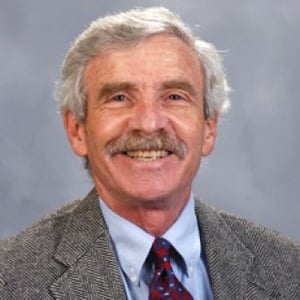
Robert Kavesh Professorship in Economics, Leonard N. Stern School of Business, New York University
Lawrence J. White has been with New York University Leonard N. Stern School of Business for more than 35 years. His primary research areas of interest include financial regulation, antitrust, network industries, international banking and applied microeconomics.
Professor White has published numerous articles in the Journal of Business, Journal of Economic Perspectives, Journal of Economic Literature, Journal of Political Economy, American Economic Review, Review of Economics and Statistics, Quarterly Journal of Economics, and other leading journals in economics, finance, and law. He is the author of The S&L Debacle: Public Policy Lessons for Bank and Thrift Regulation, among other books, and he is the co-editor (with John Kwoka) of the 6th of edition of The Antitrust Revolution. He contributed chapters to both of the NYU Stern books on the financial crisis - Restoring Financial Stability and Regulating Wall Street. He is the co-author (with Stern's Viral Acharya, Matthew Richardson, and Stijn Van Nieuwerburgh) of Guaranteed to Fail: Fannie Mae, Freddie Mac, and the Debacle of Mortgage Finance.
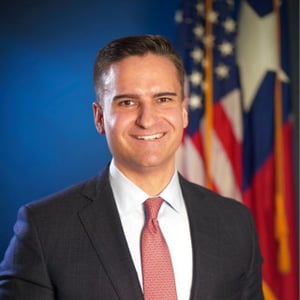
Deputy Attorney General, Civil Litigation, Texas Attorney General
James Lloyd is the Deputy Attorney General for Civil Litigation for the Texas Attorney General. He serves alongside over 600 lawyers and staff across eleven practice groups handling more than 35,000 cases involving the State of Texas. James also serves as Chief of the Antitrust Division, leading the enforcement of state and federal antitrust laws and representing the interests of Texas in national antitrust matters alongside federal enforcers.
James previously practiced at global law firms Sidley Austin LLP and Mayer Brown LLP, managing a range of high-profile matters for public and private companies. He began his legal career as a law clerk to Justice David Medina on the Texas Supreme Court.
James has served in a variety of roles in public service. He is currently an Intelligence Officer in the U.S. Navy Reserve, assigned to the Commander of the U.S. Pacific Fleet. James served on the Presidential Transition Team for President Donald Trump, where he advised on financial regulatory policy and led the transition of the U.S. Securities and Exchange Commission. James previously served at the White House as Senior Writer to President George W. Bush. He was also a member of the national security staff, coordinating policymaking and oversight with senior officials among the Cabinet departments and agencies.
James received his J.D. from The University of Texas School of Law, where he was Articles Editor for the Texas Law Review and a teaching assistant to Admiral Bobby Inman. He earned his bachelor’s degree from Rice University, where he was student body president and received the Joseph Cooper Prize in Public Policy.
A seventh-generation Texan, James comes from a family of litigators, including his mother, his sister, and his father who has served over 18 years on the Texas judiciary. James is Chair of the State Bar of Texas Antitrust and Business Litigation Section and serves on the Executive Committee of The Federalist Society’s Corporations, Securities, and Antitrust Practice Group.
James has spent over a decade as a volunteer attorney for veterans legal clinics in Houston and Austin. He is also a member of the Legal Affairs Roundtable for the Intelligence and National Security Alliance (INSA) and is also a longtime supporter of the Houston Livestock Show and Rodeo, serving on the Mutton Bustin' Committee.
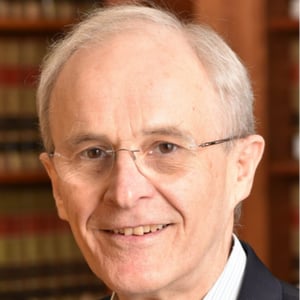
Levin, Mabie & Levin Professor of Law, University of Florida Levin College of Law
Professor Lynn M. LoPucki comes to UF in August 2022 from the UCLA School of Law where he taught Secured Transactions and Business Associations for twenty-two years. His Stakeholder Takeover Project is an effort to provide corporate stakeholders with the information they need to control corporations through markets. For example, the Project website ranks the S&P 500 companies by their greenhouse gas emissions. The UC Davis Law Review published the first Project article, Repurposing the Corporation Through Stakeholder Markets, in February 2022 and will publish the second, Corporate Greenhouse Gas Disclosures, in November.
Professor LoPucki has published more than seventy-five articles in highly regarded law reviews, including the Yale Law Journal, Stanford Law Review, University of Chicago Law Review, University of Michigan Law Review, University of Pennsylvania Law Review, Virginia Law Review, Cornell Law Review, Duke Law Journal, and Northwestern University Law Review. He co-authors three Aspen Casebooks: Business Associations: A Systems Approach (2020) (with Andrew Verstein); Secured Transactions: A Systems Approach (9th edition with Elizabeth Warren and Robert M. Lawless), and Commercial Transactions: A Systems Approach (7th edition with Elizabeth Warren, Daniel L. Keating, Ronald Mann, and Robert M. Lawless).
Since 1994, the Florida-UCLA-LoPucki Bankruptcy Research Database has collected large, public company bankruptcy data and disseminated it to the public and to bankruptcy researchers throughout the world. Those data provided the foundation for Professor LoPucki’s books, Courting Failure: How Competition for Big Cases is Corrupting the Bankruptcy Courts (University of Michigan Press 2005) and Professional Fees in Corporate Bankruptcies: Data, Analysis, and Evaluation (Oxford University Press, 2011) (with Joseph Doherty).
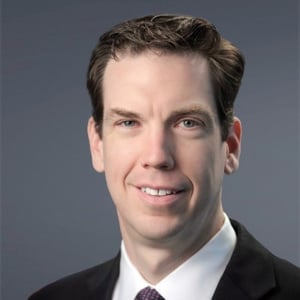
Partner, Fusion Law, PLLC
Paul is the founding partner of Fusion Law, PLLC. He has extensive experience with state, federal, and global regulators building coalitions and implementing policies to promote innovation in financial services. He is responsible for designing and implementing the first state (Arizona) and federal (CFPB) FinTech sandboxes in the United States. He also designed the CFPB no-action letter and trial disclosure policies. He helped found the first global regulatory innovation coalition (Global Financial Innovation Network) and led the founding of the first U.S. regulatory innovation coalition (American Consumer Financial Innovation Network). He served on the Financial Stability Oversight Council subcommittee on digital assets. He also has drafted state-level laws on blockchain and utility tokens.
Paul also has significant enforcement and litigation experience. He led many multi-state consumer protection enforcement matters as Civil Litigation Division Chief at the Arizona Attorney General’s Office.
Prior to his government service, Paul practiced law in the areas of securities litigation and transactional work for approximately six years at two well-known law firms. He also clerked on the U.S. Court of Appeals for the Fourth Circuit.
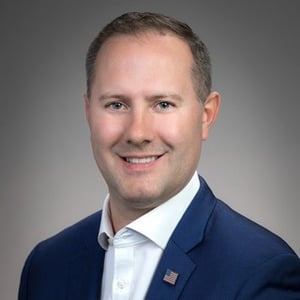
Head of Corporate Governance, Strive Asset Management
Justin Danhof is the Head of Corporate Governance at Strive Asset Management. Previously, he served as General Counsel for the National Center for Public Policy Research, as well as Director of the Center’s Free Enterprise Project. He also worked in the Miami-Dade State’s Attorney’s Office in the Economic Crimes and Cybercrimes Division, for the Massachusetts Alliance for Economic Development and at the U.S. Securities and Exchange Commission.
Mr. Danhof’s work has been widely published and quoted in major newspapers, including the Wall Street Journal, the New York Times, Politico, USA Today, the Los Angeles Times, the San Francisco Chronicle, the Boston Globe, the Christian Science Monitor, and the Washington Post. He has also appeared on the Fox News Channel, One America News Network, and the Fox Business Channel, among others.
Mr. Danhof is a member of the Federalist Society and Christian Legal Society.
Mr. Danhof is a graduate of Bentley University (Waltham, MA), where he received a Bachelor of Science in economics and finance and pitched for three seasons on the school’s NCAA Division II baseball team. Mr. Danhof completed his graduate studies at the University of Miami School of Law where he received his Juris Doctor and Master of Laws in Taxation.
Mr. Danhof is licensed to practice law in New York and Washington, D.C.

General Counsel, Strive
Before joining Strive, Alexandra served as the Director of Regulatory Affairs at River Financial, where she handled all regulatory and government matters and served as product counsel. Prior to her time at River, Alexandra worked at the U.S. Department of Treasury, first in the General Counsel’s office and then as the youngest-ever Executive Secretary, where she worked directly with Secretary Mnuchin. Alexandra previously worked as an associate in the Washington, D.C. office of Akin Gump. She clerked for then-Justice Allison Eid on the Colorado Supreme Court and Judge Jennifer Elrod on the U.S. Court of Appeals for the Fifth Circuit. She holds a J.D. from the University of Texas and a B.A. from The King’s College.

Litigation Update: Powell v. SEC
Gregory G. Garre, Jill Jacobson, Margaret A. Little
The SEC’s “Gag Rule” long conditioned settlement of enforcement actions on the defendant's agreeing never...
Foreign Influence Operations and National Security
Margaret Harker, Park MacDougald, Vincent Vitkowsky
Foreign influence operations have become increasingly important in geopolitical competition and American national security. China...
How Does AI Affect Rulemaking?
John Kennerly Davis, Daniel M. Flores, John Nay, Catherine M. Sharkey
A panel of experts will engage in a legal discussion about the implications of using...
Open Minds with Prof. Julia Mahoney and Prof. Joshua Kleinfeld - Part I
Julia D. Mahoney, Joshua Kleinfeld
In Part I, Professor Julia Mahoney joins Professor Joshua Kleinfeld to delve into the complexities...
The SEC and Cryptocurrency
Rachel Barnett, Chris Brummer, Patrick Daugherty, William McLucas, Brian Richman
This event will survey the SEC's current involvement in the cryptocurrency field. The conversation will...
Topics
AI Poses a Serious Threat to the Legal Profession. It Also Presents an Extraordinary Opportunity.
The rapid emergence of high-profile applications for Artificial Intelligence—including advanced search engines, recommendation systems, and...
Ethics CLE 2023: Recent Developments in Legal Ethics & Professional Responsibility
Margaret H. Downie, Andrew Halaby, Jennifer Perkins
CLE credit for this event is available at On-Demand CLE. In this CLE webinar, Judge Jennifer...
How Risky Are the Banks Now? What Regulatory Reforms Make Sense?
William M. Isaac, Keith Noreika, Alex J. Pollock, Lawrence J. White
Six months ago, we experienced bank runs and three of the four largest bank failures...
How Reliable are Corporate ESG Ratings?
James R. Lloyd, Lynn M. LoPucki, Paul N. Watkins, Justin Danhof
Environmental, Social, and Corporate Governance (ESG) investing has grown in popularity in recent years. As...
Crypto: The Wild West?| Bitcoin Cowboys
Alexandra Gaiser
In this episode of the FedSoc Films Podcast, we spoke with Alexandra Gaiser, Director of...