
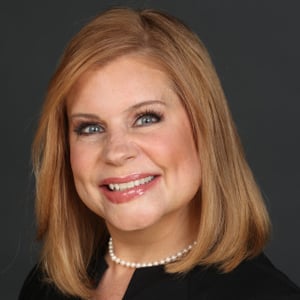
Vice President & Senior Legal Fellow, Defending Education
Sarah Parshall Perry is vice president and senior legal fellow at Defending Education.
Before coming to Defending Education, Sarah served as a Senior Legal Fellow for the Edwin Meese III Center for Legal and Judicial Studies, part of the Institute for Constitutional Government at Heritage, where her work centered on civil rights and the proper role of the courts.
Sarah joined Heritage after serving as Senior Counsel to the Assistant Secretary for Civil Rights at the U.S. Department of Education where she focused on policy reform, technical guidance, and the Office for Civil Rights’ (OCR) annual report to Congress. While at OCR, she was appointed by the Acting Assistant Secretary to co-chair the Employment Engagement, Diversity, & Inclusion Council and, in coordination with the Deputy Assistant Secretary for Enforcement oversee the hiring of dozens of attorneys for OCR’s 12 regional offices nationwide. Prior to her tenure at the Department of Education, she spent six years at the Family Research Council in Washington, D.C. where she was Senior Fellow for Education Reform and later, became the regular substitute host for the “Washington Watch” radio show. Her work at the Family Research Council also included the building and oversight of multiple policy coalitions geared toward the fight against antisemitism in academia, curbing tech censorship, and protecting religious liberty.
Before joining FRC, Sarah was in-house counsel and director of development for a Baltimore advertising agency, providing management of all new business transactions from pitch to contract execution for the multi-million-dollar enterprise. She began her practice at the litigation firm of Simms Showers, LLP where her work included Title VII employment discrimination, maritime/admiralty, and False Claims Act (“Qui Tam”) law. Sarah has a law degree from the University of Virginia School of Law, where she was an editor of the Virginia Journal of International Law, a recipient of the American Jurisprudence award, a Phi Delta Phi honor society member, and a student practitioner in the appellate litigation clinic where she argued before the 4th Circuit Court of Appeals. She holds a B.S. in Journalism with honors from Liberty University.
Her commentary and analysis have appeared in media outlets across the country, including the AP, BBC, Fox News, NPR, The Hill, Washington Post, Washington Times, and the New York Times. She is the mother of three children, and the author of just as many books on the trials and triumphs of parenting children on the autism spectrum. Sarah is a member of the Kirkpatrick Society at the American Enterprise Institute, and makes her home north of Baltimore, Maryland.
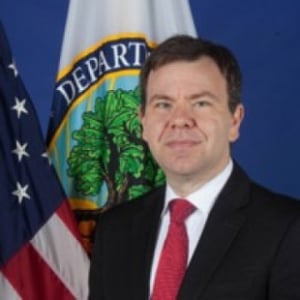
General Counsel, Mountain States Legal Foundation
William E. Trachman is General Counsel for Mountain States Legal Foundation, where he protects the rights of individuals to live freely and securely under the U.S. Constitution. Previously, he was appointed to serve in the Department of Education as Deputy Assistant Secretary in the Office for Civil Rights. Prior to his appointment, he served as General Counsel to the Douglas County School District, where he helped litigate the fight for school choice in the school district. Presently, Mr. Trachman serves as Chair of the Colorado Federalist Society and the Vice Chair of the U.S. Commission on Civil Rights’ Colorado Advisory Board. He previously taught as an Adjunct Professor at the University of Denver, Sturm College of Law. He attended U.C. Berkeley for both undergraduate and law school, and then clerked for the Honorable Harris Hartz on the 10th Circuit Court of Appeals. Mr. Trachman is licensed in Colorado, California, and Washington, D.C.
Vice President & Senior Legal Fellow, Defending Education
Sarah Parshall Perry is vice president and senior legal fellow at Defending Education.
Before coming to Defending Education, Sarah served as a Senior Legal Fellow for the Edwin Meese III Center for Legal and Judicial Studies, part of the Institute for Constitutional Government at Heritage, where her work centered on civil rights and the proper role of the courts.
Sarah joined Heritage after serving as Senior Counsel to the Assistant Secretary for Civil Rights at the U.S. Department of Education where she focused on policy reform, technical guidance, and the Office for Civil Rights’ (OCR) annual report to Congress. While at OCR, she was appointed by the Acting Assistant Secretary to co-chair the Employment Engagement, Diversity, & Inclusion Council and, in coordination with the Deputy Assistant Secretary for Enforcement oversee the hiring of dozens of attorneys for OCR’s 12 regional offices nationwide. Prior to her tenure at the Department of Education, she spent six years at the Family Research Council in Washington, D.C. where she was Senior Fellow for Education Reform and later, became the regular substitute host for the “Washington Watch” radio show. Her work at the Family Research Council also included the building and oversight of multiple policy coalitions geared toward the fight against antisemitism in academia, curbing tech censorship, and protecting religious liberty.
Before joining FRC, Sarah was in-house counsel and director of development for a Baltimore advertising agency, providing management of all new business transactions from pitch to contract execution for the multi-million-dollar enterprise. She began her practice at the litigation firm of Simms Showers, LLP where her work included Title VII employment discrimination, maritime/admiralty, and False Claims Act (“Qui Tam”) law. Sarah has a law degree from the University of Virginia School of Law, where she was an editor of the Virginia Journal of International Law, a recipient of the American Jurisprudence award, a Phi Delta Phi honor society member, and a student practitioner in the appellate litigation clinic where she argued before the 4th Circuit Court of Appeals. She holds a B.S. in Journalism with honors from Liberty University.
Her commentary and analysis have appeared in media outlets across the country, including the AP, BBC, Fox News, NPR, The Hill, Washington Post, Washington Times, and the New York Times. She is the mother of three children, and the author of just as many books on the trials and triumphs of parenting children on the autism spectrum. Sarah is a member of the Kirkpatrick Society at the American Enterprise Institute, and makes her home north of Baltimore, Maryland.
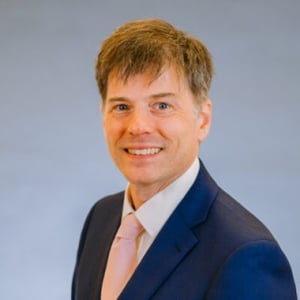
Senior Counsel, Vice President of Litigation Strategy, Alliance Defending Freedom
Jonathan Scruggs serves as senior counsel and vice president of litigation strategy with Alliance Defending Freedom. In this role, he identifies new litigation opportunities, develops new legal strategies, and improves processes across multiple litigation teams in collaboration with the chief legal counsel.
Since joining ADF in 2006, Scruggs has worked on and prevailed in a variety of cases related to Title IX, gender ideology, and people’s right to freely express their faith, including Masterpiece Cakeshop v. Colorado Civil Rights Commission, 303 Creative v. Elenis, and Brush & Nib Studio v. Phoenix, which Scruggs argued at the Arizona Supreme Court. Scruggs has argued before numerous federal appellate courts and trial courts across the country and has extensive experience litigating free-speech, religious-liberty, establishment, Title IX, and equal-protection issues on behalf of students, female athletes, businesses, professionals, and non-profit entities.
Scruggs earned his B.A., summa cum laude, from Vanderbilt University in 2003 and his J.D. at Harvard Law School in 2006. He is also a 2004 Blackstone Fellow.
A member of the bars of Arizona and Tennessee, Scruggs is admitted to the U.S. Supreme Court and multiple federal district and appellate courts.

Dr. John Eastman is the former Henry Salvatori Professor of Law & Community Service and former Dean at Chapman University's Dale E. Fowler School of Law, where he had been a member of the faculty since 1999, specializing in Constitutional Law, Legal History, and Property. He is a founding director of the Center for Constitutional Jurisprudence, a public interest law firm affiliated with the Claremont Institute that he founded in 1999. He has a Ph.D. in Government from the Claremont Graduate School and a J.D. from the University of Chicago Law School, and a B.A. in Politics and Economics from the University of Dallas. He serves as the Chairman of the Board of the National Organization for Marriage.
Prior to joining the Chapman law faculty, Dr. Eastman served as a law clerk to the Honorable Clarence Thomas, Associate Justice, Supreme Court of the United States, and to the Honorable J. Michael Luttig, Judge, United States Court of Appeals for the Fourth Circuit and practiced law with the national law firm of Kirkland & Ellis. Dr. Eastman has also represented numerous clients in important constitutional law matters and has argued before the Supreme Court. On behalf of the Claremont Institute Center for Constitutional Jurisprudence, he has participated as amicus curiae before the Supreme Court of the United States, U.S. Courts of Appeals, and State Supreme Courts in more than one hundred cases of constitutional significance, including Boy Scouts of America v. Dale, Zelman v. Simmons-Harris (the school vouchers case), Kelo v. New London, Ct. (eminent domain), and Van Orden v. Perry (the 10 Commandments case). He has also appeared as an expert legal commentator on numerous television and radio programs, including C-SPAN, Fox News, PBS, NewsHour, and The O'Reilly Factor.
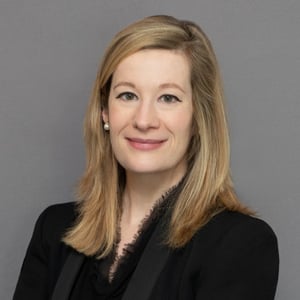
Partner, Williams & Connolly
Sarah Harris is a partner in Williams & Connolly’s Supreme Court and Appellate practice, where she represents clients in high-stakes appeals in the U.S. Supreme Court and federal and state appellate courts across the country. She has argued five cases before the U.S. Supreme Court, and she has presented many arguments in federal courts of appeals and state appellate courts. Her cases have run the gamut of substantive areas, including constitutional law—especially First Amendment and separation-of-powers issues—as well as administrative law, arbitration, class actions, antitrust, False Claims Act litigation, commercial litigation, and federal civil procedure.
Sarah is widely recognized for her appellate advocacy. Chambers USA has recognized her as “Up and Coming” in Appellate Law. She has been named to Bloomberg Law’s 40 Under 40 list of top lawyers nationwide and to Benchmark Litigation’s “40 & Under Hot List,” as well as a an appellate “Rising Star” by The National Law Journal and Law360, a “Next Generation Lawyer” by The Legal 500, and as one of Bloomberg Law’s “Five Fresh Faces to Know in Appellate.”
Sarah clerked for Justice Clarence Thomas on the Supreme Court of the United States, Judge Laurence Silberman on the United States Court of Appeals for the D.C. Circuit, and Judge Sandra Lynch on the United States Court of Appeals for the First Circuit. Before joining Williams & Connolly, she served as a Deputy Assistant Attorney General in the Department of Justice’s Office of Legal Counsel.
Sarah received her undergraduate degree summa cum laude from Princeton University, and her J.D. magna cum laude from Harvard Law School. She also holds a Ph.D. and M. Phil. from the University of Cambridge.
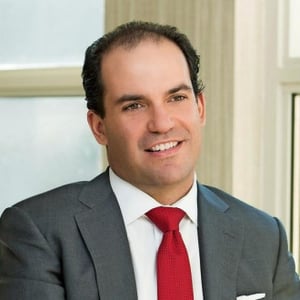
Partner, Latham & Watkins LLP
Roman Martinez is a partner in the Washington, D.C. office of Latham & Watkins. As a member of the firm’s Supreme Court and Appellate Practice, he focuses primarily on appeals in the Supreme Court of the United States, the United States Courts of Appeals, and state appellate courts. Mr. Martinez has handled civil and criminal matters involving a wide range of constitutional, statutory, and administrative law issues, and he has argued cases in the Supreme Court and the D.C., Sixth, Ninth, and Federal Circuits, among other courts.
Mr. Martinez’s appellate practice encompasses civil and criminal matters spanning virtually all areas of law. He recently rejoined Latham after serving as an Assistant to the Solicitor General at the US Department of Justice. In that role, he represented the United States in litigation before the Supreme Court and advised the Solicitor General on the government’s appellate litigation throughout the country.
Mr. Martinez has personally argued seven cases in the Supreme Court, including important cases in the fields of patent law, criminal law, civil rights, and civil procedure. He has filed over 75 briefs in the Supreme Court involving a wide range of legal issues, including administrative, tax, securities, intellectual property, criminal, environmental, education, civil rights, immigration, and First Amendment law.
Over the past year, Mr. Martinez has led Latham appellate teams in cases involving the Administrative Procedure Act, securities, ERISA, products liability, and employment law. Earlier this year, he successfully persuaded the Supreme Court to reject the State of Connecticut’s high-profile effort to reinstate the murder conviction of Michael Skakel. He frequently consults with clients to develop creative approaches to difficult legal questions that arise in and out of litigation.
Mr. Martinez’s extensive pro bono practice focuses chiefly on administrative law challenges to unlawful agency action by the Department of Veterans Affairs, as well as on criminal defense appeals. In 2018, he persuaded the Supreme Court to grant certiorari on behalf of a veteran seeking judicial review of an unlawful regulation promulgated by the Department of Veterans Affairs.
Before joining Latham, Mr. Martinez served as a law clerk to Chief Justice John G. Roberts of the Supreme Court of the United States and to then Judge Brett M. Kavanaugh of the D.C. Circuit.
From 2002 to 2005, Mr. Martinez served as an advisor on the Iraqi political and constitutional process, in various roles at the White House, at the US Embassy and Coalition Provisional Authority in Iraq, and at the Department of Defense. He received the Secretary of Defense Medal for the Global War on Terrorism and the US Department of Defense Distinguished Public Service Award for his service in Iraq.
Mr. Martinez is a member of the Edward Coke Appellate Inn of Court, and he serves on the US Chamber of Commerce's Administrative Law & Government Litigation Advisory Committee. He previously served as a member of the D.C. Circuit’s Advisory Committee on Procedures, and he now serves on the US District Court for the District of Columbia’s Committee on Grievances. His writing has appeared in The Wall Street Journal, The Washington Post, and other publications. He has appeared as a guest on the PBS NewsHour and other television programs to discuss the Supreme Court.

Executive Vice President, The Federalist Society
Dean Reuter is Executive Vice President at the Federalist Society for Law and Public Policy Studies. He has served in two federal government agency Offices of the Inspector General, as Counsel to the Inspector General and Deputy Inspector General, responsible for policing the use of federal funds granted and contracted through those agencies. As such, he helped conduct and oversee criminal investigations across the country. He is the principal author of the non-fiction book, The Hidden Nazi: The Untold Story of America's Deal with the Devil, and editor of Liberty’s Nemesis: The Unchecked Expansion of the State and Confronting Terror: 9/11 and the Future of American National Security. He was appointed by the President and served as Vice-Chairman of the Board of Directors of the Corporation for National and Community Service, and recently served as an appointee on the U.S. Commission on Presidential Scholars. He is a graduate of Hood College (BA with Honors) and the University of Maryland School of Law.
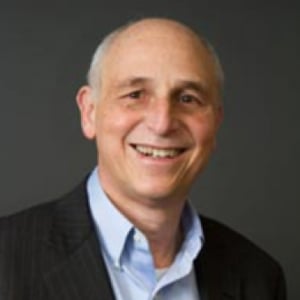
A.B. Chettle Chair in Civil Procedure, Georgetown University Law Center
Professor Vladeck teaches civil procedure, federal courts, a practicum on privacy and technology (taught jointly with MIT), and directs the Civil Litigation Clinic, a student clinic that handles trial court litigation focused on public-interest cases. He also serves as Faculty Director of the Law Center’s Center on Privacy and Technology.
From 2002 to 2009, Professor Vladeck served as Director of the Civil Rights section of Georgetown Law’s Institute for Public Representation, a student clinic that handles complex trial court and appellate litigation focused on civil rights and other public-interest litigation, while also teaching civil procedure and federal courts. From 2009 to 2012, Professor Vladeck took leave from Georgetown to serve as the Director of the Federal Trade Commission’s Bureau of Consumer Protection.
At the FTC, he supervised the Bureau’s 450 lawyers, investigators, paralegals and support staff in carrying out the Bureau’s work to protect consumers from unfair, deceptive or fraudulent practices. Before joining the Law Center faculty full-time in 2002, Professor Vladeck spent over 25 years with Public Citizen Litigation Group, a national public interest law firm, serving the last ten years as the Group’s director. He has briefed and argued a number of cases before the U.S. Supreme Court and more than sixty cases before federal courts of appeal and state courts of law resort.
He is a Senior Fellow of the Administrative Conference of the United States, a member of the National Academy of Sciences’ Committee on Law, Science and Technology, and an elected member of the American Law Institute. He also serves as Vice Chair of the Board of Trustees of the Natural Resources Defense Council, and on the boards of the National Consumers Law Center and the Center for Democracy and Technology. Professor Vladeck frequently testifies before Congress and writes on administrative law, First Amendment, consumer protection, privacy, and access to justice issues.

Laurence H. Silberman Chair in Constitutional Governance, American Enterprise Institute; Executive Director, Antonin Scalia Law School’s C. Boyden Gray Center for the Study of the Administrative State
Adam J. White is the Laurence H. Silberman Chair in Constitutional Governance and senior fellow at the American Enterprise Institute, where he focuses on the Supreme Court and the administrative state. He also directs the Antonin Scalia Law School’s C. Boyden Gray Center for the Study of the Administrative State.
He writes on regulation and constitutional government for a variety of publications. He practiced law in Washington, D.C., after clerking for the D.C. Circuit's Judge David Sentelle. He also has been chairman of the ABA's Administrative Law Section.
In 2021, he served on the Presidential Commission on the Supreme Court of the United States, where he criticized “Court packing” and other efforts to restructure the Supreme Court.

Partner, Clement & Murphy, PLLC
Paul served as the 43rd Solicitor General of the United States from June 2005 until June 2008. Before his confirmation as Solicitor General, he served as Acting Solicitor General for nearly a year and as Principal Deputy Solicitor General for over three years.
Paul has argued over 100 cases before the United States Supreme Court, including McConnell v. FEC, Tennessee v. Lane, United States v. Booker, MGM v. Grokster, Hobby Lobby v. Burwell, Epic Systems Corp. v. Lewis, Rucho v. Common Cause, Facebook v. Duguid, and TransUnion v. Ramirez. Paul has argued more Supreme Court cases since 2000 than any lawyer in or out of government. He has also argued many important cases in the lower courts, including Walker v. Cheney, United States v. Moussaoui and NFL v. Brady.
Paul’s practice focuses on appellate matters, constitutional litigation and strategic counseling. He represents a broad array of clients in the Supreme Court and in federal and state appellate courts. Last year, for example, he successfully argued Supreme Court cases involving significant issues of energy regulation, statutory interpretation, state sovereign immunity and Article III standing, and successfully argued a trademark appeal in the Fourth Circuit, and a constitutional appeal before the en banc Eleventh Circuit.
Paul focuses on high-stakes appeals. In recent years, he successfully defended a $1.2 billion jury verdict for clients in a Tenth Circuit case, while securing the reversal of an over $2 billion jury verdict for another client in the Seventh Circuit and the approval of a nearly $1 billion dollar class action settlement in the Third Circuit. He has initiated major administrative law challenges and constitutional litigation against the federal government, such as the successful challenge to the HHS drug-pricing rule and threatened challenges that led to the withdrawal of the Treasury Department’s proposed cryptocurrency regulations. He also counsels clients on a variety of strategic legal questions, whether arising from pending legislation, government inquiries or ongoing litigation.
Paul has undertaken substantial pro bono engagements in the Supreme Court, such as twice successfully representing the defendant in Bond v. United States and successfully representing the Omaha Tribe in Nebraska v. Parker, the guardian ad litem in Adoptive Couple v. Baby Girl, the defendant in Sekhar v. United States, a high school football coach in Kennedy v. Bremerton, and the Little Sisters of the Poor. Paul’s pro bono representation also precipitated the federal government’s confession of error in United States v. Rojas.
Following law school, Paul clerked for Judge Laurence H. Silberman of the U.S. Court of Appeals for the D.C. Circuit and for Associate Justice Antonin Scalia of the U.S. Supreme Court. After his clerkships, he went on to serve as Chief Counsel of the U.S. Senate Subcommittee on the Constitution, Federalism and Property Rights.
Paul is a Distinguished Lecturer in Law at the Georgetown University Law Center, where he has taught in various capacities since 1998. He also serves as a Senior Fellow of the Law Center’s Supreme Court Institute. He is the Justice Joseph Story Distinguished Practitioner in Residence at the Gray Center at Scalia Law School.
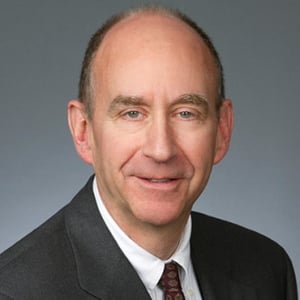
Partner, Kirkland & Ellis LLP
Neil Eggleston is a litigation partner in the Washington, D.C. office of Kirkland & Ellis LLP.
Neil has a distinguished record of public service, and has held a number of senior government roles. He was White House Counsel to President Obama from 2014 to 2017, and advised the president on all legal and constitutional issues across a broad spectrum of domestic and foreign policy matters. Neil’s practice focuses on enforcement defense including at the U.S. Department of Justice (DOJ), U.S. Securities and Exchange Commission (SEC), U.S. Attorney’s Offices, and other enforcement agencies.
Earlier in his career, Neil served as Associate Counsel to President Clinton from 1993 to 1994. Heals o served as Deputy Chief Counsel, U.S. House of Representatives Select Committee Investigating the Iran/Contra Affair (1987-1988); Assistant U.S. Attorney (1981-1987); and Chief Appellate Attorney for the Southern District of New York (1986-1987).
Neil served as a law clerk for the United States Court of Appeals for the Third Circuit (1978-1979) and for Chief Justice Warren E. Burger on the United States Supreme Court (1979-1980).
Neil teaches a seminar in Presidential Power at Harvard Law School in the spring of 2017, 2019, 2020, and 2021 and at Yale Law School in the spring of 2018. He also frequently lectures at American Bar Association and similar seminars.
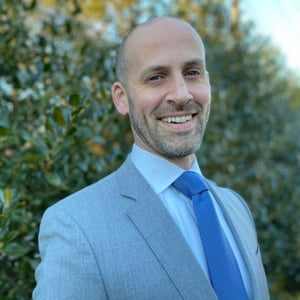
Partner, Lehotsky Keller LLP
The New York Times recognized Scott A. Keller as a “legal heavyweight,” who “is praised by opponents as a formidable advocate.”
Mr. Keller has argued 12 cases before the U.S. Supreme Court and 12 cases before the Texas Supreme Court. He is the only practicing lawyer to have argued at least 10 cases in both courts. Mr. Keller frequently represents parties in high stakes appeals, and he has argued many cases in federal courts of appeals throughout the nation. He has earned individual accolades from Lawdragon 500 Leading Litigators in America, Chambers, Legal 500, The American Lawyer, The National Law Journal, Law360, Super Lawyers, The Best Lawyers in America, and other publications.
Before founding Lehotsky Keller Cohn LLP, Mr. Keller headed Baker Botts LLP’s Supreme Court Practice. He also has significant experience at the highest levels in all three branches of government. Mr. Keller served as the Solicitor General of Texas, the State’s chief appellate litigator. He was U.S. Senator Ted Cruz’s chief counsel on the Senate Judiciary Committee. Mr. Keller was a law clerk for Justice Anthony Kennedy of the Supreme Court of the United States and Chief Judge Alex Kozinski of the U.S. Court of Appeals for the Ninth Circuit. He was also a Bristow Fellow in the U.S. Department of Justice’s Office of the Solicitor General.
Mr. Keller represents clients in cases where public communications strategy is crucial, and he has made numerous media appearances in major outlets such as The New York Times, The Wall Street Journal, BBC, Fox News, NPR, and Politico. As a sought after speaker and writer, Mr. Keller’s articles have appeared in the Stanford Law Review, Virginia Law Review, and Texas Law Review. He has also served as an adjunct professor of constitutional litigation, Supreme Court practice, and federal courts at the University of Texas School of Law.
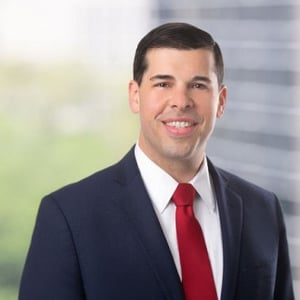
Partner, Boies Schiller Flexner LLP
Jesse, the former third-ranking official at the U.S. Department of Justice, helps clients with their most difficult litigation and regulatory issues─whether that means defending against an enforcement action, pursuing high-stakes litigation and appeals, navigating regulatory thickets at federal and state agencies, or crafting a comprehensive strategy to manage a crisis. He approaches these problems with the knowledge gained both from his broad private-practice experience and from having served at the highest levels of federal and state government.
Jesse has experience across a range of substantive and regulatory areas. He has sued the federal government and has also been one of its top law-enforcement officials; he has represented states and has also navigated their regulatory agencies on behalf of clients; and he has represented companies in business disputes, both as defendants and plaintiffs.
Before joining the firm, Jesse was the Acting Associate Attorney General at the United States Department of Justice. In that role, he oversaw the civil and criminal work of the Antitrust, Civil, Civil Rights, Environment and Natural Resources, and Tax Divisions. During Jesse’s tenure, the Associate’s office closely managed the Department’s most significant litigation, including matters involving large financial institutions, healthcare companies, automakers, energy companies, and state and local governments. In addition, Jesse served as Chair of DOJ’s Regulatory Reform Task Force and Vice Chair of DOJ’s Task Force on Market Integrity and Consumer Fraud. Jesse regularly provided legal and strategic advice to the highest-level decision makers in the federal government, including the Attorney General and Deputy Attorney General, general counsels across the spectrum of federal agencies, and White House officials.
Jesse served for three years as the secretary of Florida’s labor, economic-development, and land-use agency, the Florida Department of Economic Opportunity. Before that, he served as Governor (now Senator) Rick Scott’s general counsel.
Jesse maintains offices in both Washington D.C. and Florida. From Washington, he focuses on federal litigation and crisis management. In Florida, in addition to federal litigation, Jesse employs his knowledge of state government and regulation to help clients in courts across the state, from trial through the Florida Supreme Court.
Jesse currently serves on the Florida Supreme Court Judicial Nominating Commission, the body that provides the governor with nominees for appointment to the Florida Supreme Court. Jesse is also a fellow at the Center for the Study of the Administrative State at the Scalia Law School at George Mason University, where he writes and speaks about administrative law.
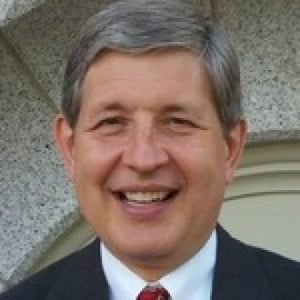
Partner, Schaerr Jaffe LLP
Gene Schaerr specializes in handling—and usually winning—civil appeals, writ proceedings and similar matters, both in appellate courts and in the law-focused proceedings at the trial-court or agency level that often determine success or failure on appeal. He has argued and won dozens of cases in a variety of forums—including the U.S. Supreme Court (where he has argued six cases), every federal circuit, and numerous federal district courts and state appellate courts. His win rate in the dozens of federal appeals he has argued in the past six years is over 75 percent.
He was a coordinator of Sidley Austin's appellate practice from 1993 until 2005, and from 2005 until 2014 was the chair of the nationwide appellate practice at Winston & Strawn—a practice he led to numerous recognitions in such publications as the Appellate Hot List. His personal practice successes have won him repeated recognition in such publications as Best Lawyers in Washington, D.C., Legal 500, D.C. Superlawyers, and Best Lawyers in America. In January 2014, Mr. Schaerr formed his own boutique litigation firm so that he could serve his clients without the conflicts and inefficiencies inherent in big-firm law practice.
Substantively, Mr. Schaerr's experience includes not only virtually every area of federal law, defamation, higher education law, immigration, insurance coverage, labor and employment, patent and trademark, privacy, product liability and warranty, statutory interpretation and tax.He has represented clients in virtually every sector, including automotive, communications, energy, financial services, health care, higher education, insurance, maritime, pharmaceuticals, technology and state and local government. He also teaches courses in Supreme Court litigation, religious freedom litigation and advanced litigation skills as an adjunct professor of law at the Brigham Young University law school.
Mr. Schaerr began law practice in 1987 following clerkships on the U.S. Supreme Court (for Chief Justice Warren Burger and Justice Antonin Scalia) and on the U.S. Court of Appeals for the D.C. Circuit (for then- Judge Kenneth Starr). He graduated in 1985 from the Yale Law School, where he was Editor-in-Chief of the Yale Journal on Regulation and Senior Editor of the Yale Law Journal. From 1991 to 1993, he served in the White House as Associate Counsel to the President, where he had responsibility for a wide range of constitutional and administrative-law issues, including those involving economic regulation, higher education, separation of powers, federalism and religious freedom. He serves as Chairman of the Constitutional Sources Project, a digital resource providing free public access to historical materials relevant to the U.S. Constitution.
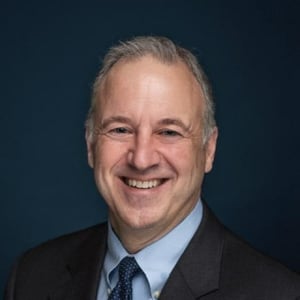
Senior Counsel, Litigation, Defense of Freedom Institute
Don Daugherty is Senior Counsel, Litigation, at the Defense of Freedom Institute for Policy Studies. He previously served as a Senior Counsel at the Institute for Free Speech and the Wisconsin Institute for Law & Liberty. Before that, he was a partner at three of Wisconsin’s largest firms, with nearly 30 years of trial and appellate litigation experience. He has been consistently recognized as among the “Best Lawyers in America,” as well as Wisconsin’s “Super Lawyers.” He received his B.A. from the University of Virginia and his J.D. from Northwestern University Law School. After law school, he served as a clerk to the Honorable Roger J. Miner of the United States Court of Appeals for the Second Circuit.
Don is on the Board of Advisors for the Milwaukee Lawyers’ Chapter of the Federalist Society, and on the Executive Committee of the Federalist Society’s Litigation Practice Group.

Professor of Law and Centennial Chair, South Texas College of Law Houston
Josh Blackman is a national thought leader on constitutional law and the United States Supreme Court. Josh’s work was quoted during two presidential impeachment trials. He has testified before Congress and advises federal and state lawmakers. Josh regularly appears on TV, including NBC, CBS, ABC, Fox, and the BBC. Josh is also a frequent guest on NPR and other syndicated radio programs. He has published commentaries in the New York Times, Wall Street Journal, Washington Post, and leading national publications.
Since 2012, Josh has served as a professor at the South Texas College of Law Houston. He holds the Centennial Chair of Constitutional Law. Josh is an Adjunct Fellow at the Manhattan Institute. Josh has written more than seven dozen law review articles that have been cited more than a thousand times. Josh was selected as the Jurist of the Year by the Texas Journal of Law & Public Policy, received the inaugural Meese III Originalism Award, and was awarded the Inaugural Joseph Story Award. Josh was selected by Forbes Magazine for the “30 Under 30” in Law and Policy. Josh is the President of the Harlan Institute, and founded FantasySCOTUS, the Internet’s Premier Supreme Court Fantasy League. He blogs at the Volokh Conspiracyand posts@JoshMBlackman.

Professor of Law, Antonin Scalia Law School, George Mason University
ILYA SOMIN is Professor of Law at George Mason University and the B. Kenneth Simon Chair in Constitutional Studies at the Cato Institute. His research focuses on constitutional law, property law, democratic theory, federalism, and migration rights. He is the author of Free to Move: Foot Voting, Migration, and Political Freedom (Oxford University Press, revised and expanded edition, 2022), Democracy and Political Ignorance: Why Smaller Government is Smarter (Stanford University Press, revised and expanded second edition, 2016), and The Grasping Hand: Kelo v. City of New London and the Limits of Eminent Domain (University of Chicago Press, 2015, rev. paperback ed., 2016), coauthor of A Conspiracy Against Obamacare: The Volokh Conspiracy and the Health Care Case (Palgrave Macmillan, 2013), and co-editor of Eminent Domain: A Comparative Perspective (Cambridge University Press, 2017). Democracy and Political Ignorance has been translated into Italian and Japanese.
Somin’s work has appeared in numerous scholarly journals, including the Yale Law Journal, Stanford Law Review, Northwestern University Law Review, Georgetown Law Journal, Critical Review, and others. Somin has also published articles in a variety of popular press outlets, including the New York Times, Washington Post, Wall Street Journal, Los Angeles Times, CNN, NBC, The Atlantic, USA Today, Boston Globe, US News and World Report, South China Morning Post, National Law Journal and Reason. He has been quoted or interviewed by the New York Times, Washington Post, Wall Street Journal, Time, Newsweek, The Economist, the Christian Science Monitor, the Financial Times, The Guardian, the Associated Press, CBS, MSNBC, NPR, BBC, Reuters, the Canadian Broadcasting Corporation, the Australian Broadcasting Corporation, Radio Free Europe/Radio Liberty, Al Jazeera, and the Voice of America, among other media.
Somin’s writings have been cited in decisions by the United States Supreme Court, multiple state supreme courts and lower federal courts, and the Supreme Court of Israel. He is co-counsel for the plaintiffs in VOS Selections, Inc. v. Trump, a case challenging the constitutionality of President Trump’s “Liberation Day” tariffs. Somin has testified on the use of drones for targeted killing in the War on Terror before the US Senate Judiciary Subcommittee on the Constitution, Civil Rights, and Human Rights. In 2009, he testified on property rights issues at the United States Senate Judiciary Committee confirmation hearings for Supreme Court Justice Sonia Sotomayor. Somin writes regularly for the popular Volokh Conspiracy law and politics blog, now affiliated with Reason magazine (previously affiliated with the Washington Post from 2014 to 2017). From 2006 to 2013, he served as Co-Editor of the Supreme Court Economic Review, one of the country’s top-rated law and economics journals.
Somin has served as a visiting professor at the University of Pennsylvania Law School. He has also been a visiting professor or scholar at the Georgetown University Law Center, the University of Hamburg, Germany, the University of Torcuato Di Tella in Buenos Aires, Argentina, Uriel Reichman University in Israel, and Zhengzhou University in China. He is a University Affiliate of the Schar School of Policy and Government at George Mason University, and an affiliated faculty member of the George Mason University Institute for Immigration Research. Before joining the faculty at George Mason, Somin was the John M. Olin Fellow in Law at Northwestern University Law School in 2002-2003. In 2001-2002, he clerked for the Hon. Judge Jerry E. Smith of the U.S. Court of Appeals for the Fifth Circuit. Professor Somin earned his B.A., Summa Cum Laude, at Amherst College, M.A. in Political Science from Harvard University, and J.D. from Yale Law School.

Senior Fellow and Director of Constitutional Studies, Manhattan Institute
Ilya Shapiro is a senior fellow and director of constitutional studies at the Manhattan Institute and a contributing editor of City Journal. Previously he was executive director and senior lecturer at the Georgetown Center for the Constitution, and before that a vice president of the Cato Institute.
Shapiro is the author of Lawless: The Miseducation of America’s Elites (2025) and Supreme Disorder: Judicial Nominations and the Politics of America’s Highest Court (2020), coauthor of Religious Liberties for Corporations? (2014), and editor of 11 volumes of the Cato Supreme Court Review (2008-18). He has contributed to a variety of academic, popular, and professional publications, including the Wall Street Journal, Harvard Journal of Law & Public Policy, Washington Post, Los Angeles Times, USA Today, National Review, and Newsweek. He also regularly provides commentary for various media outlets, writes the Shapiro’s Gavel newsletter on Substack, and once appeared on the Colbert Report.
Shapiro has testified many times before Congress and state legislatures and has filed more than 500 amicus curiae “friend of the court” briefs in the Supreme Court. He lectures regularly on behalf of the Federalist Society, is a member of the board of fellows of the Jewish Policy Center, was an inaugural Washington Fellow at the National Review Institute, and has been an adjunct law professor at the George Washington University and University of Mississippi. He is also the chairman of the board of advisers of the Mississippi Justice Institute, a barrister in the Edward Coke Appellate Inn of Court, and a former member of the Virginia Advisory Committee to the U.S. Commission on Civil Rights.
Earlier in his career, Shapiro was a special assistant/adviser to the Multi-National Force in Iraq on rule-of-law issues and practiced at Patton Boggs and Cleary Gottlieb. Before entering private practice, he clerked for Judge E. Grady Jolly of the U.S. Court of Appeals for the Fifth Circuit. He holds an AB from Princeton University, an MSc from the London School of Economics, and a JD from the University of Chicago Law School.
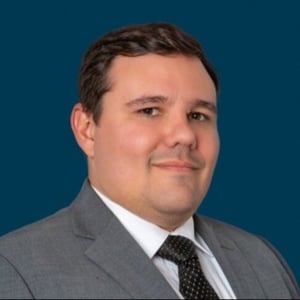
Attorney, Pacific Legal Foundation
A lifelong lover of liberty, David McDonald joined Pacific Legal Foundation’s property rights team in 2023.
As the son of two former gold miners who spent his childhood visiting ghost towns and old mines in the Mojave Desert, he has always been fascinated by the frontier spirit that built this nation and sees the defense of private property rights as absolutely vital to keeping that spirit alive. After reading about eminent domain abuse for the first time in college (and Justice Clarence Thomas’ amazing dissent in Kelo), he realized he needed to become a lawyer so he could put a stop to the government’s flagrant violation of private property rights.
Prior to joining PLF, David was an attorney with Mountain States Legal Foundation in Colorado, where his practice primarily focused on the bureaucratic overreach and intransigence of federal land use agencies like the Bureau of Land Management. While at Mountain States, David represented individuals and small businesses whose rights had been violated by the government before both state and federal courts and administrative tribunals. Before that, he worked as a legal associate with the Cato Institute’s Center for Constitutional Studies, where he authored Supreme Court amicus briefs and scholarly articles on a number of constitutional topics.
David grew up in Southern California and received his undergraduate degree from the University of California, Los Angeles before attending Columbia University for law school.
When not trying to ruin government employees’ days, David can usually be found doing something nerdy like playing board games, arguing about the finer points of Tolkien lore, and taking pub trivia way too seriously.
David is a member of the bar only in the states of New York and Colorado.

Solicitor General, State of Florida
Amit Agarwal was appointed as Florida's solicitor general in June 2016. The position, first established in February 1999, is patterned in part after the U.S. Office of the Solicitor General, which conducts litigation on behalf of the United States in the Supreme Court and supervises the handling of litigation in federal appellate courts. The Solicitor General in Florida serves three primary roles: overseeing civil appeals involving the state's interests in all state and federal appellate courts; teaching at the Florida State University College of Law where he holds the Richard W. Ervin Eminent Scholar Chair; and serving as a policy advisor to the Attorney General.
Agarwal served as deputy chief to the Appellate Division of the United States Attorney's Office for the Southern District of Florida before being named solicitor general. Previously, he clerked at the U.S. Supreme Court for Justice Samuel Alito and served as an attorney advisor in the Office of Legal Counsel of the United States Department of Justice. Additionally, he served as a law clerk for the Honorable Brett Kavanaugh, of the United States Court of Appeals for the District of Columbia Circuit, and the Honorable Edward Becker, of the United States Court of Appeals for the Third Circuit in Philadelphia, PA.
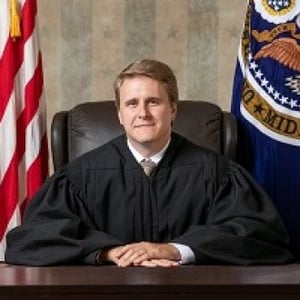
Judge, United States Court of Appeals for the Eleventh Circuit
Andrew Brasher served as a United States District Judge for the Middle District of Alabama. Before taking the bench in May 2019, Judge Brasher was the Solicitor General of the State of Alabama, where he argued cases before the United States Supreme Court, the United States Court of Appeals for the Eleventh Circuit, and the Alabama Supreme Court. He previously served for several years as the Deputy Solicitor General and practiced in the litigation and white-collar criminal defense practice groups in the Birmingham, Alabama office of Bradley Arant Boult Cummings LLP. Upon graduation from law school, Judge Brasher served as a law clerk to Judge William H. Pryor Jr. of the United States Court of Appeals for the Eleventh Circuit. Judge Brasher earned his B.A., summa cum laude, from Samford University and his J.D., cum laude, from Harvard Law School, where he was a member of the Harvard Law Review.
Partner, Lehotsky Keller LLP
The New York Times recognized Scott A. Keller as a “legal heavyweight,” who “is praised by opponents as a formidable advocate.”
Mr. Keller has argued 12 cases before the U.S. Supreme Court and 12 cases before the Texas Supreme Court. He is the only practicing lawyer to have argued at least 10 cases in both courts. Mr. Keller frequently represents parties in high stakes appeals, and he has argued many cases in federal courts of appeals throughout the nation. He has earned individual accolades from Lawdragon 500 Leading Litigators in America, Chambers, Legal 500, The American Lawyer, The National Law Journal, Law360, Super Lawyers, The Best Lawyers in America, and other publications.
Before founding Lehotsky Keller Cohn LLP, Mr. Keller headed Baker Botts LLP’s Supreme Court Practice. He also has significant experience at the highest levels in all three branches of government. Mr. Keller served as the Solicitor General of Texas, the State’s chief appellate litigator. He was U.S. Senator Ted Cruz’s chief counsel on the Senate Judiciary Committee. Mr. Keller was a law clerk for Justice Anthony Kennedy of the Supreme Court of the United States and Chief Judge Alex Kozinski of the U.S. Court of Appeals for the Ninth Circuit. He was also a Bristow Fellow in the U.S. Department of Justice’s Office of the Solicitor General.
Mr. Keller represents clients in cases where public communications strategy is crucial, and he has made numerous media appearances in major outlets such as The New York Times, The Wall Street Journal, BBC, Fox News, NPR, and Politico. As a sought after speaker and writer, Mr. Keller’s articles have appeared in the Stanford Law Review, Virginia Law Review, and Texas Law Review. He has also served as an adjunct professor of constitutional litigation, Supreme Court practice, and federal courts at the University of Texas School of Law.
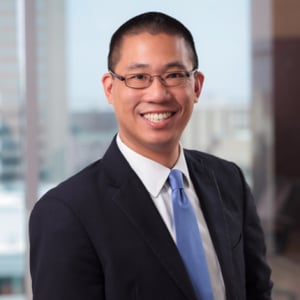
Chair, Issues & Appeals, Hunton Andrews Kurth LLP
The former Solicitor General of West Virginia, Mr. Lin has been on the front lines of many precedent-setting cases in appellate courts across the country, including in a US Supreme Court victory that George Will called “the court’s most severe rebuke of a president” since the Truman administration. Having argued more than 60 appeals, he brings to clients a well-honed ability to identify the most persuasive issues for appeal and a practiced understanding of how best to frame complex legal questions in appellate courts.
With experience in the private sector and multiple branches of government, Mr. Lin’s practice has spanned a wide range of issues, including major questions of constitutional and administrative law at the federal and state levels. On behalf of more than two dozen states, he won a stay from the US Supreme Court of the EPA’s Clean Power Plan. Described by the New York Times as an “unprecedented” order, the stay was the first time the Supreme Court had ever put a regulation on hold before review by a federal appeals court. In that same case, Elbert argued before the en banc DC Circuit in an historic proceeding that one commenter quoted in E&E News compared to “the NBA All-Star Game.” At the state level, Elbert led the effort that persuaded the West Virginia Supreme Court of Appeals to overturn an injunction of the state’s right-to-work law.
In 2013, Mr. Lin was appointed the Solicitor General of West Virginia. During his four-and-a-half year tenure, he served as a member of the Attorney General’s senior management team, oversaw all civil and criminal appeals, and argued nearly two dozen cases in federal and state appellate courts. He authored more than twenty-five briefs in the US Supreme Court and more than forty-five formal Opinions of the Attorney General.
Earlier in his career, Mr. Lin served as a trial attorney in the Federal Programs Branch of the US Department of Justice’s Civil Division, where he received a Special Service Award. He has also been a law clerk at all three levels of the federal judiciary: for Justice Clarence Thomas on the US Supreme Court; for Judge William H. Pryor Jr. on the US Court of Appeals for the Eleventh Circuit; and for Senior Judge Robert E. Keeton on the US District Court for the District of Massachusetts.
Mr. Lin speaks regularly on a wide variety of topics, including constitutional law, administrative law, environmental law, state and federal relations, the US Supreme Court, and appellate practice. He has testified before Congress, and has spoken at the national conventions of the American Bar Association, the Association of Corporate Counsel, the National Asian Pacific American Bar Association, the Federalist Society, Americans for Prosperity, and the American Legislative Exchange Council. He is an elected member of the American Law Institute, a public member of the Administrative Conference of the United States, and a fellow of the American Academy of Appellate Lawyers.
Mr. Lin is admitted to practice in the following federal courts: the Supreme Court of the United States; the First, Second, Third, Fourth, Fifth, Sixth, Seventh, Eighth, Ninth, Eleventh, D.C., and Federal Circuits; the District of Massachusetts; the Northern and Southern Districts of West Virginia; and the Eastern and Western Districts of Virginia.
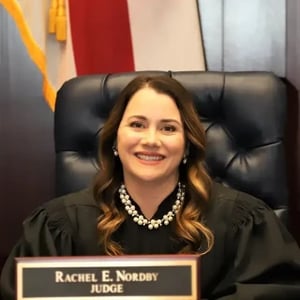
Judge, Florida First District Court of Appeal
Rachel Nordby was appointed to the First District Court of Appeal on October 16, 2019 by Governor Ron DeSantis; she took office on October 23, 2019.
Before her appointment to the bench, Judge Nordby was a partner in the Tallahassee office of Shutts & Bowen LLP and served as Vice-Chair of the firm’s Appellate Practice Group. Before joining Shutts & Bowen, Judge Nordby served as the Senior Deputy Solicitor General for Florida Attorney General Pam Bondi. In this role, she represented the State, its agencies, and public officials in cases involving constitutional challenges and issues of statewide impact.
Before joining the Office of the Attorney General, Judge Nordby clerked for Judge Bradford L. Thomas on Florida’s First District Court of Appeal. Judge Nordby is a 2008 graduate of the Florida State University College of Law, where she served as Editor-in-Chief of The Florida State University Law Review and interned in the chambers of Florida Supreme Court Justice Harry Lee Anstead. She earned her undergraduate degree in Classical Studies, summa cum laude, from the University of Florida.
Florida First District Court of Appeal
Allen Winsor is a judge on the Florida First District Court of Appeal. He was appointed to the court in February 2016 by Gov. Rick Scott.
Winsor was formerly solicitor general for the state of Florida. He was appointed by Attorney General Pam Bondi in June 2013. As solicitor general, he argued before the United States Supreme Court in October 2015.
Judge Winsor's initial appointment term expires in January 2019. He must stand for retention by voters in 2018 in order to remain on the bench.

Courthouse Steps Oral Argument: Little v. Hecox and West Virginia v. B.P.J.
Sarah Parshall Perry, William E. Trachman
Little v. Hecox and West Virginia v. B.P.J., both involve the question of whether states...
Courthouse Steps Preview: Little v. Hecox and West Virginia v. B.P.J.
Sarah Parshall Perry, Jonathan Scruggs
In 2020 and 2021, Idaho and West Virginia passed laws that required public schools and...
Revisiting Judicial Deference
John C. Eastman, Sarah M. Harris, Roman Martinez, Dean Reuter, David C. Vladeck, Adam White
The seventh annual Executive Branch Review Conference took place on May 8, 2019, at the...
How the Federal Government Litigates Cases
Paul D. Clement, W. Neil Eggleston, Scott Allen Keller, Jesse Panuccio, Gene C. Schaerr
The seventh annual Executive Branch Review Conference took place on May 8, 2019, at the...
The Supreme Court in Crisis: A Good Read, But No Crisis
Donald A. Daugherty
A review of: American Justice 2017: The Supreme Court in Crisis, by Kimberly Robinson (University...
Immigration Moratorium Back in the Court - Podcast
Josh Blackman, Ilya Somin
Eighteen days after the Supreme Court granted certiorari in Trump v. International Refugee Assistance Project and stay...
Title IX & Gender Identity: Gloucester County v. G.G.
Ilya Shapiro
Who has the authority to interpret statutes like Title IX? Ilya Shapiro, senior fellow in...
Gloucester County School Board v. G.G.: Judicial Overdeference Is Still a Massive Problem
Ilya Shapiro, David C. McDonald
Note from the Editor: This article discusses Auer deference, a central issue in Gloucester County...
Topics
SCOTUS Opinions and Orders update
Today the Supreme Court issued three opinions and a new Order List. A short summary follows:...
Combating Federal Overreach
Amit Agarwal, Andrew Brasher, Scott Allen Keller, Elbert Lin, Rachel E. Nordby, Allen Winsor
This panel, Combating Federal Overreach, was held on February 4, 2017, at the 2017 Florida...